Crypto Isn’t A Cult: Why Vanity Fair’s ‘True Believers’ Piece Misses The Point

bitcoinistPublicado em 2026-03-18Última atualização em 2026-03-18

Resumo

A recent Vanity Fair article portrays the crypto community as a cult of "true believers," depicting participants as naive, decadent, and out-of-touch zealots clinging to a failed dream. The piece uses dramatic photography and mocking captions—such as "the most expensive religion in the world"—to caricature industry figures as extravagant and unserious. The crypto community has pushed back strongly, arguing the article focuses on stereotypical "degenerate" personalities rather than the developers and contributors building real technological infrastructure and value. Critics note that legacy media often ignores the serious, technical side of crypto in favor of sensationalist narratives. Despite the article’s claim that crypto is dead, Bitcoin continues to trade at high values, underscoring the resilience and ongoing activity within the ecosystem. The response highlights a demand for more serious and nuanced coverage of the space.

A recent Vanity Fair piece painted a cartoonish profile of what they called “crypto’s true believers”, framing long‐time participants as cultish die‐hards who won’t admit the dream is over.
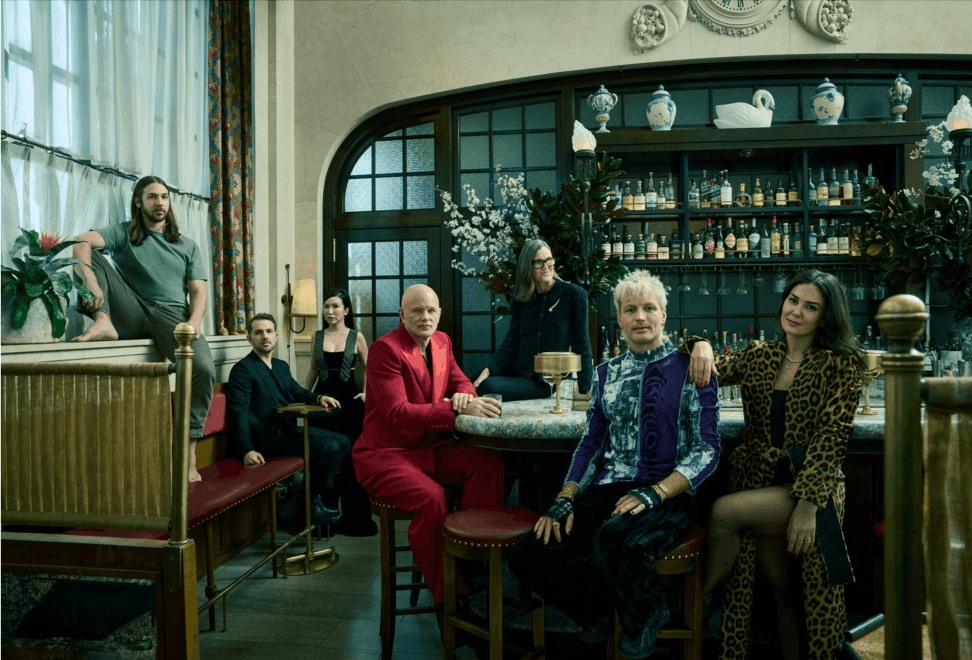
The original caption on the cover picture o the article reads “the most expensive religion on the world”. Source. Vanity Fair.

Crypto: “The Most Expensive Religion In The World”

Dim lights, deep contrast shadows, rich jewel tones, animal print, bright colored suits and a decadentism-old money aesthetic. That’s the depiction of Vanity Fair’s “Crypto’s True Believers”: a group of overdue-old Hollywood ingenuos people that refuse to accept that they have fallen out of grace. A festival of banality and naivety led by capricious people throwing a “tantrum” after living a maximalist-multimillionaire lifestyle that would make Jay Gatsby and Daisy Buchanan blush.

Related Reading: Crypto Donations Branded ‘Dangerous’? UK Security Panel Urges Immediate Ban

Even worse: the “zealots who are holding the line”, as the hit piece calls them, are condescendingly framed as cult members in a way that would make Vitalik Buterin, Ethereum’s co-founder, raise his arms in desperation: this portrayal, the entire piece, is everything that he has been tirelessly warning against — a fact that the article itself, without any sense of self-awareness, is gracious enough to acknowledge.
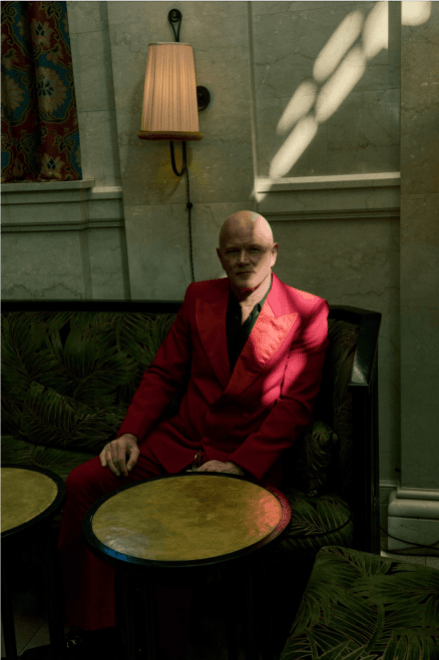
Michael Novogratz, CEO of Galaxy Digital, is made to look like some sort of Wilson Fisk, Daredevil’s Kingpin. Source. Vanity Fair.

As if the pictures weren’t enough, the captions take matters to the next level: from “the bitcoin playboy” and “the couture evangelist” to “the build-a-bear and the product mommy”: the followers of the “sixth asset class” are the successors of Satoshi Nakamoto’s original “hyper online” followers.

Despite acknowledging that the implosion of Lehman Brothers took with it “the myth of institutional security” for the entire world, Vanity Fair depicts the “early believers” of Bitcoin’s White Paper as “cypherpunks on message boards, creating their own echo chamber and convinced that cryptography could do what regulators never would: redistribute power”. A cyberpunk caricature of a rightfully disillusioned generation looking for a different way to rebuild a world that had just collapsed on top of them, crushing their dreams and ambitions with it.

The article positions itself as the “serious” view of crypto from the traditional media bubble, implicitly antagonizing and directly mocking the plead of the subjects they depict to be taken seriously: what could be serious about them, the degen-extravaganza champions? Why would anyone still care about the crashes, frauds, and regulatory crackdowns of this out of touch group of crypto aristocracy?

The Community Takes A Rightful Stand

For obvious reasons, the piece triggered immediate backlash on social media X from builders, founders and on‐chain governance people. One of them is Dennison Bertram, Tally’s founder, who argues that the problem is way bigger than “just another hit piece in a long line of forgettable nonsense”: it’s the angle, the choice to depict all crypto people like “degen” stereotypes.

Legacy outlets keep interviewing the same people, some users on X claimed, instead of people who actually shipped protocols, standards, and tooling for billions in on‐chain value: media loves “degen” archetypes because they’re clickable, but that lens erases the serious, boring, resilient parts of the ecosystem that are actually making a real impact in the world.

On his X’s thread, Bertram analyzes each picture through the lenses of someone who worked as a fashion photographer for over a decade before crypto. With this authority, Bertram argues that not only is the article mean spirited, but photographer Jeremy Liebman’s work “is a deliberate work of mockery”.

The takeaway of all of this seems to be that if you’re going to write that crypto is dead, at least talk to the people still shipping code, running DAOs, maintaining testnets and governance forums every day.
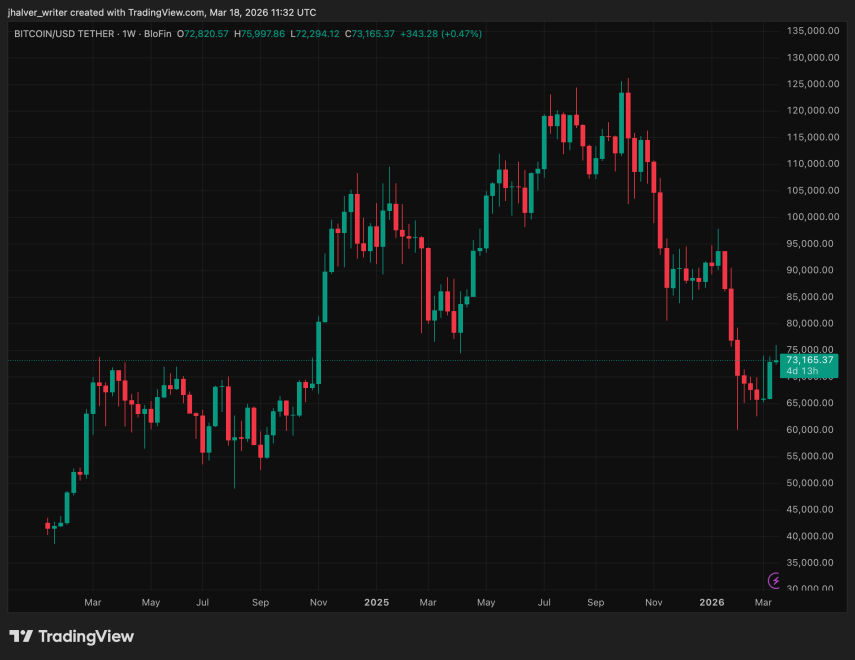
At the time of writing, BTC trades for $73k on the daily chart. Source: BTCUSD on Tradingview

Cover image from Perplexity, BTCUSD chart from Tradingview

Perguntas relacionadas

QWhat is the main criticism of the Vanity Fair article 'Crypto's True Believers' according to the author?

AThe author criticizes the Vanity Fair article for painting a cartoonish and cultish profile of long-time crypto participants, framing them as naive, decadent, and out-of-touch zealots who refuse to accept that the crypto dream is over, rather than acknowledging the serious work being done in the ecosystem.

QHow does the Vanity Fair article depict the early believers of Bitcoin's White Paper?

AThe article depicts early Bitcoin believers as 'cypherpunks on message boards, creating their own echo chamber and convinced that cryptography could do what regulators never would: redistribute power', portraying them as a cyberpunk caricature of a disillusioned generation.

QWhat does Dennison Bertram, Tally's founder, claim about the Vanity Fair article's photography?

ADennison Bertram, who has a background as a fashion photographer, argues that the photography in the Vanity Fair article is 'a deliberate work of mockery' and a setup to ridicule crypto and those depicted, rather than a serious portrayal.

QAccording to the article, what does the crypto community argue legacy media outlets keep doing wrong?

AThe crypto community argues that legacy media outlets keep interviewing the same stereotypical 'degen' personalities instead of people who actually build protocols, standards, and tooling that create real on-chain value, thus erasing the serious and resilient parts of the ecosystem.

QWhat is the implied message of the article's original cover picture caption, as mentioned in the text?

AThe original caption on the cover picture of the Vanity Fair article reads 'the most expensive religion in the world', implying that crypto is portrayed as a cult-like belief system that demands extreme financial devotion from its followers.

Leituras Relacionadas

Goldman Sachs: July Smashes Through Crowded Trades, U.S. Stock Bull Market Not Broken but Harder to Navigate

Goldman Sachs: July Sees Crowded Trades Unwound, U.S. Bull Market Intact but Getting Tougher. The U.S. stock market in July did not see an index-level crash, but rather a significant unwinding of speculative positions. While the S&P 500 remained stable—trading within a narrow 3.5% range and staying within 2% of its high—underlying market dynamics were volatile. Heavily crowded trades, particularly in high-momentum tech, AI-linked stocks, and Asian strategies, faced severe pressure and forced deleveraging. Data indicates this was a meaningful cleanse, not a minor adjustment. Global tech exposure saw its largest sell-off in over five years, leverage in Korean equity ETFs plummeted, and Goldman's prime brokerage recorded the largest gross exposure reduction since late 2022. Leverage on momentum factors among fundamental long/short clients fell to the 28th percentile of its one-year range. The AI trade narrative shifted from pure potential to a focus on tangible returns. While Meta failed to show clear AI monetization, Microsoft and Amazon provided evidence that massive capital expenditure is translating into scalable revenue and product growth, preventing a blanket sell-off of the AI sector. The Federal Reserve's more opaque communication style and volatility in long-end Treasury yields have introduced new friction, particularly for rate-sensitive growth and tech stocks. The broader outlook for U.S. equities remains favorable, supported by a strong economy, robust earnings, and substantial AI capital expenditure. However, risk/reward is no longer cheap, and the market's upward elasticity has weakened. The Nasdaq 100's trajectory—up 12% year-to-date despite significant pullbacks—illustrates that the bull trend persists but the path is becoming more difficult. The key lesson from July is that the market no longer rewards crowded, highly leveraged trades, requiring more disciplined and liquid portfolio approaches.

marsbitHá 2h

Goldman Sachs: July Smashes Through Crowded Trades, U.S. Stock Bull Market Not Broken but Harder to Navigate

marsbitHá 2h

Interview with Robinhood Executive: Meme + Tokenized US Stocks as "Barbell" Customer Acquisition Strategy, All Business Lines Achieve Hundreds of Millions in Revenue

Interview with Robinhood executive Johann Kerbrat reveals the company's "barbell" customer acquisition strategy for its new Robinhood Chain, combining meme tokens with tokenized stocks. Three weeks after mainnet launch, the chain has seen over $3B in weekly DEX volume and 105M transactions. Kerbrat explains the logic behind the permissionless chain: meme tokens attract DeFi users, while tokenized real-world assets (RWA), currently over 90 US stocks and ETFs accessible in 120+ countries, serve global users. The goal is to bring Robinhood's 27 million funded accounts on-chain by simplifying DeFi with a user-friendly interface, exemplified by features like Robinhood Earn which offers yield without requiring wallet management. Built on Arbitrum's technology stack for its speed, low cost, and Ethereum's security, the chain focuses on financial products like Earn, spot trading, and perpetuals. Kerbrat downplays direct competition with platforms like Base, emphasizing the goal of expanding the overall market for on-chain assets. He details selective partnerships (e.g., Morpho, Lighter) based on compliance, unique UX, and differentiation. While regulatory clarity is pending for US perpetuals, the expansion continues via Bitstamp in Europe. Finally, Kerbrat positions Robinhood as a "super app" integrating stocks, options, crypto, banking, and AI trading, with all major business lines generating hundreds of millions in revenue. For the chain, current priority is driving adoption over maximizing gas fee revenue.

marsbitHá 4h

Interview with Robinhood Executive: Meme + Tokenized US Stocks as "Barbell" Customer Acquisition Strategy, All Business Lines Achieve Hundreds of Millions in Revenue

marsbitHá 4h

Trading

Spot
活动图片