Crypto industry, trade unions clash over multi-trillion dollar retirement funds

cointelegraphPublicado em 2025-12-12Última atualização em 2025-12-12

Resumo

A dispute has emerged in Washington between the cryptocurrency industry and labor unions over proposed legislation that would allow cryptocurrencies, such as Bitcoin, to be included in 401(k) retirement accounts. Labor unions, including the American Federation of Teachers (AFT) and the AFL-CIO, argue that cryptocurrencies are too volatile and speculative for retirement savings, posing significant risks to workers' financial security. They oppose regulatory changes that would permit exposure to such assets in pension plans. In response, crypto industry representatives contend that the proposed bill would improve oversight and allow retirement funds to access a high-performing asset class. They accuse unions of being politically motivated and dismiss their concerns as uninformed. The debate highlights a broader clash between proponents who see crypto as a means of financial democratization and critics who warn against its unregulated and risky nature.

A growing rift has emerged in Washington, D.C., between the cryptocurrency industry and labor unions as lawmakers debate whether to ease rules allowing cryptocurrencies in 401(k) retirement accounts.

The dispute centers on proposed market structure legislation that would allow retirement accounts to gain exposure to crypto, a move labor groups say could expose workers to speculative risk. In a letter sent on Wednesday to the US Senate Banking Committee, the American Federation of Teachers argued that cryptocurrencies are too volatile for pension and retirement savings, warning that workers could face significant losses.

The letter drew immediate pushback from crypto investors and industry figures. “The American Federation of Teachers has somehow developed the most logically incoherent, least educated take one could possibly author on the matter of crypto market structure regulation,” a crypto investor said on X.
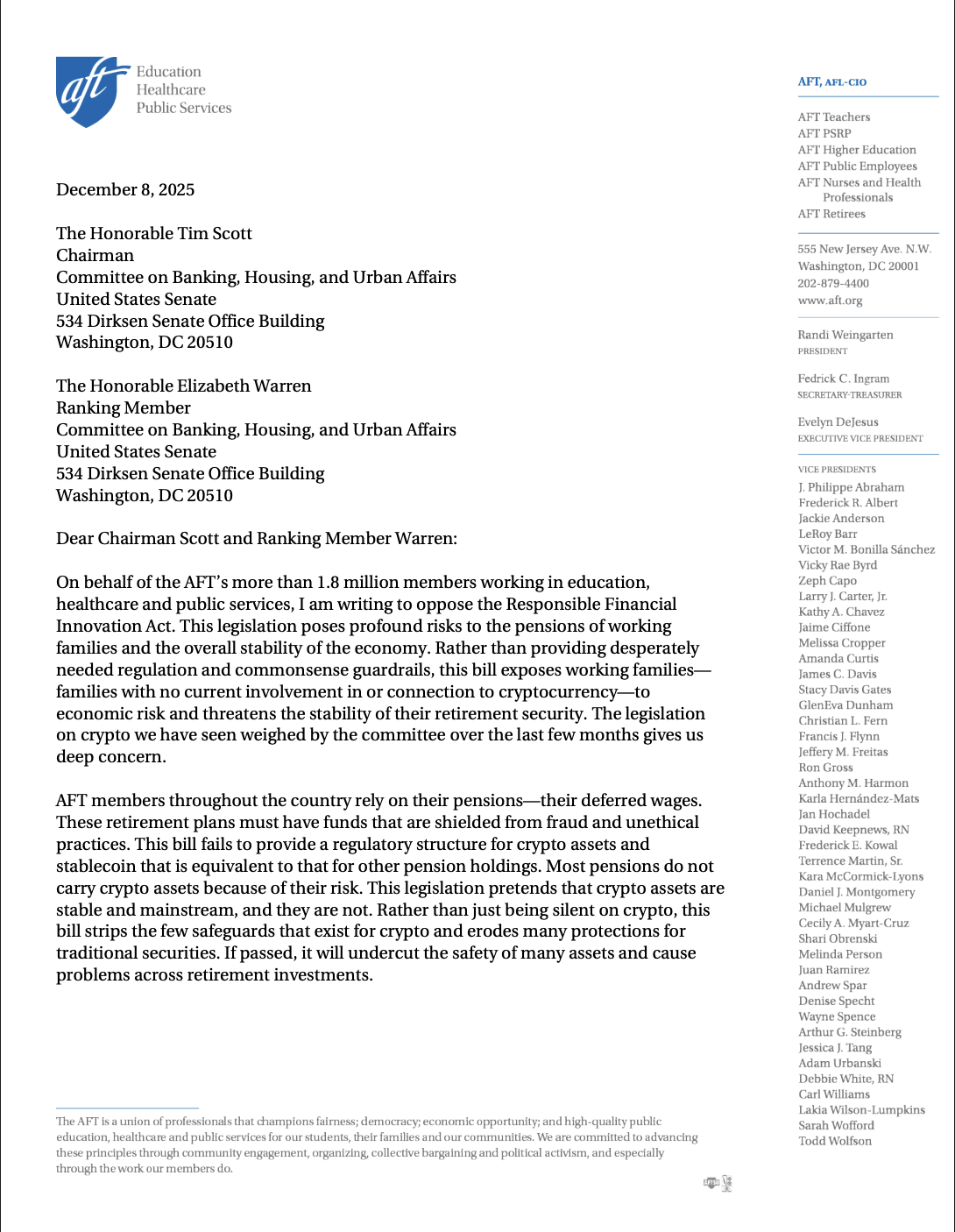
The AFT letter to Congress opposes regulatory changes that would allow 401(k) retirement accounts to hold alternative assets, including cryptocurrency. Source: CNBC

In response to the letter, Castle Island Ventures partner Sean Judge said the bill would improve oversight and reduce systemic risk, while enabling pension funds to access an asset class that has delivered strong long-term returns.

Consensys attorney Bill Hughes said the AFT’s opposition to the crypto market structure bill was politically motivated, accusing the group of acting as an extension of Democratic lawmakers.
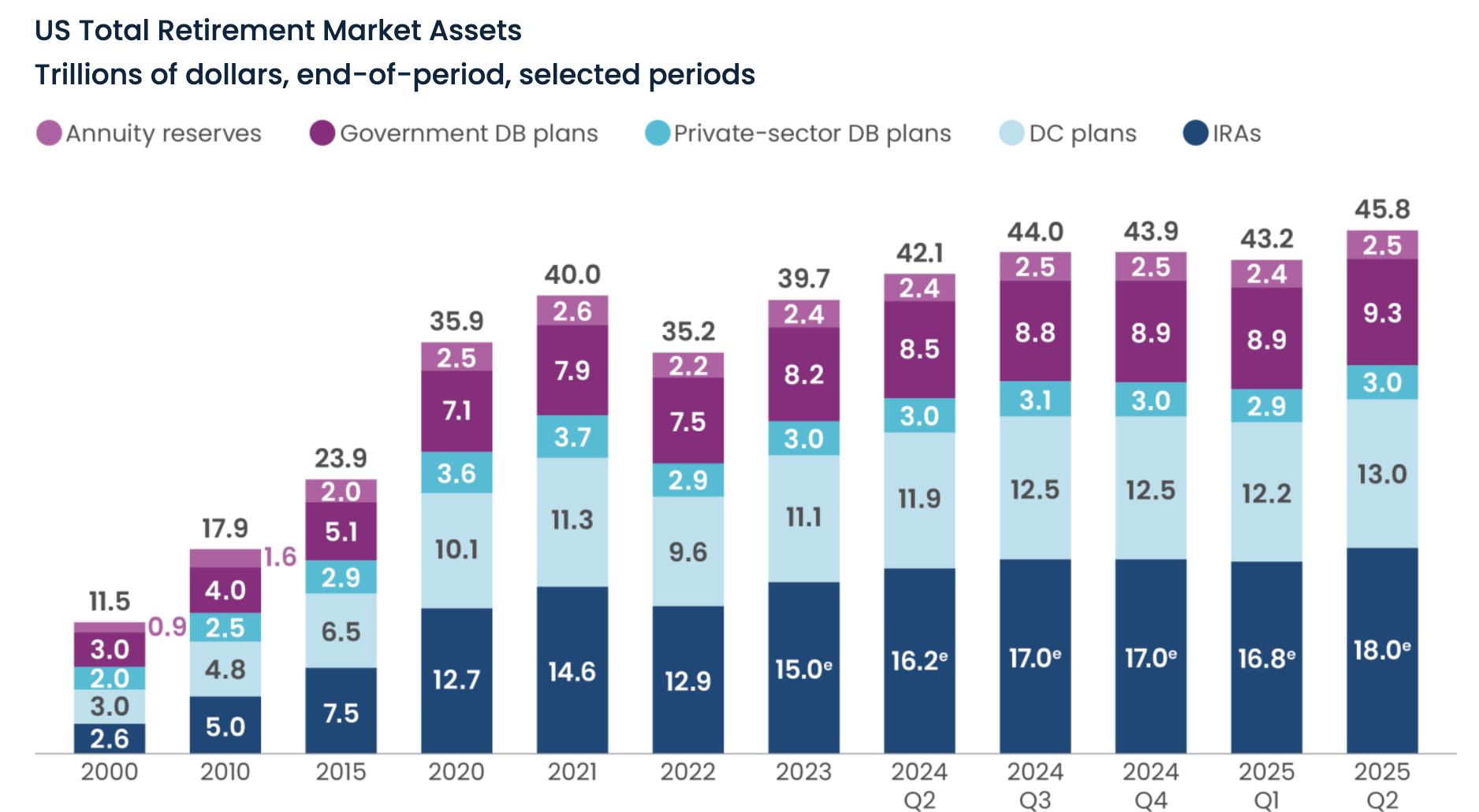
Funds held in US retirement accounts by type of account plan. Source: ICI

Related: Atkins says SEC has ‘enough authority’ to drive crypto rules forward in 2026

Opposition to crypto in retirement and pension funds mounts

Proponents of allowing crypto in retirement portfolios, on the other hand, argue that it democratizes finance, while trade unions have voiced strong opposition to relaxing current regulations, claiming that crypto is too risky for traditional retirement plans.

“Unregulated, risky currencies and investments are not where we should put pensions and retirement savings. The wild, wild west is not what we need, whether it’s crypto, AI, or social media,” AFT president Randi Weingarten said on Thursday.

The AFT represents 1.8 million teachers and educational professionals in the US and is one of the largest teachers’ unions in the country.

According to Better Markets, a nonprofit and nonpartisan advocacy organization, cryptocurrencies are too volatile for traditional retirement portfolios, and their high volatility can create time-horizon mismatches for pension investors seeking a predictable, low-volatility retirement plan.
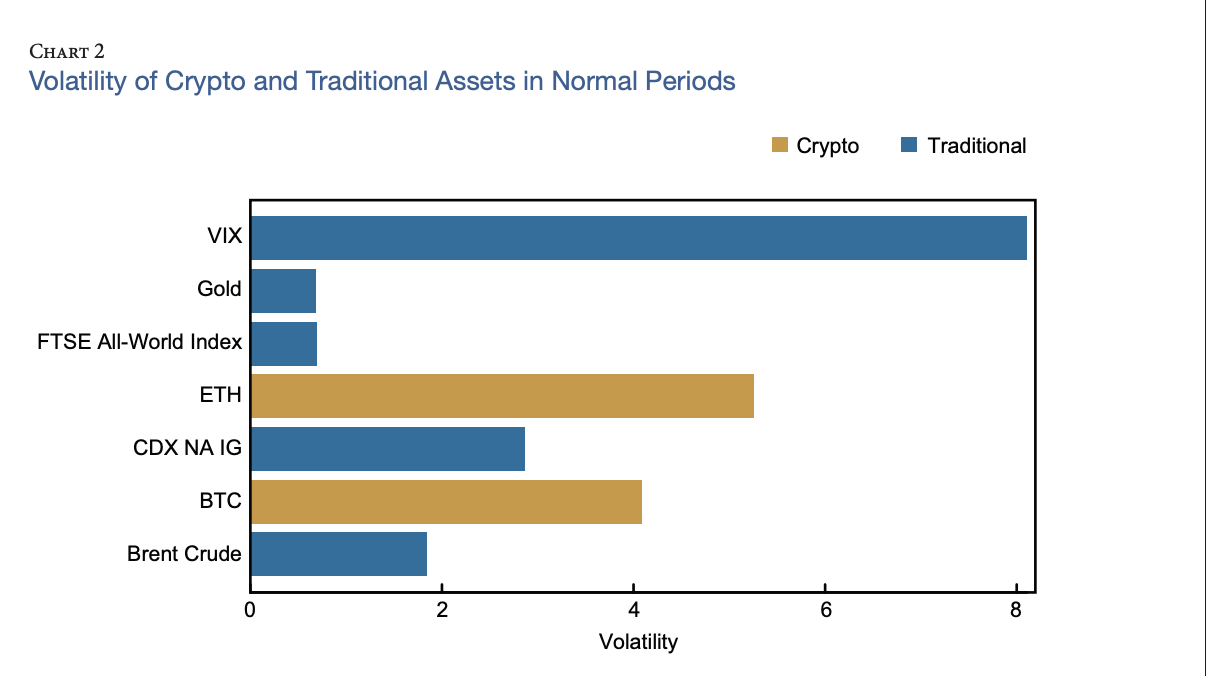
Bitcoin and Ether volatility compared to other asset classes and stock indexes. Source: US Federal Reserve

In October, the American Federation of Labor and Congress of Industrial Organizations (AFL-CIO) also wrote to Congress opposing provisions within the crypto market structure regulatory bill.

The AFL-CIO, the largest federation of trade unions in the US, wrote that cryptocurrencies are volatile and pose a systemic risk to pension funds and the broader financial system.

Magazine: 13 Christmas gifts that Bitcoin and crypto degens will love

Leituras Relacionadas

GitHub, Transfixed by AI

On the night of February 9th, GitHub suffered a major outage caused by a simple configuration change—reducing a cache refresh interval from 12 to 2 hours—that triggered a cascade of failures. This was not an isolated event, but part of a broader pattern. In early 2026, GitHub experienced at least 8 major incidents, failing to meet its promised 99.9% availability. These outages stemmed from structural issues: explosive growth in load, tight service coupling, and insufficient protection against abnormal traffic. This unprecedented load is driven by AI Agents. In 2025, GitHub handled ~1 billion commits. By 2026, weekly commits reached 275 million, projecting to ~14 billion for the year—a 14x increase. AI tools like Claude Code now contribute 4.5% of all public repository commits, with weekly submissions surging 25x in just three months. AI-generated pull requests jumped from 4 million to 17 million per month in half a year. Unlike human developers, AI Agents work continuously, generating commits at a scale that overwhelms infrastructure designed for human rhythms. The surge also shattered GitHub's business model. Copilot's flat-rate pricing, based on assisting human developers, became unsustainable as Agentic AI sessions consumed resources worth hundreds of dollars for a few dollars in fees. In response, GitHub imposed usage limits and, by June 1st, shifted to a pay-per-use "AI Credits" system. Facing this new reality, GitHub realized a 10x scaling plan was insufficient. It announced a need to *redesign* its architecture for 30x current scale—decoupling services, adding fault isolation, and improving change management to prevent cascading failures. Other platforms like Stripe and AWS are facing similar challenges with AI Agents. Fundamentally, GitHub is transitioning from a human collaboration platform to an "exhaust pipe" for automated AI workflows. Its detailed post-mortem reports aim to maintain trust during this turbulent rebuild. The February outage was not just a technical glitch, but a signal of the software industry's entry into a new, AI-driven era.

marsbitHá 8m

GitHub, Transfixed by AI

marsbitHá 8m

Both Suffer Massive Losses Exceeding $90 Billion, Which Is in Greater Peril: Strategy or Bitmine?

Facing massive paper losses exceeding $90 billion each amidst a sharp market downturn, "Digital Asset Treasury" (DAT) giants Strategy and Bitmine find themselves in a precarious position, but with different underlying risks. Strategy, heavily invested in Bitcoin (BTC), faces significant financial strain. Its strategy relies heavily on debt, including convertible notes and preferred stock (STRC) requiring substantial dividend payments. With its cash reserves dwindling and BTC offering no staking yield for cash flow, Strategy's high leverage makes it vulnerable. A continued price decline could force asset sales to meet obligations, potentially creating a negative feedback loop. Its market value has already fallen sharply. In contrast, Bitmine, an Ethereum (ETH) holder, appears on firmer financial ground. It primarily funds its purchases through equity offerings (like ATM programs), avoiding debt pressure. It also generates income by staking a large portion of its ETH holdings. While not immune to market drops and shareholder dilution concerns, Bitmine maintains more flexibility, recently announcing a new preferred share offering to raise further capital. The core divergence lies in their financing: Bitmine uses equity (investor money), while Strategy uses debt (borrowed money). Consequently, Bitmine currently faces less immediate liquidity pressure than Strategy, which must navigate the dual challenge of servicing debt/dividends and a declining core asset (BTC) price.

marsbitHá 15m

Both Suffer Massive Losses Exceeding $90 Billion, Which Is in Greater Peril: Strategy or Bitmine?

marsbitHá 15m

Where the AI Bubble Really Is: Which Layer of Players Are Naked

AI Bubble: Where It Really Is and Who's Swimming Naked This analysis dissects the AI industry not as a single entity but as a five-layer pyramid, arguing that bubbles are concentrated in specific tiers, not uniformly distributed. **Key Distinction from the 2000 Dot-com Bubble:** Unlike 2000, where companies had stock prices before revenue, today's leading AI players have massive, contract-backed revenue driving their valuations. Core infrastructure demand is real, with every GPU running at full capacity for paying customers. **The Five-Layer Pyramid & Bubble Assessment:** * **L0 (Fab/Manufacturing) & Top L4 (Leading AI Apps): NO BUBBLE.** Companies like TSMC, NVIDIA, major cloud providers (Microsoft, Google, Meta, Amazon), and top AI labs have real revenues and orders. Supply is tightly constrained by TSMC's disciplined capacity control and physical limits like power/land for data centers, preventing a supply glut. * **L1 (Memory): BATTLEGROUND.** Sky-high HBM margins could signal a new structural cycle or a classic "boom before bust." The oligopoly of three major players may enforce supply discipline, making this a high-stakes bet. * **L2 (Interconnect/Optical Modules): BUBBLE TERRITORY.** Companies like Lumentum and AAOI have seen stock surges (4-10x) far outpacing revenue growth. This hardware segment has lower physical barriers to expansion than fabs, allowing speculation. It mirrors the 2000 bubble's epicenter—optics. * **L3 (Infrastructure/"GPU Landlords"): VULNERABLE.** GPU leasing companies profit from the current compute shortage but own no long-term moat. Their business model relies on a temporary bottleneck that will ease as big tech expands and new tech (e.g., potential space-based data centers) emerges. * **L4 Long Tail (VC-backed Startups): STRONG BUBBLE SIGNALS.** VC funding concentration in AI is twice that of the 1999 peak. Many startups with little revenue use the valuation logic of successful giants to justify their own, creating high risk of a "valuation crunch" when funding dries up. **Critical Risks to Monitor:** 1. **GPU Depreciation & Accounting:** Companies extending the assumed useful life of GPUs artificially boost profits. The true economic life depends on future generational leaps from NVIDIA. 2. **"GPU Credit" & Off-Balance-Sheet Leverage:** Emerging structures where shell companies borrow to buy GPUs and lease them out (with chipmakers sometimes investing) move debt off major balance sheets. This echoes the "vendor financing" of 2000 and the securitization risks of 2008, though currently small-scale. 3. **TSMC Abandoning Caution:** If the primary supply bottleneck (TSMC's conservative capacity planning) breaks, runaway supply could trigger a bust. 4. **Algorithmic Efficiency Breakthrough:** A major leap in software efficiency could drastically reduce the need for raw compute hardware, undermining the investment thesis. **Conclusion:** The AI boom is expensive and has frothy areas, but its core is underpinned by real demand and physical supply constraints. The bubble risk is layered: most present in optical components, GPU leasing, and the long-tail startup ecosystem, while the foundational chip manufacturing and leading application layers remain relatively solid—for now.

marsbitHá 28m

Where the AI Bubble Really Is: Which Layer of Players Are Naked

marsbitHá 28m

Trading

Spot
Futuros

Artigos em Destaque

Como comprar BILL

Bem-vindo à HTX.com!Tornámos a compra de Billions Network (BILL) simples e conveniente.Segue o nosso guia passo a passo para iniciar a tua jornada no mundo das criptos.Passo 1: cria a tua conta HTXUtiliza o teu e-mail ou número de telefone para te inscreveres numa conta gratuita na HTX.Desfruta de um processo de inscrição sem complicações e desbloqueia todas as funcionalidades.Obter a minha contaPasso 2: vai para Comprar Cripto e escolhe o teu método de pagamentoCartão de crédito/débito: usa o teu visa ou mastercard para comprar Billions Network (BILL) instantaneamente.Saldo: usa os fundos da tua conta HTX para transacionar sem problemas.Terceiros: adicionamos métodos de pagamento populares, como Google Pay e Apple Pay, para aumentar a conveniência.P2P: transaciona diretamente com outros utilizadores na HTX.Mercado de balcão (OTC): oferecemos serviços personalizados e taxas de câmbio competitivas para os traders.Passo 3: armazena teu Billions Network (BILL)Depois de comprar o teu Billions Network (BILL), armazena-o na tua conta HTX.Alternativamente, podes enviá-lo para outro lugar através de transferência blockchain ou usá-lo para transacionar outras criptomoedas.Passo 4: transaciona Billions Network (BILL)Transaciona facilmente Billions Network (BILL) no mercado à vista da HTX.Acede simplesmente à tua conta, seleciona o teu par de trading, executa as tuas transações e monitoriza em tempo real.Oferecemos uma experiência de fácil utilização tanto para principiantes como para traders experientes.

183 Visualizações TotaisPublicado em {updateTime}Atualizado em 2026.06.02

Como comprar BILL

O que é ATWO

I. Introdução ao ProjetoArena Two é uma plataforma interativa descentralizada que permite aos fãs desempenhar um papel ativo e tokenizado nos resultados de eventos em tempo real. Ao contrário dos modelos tradicionais de transmissão que reduzem os fãs a espectadores passivos, a Arena Two utiliza a tecnologia blockchain para permitir que os fãs votem diretamente em tempo real e influenciem os resultados em campo.II. Informação sobre o TokenNome do token: ATWO(Arena Two)III. Links RelacionadosWebsite:https://arenatwo.com/Exploradores:https://basescan.org/token/0x499D35eBE6cEe9B2Ac35Fd003fcBbeeB9CFc7B32Twitter:https://x.com/arenatwoXNota: A introdução ao projeto provém dos materiais publicados ou fornecidos pela equipa oficial do projeto, que é apenas para referência e não constitui aconselhamento de investimento. A HTX não se responsabiliza por quaisquer perdas diretas ou indiretas resultantes.

204 Visualizações TotaisPublicado em {updateTime}Atualizado em 2026.06.02

O que é ATWO

Como comprar ATWO

Bem-vindo à HTX.com!Tornámos a compra de Arena Two (ATWO) simples e conveniente.Segue o nosso guia passo a passo para iniciar a tua jornada no mundo das criptos.Passo 1: cria a tua conta HTXUtiliza o teu e-mail ou número de telefone para te inscreveres numa conta gratuita na HTX.Desfruta de um processo de inscrição sem complicações e desbloqueia todas as funcionalidades.Obter a minha contaPasso 2: vai para Comprar Cripto e escolhe o teu método de pagamentoCartão de crédito/débito: usa o teu visa ou mastercard para comprar Arena Two (ATWO) instantaneamente.Saldo: usa os fundos da tua conta HTX para transacionar sem problemas.Terceiros: adicionamos métodos de pagamento populares, como Google Pay e Apple Pay, para aumentar a conveniência.P2P: transaciona diretamente com outros utilizadores na HTX.Mercado de balcão (OTC): oferecemos serviços personalizados e taxas de câmbio competitivas para os traders.Passo 3: armazena teu Arena Two (ATWO)Depois de comprar o teu Arena Two (ATWO), armazena-o na tua conta HTX.Alternativamente, podes enviá-lo para outro lugar através de transferência blockchain ou usá-lo para transacionar outras criptomoedas.Passo 4: transaciona Arena Two (ATWO)Transaciona facilmente Arena Two (ATWO) no mercado à vista da HTX.Acede simplesmente à tua conta, seleciona o teu par de trading, executa as tuas transações e monitoriza em tempo real.Oferecemos uma experiência de fácil utilização tanto para principiantes como para traders experientes.

81 Visualizações TotaisPublicado em {updateTime}Atualizado em 2026.06.02

Como comprar ATWO

Discussões

Bem-vindo à Comunidade HTX. Aqui, pode manter-se informado sobre os mais recentes desenvolvimentos da plataforma e obter acesso a análises profissionais de mercado. As opiniões dos utilizadores sobre o preço de A (A) são apresentadas abaixo.

活动图片














