Crypto Exchange Uniswap Prevails In High-Profile Rug Pull Lawsuit

bitcoinistPublicado em 2026-03-04Última atualização em 2026-03-04

Resumo

A federal judge has dismissed a lawsuit against Uniswap, ruling that the decentralized exchange cannot be held liable for fraudulent tokens traded on its platform. The case, initially filed in 2022 by a group of investors, alleged that Uniswap enabled rug pulls and pump-and-dump schemes. The judge determined that providing a platform where fraud may occur is not equivalent to actively participating in the fraud. She compared it to a bank processing transactions for a money launderer without knowledge of the crime. Uniswap founder Hayden Adams welcomed the decision, stating that developers of open-source smart contract code should not be held responsible if scammers misuse it. The case was dismissed with prejudice, meaning it cannot be refiled.

A four-year legal battle came to a close this week when a federal judge ruled that Uniswap cannot be held responsible for fraudulent tokens that were bought and sold on its platform. The decision is being seen as a major win — not just for Uniswap, but for decentralized finance as a whole.

The Case That Kept Coming Back

The lawsuit had a long and winding road before reaching its end. According to reports, a group of investors led by Nessa Risley first took Uniswap, its founder Hayden Adams, and venture capital firms Paradigm, Andreessen Horowitz, and Union Square Ventures to court back in April 2022, claiming the platform had enabled rug pulls and pump-and-dump schemes that cost them money.

Lawsuit Junked

That first lawsuit was thrown out in August 2023 and the decision was later upheld on appeal. The plaintiffs came back a second time, reshaping their complaint around state-level consumer protection claims. That attempt failed too.

Manhattan federal judge Katherine Polk Failla dismissed the case with prejudice on Monday — meaning the plaintiffs cannot bring the same claims to court again. Reports say the judge found that the group had not adequately shown that Uniswap had any knowledge of the fraudulent activity or that it had actively helped carry it out.

UNIUSDT currently trading at $3.8. Chart: TradingView

The distinction the judge drew was clear and direct. Creating a space where fraud could happen, she said, is not the same as helping commit the fraud itself. Reports note she compared the situation to a bank that unknowingly processes a money launderer’s transactions, or a messaging app whose service is used by someone dealing drugs. In both cases, the platform is not the one breaking the law — the person misusing it is.

Open-Source Code Is Not A Crime

Uniswap Labs founder Hayden Adams responded to the ruling on X, calling it a good and sensible outcome. According to reports, Adams said that when open-source smart contract code is written and scammers choose to misuse it, the scammers bear the legal responsibility — not the developers who built the tools. That argument was central to Uniswap’s defense throughout the case.

Uniswap operates differently from a traditional exchange. Anyone can list a token on it without going through an approval process, which is what makes it decentralized. That same openness is what the plaintiffs argued made it dangerous. The judge disagreed.

Reports say she wrote that offering ordinary services that could be used for both lawful and unlawful purposes does not make a platform liable for how bad actors choose to use those services.

Featured image from Unsplash, chart from TradingView

Perguntas relacionadas

QWhat was the outcome of the lawsuit against Uniswap regarding fraudulent tokens?

AA federal judge ruled that Uniswap cannot be held responsible for fraudulent tokens traded on its platform, dismissing the case with prejudice.

QWho was the lead plaintiff in the lawsuit against Uniswap?

AThe lawsuit was led by a group of investors, with Nessa Risley as the lead plaintiff.

QWhat key distinction did the judge make in dismissing the case?

AThe judge distinguished that creating a space where fraud could occur is not the same as actively assisting in the fraud itself, comparing it to a bank processing a money launderer's transactions unknowingly.

QHow did Uniswap's defense use the concept of open-source code in their argument?

AUniswap's defense argued that developers of open-source smart contract code are not liable if scammers misuse it; the legal responsibility lies solely with the scammers.

QWhat does the dismissal 'with prejudice' mean for future legal actions?

ADismissal with prejudice means the plaintiffs cannot bring the same claims against Uniswap to court again in the future.

Leituras Relacionadas

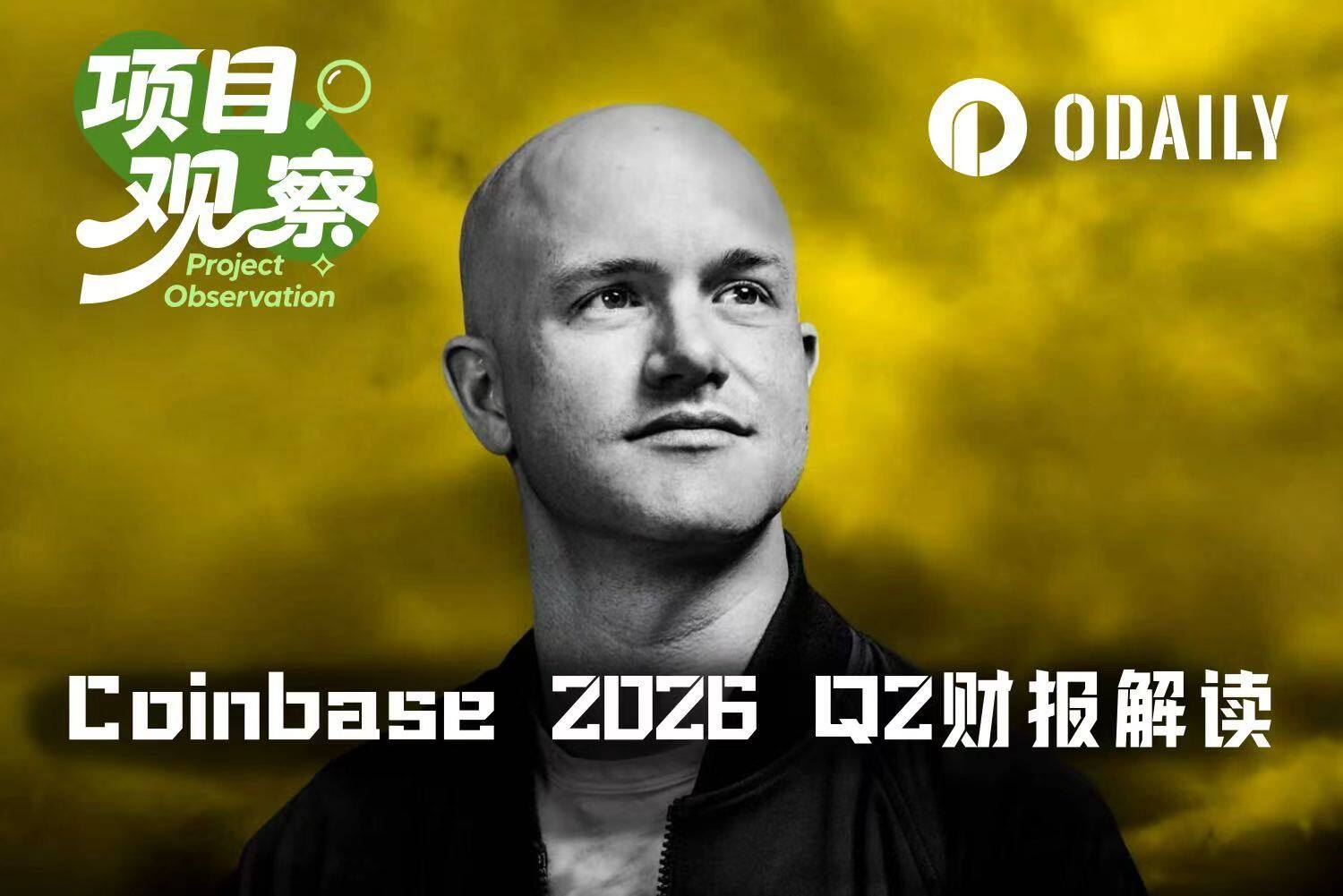
Cyclical Stock or Growth Stock? Coinbase's Q2 Earnings Report Reveals 'Valuation Disagreement'

Coinbase's Q2 2026 financial results revealed a mixed performance, reigniting debate over whether the company should be valued as a cyclical stock tied to crypto markets or a growth stock with future potential. Total revenue missed expectations at $1.22 billion, down 19% year-over-year. Transaction revenue fell to $599 million, with retail crypto spot trading revenue dropping 30% to $452 million, back to 2023 levels. The company reported a net loss of $359 million, marking its third consecutive quarterly loss. Despite CEO Brian Armstrong's positive commentary on metrics like a 10.3% overall crypto trading market share and 106% growth in prediction markets, the market reacted negatively, with shares dropping over 5% after-hours. A key issue is the decline in core retail trading. While Coinbase touted record market share, this figure includes derivatives and new products. Its traditional crypto spot trading share is likely shrinking. New ventures like prediction markets, while growing, contributed less than $30 million, insufficient to offset the core revenue decline. The valuation debate hinges on perspective. As a cyclical stock, Coinbase remains deeply tied to the crypto bear market, with user attrition and competitive pressures justifying a lower valuation. The company's strategy appears focused on surviving until the next bull cycle. Viewed as a growth stock, however, Coinbase shows promising diversification. Subscription and service revenue reached $555 million, nearly matching transaction revenue. Stablecoin revenue, its second-largest source at $292 million, remains strong through its partnership with Circle. Critically, Coinbase is positioning itself as a leader in the emerging on-chain "agent economy." Over 90% of agent-based stablecoin transactions occur on its Base network, which it believes could handle trillions in future agent transactions. The recent acquisition of Deribit also aims to boost its international derivatives offering. In summary, Coinbase's present struggles are clear, but its future hinges on whether its investments in revenue diversification, stablecoins, and the agent economy can ultimately transform its business model and justify a growth premium.

Odaily星球日报Há 4m

Cyclical Stock or Growth Stock? Coinbase's Q2 Earnings Report Reveals 'Valuation Disagreement'

Odaily星球日报Há 4m

Global Market Share Survey: Japanese Firms Lead in Semiconductor Materials

Global Market Share Survey: Japanese Firms Lead in Semiconductor Materials According to the 2025 "Major Goods and Services Market Share Survey" by Nikkei, Japanese companies maintain strong positions in semiconductor-related materials. In silicon wafers, Shin-Etsu Chemical ranks first with a 26.3% share, followed by SUMCO at 17.8%. Together, they hold 44.1% of the market, widening their lead over competitors from Taiwan, Germany, and South Korea. In photoresists, Tokyo Ohka Kogyo, JSR, and Shin-Etsu Chemical occupy the top three spots, with a combined share of 60.5%. Despite their strength in materials, Japanese firms have a weaker presence in core semiconductor segments like DRAM and NAND flash memory, where South Korean and U.S. companies dominate. For instance, SK Hynix and Samsung lead in DRAM, while China’s CXMT doubled its share to 6% in 2025. The semiconductor market is projected to grow rapidly, with WSTS forecasting a 90% increase to $1.5112 trillion by 2026. Major players like Samsung, SK Hynix, and Micron are making massive investments to expand capacity. To maintain their edge in materials, Japanese companies must similarly commit to large-scale, risk-taking investments. In contrast, Japan’s automotive sector shows stagnation. Toyota remains the global leader but with only a slight share increase to 12.3%, while Japanese brands are absent from the top five in the EV market. In shipbuilding, Imabari Shipbuilding rose to third place globally with a 7.2% share, benefiting from large container ship deliveries. However, Chinese and South Korean firms dominate the sector, holding the top two positions. Japan aims to revitalize its shipbuilding industry through government and corporate efforts, targeting a near doubling of output by 2035. Addressing labor shortages and adopting advanced technologies like physical AI will be critical for competitiveness.

marsbitHá 29m

Global Market Share Survey: Japanese Firms Lead in Semiconductor Materials

marsbitHá 29m

STRC Major De-pegging's First Financial Report, How Will Strategy Repair Its Capital Flywheel?

Bitcoin treasury company Strategy released its Q2 2026 earnings report on July 31. Despite a 6.9% year-over-year revenue increase to $122 million, the company recorded a net loss of $8.22 billion, largely due to $8.32 billion in unrealized losses from Bitcoin price fluctuations. As of quarter-end, Strategy holds 843,775 BTC with an average cost of $75,000 per coin, and Bitcoin per share increased. The report highlights a critical shift in Strategy's capital model following the de-pegging of its key financing tool, STRC (Strategic Coin), which fell below its $100 target. Management's top priority is restoring STRC to its target value, aiming for a recovery by September 8. They rule out discounted STRC issuances and plan to maintain its dividend yield at 12%, instead focusing on bolstering its $3.75 billion cash reserve. Strategy has moved from a one-way "buy-and-hold" Bitcoin strategy to active capital management. This new approach, part of its "Digital Credit Capital Framework," involves flexibly managing its balance sheet across four elements: BTC, USD cash, common stock (MSTR), and digital credit securities like STRC. This allows for BTC monetization (having sold $218.4 million in BTC so far), strategic repurchases of discounted securities, and debt optimization, as seen with a $1.5 billion convertible bond buyback. The company's future hinges on two key tests: successfully re-pegging STRC to restore market confidence in its digital credit system, and a long-term recovery in Bitcoin's price to ultimately support its growth thesis.

marsbitHá 1h

STRC Major De-pegging's First Financial Report, How Will Strategy Repair Its Capital Flywheel?

marsbitHá 1h

Trading

Spot
活动图片