Crypto Exchange Bithumb Pushes IPO Past 2028 As Cleanup Effort Continues

bitcoinistPublicado em 2026-04-02Última atualização em 2026-04-02

Resumo

Bithumb, a major South Korean cryptocurrency exchange, has delayed its initial public offering (IPO) plans to after 2028, a significant postponement from its original 2025 target. The decision follows a year of challenges, including compliance issues, board changes, and a major internal error in February that temporarily displayed over $40 billion in fake user balances. The exchange mistakenly credited users with 2,000 Bitcoin instead of 2,000 won, raising serious concerns about its internal controls. Additionally, Bithumb faced regulatory pressure, including a six-month suspension and a $24 million fine for alleged anti-money laundering breaches. Under renewed CEO Lee Jae-won, the company is now prioritizing the strengthening of its accounting systems and internal governance with advisory firm Samjong KPMG before proceeding with an IPO. This slower timeline contrasts with competitor Upbit, which is reportedly preparing for its own public listing.

Bithumb is now looking at an initial public offering sometime after 2028, a further slip from its earlier 2025 target, after a year of compliance trouble, board changes, and a costly internal blunder that briefly showed more than $40 billion in fake balances on its books.

According to reports tied to the company’s shareholder meeting, the South Korea-based exchange says it wants to spend the next stretch fixing its accounting and control systems before it tries to list.

Internal Error Raised Fresh Questions

The exchange’s most damaging recent episode came in February, when it mistakenly credited users with about 2,000 Bitcoin instead of 2,000 won. The mix-up was quickly reversed, and most of the money never left Bithumb’s internal ledger, but the scale of the error was hard to ignore.

It turned a routine systems failure into a public test of trust, and it arrived at a bad time for a company trying to convince regulators and investors that it is ready for the scrutiny that comes with a stock listing.

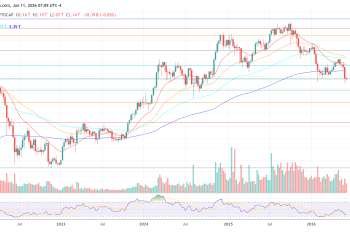
BTCUSD trading at $66,362 on the 24-hour chart: TradingView

That mistake followed earlier pressure from South Korean authorities. Under CEO Lee Jae-won, Bithumb faced a six-month suspension and a $24 million fine tied to alleged anti-money-laundering breaches.

Shareholders have now backed Lee for another two-year term, even as the company keeps moving the IPO goal farther down the road. The exchange had once expected to list in 2025, but the new plan is to focus on preparation through 2027 before any filing process advances.
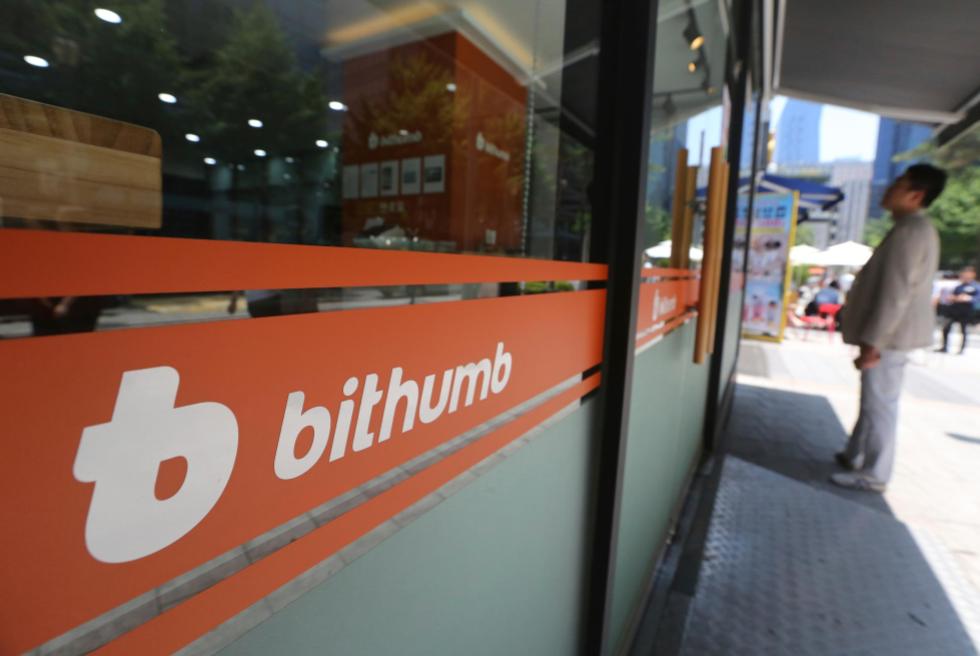
Image: AP

A Slower Road To The Market

Bithumb’s latest timeline fits a broader pattern of delay. CFO Jeong Sang-gyun told shareholders that the company is strengthening its accounting policies and internal controls after bringing in Samjong KPMG as an IPO adviser.

That language points to work that usually happens before a listing window opens, not after a target year has already passed. The change in pace also shows how much the exchange’s public debut now depends on proving basic governance, not just market demand.

The exchange is not the only one moving through the South Korean market with listing plans in view. Dunamu, the operator of Upbit, is also said to be preparing for an IPO after a share swap with Naver Financial, with September mentioned as a possible timing point.

Featured image from Moneyseth, chart from TradingView

Perguntas relacionadas

QWhat is the new target year for Bithumb's IPO, and why was it delayed from the original 2025 target?

ABithumb is now targeting an IPO sometime after 2028, a delay from its original 2025 goal. The postponement is due to a year of compliance issues, board changes, and a major internal error that falsely displayed over $40 billion in balances. The company now plans to focus on fixing its accounting and control systems before attempting to list.

QWhat was the significant internal error that occurred at Bithumb in February, and what was its impact?

AIn February, Bithumb mistakenly credited users with approximately 2,000 Bitcoin instead of 2,000 won due to a systems failure. Although the error was quickly reversed and most funds never left the exchange's internal ledger, the massive scale of the mistake severely damaged trust and raised questions about the company's readiness for the scrutiny of a public listing.

QWhat regulatory action did South Korean authorities take against Bithumb under CEO Lee Jae-won?

AUnder CEO Lee Jae-won, Bithumb faced regulatory pressure from South Korean authorities, resulting in a six-month suspension and a $24 million fine for alleged anti-money laundering breaches.

QWho did Bithumb bring on as an IPO adviser, and what is the company's current focus according to its CFO?

ABithumb brought in Samjong KPMG as an IPO adviser. According to CFO Jeong Sang-gyun, the company is now focusing on strengthening its accounting policies and internal controls as part of its preparation for a future listing.

QWhich other major South Korean crypto exchange is also preparing for an IPO, and what was a key step in its preparation?

ADunamu, the operator of the Upbit exchange, is also preparing for an IPO. A key step in its preparation was a share swap with Naver Financial, with September mentioned as a potential timing for its public debut.

Leituras Relacionadas

Can Generative Models Finally Be Trained End-to-End? The Core Is a For Loop

This article introduces a novel training paradigm for generative models called Explorative Modeling (XM), which enables true end-to-end training. Traditionally, powerful generative models like autoregressive and diffusion models are not trained end-to-end. They are trained to predict a single small step but require iterative multi-step sampling for inference. This "exposure bias" leads to error accumulation and limits performance. The core challenge XM addresses is "mode blurring." In generative tasks, a single input (e.g., "generate a dog") corresponds to many valid outputs (multiple modes). Standard training objectives like reconstruction loss force the model to average these modes, producing unrealistic, blurry outputs. To avoid this, existing models break generation into many small, almost deterministic steps, sacrificing end-to-end training. XM tackles this by restructuring the training loop itself. Its key insight is to amplify "generative expressivity." For each training input, instead of generating one sample, the model generates K candidate outputs. Only the candidate closest to the real data is used for computing the loss and updating the model via backpropagation. This simple "best-of-K" mechanism is implemented as a short for-loop. By exploring multiple possibilities, the model learns to distribute its guesses across different modes rather than collapsing to their uninformative average. The paper demonstrates that "exploration" acts as a new, powerful scaling axis. Gains from XM increase with model size, data scale, and compute. Experiments show improvements in FID scores for image generation and significant efficiency gains, sometimes outperforming larger models without exploration. When pushed to the limit, XM enables fully single-step, end-to-end generative models. In robotics tasks, an "Explorative Policy" matched the performance of a 100-step Diffusion Policy with a single forward pass, drastically improving inference speed. While the best-of-K concept is not entirely new, the authors' contribution lies in formally understanding it as a direct method to boost generative expressivity without fragmenting the generation process. This work suggests that as models scale, enhancing exploration during training may become crucial for overcoming fundamental performance bottlenecks.

marsbitHá 48m

Can Generative Models Finally Be Trained End-to-End? The Core Is a For Loop

marsbitHá 48m

Annual Salary of Millions Competing for Electricians, Meta Rushes to Open Its Own Technical School

The AI boom is facing an unexpected bottleneck: a severe shortage of skilled construction workers and electricians. As tech giants like Meta, OpenAI, and Alphabet race to build massive data centers—such as OpenAI's $16 billion "Stargate" project—they are hitting a critical labor wall. The U.S. needs an estimated 130,000 more electricians, 240,000 construction workers, and 150,000 supervisors by 2030 for AI infrastructure alone, but tens of thousands of electrician jobs go unfilled each year. While AI companies offer high premiums, with electricians earning up to $280,000 annually, worker scarcity still causes massive losses—delays on a single project can cost $14.2 million per month. The complexity of building AI data centers, which require immense power (equivalent to powering hundreds of thousands of homes), sophisticated electrical systems, and advanced liquid cooling solutions, demands highly skilled technicians who are in short supply. To combat this, companies are investing heavily in training. Meta has committed $115 million to a free training school offering tuition, housing, and stipends, targeting 5,000 new workers. OpenAI is partnering with unions to secure skilled labor. These efforts are paying off, with a significant rise in Gen Z interest in trade schools over college. However, the power demands are staggering. AI data centers are driving a rapid surge in electricity consumption, projected to account for up to 12% of U.S. power use by 2028 and raising costs for consumers. Furthermore, the construction boom is project-based, leading to a potential future glut of trained workers once building peaks, which could depress wages industry-wide. The race for AI supremacy now depends as much on skilled hands as on advanced chips.

marsbitHá 2h

Annual Salary of Millions Competing for Electricians, Meta Rushes to Open Its Own Technical School

marsbitHá 2h

Trading

Spot
活动图片