Crypto Donations Under Spotlight in the UK

TheNewsCryptoPublicado em 2026-03-18Última atualização em 2026-03-18

Resumo

Crypto donations are under scrutiny in the UK, with a cross-party committee proposing a ban to protect the integrity of the political system. Reform UK is the only party reported to have received such donations. The proposed measures include requiring donors to have UK assets registered for 12 months and creating a police unit to oversee political finance. Committee Chair Matt Western warned that foreign financial influence is "corrosive." A temporary ban could particularly impact Reform UK, which has faced criticism for not sharing crypto wallet addresses, hindering transparency. The situation highlights concerns about unregulated currencies in political funding.

Donations in crypto are under the scanner in the UK. Reform UK is the only political party to reportedly receive crypto donations. The implications of the ongoing situation could be severe for the said political party. A ban has been proposed to strengthen the trust factor in the nation’s politics.

Notably, some reports have underlined that what MPs have sought is a temporary ban at the moment.

Crypto Donations in UK Politics

A cross-party committee has noted that banning crypto donations is imperative to keep UK politics safe. The government, according to a report, has sought an immediate ban on donations that are made through digital tokens. Some of the recommendations made in this regard are several amendments to the Representation of the People Bill.

Also, the report has proposed a guideline, wherein it has recommended that donors must have sufficient UK assets registered with HMRC for 12 months before donating. The report further seeks the creation of a national police unit that will be tasked with overseeing political finance.

Crypto donations in UK politics have been under the scanner mainly because they pose an unnecessary and unacceptable high risk to its financial system. There is also a warning that crypto donations could lead to an external financial influence.

Committee Chair Speaks

Matt Western, the Chair of the Joint Committee on the National Security Strategy, has called the possibility of politicians being bought through external or foreign money corrosive. Further addressing it as a strategic challenge, Matt has underlined that it could impact the long-term integrity of the nation’s political system.

He has acknowledged that failure to act would be detrimental, as the UK could get into real trouble.

Notably, the Reform UK party was earlier reported to race ahead in terms of donations through cryptocurrencies. Christopher Harborne last donated approximately £3 million to the political party.

Issues for Reform UK

Needless to say, even a temporary ban on crypto donations to political parties could be a jolt to Nigel Farage. Adding to the worry is a report that highlights crypto wallet addresses not shared by Reform UK. This has limited the ability of relevant authorities to monitor the source of donations.

The election body frequently asks for information to make sure that all the political parties are operating well within the legal limits. Anti-corruption groups and many Labour MPs are now proposing transparency, or a temporary ban on the receipt of unregulated currencies.

Highlighted Crypto News Today:

Juliana Stratton Defeats Crypto-Backed Krishnamoorthi in Illinois Senate Primary

TagsCryptoUK

Perguntas relacionadas

QWhich is the only political party in the UK reported to have received crypto donations?

AReform UK is the only political party reported to have received crypto donations.

QWhat has the cross-party committee proposed regarding crypto donations in UK politics?

AThe cross-party committee has proposed an immediate ban on crypto donations to keep UK politics safe, along with several amendments to the Representation of the People Bill.

QWho is the Chair of the Joint Committee on the National Security Strategy, and what did he say about external financial influence?

AMatt Western is the Chair. He called the possibility of politicians being bought through external or foreign money 'corrosive' and a strategic challenge to the nation's political integrity.

QWhat specific issue has been raised regarding Reform UK's handling of crypto donations?

AReform UK has been criticized for not sharing crypto wallet addresses, which limits the ability of authorities to monitor the source of donations.

QWhat additional measure has been proposed to ensure transparency in political donations besides a ban on crypto?

AThe report has proposed that donors must have sufficient UK assets registered with HMRC for 12 months before donating, and the creation of a national police unit to oversee political finance.

Leituras Relacionadas

A Brief History of the Lithography Machine: How a Beam of Light Walked Sixty-Nine Years

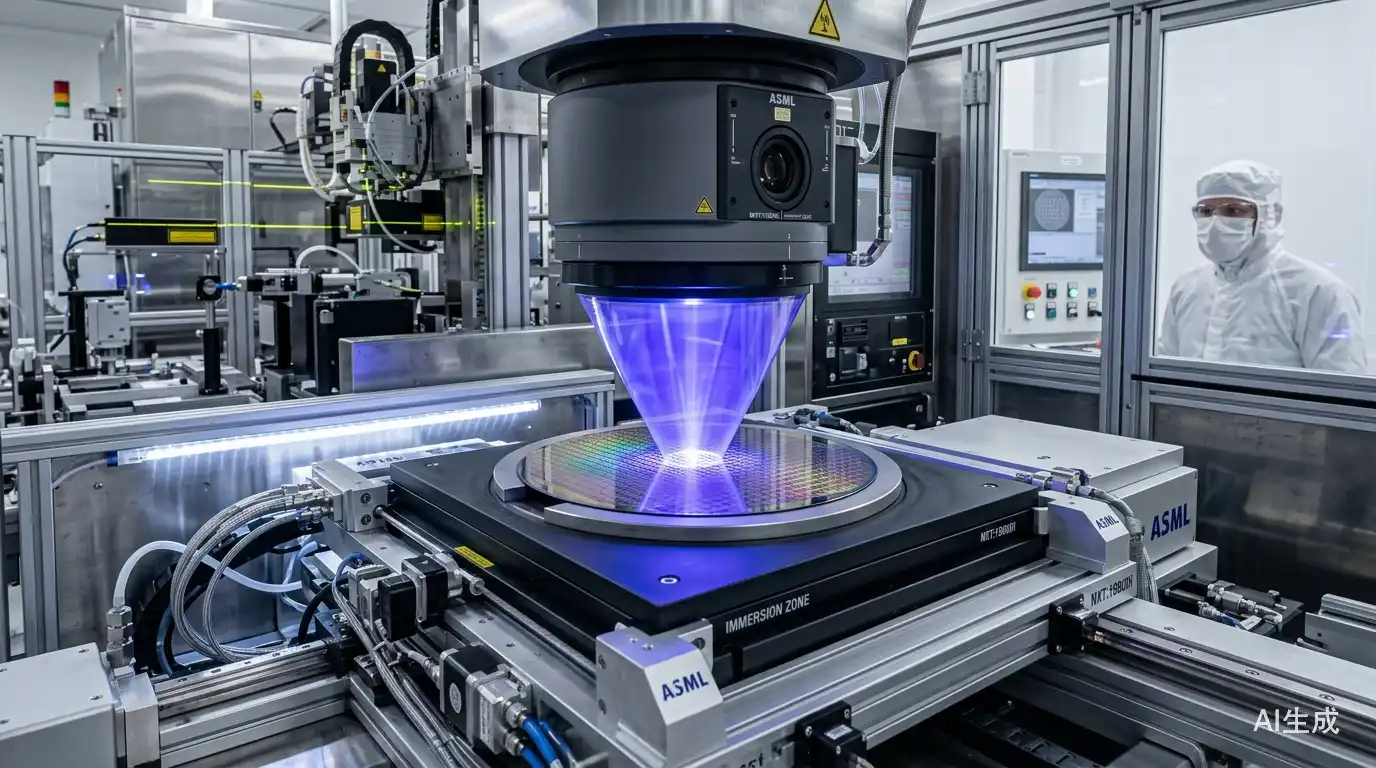
A Brief History of Lithography: 69 Years of Light In July 2026, reports of a Chinese state-backed company producing five immersion DUV lithography machines sent shockwaves through Wall Street, wiping roughly $44 billion from ASML's market cap in a single day. This event signaled a crack in the long-held assumption of Western monopoly over advanced chipmaking equipment. The journey began in 1957 when Jay Lathrop coined the term "photolithography." Early contact aligners (1960s) gave way to PerkinElmer's revolutionary projection aligners in 1973, boosting yields dramatically. GCA's step-and-repeat system (1978) established the modern stepper blueprint. However, within a decade, Japanese firms like Nikon and Canon, supported by a strong domestic market, captured nearly 90% of the global market from American pioneers, who ultimately exited the business. ASML, founded in a leaky shed in 1984, rose to dominance through key strategic moves: the TWINSCAN dual-stage platform (2001) and the acquisition of SVG, gaining access to Intel. A pivotal moment came in the early 2000s with the industry at a 193nm wavelength impasse. While most invested in the costly 157nm path, TSMC's Burn Lin proposed immersion lithography—using water between the lens and wafer. ASML bet on this simpler idea and, with Zeiss, delivered the first commercial immersion tool in 2004, effectively ending the 157nm roadmap and leaving competitors behind. The subsequent push for Extreme Ultraviolet (EUV) lithography was an even greater marathon. Deemed the least promising option in 1997, EUV's development, led by ASML, required vacuum chambers, reflective optics, and a complex tin-droplet laser plasma source. Critical to its eventual success (first high-volume manufacturing in 2018) was the 2012 "Customer Co-Investment Program," where Intel, TSMC, and Samsung provided upfront funding and equity, sharing the immense risk and cost. Today, ASML holds a near-total monopoly in EUV and immersion DUV. The core lesson of this 69-year history is not merely one of technological invention but of sustained partnership. Successive leaders—PerkinElmer, GCA, Nikon—were not ultimately defeated by superior technology but by losing the vital connection to customers willing to tolerate years of iteration, fund long-term R&D, and integrate early, imperfect tools into their production lines. The "light" that completed the journey was always carried by those patient, invested partners.

marsbitHá 1h

A Brief History of the Lithography Machine: How a Beam of Light Walked Sixty-Nine Years

marsbitHá 1h

Trading

Spot
活动图片