Crypto dealmaking hits record pace in 2025 as regulatory clarity fuels consolidation

ambcryptoPublicado em 2025-12-24Última atualização em 2025-12-24

Resumo

Crypto industry dealmaking reached record levels in 2025, with 267 deals totaling $8.6 billion—an 18% increase in volume and nearly four times the value from 2023. This surge was driven by clearer U.S. regulations under the Trump administration, including crypto-friendly policies and reduced legal uncertainty. Major acquisitions like Coinbase's $2.9 billion purchase of Deribit highlighted strategic moves for derivatives access and regulatory compliance. The IPO market also rebounded, with 11 crypto listings raising $14.6 billion. Looking ahead, stablecoins and compliance-driven mergers are expected to grow as new U.S. and UK regulations take effect in 2026.

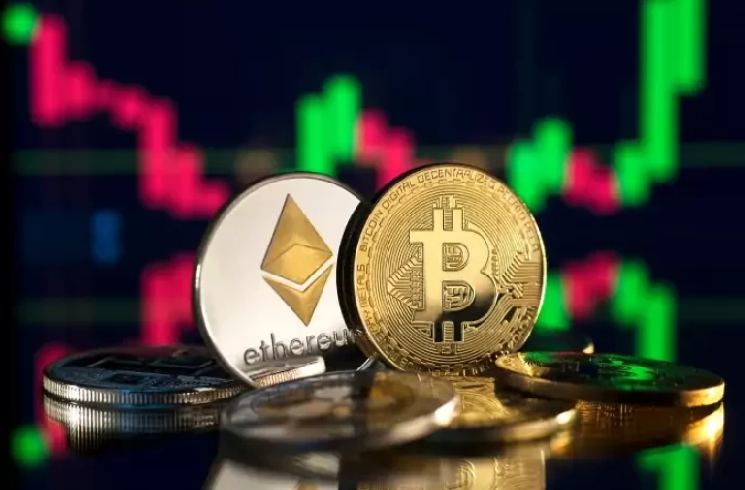
Crypto industry dealmaking surged to record levels in 2025, with mergers, acquisitions, and public listings accelerating despite Bitcoin’s pullback from its October highs.

According to PitchBook data cited by the Financial Times, crypto companies completed 267 deals worth a combined $8.6 billion this year.

This marks an 18% increase in deal count compared to 2024 and nearly four times the total deal value recorded in 2023.

The surge reflects growing regulatory clarity in the United States. Also, there is a broader push by both crypto-native firms and traditional financial institutions to consolidate ahead of incoming compliance requirements.

Regulatory shift unlocks institutional appetite

Market participants attribute the uptick in crypto mergers to the US government’s more crypto-friendly stance in 2025.

Policy changes under President Donald Trump’s administration — including the appointment of crypto-aligned regulators, the rollback of high-profile enforcement actions, and the establishment of a national crypto reserve — have reduced legal uncertainty and encouraged institutional participation.

Major crypto mergers reshape market structure

Several crypto mergers defined the year’s dealmaking wave.

The most significant was Coinbase’s $2.9 billion acquisition of Deribit, the largest crypto takeover on record. Other notable deals included Kraken’s $1.5 billion purchase of NinjaTrader and Ripple’s $1.25 billion acquisition of Hidden Road.

Industry analysts note that many of these transactions were motivated less by market timing and more by strategic positioning, particularly around derivatives access, regulatory licensing, and institutional infrastructure.

IPO market reopens for crypto firms

Public markets also reopened to crypto companies in 2025.

PitchBook data shows 11 crypto-related IPOs raised $14.6 billion globally, a sharp contrast to 2024, when just four listings raised a combined $310 million.

Firms such as Gemini, Circle, and Bullish tapped equity markets amid renewed investor demand for digital asset exposure.

The rebound suggests growing confidence that crypto companies can operate within emerging regulatory frameworks rather than outside them.

Compliance and licensing drive acquisition strategy

A key theme underpinning the crypto mergers has been regulatory compliance.

Executives and legal advisers say companies are increasingly acquiring rivals to gain licences and regulatory approvals, particularly in jurisdictions with established frameworks such as the EU’s Markets in Crypto-Assets Regulation [MiCA].

With new crypto licensing regimes set to come into force across the US and UK in 2026, industry participants expect compliance-driven acquisitions to remain a dominant trend.

Stablecoins emerge as a focal point for 2026

Stablecoins have emerged as one of the fastest-growing areas of interest within crypto dealmaking.

Demand for stablecoin issuers and infrastructure providers increased sharply in 2025, driven by clearer regulatory treatment and broader adoption across various use cases, including payments, trading, and settlement.

Further consolidation in the sector is expected as new U.S. and UK rules governing stablecoins take effect next year.


Final Thoughts

  • Crypto dealmaking is being driven less by token prices and more by regulatory clarity, infrastructure build-out, and compliance readiness.
  • With new licensing regimes approaching in 2026, consolidation across exchanges, stablecoins, and institutional platforms is likely to accelerate further.

Perguntas relacionadas

QWhat was the total value and number of crypto deals completed in 2025 according to the article?

ACrypto companies completed 267 deals worth a combined $8.6 billion in 2025.

QHow did the regulatory environment in the United States contribute to the surge in crypto dealmaking in 2025?

AThe surge was fueled by growing regulatory clarity, including a more crypto-friendly stance from the US government, the appointment of crypto-aligned regulators, the rollback of high-profile enforcement actions, and the establishment of a national crypto reserve, which reduced legal uncertainty.

QWhat were the three most significant acquisition deals mentioned in the crypto industry for 2025?

AThe three most significant deals were Coinbase's $2.9 billion acquisition of Deribit, Kraken's $1.5 billion purchase of NinjaTrader, and Ripple's $1.25 billion acquisition of Hidden Road.

QWhy did the IPO market for crypto firms rebound in 2025, and how much was raised globally?

AThe IPO market rebounded due to renewed investor demand and growing confidence that crypto companies can operate within emerging regulatory frameworks. Eleven crypto-related IPOs raised $14.6 billion globally.

QWhat is expected to be a dominant trend in crypto acquisitions in 2026, and why?

ACompliance-driven acquisitions are expected to remain a dominant trend because new crypto licensing regimes are set to come into force across the US and UK in 2026, prompting companies to acquire rivals to gain necessary licenses and regulatory approvals.

Leituras Relacionadas

Interview with Robinhood Executive: Meme + Tokenized US Stocks as "Barbell" Customer Acquisition Strategy, All Business Lines Achieve Hundreds of Millions in Revenue

Interview with Robinhood executive Johann Kerbrat reveals the company's "barbell" customer acquisition strategy for its new Robinhood Chain, combining meme tokens with tokenized stocks. Three weeks after mainnet launch, the chain has seen over $3B in weekly DEX volume and 105M transactions. Kerbrat explains the logic behind the permissionless chain: meme tokens attract DeFi users, while tokenized real-world assets (RWA), currently over 90 US stocks and ETFs accessible in 120+ countries, serve global users. The goal is to bring Robinhood's 27 million funded accounts on-chain by simplifying DeFi with a user-friendly interface, exemplified by features like Robinhood Earn which offers yield without requiring wallet management. Built on Arbitrum's technology stack for its speed, low cost, and Ethereum's security, the chain focuses on financial products like Earn, spot trading, and perpetuals. Kerbrat downplays direct competition with platforms like Base, emphasizing the goal of expanding the overall market for on-chain assets. He details selective partnerships (e.g., Morpho, Lighter) based on compliance, unique UX, and differentiation. While regulatory clarity is pending for US perpetuals, the expansion continues via Bitstamp in Europe. Finally, Kerbrat positions Robinhood as a "super app" integrating stocks, options, crypto, banking, and AI trading, with all major business lines generating hundreds of millions in revenue. For the chain, current priority is driving adoption over maximizing gas fee revenue.

marsbitHá 1h

Interview with Robinhood Executive: Meme + Tokenized US Stocks as "Barbell" Customer Acquisition Strategy, All Business Lines Achieve Hundreds of Millions in Revenue

marsbitHá 1h

Fidelity Q3 Report: BTC, ETH, and SOL Continue to Build Bottoms; How Much Further Will This Crypto Bear Market Go?

Fidelity's Q3 Crypto Signal Report analyzes the current bear market, noting Bitcoin (BTC), Ethereum (ETH), and Solana (SOL) are in a prolonged bottoming phase. Key indicators like the weighted Net Unrealized Profit/Loss (NUPL) have turned negative (-0.01), signaling the market is slightly below its aggregate cost basis, with BTC acting as the primary stabilizing asset. BTC's dominance has risen to 68%, indicating a lack of capital rotation to other digital assets. Performance has been weak across the board, with BTC, ETH, and SOL down significantly year-to-date. Market sentiment is depressed, exacerbated by substantial outflows from spot ETPs and a challenging macro environment. The report compares the current ~203-day downtrend to historical ~300-day bottoming cycles, suggesting the process may be two-thirds complete, with late 2026 as a potential timeframe to monitor. For Bitcoin, NUPL at 0.09 indicates cautious sentiment, while momentum signals remain negative. The Yardstick metric points to potential undervaluation relative to network security (hashrate). Ethereum's NUPL is deep in the "capitulation" zone at -0.43, a historically positive signal for future returns, though its momentum and network fee revenue are negative. Solana shows the deepest NUPL at -0.72 but demonstrates relative resilience in on-chain activity and stablecoin transfer volume. The report concludes that while several metrics are near historical capitulation levels, a definitive market bottom has not yet been established. The path forward likely involves continued consolidation, with BTC's relative strength and fundamental on-chain usage for ETH and SOL providing key areas for investor observation.

marsbitHá 1h

Fidelity Q3 Report: BTC, ETH, and SOL Continue to Build Bottoms; How Much Further Will This Crypto Bear Market Go?

marsbitHá 1h

Trading

Spot
活动图片