Crypto Committees Increase Spending Against Sherrod Brown in Ohio Senate Race

cryptonews.ruPublished on 2026-10-17Last updated on 2026-10-17

Abstract

Crypto-affiliated PACs, mainly funded by Coinbase and Ripple Labs, have increased their initially announced spending by more than 50% in a potentially key race that could determine control of Congress in 2026. According to documents filed Thursday with the Federal Election Commission (FEC), the Fairshake-affiliated committee Defend American Jobs—a group supporting Republican candidates in primaries and general elections—spent $46.6 million on media advertising against former lawmaker Sherrod Brown and in support of incumbent Republican Senator Jon Husted in the Ohio Senate race in the 2026 midterms. This spending sharply increased compared with what Fairshake initially planned to spend against Brown's return to the Senate—$30 million. "I fought Wall Street, Big Pharma, Big Oil my whole career, and in many cases succeeded," Brown said in an interview shown Friday on Pod Save America, speaking about the advertising attacks funded by the crypto industry.

Committees affiliated with the political committee Fairshake (PAC), primarily funded by Coinbase and Ripple Labs, have increased their initially announced spending by more than 50% in a potentially key race that could determine control of Congress in 2026.

According to documents filed Thursday with the Federal Election Commission (FEC), the Fairshake-affiliated committee Defend American Jobs — a group supporting Republican candidates in primaries and general elections — has spent $46.6 million on media advertising against former lawmaker Sherrod Brown and in support of incumbent Republican Senator Jon Husted in the Ohio Senate race in the 2026 midterm elections. This spending has sharply increased compared to what Fairshake initially planned to spend against Brown's return to the Senate — $30 million.

"I've spent my entire career fighting Wall Street, Big Pharma, Big Oil, and in many cases succeeding," Brown said in an interview shown Friday on Pod Save America, speaking about the advertising attacks funded by the crypto industry, and added:

Related Questions

QWhich political committees increased their spending in the Ohio Senate race against Sherrod Brown?

ACommittees affiliated with the Fairshake PAC, mainly funded by Coinbase and Ripple Labs, increased their spending. Specifically, the affiliated committee Defend American Jobs raised its expenditures.

QHow much did Defend American Jobs spend on media advertising in the Ohio Senate race?

ADefend American Jobs spent $46.6 million on media advertising against Sherrod Brown and in support of Republican Senator Jon Husted.

QBy what percentage did the originally announced spending increase?

AThe originally announced spending increased by more than 50%, from the initially planned $30 million to $46.6 million.

QWho is the Republican candidate supported by the crypto-affiliated committee in the Ohio Senate race?

AThe committee supported incumbent Republican Senator Jon Husted.

QWhat did Sherrod Brown say about the crypto-industry-funded advertising attacks against him?

ABrown said, 'I fought Wall Street, Big Pharma, Big Oil my whole career, and in many cases succeeded,' referring to the ad attacks funded by the crypto industry.

Related Reads

Democrats Plan to Investigate Apple, Meta and Musk, Trump's Silicon Valley Allies Face 'Reckoning'

Democrats, after winning majorities in both chambers of Congress, are rapidly setting investigative priorities targeting Trump's Silicon Valley allies. The House is preparing to examine Trump's use of Musk's AI chatbot Grok in planning a military operation to abduct Venezuelan President Maduro; Apple and Meta are under scrutiny over an ICE tracking app and local government data center agreements, respectively. The probe scope may extend well beyond these three companies, reviewing major corporations' most controversial business activities over the past two years and their ties to the Trump administration. Since Trump's second term, tech billionaires and executives have frequently attended White House events, donated to his ballroom project, and given gifts, while companies backed by Trump family members and Wall Street executives received billions in government funding. Groundwork Collaborative labeled Big Tech, private prison operators, and natural gas firms as "high-value" targets. Even before formal investigations begin, companies are preparing: Washington law firms are holding emergency meetings to advise founders and executives on congressional inquiries, and many are seeking to become Musk's personal counsel, anticipating subpoenas and high-profile legal work. Some VCs advise startups to close financing before year-end in case executives are called to testify or Pentagon spending shifts. Incoming House Oversight Committee Chairman Robert Garcia warned companies to "hire lawyers," and Senator Ed Markey said tech executives will need plenty of paper for subpoenas. Lawyers expect Democratic control of Congress to accelerate and intensify investigations, with detailed corporate inquiries potentially more effective than letters to Trump agencies since companies are more likely to respond and disclose dealings with officials. Apple, Meta, X, and Musk did not immediately respond to requests for comment. Covington & Burling lawyer Robert Kelner said the investigative wave is all but certain: "We've been telling clients, winter is coming. Now, winter is here."

marsbit11m ago

Democrats Plan to Investigate Apple, Meta and Musk, Trump's Silicon Valley Allies Face 'Reckoning'

marsbit11m ago

Anthropic's Strongest Model 4 Revealed for the First Time: RSI Soars at 2x Speed

Anthropic's unreleased "Model 4," reportedly trained between September and October, has surfaced via a third-party METR evaluation, scoring 178.6 on Anthropic's internal Aggregate Evaluation Capability Index (AECI)—outpacing public models Opus 5.5 (174.5) and Mythos 5.1 (172.5). Model 4 passed all 15 benchmarks at above 50% accuracy, a first compared with Opus 4.6 nine months earlier; removing three flawed benchmarks would push its score to 179.7. METR's 11-week investigation of internal data concludes Anthropic's model improvement has roughly doubled, with an inflection point in October 2025: AECI growth accelerated from about 15 points per year to 29 points per year (1.9x), meaning one year now covers what previously took two. Notably, METR estimates about 80% of this acceleration stems from AI assisting its own R&D rather than increased training compute, researcher headcount, or inference scaling—Claude is effectively helping build a stronger Claude. Internal employee surveys report self-assessed productivity gains rising from 1.3–1.4x in spring 2025 to about 5x by June and roughly 12x by October with Model 4, as researchers shift from using Claude as autocomplete to orchestrating many parallel agents, cutting idea-to-experiment time by up to 80%. METR researcher Ryan Greenblatt calls the report a signal pointing toward ASI within one to two years. Roughly 100 pages were submitted to Anthropic, but much of the most sensitive evidence—including a table forecasting future model capability scores—was redacted in the public version. METR sees no obvious bottleneck in algorithms, compute, or data over the next 12 months, and no brake in sight.

marsbit31m ago

Anthropic's Strongest Model 4 Revealed for the First Time: RSI Soars at 2x Speed

marsbit31m ago

US 401(k) proposal leaves door open to altcoins, but hurdles remain

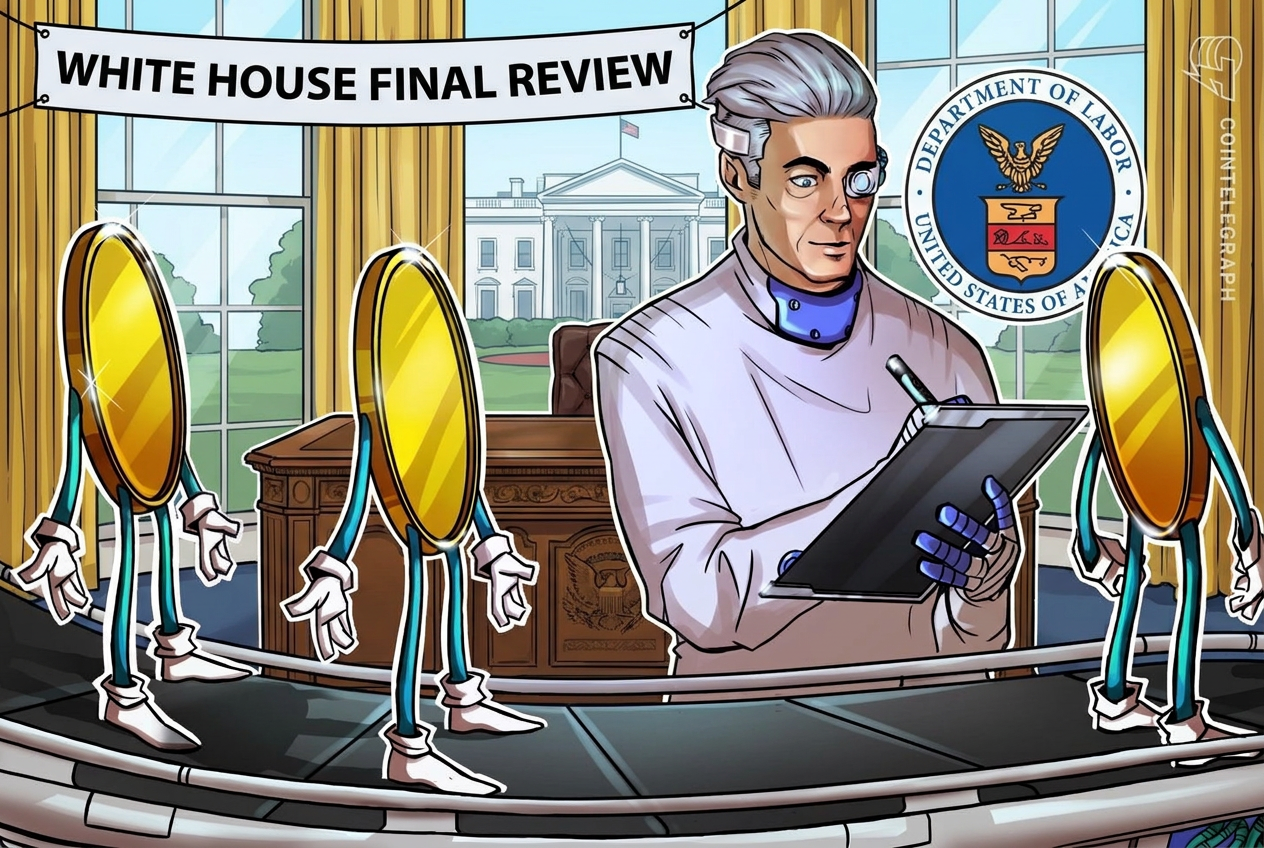
A proposed US Labor Department rule could allow smaller cryptocurrencies (altcoins) in 401(k) retirement plans, but experts say they face more hurdles than Bitcoin and Ether. The rule, now under White House final review, aims to ease offering alternative investments like crypto while giving employers and plan managers more legal protection. It doesn't specify which digital assets qualify or set a minimum market cap, but directs plan managers to weigh six factors: performance, fees, liquidity, valuation, benchmarks and complexity. Experts expect Bitcoin and Ether to be offered first given their established markets and investment products. Teresa Goody Guillén of Bellementis PLLC said altcoins aren't automatically excluded, but plan managers must show their choices are prudent, noting "big doesn't mean suitable, and small doesn't mean disqualified." Bernardo Brites of Trace Finance said most tokens fail on track record or benchmark, and the practical test is whether a plan committee can document a reliable daily price from a regulated wrapper. ETFs and managed funds will likely precede direct crypto holdings, fitting existing custody and recordkeeping systems. Brites expects some crypto options by 2027, ETFs at larger employers later that year, and wider availability by 2028, noting the rule changes legal risk, not infrastructure. Legal uncertainty remains: the proposal offers some lawsuit protection but doesn't prevent suits, and future administrations could reverse the rule, potentially making employers hesitant.

cointelegraph5h ago

US 401(k) proposal leaves door open to altcoins, but hurdles remain

cointelegraph5h ago

Russia finalizes crypto trading rules ahead of Nov. 17 rollout

Russia’s central bank has finalized rules allowing exchanges to offer Bitcoin, Ether and Tether USDt to retail investors starting Nov. 17. Non-qualified investors can buy up to 300,000 rubles (about $3,700) in crypto annually through each intermediary, including brokers, asset managers and crypto exchange providers. Qualified investors face no purchase limits, but all investors must pass a mandatory test before trading. The directive builds on legislation signed by President Vladimir Putin on Aug. 4 establishing a regulated crypto market under central bank oversight. On Aug. 11, the Bank of Russia published draft regulations identifying BTC, ETH and USDT as eligible for public trading based on market capitalization, average daily trading volume and at least five years of price history on foreign exchanges. The law took effect Sept. 1, and the Bank of Russia later authorized Sberbank, the country’s largest bank, to offer crypto exchange services in October. Moscow Exchange, Russia’s largest securities exchange and a publicly traded company, is preparing to launch crypto trading on Dec. 1, initially offering the three cryptocurrencies through pilot transactions. While expanding regulated access, Russia is also tightening restrictions outside those channels. Direct peer-to-peer crypto trading will be prohibited starting July 1, 2027, transfers from regulated digital accounts to self-custody wallets are already banned, and cryptocurrency cannot be used to pay for goods and services.

cointelegraph6h ago

Russia finalizes crypto trading rules ahead of Nov. 17 rollout

cointelegraph6h ago

Trading

Spot
活动图片