Crypto Billionaire’s $7M Gift Puts UK Reform Leader Under Ethics Spotlight

bitcoinistPublicado em 2026-05-14Última atualização em 2026-05-14

Resumo

UK Reform Party leader Nigel Farage is under investigation by the Parliamentary Commissioner for Standards for allegedly failing to properly declare a £5 million ($6.7 million) gift from cryptocurrency billionaire Christopher Harborne. The donation, made in early 2024 before Farage's election to Parliament, is under scrutiny as MPs must register significant benefits received in the 12 months prior to their election. Farage claims the money was a private, unconditional gift for personal security costs. Opposition parties, including the Conservatives who filed the complaint, are demanding transparency. This follows a prior late registration of interests by Farage, which was deemed accidental. The inquiry could result in outcomes ranging from an apology to suspension from Parliament.

A £5 million ($6.7 million) gift from crypto billionaire Christopher Harborne has landed Reform UK leader Nigel Farage before a parliamentary standards watchdog over an alleged disclosure failure.

The Size Of The Donation

According to reports, the money came from Harborne, a British cryptocurrency investor based in Thailand who gave £9 million to Reform UK in a single donation last year — the largest gift to a UK political party by a living person in British history.

His total contributions to Reform reached £12 million in 2025. The separate £5 million payment went directly to Farage in early 2024, months before Farage won a seat in Parliament.
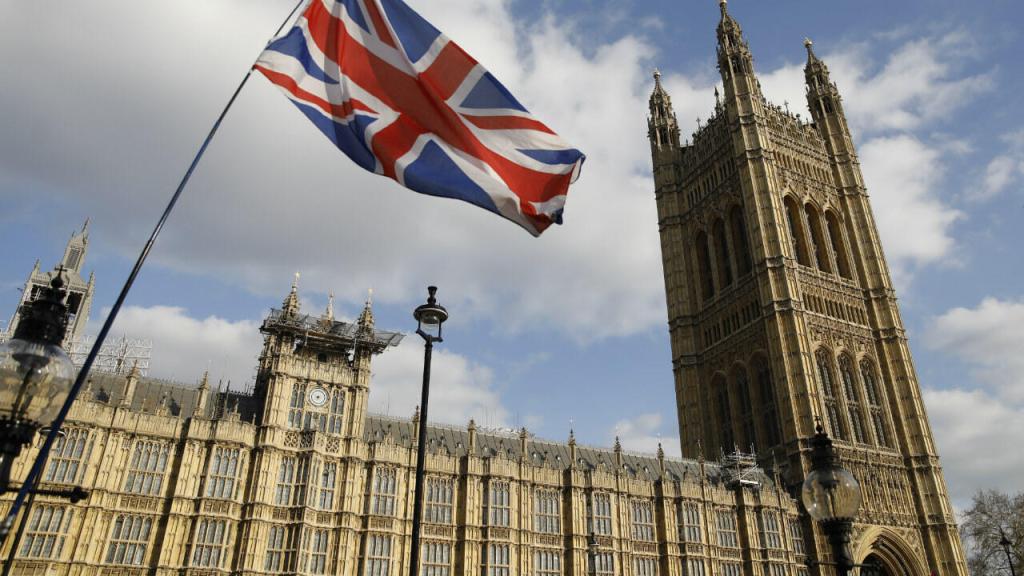
The UK Parliament. Image: France24

Farage says the money was given to cover his personal security costs and describes it as a private, unconditional gift with no political strings attached.

His office confirmed it is in contact with the Parliamentary Commissioner for Standards and said they expect the inquiry to clear him. “No rules were broken,” a Reform spokesman said.

What The Rules Actually Say

Commons rules require newly elected MPs to register financial interests and any benefits received in the 12 months before their election. Farage was elected in July 2024. The gift was made in early 2024, which places it squarely within that window.

The rules do allow exemptions for purely personal gifts, but they also state that both the giver’s possible motive and the intended use of the money must be weighed. Where doubt exists, registration is expected.

BTCUSD trading at $79,075 on the 24-hour chart: TradingView

This is not the first time Farage has run into disclosure issues. Earlier this year, he was found to have registered £384,000 in interests late. Standards commissioner Daniel Greenberg ruled that breach was accidental and allowed Farage to update his records without facing formal punishment.

Opposition Parties Push Back

Labour and the Conservatives have both called for answers. Labour Party chair Anna Turley said Farage has been dodging questions since the gift first came to light and called the investigation appropriate.

The Conservatives, who filed the complaint that triggered the inquiry, also raised the matter separately with the Electoral Commission, which said it is reviewing the information.

A Conservative spokesman put it bluntly: £5 million is more than most people earn in a lifetime, and Farage owes the public an explanation for how and why he received it.

If the Commissioner finds Farage violated the code of conduct, possible consequences range from a formal apology to suspension from Parliament. Expulsion remains an option in the most serious cases.

Featured image from Mark Thomas/Alamy, chart from TradingView

Perguntas relacionadas

QWhy is Reform UK leader Nigel Farage under investigation by the parliamentary standards watchdog?

AHe is under investigation for an alleged failure to properly disclose a £5 million ($6.7 million) gift from crypto billionaire Christopher Harborne. The gift was received in early 2024, within the 12-month pre-election period requiring registration.

QWhat was the intended purpose of the £5 million gift given to Nigel Farage, according to him?

ANigel Farage says the money was an unconditional, private gift intended to cover his personal security costs, with no political strings attached.

QWhat is the parliamentary rule relevant to this gift and its disclosure?

ACommons rules require newly elected MPs to register financial interests and benefits received in the 12 months before their election. While personal gifts can be exempt, factors like the giver's motive and intended use must be considered, and registration is expected where doubt exists.

QHow have other political parties reacted to news of the gift and investigation?

ABoth the Labour and Conservative parties have called for answers. The Conservatives filed the complaint triggering the inquiry. Labour criticized Farage for dodging questions and supported the investigation.

QWhat are the potential consequences if the Commissioner finds Nigel Farage violated the code of conduct?

APossible consequences range from a formal apology to suspension from Parliament. Expulsion remains an option in the most serious cases.

Leituras Relacionadas

STRC Breaks Below $95: Why Does It Continue to Depeg? Is There Default Risk?

"STRC Falls Below $95: Why the Persistent Depegging and Is There Default Risk?" The article discusses the recent decline in the price of STRC, a perpetual preferred stock issued by Strategy (MSTR) designed to trade around a $100 par value. As of publication, STRC traded at $94.65, raising market concerns. STRC is described as a high-yield cash flow product, offering an 11.50% annual dividend paid monthly. Its "preferred" status grants it priority over common stock for dividends and in liquidation. Key reasons cited for the price depegging include: 1. **Bitcoin's Price Drop:** MSTR's assets are heavily tied to Bitcoin (BTC), which fell over 21% from its recent high, pressuring all Strategy-related products. 2. **Competitive Pressure:** Rival Strive Asset Management's similar product, SATA, offers daily dividends and has maintained its $100 par value with a ~13% yield. In response, Strategy has proposed changing STRC's dividend frequency from monthly to bi-weekly, pending shareholder vote. 3. **Technical Selling:** A break below $100 may have triggered algorithmic selling and stop-losses, exacerbating the decline. Regarding default risk, the analysis suggests it is currently low. Strategy founder Michael Saylor confirmed the June 2026 dividend rate remains at 11.50% with no cuts or suspensions. The company's massive reserve of 843,706 BTC provides a significant backstop for its obligations. Industry opinions are mixed. Some analysts view the BTC holdings as reliable support for dividends, while critics like Peter Schiff warn of potential dividend cuts leading to price crashes and lawsuits. Others highlight inflation risk and the company's ability to reduce dividends without a formal default. In summary, STRC's drop is attributed to BTC volatility, competition, and technical factors. While immediate default risk appears contained, the product faces challenges from market conditions and competitive dynamics.

marsbitHá 4m

STRC Breaks Below $95: Why Does It Continue to Depeg? Is There Default Risk?

marsbitHá 4m

AI Trading Cools, South Korean Stocks Plunge 1.8%, Spot Gold Rises 1%, Bitcoin Dives

A sell-off in AI-related stocks, triggered by Broadcom's disappointing earnings forecast, sent shockwaves through global markets. South Korea's KOSPI led Asia's decline, plunging 1.8% as the risks from concentrated chip stock gains and surging leveraged investments came to the fore. The tech-heavy Nasdaq 100 futures fell 0.5% following Broadcom's 14% after-hours plunge, which signaled a slower-than-expected transition to AI clients. This pullback extended Wall Street's weakness, halting the S&P 500's nine-day rally amid hawkish Fed signals and renewed Middle East tensions. South Korean authorities convened an emergency meeting, pledging "immediate measures" against market volatility and warning of record-high stock margin debt. The adjustment rippled across assets: Bitcoin fell to around $64,000, its lowest since February, while safe-haven gold rose 1% on bargain hunting. Oil prices dipped on Middle East ceasefire news. Market analysts noted the sell-off was driven by profit-taking after massive gains, particularly in chip stocks like Samsung and SK Hynix, which now dominate the KOSPI. Wall Street banks are divided on Korea's outlook, with Goldman Sachs raising its target while Citigroup and others warn of overvaluation and a potential bubble. Bridgewater's Ray Dalio noted that great technological shifts often create bubbles. Meanwhile, Fed officials' hints at potential future rate hikes added to the cautious mood ahead of key U.S. jobs data.

华尔街日报Há 30m

AI Trading Cools, South Korean Stocks Plunge 1.8%, Spot Gold Rises 1%, Bitcoin Dives

华尔街日报Há 30m

Seeking Alpha's Hot Article: Why Might the U.S. Stock Market Crash in June?

In a recent Seeking Alpha article, financial professor and analyst Damir Tokic argues that the US stock market may be poised for a significant crash in June 2026. The core thesis centers on a "mega-bubble" in equities, particularly within the technology sector, which has driven the S&P 500 to near-record valuations, with a Shiller P/E ratio exceeding 40—a level comparable to the 2000 dot-com bubble. Tokic identifies two primary catalysts for a potential collapse. First, he points to unsustainable market exuberance fueled by what he terms the "Trump Stimulus"—massive AI capital expenditure by tech giants, which he believes is politically driven and cannot last. Second, and more urgently, he highlights the escalating Iran war as a critical threat. The ongoing closure of the Strait of Hormuz has created a severe global energy supply crunch. Strategic petroleum reserves are projected to hit critically low operational levels by June, potentially causing oil prices to spike above $200 per barrel and triggering a severe, supply-driven inflationary shock. This scenario, Tokic warns, would force the Federal Reserve's hand. Despite currently maintaining a dovish bias, the Fed would likely be compelled to officially pivot to a hawkish stance at its June FOMC meeting to combat soaring inflation and bond yields. He contends that such a shift—or even a failure to act, which would destroy Fed credibility—could be the trigger that punctures the market bubble. The resulting downturn, he concludes, could rival the bear markets of 2000 and 2008, advising investors to prepare for a major correction.

marsbitHá 52m

Seeking Alpha's Hot Article: Why Might the U.S. Stock Market Crash in June?

marsbitHá 52m

AI PC Battle: Bet on the Toll Booth, Not the Camp

**Title:** The AI PC Battle: Don't Bet on Sides, Bet on the Tollbooth **Summary:** The AI PC competition is moving beyond simple "x86 vs. Arm" narratives. The core investment thesis should focus on identifying which players can sustain margins, cash flow, and pricing power throughout the upgrade cycle, rather than backing a particular architecture. The opportunity is analyzed in three layers: 1. **The Advanced Foundry Tollbooth:** TSMC is positioned to collect "tolls" regardless of which chip designer wins, due to its dominant ~70% share in advanced semiconductor manufacturing, which is essential for high-end AI PC chips. 2. **Compute & Platform Spillover:** AMD represents an offensive in the x86 CPU+GPU space, while NVIDIA leverages its GPU and CUDA software stack dominance. Both benefit from the demand for increased local AI compute. 3. **Architecture Diffusion & Turnaround Plays:** ARM and Intel offer potential for significant upside (elasticity), but investments here require stricter discipline due to higher execution risks and competitive challenges. The industry is transitioning from concept to shipment validation. While short-term forecasts for AI PC adoption have been revised down slightly due to tariffs and procurement delays, the long-term trend towards AI becoming a standard PC feature remains intact. The key driver for upgrade cycles will be whether compelling enterprise applications (e.g., privacy-sensitive computing, low-latency inference) emerge beyond consumer-focused features like meeting summarization. Investment strategy should prioritize companies with platform-level advantages and recurring revenue streams. TSMC offers high certainty as the foundational tollbooth. AMD presents a strong offensive play within the established ecosystem. ARM and Intel are higher-risk, higher-potential-reward turnaround bets. The report cautions against chasing short-term hype and emphasizes a disciplined, long-term approach focused on buying ecosystem strength and cash-flow certainty after market enthusiasm subsides. **Key Risks:** Underwhelming AI PC applications slowing upgrade cycles; slow improvement in Windows on Arm compatibility; macro/tariff impacts on PC demand; potential advanced node supply-demand mismatches affecting TSMC; high overall AI sector valuations making stocks vulnerable to a risk-off shift in markets.

marsbitHá 1h

AI PC Battle: Bet on the Toll Booth, Not the Camp

marsbitHá 1h

Trading

Spot
Futuros
活动图片





