Crypto Betting Giant Polymarket Faces Backlash After Users Harass A Reporter

bitcoinistPublicado em 2026-03-17Última atualização em 2026-03-17

Polymarket, the largest crypto prediction market in the world, is under fire after bettors allegedly sent death threats to Times of Israel military reporter Emanuel Fabian.

A Bombing Report Turned Into A Bombing Of Threats

A routine war report from Emanuel Fabian for The Times of Israel on Monday triggered a bombarding of harrasment for the journalist. After reporting that an Iranian ballistic missile “struck an open area” near Beit Shemesh on March 10, he was bombarded with messages, including explicit death threats, urging him to rewrite the article as “intercepted fragments”, claims WuBlockchain.

More than $14 million were bet on whether Iran would strike Israel on that exact date, with rules stating that intercepted missiles would not count as a “Yes” result. Bettors contacted Fabian via email and WhatsApp, in some cases revealing knowledge of his home and family, and even offering bribes in exchange for edits before escalating to threats. According to Binance Square, one bettor claimed Fabian’s wording cost them around $900,000, and threatened the journalist with “settling” him for the same amount if he didn’t change his report.
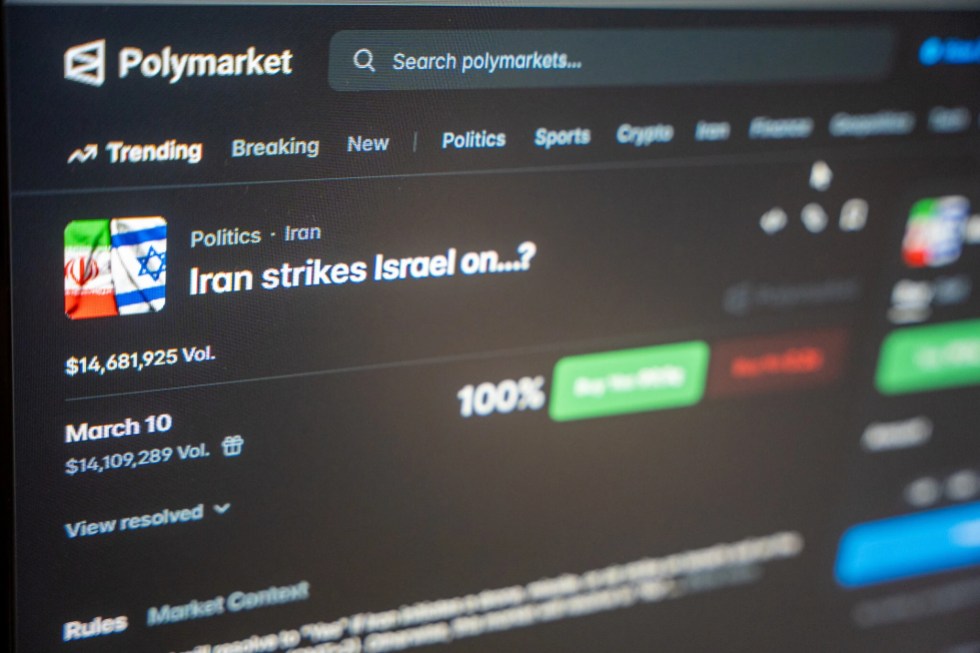
A photo taken on March 16, 2026, shows a bet on Polymarket titled ‘Iran strikes Israel on...?’ Source: Emanuel Fabian for The Israel Times.

Clarifying The Facts

Fabian defended himself citing IDF information and footage of the blast, arguing that the explosion matched a full warhead detonation, not small interceptor debris:

I told Aviv that, from what I know from the Israeli military, the impact outside Beit Shemesh was indeed a missile warhead and not just fragments. I added: “The footage also shows a massive explosion of hundreds of kilograms of explosives from the warhead. Normally, a fragment does not produce such an explosion.”

Ironically enough, the IDF later confirmed that the missile which exploded in an open area outside Beit Shemesh had not been intercepted, with Fabian’s own reporting that “one missile struck an open area just outside Beit Shemesh” treats it as a direct hit, not debris from an interceptor.

Enraged Polymarket bettors, of course, didn’t take the clarification into account.

Another “Crypto Degen Casino” Accusation

Fabian echoed accusations of Polymarket “being plagued by manipulation and insider trading”. This is not the first time this week that Polymarket is accused of insider trading: just yesterday, Argentinian authorities ordered a full national ban of Polymarket after it “predicted” inflation data back in February.

Polymarket responded condemning the behavior, said it had banned the involved accounts, and pledged to hand over identifying information to law‐enforcement agencies:

Polymarket condemns the harassment and threats directed at Emanuel Fabian, or anyone else for that matter. This behavior violates our terms of service and has no place on our platform or anywhere else.

This episode follows earlier concerns around alleged insider trading on Iran‐strike markets and controversial resolutions on other high‐stakes political bets, raising fresh questions about governance, ethics, and oracles in crypto prediction markets.
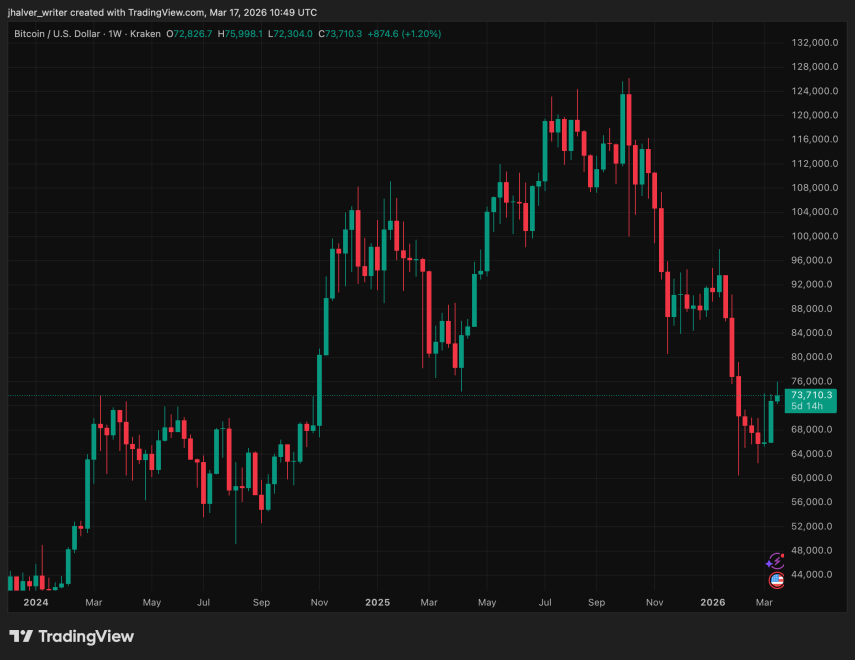
BTC’s price is on the highs $73k on the daily chart. Source: BTCUSD on Tradingview

Cover image from Perplexity, BTCUSD chart from Tradingview

Perguntas relacionadas

QWhat event triggered the harassment against Times of Israel reporter Emanuel Fabian by Polymarket bettors?

AEmanuel Fabian's report that an Iranian ballistic missile 'struck an open area' near Beit Shemesh on March 10, 2026, which contradicted the betting market's rule that intercepted missiles would not count as a 'Yes' result for the bet on whether Iran would strike Israel.

QHow did some Polymarket bettors escalate their actions beyond mere communication?

AThey sent explicit death threats, revealed knowledge of Fabian's home and family, offered bribes for edits to his report, and one bettor threatened to 'settle' him for $900,000—the amount they claimed to have lost due to his wording.

QWhat was Polymarket's official response to the harassment incident?

APolymarket condemned the harassment and threats, stated that such behavior violates their Terms of Service, banned the accounts of those involved, and pledged to hand over their identifying information to law-enforcement agencies.

QWhy was Fabian's reporting significant to the Polymarket bet on Iran striking Israel?

AThe rules of the bet specified that intercepted missiles would not count as a 'Yes' result. Fabian's report that a missile 'struck an open area' was interpreted as a direct hit (a 'Yes'), costing bettors who had wagered 'No' significant amounts, with one individual claiming a loss of around $900,000.

QWhat broader accusations has Polymarket faced recently, according to the article?

APolymarket has been accused of being 'plagued by manipulation and insider trading,' including a recent incident where Argentinian authorities ordered a national ban after it allegedly 'predicted' inflation data in February, raising concerns about governance and ethics in crypto prediction markets.

Leituras Relacionadas

Within Strategy's Framework, STRC's Dividend Yield Remains at 12% as Share Price Stays Below Par Value

Michael Saylor, Executive Chairman of Strategy (MSTR), confirmed that the dividend rate for its STRC perpetual preferred shares will remain at 12.00% through August 2026. The rate has increased from 9% at its July 2025 launch to the current high via a "ratchet" mechanism, which permanently raises the rate by 0.5% whenever the share price falls below $95. This mechanism is intended to push the price back toward its $100 par value and support Strategy's "at-the-market" (ATM) program for issuing new shares to fund Bitcoin purchases. However, the mechanism has not worked as intended. STRC shares closed at $89.46 on July 31, remaining about 10-11% below par value despite the record-high dividend. Competition from rival Strive's higher-yielding SATA securities has pressured demand. The persistent discount has forced Strategy to suspend new STRC issuances via its ATM program, limiting this funding channel for Bitcoin acquisitions. STRC's struggles reflect Bitcoin's own volatility, as the preferred shares historically move in tandem. Analysts have warned the ratchet structure carries long-term, one-way risk. A law firm is investigating Strategy's ability to maintain dividend payments if Bitcoin's price stays low. Retail investors own roughly 83% of outstanding STRC shares, a group seen as prone to panic selling during downturns. In response, Strategy has established financial reserves, including a liquidity cushion covering about 26 months of dividend/interest obligations, and a $2 billion share buyback program alongside a Bitcoin monetization framework, though the company emphasized it is not obligated to sell any Bitcoin.

cryptonews.ruHá 40m

Within Strategy's Framework, STRC's Dividend Yield Remains at 12% as Share Price Stays Below Par Value

cryptonews.ruHá 40m

Analyst: Bitcoin's Price Will Drop to $60k in August, Then Rebound to $70k

Financial analyst Andrey Poroshin has provided a new forecast for Bitcoin's price dynamics in August. Poroshin, an analyst at the Bitbanker exchange, expects the cryptocurrency market to experience a downturn this month, with prices retesting the $60,000 level due to a lack of supportive macroeconomic catalysts. He noted that the recent US Federal Reserve decision to hold interest rates did not significantly impact the market, while inflation remains above the 2% target. Poroshin stated that Bitcoin is ending July under pressure from moderate volatility and a lack of new macroeconomic stimuli, leading to continued market caution. According to his base scenario, Bitcoin will drop to a range of $60,000 to $62,000 before recovering to $70,000. He pointed out that even $70,000 remains below the cost of mining in the US, which has prompted some miners to shift towards AI data center operations. Poroshin cited the winding down of BitMEX's operations as a potential catalyst for a price rebound, suggesting the exit of weaker players often coincides with market reversals and reduced short-term selling pressure. He believes Bitcoin is currently less susceptible to geopolitical shocks, such as the Iran-US conflict, and does not expect significant market changes in August related to the pending CLARITY Act. Looking ahead, Poroshin forecasts that September will bring more active price fluctuations driven by potential Fed rate decisions and possible discussions or approval of the CLARITY Act.

cryptonews.ruHá 40m

Analyst: Bitcoin's Price Will Drop to $60k in August, Then Rebound to $70k

cryptonews.ruHá 40m

Trading

Spot
活动图片





