Crypto Betting Giant Polymarket Faces Backlash After Users Harass A Reporter

bitcoinistPublicado em 2026-03-17Última atualização em 2026-03-17

Polymarket, the largest crypto prediction market in the world, is under fire after bettors allegedly sent death threats to Times of Israel military reporter Emanuel Fabian.

A Bombing Report Turned Into A Bombing Of Threats

A routine war report from Emanuel Fabian for The Times of Israel on Monday triggered a bombarding of harrasment for the journalist. After reporting that an Iranian ballistic missile “struck an open area” near Beit Shemesh on March 10, he was bombarded with messages, including explicit death threats, urging him to rewrite the article as “intercepted fragments”, claims WuBlockchain.

More than $14 million were bet on whether Iran would strike Israel on that exact date, with rules stating that intercepted missiles would not count as a “Yes” result. Bettors contacted Fabian via email and WhatsApp, in some cases revealing knowledge of his home and family, and even offering bribes in exchange for edits before escalating to threats. According to Binance Square, one bettor claimed Fabian’s wording cost them around $900,000, and threatened the journalist with “settling” him for the same amount if he didn’t change his report.

A photo taken on March 16, 2026, shows a bet on Polymarket titled ‘Iran strikes Israel on...?’ Source: Emanuel Fabian for The Israel Times.

Clarifying The Facts

Fabian defended himself citing IDF information and footage of the blast, arguing that the explosion matched a full warhead detonation, not small interceptor debris:

I told Aviv that, from what I know from the Israeli military, the impact outside Beit Shemesh was indeed a missile warhead and not just fragments. I added: “The footage also shows a massive explosion of hundreds of kilograms of explosives from the warhead. Normally, a fragment does not produce such an explosion.”

Ironically enough, the IDF later confirmed that the missile which exploded in an open area outside Beit Shemesh had not been intercepted, with Fabian’s own reporting that “one missile struck an open area just outside Beit Shemesh” treats it as a direct hit, not debris from an interceptor.

Enraged Polymarket bettors, of course, didn’t take the clarification into account.

Another “Crypto Degen Casino” Accusation

Fabian echoed accusations of Polymarket “being plagued by manipulation and insider trading”. This is not the first time this week that Polymarket is accused of insider trading: just yesterday, Argentinian authorities ordered a full national ban of Polymarket after it “predicted” inflation data back in February.

Polymarket responded condemning the behavior, said it had banned the involved accounts, and pledged to hand over identifying information to law‐enforcement agencies:

Polymarket condemns the harassment and threats directed at Emanuel Fabian, or anyone else for that matter. This behavior violates our terms of service and has no place on our platform or anywhere else.

This episode follows earlier concerns around alleged insider trading on Iran‐strike markets and controversial resolutions on other high‐stakes political bets, raising fresh questions about governance, ethics, and oracles in crypto prediction markets.
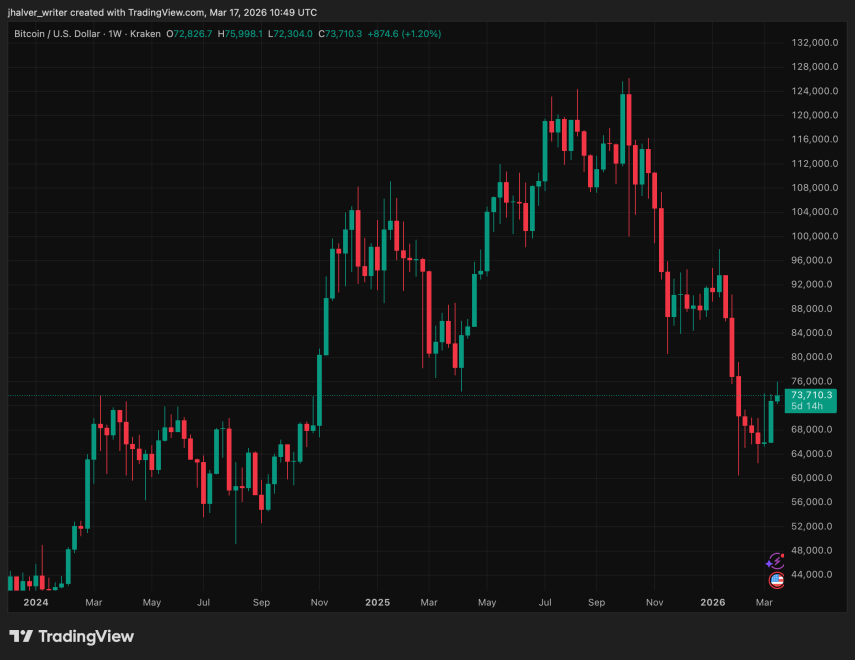
BTC’s price is on the highs $73k on the daily chart. Source: BTCUSD on Tradingview

Cover image from Perplexity, BTCUSD chart from Tradingview

Perguntas relacionadas

QWhat event triggered the harassment against Times of Israel reporter Emanuel Fabian by Polymarket bettors?

AEmanuel Fabian's report that an Iranian ballistic missile 'struck an open area' near Beit Shemesh on March 10, 2026, which contradicted the betting market's rule that intercepted missiles would not count as a 'Yes' result for the bet on whether Iran would strike Israel.

QHow did some Polymarket bettors escalate their actions beyond mere communication?

AThey sent explicit death threats, revealed knowledge of Fabian's home and family, offered bribes for edits to his report, and one bettor threatened to 'settle' him for $900,000—the amount they claimed to have lost due to his wording.

QWhat was Polymarket's official response to the harassment incident?

APolymarket condemned the harassment and threats, stated that such behavior violates their Terms of Service, banned the accounts of those involved, and pledged to hand over their identifying information to law-enforcement agencies.

QWhy was Fabian's reporting significant to the Polymarket bet on Iran striking Israel?

AThe rules of the bet specified that intercepted missiles would not count as a 'Yes' result. Fabian's report that a missile 'struck an open area' was interpreted as a direct hit (a 'Yes'), costing bettors who had wagered 'No' significant amounts, with one individual claiming a loss of around $900,000.

QWhat broader accusations has Polymarket faced recently, according to the article?

APolymarket has been accused of being 'plagued by manipulation and insider trading,' including a recent incident where Argentinian authorities ordered a national ban after it allegedly 'predicted' inflation data in February, raising concerns about governance and ethics in crypto prediction markets.

Leituras Relacionadas

STRC Major De-pegging's First Financial Report, How Will Strategy Repair Its Capital Flywheel?

Bitcoin treasury company Strategy released its Q2 2026 earnings report on July 31. Despite a 6.9% year-over-year revenue increase to $122 million, the company recorded a net loss of $8.22 billion, largely due to $8.32 billion in unrealized losses from Bitcoin price fluctuations. As of quarter-end, Strategy holds 843,775 BTC with an average cost of $75,000 per coin, and Bitcoin per share increased. The report highlights a critical shift in Strategy's capital model following the de-pegging of its key financing tool, STRC (Strategic Coin), which fell below its $100 target. Management's top priority is restoring STRC to its target value, aiming for a recovery by September 8. They rule out discounted STRC issuances and plan to maintain its dividend yield at 12%, instead focusing on bolstering its $3.75 billion cash reserve. Strategy has moved from a one-way "buy-and-hold" Bitcoin strategy to active capital management. This new approach, part of its "Digital Credit Capital Framework," involves flexibly managing its balance sheet across four elements: BTC, USD cash, common stock (MSTR), and digital credit securities like STRC. This allows for BTC monetization (having sold $218.4 million in BTC so far), strategic repurchases of discounted securities, and debt optimization, as seen with a $1.5 billion convertible bond buyback. The company's future hinges on two key tests: successfully re-pegging STRC to restore market confidence in its digital credit system, and a long-term recovery in Bitcoin's price to ultimately support its growth thesis.

marsbitHá 19m

STRC Major De-pegging's First Financial Report, How Will Strategy Repair Its Capital Flywheel?

marsbitHá 19m

STRC's First Financial Report Post-Depegging, How is Strategy Restoring the Capital Flywheel?

On July 31, 2026, Bitcoin treasury company Strategy released its Q2 financial report. Despite a 6.9% year-over-year increase in revenue to $122 million, the company recorded a substantial net loss of $8.22 billion, primarily due to $8.32 billion in unrealized losses from Bitcoin holdings. While Strategy's core Bitcoin strategy remains intact—its holdings grew 11% to 843,775 BTC—the company is undergoing a fundamental shift in its capital model. Following the de-pegging of its key financing tool, the STRCoin (STRC), from its $100 target in May, Strategy has pivoted from a one-directional "raise funds, buy Bitcoin" cycle to a more dynamic, multi-asset capital management approach. A key part of this new framework is the "Monetization Program," through which Strategy has sold approximately $218.4 million worth of BTC to bolster liquidity. The company's top priority is repairing STRC's peg, committing not to issue discounted shares until it returns to its target range. It has initiated a $1 billion buyback program for discounted digital credit securities, having repurchased $28.9 million face value of STRC so far. Management aims to restore the peg around September 8, 2026. Strategy now actively manages a matrix of assets: Bitcoin (for accumulation or strategic sales), USD cash reserves (now at $3.75 billion), common stock (MSTR), and digital credit securities like STRC. This allows for tactical moves like repurchasing discounted debt or equity to capture value. The future success of Strategy's "capital flywheel" hinges on two factors: the short-term ability to successfully re-peg STRC to restore market confidence in its digital credit system, and the long-term price trajectory of Bitcoin, upon which its entire investment thesis ultimately depends.

Odaily星球日报Há 24m

STRC's First Financial Report Post-Depegging, How is Strategy Restoring the Capital Flywheel?

Odaily星球日报Há 24m

With Two Consecutive Quarters of Losses, Coinbase Must Rely on Paths Beyond Trading

Coinbase posted its second consecutive quarterly net loss of $359 million on $1.22 billion in revenue for Q2, highlighting its vulnerability to crypto market cycles where weaker prices and lower volatility reduce user trading. However, the report also reveals a strategic shift in its business model. Despite a 25% quarter-over-quarter decline in global spot trading volume, Coinbase increased its market share to a company-record 10.3%. This suggests its position as a compliant U.S. on-ramp is strengthening even in a cooler market. A key development is the diversification of revenue streams. Transaction revenue fell to $599 million, nearly equaling subscription and services revenue of $555 million. Stablecoin services, generating $292 million, are becoming a crucial revenue "floor." This income, derived from interest on the $20 billion average USDC balance held on its platform, is less tied to daily trading activity. Furthermore, while spot trading volume dropped significantly, derivatives volume held steady at $1.03 trillion. Coinbase is pushing to integrate spot, stablecoin, and derivatives liquidity to create a more interconnected and sticky ecosystem for users. The GAAP net loss includes non-cash expenses like stock-based compensation and crypto asset valuation changes. Its adjusted EBITDA remained positive at $208 million for the 14th straight quarter, indicating core operations can cover ongoing costs. The company is also reducing expenses to manage the downturn. The central question moving forward is whether Coinbase's growing market share, stablecoin revenues, and expanding product integration can sufficiently offset the inherent cyclicality of its core trading business during future market contractions.

marsbitHá 40m

With Two Consecutive Quarters of Losses, Coinbase Must Rely on Paths Beyond Trading

marsbitHá 40m

Trading

Spot
活动图片