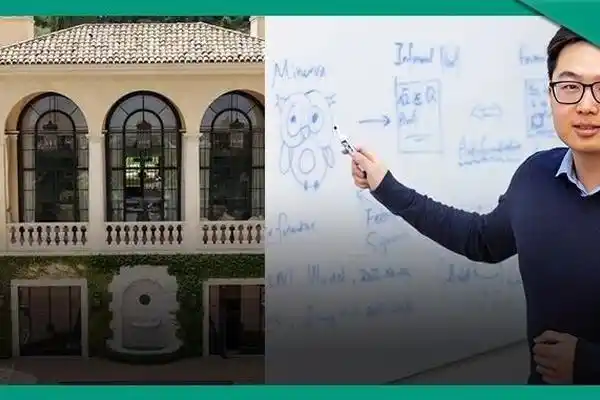
Conversation with Polygon Founder: Escaping Poverty and Building a $30 Billion Crypto Company

marsbitPublicado em 2025-12-14Última atualização em 2025-12-14

Resumo

Sandeep Nailwal, co-founder of Polygon, discusses his journey from a challenging childhood in India to building a $30 billion blockchain company. Growing up in poverty, he developed a strong drive for success. Nailwal works long hours, often sleeping only 4-5 hours a night, to advance Polygon’s mission of enabling sovereign individuals through decentralized systems. He believes blockchain and AI are critical for creating a borderless world with decentralized governance and financial freedom. While blockchain supports decentralization, AI represents a centralizing force, making their intersection vital for future societal structures. Nailwal also emphasizes the importance of philanthropy, aiming to reduce suffering for others based on his own experiences. Polygon faced significant challenges, including financial struggles and market volatility, but has grown into a leading platform. Projects like Polymarket choose Polygon for its scalability and network effects. Looking ahead, Nailwal plans to focus on AI and decentralized governance long-term, aiming to contribute to a freer, more equitable global system.

Source: "When Shift Happens", Youtube

Compiled by: Felix, PANews

From the storeroom where his ancestors worked as servants, Polygon founder Sandeep Nailwal struggled his way to build a blockchain company with a market cap of $30 billion. Sandeep Nailwal works 18 hours a day, dedicated to making Polygon a global payment platform for companies like Stripe. Below are the highlights of the interview from the "When Shift Happens" podcast, compiled by PANews.

Host: Your team says you always reply instantly, no matter the time of day. Do you sleep very little?

Sandeep: Yeah, I mean, I do sleep, but my mind is always on Polygon, online 24/7.

Host: What's your usual daily routine like?

Sandeep: My schedule is a bit reversed. I have a three-and-a-half-year-old son, and I work on US time, so I only really start getting busy after 2 PM, working until 11-12 midnight, and going to sleep around 2 to 2:30 AM. Sometimes my son wakes up at 7 or 7:30 AM, so I get up to play with him. So I often only get 4 or 5 hours of sleep.

Host: I previously interviewed Tether CEO Paolo, who said he has slept only 5 hours a night for 11 years and wakes up every hour to check notifications.

Sandeep: Paolo is steering a much bigger "ship." I have a good relationship with him; he's an amazing, and also super crazy, person. He is completely immersed in his vision. I've never seen a team as small as Tether's where everyone is so deeply committed to the blockchain spirit. They genuinely want a personal, sovereign monetary system. So I'm not at all surprised by their huge success now.

Host: What do you believe is your mission?

Sandeep: My mission is what I always say: sovereign individuals. Many people in the crypto space want to build monetary systems. It should be a free, individual monetary system where people can manage their wealth as they wish. What I truly want is complete individual sovereignty: not just money. Money is actually a product of civilization, and civilization is built on the layer of "controlled violence," meaning law and order. Now we're working on global currency, Bitcoin... but to achieve a truly borderless world, money alone is not enough; you need to decentralize this "controlled violence" layer as well.

This sounds sci-fi, but it's actually starting to become feasible. In the future, there could be drone and robot police forces, controlled by a completely decentralized AI, not by any single company or government. Imagine a 'super brain' controlled collectively by all people, with its own constitution dedicated to protecting everyone's safety. This would truly break down borders, and individuals would achieve real freedom. That's why I co-founded Sentient AI; the other three co-founders are working on it full-time. I'm too busy with Polygon, but this is my deepest goal: to align AI with human interests and ultimately achieve external governance and control.

It sounds like science fiction, but once Polygon and the entire crypto industry become more stable, I will invest more time. Crypto is just now entering its truly practical stage. DeFi is a practical track, but 70-80% of lending is leveraged speculation. Now stablecoins and cross-border payments are starting to rise. I've been in this career for 8 years and want to do it for another 10-15 years, see it become completely mainstream, and then see what to do next.

Host: So who are you, really?

Sandeep: I am a global citizen who wants complete sovereignty. I am very law-abiding and hope everyone else is too, but everyone should have the right to "exit." I can even imagine 20, 30, 40 years from now, you could have your own small space pod, take off to脱离 all systems, and wander alone in the solar system. Then you would need a monetary system not controlled by any single government and a neutral police system, guarded collectively by humanity and awakened AI at that time (including AI itself), allowing everyone to live by their own rules. So I'm very serious about freedom, perhaps also related to me being from India—many people don't know that the core value of Indian civilization for thousands of years has been freedom.

Host: What exactly happened in your life that made you so hungry for success?

Sandeep: I've been thinking about this question a lot. I had a really tough childhood, as I've said on many podcasts. The India of my childhood was almost a third-world country. My maternal and paternal grandfathers were both servants for wealthy families; that's how they met, and later decided to have their children marry, which led to my parents. I was always among the top students in school, respected everywhere, but coming home was a completely different world.

I didn't dare bring friends home until I was 21 or 22, not wanting them to see what my home was really like. Five people crammed into one room, plus a small kitchen. No living room, no bedroom, just one room. We lived in a temporary storage room built on the roof of someone else's two-story house; the owner rented it to us to earn some extra money. Summers were like a steamer. When I was five or six, my grandfather was still alive. The master he served passed away, leaving a large hotel, and my grandfather became the caretaker. Sometimes when the master's family wasn't around, grandfather would take me to play, and I naively thought this big house was my home. I came back and boasted to my little friends, saying this was my house. Maybe from then on, I had this 'never give up' drive. I always said from a young age: I must become a big shot, never settle for small things, and never accept failure. But I had no idea how to succeed, and everyone laughed at me.

Host: How did you get involved in blockchain and cryptocurrency?

Sandeep: As I've said before, I didn't start because of Bitcoin. I saw Bitcoin several times and thought it looked like a pyramid scheme, so I ignored it. It wasn't backed by anything, how could it have value?

But around late 2016 or early 2017, when I first read the Ethereum whitepaper and Vitalik's blog, I was deeply moved. They had created a computer run collectively by countless people, owned by no one, and always online. My immediate second thought was, what if you could write complex business logic on this computer, and no matter what happens, it executes exactly as written? I thought then that this was something that would truly change the world. So I started getting seriously involved, and here I am now.

Host: In the 8 years since Polygon launched, what was the most difficult moment?

Sandeep: Several times in the first year and a half, we almost couldn't make payroll. December 2019 was the worst. Woke up to find someone had shorted MATIC (it was called MATIC then) massively, the price dropped 70% in a day, and the whole internet was calling me a scammer. But those were just single events. The hardest period is always now—for Polygon, it's always now that is the most difficult.

Host: Why did Polymarket need to be built on blockchain?

Sandeep: This is a very good question. Many of its competitors don't put market data on-chain. If two platforms have similar user experiences, one is blockchain-based: you own your content, funds, followers; the other is centralized, then the answer is obvious, people will definitely choose the more open one. Now, Polymarket has achieved network effects. It has verifiability, transparency, and credibility. No matter who competes, Polymarket can maintain its dominant position long-term.

Host: But why specifically the Polygon chain?

Sandeep: In 2020, Polygon was the fastest-growing blockchain at the time, and Ethereum was extremely expensive. Choosing Polygon was related to the network effects of blockchain.

Host: Why is the intersection of AI and blockchain so important for humanity's future?

Sandeep: Blockchain is a payment platform, AI is an intelligence platform; technically, they have no direct relation. But the key point is: AI is the greatest centralizing force in human history, and the only technology currently pushing for decentralization of power is cryptocurrency.

Host: Why are you so invested in charity?

Sandeep: Everyone experiences pain in life. After that, there are two choices: first, I suffered, so you all should suffer too; second, I suffered, so I want others to suffer less. I choose the second, purely for my own happiness.

Related reading: Polygon Latches Onto a New Big Player, Neo-bank Revolut Chooses Its Tech Stack to Drive Crypto Payments


Criptomoedas em alta

Perguntas relacionadas

QWhat is Sandeep Nailwal's daily work schedule and how much sleep does he typically get?

ASandeep Nailwal follows a schedule aligned with US time, starting work around 2 PM and working until 11-12 PM, then going to bed around 2-2:30 AM. He often wakes up at 7-7:30 AM to spend time with his son, resulting in about 4-5 hours of sleep per night.

QWhat is Sandeep Nailwal's ultimate mission and vision for the future?

ASandeep Nailwal's mission is to achieve complete sovereignty for individuals, not just in money but in all aspects of life. He envisions a future with a decentralized global monetary system and a neutral, decentralized law enforcement system, potentially involving AI and robotics, to create a borderless world where individuals have true freedom and the right to exit any system.

QHow did Sandeep Nailwal's childhood experiences influence his drive for success?

ASandeep Nailwal grew up in poverty in India, living in a small storage room on a rooftop with his family members. He felt ashamed to bring friends home and developed a strong determination to become 'a big person' and not accept failure, driven by the contrast between his humble surroundings and the wealthy environments he occasionally visited.

QWhy did Sandeep Nailwal initially dismiss Bitcoin but later become involved in blockchain through Ethereum?

ASandeep initially dismissed Bitcoin as a Ponzi scheme because it seemed to have no backing. However, he was deeply moved after reading the Ethereum whitepaper and Vitalik Buterin's blog, realizing that a globally distributed computer run by many but owned by none, executing complex business logic reliably, could truly change the world.

QAccording to Sandeep, why is the intersection of AI and blockchain crucial for humanity's future?

ASandeep believes that while AI is the greatest centralizing force in human history, cryptocurrency is the only technology actively pushing for decentralization of power. The intersection is crucial because blockchain can provide a decentralized framework to counterbalance the centralizing tendencies, ensuring a more equitable and sovereign future for individuals.

Leituras Relacionadas

AAVE Rallies 30% in a Week, Is It Back on Track?

Over the past week, the price of AAVE surged from around $70 to nearly $100, a rebound exceeding 30%. This occurred despite Aave's TVL continuing to decline following the Kelp DAO security incident. The price movement was partly driven by market rumors, first reported by CoinDesk, that Kraken was negotiating to acquire a stake in Aave. While Aave founder Stani Kulechov denied the specific terms, he confirmed discussions with multiple parties about purchasing Aave Labs' AAVE tokens. He also revealed ongoing work on Tokenomics 3.0, featuring an automated buyback mechanism, and plans to expand into securities-backed lending. Analysts remain optimistic about Aave's long-term prospects. Standard Chartered gave an extremely bullish $3,500 price target for 2030, citing DeFi revival and RWA tokenization. Grayscale offered a more conservative one-year target of $175. However, competitors like Morpho are gaining traction, with recent reports highlighting its advantages in capital efficiency and customization. Morpho also secured a massive $175 million funding round. Fundamentally, Aave maintains its dominance as the leading DeFi lending protocol. Its TVL is nearly double that of second-place Morpho and rivals the combined total of the next several competitors. Key metrics like active borrowing, total supply, and revenue significantly outpace rivals. While Aave faces challenges from newer, more flexible protocols, its deep liquidity and established position make it a preferred choice for large, yield-seeking users. The article concludes that despite setbacks, Aave's long-tested protocol merits ongoing attention in a market with increasingly scarce quality projects.

Foresight NewsHá 36m

AAVE Rallies 30% in a Week, Is It Back on Track?

Foresight NewsHá 36m

Real-life 'Black Mirror' Pumpfun Go: 40 Yuan to Lick Toilets, 14,000 USD for a Logo Tattoo on the Forehead

The article discusses the controversial new platform "Pumpfun Go," a bounty task platform launched by the meme coin platform Pump.fun. Its slogan is "Pay anyone to do anything." The platform allows users to anonymously post tasks with cryptocurrency rewards, which are held in escrow until completion and verification. The piece highlights extreme and disturbing tasks that have gained notoriety, such as licking a gas station toilet floor for roughly $5.63, eating live insects, getting a company logo tattooed on one's forehead for $14,000, and even a now-removed $700,000 bounty for suicide. These tasks are often linked to promoting specific meme coins by generating shocking, attention-grabbing content. While some tasks involve community-building or charity, critics, including New York Governor Kathy Hochul, condemn the platform for exploiting economic desperation and encouraging humiliating or dangerous behavior. They argue it mirrors dystopian narratives from shows like "Black Mirror" and movies like "Nerve," where online dares escalate for viewers' entertainment. Supporters and some participants counter that the platform provides much-needed income opportunities for the financially struggling. One user claimed the bounty money far exceeded his monthly salary. The article concludes by questioning the morality of a system where the wealthy pay for spectacle and the poor trade dignity for survival, reflecting a long history of public consumption of others' suffering. It suggests hope may lie in future technological abundance freeing people from such desperate choices.

marsbitHá 59m

Real-life 'Black Mirror' Pumpfun Go: 40 Yuan to Lick Toilets, 14,000 USD for a Logo Tattoo on the Forehead

marsbitHá 59m

Faked Trades, Clone Websites, 1105 Videos: Polymarket Under CFTC Scrutiny

The U.S. Commodity Futures Trading Commission (CFTC) has launched a wide-ranging investigation into prediction market platform Polymarket. The probe, triggered by a Wall Street Journal report, focuses on allegations of systematic marketing fraud. The report revealed Polymarket allegedly hired dozens of student content creators to post over 1,100 videos showing fake, profitable trades on cloned websites, without disclosing the paid relationships. These videos, with over 140 million views, were pivotal to user growth. Simultaneously, the National Association of Consumer Advocates (NACA) filed a lawsuit in Washington D.C., accusing Polymarket and its executives of deceptive advertising targeting college students. The suit details off-campus promotions and payments made through the CMO's personal PayPal account to influencers who failed to disclose sponsorships. The investigation places CFTC Chairman Michael Selig in a difficult position, as he has been a vocal advocate for prediction markets and is currently suing multiple states to assert federal jurisdiction over them. This case tests the CFTC's dual role as both promoter and enforcer. This marks Polymarket's second major clash with the CFTC. After a 2022 settlement and U.S. ban, it regained approval to operate in September 2025, secured a $20 billion investment, and saw its valuation soar. The current crisis, compounded by a recent $3.1 million front-end supply chain attack, represents the platform's most severe multi-front challenge since its founding.

Foresight NewsHá 1h

Faked Trades, Clone Websites, 1105 Videos: Polymarket Under CFTC Scrutiny

Foresight NewsHá 1h

Trading

Spot

Artigos em Destaque

Como comprar NASDAQ100

Bem-vindo à HTX.com!Tornámos a compra de Nasdaq-100 Index (NASDAQ100) simples e conveniente.Segue o nosso guia passo a passo para iniciar a tua jornada no mundo das criptos.Passo 1: cria a tua conta HTXUtiliza o teu e-mail ou número de telefone para te inscreveres numa conta gratuita na HTX.Desfruta de um processo de inscrição sem complicações e desbloqueia todas as funcionalidades.Obter a minha contaPasso 2: vai para Comprar Cripto e escolhe o teu método de pagamentoCartão de crédito/débito: usa o teu visa ou mastercard para comprar Nasdaq-100 Index (NASDAQ100) instantaneamente.Saldo: usa os fundos da tua conta HTX para transacionar sem problemas.Terceiros: adicionamos métodos de pagamento populares, como Google Pay e Apple Pay, para aumentar a conveniência.P2P: transaciona diretamente com outros utilizadores na HTX.Mercado de balcão (OTC): oferecemos serviços personalizados e taxas de câmbio competitivas para os traders.Passo 3: armazena teu Nasdaq-100 Index (NASDAQ100)Depois de comprar o teu Nasdaq-100 Index (NASDAQ100), armazena-o na tua conta HTX.Alternativamente, podes enviá-lo para outro lugar através de transferência blockchain ou usá-lo para transacionar outras criptomoedas.Passo 4: transaciona Nasdaq-100 Index (NASDAQ100)Transaciona facilmente Nasdaq-100 Index (NASDAQ100) no mercado à vista da HTX.Acede simplesmente à tua conta, seleciona o teu par de trading, executa as tuas transações e monitoriza em tempo real.Oferecemos uma experiência de fácil utilização tanto para principiantes como para traders experientes.

26 Visualizações TotaisPublicado em {updateTime}Atualizado em 2026.06.18

Como comprar NASDAQ100

O que é RE

I. Introdução ao Projeto1. O Que É o Re Protocol?O Re Protocol é um protocolo de resseguro descentralizado que conecta capital em stablecoin a mercados de resseguro regulamentados no mundo real. Os utilizadores depositam stablecoins no contrato inteligente da Insurance Capital Layer (ICL). Os fundos depositados são utilizados para apoiar contratos de resseguro totalmente colateralizados, e os depositantes recebem recompensas em troca. O rendimento é derivado de fontes tanto on-chain como off-chain, além de spreads específicos de tokens. O protocolo opera em várias cadeias, incluindo Ethereum, Avalanche e Arbitrum.2. Como Funciona o Re Protocol?Os utilizadores depositam ativos aprovados (como USDC, USDe, sUSDe) em contratos inteligentes ICL para cunhar um de dois tokens que geram rendimento. Os fundos são agregados diariamente em um cofre de custódia Fireblocks, mantido sob controle de múltiplas assinaturas, com saldos publicados diariamente para oráculos Chainlink. Quando os resseguradores licenciados retiram fundos de acordo com uma Surplus Note, uma parte do capital é transferida para contas de confiança de resseguro §114 domiciliadas nos EUA, servindo como colateral em conformidade para as apólices do ressegurador. À medida que os contratos de resseguro vencem e a equipe atuarial libera capital, a liquidez flui de volta para o protocolo, apoiando os resgates de reUSD e acumulando rendimento para ambos os tokens.O protocolo oferece dois tokens correspondentes a diferentes tranches na estrutura de capital:reUSD (Basis-Plus, Tranche Sênior): O rendimento é uma taxa misturada (média ponderada da taxa SOFR e da taxa sUSDe de 7 dias) mais um spread de 250 pontos base. Oferece maior liquidez e suporta resgates instantâneos quando há capacidade disponível.reUSDe (Insurance Alpha, Tranche Júnior): O rendimento é a mesma taxa misturada mais um spread de 850 pontos base, em troca de absorver perdas antes da tranche sênior. Os resgates são trimestrais. O reUSDe tem um período mínimo de detenção de pelo menos 40 dias.Camadas de Proteção de Capital: O próprio capital do ressegurador absorve as perdas primeiro, seguido pelo reUSDe, com o reUSD como a tranche mais sênior protegida pelas duas camadas abaixo dela.3. Quem Fundou o Re Protocol?Karn Saroya, Co-Fundador e CEO, graduou-se no MIT. Anteriormente, fundou a plataforma insurtech apoiada por capital de risco Cover (uma corretora licenciada, que mais tarde cessou operações) e anteriormente fundou o aplicativo de moda Stylekick (adquirido pela Shopify em 2015). Ele também trabalhou anteriormente em consultoria de serviços financeiros.Detalhes de Financiamento:Setembro de 2022: O Re completou uma rodada de Seed de $14 milhões liderada pela Tribe Capital (incubada através do seu Tribe Crypto Labs), com participação da Framework Ventures, Morgan Creek Digital, Defy VC, Stratos, Exor, SiriusPoint, entre outros.Maio de 2024: Completou uma rodada de financiamento de $7 milhões liderada pela Electric Capital.4. Tokenomics do Re ProtocolRE é o token de governança do Re Protocol com um fornecimento total fixo de 1 bilhão de tokens, sem mecanismo inflacionário e sem plano de cunhagem contínua. O token é utilizado para governança através de um modelo de stake-to-vote, cobrindo acesso ao mercado, orçamentos de incentivos, staking e delegação, comitês, atualizações do protocolo e capital de resiliência compartilhado.Distribuição de tokens:Ecosistema (50%): Usado para recompensas de staking, participação na governança, liquidez, integrações, subsídios, expansão de mercado e crescimento do ecossistema. 159,6 milhões de tokens estão em circulação no TGE, com o restante sujeito a um vesting linear ao longo de 48 meses.Contribuidores Principais (20%): Inclui contribuintes principais e consultores que constroem o protocolo, sistemas de governança, integrações, estruturas de risco e infraestrutura de mercado; 12 meses de cliff mais 36 meses de vesting linear.Investidores (17%): Apoios estratégicos; 12 meses de cliff mais 36 meses de vesting linear.Reserva para Desenvolvimento do Ecossistema (13%): Reserva de longo prazo para futuras contribuições e contribuintes.5. Cronograma de Principais MarcosSetembro de 2022: O Re completou uma rodada de Seed de $14 milhões, estreou publicamente e se posicionou como o primeiro protocolo de resseguro alimentado por blockchain, inicialmente construído na Avalanche.Maio de 2024: Completou uma rodada de financiamento de $7 milhões liderada pela Electric Capital.18 de junho de 2026: O token $RE foi oficialmente lançado.​II. Informação sobre o TokenNome do token: RE(Re)III. Links RelacionadosWebsite:https://re.xyz/Exploradores:https://etherscan.io/token/0x526526528f35ac738177003b8773b402b8df8143Twitter:https://twitter.com/reNota: A introdução ao projeto provém dos materiais publicados ou fornecidos pela equipa oficial do projeto, que é apenas para referência e não constitui aconselhamento de investimento. A HTX não se responsabiliza por quaisquer perdas diretas ou indiretas resultantes.

249 Visualizações TotaisPublicado em {updateTime}Atualizado em 2026.06.29

O que é RE

Como comprar RE

Bem-vindo à HTX.com!Tornámos a compra de Re (RE) simples e conveniente.Segue o nosso guia passo a passo para iniciar a tua jornada no mundo das criptos.Passo 1: cria a tua conta HTXUtiliza o teu e-mail ou número de telefone para te inscreveres numa conta gratuita na HTX.Desfruta de um processo de inscrição sem complicações e desbloqueia todas as funcionalidades.Obter a minha contaPasso 2: vai para Comprar Cripto e escolhe o teu método de pagamentoCartão de crédito/débito: usa o teu visa ou mastercard para comprar Re (RE) instantaneamente.Saldo: usa os fundos da tua conta HTX para transacionar sem problemas.Terceiros: adicionamos métodos de pagamento populares, como Google Pay e Apple Pay, para aumentar a conveniência.P2P: transaciona diretamente com outros utilizadores na HTX.Mercado de balcão (OTC): oferecemos serviços personalizados e taxas de câmbio competitivas para os traders.Passo 3: armazena teu Re (RE)Depois de comprar o teu Re (RE), armazena-o na tua conta HTX.Alternativamente, podes enviá-lo para outro lugar através de transferência blockchain ou usá-lo para transacionar outras criptomoedas.Passo 4: transaciona Re (RE)Transaciona facilmente Re (RE) no mercado à vista da HTX.Acede simplesmente à tua conta, seleciona o teu par de trading, executa as tuas transações e monitoriza em tempo real.Oferecemos uma experiência de fácil utilização tanto para principiantes como para traders experientes.

77 Visualizações TotaisPublicado em {updateTime}Atualizado em 2026.06.29

Como comprar RE

Discussões

Bem-vindo à Comunidade HTX. Aqui, pode manter-se informado sobre os mais recentes desenvolvimentos da plataforma e obter acesso a análises profissionais de mercado. As opiniões dos utilizadores sobre o preço de A (A) são apresentadas abaixo.

活动图片