Consensus Live | Avenir Group, Tiger, AMINA, and CoinRoutes Discuss Institutional Capital Efficiency and Financial Infrastructure Evolution

marsbitPublicado em 2026-02-11Última atualização em 2026-02-11

Resumo

At Consensus Hong Kong 2026, the institutional investment narrative is structurally shifting toward multi-asset allocation, yet cross-system frictions are diluting capital efficiency. Avenir Group, in partnership with Tiger Brokers, AMINA Bank, and CoinRoutes, led a roundtable on next-generation institutional trading infrastructure. Key consensus emerged: the industry must transition from an asset-centric to a capital-centric framework to optimize efficiency in a multi-asset environment. Panelists highlighted challenges including fragmented capital utilization due to segregated systems, misaligned clearing cycles causing idle capital, and the need for natively compliant, scalable infrastructure. Avenir Group and partners signed an MOU to explore collaborative solutions, emphasizing that future competitiveness hinges on unified capital management and cross-asset operational capabilities within regulatory frameworks.

At Consensus Hong Kong 2026, the narrative focus of institutional investors is undergoing a structural shift. As regulatory frameworks mature, crypto assets are accelerating their integration into institutional portfolios, moving beyond exploratory allocations. However, this transition towards multi-asset allocation has highlighted a new theme: although portfolios are expanding across asset classes, cross-system friction is diluting capital efficiency.

Avenir Group, an investment group dedicated to promoting the integration of traditional finance and digital assets, has observed that as the scale of institutional participation grows, the completeness of infrastructure is increasingly impacting institutional capital efficiency. As an official partner of Consensus Hong Kong 2026, Avenir Group initiated a roundtable discussion titled "Next-Generation Institutional Trading Infrastructure." Industry leaders from global leading tech brokerage Tiger Brokers, Swiss FINMA-regulated crypto bank AMINA Bank AG (“AMINA Bank”), and leading multi-asset institutional trading platform CoinRoutes systematically deconstructed the reasons behind constrained capital efficiency in a multi-asset environment and jointly explored potential evolutionary directions.
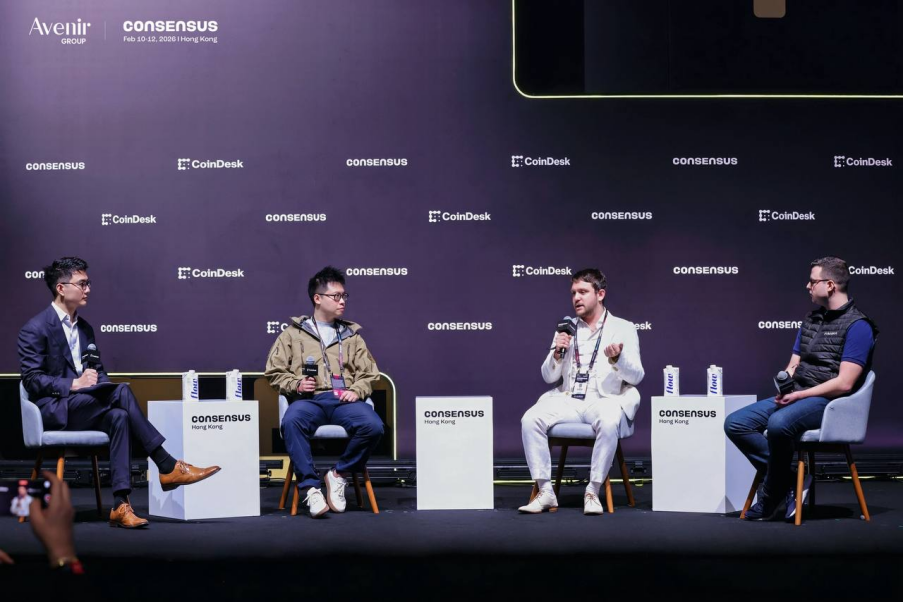
Industry Consensus: A Foundational Restructuring from "Asset-Oriented" to "Capital-Oriented"

During the discussion, a core consensus was reached: the industry must shift from an "Asset-Centric" infrastructure framework to a "Capital-Centric" framework.

In the past, an asset-centric model, optimized for single asset classes, could meet demands. However, in the complex era of multi-asset markets, this model may lead to a certain degree of capital efficiency drain. When institutions manage traditional and digital assets in parallel, the inherent differences between these assets—from price volatility to clearing and settlement cycles—result in hidden capital occupation and execution friction. These are no longer mere operational inconveniences but can become significant structural constraints affecting overall capital efficiency.

Roundtable guests shared deep insights from different parts of the value chain:

· Holistic Capital Efficiency Utilization: Felix Huang Shuojun, Global Partner at Tiger Brokers International, pointed out that traditional markets improve capital utilization through margin interoperability; however, the inclusion of digital assets disrupts this synergy. Existing systems are often designed around "asset isolation" rather than "overall capital efficiency," making it difficult for institutions to achieve cross-asset capital allocation within a unified framework.

· Efficient Execution and Liquidity Linkage: Ian Weisberger, CEO and Co-Founder of CoinRoutes, added that misaligned clearing rhythms leave substantial funds idle during trading gaps. What institutions urgently need is unified execution capability across markets and for multi-leg strategies, as well as flexible rotation of positions and risk across different asset classes.

· Compliance-First Infrastructure: Myles Harrison, Chief Product Officer at AMINA Bank, emphasized that compliance is not the opposite of efficiency but a prerequisite for the safe operation of the system. The pain point lies in the industry's lack of a natively multi-asset supportive infrastructure that also possesses high transparency and scalability, thereby unlocking capital potential within a global compliance framework.

Jacob Zhong, Managing Partner of Strategic Investment and Cooperation at Avenir Group, stated: "Synthesizing industry insights, the direction of infrastructure evolution has become relatively clear. As institutional participation in multi-asset environments deepens, the market increasingly requires an infrastructure capable of unified cross-asset capital allocation, synchronized trading execution and clearing rhythms, and embedding compliance capabilities natively into the system (rather than as an afterthought patch). In this direction, more integrated and regulation-adaptive infrastructure is gradually becoming a crucial support for enhancing capital efficiency and enabling cross-asset operations at scale."

Building the Ecosystem Together: Advancing Financial Infrastructure Evolution Through Collaborative Action

At the conclusion of the thematic discussion, Avenir Group, Tiger Brokers, AMINA Bank, and CoinRoutes formally signed a Memorandum of Understanding (MOU) to explore potential future cooperation.

The integration of traditional finance and digital assets is not merely a technical or product-level consolidation but a progressive, systematic compliance engineering project. As multi-asset allocation becomes the norm, the competitive focus among institutions is shifting—it no longer depends solely on market access capabilities but on the systemic ability to manage and flexibly allocate capital under a compliance framework.

Avenir Group looks forward to collaborating with a broader range of financial institutions and technology partners. By fostering dialogue and cooperation across the entire ecosystem, Avenir Group aims to join hands with industry partners to jointly promote a more synergistic and scalable infrastructure path, gradually turning the enhancement of capital efficiency from an industry consensus into verifiable practice.

About Avenir Group

Avenir Group is a pioneering investment group focused on driving the integration of traditional finance and digital assets, building the financial infrastructure of the future. The group adopts an integrated "Investment—Incubation—Operation" strategy, with a core investment portfolio focusing on digital asset management, trading and financial services platforms, payment finance (PayFi) infrastructure, and real-world asset (RWA) tokenization, providing the industry with institutional-grade products and services, and continuously promoting financial innovation and the development of emerging technologies. As the largest institutional holder of Bitcoin ETFs in Asia, Avenir Group expands its business globally, covering Hong Kong, Singapore, Tokyo, London, San Francisco, and more. Leveraging robust capital strength and professional operational capabilities, the group is committed to becoming a strategic hub connecting Eastern and Western capital, driving efficient global capital flow and collaboration. Learn more: https://avenirx.com


Perguntas relacionadas

QWhat is the main shift in the narrative focus for institutional investors at Consensus Hong Kong 2026, as discussed by Avenir Group and partners?

AThe narrative focus is shifting structurally from exploratory allocation of crypto assets to their accelerated integration into institutional portfolios, highlighting the theme that cross-system friction is diluting capital efficiency despite multi-asset expansion.

QAccording to the roundtable, what fundamental change is needed in infrastructure frameworks to improve capital efficiency in multi-asset environments?

AThe industry must transition from an 'Asset-Centric' infrastructure framework to a 'Capital-Centric' one to enable unified capital scheduling across assets, synchronized execution and settlement rhythms, and natively embedded compliance capabilities.

QWhat specific capital efficiency challenge did Felix Huang Shuojun from Tiger International highlight regarding digital assets?

AHe pointed out that while traditional markets improve capital utilization through margin interoperability, the inclusion of digital assets disrupts this synergy. Existing systems designed for 'asset isolation' rather than 'overall capital efficiency' hinder unified cross-asset capital scheduling.

QHow did Ian Weisberger of CoinRoutes and Myles Harrison of AMINA Bank contribute to the discussion on infrastructure needs?

AIan Weisberger emphasized the need for unified execution capabilities across markets and flexible rotation of positions and risk between asset classes, citing idle funds due to misaligned settlement cycles. Myles Harrison stressed the necessity for native multi-asset infrastructure with high transparency and scalability that operates within global compliance frameworks to unlock capital potential.

QWhat action did Avenir Group and its partners take following the roundtable discussion, and what is their broader goal?

AThey signed a strategic Memorandum of Understanding (MOU) to explore future collaboration. Avenir Group aims to work with financial institutions and tech partners to promote dialogue and cooperation, advancing more synergistic and scalable infrastructure paths to turn capital efficiency consensus into verifiable practice.

Leituras Relacionadas

Goldman Sachs: July Smashes Through Crowded Trades, U.S. Stock Bull Market Not Broken but Harder to Navigate

Goldman Sachs: July Sees Crowded Trades Unwound, U.S. Bull Market Intact but Getting Tougher. The U.S. stock market in July did not see an index-level crash, but rather a significant unwinding of speculative positions. While the S&P 500 remained stable—trading within a narrow 3.5% range and staying within 2% of its high—underlying market dynamics were volatile. Heavily crowded trades, particularly in high-momentum tech, AI-linked stocks, and Asian strategies, faced severe pressure and forced deleveraging. Data indicates this was a meaningful cleanse, not a minor adjustment. Global tech exposure saw its largest sell-off in over five years, leverage in Korean equity ETFs plummeted, and Goldman's prime brokerage recorded the largest gross exposure reduction since late 2022. Leverage on momentum factors among fundamental long/short clients fell to the 28th percentile of its one-year range. The AI trade narrative shifted from pure potential to a focus on tangible returns. While Meta failed to show clear AI monetization, Microsoft and Amazon provided evidence that massive capital expenditure is translating into scalable revenue and product growth, preventing a blanket sell-off of the AI sector. The Federal Reserve's more opaque communication style and volatility in long-end Treasury yields have introduced new friction, particularly for rate-sensitive growth and tech stocks. The broader outlook for U.S. equities remains favorable, supported by a strong economy, robust earnings, and substantial AI capital expenditure. However, risk/reward is no longer cheap, and the market's upward elasticity has weakened. The Nasdaq 100's trajectory—up 12% year-to-date despite significant pullbacks—illustrates that the bull trend persists but the path is becoming more difficult. The key lesson from July is that the market no longer rewards crowded, highly leveraged trades, requiring more disciplined and liquid portfolio approaches.

marsbitHá 16m

Goldman Sachs: July Smashes Through Crowded Trades, U.S. Stock Bull Market Not Broken but Harder to Navigate

marsbitHá 16m

Interview with Robinhood Executive: Meme + Tokenized US Stocks as "Barbell" Customer Acquisition Strategy, All Business Lines Achieve Hundreds of Millions in Revenue

Interview with Robinhood executive Johann Kerbrat reveals the company's "barbell" customer acquisition strategy for its new Robinhood Chain, combining meme tokens with tokenized stocks. Three weeks after mainnet launch, the chain has seen over $3B in weekly DEX volume and 105M transactions. Kerbrat explains the logic behind the permissionless chain: meme tokens attract DeFi users, while tokenized real-world assets (RWA), currently over 90 US stocks and ETFs accessible in 120+ countries, serve global users. The goal is to bring Robinhood's 27 million funded accounts on-chain by simplifying DeFi with a user-friendly interface, exemplified by features like Robinhood Earn which offers yield without requiring wallet management. Built on Arbitrum's technology stack for its speed, low cost, and Ethereum's security, the chain focuses on financial products like Earn, spot trading, and perpetuals. Kerbrat downplays direct competition with platforms like Base, emphasizing the goal of expanding the overall market for on-chain assets. He details selective partnerships (e.g., Morpho, Lighter) based on compliance, unique UX, and differentiation. While regulatory clarity is pending for US perpetuals, the expansion continues via Bitstamp in Europe. Finally, Kerbrat positions Robinhood as a "super app" integrating stocks, options, crypto, banking, and AI trading, with all major business lines generating hundreds of millions in revenue. For the chain, current priority is driving adoption over maximizing gas fee revenue.

marsbitHá 2h

Interview with Robinhood Executive: Meme + Tokenized US Stocks as "Barbell" Customer Acquisition Strategy, All Business Lines Achieve Hundreds of Millions in Revenue

marsbitHá 2h

Fidelity Q3 Report: BTC, ETH, and SOL Continue to Build Bottoms; How Much Further Will This Crypto Bear Market Go?

Fidelity's Q3 Crypto Signal Report analyzes the current bear market, noting Bitcoin (BTC), Ethereum (ETH), and Solana (SOL) are in a prolonged bottoming phase. Key indicators like the weighted Net Unrealized Profit/Loss (NUPL) have turned negative (-0.01), signaling the market is slightly below its aggregate cost basis, with BTC acting as the primary stabilizing asset. BTC's dominance has risen to 68%, indicating a lack of capital rotation to other digital assets. Performance has been weak across the board, with BTC, ETH, and SOL down significantly year-to-date. Market sentiment is depressed, exacerbated by substantial outflows from spot ETPs and a challenging macro environment. The report compares the current ~203-day downtrend to historical ~300-day bottoming cycles, suggesting the process may be two-thirds complete, with late 2026 as a potential timeframe to monitor. For Bitcoin, NUPL at 0.09 indicates cautious sentiment, while momentum signals remain negative. The Yardstick metric points to potential undervaluation relative to network security (hashrate). Ethereum's NUPL is deep in the "capitulation" zone at -0.43, a historically positive signal for future returns, though its momentum and network fee revenue are negative. Solana shows the deepest NUPL at -0.72 but demonstrates relative resilience in on-chain activity and stablecoin transfer volume. The report concludes that while several metrics are near historical capitulation levels, a definitive market bottom has not yet been established. The path forward likely involves continued consolidation, with BTC's relative strength and fundamental on-chain usage for ETH and SOL providing key areas for investor observation.

marsbitHá 2h

Fidelity Q3 Report: BTC, ETH, and SOL Continue to Build Bottoms; How Much Further Will This Crypto Bear Market Go?

marsbitHá 2h

Trading

Spot
活动图片