Compliance Guide for Utility Token Issuance

marsbitPublicado em 2025-12-17Última atualização em 2025-12-17

Resumo

"Functional Token Issuance Compliance Guide" This guide outlines the legal framework for issuing utility tokens, emphasizing that regulatory risk depends not on the token's description, but on its economic reality. A token's classification as a security is determined by market behavior and investor expectations, not technical promises, as seen in cases like Telegram's TON. Projects fall into two main categories with different compliance paths: Infrastructure projects (e.g., Bitcoin, Celestia) often use fair launches for lower risk, while Application-layer projects (e.g., DeFi, GameFi) require careful legal structuring due to higher regulatory scrutiny. Key stages and actions are detailed: * **Testnet Phase:** Separate development (DevCo) and token/ecosystem (Foundation) entities. Use equity + token warrants for fundraising, not direct token sales, to avoid triggering securities laws prematurely. * **Mainnet Launch (TGE):** This is a high-risk phase. Ensure clear disclosure of token utility, allocation, lock-ups, and conduct KYC/AML. Avoid marketing that promises profit. Public airdrops and sales are closely watched. * **DAO Stage:** Achieve true decentralization by relinquishing team control to community governance (e.g., Uniswap DAO). This "verifiable exit" is crucial for reducing securities risk. The core compliance challenge is proactively demonstrating the token is *not* a security by emphasizing its functional use, avoiding profit promises, and progressively de...

Original Author: Shao Jiadian

Introduction

In recent years, "issuing tokens" has become the most sensitive term in the Web3 world. Some have become famous overnight because of it, while others have faced investigations, refunds, or account bans. The issue isn't with "issuing" itself, but with "how to issue." While some projects list on major exchanges, build communities, and establish DAOs, others are deemed illegal securities offerings. The difference lies in whether it's done within a legal framework.

In 2025, utility tokens are no longer a gray area. Regulators are scrutinizing every TGE, every SAFT, and every "airdrop" with a magnifying glass.

This article is for every Web3 project founder: On the journey from Testnet to DAO, the legal structure is the skeleton of your project. Before issuing tokens, learn to build that skeleton.

Note: This article is based on an international legal perspective and does not target or apply to the legal environment of mainland China.

Token "Identity" Isn't Determined by Your Whitepaper

Many teams claim, "Our token is just a utility token with no profit distribution, so it should be fine, right?"

But reality is different. In the eyes of regulators, a token's "identity" depends on market behavior, not how you describe it.

A classic case is Telegram's TON project.
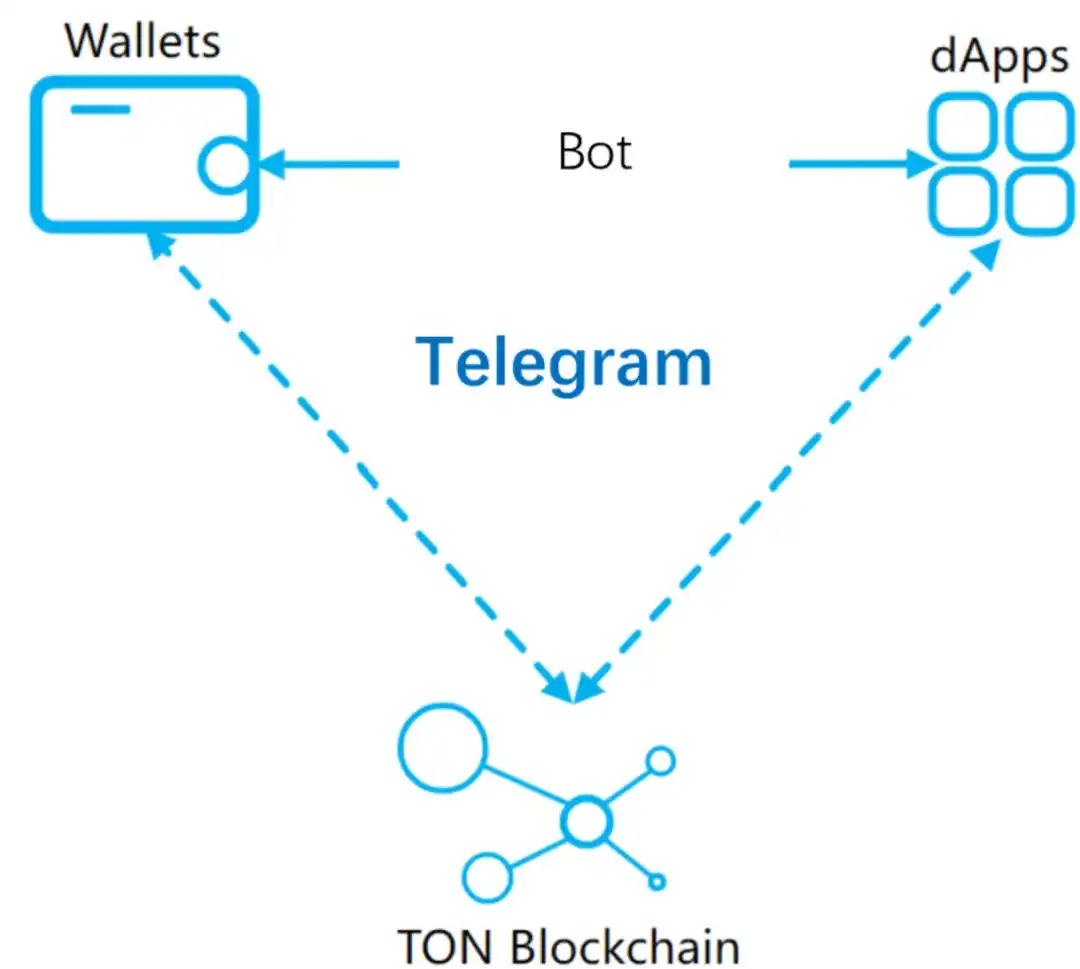
Telegram raised $1.7 billion from private investors, claiming the tokens were merely "fuel" for a future communication network;

However, the U.S. SEC deemed this financing an unregistered securities offering—because investors' intent was clearly "future appreciation," not "immediate use."

The result: Telegram refunded investors and paid fines, and the TON network was forced to operate independently from Telegram.

Lesson: Regulators focus on "investment expectations," not "technical vision." As long as you use investors' money to build an ecosystem, it carries securities attributes.

So, don't幻想 use the "utility" label to eliminate risks. Token nature evolves dynamically—early stages may constitute investment contracts, and only after mainnet launch can they become genuine usage credentials.

First, Identify Your Project Type

What determines your compliance path is not the token's name or total supply, but the project type.

  • Infrastructure (Infra):

Such as Layer1, Layer2, public chains, ZK, storage protocols.

Typically adopt "Fair Launch," with no pre-mining or SAFTs; tokens are generated by node consensus.

Examples include Bitcoin, Celestia, EigenLayer.

Advantages: Naturally decentralized, low regulatory risk; Disadvantages: Difficult to fundraise, long development cycles.

  • Application Layer Projects (App Layer):

Such as DeFi, GameFi, SocialFi.

The team pre-mints tokens (TGE) and manages the ecosystem treasury. Typical examples include Uniswap, Axie Infinity, Friend.tech.

Clear business models but high compliance risks: Sales, airdrops, and circulation all require regulatory disclosure and KYC handling.

Conclusion: Infrastructure survives on consensus; application projects rely on structure for survival. Without proper structure, all "Tokenomics" are empty talk.

Testnet Phase: Don't Rush to Issue Tokens; Build the "Legal Skeleton" First

Many teams start seeking investors, signing SAFTs, and pre-mining tokens during the Testnet phase.

But the most common mistake at this stage is:

Taking investors' money while still claiming "this is just a utility token."

The U.S. Filecoin is a cautionary tale. It raised about $200 million via SAFT before mainnet launch. Although it received an SEC exemption, delays in launch and temporary unusability led investors to question its "securities attributes," resulting in massive compliance costs to rectify.

The correct approach:

  • Separate two entities:
  • DevCo (Development Company) handles technical development and intellectual property;
  • Foundation / TokenCo manages ecosystem building and future governance.
  • Fundraising method: Use equity + Token Warrant structures instead of direct token sales.

Investors obtain rights to future tokens, not immediate token assets.

This method was first adopted by projects like Solana and Avalanche, allowing early investors to participate in ecosystem building without directly triggering securities sales.

Principle: The legal structure in the early stages is like the genesis block. One logical error, and compliance costs may multiply tenfold.

Mainnet Issuance (TGE): The Moment Most Likely to Attract Regulatory Attention

Once tokens can be traded and have a price, they enter regulatory radar—especially during public distributions like airdrops, LBPs (Liquidity Bootstrapping Pools), or Launchpad events.

  • Public Chain Projects:

Such as Celestia, Aptos, Sui, etc., typically generate tokens automatically via validator networks at TGE.

The team doesn't directly participate in sales; the distribution is decentralized, posing the lowest regulatory risk.

  • Application Layer Projects:

Such as Arbitrum and Optimism airdrops, or Blur and Friend.tech community distributions,

have drawn attention from regulators in some jurisdictions regarding whether "distribution and voting incentives constitute securities sales."

The safety line at TGE lies in disclosure and usability:

1. Clearly define token use cases and functionality;

2. Disclose token allocation ratios, lock-up periods, and vesting mechanisms;

3. Implement KYC/AML for investors and users;

4. Avoid "expected returns" promotions.

For example, during TGE, Arbitrum Foundation explicitly stated: its airdrop was solely for governance purposes, not representing investment or profit rights; and it gradually reduced foundation control in community governance—key to "de-securitizing" the token.
DAO Phase: Learn to "Let Go" and Truly Decentralize the Project

Many projects end after "issuing tokens," but the real challenge is—how to relinquish control and let tokens become public goods.

Take Uniswap DAO as an example:

  • Early development and governance were led by Uniswap Labs;
  • Later, Uniswap Foundation managed the treasury and funded ecosystem projects;
  • The community votes with UNI to decide protocol upgrades and parameter adjustments.

This structure makes it harder for regulators to identify a "centralized issuer" and boosts community trust.

In contrast, projects that fail to handle the DAO transition well, such as some GameFi or NFT ecosystems, where teams still control most tokens and voting rights, are seen as "pseudo-decentralized" and retain securities risks.

Decentralization isn't about "neglect," but "verifiable exit." A safe DAO architecture balances code, foundation, and community.

What Regulators Look For: Can You Prove "This Is Not a Security"?

Regulators aren't afraid of token issuance; they're concerned when you say "it's not a security" but act like it is.

In 2023, the SEC's lawsuits against Coinbase, Kraken, and Binance.US listed dozens of "utility tokens," asserting that during sales and marketing, they exhibited "investment contract" characteristics. This means that if a project promotes "expected returns" during token sales, even if the token has utility, it may be deemed a security.

Thus, compliance key is dynamic response:

  • Testnet → Focus on technology and development compliance;
  • TGE → Emphasize use cases and functional attributes;
  • DAO → Reduce team control, strengthen governance mechanisms.

Risks vary at each stage; every upgrade requires re-evaluating token positioning. Compliance isn't a stamp but continuous iteration.

Conclusion: Projects That Endure Cycles Rely on "Stability," Not "Speed"

Many projects fail not due to poor technology but flawed structure. While others talk about "gains," "airdrops," and "exchange listings," truly smart founders are already building legal frameworks, writing compliance logic, and planning DAO transitions.

Utility token issuance isn't about bypassing regulation but using law to prove you don't need it. When code takes over rules, law becomes your firewall.


Perguntas relacionadas

QWhat is the legal identity of a utility token determined by, according to the article?

AThe legal identity of a utility token is determined by market behavior and investment expectations, not by how the project describes it in its whitepaper. Regulators focus on whether the token sale constitutes an investment contract, based on the expectation of profit, rather than its technical vision or intended use.

QWhat are the two main types of projects mentioned, and how do their compliance paths differ?

AThe two main types are Infrastructure projects (e.g., Layer1, Layer2, public chains) and Application Layer projects (e.g., DeFi, GameFi). Infrastructure projects often use a 'Fair Launch' with no pre-mining or SAFTs, leading to lower regulatory risk but greater difficulty in fundraising. Application Layer projects typically pre-mint tokens, have clearer business models, but face higher compliance risks requiring careful handling of sales, airdrops, and regulatory disclosures.

QWhat is the recommended legal structure during the Testnet phase to avoid regulatory issues?

AThe recommended structure is to separate the project into two entities: a DevCo for technical development and IP, and a Foundation/TokenCo for ecosystem building and future governance. Funding should be raised using 'equity + Token Warrant' structures instead of direct token sales, granting investors rights to future tokens rather than immediate assets to avoid triggering securities regulations prematurely.

QWhat are key steps to enhance compliance during a Token Generation Event (TGE)?

AKey steps during TGE include: 1) Clearly defining the token's use cases and functionality, 2) Disclosing token allocation, lock-up periods, and release mechanisms, 3) Implementing KYC/AML procedures for investors and users, and 4) Avoiding promotional language that suggests an expectation of profit or investment return.

QHow does the article define the transition to a DAO for achieving true decentralization and reducing regulatory risk?

AThe transition to a DAO involves the project team gradually relinquishing control to the community. This is achieved by establishing a verifiable exit strategy where code, a foundation, and the community form a balanced governance structure. This reduces the perception of a centralised issuer and demonstrates that the token is a public good rather than a security, as seen in successful models like Uniswap DAO.

Leituras Relacionadas

From South Korea to the United States: Blue-Collar Jobs Are Becoming Increasingly Popular, Thanks to AI

AI is reshaping the labor market's value proposition. The traditional four-year college degree is losing its appeal as a guaranteed career path, while skilled blue-collar trades like electricians, welders, and plumbers are experiencing historic demand and wage premiums. This shift is driven by dual pressures: AI's displacement of certain white-collar roles and a booming need for physical infrastructure and data center construction. Data confirms the trend. In the U.S., vocational school revenue surged, and a significant portion of recent layoffs are AI-related. Surveys show a majority of Gen Z adults plan to pursue blue-collar work, citing better job security against AI automation. Vocational education interest has exploded recently. Experts cite a psychological shift as younger generations seek tangible, AI-resistant careers and avoid high student debt. In many cases, salaries for skilled trades now match or exceed those requiring a bachelor's degree. In South Korea, semiconductor vocational high schools boast near-total employment, with graduates securing high-paying roles at companies like Samsung. The shortage is structural, exacerbated by a retiring baby boomer workforce and massive infrastructure projects. Companies like JPMorgan Chase, Meta, and Lowe's are investing heavily in training programs. However, overcoming historical stigma and a "perception gap" around trade careers remains a key challenge to closing the talent gap.

marsbitHá 42m

From South Korea to the United States: Blue-Collar Jobs Are Becoming Increasingly Popular, Thanks to AI

marsbitHá 42m

Qualcomm: AI Hype Subsides, When Will Smartphones Emerge from the Gloom?

Qualcomm reported its Q3 FY2026 results (ending June 2026), with revenue of $9.95B, down 4% YoY but above expectations. Gross margin declined to 53.1%, pressured by rising costs across manufacturing and memory. Key business segments showed mixed performance: Handset revenue fell 19.6% YoY to $5.09B, dragged by an 11% decline in non-Apple Android shipments and weaker high-end mix. Conversely, Automotive revenue surged 61% to $1.59B, and IoT grew 9% to $1.83B. Core operating profit dropped 41% YoY due to margin compression and higher expenses. Management's Q4 FY2026 guidance projects revenue of $9.7B-$10.5B, in line with consensus, but Non-GAAP EPS guidance of $2.05-$2.25 fell short of expectations. Amidst persistent weakness in its core handset market, Qualcomm is pursuing growth in AI, focusing on Edge AI (smartphones, PCs, automotive) and Data Center AI. Its data center strategy includes four pillars: AI accelerators (e.g., AI200), commercial CPUs (Dragonfly C1000), custom silicon, and connectivity solutions. While these initiatives initially boosted its stock, concerns over AI capital expenditure sustainability have since erased those gains. The company targets $5B in data center revenue for FY2027 and $15B for FY2029. The report concludes that with the traditional handset business still under pressure, the data center opportunity is currently viewed as a longer-term option, and a more conservative valuation based on core operations may be warranted until AI contributions materialize.

marsbitHá 46m

Qualcomm: AI Hype Subsides, When Will Smartphones Emerge from the Gloom?

marsbitHá 46m

From TPU to Self-Evolving Agents: How Jeff Dean Predicts the Next Step in AI

At the 2026 YC Startup School, Jeff Dean outlined his vision for AI's next phase, shifting focus from simply scaling models to building intelligent, autonomous systems. He believes AI's progress is no longer just about creating smarter models, but about integrating them into systems capable of long-term, iterative work, automated experimentation, and continuous learning. This evolution moves the competition from "who has the bigger model" to "who can best organize intelligence." Dean suggests AI capabilities are now comparable to a junior engineer, enabling the automation of complex workflows. However, the true challenge and opportunity lie in managing these AI "workers" at scale. He emphasizes the importance of **context engineering**—structuring tools, memory, and feedback loops—over raw model power. For startups, this means building deep expertise in niche domains where general models currently fail (near 0-1% success rates), leveraging proprietary data, specialized tools, and domain-specific evaluators. A recurring theme is re-examining fundamental constraints. Dean's past work, like moving Google's search index to memory or creating the TPU, stemmed from questioning outdated assumptions about hardware and cost. He sees similar inflection points today, particularly in **specialized inference hardware** to drastically reduce latency and energy consumption for real-time Agent operation. Notably, he points out that in modern AI systems, the dominant cost is often not computation but **data movement**. Reliable, long-running Agents require robust system design, borrowing concepts from distributed computing like checkpointing, state management, and parallel exploration to handle failures and maintain progress over days or weeks. As AI automates execution, the scarcest human skills will shift to **defining clear specifications**, **judging what problems are worth solving** (taste), and designing effective feedback loops. Ultimately, Dean's framework prioritizes understanding the problem deeply, identifying the true bottlenecks, and systematically building closed-loop systems where AI can not only perform tasks but also improve AI itself.

marsbitHá 46m

From TPU to Self-Evolving Agents: How Jeff Dean Predicts the Next Step in AI

marsbitHá 46m

Trading

Spot
活动图片




