Coinbase Founder Is Now Researching Immortality

Odaily星球日报Publicado em 2026-06-03Última atualização em 2026-06-03

Resumo

Coinbase Founder Invests in the "Fountain of Youth": NewLimit's $435M Funding to Reverse Aging Brian Armstrong, co-founder and CEO of Coinbase, is now targeting a new frontier: human longevity. His biotech startup, NewLimit, has just raised $435 million in a Series C round led by Peter Thiel’s Founders Fund, valuing the company at $3.1 billion. The funding will advance its mission to develop therapies that slow or even reverse cellular aging, with its first drug targeting alcohol-related liver disease set to enter clinical trials next year. Founded in 2021 by Armstrong, former GV partner Blake Byers, and stem cell biologist Jacob Kimmel, NewLimit builds on Nobel Prize-winning research by Shinya Yamanaka, who discovered that adult cells can be reprogrammed to a younger state. NewLimit’s approach focuses on identifying specific gene combinations to reset the "epigenetic age" of cells, aiming first to treat diseases viewed as accelerated aging before broadening its applications. The company joins a growing field of longevity startups backed by tech billionaires, including Sam Altman’s investment in Retro Biosciences and Jeff Bezos’s support for Altos Labs. For these ultra-wealthy backers, conquering aging represents the ultimate investment—extending the one resource even immense wealth cannot buy: time.

Original | Odaily Planet Daily (@OdailyChina)

Author | Azuma (@azuma_eth)
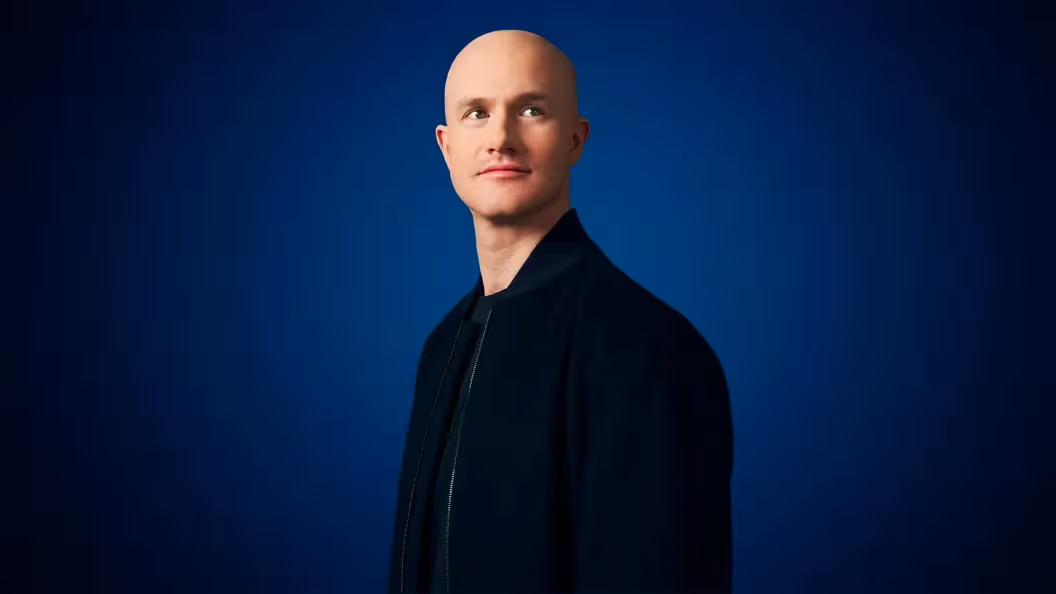
At 3 AM Beijing time on June 3, longevity tech startup NewLimit announced the completion of a $435 million Series C funding round. This round was led by Founders Fund, the fund under Peter Thiel, with continued participation from Abstract Ventures, Kleiner Perkins, NFDG, Eli Lilly Ventures, Valor Equity Partners, among others. New investors including Thrive Capital, Greenoaks, and Quiet Capital also joined this round.

WSJ reported that NewLimit's valuation in this round reached $3.1 billion, more than tripling its valuation from a year ago.
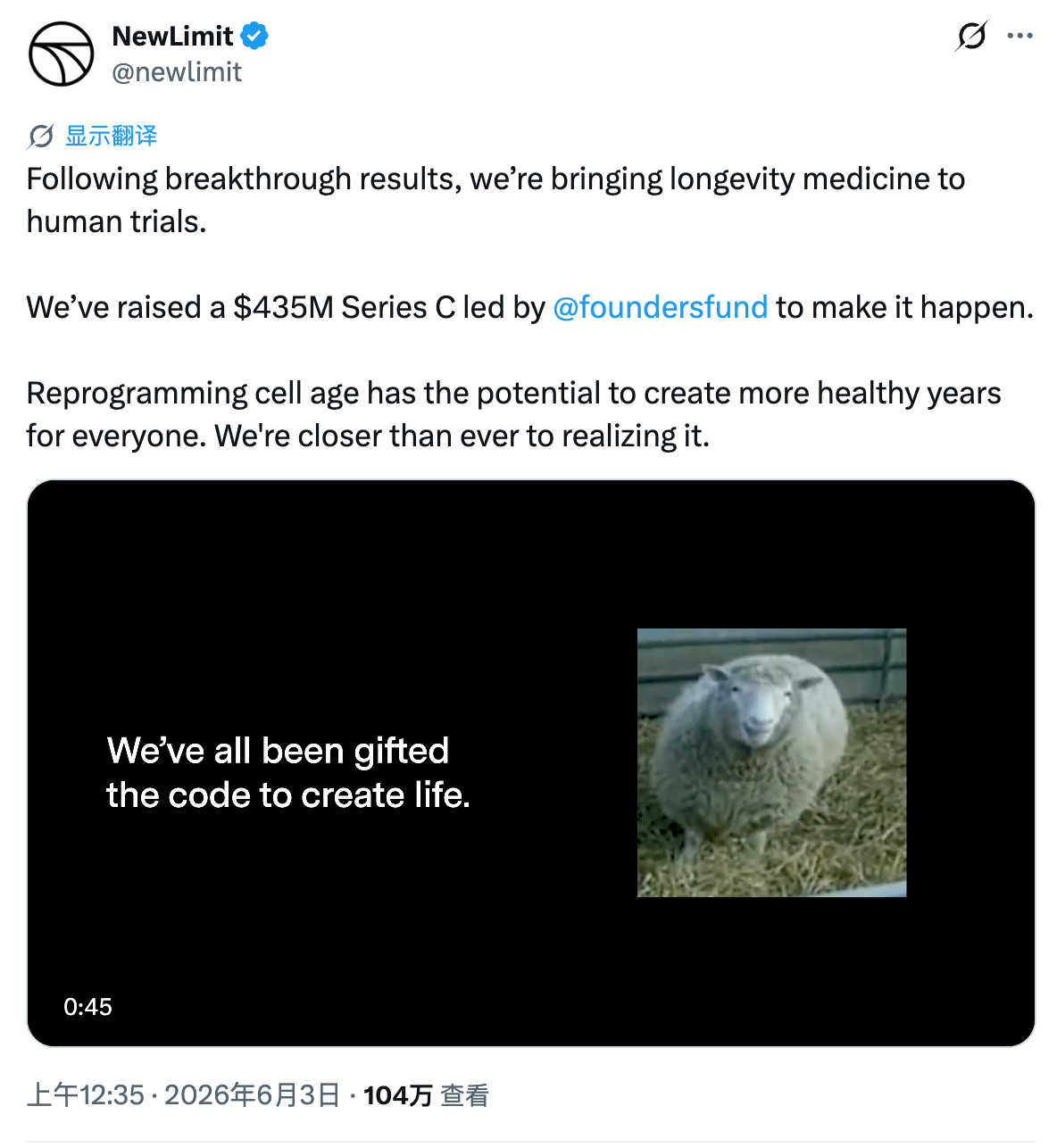
In the funding announcement, NewLimit revealed that following breakthrough research achievements, the company is advancing longevity medicine to the stage of human clinical trials. Its first drug targeting alcohol-associated liver disease is expected to commence clinical trials next year.

NewLimit further emphasized: "By reprogramming cell age, humans have the potential to achieve longer healthspans. Now, humanity is closer than ever to the goal of 'slowing down or even reversing aging.'"

The Founder is an Old Acquaintance

It's worth noting that NewLimit's co-founder is none other than a familiar name – Brian Armstrong, the founder and CEO of Coinbase.

In 2021, Brian Armstrong, alongside former GV partner and bioengineer Blake Byers, and stem cell biologist Jacob Kimmel, jointly invested $110 million to establish NewLimit in the southern part of San Francisco.
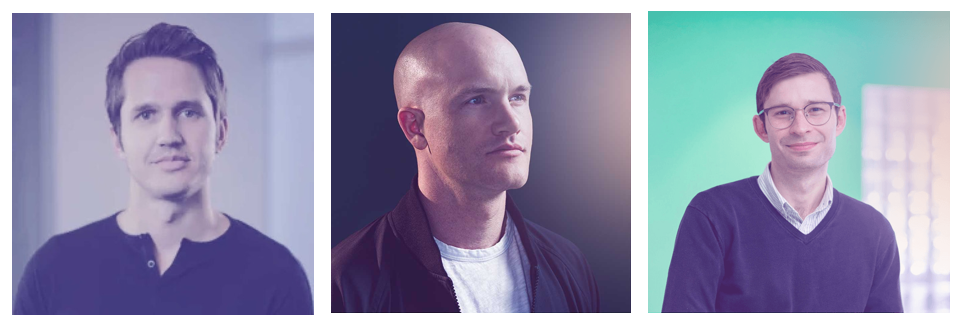
Photo: NewLimit founding team

Prior to this Series C round, NewLimit had completed three rounds of funding, detailed as follows.

  • Completed a $40 million Series A round in May 2023, with investors including Dimension, Founders Fund, and Kleiner Perkins;
  • Completed a $130 million Series B round in May 2025, valuing the company at $810 million, led by Kleiner Perkins with participation from Founders Fund, Khosla Ventures, and Human Capital, among others;
  • Secured an additional $45 million in funding in October 2025, bringing the post-money valuation to $1.62 billion, with investors including Lilly Ventures, Duke University, Section 32, etc.;

According to NewLimit's official introduction, the company is committed to developing drugs that extend people's healthspan – "As we age, our cells' functions gradually decline, making us more susceptible to disease. It was once thought that aging was inevitable, but emerging science suggests the aging process can be reversed at the cellular level. We are developing the first drugs based on these discoveries to restore youthful function to aged cells."

In simpler terms, NewLimit is researching immortality using scientific methods!

Reversing Aging is Not a Fantasy

Over the past few decades, the scientific community has long recognized the connection between aging and cellular functional decline but couldn't find precise methods to make cells 'rejuvenate'. The turning point came in 2006 when Japanese scientist Shinya Yamanaka discovered that activating just a few specific transcription factors could reprogram adult cells into a younger state similar to embryonic stem cells. This discovery was later named "Yamanaka Factors" and earned him the 2012 Nobel Prize in Physiology or Medicine.

Odaily Note: Photo of Shinya Yamanaka speaking in Tokyo

Yamanaka's research first proved something previously thought impossible – that cellular age is not irreversible. The story NewLimit is telling is built precisely upon this discovery.

NewLimit writes on its website: "Our drugs work by reprogramming a cell's epigenome to a more youthful state by activating specific transcription factor genes. We already know this reversal is possible. But for different types of cells, exactly which combination of transcription factors is needed to restore their youthful function remains unknown. The core challenge of our work is finding and discovering these effective gene payloads."

NewLimit's strategy is to first target a specific disease to secure drug approval, then explore broader applications. As mentioned earlier, NewLimit is advancing a drug for alcohol-associated liver disease into clinical trials.

Jacob Kimmel, co-founder and CEO of NewLimit, further explained this: Liver disease can essentially be viewed as a form of 'accelerated aging,' where the aging process everyone experiences manifests faster and more severely.

The Biggest Investors in This Sector Are All Billionaires

NewLimit is not the only tech company currently targeting "immortality."

In 2022, Sam Altman invested $180 million in Retro Biosciences, which is developing drugs to rejuvenate aging cells and revealed last month its valuation had reached $1.8 billion.

Additionally, Altos Labs, reportedly backed by Jeff Bezos's funding, launched in 2022 with $3 billion and has since raised nearly twice that amount cumulatively.

It's not hard to see that from Peter Thiel to Sam Altman, to Jeff Bezos, the biggest investors in this sector are invariably super-wealthy individuals at the pinnacle of the tech and wealth pyramid. Peter Thiel has publicly expressed extreme aversion to death, stating views like: "Death is humanity's greatest enemy, yet we treat it as a natural law..."

The logic behind these tech tycoons' willingness to invest hundreds of millions of dollars isn't hard to understand – when wealth and power reach their peak, time becomes the only enemy, the one luxury that cannot be directly purchased with money.

Having made enough money, "how to live longer" becomes the ultimate quest.

Perguntas relacionadas

QWho is the founder of NewLimit, and what other company is he known for?

AThe founder of NewLimit is Brian Armstrong, who is also the founder and CEO of Coinbase.

QWhat is the key scientific breakthrough that NewLimit's research is built upon?

ANewLimit's research is built upon the discovery of the 'Yamanaka Factors' by Shinya Yamanaka, which demonstrated that adult cells can be reprogrammed to a younger, embryonic-like state.

QWhat is NewLimit's primary approach to developing its age-reversing drugs?

ANewLimit's primary approach is to discover the specific combinations of transcription factor genes that can reprogram the epigenome of different cell types to a younger state, aiming to restore their youthful function.

QWhat is the significance of liver disease in NewLimit's current clinical trial plans?

AAccording to NewLimit's co-founder Jacob Kimmel, liver disease can be seen as an 'accelerated version of aging,' making it a strategic starting point to develop and test drugs before exploring broader anti-aging applications.

QWhich other prominent tech billionaires are investing in similar longevity research companies?

AOther prominent tech billionaires investing in similar longevity research include Peter Thiel (investing in NewLimit), Sam Altman (investing in Retro Biosciences), and Jeff Bezos (investing in Altos Labs).

Leituras Relacionadas

Should You Buy SpaceX Stock at $1.7 Trillion? Here's What the Market Is Worried About

SpaceX is preparing for a massive IPO aiming to raise around $75 billion at a valuation of approximately $1.75 trillion. While its achievements in reusable rockets and the profitable Starlink satellite internet service are clear, the market is concerned about the aggressive valuation. Key issues include: the current $1.75 trillion valuation, which is about 94 times 2025 revenue, seems to price in not just existing businesses but also unproven future ventures like AI infrastructure and orbital data centers. Financially, while Starlink is profitable, the AI division, bolstered by the acquisition of xAI, is incurring massive losses and consuming the majority of capital expenditures. This acquisition also introduced complex related-party financing arrangements and debt onto SpaceX's balance sheet. Furthermore, corporate governance poses a challenge. SpaceX's dual-class share structure ensures founder Elon Musk retains absolute control, limiting ordinary shareholders' influence over high-risk, long-term strategic decisions. The future success of ambitious projects like the Starship rocket—critical for lowering costs and enabling new services—remains a significant variable for the valuation. In summary, the market's apprehension (FUD) centers not on doubting SpaceX's past technological triumphs but on questioning how much premium public investors should pay for a future that combines proven profits with highly speculative and capital-intensive new ventures, all under a governance structure that offers limited shareholder oversight.

marsbitHá 55m

Should You Buy SpaceX Stock at $1.7 Trillion? Here's What the Market Is Worried About

marsbitHá 55m

Breaking the DeFi Cascading Liquidation Curse: Vitalik Proposes a New Solution

Vitalik Buterin has proposed a new DeFi design to eliminate the automatic liquidation mechanism that causes market instability during sharp downturns. The current system, used by protocols like Aave, triggers forced sales when collateral value falls below a threshold, often exacerbating price drops and creating systemic selling pressure. Buterin's alternative model is based on splitting an asset like ETH into two synthetic option-like tokens, P and N, pegged to a price index. Their combined value always equals one ETH. Instead of sudden liquidation, a position's value gradually drifts from its target peg if the market moves. Users must proactively rebalance their holdings to maintain their desired exposure, transferring the management burden from the protocol to the user or automated tools. A key advantage is the reduced reliance on real-time oracles. Pricing decisions are deferred until contract expiry, allowing for more robust, fault-tolerant oracle designs. This removes a clear liquidation threshold that speculators can target for manipulation or MEV extraction. However, significant challenges remain. Frequent rebalancing could incur high slippage and transaction costs, necessitating new liquidity provider models. The design is better suited for hedging instruments than for stablecoins requiring a rigid 1:1 peg. While not an immediate replacement for existing systems, the proposal challenges the foundational assumption that instantaneous forced liquidation is an unavoidable necessity in DeFi, opening the door for fundamentally different risk management architectures.

marsbitHá 1h

Breaking the DeFi Cascading Liquidation Curse: Vitalik Proposes a New Solution

marsbitHá 1h

The End of Single-Factor Cryptography

The article "The End of Single-Factor Crypto" posits a fundamental shift in the cryptocurrency ecosystem. It argues the era where crypto asset valuations were predominantly driven by, and correlated with, Bitcoin's price is ending. The space is bifurcating into two distinct economies: endogenous and exogenous. The endogenous economy represents traditional crypto, where token and project values are directly tied to crypto market prices. The emerging exogenous economy comprises projects and businesses that may utilize blockchain technology or tokens but derive their fundamental value from external, non-crypto factors like consumer demand, subscription revenue, or real-world utility. Examples include AI inference platforms like Venice, fintech lenders using blockchain for efficiency, and stablecoin/payment infrastructure companies acquired by giants like Mastercard and Stripe. This shift means investment analysis must change. For exogenous assets, evaluating traditional business fundamentals—such as revenue streams, unit economics, and competitive moats—becomes more critical than tracking Bitcoin charts. While endogenous assets like Bitcoin remain relevant, the growth of the exogenous category is driven by measurable demand independent of crypto price cycles, paving the way for a new, more diversified market phase. Consequently, crypto is evolving from a single-factor, reflexive asset class into a multifaceted ecosystem with varied drivers and investment theses.

marsbitHá 1h

The End of Single-Factor Cryptography

marsbitHá 1h

Morning Post | Bitmine Plans to Raise $300 Million Through Preferred Stock Issuance; Polymarket Accuses Kalshi of Commercial Espionage

ChainCatcher's Daily Crypto Brief: Key developments from the past 24 hours include significant funding moves, regulatory actions, and market predictions. Bitmine announced a $300 million preferred stock fundraising. Polymarket accused rival prediction platform Kalshi of corporate espionage, citing numerous suspicious coincidences in product launches, a claim Kalshi strongly denied. The U.S. Department of Justice, in a joint "Disruption Week" anti-fraud operation with companies like Coinbase and Meta, froze over $3.8 million in cryptocurrency linked to scams. In infrastructure news, Macau completed its integration with the multi-central bank digital currency bridge, mBridge, aiming to build efficient cross-border payment channels. Cosmos Labs acquired the block explorer Mintscan. Market-wise, Geoffrey Kendrick, Standard Chartered's Head of Digital Assets Research, stated Bitcoin is nearing a bottom around $63,000, maintaining a year-end target of $100,000. He noted stability in U.S. spot Bitcoin ETF holdings. Ahead of SpaceX's anticipated IPO, internal insiders at Rocket Lab (RKLB) sold over $18.41 million in stock. In tokenization, Goldman Sachs partnered with Apex and Archax to launch a tokenized real estate fund. The meme token tracker GMGN reported the top trending tokens: on Ethereum, HEX, SHIB, LINK, PEPE, mUSD; on Solana, TROLL, swarms, WORLDCUP, neet, Buttcoin; and on Base, PEPE, toby, ODDS, ELSA, SKI.

链捕手Há 1h

Morning Post | Bitmine Plans to Raise $300 Million Through Preferred Stock Issuance; Polymarket Accuses Kalshi of Commercial Espionage

链捕手Há 1h

Trading

Spot
Futuros
活动图片