Coinbase Escalates Fight With Australian Banks Over Crypto Bans

bitcoinistPublicado em 2026-02-05Última atualização em 2026-02-05

Resumo

Coinbase has formally complained to Australia's parliament, accusing the country's four major banks—Commonwealth Bank, Westpac, ANZ, and National Australia Bank—of blocking or shutting down services for legitimate crypto firms without warning. The exchange argues these actions create significant barriers for crypto businesses that depend on banking services. It calls for mandatory rules requiring banks to provide explanations, advance notice, dispute channels, and transparent compliance checks. Banks defend their actions by citing anti-money laundering and counter-terrorism financing risks, stating that some crypto activities are difficult to monitor. The issue particularly affects smaller crypto firms, forcing some to consider moving operations overseas. Parliamentary hearings are expected to address the conflict between financial safety and business access, potentially leading to clearer regulations or stronger oversight.

Coinbase has taken a louder stand against Australia’s biggest banks, saying those banks are shutting down or blocking services for legitimate crypto firms.

The exchange lodged a formal complaint with the House of Representatives Standing Committee on Economics and argues that the problem goes beyond occasional account closures — it has become a common barrier for companies that rely on bank accounts and payment rails to do business.

Coinbase Raises Formal Complaint

Based on reports, Coinbase asks for clearer rules and more fairness. It wants banks to explain why they close accounts, give at least 30 days’ notice before cutting services, set up dispute channels, and publish compliance checks.

Coinbase submitted a report to the House’s SCE, naming Commonwealth Bank, Westpac, ANZ, and National Australia Bank. It alleges the banks are closing accounts without warning and blocking crypto-related transactions.

Reports say the company also calls on lawmakers to make those rules mandatory so firms can’t be cut off without cause.

One study cited in coverage found as much as 60% of some fintechs were denied banking in recent years, and Coinbase uses figures like that to show the problem is widespread.

Banks Cite Risk And Compliance Concerns

Banks respond that they act to meet anti-money-laundering and counter-terrorism financing rules. They argue that some crypto activity is hard to monitor and that cutting ties can be a compliance step when risk can’t be clearly managed.

Bank customers and regulators want safe payment systems, and banks say they must weigh that against new business lines.

Total crypto market cap currently at $2.53 trillion. Chart: TradingView

At times, actions by lenders are reactive; at other times they follow formal internal policies. That difference matters because it affects how easy it is for a firm to appeal a decision.

Who Gets Hurt When Banking Is Closed

Small exchanges, payment processors, and other crypto services feel the squeeze. When a bank ends a relationship, transactions slow, wages need alternative accounts, and trust gets strained.

Reports say some startups consider moving operations overseas where banking is more welcoming. That risk has policy implications: if local fintechs leave, jobs go with them and the country may miss out on new services. The result is a tug-of-war between financial safety and business access.

What Comes Next For Regulators

Parliamentary hearings are now a likely next step, and those sessions could press banks for more detail and push regulators to set clearer rules.

Australia’s financial watchdogs have discussed the issue before but stopped short of forcing banks to change. The committee will hear evidence, and it can recommend legal changes or stronger guidance to make sure account closures are tracked and justified.

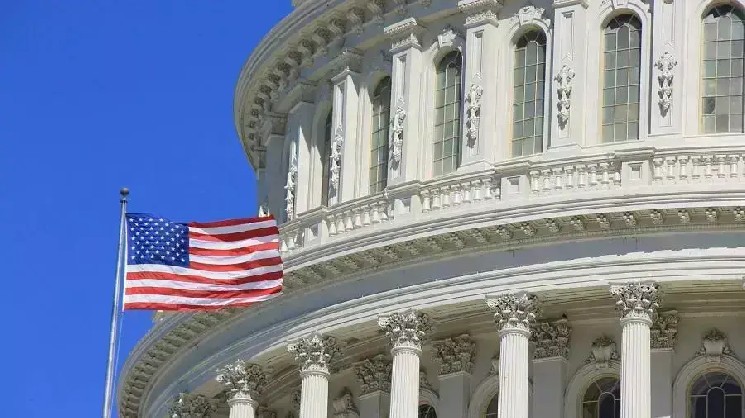
Featured image by Jakub Porzycki/NurPhoto via Getty Images, chart from TradingView

Perguntas relacionadas

QWhat formal action has Coinbase taken against Australian banks regarding crypto service restrictions?

ACoinbase has lodged a formal complaint with the House of Representatives Standing Committee on Economics, accusing major Australian banks of blocking or shutting down services for legitimate crypto firms.

QWhich specific Australian banks did Coinbase name in its complaint?

ACoinbase named Commonwealth Bank, Westpac, ANZ, and National Australia Bank in its formal complaint.

QWhat reasons do banks give for restricting services to crypto-related firms?

ABanks cite anti-money laundering and counter-terrorism financing compliance concerns, stating that some crypto activities are difficult to monitor and pose risks that are hard to manage.

QWhat percentage of fintechs were reportedly denied banking services according to the study mentioned?

AThe study cited in the coverage found that as much as 60% of some fintechs were denied banking services in recent years.

QWhat potential consequence does the article mention if Australian crypto startups move operations overseas?

AIf local crypto startups move operations overseas due to banking restrictions, jobs may be lost and Australia could miss out on new financial services and innovations.

Leituras Relacionadas

Interview with Robinhood Executive: Meme + Tokenized US Stocks as "Barbell" Customer Acquisition Strategy, All Business Lines Achieve Hundreds of Millions in Revenue

Interview with Robinhood executive Johann Kerbrat reveals the company's "barbell" customer acquisition strategy for its new Robinhood Chain, combining meme tokens with tokenized stocks. Three weeks after mainnet launch, the chain has seen over $3B in weekly DEX volume and 105M transactions. Kerbrat explains the logic behind the permissionless chain: meme tokens attract DeFi users, while tokenized real-world assets (RWA), currently over 90 US stocks and ETFs accessible in 120+ countries, serve global users. The goal is to bring Robinhood's 27 million funded accounts on-chain by simplifying DeFi with a user-friendly interface, exemplified by features like Robinhood Earn which offers yield without requiring wallet management. Built on Arbitrum's technology stack for its speed, low cost, and Ethereum's security, the chain focuses on financial products like Earn, spot trading, and perpetuals. Kerbrat downplays direct competition with platforms like Base, emphasizing the goal of expanding the overall market for on-chain assets. He details selective partnerships (e.g., Morpho, Lighter) based on compliance, unique UX, and differentiation. While regulatory clarity is pending for US perpetuals, the expansion continues via Bitstamp in Europe. Finally, Kerbrat positions Robinhood as a "super app" integrating stocks, options, crypto, banking, and AI trading, with all major business lines generating hundreds of millions in revenue. For the chain, current priority is driving adoption over maximizing gas fee revenue.

marsbitHá 4m

Interview with Robinhood Executive: Meme + Tokenized US Stocks as "Barbell" Customer Acquisition Strategy, All Business Lines Achieve Hundreds of Millions in Revenue

marsbitHá 4m

Fidelity Q3 Report: BTC, ETH, and SOL Continue to Build Bottoms; How Much Further Will This Crypto Bear Market Go?

Fidelity's Q3 Crypto Signal Report analyzes the current bear market, noting Bitcoin (BTC), Ethereum (ETH), and Solana (SOL) are in a prolonged bottoming phase. Key indicators like the weighted Net Unrealized Profit/Loss (NUPL) have turned negative (-0.01), signaling the market is slightly below its aggregate cost basis, with BTC acting as the primary stabilizing asset. BTC's dominance has risen to 68%, indicating a lack of capital rotation to other digital assets. Performance has been weak across the board, with BTC, ETH, and SOL down significantly year-to-date. Market sentiment is depressed, exacerbated by substantial outflows from spot ETPs and a challenging macro environment. The report compares the current ~203-day downtrend to historical ~300-day bottoming cycles, suggesting the process may be two-thirds complete, with late 2026 as a potential timeframe to monitor. For Bitcoin, NUPL at 0.09 indicates cautious sentiment, while momentum signals remain negative. The Yardstick metric points to potential undervaluation relative to network security (hashrate). Ethereum's NUPL is deep in the "capitulation" zone at -0.43, a historically positive signal for future returns, though its momentum and network fee revenue are negative. Solana shows the deepest NUPL at -0.72 but demonstrates relative resilience in on-chain activity and stablecoin transfer volume. The report concludes that while several metrics are near historical capitulation levels, a definitive market bottom has not yet been established. The path forward likely involves continued consolidation, with BTC's relative strength and fundamental on-chain usage for ETH and SOL providing key areas for investor observation.

marsbitHá 18m

Fidelity Q3 Report: BTC, ETH, and SOL Continue to Build Bottoms; How Much Further Will This Crypto Bear Market Go?

marsbitHá 18m

Trading

Spot
活动图片