Claude Opus 5 Leaks, First Wave of User Tests Arrive

marsbitPublicado em 2026-07-24Última atualização em 2026-07-24

Resumo

Claude Opus 5 appears to have been leaked, with early test results circulating online. Users report generating highly detailed 3D scenes, such as a catapult attacking a castle with intricate parameter cards, dynamic weather interfaces, and realistic kitchen renders. Comparisons show Opus 5 outperforming the current Fable 5 in detail density for similar prompts. Other demos include impressive Minecraft recreations and detailed SVG graphics. Evidence of the leak includes sightings in Cursor's model selector (under the code "Honeycomb EAP") and Google Vertex AI, followed by reports of the model appearing for some users, though officially labeled as version 4.8. Speculation is growing that Opus 5 could match Fable 5's capabilities at half the price per token, though concerns exist about potentially higher token consumption. The model's formal release seems imminent.

Claude Opus 5 has leaked early, and netizens have already put it through a full round of testing.

In a 3D-generated scene posted by @chetaslua, a catapult is launching stones at a city wall. On the left side of the image, parameter cards for projectile tension and arrow weight are displayed, along with various other details, all rendered with exceptional clarity.
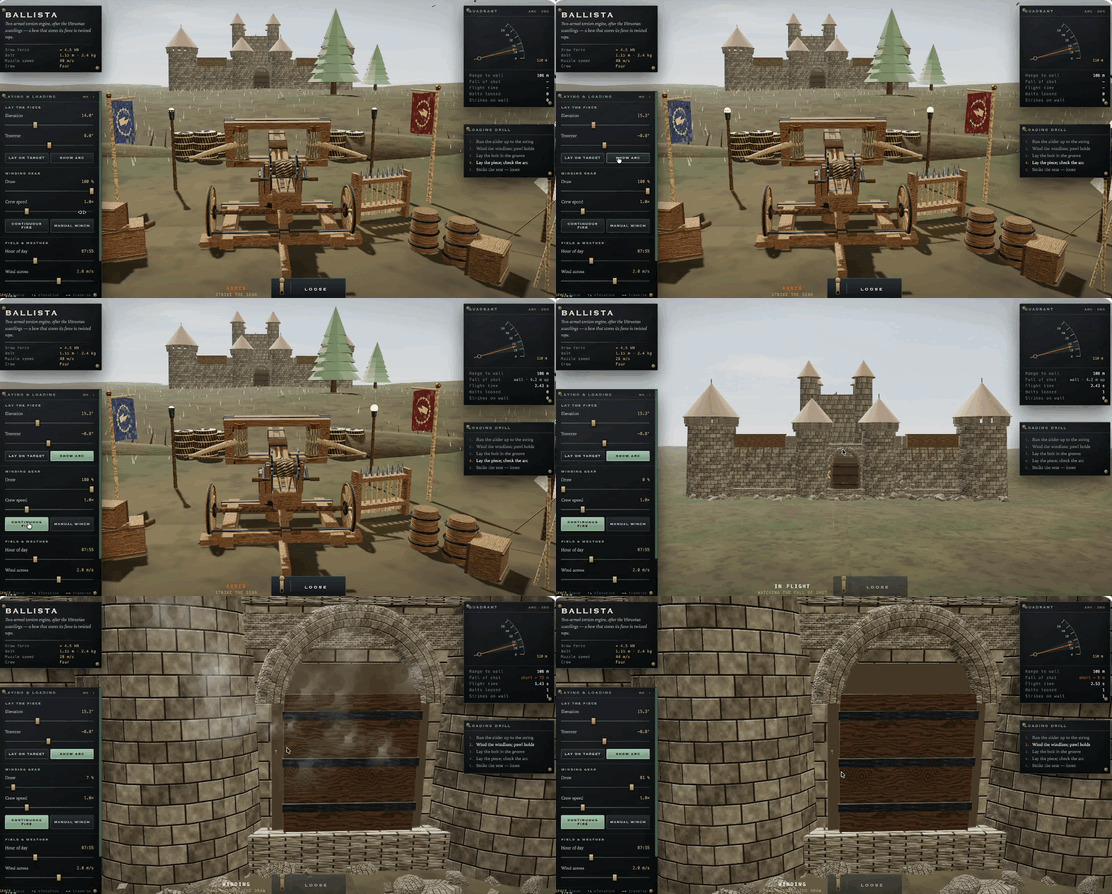
He said, having used Opus for so long, I've never seen this level of detail in a single image, not even by piecing together multiple screenshots.

Similar reactions have been popping up over the past couple of days, with some even saying they'd be willing to call it fable 6.

Of course, this video wasn't an isolated case. Others have been posting different real-world tests over these past days.

Netizens Take Opus 5 for a Spin First

@chetaslua didn't post just one video.

On the same day, he shared a weather card interface where lighting and shadows change as time progresses. When it's sunny, sunlight falls on a frosted glass panel; when clouds pass by, the shadows shift accordingly.

There was also a kitchen scene complete with fridge magnets, gaps between tiles, and the reflection on a kettle on the stovetop.

He attributed these effects to one statement: after using Opus for so long, it's the first time he's felt that three.js could achieve this level of quality.

Some users even found that Opus 5's handling of this scene has surpassed that of fable.

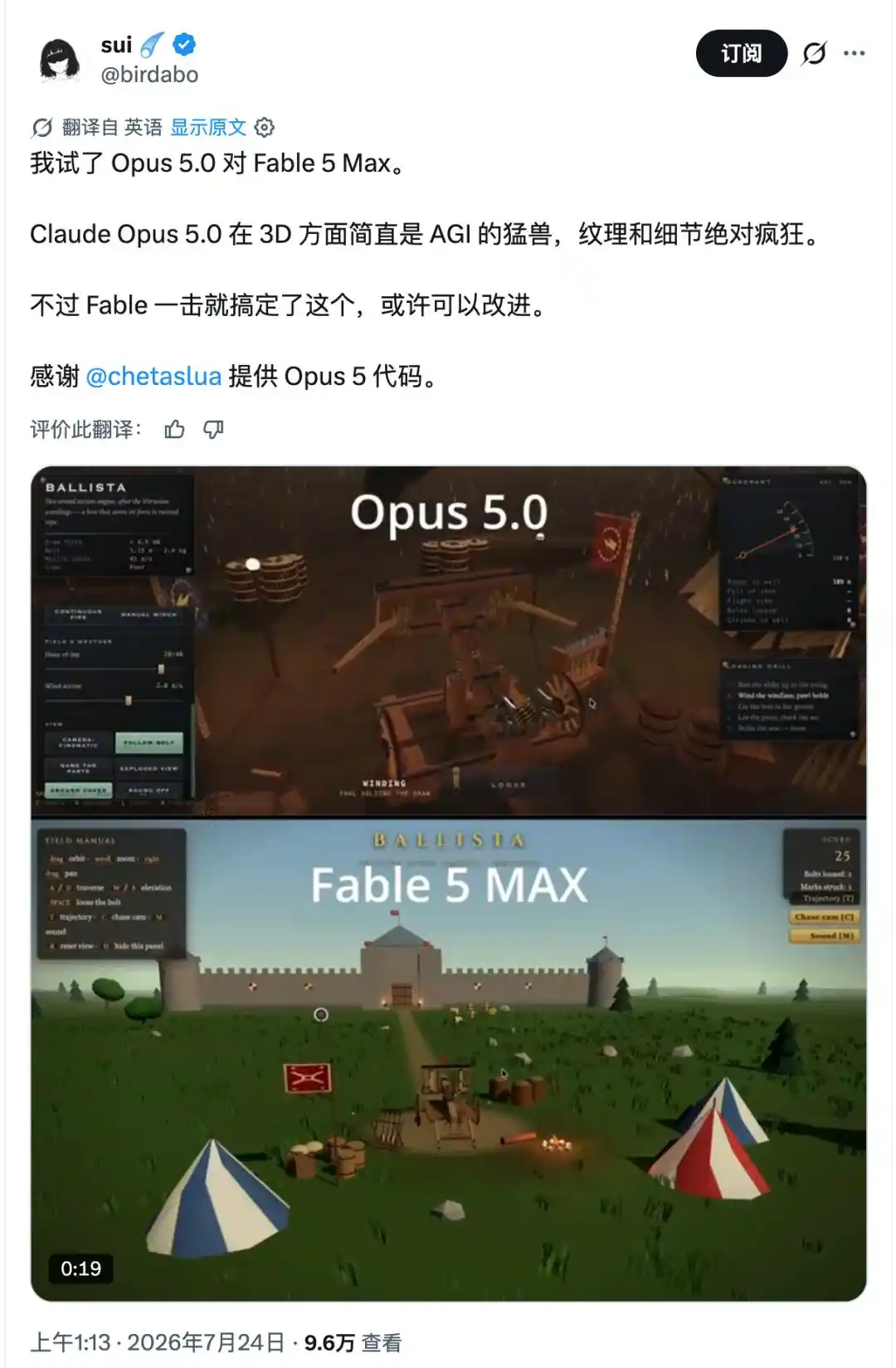
@birdabo conducted a head-to-head comparison.

For the same catapult siege scene, he fed it to both Opus 5 and the already-released Fable 5.

While Fable 5 generated the scene in one go, its tents were flat single-color planes, the grass lacked texture, and the catapult itself was missing parameter panels for tension and arrow weight. The density of detail was visibly lower.
At the same time, @xikhar shared a completely different scene—a real-world test of recreating Minecraft.

Asking models to recreate Minecraft has already become a classic test.

In the demo shown by the blogger, the physical effects of block breakage and the shadows cast by light on surfaces were reproduced vividly.

Later, he posted an SVG image of a PS5 controller, where the highlights and shadows on the joysticks, touchpad, and buttons looked like a product render.

The blogger therefore commented that Opus 5 is "strong in both 3D and 2D."

Hints of Opus 5 Already Appearing

The earlier traces of the Opus 5 leak appeared around July 9th.

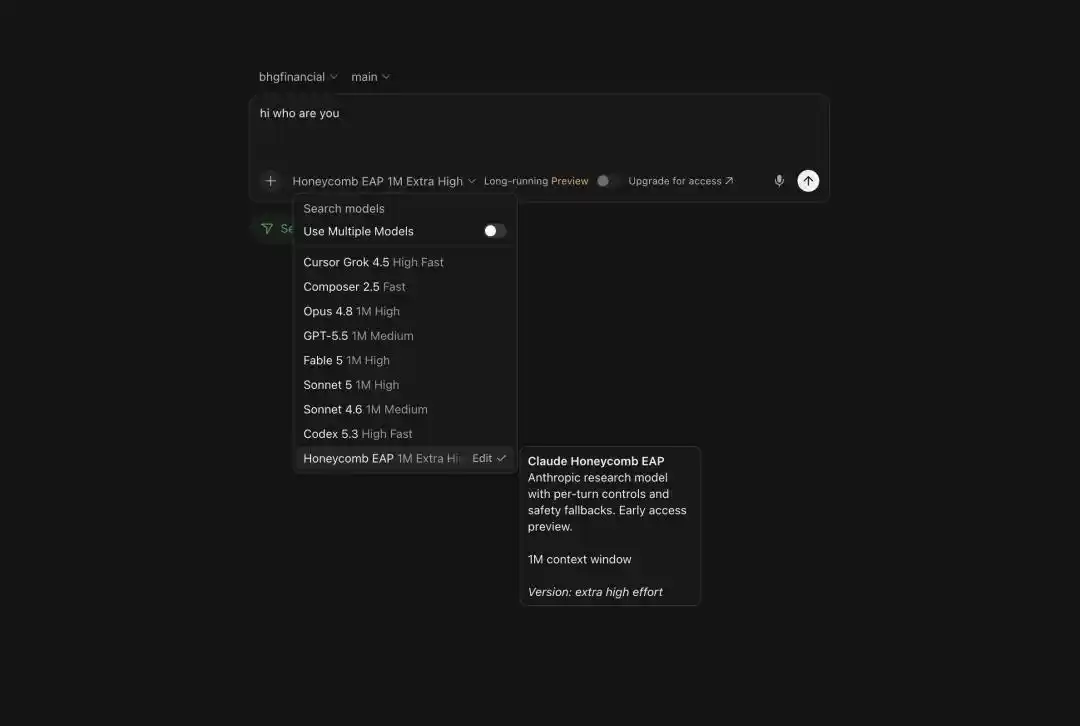
On that day, a codename called Honeycomb EAP appeared in Cursor's model selector.

Key point: this mysterious model was listed alongside Opus 4.8 and Sonnet 4.5, and was annotated with a 1M context window and a setting called "extra high effort."

A few hours later, this mysterious model disappeared again.
On July 14th, another user posted that they saw an entry for Opus 5 in the Google Vertex AI model library.

This blogger estimated the model would be officially released as early as Thursday, while also expressing concern that Anthropic might use this as an excuse to remove Fable 5 from the Claude subscription plan.
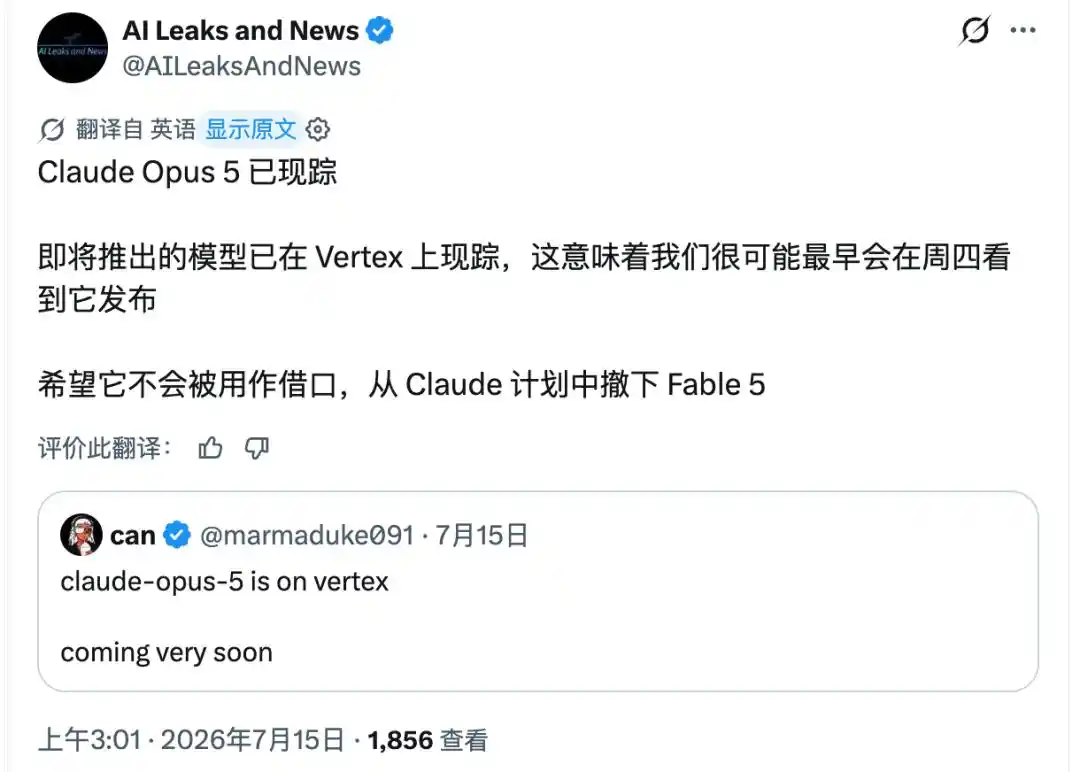
The next day, another blogger posted the same news.

Last night, @M1Astra made a new post saying that preliminary traces of Opus 5 had appeared once more.

Not long after, he added another post, indicating that Opus 5 had begun rolling out to various provider platforms.

This morning, he updated again, stating that some users were already using Opus 5. Although the interface still displayed 4.8, the output difference was stark.

Also, in the early hours of this morning, a screenshot leaked.
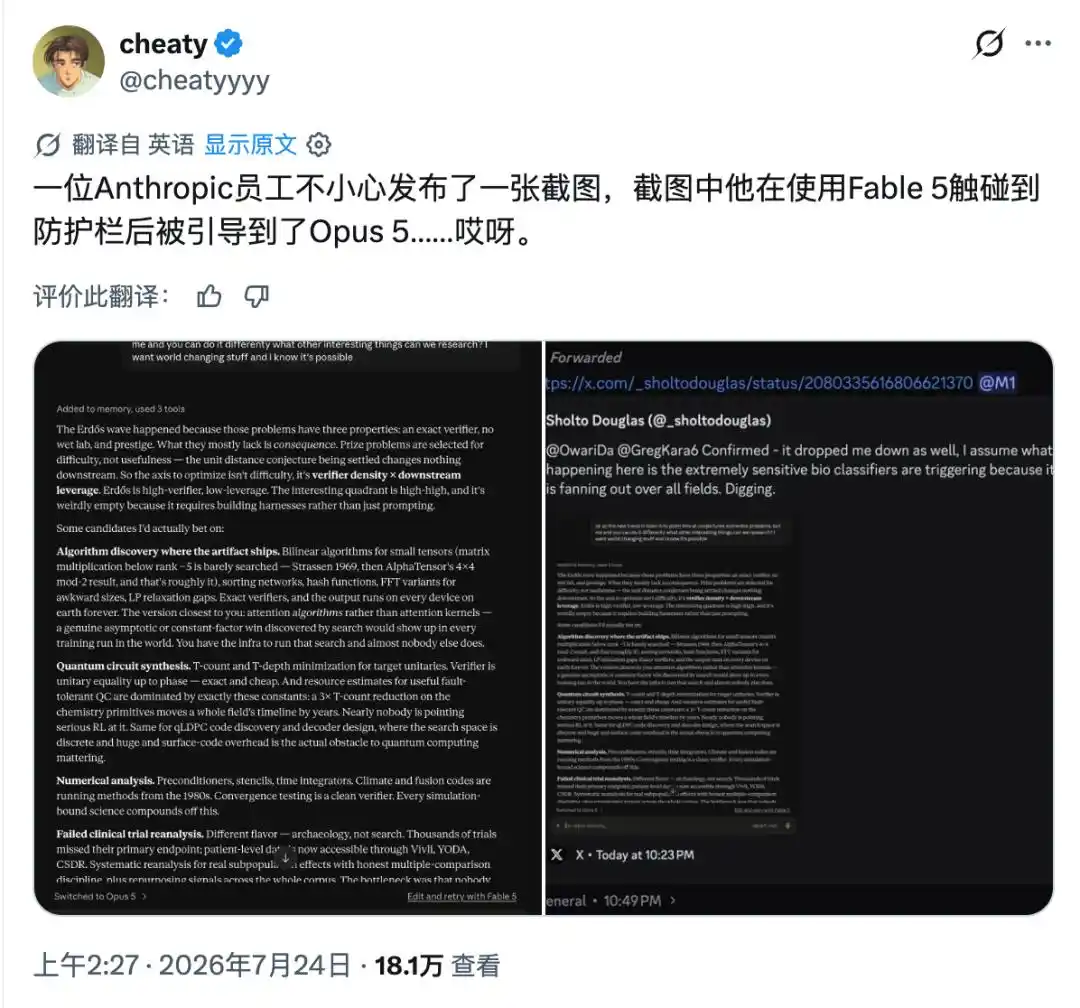
A screenshot, seemingly mistakenly sent by someone posing as an Anthropic employee, showed that after triggering Fable 5's guardrail, the system routed him to Opus 5.

Furthermore, Opus 5 appeared under its real name within Cursor.

Specifically, it appeared in an error pop-up window, which contained the string "claude-opus-5-thinking-high". The pop-up indicated that Max Mode needed to be enabled to use it.

According to some users' speculation, Opus's official release isn't far off.

A Fable 5 Alternative?

As this round of real-world tests gained traction, talk of Opus 5's performance matching Fable 5's also began to circulate.
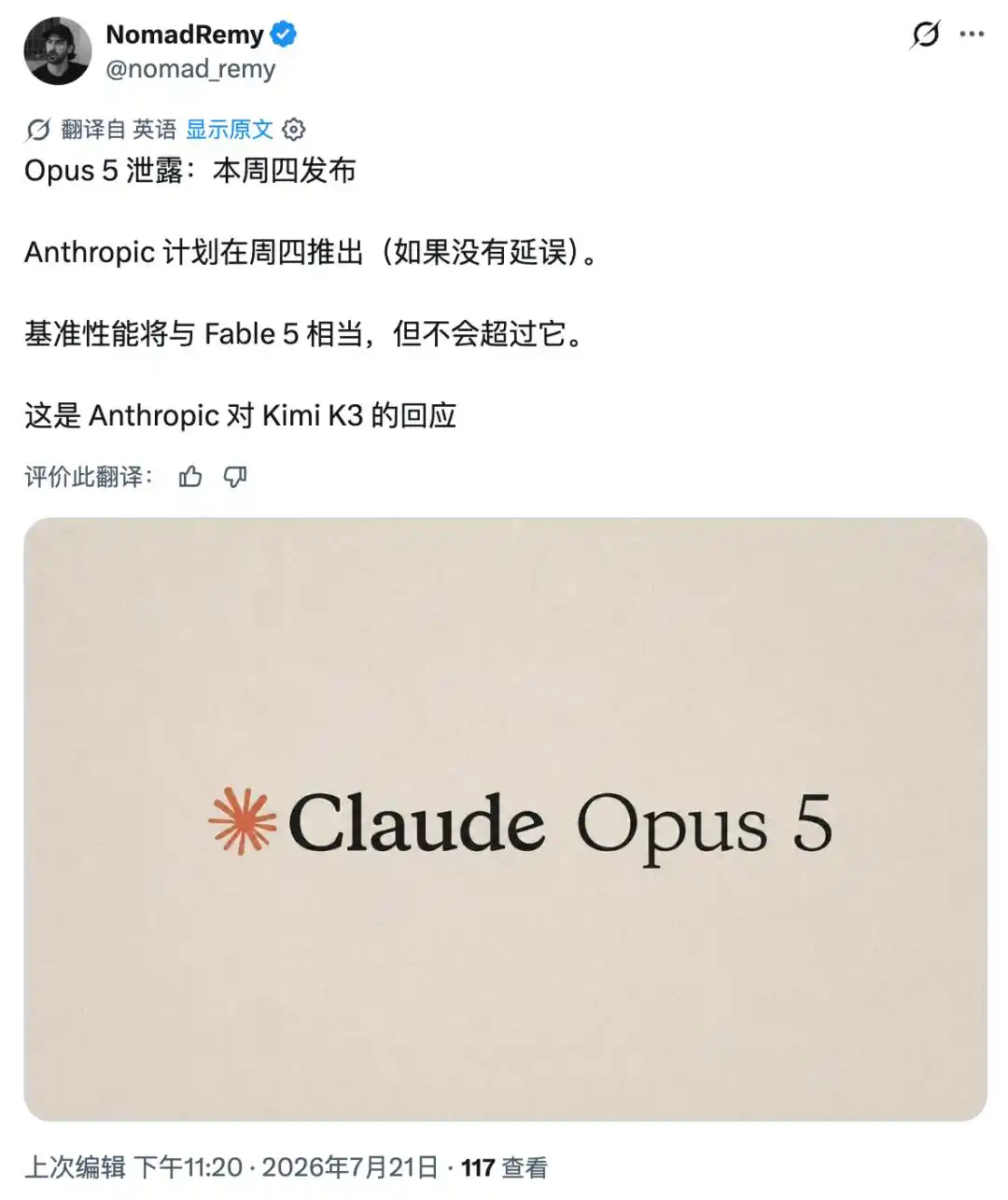
This claim is particularly enticing because Fable 5 is priced at $10 per million tokens for input and $50 for output, exactly twice the price of the Opus series.

If Opus 5 truly matches Fable 5's performance while remaining at the Opus price point, it would be a functional alternative at half the price.

However, as of now, no complete, independently verifiable benchmark results have been made public.

Also, whether it's actually cheaper overall cannot be judged solely by per-token price.

The blogger Chetaslua mentioned at the beginning stated that Opus 5 consumes tokens even more voraciously than Fable 5, exhausting his quota with just three prompts.

If token consumption is indeed that massive, then the per-token price advantage would disappear, shattering the expectation of being half the price.

Nevertheless, Opus 5's release is likely imminent. Whether it can truly be an alternative to fable will become clear with a bit more waiting.

References:

[1]https://x.com/chetaslua/status/2080290382315925911

[2]https://x.com/cheatyyyy/status/2080359098214953421

[3]https://x.com/M1Astra/status/2080246754104971356

[4]https://x.com/birdabo/status/2080340647622623315

This article is from the WeChat public account "QbitAI", author: Krei Xi

Perguntas relacionadas

QAccording to the article, what are some of the key visual capabilities demonstrated by the leaked Claude Opus 5 based on user tests?

ABased on user tests in the article, the leaked Claude Opus 5 demonstrated impressive visual capabilities. These include generating detailed 3D scenes (e.g., a catapult scene with parameter cards for tension and projectile weight, a kitchen scene with intricate details), sophisticated UI/UX elements (e.g., a weather card interface with dynamic lighting and shadows), high-quality 2D vector graphics (e.g., a PS5 controller with realistic shading), and faithful recreation of game physics and aesthetics (e.g., a Minecraft demo with block-breaking effects and lighting). Users noted these outputs contained a level of detail and quality surpassing previous models like Opus 4.8 and even rivaling the dedicated Fable 5 model.

QWhat evidence from third-party platforms does the article cite to suggest that Opus 5's release is imminent?

AThe article cites several pieces of evidence from third-party platforms suggesting Opus 5's imminent release. First, on July 9th, a model codenamed 'Honeycomb EAP' appeared briefly in the Cursor IDE's model selector alongside Opus 4.8 and Sonnet 4.5. Second, on July 14th, users reported seeing an Opus 5 entry in Google's Vertex AI model library. Third, an error popup in Cursor explicitly mentioned the string 'claude-opus-5-thinking-high.' Finally, users and the author @M1Astra reported that Opus 5 had begun rolling out to various API providers, with some users already accessing it (though interfaces still showed version 4.8).

QThe article mentions a potential 'cost-effective alternative' to Fable 5. What is the basis for this hope, and what is the main concern that could negate it?

AThe hope that Opus 5 could be a cost-effective alternative to Fable 5 is based on its pricing. Fable 5 is priced at $10 per million tokens for input and $50 for output, which is double the rate of the Opus series. If Opus 5 matches Fable 5's visual generation quality, it would offer similar performance at half the price. However, the main concern that could negate this cost advantage is Opus 5's potentially much higher token consumption. User @chetaslua reported that Opus 5 'ate tokens' much faster than Fable 5, using up his quota with just three prompts. If this high token usage is typical, the total cost could become comparable or even higher, eliminating the expected savings.

QWho is @birdabo and what specific comparison did they make between Opus 5 and Fable 5?

A@birdabo is a user mentioned in the article who conducted a head-to-head comparison test between the leaked Opus 5 and the already-released Fable 5 model. They fed both models the same prompt: to generate the 'catapult attacking a city wall' scene. The comparison showed that while Fable 5 generated the scene in one go, its output lacked detail—the tents were flat-colored planes, the grass lacked texture, and the catapult itself was missing the detailed parameter panels (for tension, projectile weight, etc.) that were present in the Opus 5 generation. The article states that Fable 5 'visibly lost a notch in detail density' compared to Opus 5's output for this specific task.

QWhat was the significance of the screenshot allegedly sent by an Anthropic employee, as described in the article?

AThe significance of the screenshot, allegedly sent by an Anthropic employee, was that it provided indirect evidence of Opus 5's existence and its potential integration into Anthropic's systems. The screenshot showed that after a user's request triggered a 'guardrail' (likely a safety or content filter) on Fable 5, the system automatically rerouted the request to Opus 5. This suggests that Opus 5 is not only a real, functioning model within Anthropic's infrastructure but also that it might be positioned as a fallback or alternative model within their product ecosystem, possibly handling requests that Fable 5 cannot or should not process.

Leituras Relacionadas

The Verdict in Choi Tae-won's Divorce Case: Revealing the Inheritance Undercurrent Behind SK Hynix's Trillion-Won Empire

SK Group Chairman Chey Tae-won's high-profile divorce case, involving a record 1.38 trillion won settlement, has drawn attention to the succession plans for Korea's second-largest conglomerate, especially its crown jewel, SK hynix. Unlike traditional chaebol scripts centered on the eldest son, Chey's three children from his marriage to former President Roh Tae-woo's daughter, Roh Soh-yeong, are carving distinct, non-traditional paths. Eldest daughter Chey Yun-jung (b. 1989) is seen as the most evident successor. With a scientific and consulting background, she holds executive roles at SK bioscience and SK Inc.'s growth support department, focusing on future strategy and biopharma. Her marriage is to an AI infrastructure entrepreneur, not a traditional business alliance. Second daughter Chey Min-jung (b. 1991) took a unique route, voluntarily serving as a South Korean naval officer, including an anti-piracy deployment. She later worked on policy and strategy for SK hynix in Washington D.C. before co-founding an AI-driven healthcare startup. She married a former U.S. Marine Corps officer, connecting her to U.S. defense and policy circles—networks crucial for a global semiconductor giant. The only son, Chey In-geun (b. 1995), who studied physics like his father, worked briefly at SK E&S before joining McKinsey. Despite fitting the traditional "heir" profile as the eldest son, he remains silent and holds no public position or shares in SK, suggesting the old succession playbook is obsolete. As SK hynix's valuation soars, becoming a geopolitical asset in the AI era, the heirs' legitimacy is no longer automatic. They must prove themselves in fields like AI biotech, global policy, and strategic consulting. Their marriages also reflect new elite networks in tech and defense, not old political alliances. Their inheritance is the complex challenge of navigating a globalized, tech-driven world, not just a corporate throne.

marsbitHá 10h

The Verdict in Choi Tae-won's Divorce Case: Revealing the Inheritance Undercurrent Behind SK Hynix's Trillion-Won Empire

marsbitHá 10h

From OpenSea to OpenRouter: Is Alex Atallah Repeating His 'Exit at the Peak' Playbook?

From OpenSea to OpenRouter: Is Alex Atallah Repeating His "Exit at the Peak" Playbook? According to the Wall Street Journal, payments giant Stripe is in talks to acquire the AI model aggregation platform OpenRouter in a potential deal valuing the company near $100 billion. This would mark founder Alex Atallah's second creation of a company reaching a $100 billion valuation, following his co-founding of NFT marketplace OpenSea. OpenRouter, founded just over three years ago, has grown rapidly by acting as a unified gateway for developers to access over 400 AI models. It currently has about 10 million users and processes over 200 trillion tokens monthly. While the platform's annualized revenue is around $50 million, its valuation has skyrocketed from $1.3 billion in March 2026. The potential acquisition by Stripe, a company OpenRouter's founder once likened it to, represents a major expansion into AI infrastructure for the payments leader. This move echoes Atallah's previous timing with OpenSea, where he departed before the NFT market's significant downturn. For OpenRouter, selling now may be strategic. Despite its scale, its business model—charging a 5-5.5% fee on AI inference calls—faces pressure from competition, open-source models, and potential price wars among model providers, limiting its profitability narrative for an IPO. A key asset for potential acquirers like Stripe is OpenRouter's vast repository of real-world AI usage data, which offers unique insights into model performance and developer preferences that are difficult to replicate. Whether this potential deal signifies a new valuation benchmark for AI infrastructure or another market peak signal remains to be seen.

链捕手Há 11h

From OpenSea to OpenRouter: Is Alex Atallah Repeating His 'Exit at the Peak' Playbook?

链捕手Há 11h

Trading

Spot
活动图片





