Chainstack Adds Support for Robinhood Chain for Managed and Self-Hosted Nodes

cryptonews.ruPublicado em 2026-08-05Última atualização em 2026-08-05

Resumo

Chainstack, a Web3 infrastructure platform supporting over 100,000 developers across 70+ blockchain networks, has added support for Robinhood Chain across its three deployment models: Global Nodes, Dedicated Nodes, and Chainstack Self-Hosted. The support is available for both the mainnet (chain ID 4663) and testnet (chain ID 46630). Robinhood Chain is an Ethereum L2 network built on Arbitrum Orbit with Nitro, optimized for financial and tokenized real-world asset transactions. It offers 100-millisecond block times and uses ETH for gas. A key feature is its first-come, first-served transaction ordering based on endpoint latency, making node placement a matter of execution rather than fee strategy. Chainstack's three models provide different levels of control and infrastructure: scalable Global Nodes for dApps and wallets, high-performance Dedicated Nodes with unlimited requests for marketplaces and protocols, and Self-Hosted Nodes for clients requiring full control over data sovereignty and deployment in their own environment. The Self-Hosted option is highlighted as critical for regulated issuers and brokers who cannot use third-party infrastructure due to compliance. The platform offers a unified management plane, billing, and monitoring for RWA workflows across multiple blockchains. Access is available immediately, with testnet tokens provided via a faucet and a free tier for evaluation.

Singapore, August 5, 2026 — Chainstack, a Web3 infrastructure platform serving over 100,000 developers across more than 70 blockchain networks, has added Robinhood Chain for three deployment models: global nodes, dedicated nodes, and Chainstack Self-Hosted. The Robinhood Chain mainnet launched on July 1, 2026. Chainstack endpoints are now available for the mainnet (chain ID 4663) and testnet (chain ID 46630).

What is Robinhood Chain?

Robinhood Chain is a decentralized, EVM-compatible Ethereum Layer 2 network built on Arbitrum Orbit using the Nitro stack, specifically designed for financial transactions and tokenized real-world assets. It generates blocks every 100 milliseconds with sub-second confirmation, uses Ether (ETH) as the gas token, and posts data to Ethereum using blobs. Full Ethereum finality occurs approximately 13 minutes after a batch of data is posted to Layer 1. The network provides a standard Ethereum JSON-RPC, so Foundry, Hardhat, ethers.js, viem, and web3.py work unchanged, and Solidity contracts deploy unmodified.

For trading operations, one detail is important: the sequencer orders transactions on a first-come, first-served basis according to arrival time, so a higher priority fee does not move a transaction forward in the queue. Endpoint latency, not a fee bidding strategy, determines ordering outcomes—thus, node placement becomes a matter of execution, not cost.

Three Deployment Paths, One Management Plane

Global Nodes Dedicated Nodes Chainstack Self-Hosted
Infrastructure Elastic, load-balanced Isolated node instance Client's own cloud, on-premise, or dedicated hardware
Requests Counted against requested units Unlimited Unlimited
Control Standard Full node configuration Full stack
Data Location Chainstack-managed regions Chainstack-managed regions Customer-controlled
Best Suited For Wallets, dApps, production scaling Exchanges, indexers, high-throughput RWA protocols Regulated issuers, sovereignty requirements

Global Nodes are auto-scaling, load-balanced RPC endpoints; Dedicated Nodes are isolated, high-performance instances with unlimited requests. Chainstack Self-Hosted is a Kubernetes-native dashboard for running nodes in the client's own environment, handling deployment, monitoring, updates, and recovery, with one-click deployment, self-healing, and snapshotting that allows new nodes to spin up without a full sync from genesis. Chainstack is one of the first infrastructure providers to offer a self-hosted option for Robinhood Chain.

Why the Third Path Matters

Infrastructure for tokenized stocks falls into three categories. A proprietary trading firm needs latency guarantees. A wallet integrating tokenized stocks needs predictably priced throughput. A regulated issuer or licensed broker-dealer often cannot host client-linked transaction data on third-party infrastructure at all, regardless of the provider's certifications.

"Teams working on RWAs can get the token model and compliance system right but still hit roadblocks from infrastructure policy," said Eugene Aseev, CTO and Co-founder of Chainstack.

"For a regulated issuer, node location can determine whether a product launches at all. With managed and self-hosted deployments on the same management plane, teams can integrate infrastructure into their own environment without rebuilding the stack."

Availability

Robinhood Chain joins over 70 networks supported by Chainstack, including Ethereum, Solana, Base, Arbitrum, Polygon, and Hyperliquid—a single platform, single billing, and a single monitoring layer for RWA workflows across different blockchains. Chainstack also runs a Model Context Protocol (MCP) server, enabling developers to query on-chain data and deploy nodes from Claude, Cursor, and ChatGPT.

Endpoint access is now open. Create a Chainstack account, deploy a node on the mainnet or testnet, and use the HTTPS or WSS endpoint with chain ID 4663 or 46630. Testnet tokens are available via the Chainstack faucet, and free access is available for teams evaluating the network.


About Chainstack

Chainstack is a Web3 infrastructure platform serving over 100,000 developers across more than 70 blockchain networks and holds SOC 2 Type II and ISO 27001 certifications. Chainstack provides low-latency RPC access, dedicated node deployment, and self-hosted node infrastructure for teams building trading, DeFi, fintech, and RWA applications worldwide.

Criptomoedas em alta

Perguntas relacionadas

QWhat is Robinhood Chain, and what makes it unique for financial applications?

ARobinhood Chain is an Ethereum Layer 2 network built on Arbitrum Orbit using the Nitro stack, specifically designed for financial transactions and tokenized real-world assets (RWA). Its uniqueness lies in its ordering mechanism. It sequences transactions based on a 'first-come, first-served' principle dependent on arrival time, meaning a higher priority fee does not move a transaction ahead in the queue. Execution results are determined by endpoint latency rather than fee strategy, making node placement a critical factor for performance.

QWhat are the three deployment models for Robinhood Chain offered by Chainstack?

AChainstack offers three deployment models for Robinhood Chain: 1) Global Nodes: Elastic, load-balanced RPC endpoints with usage-based pricing. 2) Dedicated Nodes: Isolated, high-performance node instances with unlimited requests and full node configuration control. 3) Chainstack Self-Hosted: A Kubernetes-based management plane to run nodes in a customer's own cloud, on-premises environment, or dedicated hardware, providing full-stack control and customer-controlled data residency.

QWhy is the Self-Hosted deployment model particularly important for certain users like regulated issuers?

AThe Self-Hosted model is crucial for regulated entities like licensed broker-dealers or issuers because they often have strict data residency and sovereignty requirements. They may be legally prohibited from hosting sensitive customer transaction data on third-party infrastructure, regardless of the provider's certifications. This model allows them to integrate the node infrastructure into their own controlled environment while using Chainstack's unified management plane for deployment and monitoring.

QWhat key performance characteristics does Robinhood Chain offer according to the article?

AAccording to the article, Robinhood Chain generates blocks every 100 milliseconds with sub-second confirmation. It uses Ether (ETH) as its gas token, posts data to Ethereum via blobs, and achieves full Ethereum finality approximately 13 minutes after a batch is submitted to the base layer. It provides a standard Ethereum JSON-RPC interface, ensuring compatibility with popular development tools like Foundry, Hardhat, ethers.js, viem, and web3.py.

QHow does Chainstack facilitate developer access to blockchain data and node deployment through AI tools?

AChainstack manages a server for the Model Context Protocol (MCP), which enables developers to query on-chain data and deploy nodes directly from popular AI-assisted development environments and chat interfaces such as Claude, Cursor, and ChatGPT.

Leituras Relacionadas

New Changes in the Clarity Information Act: Eleanor Terrett Shares Her Thoughts!

The U.S. Senate is at a critical juncture in its legislative work on cryptocurrency. At the Rare Evo conference, journalist Eleanor Terrett discussed the latest developments for the long-awaited "CLARITY Act" and its chances of passage this year. Facing the August recess, the bill's fate hangs in the balance, requiring 60 votes to proceed. With 53 Republican senators, support from at least seven Democrats is needed. Terrett suggested a push by Senate leadership could force compromise and even delay the recess to finish the bill. A major hurdle is ethics. Democrats argue the current provisions are insufficient to prevent former President Donald Trump from profiting from his crypto projects and want to empower state attorneys general to sue the DOJ for potential ethics violations, a move opposed by Republicans and the White House. The draft also includes a provision, effective until 2029, banning officials and members of Congress from issuing digital assets while in office. Another key dispute involves provisions from Representative Tom Emmer's Blockchain Regulatory Certainty Act (BRCA), which would grant criminal immunity to programmers whose code is misused by third parties. The crypto sector sees this as necessary, but prosecutors and law enforcement oppose it. While prediction markets estimate roughly a 30% chance of the CLARITY Act passing by the end of 2026, Terrett stated she sees a higher probability of it becoming law this year.

cryptonews.ruHá 4m

New Changes in the Clarity Information Act: Eleanor Terrett Shares Her Thoughts!

cryptonews.ruHá 4m

Democrats Take Steps to Block the CLARITY Act Due to Protracted Ethics Negotiations

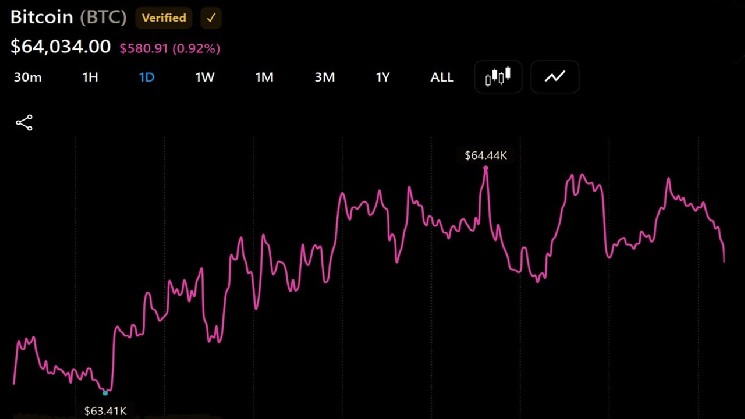
Democratic senators are planning to block a procedural vote to advance the CLARITY Act, a major digital asset bill, due to stalled negotiations on a bipartisan ethics agreement. The Democrats had made this ethics deal a condition for their support. They submitted the agreement text to the White House but have received no response, leading them to withhold the votes needed to proceed. The ethics dispute centers on proposed restrictions for federal officials profiting from digital assets while in office, a measure seen as targeting former President Trump's family crypto ventures. Democrats have rejected the current bill's provisions as insufficient. With time running out before a Friday recess, Senate Majority Leader John Thune insists on holding the vote. However, rules require a one-day delay after filing a cloture motion, making passage this week unlikely without immediate Democratic support. Republicans hold 53 seats and need about seven Democratic votes to reach the 60-vote threshold, which they currently lack. Industry supporters have flooded Congress with over 1 million calls backing the bill. Crypto markets are already reacting; prediction market odds for the CLARITY Act being signed in 2026 have fallen to 23%, and Bitcoin has remained stagnant around $64,000. If the vote fails or is delayed, the bill will be pushed back to at least September, reigniting the ethics fight ahead of the midterm elections.

cryptonews.ruHá 7m

Democrats Take Steps to Block the CLARITY Act Due to Protracted Ethics Negotiations

cryptonews.ruHá 7m

Bitcoin Price Fluctuates Around $64,000 as Coldcard Losses Exceed $116 Million

Bitcoin's price is holding around $64,000 despite significant negative pressure. Losses from a vulnerability in Coldcard hardware wallets have surpassed $116 million, with thefts continuing in waves. Michael Saylor's MicroStrategy sold another 1,638 BTC (its third sale this year), and wallets linked to the firm moved a further 1,030 BTC, raising fears of a fourth sale. In Washington, the "Clarity Act" bill faces likely failure after Democratic senators blocked negotiations. The Coldcard flaw, stemming from a March 2021 firmware bug, caused some devices to generate seeds with only ~40 bits of entropy instead of 128, exposing long-term holders to brute-force attacks. Developer James O'Beirn launched a public dashboard tracking the ongoing thefts in real-time; a test wallet with no added entropy was drained within an hour. Coinkite has halted shipments and urged affected users to move funds immediately, as firmware updates alone cannot eliminate the risk. For bulls, a potential floor is seen around Bitcoin's production cost, currently estimated at $54,000 (with an energy cost component of ~$40k). Historically, prices have bottomed below this cost in previous cycles. Meanwhile, exchange inflows have spiked as worried Coldcard users transfer coins, and with MicroStrategy still holding $5 billion in approved sales, alongside the potential collapse of the Clarity Act, further downward pressure looms.

cryptonews.ruHá 8m

Bitcoin Price Fluctuates Around $64,000 as Coldcard Losses Exceed $116 Million

cryptonews.ruHá 8m

Trading

Spot

Artigos em Destaque

O que é ANSEM

I. Introdução ao ProjetoO Black Bull ($ANSEM) é uma memecoin transparente e orientada pela comunidade na Solana, construída em torno de um credo: avançar independentemente das circunstâncias. O projeto é focado no frontend e totalmente verificável — o seu website lê dados de mercado e em cadeia em tempo real diretamente da Solana, incluindo preço, liquidez, volume, capitalização de mercado e distribuição de detentores, para que qualquer pessoa possa auditar as alegações sem necessidade de login e sem recolha de dados de utilizador. Para além do token, oferece um Radar de chamadas Ansem, Pods de liquidez comunitária não custodiais no PumpSwap e um terminal de memes baseado em navegador. O $ANSEM é um token SPL padrão do Pump.fun (6 casas decimais) negociando contra SOL e USDC.II. Informação sobre o TokenSímbolo do Token: ANSEM (O Black Bull)III. Links RelacionadosWebsite:https://www.blackbullsol.com/X: https://x.com/blknoiz06Endereço do Contrato: https://solscan.io/token/9cRCn9rGT8V2imeM2BaKs13yhMEais3ruM3rPvTGpumpNota: A introdução ao projeto provém dos materiais publicados ou fornecidos pela equipa oficial do projeto, que é apenas para referência e não constitui aconselhamento de investimento. A HTX não se responsabiliza por quaisquer perdas diretas ou indiretas resultantes.

1.1k Visualizações TotaisPublicado em {updateTime}Atualizado em 2026.07.01

O que é ANSEM

O que é GIGADEVICE

A GIGADEVICE acompanha o valor de 1 ação A da GigaDevice Semiconductor Inc., listada na Bolsa de Valores de Xangai (código de ação 603986). A GigaDevice é uma fabricante de chips sem fábrica com sede em Pequim e um líder global em memória flash NOR, produzindo também DRAM especial, microcontroladores e chips analógicos.

7 Visualizações TotaisPublicado em {updateTime}Atualizado em 2026.08.05

O que é GIGADEVICE

O que é GIGADEV

O ativo subjacente do contrato são as ações H da GigaDevice Semiconductor Inc. - (HKEX: 3986). A GigaDevice Semiconductor Inc é uma empresa com sede na China, principalmente envolvida no design, pesquisa e desenvolvimento de circuitos integrados (IC).

10 Visualizações TotaisPublicado em {updateTime}Atualizado em 2026.08.05

O que é GIGADEV

Discussões

Bem-vindo à Comunidade HTX. Aqui, pode manter-se informado sobre os mais recentes desenvolvimentos da plataforma e obter acesso a análises profissionais de mercado. As opiniões dos utilizadores sobre o preço de O (O) são apresentadas abaixo.

活动图片