CFTC Chair Signals Shift Toward Clear Rules for Prediction Markets

TheNewsCryptoPublicado em 2026-01-30Última atualização em 2026-01-30

Resumo

CFTC Chair Michael S. Selig is leading efforts to establish a clearer regulatory framework for prediction markets, which allow trading on the outcomes of events like elections and sports. The agency is withdrawing previous proposals, including a 2024 plan to ban certain event contracts, to reduce regulatory uncertainty. This shift is part of a broader "Future-Proof" initiative to modernize regulation, moving from enforcement-driven approaches to tailored rules. The CFTC is also collaborating with the SEC to harmonize regulations for digital assets and define distinctions between commodities and securities. The goal is to provide a more stable environment for prediction market platforms and related digital finance sectors.

The CFTC, under the leadership of Chair Michael S. Selig, is working to establish a new, clearer framework for prediction markets. As part of a larger effort to update the regulatory framework for new markets such as digital assets and event contracts.

Prediction markets are platforms where individuals engage in the trading of contracts with respect to the outcome of events such as elections, sports, and economic data. They are becoming increasingly popular on both crypto and traditional financial platforms, leading to regulatory uncertainty.

Speaking for the first time as the CFTC Chair, Selig announced that the CFTC would withdraw previous rulemaking proposals and advisories. This includes a 2024 proposal to prohibit certain political and sports-related event contracts. This had contributed to a lack of clarity, according to the regulators. He asked his staff to develop new and clearer guidelines on event contracts.

Regulatory Uncertainty Addressed

The CFTC is hinting at a larger change in its approach to regulation of prediction markets and digital asset-linked products. This has given rise to prediction market platforms such as Kalshi, Polymarket, and cryptocurrency exchanges. The legal disputes over whether prediction markets are gambling or financial derivatives have increased the need for a regulatory framework.

Selig’s guidance is part of the “Future-Proof” initiative to update the agency’s approach to new technologies. The initiative focuses on a shift from enforcement-driven regulation to tailored regulation and aligning regulation across financial markets.

Coordination with the SEC is also part of the plan, as both organizations are working towards harmonizing the regulation of digital assets. Collaboration will hopefully help to define the lines between commodity derivatives and securities. As well as avoiding fragmentation in the regulation of traditional and new markets.

Implications for Market Participants

CFTC Chairman Michael S. Selig indicates a change in regulatory policy to better define rules for prediction markets in the U.S. by pulling out outdated proposals and encouraging staff to write clearer guidelines. Collaboration with the SEC and updating regulations for Future-Proof and Project Crypto indicate a coordinated effort among agencies to provide greater clarity on digital assets and related markets. The efforts are intended to provide a cleaner, more stable environment for companies operating in prediction markets and related digital finance markets.

Highlighted Crypto News:

U.S. Finalizes Forfeiture of $400 Million Linked to Helix Darknet Mixer

TagsCFTCKalshiSEC

Perguntas relacionadas

QWhat is the CFTC's new initiative regarding prediction markets under Chair Michael S. Selig?

AThe CFTC, under Chair Michael S. Selig, is working to establish a new, clearer regulatory framework for prediction markets. This includes withdrawing previous rulemaking proposals and advisories, and directing staff to develop new and clearer guidelines on event contracts as part of its 'Future-Proof' initiative.

QWhy is there regulatory uncertainty surrounding prediction markets according to the article?

ARegulatory uncertainty exists because prediction markets are becoming increasingly popular on both crypto and traditional financial platforms, and there are legal disputes over whether they constitute gambling or financial derivatives. Previous CFTC actions, such as a 2024 proposal to ban certain event contracts, also contributed to this lack of clarity.

QWhich specific prediction market platforms are mentioned as being affected by the CFTC's regulatory approach?

AThe article mentions that the CFTC's approach affects prediction market platforms such as Kalshi and Polymarket, as well as cryptocurrency exchanges.

QHow does the CFTC's 'Future-Proof' initiative aim to change its regulatory approach?

AThe 'Future-Proof' initiative aims to shift the CFTC's approach from enforcement-driven regulation to tailored regulation. It focuses on updating the agency's approach to new technologies and aligning regulation across financial markets to provide greater clarity and stability.

QWhat role does coordination with the SEC play in the CFTC's new plan for prediction and digital asset markets?

ACoordination with the SEC is part of the plan to harmonize the regulation of digital assets. The collaboration aims to help define the lines between commodity derivatives and securities, and to avoid regulatory fragmentation between traditional and new markets.

Leituras Relacionadas

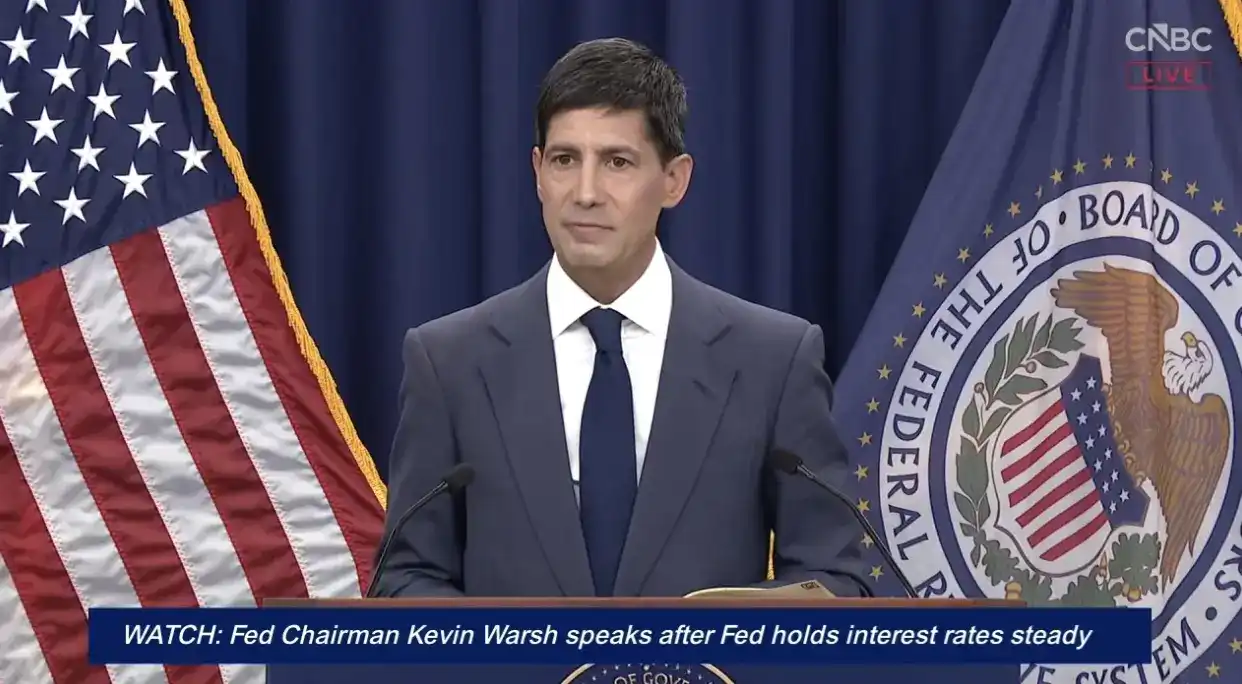
After the Fed's Interest Rate Decision and Comments from Kevin Walsh, Experts Gathered and Shared Their Latest Insights!

Following the Fed's decision to hold interest rates steady, experts highlight a potential shift towards more independent policymaking within the FOMC, as three members dissented. Market strategists note the slight decline in bond yields and a weaker dollar post-announcement, but caution that a rate hike in September remains possible. Experts like Mark Hackett point to the three dissenting votes as a sign of growing committee independence. While markets initially rallied in relief, the final direction hinges on Fed Chair Kevin Warsh's upcoming press conference. Analysts, including Audrey Childs-Freeman, interpret the dissent as the Fed maintaining a hawkish stance. They suggest the Fed will continue monitoring data, with a summer scenario of high bond yields supporting the dollar still in play. Chris Anstey emphasizes that markets will closely watch the 10-year Treasury yield during Warsh's conference. A continued rise could signal investor fears that the Fed is not acting aggressively enough on inflation, posing a challenge for the Chair. The long-term yield is also viewed as critical for mortgages and economic management. Diane Swonk of KPMG argues a September rate hike is likely, stating that an increase now would have been more appropriate given nearly five years of high inflation. She warns that prolonged high prices risk becoming embedded in the economic system. *This is not investment advice.

cryptonews.ruHá 2h

After the Fed's Interest Rate Decision and Comments from Kevin Walsh, Experts Gathered and Shared Their Latest Insights!

cryptonews.ruHá 2h

Trading

Spot
活动图片