Canada launches new multi-crypto ETF as banks enter the sector

ambcryptoPublicado em 2026-03-05Última atualização em 2026-03-05

Resumo

Canada's Scotia Bank, through its asset management arm Dynamic Fund, has launched a new actively managed multi-crypto ETF, providing investors exposure to Bitcoin (BTC), Ethereum (ETH), Solana (SOL), and Ripple (XRP). This move signifies a notable shift, as Scotia becomes the first Canadian bank to directly enter the sector with an active crypto ETF, offering a low fee of 25 basis points. The launch reflects the growing institutional adoption and maturity of crypto assets, driven by investor demand and regulatory progress. This development is part of a broader trend of major banks increasing their involvement in cryptocurrencies, with Canada ranking third globally in crypto assets under management at $4.9 billion.

There’s increased institutional involvement in Bitcoin [BTC] and cryptocurrencies across Canada.

Dynamic Fund is the latest player to offer a simplified way for Canadian investors to gain exposure to an array of crypto assets, including Bitcoin, Ethereum [ETH], Solana [SOL], and Ripple [XRP].

Commenting on the move, Dynamic’s head Mark Brisley, said crypto has matured with several tailwinds driving investor demand.

“We have witnessed an evolution in the maturity of crypto assets, supported by growing investor demand, institutional adoption, and regulatory progress.”

The Dynamic Fund seeks to offer long-term capital appreciation for investors via exposure to multiple crypto assets.

Banks are doubling down, too

The most notable aspect of this development is that Dynamic Fund serves as the asset management arm of the Bank of Nova Scotia, better known as Scotia Bank.

Canadian brokerage firms and banks have been offering access to crypto ETFs since 2021. However, Scotia Bank’s move marks a shift of banks directly moving into the sector to offer active crypto ETFs, noted Bloomberg ETF analyst Eric Balchunas.

“Scotia Bank has launched an active crypto-picking ETF in Canada today. Notable because first bank up there to get in game and the fee is only 25bps, very low for active and Canada.”

Scotia’s move mirrors a broader trend of major banks doubling down in crypto. Notably, in the U.S., Morgan Stanley has made a late entry into the U.S spot Bitcoin ETF race.

That said, from a regional perspective, Canada was one of the bullish countries into the weekend of the Iran escalations. According to CoinShares data, the country saw $34 million in inflows into its crypto products, bringing its year-to-date (YTD) flows to $142 million.

In terms of assets under management (AUM), Canada ranked third after the U.S and Germany, with $4.9 billion of crypto assets.

Like the U.S and the U.K., Canada treats crypto as property, but only applies half of the gain for capital gains tax.

Apart from the broader regulatory framework and maturing crypto market, Canada is only playing catch-up to the U.S on stablecoin legislation. Even so, the country is aggressively pushing for clear rules for the stablecoin subsector, as well.


Final Summary

  • Canada’s Scotia Bank unveiled an active multi-crypto ETF covering BTC, ETH, SOL, and XRP via its asset management arm, Dynamic Fund.
  • According to Bloomberg ETF analyst Eric Balchunas, Scotia is the first Canadian bank to actively offer crypto ETFs.


Leituras Relacionadas

Once-Popular Web3 Enters Wave of Layoffs

The once-hot Web3 industry is experiencing a severe wave of layoffs. While many companies attribute job cuts to AI-driven restructuring, the primary reason is often financial pressure. The Web3 sector, at the intersection of tech and finance, has been hit particularly hard. Employees at major cryptocurrency exchanges report sudden, impersonal layoffs—often with system access revoked overnight—and minimal or no severance. Common tactics include setting impossible performance targets or terminating employees for minor policy violations. The working atmosphere has become toxic, marked by intense monitoring, excessive meetings, and management obsessed with control and internal politics rather than product innovation. The industry's core business model is collapsing. Exchange revenue from trading fees and listing charges has plummeted due to a decline in quality projects and retail investor exodus. Events like the massive forced liquidation on October 10th further shattered confidence. Competition from on-chain derivatives platforms and prediction markets is intensifying the downturn. As layoffs continue, displaced workers struggle to find new opportunities. Many transition to the AI sector, but face significant bias from traditional finance and even some AI firms, which view crypto industry experience with suspicion. The current downturn appears more structural than cyclical, driven by unsustainable practices, internal strife, and a failure to innovate, raising questions about the industry's future trajectory.

marsbitHá 47m

Once-Popular Web3 Enters Wave of Layoffs

marsbitHá 47m

Sales Drop 26% But Prices Rise? Xiaomi's Dilemma

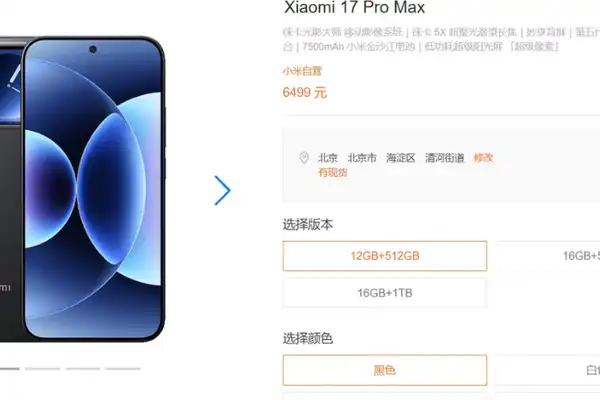
Xiaomi, facing a significant 26.3% year-on-year decline in global smartphone shipments in Q2 2026, has implemented its third price hike of the year. On August 2nd, prices were raised for nine models, including the flagship Mi 17 series (up 400-500 yuan) and Redmi K90/Turbo 5 series (up 300 yuan). This move completes a pattern where cost pressure, originating from surging memory chip prices, has climbed from entry-level to mid-range and now flagship products. The primary driver is a severe supply squeeze on consumer-grade DRAM and NAND flash memory, as major manufacturers like Samsung shift advanced capacity to more profitable HBM for AI applications. According to Xiaomi President Lu Weibing, memory prices for the same configuration have skyrocketed nearly fourfold since Q1 2025, adding roughly 1500 yuan to the cost of a mainstream 12GB+512GB phone. IDC estimates consumer memory costs have risen nearly 300% year-on-year. While the price increases hurt demand and contributed to the sales slump, Xiaomi's strategy of reducing entry-level models and upgrading its product mix also played a role. Domestically, its market share in China fell to 12% (5th place), while leaders Huawei and Apple saw shipments grow over 24%. To mitigate future risks, Xiaomi is accelerating its in-house "Surge" chip development and optimizing memory configurations across its lineup. Xiaomi is not alone; major brands like OPPO, vivo, and Apple have already raised prices in 2026, with industry insiders predicting another round of increases (200-800 yuan) in the second half. A full-scale industry-wide涨价 cycle is underway, forcing both manufacturers and consumers to recalibrate their strategies and purchasing decisions amid sustained cost pressures.

marsbitHá 57m

Sales Drop 26% But Prices Rise? Xiaomi's Dilemma

marsbitHá 57m

Trading

Spot
活动图片