BTC Breaks Through $97,000, Crypto Market Stands at a New Structural Turning Point

marsbitPublicado em 2026-01-15Última atualização em 2026-01-15

Resumo

Bitcoin surged past $97,000, reaching a high of $97,924, while ETH and SOL also rose but remained below key resistance levels. The rally triggered significant liquidations, with shorts seeing the largest losses since the October 2021 crash. Notably, crypto-related stocks outperformed traditional equities. A key driver is renewed institutional interest: after weeks of outflows, U.S. Bitcoin ETFs recorded a substantial $750 million net inflow in a single day. Bitcoin’s strongest gains occurred during U.S. trading hours, a reversal from late 2025 trends. Macro conditions remain mixed: December CPI held steady at 2.7%, but strong retail data and persistent inflation suggest the Fed will hold rates in January, though 150 bps of cuts are expected in 2026. Regulatory developments are critical. The CLARITY Act, aimed at defining U.S. crypto regulations, faces a key Senate vote. Industry opinion is split, with Coinbase withdrawing support due to concerns over DeFi and stablecoin rules, while others back the bill for providing regulatory clarity. On-chain, Ethereum staking demand remains strong, with over 30% of ETH supply locked. MicroStrategy (now Strategy) continued accumulating Bitcoin, adding 13,627 BTC. Market structure may be shifting. Analysts note that the traditional four-year cycle has weakened, with altcoins underperforming. A sustained rally may require broader ETF adoption beyond BTC/ETH, renewed wealth effect from major cryptocurrencies, and a return of retail inves...

Original | Odaily Planet Daily (@OdailyChina)

Author | DingDang (@XiaMiPP)
Following yesterday's strong breakthrough of the $95,000 key resistance level, BTC continued its upward momentum early this morning, reaching a high of $97,924, and is currently trading at $96,484; ETH broke through $3,400 and is currently at $3,330; SOL rose to a high of $148 and is currently at $145. Compared to BTC, ETH and SOL are still hovering around key resistance levels and have not yet formed a clear trend breakthrough.

In derivatives, according to Coinglass data, yesterday's total liquidations reached $680 million, with short liquidations at $578 million and long liquidations at $101 million; Glassnode stated that the market rebound led to short liquidation volumes hitting a new high since the "10/11 crash".

According to msx.com data, while the three major U.S. stock indices closed lower, crypto-related stocks generally rose, with ALTS up over 30.94% and BNC up over 11.81%. This situation is not common. What is driving such a strong rally in the crypto market?

ETF Fund Shift

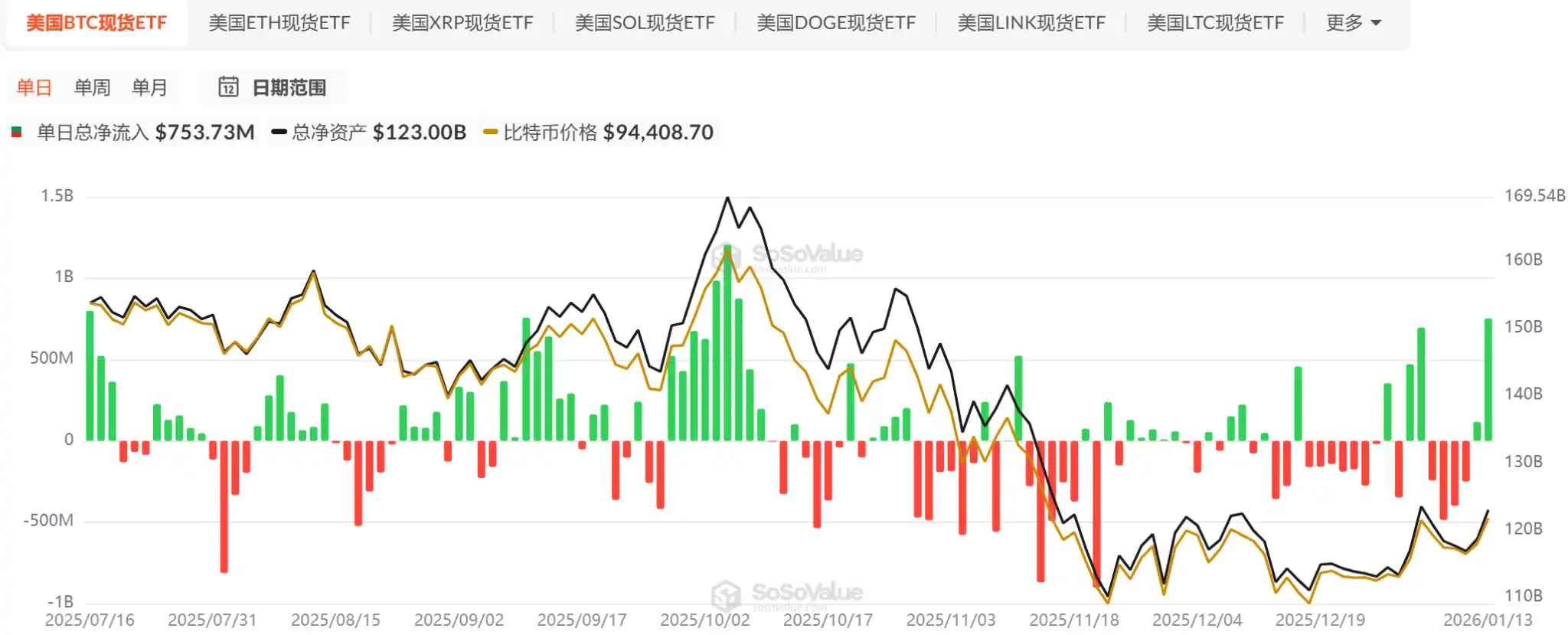
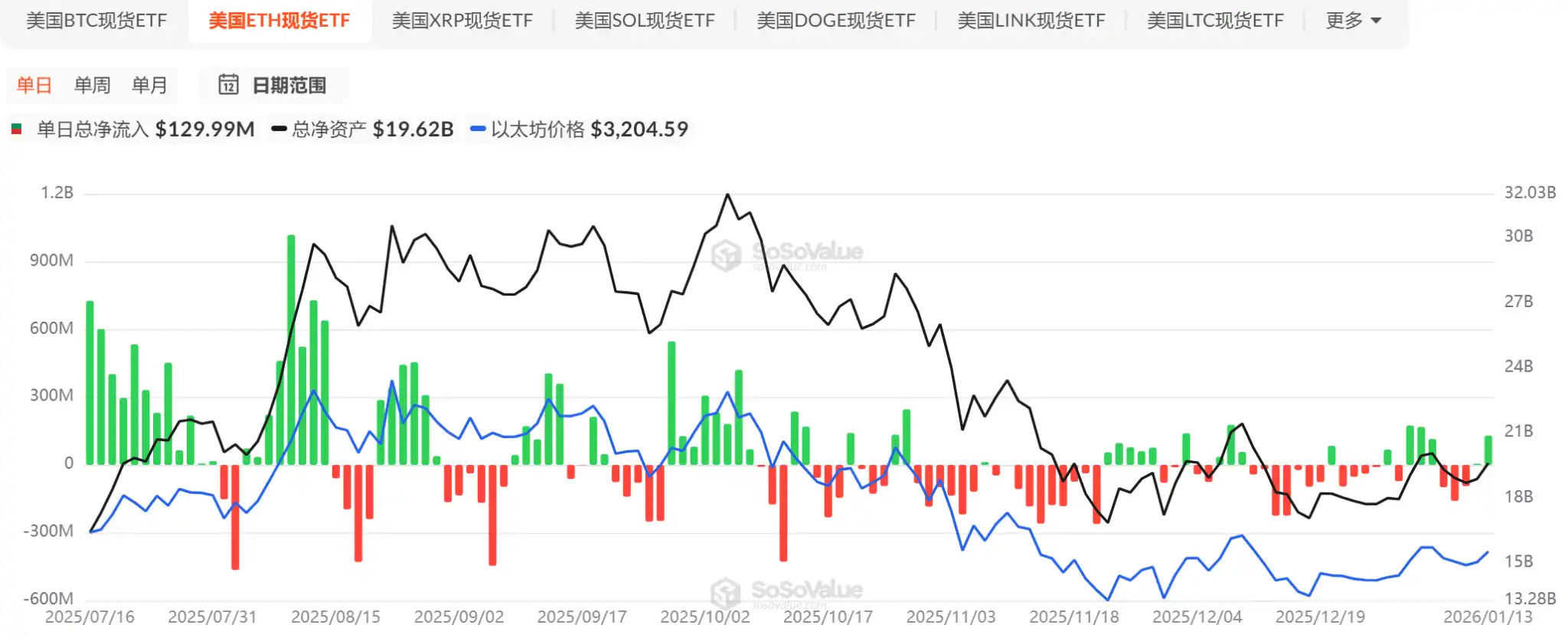
On the fund level, since mid-October 2025, BTC spot ETFs have generally been in a state of net outflows or small net inflows, indicating a lack of clear incremental fund signals in the market. However, after four consecutive trading days of net outflows last week, BTC spot ETFs turned to two consecutive days of net inflows, with a single-day net inflow of $750 million on January 13, becoming a significant signal for the phase. In contrast, ETH spot ETFs remain weak.
From a price action perspective, a noteworthy change is occurring. Bitcoin's cumulative return during North American trading hours is about 8%, while the European session recorded only a mild gain of about 3%, and the Asian trading session even dragged down the overall performance.

This phenomenon is in stark contrast to the end of 2025. At that time, Bitcoin accumulated a decline of up to 20% during North American hours, with prices once falling back to around $80,000. In the fourth quarter, U.S. market opening hours were often accompanied by selling pressure, and spot Bitcoin ETFs faced almost daily fund outflows.

Now, the strongest returns are occurring shortly after the U.S. stock market opens, which was precisely Bitcoin's weakest period over the past six months.

Macro Data: No Bad News, But Lacking Easing Catalysts

On the macro level, the December CPI year-on-year remained at 2.7% (unchanged from the previous reading, meeting market expectations), while the core CPI year-on-year slightly rose to 2.7% (previous 2.6%, slightly above some expectations), indicating that inflationary pressures still have some stickiness; however, the November PPI year-on-year unexpectedly rose to 3.0% (higher than the expected 2.7%), and retail sales month-on-month also recorded strong growth (exceeding market expectations), showing robust consumer data, which to some extent supports the view that economic growth remains resilient.

Although the December CPI data was generally mild (month-on-month 0.3% met expectations, year-on-year did not accelerate further), inflation has not clearly fallen back to the Fed's comfort zone. Combined with the labor market resilience shown in previous employment reports, the market widely believes that the probability of the Fed maintaining interest rates unchanged at the end-of-January FOMC meeting is extremely high, with almost no expectation of a rate cut. This also means that short-term policy easing catalysts are still lacking. According to CME's "FedWatch," the probability of the Fed keeping rates unchanged in January is 95%.

However, rate cut expectations for 2026 are worth anticipating, with Fed Governor Milan reiterating the need for 150 basis points of rate cuts this year.

Regulatory Legislative Progress: CLARITY Act in Focus

Beyond short-term market movements, the most noteworthy mid-to-long-term variable recently is the legislative progress of the 《CLARITY Act》. This bill aims to establish a comprehensive regulatory framework for the U.S. crypto market, with main objectives including:

  • Clarifying the regulatory boundaries between the SEC (security-like assets) and the CFTC (commodity-like digital assets);
  • Defining digital asset classifications (securities, commodities, stablecoins, etc.);
  • Introducing stricter disclosure, anti-money laundering, and investor protection requirements, while leaving room for innovation.

With the Senate Banking Committee's revision and voting scheduled for January 15, U.S. crypto legislation has officially entered the "final sprint." Committee Chairman Tim Scott (Republican) released a 278-page revised text on January 13, which followed months of bipartisan closed-door negotiations. It quickly sparked over 70 (some statistics say 137) proposed amendments, with disagreements over stablecoin yields and DeFi regulation heating up rapidly. The crypto industry, banking lobby groups, and consumer protection organizations are all involved.

Moreover, the crypto industry itself is not united. On January 14, Coinbase CEO Brian Armstrong publicly withdrew his support, stating that after reviewing the text, he believed the bill had "too many issues regarding DeFi bans, stifling stablecoin reward mechanisms, and excessive government surveillance, making it worse than the status quo." He emphasized that Stand With Crypto would score the Thursday revision vote to test whether senators "side with bank profits or consumer/innovation rewards." Industry insiders believe that Coinbase's public opposition is "significant" and could determine the bill's fate.

After Coinbase publicly opposed the bill, several leading institutions and associations including a16z, Circle, Kraken, Digital Chamber, Ripple, and Coin Center publicly expressed support for the Senate Republican version, believing that "any clear rules are better than the status quo," as they can inject long-term certainty into the market and position the U.S. as the "global crypto hub." (Recommended reading 《Why is the industry so severely divided as CLARITY deliberation is suddenly postponed?》)

Other Observations: Strengthening Ethereum Staking Demand and Strategy's Continued Accumulation

Ethereum staking demand continues to strengthen. Currently, the amount of ETH locked in the Beacon Chain has exceeded 36 million, accounting for nearly 30% of the network's circulating supply, with a staking market value exceeding $118 billion, continuously refreshing historical highs. The previous peak was 29.54%, reached in July 2025. The Ethereum network currently has about 900,000 active validators, with about 2.55 million ETH still queued waiting to enter the staking queue. This means that, at least from on-chain behavior observation, existing stakers still have limited short-term selling意愿, and the network overall tends to "lock rather than release."
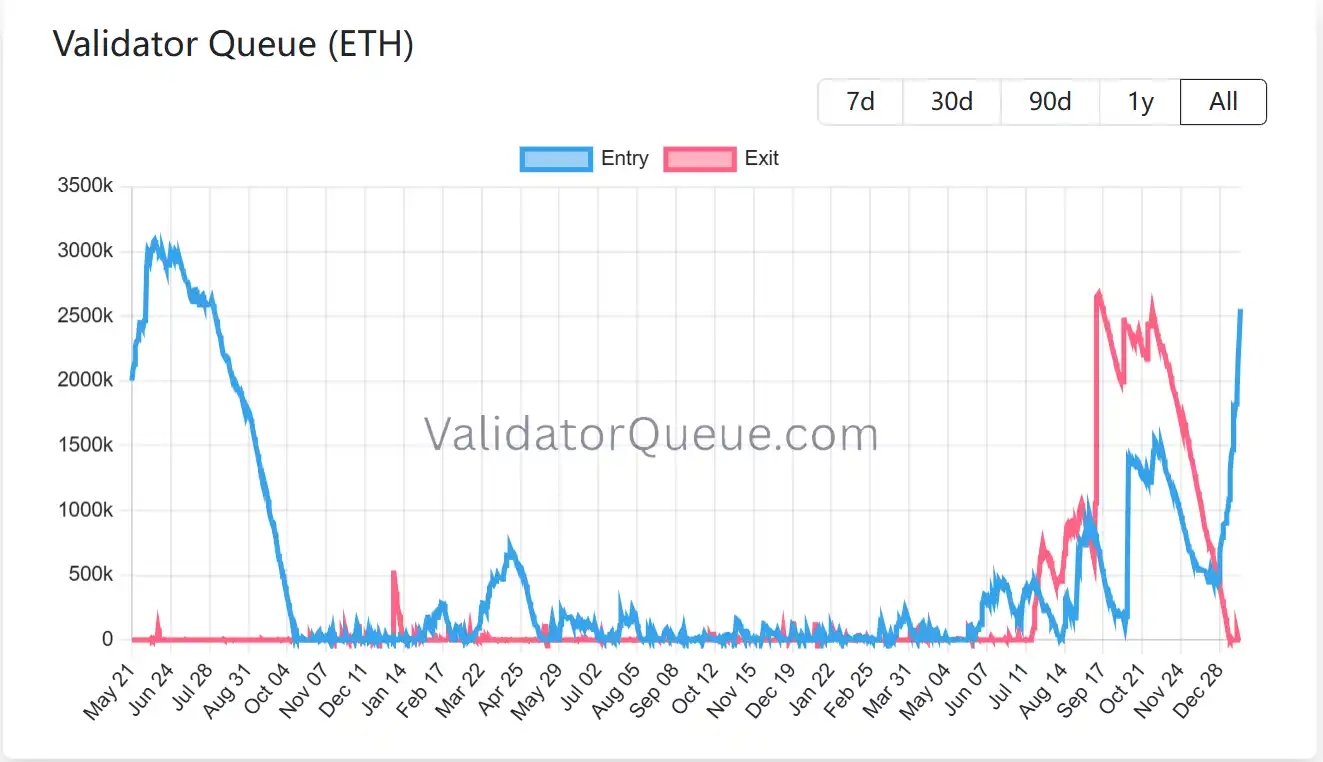
In addition, developer activity and stablecoin trading volume on Ethereum have both hit record highs. Recommended reading 《ETH Staking Data Reversal: Exits Zeroed Out VS Entries Surge 1.3 Million, When to Buy the Dip?》

Bitcoin reserve company Strategy (formerly MicroStrategy) continued its long-term accumulation strategy this week, spending approximately $1.25 billion to purchase 13,627 BTC at an average price of about $91,519. Thus, its total Bitcoin holdings have increased to 687,410 BTC, worth approximately $65.89 billion, with an overall average cost basis of about $75,353 per BTC.

Investment bank TD Cowen recently lowered its one-year price target from $500 to $440, citing dilution effects from continued issuance of common and preferred stock, which weakens Bitcoin yield expectations. Analysts expect Strategy to acquire approximately 155,000 more Bitcoin in fiscal year 2026, higher than previous forecasts, but a higher proportion of equity financing will reduce the growth in Bitcoin holdings per share.

TD Cowen also pointed out that although short-term yields are under pressure, related metrics are expected to improve in fiscal year 2027 as Bitcoin prices recover. The report also emphasized that Strategy chose to continue accumulating during the recent Bitcoin price pullback, with most financing proceeds directly used to purchase Bitcoin, indicating that its strategic goals remain unchanged. Overall, analysts remain relatively positive about Strategy's long-term value as a "Bitcoin exposure tool" and believe that some of its preferred stock has certain attractiveness in terms of yield and capital appreciation. Regarding index inclusion, MSCI has not yet removed Bitcoin reserve companies from its index system, which is seen as a short-term positive factor, but uncertainty remains in the medium to long term.

Arthur Hayes also stated that his core trading strategy this quarter is to go long on Strategy (MSTR) and Metaplanet (3350), using them as leveraged bets on BTC's return to an upward trend.

Market Outlook: Structural Changes and Rebound Conditions

Overall, the crypto market is standing at a critical turning point. Whether the traditional "four-year cycle" is still valid will likely be revealed in the coming months.

Crypto market maker Wintermute analyzed in its latest OTC market review: In 2025, Bitcoin did not exhibit the strong characteristics typical of a four-year cycle, and the altcoin cycle almost disappeared. In their view, this is not a short-term fluctuation or misalignment but a deeper structural change.

Under this premise, Wintermute believes that for a truly strong rebound to occur in 2026, the triggering conditions will be significantly higher than in previous cycles and will no longer rely on a single variable. Specifically, at least one of the following three outcomes needs to be validated.

First, the allocation scope of ETFs and crypto treasury (DAT) companies must expand beyond Bitcoin and Ethereum. Currently, U.S. spot BTC and ETH ETFs objectively concentrate a large amount of new liquidity on a few large-cap assets. While this enhances the stability of top assets, it also significantly compresses market breadth, leading to severe performance divergence. Only when more crypto assets are included in ETF products or corporate balance sheets can the market potentially regain broader participation and a liquidity foundation.

Second, core assets like BTC, ETH, as well as BNB and SOL, need to show sustained strong rallies again and recreate significant wealth effects. In 2025, the traditional transmission mechanism of "Bitcoin rising — funds spreading to altcoins" largely failed. The average uptrend cycle for altcoins was compressed to about 20 days (compared to about 60 days the previous year), with many tokens weakening under unlocking sell pressure. Without sustained rallies in top assets, funds lack the motivation to trickle down, making altcoin行情 naturally difficult to activate.

Third, and most crucially, retail attention needs to truly return to the crypto market. Although retail investors have not completely left, their new funds are currently flowing more into high-growth themes like the S&P 500, AI, robotics, and quantum computing. The extreme drawdowns of 2022-2023, memories of platform bankruptcies and liquidations, coupled with the reality that crypto assets overall underperformed traditional stocks in 2025, have significantly weakened the narrative appeal of "crypto = getting rich quick." Only when retail investors believe that the crypto market has the potential for超额 returns and return in a scaled manner can the market potentially regain the highly emotional,近乎狂热 upward momentum of the past.

In other words, against the backdrop of structural changes, the future rebound is no longer about "if it will come," but rather "under what conditions and through which path it will be reignited."


Perguntas relacionadas

QWhat was the key factor that led to the recent surge in Bitcoin's price above $97,000 according to the article?

AThe shift in BTC spot ETF flows from net outflows to significant net inflows, with a single-day net inflow of $750 million on January 13, was a key factor, particularly driven by strong buying during the North American trading session.

QWhat is the current market expectation for the Federal Reserve's interest rate decision at the end of the month, and why?

AThe market expects the Federal Reserve to almost certainly keep interest rates unchanged at the January meeting, with a 95%, due to persistent inflation and strong economic data that show a lack of clear catalysts for policy easing.

QWhat major U.S. regulatory bill is currently a focal point for the crypto industry, and what is its primary goal?

AThe CLARITY Act is the major regulatory bill. Its primary goals are to clarify the regulatory boundaries between the SEC and CFTC, define digital asset classifications, and introduce stricter disclosure, anti-money laundering, and investor protection requirements.

QHow does the article describe the current state of the Ethereum staking market?

AThe article states that Ethereum staking demand is strong, with over 36 million ETH locked on the beacon chain, representing nearly 30% of the circulating supply. The network is characterized by a tendency to 'lock rather than release,' with limited short-term selling pressure from existing stakers.

QAccording to market maker Wintermute, what are the necessary conditions for a true strong rebound in the crypto market in 2026?

AWintermute states that a true rebound requires at least one of three conditions: 1) ETF and corporate treasury allocations expanding beyond just Bitcoin and Ethereum, 2) sustained strong rallies in core assets to recreate wealth effect, or 3) a genuine return of retail investor attention and capital to the crypto market.

Leituras Relacionadas

Bitwise: Bullish on Bitcoin's Performance in the Second Half of the Year, AI and Regulation Will Spark a New Altcoin Season

Bitwise CIO Matt Hougan and Research Lead Ryan Rasmussen express strong bullish sentiment on Bitcoin's long-term prospects, suggesting that its $1 million price target may be too conservative. They argue Bitcoin serves a dual role: as digital gold and a potential global settlement asset, especially amid declining trust in traditional monetary systems. Despite a weak Q1 2026 where nearly all crypto assets and prices saw double-digit declines, the analysts remain optimistic due to strong forward-looking catalysts, including institutional adoption via Bitcoin ETFs from major firms like Morgan Stanley and Goldman Sachs. Geopolitical instability, such as Iran’s mention of using Bitcoin for international payments, increases the value of Bitcoin’s “out-of-the-money call option” as a non-political, global settlement currency. This enhances its appeal beyond a mere store of value. . Additionally, Hougan highlights that a clearer regulatory token framework under current SEC leadership, combined with AI efficiency gains and high-performance blockchains, could fuel a new “altseason” by late 2026. This may lead to a wave of legitimate, value-capturing token projects, unlike the earlier ICO boom. . Bitwise also announced an Avalanche ETF, citing its unique architecture and rapid growth in real-world asset (RWA) tokenization, which has surged 10x to nearly $30 billion in two years. The firm believes Layer 1 blockchains are still early in their growth cycle, with significant potential ahead.

marsbitHá 22m

Bitwise: Bullish on Bitcoin's Performance in the Second Half of the Year, AI and Regulation Will Spark a New Altcoin Season

marsbitHá 22m

Trading

Spot
Futuros

Artigos em Destaque

O que é BITCOIN

Compreender o HarryPotterObamaSonic10Inu (ERC-20) e a Sua Posição no Espaço Cripto Nos últimos anos, o mercado de criptomoedas assistiu a um aumento na popularidade das moedas meme, cativando não apenas os traders, mas também aqueles que procuram envolvimento comunitário e valor de entretenimento. Entre estes tokens únicos está o HarryPotterObamaSonic10Inu (ERC-20), um projeto intrigante que mistura referências culturais no tecido das criptomoedas. Este artigo explora os principais aspetos do HarryPotterObamaSonic10Inu, examinando os seus mecanismos, a sua ética orientada pela comunidade e o seu envolvimento com o vasto panorama cripto. O que é o HarryPotterObamaSonic10Inu (ERC-20)? Como o nome sugere, o HarryPotterObamaSonic10Inu é uma moeda meme construída na blockchain Ethereum, classificada sob o padrão ERC-20. Ao contrário das criptomoedas tradicionais, que podem enfatizar a utilidade prática ou o potencial de investimento, este token prospera no valor de entretenimento e na força da sua comunidade. O projeto visa promover um ambiente onde utilizadores envolvidos possam reunir-se, partilhar ideias e participar em atividades inspiradas por diversos fenómenos culturais. Uma característica notável do HarryPotterObamaSonic10Inu é a zero taxa sobre transações. Este elemento atraente visa encorajar a negociação e o envolvimento da comunidade, isento de encargos adicionais que podem desencorajar os traders de pequena escala. A oferta total da moeda está fixada em mil milhões de tokens, uma cifra que marca a sua intenção de manter uma circulação substancial dentro da comunidade. Criador do HarryPotterObamaSonic10Inu (ERC-20) As origens do HarryPotterObamaSonic10Inu estão um pouco envoltas em mistério; os detalhes sobre o criador permanecem desconhecidos. O desenvolvimento deste token carece de uma equipa identificável ou de um plano explícito, o que não é raro no setor das moedas meme. Em vez disso, o projeto surgiu de forma orgânica, com o seu progresso a depender fortemente do entusiasmo e da participação da sua comunidade. Investidores do HarryPotterObamaSonic10Inu (ERC-20) No que diz respeito a investimentos externos e apoios, o HarryPotterObamaSonic10Inu também permanece ambíguo. O token não lista quaisquer fundações de investimento conhecidas ou apoio organizacional significativo. Em vez disso, o “sangue vital” do projeto é a sua comunidade de base, que informa o seu crescimento e sustentabilidade através da ação coletiva e do envolvimento no espaço cripto. Como Funciona o HarryPotterObamaSonic10Inu (ERC-20)? Como uma moeda meme, o HarryPotterObamaSonic10Inu opera principalmente fora dos quadros tradicionais que muitas vezes governam o valor dos ativos. Existem vários aspetos distintivos que definem como o projeto funciona: Transações Sem Taxas: Sem taxas sobre transações, os utilizadores podem comprar e vender o token livremente, sem a preocupação de custos ocultos. Envolvimento da Comunidade: O projeto prospera na interação da comunidade, aproveitando plataformas de redes sociais para criar entusiasmo e facilitar a participação. Discussões, partilha de conteúdo e envolvimento são elementos cruciais que ajudam a expandir o seu alcance e a fomentar a lealdade entre os apoiantes. Sem Utilidade Prática: Deve ser notado que o HarryPotterObamaSonic10Inu não oferece utilidade concreta dentro do ecossistema financeiro. Em vez disso, é classificado como um token principalmente para entretenimento e atividades comunitárias. Referência Cultural: O token incorpora de forma inteligente elementos da cultura popular para atrair interesse, conectando-se tanto com entusiastas de memes como com seguidores de criptomoedas. HarryPotterObamaSonic10Inu exemplifica como as moedas meme operam de forma diferente de projetos de criptomoedas mais tradicionais, entrando no mercado como construções sociais inovadoras em vez de ativos utilitários. Linha do Tempo do HarryPotterObamaSonic10Inu (ERC-20) A história do HarryPotterObamaSonic10Inu é marcada por vários marcos notáveis: Criação: O token surgiu de um meme viral, capturando a imaginação de muitos entusiastas de criptomoedas. Datas específicas de criação não estão disponíveis, sublinhando a sua ascensão orgânica. Listagem em Exchanges: O HarryPotterObamaSonic10Inu conseguiu entrar em várias exchanges, permitindo um acesso e negociação mais fáceis pela comunidade. Iniciativas de Envolvimento da Comunidade: Atividades contínuas direcionadas a melhorar a interação comunitária, incluindo concursos, campanhas em redes sociais e geração de conteúdo por fãs e defensores. Planos de Expansão Futura: O roteiro do projeto inclui o lançamento de uma coleção de NFTs, mercadorias e um site de eCommerce relacionado aos seus temas culturais, envolvendo ainda mais a comunidade e tentando adicionar mais dimensões ao seu ecossistema. Pontos-Chave sobre o HarryPotterObamaSonic10Inu (ERC-20) Natureza Orientada pela Comunidade: O projeto prioriza a contribuição coletiva e a criatividade, assegurando que o envolvimento dos utilizadores está na vanguarda do seu desenvolvimento. Classificação como Moeda Meme: Representa o epítome da criptomoeda baseada em entretenimento, destacando-se dos veículos de investimento tradicionais. Sem Afiliação Direta com o Bitcoin: Apesar da semelhança no nome do ticker, o HarryPotterObamaSonic10Inu é distinto e não tem qualquer relação com o Bitcoin ou outras criptomoedas estabelecidas. Foco na Colaboração: O HarryPotterObamaSonic10Inu é projetado para criar um espaço de colaboração e partilha de histórias entre os seus detentores, proporcionando uma via para a criatividade e o fortalecimento da comunidade. Perspectivas Futuras: A ambição de expandir além da sua premissa inicial para NFTs e mercadorias delineia um caminho para o projeto potencialmente entrar em avenidas mais mainstream dentro da cultura digital. À medida que as moedas meme continuam a capturar a imaginação da comunidade cripto, HarryPotterObamaSonic10Inu (ERC-20) destaca-se devido aos seus laços culturais e abordagem centrada na comunidade. Embora possa não se encaixar no molde típico de um token orientado para utilidade, a sua essência reside na alegria e camaradagem fomentadas entre os seus apoiantes, destacando a natureza em evolução das criptomoedas em uma era cada vez mais digital. À medida que o projeto continua a desenvolver-se, será importante observar como as dinâmicas comunitárias influenciam a sua trajetória no panorama em constante mudança da tecnologia blockchain.

1.2k Visualizações TotaisPublicado em {updateTime}Atualizado em 2024.12.03

O que é BITCOIN

Como comprar BTC

Bem-vindo à HTX.com!Tornámos a compra de Bitcoin (BTC) simples e conveniente.Segue o nosso guia passo a passo para iniciar a tua jornada no mundo das criptos.Passo 1: cria a tua conta HTXUtiliza o teu e-mail ou número de telefone para te inscreveres numa conta gratuita na HTX.Desfruta de um processo de inscrição sem complicações e desbloqueia todas as funcionalidades.Obter a minha contaPasso 2: vai para Comprar Cripto e escolhe o teu método de pagamentoCartão de crédito/débito: usa o teu visa ou mastercard para comprar Bitcoin (BTC) instantaneamente.Saldo: usa os fundos da tua conta HTX para transacionar sem problemas.Terceiros: adicionamos métodos de pagamento populares, como Google Pay e Apple Pay, para aumentar a conveniência.P2P: transaciona diretamente com outros utilizadores na HTX.Mercado de balcão (OTC): oferecemos serviços personalizados e taxas de câmbio competitivas para os traders.Passo 3: armazena teu Bitcoin (BTC)Depois de comprar o teu Bitcoin (BTC), armazena-o na tua conta HTX.Alternativamente, podes enviá-lo para outro lugar através de transferência blockchain ou usá-lo para transacionar outras criptomoedas.Passo 4: transaciona Bitcoin (BTC)Transaciona facilmente Bitcoin (BTC) no mercado à vista da HTX.Acede simplesmente à tua conta, seleciona o teu par de trading, executa as tuas transações e monitoriza em tempo real.Oferecemos uma experiência de fácil utilização tanto para principiantes como para traders experientes.

3.8k Visualizações TotaisPublicado em {updateTime}Atualizado em 2025.03.21

Como comprar BTC

O que é $BITCOIN

OURO DIGITAL ($BITCOIN): Uma Análise Abrangente Introdução ao OURO DIGITAL ($BITCOIN) OURO DIGITAL ($BITCOIN) é um projeto baseado em blockchain que opera na rede Solana, com o objetivo de combinar as características dos metais preciosos tradicionais com a inovação das tecnologias descentralizadas. Embora partilhe um nome com o Bitcoin, frequentemente referido como “ouro digital” devido à sua percepção como uma reserva de valor, o OURO DIGITAL é um token separado projetado para criar um ecossistema único dentro da paisagem Web3. O seu objetivo é posicionar-se como um ativo digital alternativo viável, embora os detalhes sobre as suas aplicações e funcionalidades ainda estejam em desenvolvimento. O que é o OURO DIGITAL ($BITCOIN)? OURO DIGITAL ($BITCOIN) é um token de criptomoeda explicitamente projetado para uso na blockchain Solana. Em contraste com o Bitcoin, que fornece um papel amplamente reconhecido como armazenamento de valor, este token parece focar em aplicações e características mais amplas. Aspectos notáveis incluem: Infraestrutura Blockchain: O token é construído na blockchain Solana, conhecida pela sua capacidade de lidar com transações de alta velocidade e baixo custo. Dinâmicas de Oferta: O OURO DIGITAL tem um fornecimento máximo limitado a 100 quatrilhões de tokens (100P $BITCOIN), embora os detalhes sobre o seu fornecimento circulante ainda não tenham sido divulgados. Utilidade: Embora as funcionalidades precisas não estejam explicitamente delineadas, existem indicações de que o token poderia ser utilizado para várias aplicações, potencialmente envolvendo aplicações descentralizadas (dApps) ou estratégias de tokenização de ativos. Quem é o Criador do OURO DIGITAL ($BITCOIN)? Neste momento, a identidade dos criadores e da equipa de desenvolvimento por trás do OURO DIGITAL ($BITCOIN) permanece desconhecida. Esta situação é típica entre muitos projetos inovadores no espaço da blockchain, particularmente aqueles alinhados com finanças descentralizadas e fenómenos de moedas meme. Embora tal anonimato possa fomentar uma cultura orientada pela comunidade, intensifica as preocupações sobre governança e responsabilidade. Quem são os Investidores do OURO DIGITAL ($BITCOIN)? As informações disponíveis indicam que o OURO DIGITAL ($BITCOIN) não tem apoiantes institucionais conhecidos ou investimentos proeminentes de capital de risco. O projeto parece operar num modelo peer-to-peer focado no apoio e adoção da comunidade, em vez de rotas de financiamento tradicionais. A sua atividade e liquidez estão principalmente situadas em exchanges descentralizadas (DEXs), como a PumpSwap, em vez de plataformas de negociação centralizadas estabelecidas, destacando ainda mais a sua abordagem de base. Como Funciona o OURO DIGITAL ($BITCOIN) A mecânica operacional do OURO DIGITAL ($BITCOIN) pode ser elaborada com base no seu design de blockchain e nas características da rede: Mecanismo de Consenso: Ao aproveitar o exclusivo proof-of-history (PoH) da Solana combinado com um modelo de proof-of-stake (PoS), o projeto assegura uma validação eficiente das transações, contribuindo para o alto desempenho da rede. Tokenomics: Embora mecanismos deflacionários específicos não tenham sido extensivamente detalhados, o vasto fornecimento máximo de tokens implica que pode atender a microtransações ou casos de uso de nicho que ainda estão por definir. Interoperabilidade: Existe o potencial para integração com o ecossistema mais amplo da Solana, incluindo várias plataformas de finanças descentralizadas (DeFi). No entanto, os detalhes sobre integrações específicas permanecem não especificados. Cronologia de Eventos Chave Aqui está uma cronologia que destaca marcos significativos relacionados ao OURO DIGITAL ($BITCOIN): 2023: O lançamento inicial do token ocorre na blockchain Solana, marcado pelo seu endereço de contrato. 2024: O OURO DIGITAL ganha visibilidade ao tornar-se disponível para negociação em exchanges descentralizadas como a PumpSwap, permitindo que os utilizadores o negociem contra SOL. 2025: O projeto testemunha atividade de negociação esporádica e potencial interesse em envolvimentos liderados pela comunidade, embora não tenham sido documentadas parcerias ou avanços técnicos notáveis até ao momento. Análise Crítica Forças Escalabilidade: A infraestrutura subjacente da Solana suporta altos volumes de transações, o que pode aumentar a utilidade do $BITCOIN em vários cenários de transação. Acessibilidade: O potencial preço de negociação baixo por token pode atrair investidores de retalho, facilitando uma participação mais ampla devido a oportunidades de propriedade fracionada. Riscos Falta de Transparência: A ausência de apoiantes, desenvolvedores ou um processo de auditoria publicamente conhecidos pode gerar ceticismo em relação à sustentabilidade e confiabilidade do projeto. Volatilidade do Mercado: A atividade de negociação depende fortemente do comportamento especulativo, o que pode resultar em volatilidade significativa dos preços e incerteza para os investidores. Conclusão O OURO DIGITAL ($BITCOIN) surge como um projeto intrigante, mas ambíguo, dentro do ecossistema em rápida evolução da Solana. Embora tente aproveitar a narrativa do “ouro digital”, a sua divergência do papel estabelecido do Bitcoin como reserva de valor sublinha a necessidade de uma diferenciação mais clara da sua utilidade pretendida e estrutura de governança. A aceitação e adoção futuras dependerão provavelmente da abordagem da atual opacidade e da definição mais explícita das suas estratégias operacionais e económicas. Nota: Este relatório abrange informações sintetizadas disponíveis até outubro de 2023, e desenvolvimentos podem ter ocorrido além do período de pesquisa.

92 Visualizações TotaisPublicado em {updateTime}Atualizado em 2025.05.13

O que é $BITCOIN

Discussões

Bem-vindo à Comunidade HTX. Aqui, pode manter-se informado sobre os mais recentes desenvolvimentos da plataforma e obter acesso a análises profissionais de mercado. As opiniões dos utilizadores sobre o preço de BTC (BTC) são apresentadas abaixo.

活动图片













