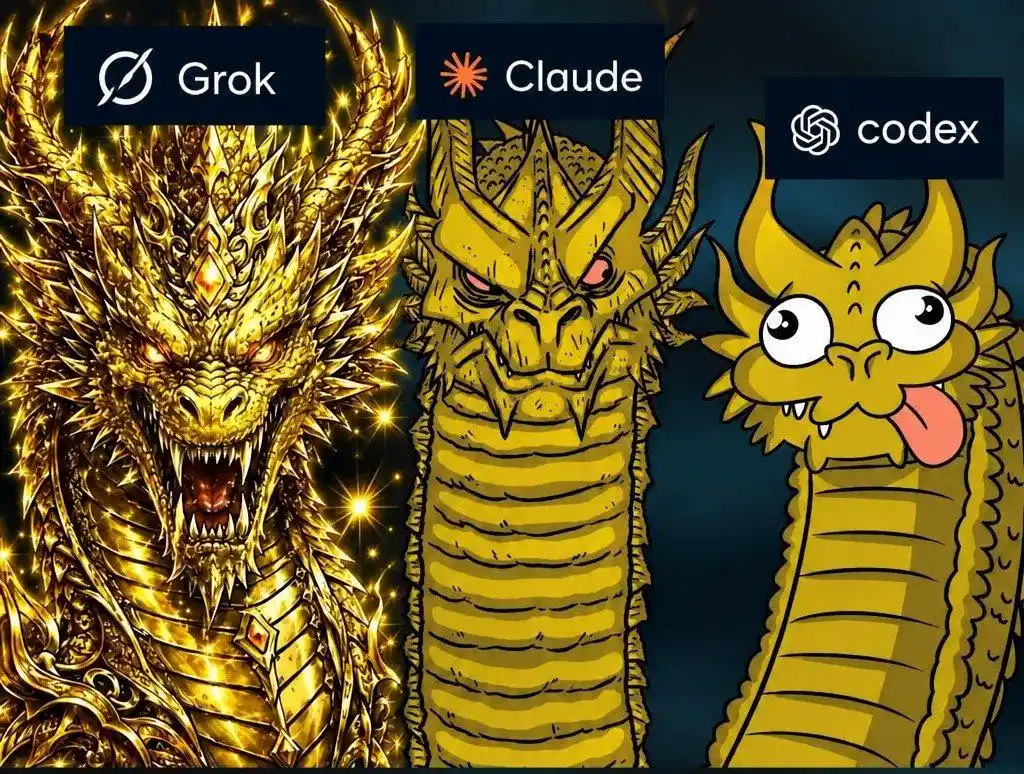
Breaking News: Musk Delivers the Most Powerful Grok 4.5, Slashes Price of Top-tier Opus Intelligence Drastically

marsbitPublicado em 2026-07-09Última atualização em 2026-07-09

Resumo

**Elon Musk Launches Grok 4.5: A Cost-Effective, High-Performance AI Rival** SpaceXAI, in collaboration with Cursor, has released Grok 4.5, its new flagship AI model designed specifically for coding and agentic tasks. Trained on tens of thousands of NVIDIA GB300 GPUs using massive, high-quality data filtered from trillions of Cursor developer interactions, the model emphasizes "per-token intelligence." In benchmark performance, Grok 4.5 is highly competitive. It scores 64.7% on SWE Bench Pro (surpassing GPT-5.5's 58.6% and Opus 4.7's 64.3%), 83.3% on Terminal Bench 2.1 (nearly matching GPT-5.5), and 62.0% on DeepSWE 1.0 (beating Opus 4.8). Overall, it ranks fourth in AAAI official tests and first in the Harvey legal agent benchmark. The model's key advantage is its combination of speed, efficiency, and low cost. It generates responses at 80 tokens per second and, crucially, uses far fewer tokens to complete tasks—4.2 times fewer than Opus 4.8 on SWE Bench Pro. It is priced at $2 per million input tokens and $6 per million output tokens, significantly undercutting competitors. Musk stated it is "roughly equivalent to Opus 4.7, but much faster." Early user tests show Grok 4.5 can generate functional code for applications like 3D solar system simulators and basic games from simple prompts, though some note it still lags behind top models in certain creative tasks. Musk has hinted at a major update next month, leveraging real-world engineering data from his companies, with an...

Grok 4.5, finally delivered!

Just now, Musk's SpaceXAI impressively released its own strongest flagship model to date, Grok 4.5.
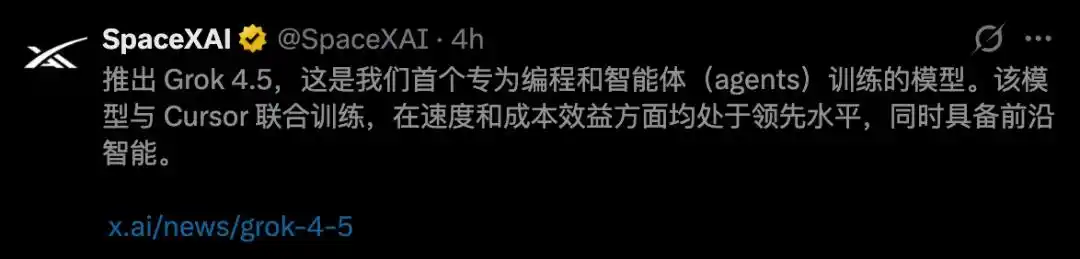
This time, SpaceXAI and Cursor have joined forces powerfully.

On tens of thousands of GB300 beasts, they have fiercely "forged" this performance monster, born for coding and agents.

The report card is quite dazzling—

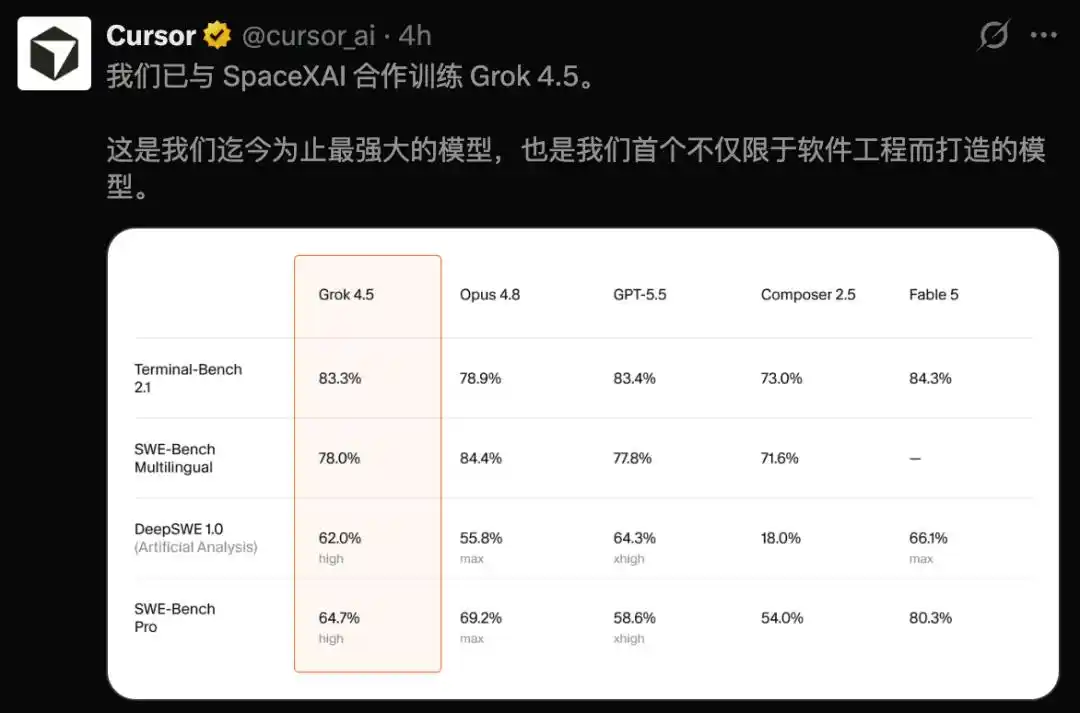
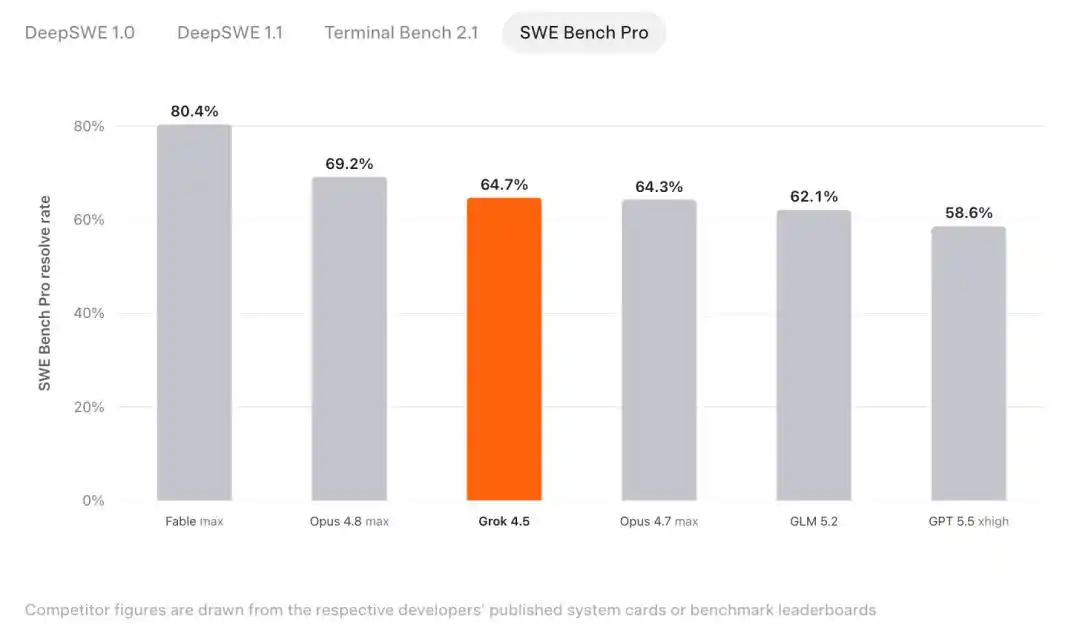
  • SWE Bench Pro: Sweeps a whopping 64.7%, directly challenging and surpassing Opus 4.7's 64.3%;
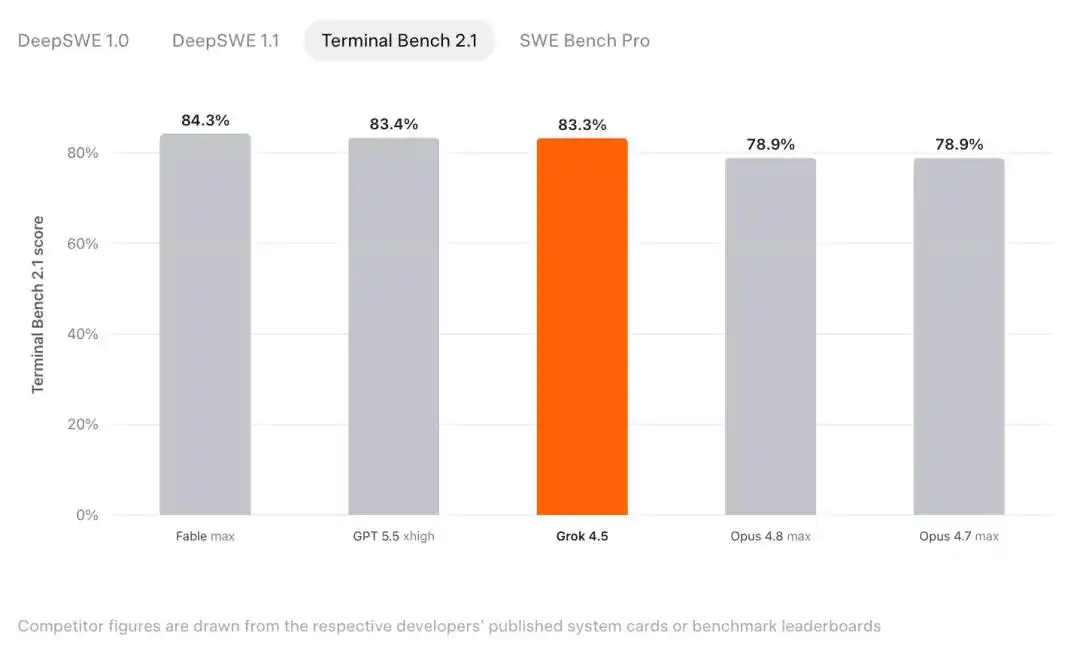
  • Terminal Bench 2.1: Races all the way up to 83.3%;
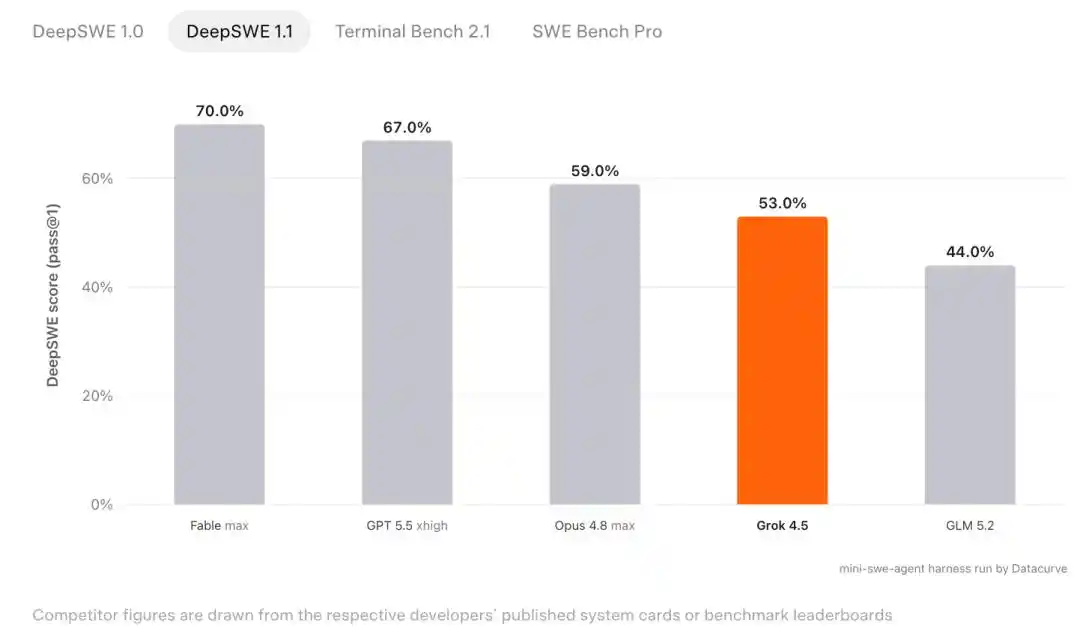
  • DeepSWE 1.0: Firmly stands at 62.0%, decisively crushing Opus 4.8.
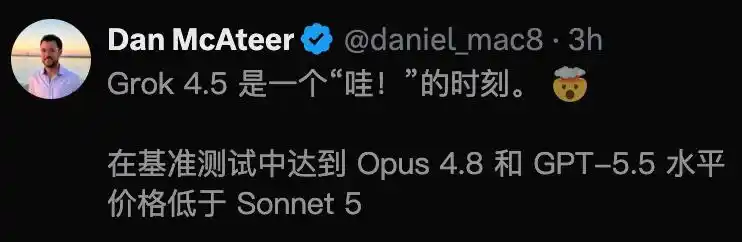
Musk stated plainly, "Grok 4.5 is roughly equivalent to Opus 4.7, but much faster."

It's the combination of capability, speed, and cost that forms its competitiveness. In other words, the Tokens it uses for work are only a fraction of others'.

Grok 4.5 is priced at $2 per million tokens for input, $6 per million tokens for output.

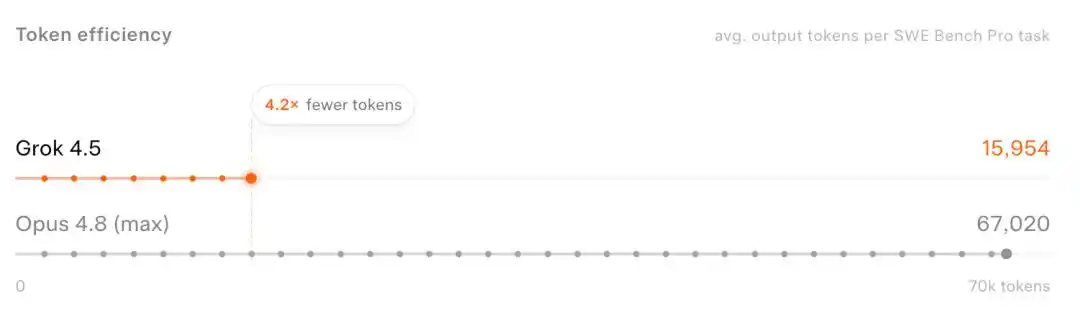
Compared to Opus 4.8, Token consumption is dramatically reduced by 4.2 times.
Tens of thousands of GB300s forged an "Opus-level" model

Grok 4.5 is the first ace card after SpaceXAI went public and the first report card from their collaboration with Cursor.

So, how was it trained?

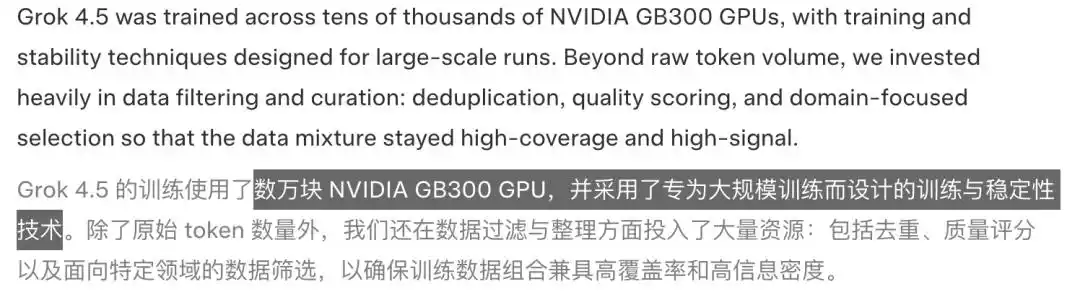
The answer: tens of thousands of NVIDIA GB300 GPUs, in one super large-scale training session. But stacking compute power was just the entry ticket.

Musk previews: Grok 4.5 context will be upgraded to 1 million next week

Where SpaceXAI truly put in exhaustive effort is in the data.

They subjected massive corpora to devilish filtering, deduplication, and quality scoring, ensuring every bit fed into the model was professional content with high information density.
Then, they focused RL efforts on an indicator rarely mentioned—"per-token intelligence".

Cursor's involvement is the most crucial link in this flywheel.

Grok 4.5's base is V9 (1.5T), and officially, it was trained on trillions of Cursor data points.

This data records how real developers interact with codebases, tools, and agents.

This means the model learns not just "what code looks like," but "how humans and AI code together."
And its training stack is designed for high asynchronicity—

Agents can run for hours continuously, the model keeps learning while working, and training on tens of thousands of GPUs never stops.

The result is that it not only solves problems but can also withstand complex, multi-step engineering tasks over hours.
Matches GPT-5.5, approaches Opus 4.8

The hardcore performance of Grok 4.5, trained with this approach, can absolutely withstand scrutiny.
Its performance on several core engineering benchmarks can be described as "steady"—not the strongest, but solidly within the top tier.

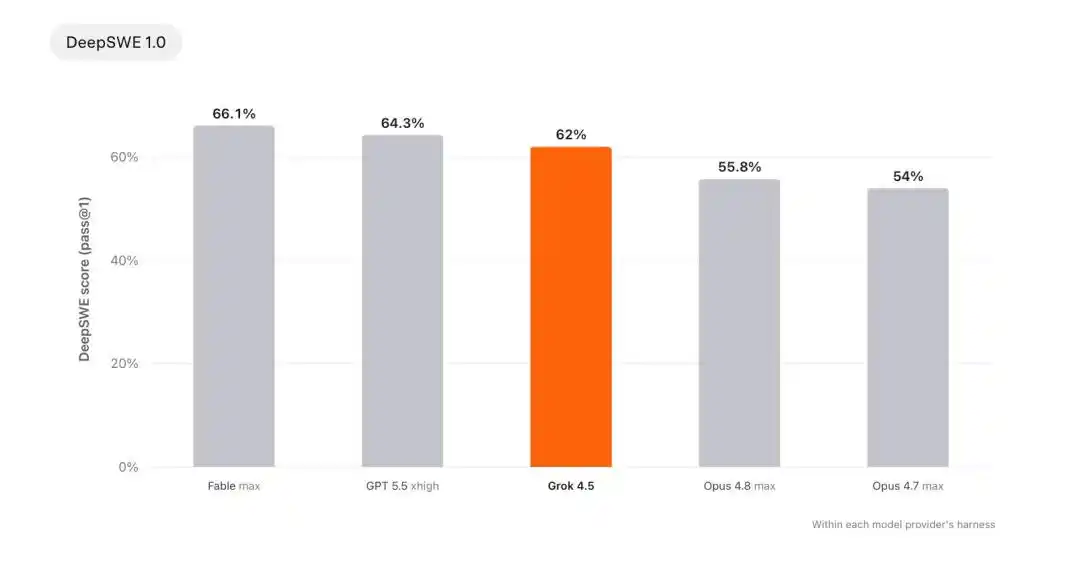
On DeepSWE 1.0, it scores 62.0%, surpassing Opus 4.8 (55.75%) and closely trailing GPT-5.5 (64.31%);
On Terminal Bench 2.1, it surges to 83.3%, only 0.1 behind GPT-5.5 (83.4%)!;

On the more hardcore SWE Bench Pro, it overtakes GPT-5.5 (58.6%) with a 64.7% solve rate, approaching Opus 4.8 (69.2%).
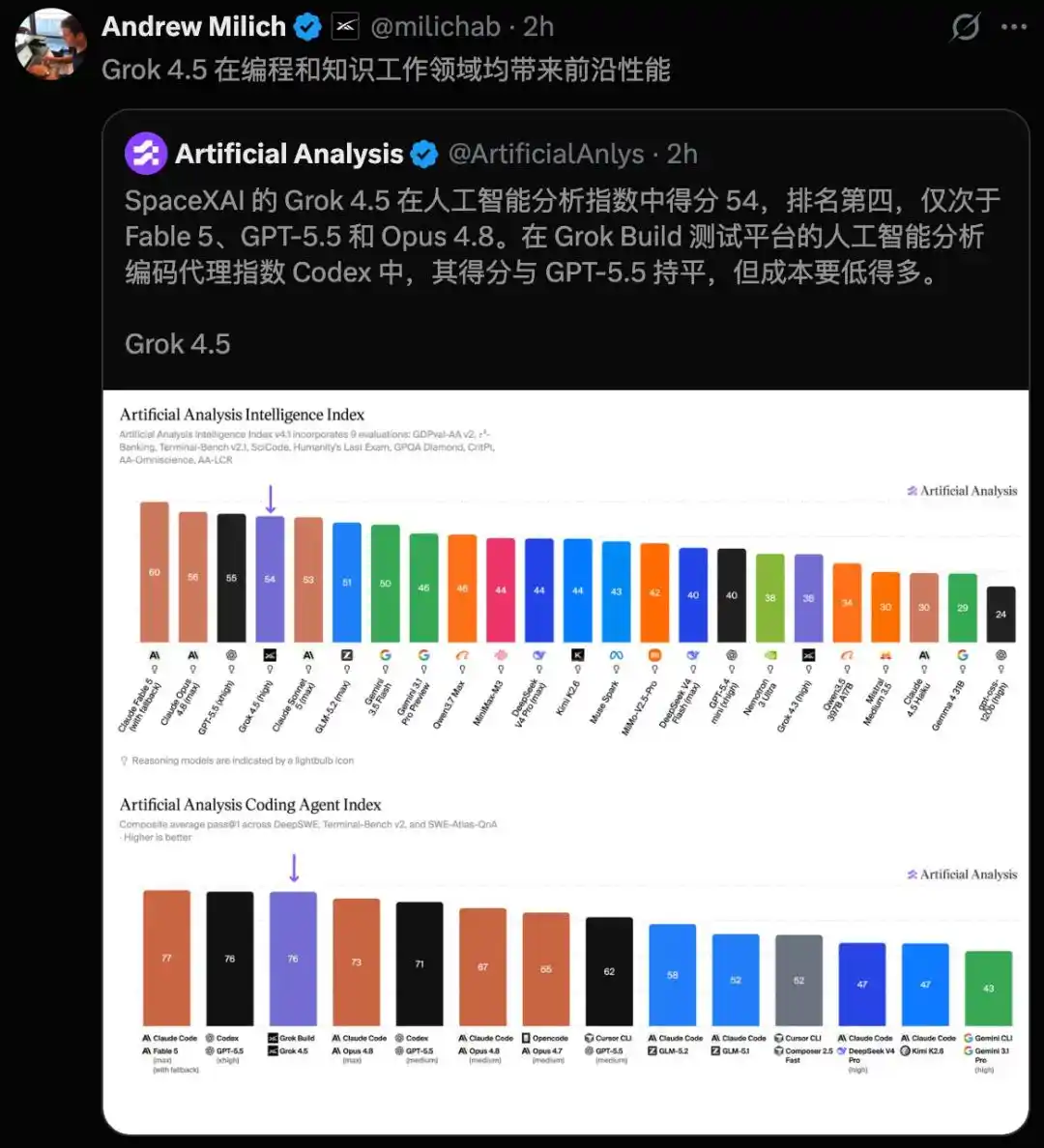
In the official AAAI test, Grok 4.5 ranks fourth, behind only Fable 5, GPT-5.5, and Opus 4.8.

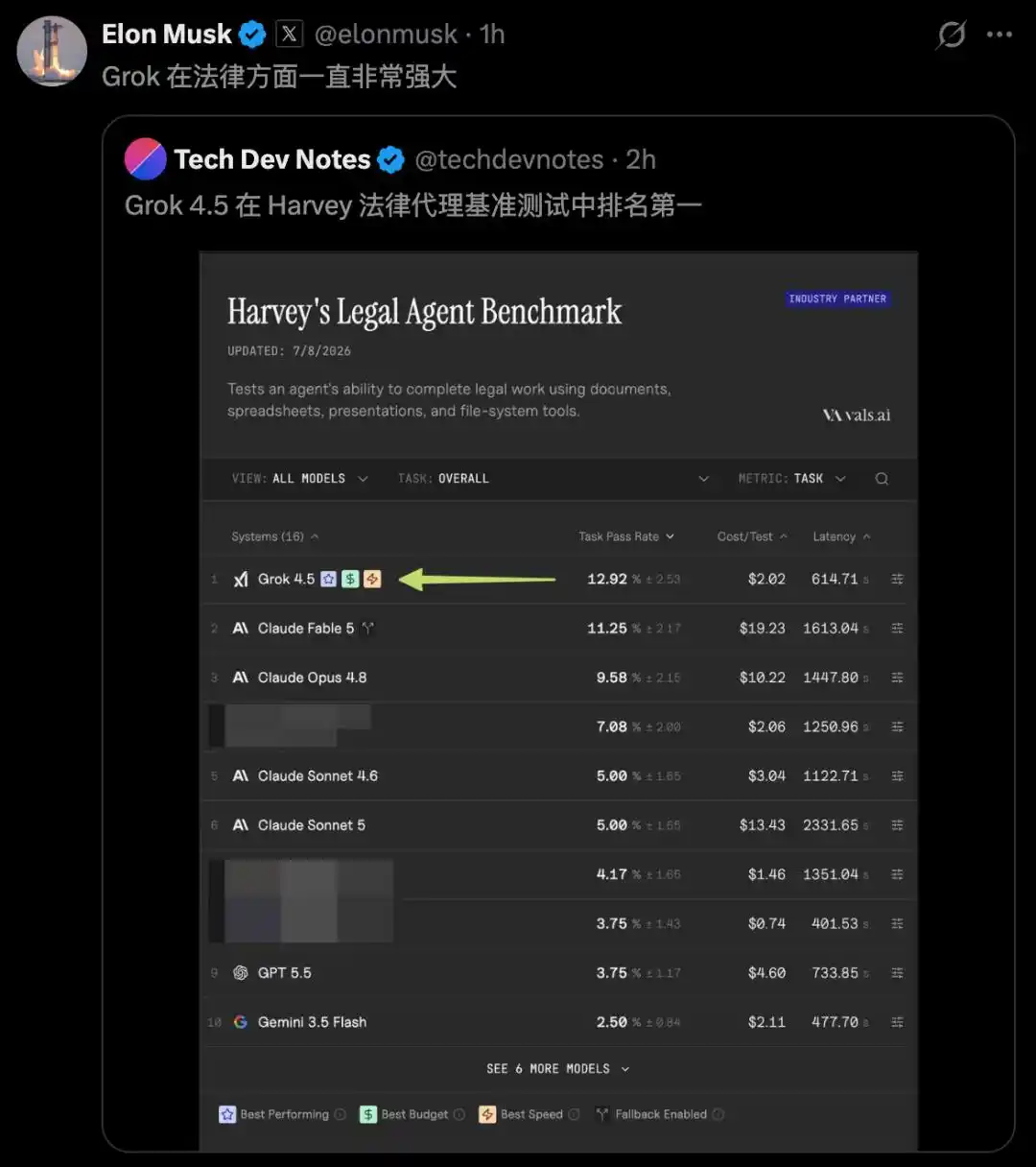
In the Harvey legal agent benchmark test, it ranks first.
It must be said, this report card is quite impressive.

But it must be acknowledged that the current undisputed king is still Claude Fable.

In summary, Grok 4.5 is roughly on par with GPT-5.5, closely follows Opus 4.8, but there is still a distance to the true ceiling.

Musk himself said quite realistically: "Our internal evaluation is that Grok 4.5 is roughly equivalent to Opus 4.7, but much faster."

The real killer feature: Fast and cheap

Grok 4.5's real knockout punch lies in three words: speed, efficiency, and price.

Its inference speed reaches up to 80 TPS (Tokens per second). The official statement is "faster than flash-type models."

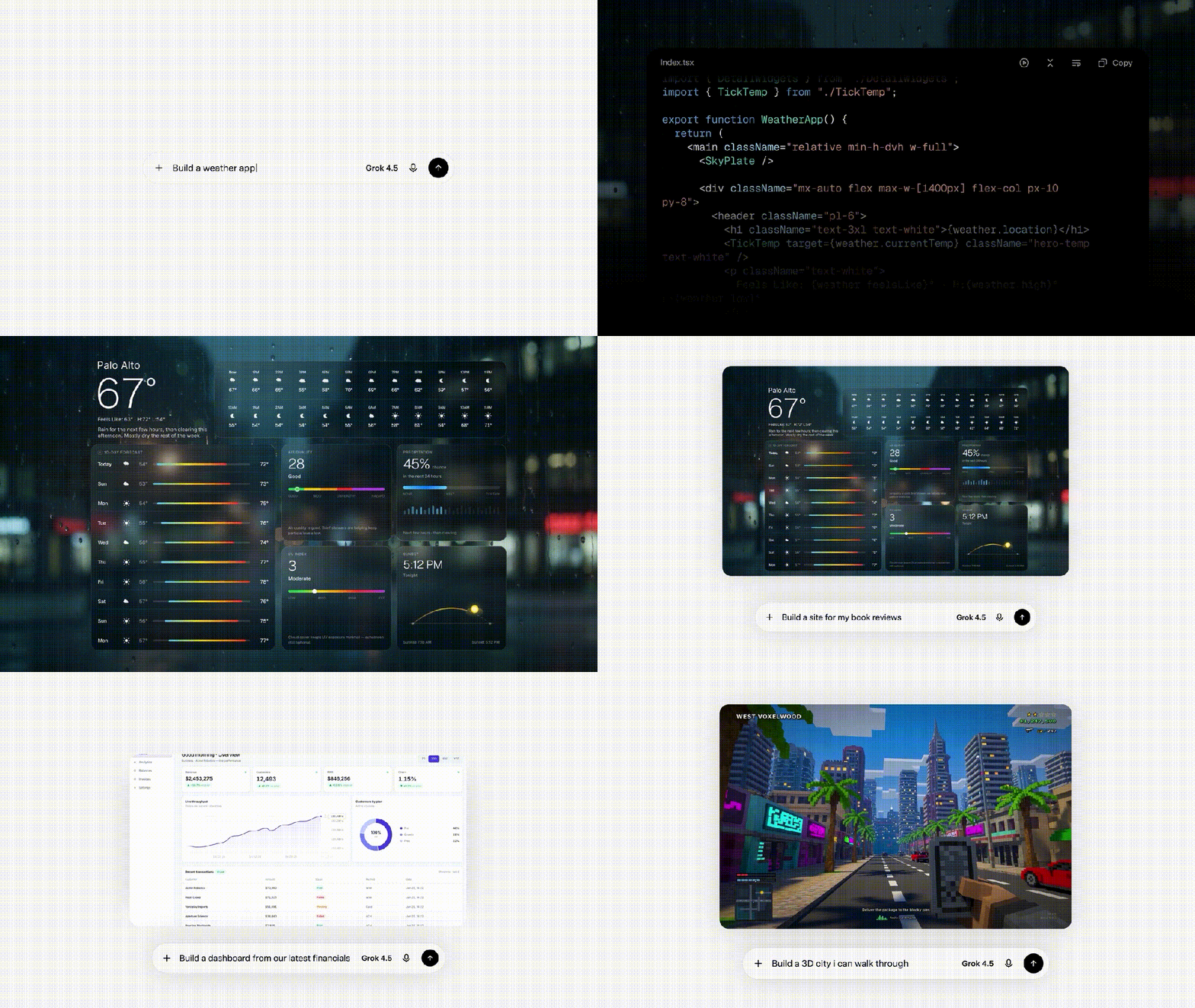
With just one sentence, it wrote a 3D solar system simulator using Three.js:

Supports time acceleration, realistic orbital motion of the eight planets, even the HUD panel is quite well-crafted.

Regarding efficiency, on SWE Bench Pro tasks, Grok 4.5 on average outputs only 15,954 Tokens to solve the problem.

Opus 4.8, doing the same job, spits out an average of 67,020 Tokens.

4.2 times—Grok 4.5 solves the same engineering problem using less than a quarter of its competitor's Tokens.
On price, it's $2 per million tokens for input, $6 per million tokens for output.

There's also an even faster premium version priced at $4 input / $18 output.

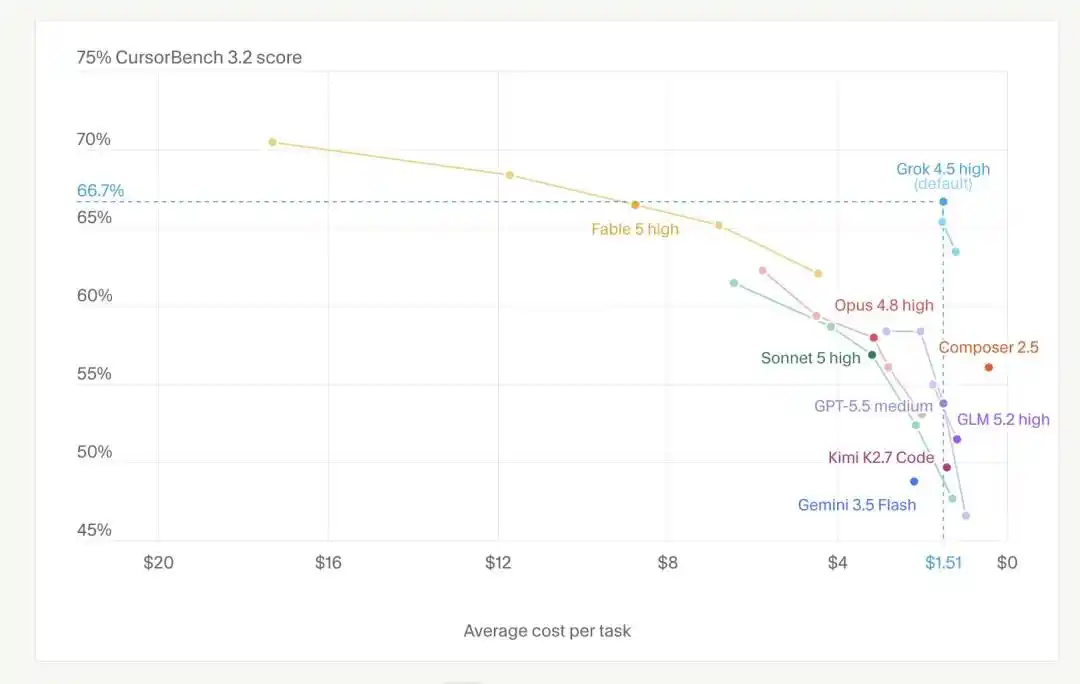
Compared to a host of top-tier models starting at over ten dollars, this price almost beats the cost down to the bone.
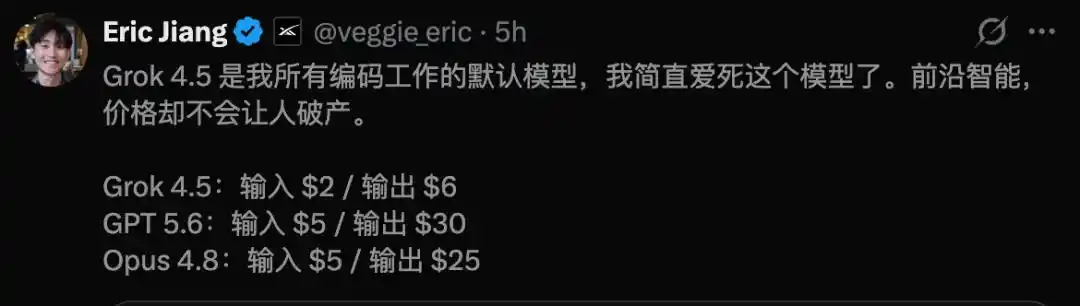
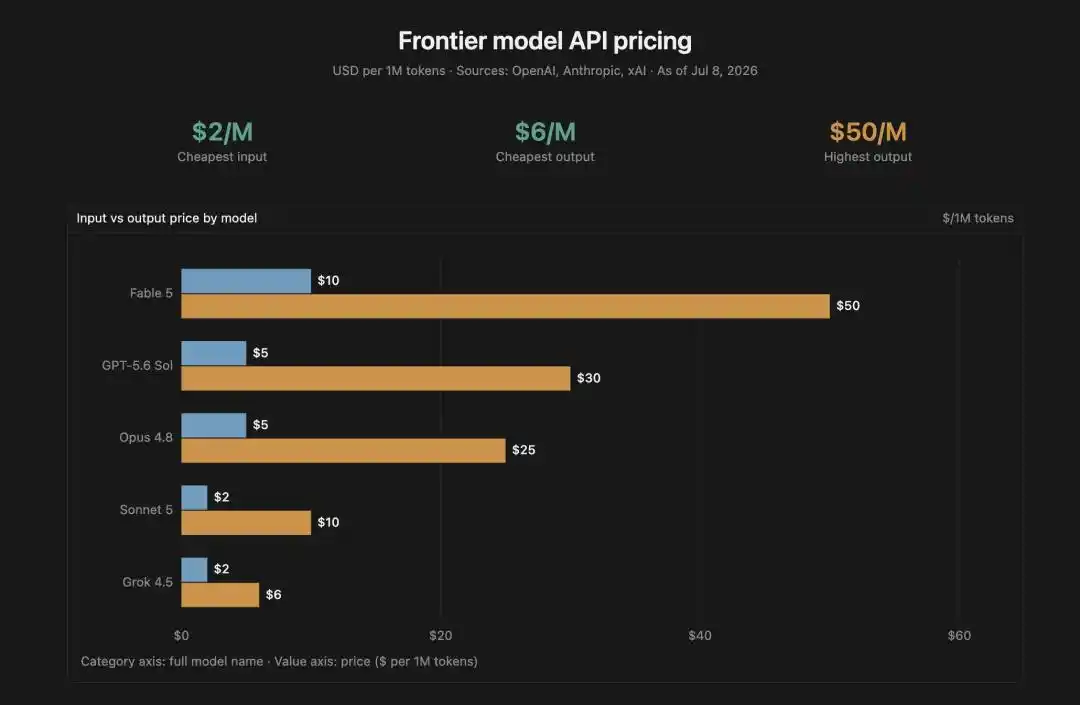
Put these three numbers together, and the conclusion is one sentence:

When it comes to "how much intelligence you can buy per unit of time and cost," Grok 4.5 is currently the "king of cost-effectiveness."

Global hands-on tests: Grok 4.5's real performance

Furthermore, from the hands-on feedback of netizens, we can glimpse a corner of Grok 4.5's true capabilities.

One sentence, directly outputs "Minecraft."
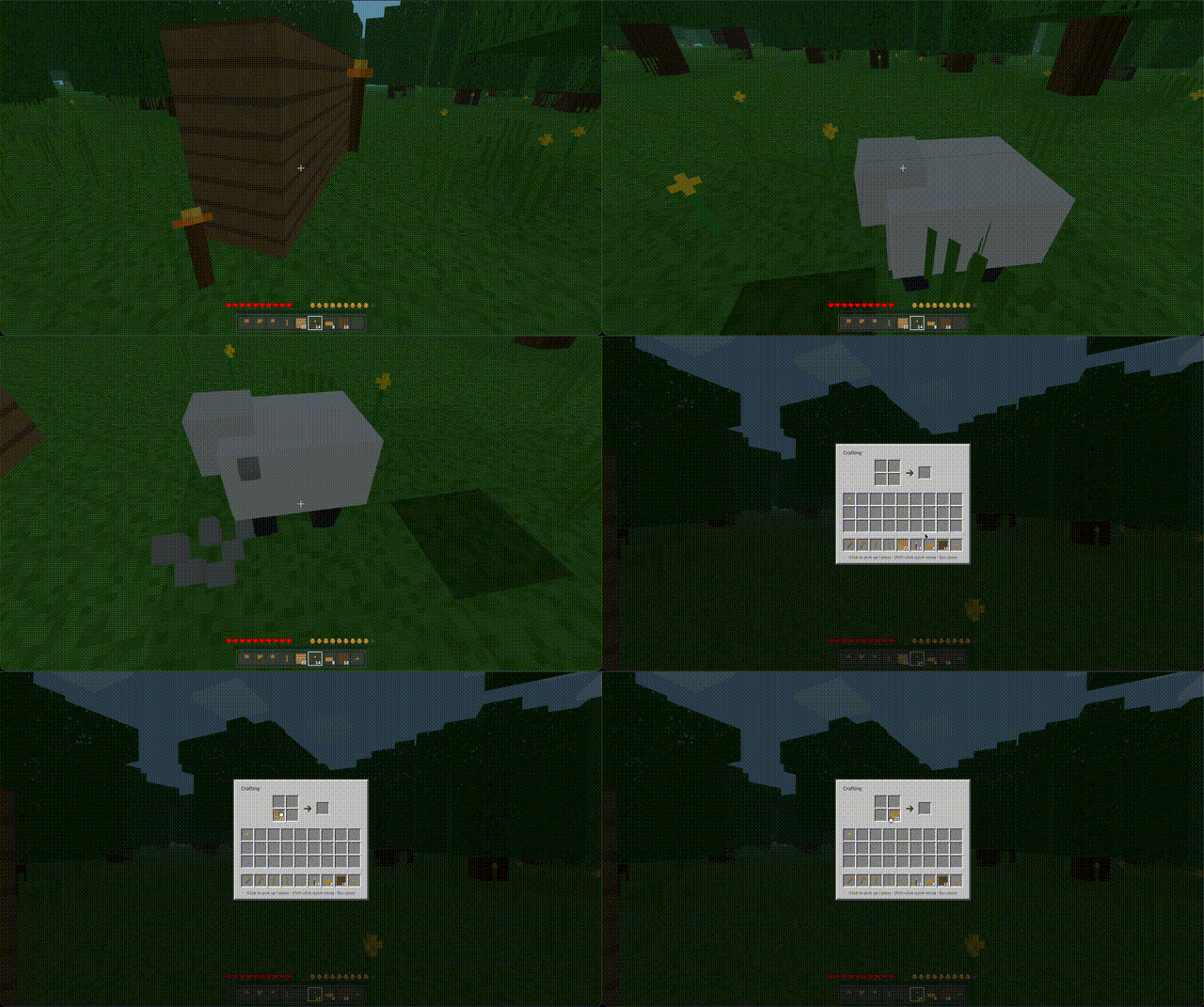
In a single HTML file, Grok 4.5 can easily handle a complete high-end SaaS page.

Grok 4.5 showcases its skills, completing a full set of 2D+3D design schemes within the app in less than a minute.
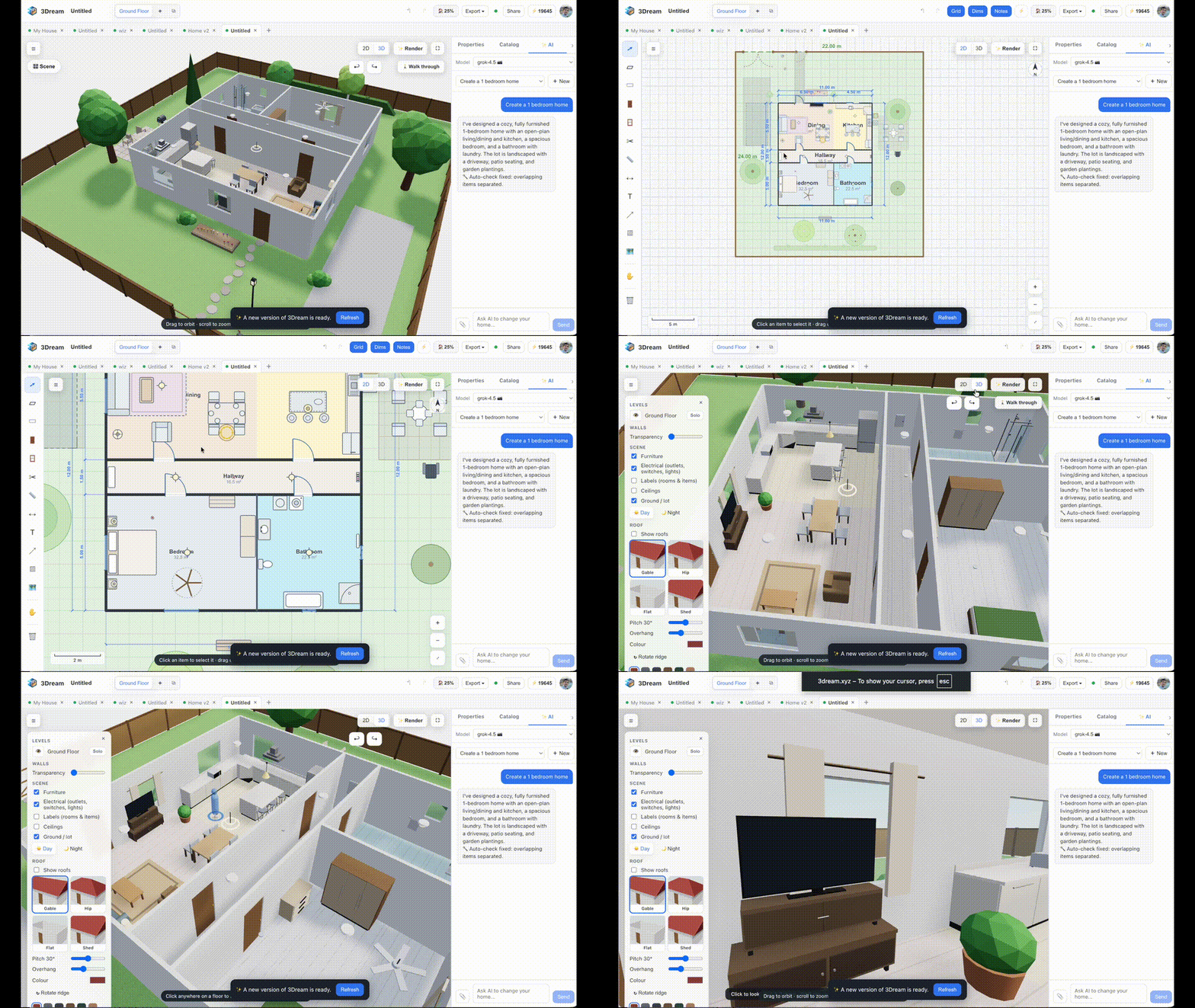
AI game master Danny Limanseta used Grok 4.5 to generate a game with various complete functions.

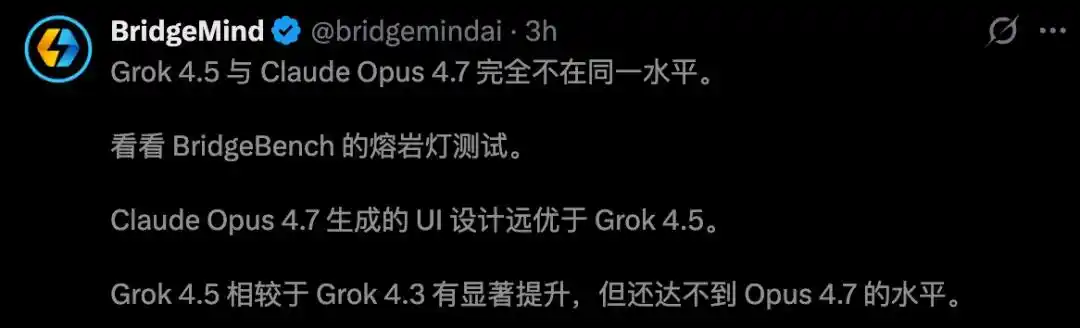

However, some developers stated that Grok 4.5 is completely not on the same level as Opus 4.7, and the generated lava lamp test performed poorly.
Not the strongest, saving energy to overturn the table next month

Today, Musk planted another bombshell:

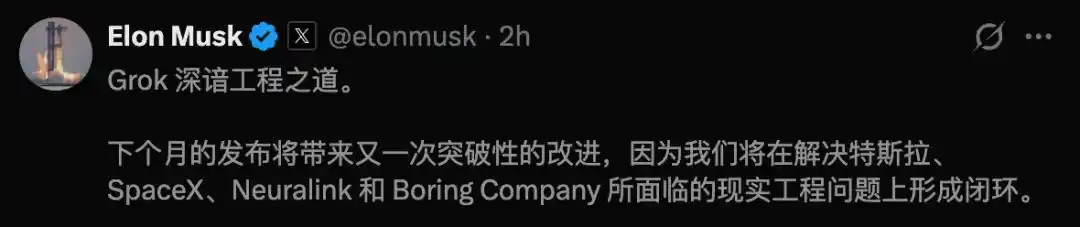
Grok understands engineering deeply.

Next month's version will be another step-change improvement, because we are closing the loop on solving real engineering problems inside Tesla, SpaceX, Neuralink, and Boring Company.
Next month, another leap. And reportedly, a larger 2 trillion parameter version is already on the way.

Benchmarks are fireworks for outsiders; efficiency and cost are the real weapons to drag opponents into a war of attrition.

When model intelligence starts being billed like electricity per kilowatt-hour, the winning move is who can make intelligence fast, cheap, and omnipresent.

This time, Musk didn't play the strongest card, but he flipped the table.

References:

https://x.ai/news/grok-4-5

https://cursor.com/blog/grok-4-5

This article is from WeChat official account "New Zhiyuan," author: ASI Apocalypse, editor: Taozi


Perguntas relacionadas

QWhat is the main advantage of Grok 4.5 according to the article compared to models like Opus 4.8?

AIts main advantages are significantly higher speed, better efficiency (using far fewer tokens for the same tasks), and a much lower cost. For example, it uses about 4.2 times fewer tokens than Opus 4.8 on SWE Bench Pro tasks and is priced at $2/million tokens for input and $6/million for output.

QWhich company did SpaceX AI collaborate with to develop Grok 4.5, and what unique data did this partnership provide?

ASpaceX AI collaborated with Cursor. The training incorporated trillions of tokens of Cursor data, which records how real developers interact with codebases, tools, and AI agents. This taught the model not just 'what code looks like' but 'how humans and AI code together.'

QWhat are some of the key benchmark scores achieved by Grok 4.5 mentioned in the article?

AKey benchmark scores include: SWE Bench Pro: 64.7% (surpassing Opus 4.7's 64.3%), Terminal Bench 2.1: 83.3%, and DeepSWE 1.0: 62.0% (surpassing Opus 4.8's 55.75%). It also ranked 4th in AAAI official tests and 1st in the Harvey legal agent benchmark.

QWhat did Elon Musk hint at regarding the next version of Grok?

AElon Musk hinted that next month's version will be another 'step-change' improvement. This will be achieved by closing the loop on solving real engineering problems within his companies like Tesla, SpaceX, Neuralink, and Boring Company. A larger 2-trillion parameter version is also rumored to be in development.

QWhat is the core training focus for Grok 4.5's reinforcement learning, as stated in the article?

AThe core focus of its reinforcement learning (RL) was on optimizing 'per-token intelligence,' an indicator rarely emphasized by others. This aims to maximize the useful intelligence delivered by each token the model processes.

Leituras Relacionadas

Bitcoin Has Yet to Hit Bottom, While Exchange AscendEX Has Already "Run Away"

On July 6, 2026, cryptocurrency exchange AscendEX officially announced it is ceasing operations, with a complete shutdown scheduled for July 1, 2026. The platform cited the full implementation of the EU's MiCA regulation alongside market, financial, and operational challenges. Users can no longer perform most functions, with accounts limited to withdrawal purposes only. Prior to the announcement, on-chain investigator ZachXBT had issued warnings about significant withdrawal delays and a severe lack of high-liquidity assets (like ETH, USDT, SOL) in AscendEX's public hot wallets. Following the news, ZachXBT confirmed that the exchange lacks sufficient liquid assets to process multiple verified seven-figure withdrawal requests. AscendEX acknowledged that all withdrawals now require manual review, with no guarantees on processing times. Chain analysis via Arkham Intelligence shows the platform's marked wallets hold minimal readily accessible funds, with most recent activity being small withdrawals. One highlighted wallet reportedly contains only $13.46 million in altcoins. AscendEX, formerly known as BitMax, launched in 2018 and raised $50 million in a 2021 funding round. However, it suffered a major security breach in December 2021, losing approximately $77.7 million from hot wallets. The exchange compensated users but never fully recovered. The current crisis underscores the inherent risks of centralized exchanges, where poor liquidity management, regulatory pressure, and bear market conditions can trigger a collapse. The event is seen as part of a broader industry shakeout, highlighting the importance for users to prioritize non-custodial wallets or exchanges with transparent proof-of-reserves.

Foresight NewsHá 36m

Bitcoin Has Yet to Hit Bottom, While Exchange AscendEX Has Already "Run Away"

Foresight NewsHá 36m

Sevenfold Oversubscription, Can SK Hynix Save the Semiconductor Industry This Time?

SK Hynix's planned US ADR listing is drawing intense interest, with its offering reportedly oversubscribed by over seven times, potentially making it the largest foreign listing in US history. The fundraising of approximately $24.5 billion is intended for expanding its Korean production capacity, including advanced packaging and EUV equipment. This massive demand from long-term funds and prominent institutions like Baillie Gifford and Situational Awareness Partners (led by noted investor Leopold Aschenbrenner) presents a stark contrast to the recent downturn in the broader semiconductor sector. The sector has faced a significant correction, with SK Hynix's own stock falling nearly 30% from its June high. This sell-off was triggered by concerns that major tech giants might slow their AI infrastructure spending, following signals like Meta's reported plan to sell surplus computing capacity. The strong ADR appetite suggests long-term investors still believe in the AI investment cycle's fundamentals, viewing the recent decline more as a valuation reset than a demand collapse. Some market speculation even suggests the pre-IPO price drop could be strategic, setting the stage for a stronger post-listing performance. While SK Hynix's successful listing may act as a short-term positive catalyst for market sentiment, the article argues the true signal for a sustained semiconductor recovery will come from upcoming earnings reports of tech giants like Microsoft, Google, Meta, and Amazon. Their future capital expenditure plans will be crucial in determining whether the AI-driven growth cycle can continue.

Odaily星球日报Há 1h

Sevenfold Oversubscription, Can SK Hynix Save the Semiconductor Industry This Time?

Odaily星球日报Há 1h

Today, The Hong Kong Exchange Was Once Again Overwhelmed

Hong Kong's stock exchange witnessed an exceptionally busy day on July 9, with a record seven companies conducting initial public offerings (IPOs) simultaneously. The list included major firms such as Luxshare Precision, which launched the largest Hong Kong IPO of the year, and other notable names like Tri-Ring Group and Qiyunshan Food. However, the market reception was sharply divided on the first trading day. While Qiyunshan Food's shares surged over 110%, several other newcomers, including Luxshare Precision, Dingtai High-Tech, and Rigol Technologies, opened below their issue prices, with some falling nearly 20%. This event highlights a broader, bustling IPO scene in Hong Kong for 2024, with 82 Chinese companies listing in the first half alone—more than double the figure from the same period last year. A significant portion of this activity comes from dual "A+H" listings, where mainland China-listed firms seek secondary listings in Hong Kong. These larger companies have accounted for nearly 60% of total fundraising. Despite the high volume, recent trends show a cooling market sentiment for many new listings. Several IPOs in early July, including that of Tongrentang Healthcare, debuted with significant losses, indicating increased investor caution and selectivity. The market narrative is shifting, with capital increasingly concentrating on high-growth sectors like artificial intelligence, robotics, and semiconductors, while traditional manufacturing and consumer goods face greater pressure and volatility. This divergence underscores a market where success is no longer guaranteed by merely listing, but depends heavily on a company's growth prospects and sector appeal.

marsbitHá 1h

Today, The Hong Kong Exchange Was Once Again Overwhelmed

marsbitHá 1h

Glassnode: Crypto Market Enters Later Stages of Bottoming Phase

Glassnode: Crypto Market Enters Later Stages of Bottom Formation Bitcoin has traded below the true market average and the short-term holder cost basis for five consecutive months, indicating a deep undervaluation. On-chain data reveals a significant shift in selling pressure, with long-term holders now accounting for 43% of all realized losses. Daily realized losses for this group recently peaked at $280 million, the highest level since December 2022. While this large-scale capitulation is a hallmark of bear market bottoms, a sustained decline in this metric is a prerequisite for a sustained recovery. Institutional demand remains weak. US spot Bitcoin ETFs continue to see monthly net outflows, although the pace has moderated from June's peak. Furthermore, average daily ETF trading volumes have contracted by approximately 80% from their October 2025 peak, reflecting subdued institutional participation. Derivatives markets present a mixed picture. Overall positioning has shifted to cautiously bullish, with the put/call ratio dropping to a yearly low. However, the options volatility skew remains elevated, signaling that traders are still paying a premium for downside protection. The spot price also trades below the gamma "max pain" level. In summary, multiple indicators suggest the market is in the later phases of a bottoming process, characterized by long-term holder capitulation and weak institutional inflows. However, key confirmation signals for a durable trend reversal—a sustained drop in long-term holder selling pressure, stabilization of ETF flows, and a price recovery above key cost bases—are still pending.

Foresight NewsHá 1h

Glassnode: Crypto Market Enters Later Stages of Bottoming Phase

Foresight NewsHá 1h

Trading

Spot
活动图片