BNY Partners with Key Companies to Expand Crypto Custody in the UAE

bitcoinistPublicado em 2026-05-08Última atualização em 2026-05-08

Resumo

BNY, the world's largest custodian bank, has announced a strategic collaboration with Finstreet Limited and ADI Foundation to establish regulated, institutional-grade digital asset custody infrastructure in the Abu Dhabi Global Market (ADGM). This marks the first time a U.S. global systemically important bank has introduced crypto custody services to the UAE. The initiative will begin with Bitcoin and Ethereum custody, with plans to expand into stablecoins, tokenized assets, and other regulated digital instruments, subject to final agreements and regulatory approvals. BNY provides its global custody expertise, Finstreet contributes its licensed digital market ecosystem within ADGM, and ADI Foundation supplies sovereign-grade blockchain infrastructure via its ADI Chain. Choosing ADGM as the anchor jurisdiction underscores its institutional-grade regulatory framework under English common law. The move aligns with the UAE's broader efforts to build sovereign digital currency infrastructure, including a regulated dirham-backed stablecoin. BNY's entry signals that regulated digital asset infrastructure in the Gulf is now a present reality, positioning Abu Dhabi as a key hub for institutional crypto adoption and future financial innovation.

BNY, the world’s largest custodian bank overseeing $59.4 trillion in assets, has announced a strategic collaboration with Finstreet Limited and ADI Foundation to build regulated, institutional-grade digital asset custody infrastructure anchored in the Abu Dhabi Global Market (ADGM) — marking the first time a US global systemically important bank has brought crypto custody to the UAE.

The announcement, made on May 7 via BNY’s official newsroom, positions Abu Dhabi as the geographic anchor for an initiative that begins with Bitcoin and Ethereum custody before expanding into stablecoins, tokenized real-world assets, and other regulated digital instruments. All efforts remain subject to definitive agreements and relevant regulatory approvals, per the official release.
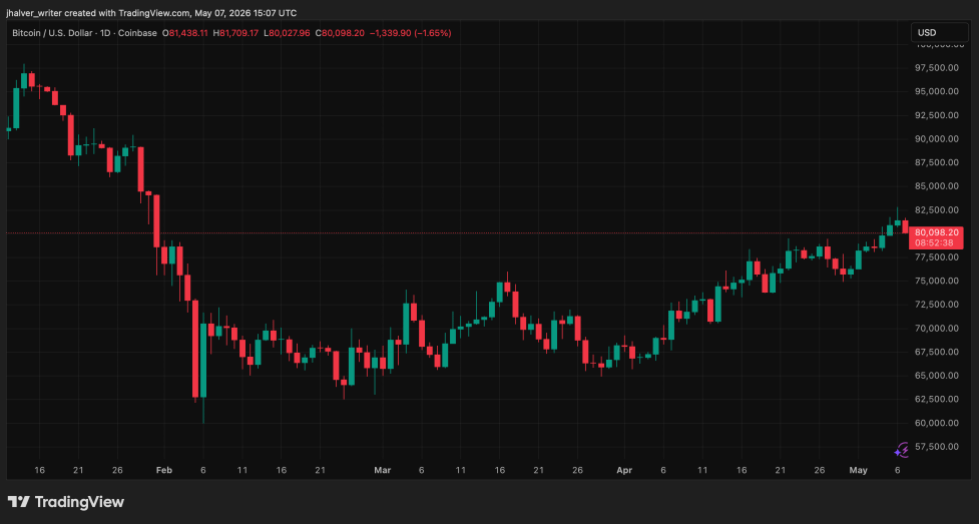
Bitcoin's price trends to the upside on the daily chart. Source: BTCUSD on Tradingview

Three Institutions, Three Distinct Roles

The architecture of the collaboration reflects three distinct layers of infrastructure, each contributed by a different partner. BNY brings its globally recognized custody backbone — the institution has offered digital asset custody to a select group of US clients since 2022, and obtained a Category 4 license in ADGM ahead of this expansion.

Finstreet Limited, a subsidiary of International Holding Company (IHC) through Sirius International Holding and based within ADGM, contributes its digital market ecosystem. Its licensed subsidiaries cover multilateral trading, custody and depository services, and investment advisory — giving the partnership a direct plug into Abu Dhabi’s institutional capital markets infrastructure.

ADI Foundation provides what it describes as sovereign-grade blockchain infrastructure through ADI Chain, a Layer 2 blockchain also founded under the IHC umbrella. Ajay Bhatia, Principal Council Member at ADI Foundation, noted in the release that ADI Chain is designed to unlock new opportunities in custody, trade finance, and lending from Abu Dhabi to the world.

Abu Dhabi’s Crypto Institutional Bet

The choice of ADGM as the anchor jurisdiction is deliberate. While Dubai’s VARA framework has attracted retail exchanges and Web3 startups, ADGM has built its reputation on institutional-grade licensing under English common law — a framework that has drawn Galaxy Digital, Circle, and Tether’s USDt to the market in recent months, per CryptoTimes.

IHC separately announced the launch of DDSC, a dirham-backed stablecoin fully regulated by the Central Bank of the UAE, which is currently in early-stage government and institutional adoption, according to the FX News Group. That context matters: BNY is entering a market that is actively building its own sovereign-grade digital currency infrastructure, not merely accommodating crypto adoption from the outside.

Hani Kablawi, Executive Vice Chair at BNY, characterized the move in the official release as a commitment to building financial infrastructure for the future — noting that the UAE is entering a new phase marked by deeper markets, greater digital sophistication, and stronger global connectivity.

This development marks a critical juncture for the nascent sector’s institutional custody landscape. As the world’s largest custodian plants its flag in Abu Dhabi, the signal to other global financial institutions considering Middle East expansion is clear: regulated digital asset infrastructure in the Gulf is no longer a future consideration — it is being built now.

Cover image from Grok, BTCUSD chart from Tradingview

Perguntas relacionadas

QWhat is the significance of BNY's collaboration in Abu Dhabi for the crypto custody sector?

AIt marks the first time a US global systemically important bank has brought crypto custody to the UAE, signaling a major institutional commitment and building regulated digital asset infrastructure in the region now, not in the future.

QWhich three companies are partnering with BNY, and what unique role does each play?

ABNY provides its global custody backbone and ADGM license; Finstreet Limited contributes its licensed digital market ecosystem (trading, custody, advisory) within ADGM; and ADI Foundation supplies sovereign-grade blockchain infrastructure through its ADI Chain.

QWhy was Abu Dhabi Global Market (ADGM) chosen as the anchor jurisdiction for this initiative?

AADGM has built a reputation for institutional-grade licensing under English common law, attracting firms like Galaxy Digital and Circle, unlike Dubai's VARA which focuses more on retail and Web3 startups.

QWhat digital assets will the custody service initially support, and what is the planned expansion?

AThe service will begin with Bitcoin and Ethereum custody, with plans to expand into stablecoins, tokenized real-world assets, and other regulated digital instruments.

QHow does the recent launch of a dirham-backed stablecoin (DDSC) relate to BNY's market entry?

AIt shows BNY is entering a market that is actively building its own sovereign-grade digital currency infrastructure, not just accommodating external crypto adoption, indicating deeper local market development.

Leituras Relacionadas

Gensyn AI: Don't Let AI Repeat the Mistakes of the Internet

In recent months, the rapid growth of the AI industry has attracted significant talent from the crypto sector. A persistent question among researchers intersecting both fields is whether blockchain can become a foundational part of AI infrastructure. While many previous AI and Crypto projects focused on application layers (like AI Agents, on-chain reasoning, data markets, and compute rentals), few achieved viable commercial models. Gensyn differentiates itself by targeting the most critical and expensive layer of AI: model training. Gensyn aims to organize globally distributed GPU resources into an open AI training network. Developers can submit training tasks, nodes provide computational power, and the network verifies results while distributing incentives. The core issue addressed is not decentralization for its own sake, but the increasing centralization of compute power among tech giants. In the era of large models, access to GPUs (like the H100) has become a decisive bottleneck, dictating the pace of AI development. Major AI companies are heavily dependent on large cloud providers for compute resources. Gensyn's approach is significant for several reasons: 1) It operates at the core infrastructure layer (model training), the most resource-intensive and technically demanding part of the AI value chain. 2) It proposes a more open, collaborative model for compute, potentially increasing resource utilization by dynamically pooling idle GPUs, similar to early cloud computing logic. 3) Its technical moat lies in solving complex challenges like verifying training results, ensuring node honesty, and maintaining reliability in a distributed environment—making it more of a deep-tech infrastructure company. 4) It targets a validated, high-growth market with genuine demand, rather than pursuing blockchain integration without purpose. Ultimately, the boundaries between Crypto and AI are blurring. AI requires global resource coordination, incentive mechanisms, and collaborative systems—areas where crypto-native solutions excel. Gensyn represents a step toward making advanced training capabilities more accessible and collaborative, moving beyond a niche controlled by a few giants. If successful, it could evolve into a fundamental piece of AI infrastructure, where the most enduring value in the AI era is often created.

marsbitHá 2h

Gensyn AI: Don't Let AI Repeat the Mistakes of the Internet

marsbitHá 2h

Why is China's AI Developing So Fast? The Answer Lies Inside the Labs

A US researcher's visit to China's top AI labs reveals distinct cultural and organizational factors driving China's rapid AI development. While talent, data, and compute are similar to the West, Chinese labs excel through a pragmatic, execution-focused culture: less emphasis on individual stardom and conceptual debate, and more on teamwork, engineering optimization, and mastering the full tech stack. A key advantage is the integration of young students and researchers who approach model-building with fresh perspectives and low ego, prioritizing collective progress over personal credit. This contrasts with the US culture of self-promotion and "star scientist" narratives. Chinese labs also exhibit a strong "build, don't buy" mentality, preferring to develop core capabilities—like data pipelines and environments—in-house rather than relying on external services. The ecosystem feels more collaborative than tribal, with mutual respect among labs. While government support exists, its scale is unclear, and technical decisions appear driven by labs, not state mandates. Chinese companies across sectors, from platforms to consumer tech, are building their own foundational models to control their tech destiny, reflecting a broader cultural drive for technological sovereignty. Demand for AI is emerging, with spending patterns potentially mirroring cloud infrastructure more than traditional SaaS. Despite challenges like a less mature data industry and GPU shortages, Chinese labs are propelled by vast talent, rapid iteration, and deep integration with the open-source community. The competition is evolving beyond a pure model race into a contest of organizational execution, developer ecosystems, and industrial pragmatism.

marsbitHá 4h

Why is China's AI Developing So Fast? The Answer Lies Inside the Labs

marsbitHá 4h

3 Years, 5 Times: The Rebirth of a Century-Old Glass Factory

Corning, a 175-year-old glass company, is experiencing a dramatic revival as a key player in AI infrastructure, driven by surging demand for high-performance optical fiber in data centers. AI data centers require vastly more fiber than traditional ones—5 to 10 times as much per rack—to handle high-speed data transmission between GPUs. This structural demand shift, coupled with supply constraints from the lengthy expansion cycle for fiber preforms, has created a significant supply-demand gap. Nvidia has invested in Corning, along with Lumentum and Coherent, in a $4.5 billion total commitment to secure the optical supply chain for AI. Corning's competitive edge lies in its expertise in producing ultra-low-loss, high-density, and bend-resistant specialty fiber, which is critical for 800G+ and future 1.6T data rates. Its deep involvement in co-packaged optics (CPO) with partners like Nvidia further solidifies its position. While not the largest fiber manufacturer globally, Corning's revenue from enterprise/data center clients now exceeds 40% of its optical communications sales, and it has secured multi-year supply agreements with major hyperscalers including Meta and Nvidia. Financially, Corning's optical communications revenue has surged, doubling from $1.3 billion in 2023 to over $3 billion in 2025. Its stock price has risen nearly 6-fold since late 2023. Key future catalysts include the rollout of Nvidia's CPO products and the scale of undisclosed customer agreements. However, risks include high current valuations and potential disruption from next-generation technologies like hollow-core fiber. The company's long-term bet on light over electricity, maintained even through the telecom bubble crash, is now being validated by the AI boom.

marsbitHá 4h

3 Years, 5 Times: The Rebirth of a Century-Old Glass Factory

marsbitHá 4h

Trading

Spot
Futuros

Artigos em Destaque

O que é $BANK

Bank AI: Um Passo Revolucionário no Futuro da Banca Introdução Em uma era marcada por avanços rápidos na tecnologia, o Bank AI está na interseção da inteligência artificial (IA) e dos serviços bancários. Este projeto inovador visa redefinir o panorama financeiro, melhorando a eficiência operacional, as medidas de segurança e as experiências dos clientes através do poder da IA. Ao embarcarmos nesta exploração do Bank AI, iremos aprofundar no que o projeto implica, suas dinâmicas operacionais, seu contexto histórico e marcos significativos. O que é o Bank AI? No seu cerne, o Bank AI representa uma iniciativa transformadora com o objetivo de integrar a inteligência artificial em várias operações bancárias. Este projeto aproveita as capacidades da IA para automatizar processos, melhorar os protocolos de gestão de risco e melhorar a interação com os clientes através de serviços personalizados. Os principais objetivos do Bank AI incluem: Automatização das Funções Bancárias: Ao aproveitar as tecnologias de IA, o Bank AI visa automatizar tarefas rotineiras, reduzindo o peso sobre os recursos humanos e aumentando a eficiência. Gestão de Risco Melhorada: O projeto utiliza algoritmos de IA para prever e identificar riscos, fortalecendo assim as medidas de segurança contra fraudes e outras ameaças. Personalização dos Serviços Bancários: O Bank AI foca em oferecer produtos e serviços financeiros ajustados, analisando dados e comportamentos dos clientes. Melhoria da Experiência do Cliente: A implementação de soluções impulsionadas por IA, como chatbots e assistentes virtuais, visa proporcionar aos usuários interações mais humanizadas, revolucionando a forma como os clientes se envolvem com os bancos. Com esses objetivos, o Bank AI posiciona-se como um ator crucial para tornar a banca mais eficiente, segura e centrada no usuário. Quem é o Criador do Bank AI? Os detalhes sobre o criador do Bank AI permanecem desconhecidos. Assim, nenhuma pessoa ou organização específica foi identificada nas informações disponíveis. O anonimato que cerca a origem do projeto levanta questões, mas não diminui a sua ambiciosa visão e objetivos. Quem são os Investidores do Bank AI? Semelhante ao criador do projeto, informações específicas sobre os investidores ou organizações que apoiam o Bank AI não foram divulgadas. Sem essas informações, é difícil delinear o apoio financeiro e institucional que pode estar impulsionando o projeto para frente. No entanto, a importância de ter uma sólida base de investimento é fundamental para sustentar o desenvolvimento em um campo tão inovador. Como Funciona o Bank AI? O Bank AI opera em várias frentes inovadoras, focando em fatores únicos que o diferenciam das estruturas bancárias tradicionais. Abaixo estão as principais características operacionais: Automatização: Ao aplicar algoritmos de aprendizado de máquina, o Bank AI automatiza vários processos manuais dentro dos bancos. Isso resulta na redução dos custos operacionais e permite que os trabalhadores humanos redirecionem os seus esforços para atividades mais estratégicas. Gestão de Risco Avançada: A integração da IA nas práticas de gestão de risco equipa os bancos com ferramentas para prever com precisão potenciais ameaças, como fraudes, garantindo que as informações e ativos dos clientes permaneçam seguros. Recomendações Financeiras Personalizadas: Através do aprendizado contínuo a partir das interações com os clientes, os sistemas de IA desenvolvem uma compreensão sutil das necessidades dos usuários, permitindo oferecer conselhos adaptados sobre decisões financeiras. Interações Melhoradas com os Clientes: Utilizando chatbots e assistentes virtuais alimentados por IA, o Bank AI permite uma experiência de cliente mais envolvente, permitindo que os usuários tenham suas dúvidas resolvidas rapidamente, reduzindo assim os tempos de espera e melhorando os níveis de satisfação. Juntas, estas características operacionais posicionam o Bank AI como um pioneiro no setor bancário, estabelecendo novos padrões para a prestação de serviços e a excelência operacional. Cronologia do Bank AI Compreender a trajetória do Bank AI requer uma análise do seu contexto histórico. Abaixo está uma cronologia que destaca marcos e desenvolvimentos importantes: Início de 2010: A conceituação da integração da IA nos serviços bancários começou a ganhar atenção à medida que instituições bancárias reconheciam os potenciais benefícios. 2018: Ocorreu um aumento significativo na implementação de tecnologias de IA, quando os bancos começaram a usar ferramentas de IA como chatbots para atendimento ao cliente básico e sistemas de gestão de risco para melhorar o tratamento de segurança. 2023: A sofisticação da IA continuou a avançar, com a introdução de IA generativa para tarefas mais complexas, como processamento de documentos e análise de investimentos em tempo real. Este ano marcou um salto significativo nas capacidades proporcionadas aos bancos pela tecnologia de IA. 2024-Estado Atual: Neste ano, o Bank AI está em uma trajetória ascendente, com pesquisas e desenvolvimentos em andamento prontos para aprimorar ainda mais as capacidades nas operações bancárias. A exploração contínua das aplicações de IA sugere desenvolvimentos emocionantes por vir. Pontos Chave Sobre o Bank AI Integração da IA na Banca: O Bank AI foca na adoção da inteligência artificial para simplificar os processos bancários e melhorar as experiências dos usuários. Automatização e Foco em Gestão de Risco: O projeto enfatiza fortemente essas áreas, visando transferir o peso das tarefas rotineiras enquanto melhora as estruturas de segurança através de análises preditivas. Soluções Bancárias Personalizadas: Ao aproveitar os dados dos clientes, o Bank AI possibilita serviços bancários ajustados que atendem às necessidades individuais dos usuários. Compromisso com o Desenvolvimento: O Bank AI permanece comprometido com contínuas pesquisas e esforços de desenvolvimento, garantindo a sua adaptabilidade e relevância contínua à medida que a tecnologia continua a evoluir. Conclusão Em resumo, o Bank AI exemplifica um passo crucial em frente na indústria bancária, aproveitando a inteligência artificial para remodelar paradigmas operacionais, melhorar a segurança e promover a satisfação do cliente. Apesar das lacunas de informação em torno do criador e dos investidores, os objetivos claros e os mecanismos funcionais do Bank AI fornecem uma base sólida para sua evolução contínua. À medida que a tecnologia de IA continua a avançar e se fundir com o setor bancário, o Bank AI está bem posicionado para impactar significativamente o futuro dos serviços financeiros, aprimorando a maneira como entendemos e interagimos com a banca.

40 Visualizações TotaisPublicado em {updateTime}Atualizado em 2024.12.03

O que é $BANK

Como comprar BANK

Bem-vindo à HTX.com!Tornámos a compra de Lorenzo Protocol (BANK) simples e conveniente.Segue o nosso guia passo a passo para iniciar a tua jornada no mundo das criptos.Passo 1: cria a tua conta HTXUtiliza o teu e-mail ou número de telefone para te inscreveres numa conta gratuita na HTX.Desfruta de um processo de inscrição sem complicações e desbloqueia todas as funcionalidades.Obter a minha contaPasso 2: vai para Comprar Cripto e escolhe o teu método de pagamentoCartão de crédito/débito: usa o teu visa ou mastercard para comprar Lorenzo Protocol (BANK) instantaneamente.Saldo: usa os fundos da tua conta HTX para transacionar sem problemas.Terceiros: adicionamos métodos de pagamento populares, como Google Pay e Apple Pay, para aumentar a conveniência.P2P: transaciona diretamente com outros utilizadores na HTX.Mercado de balcão (OTC): oferecemos serviços personalizados e taxas de câmbio competitivas para os traders.Passo 3: armazena teu Lorenzo Protocol (BANK)Depois de comprar o teu Lorenzo Protocol (BANK), armazena-o na tua conta HTX.Alternativamente, podes enviá-lo para outro lugar através de transferência blockchain ou usá-lo para transacionar outras criptomoedas.Passo 4: transaciona Lorenzo Protocol (BANK)Transaciona facilmente Lorenzo Protocol (BANK) no mercado à vista da HTX.Acede simplesmente à tua conta, seleciona o teu par de trading, executa as tuas transações e monitoriza em tempo real.Oferecemos uma experiência de fácil utilização tanto para principiantes como para traders experientes.

373 Visualizações TotaisPublicado em {updateTime}Atualizado em 2025.05.09

Como comprar BANK

Discussões

Bem-vindo à Comunidade HTX. Aqui, pode manter-se informado sobre os mais recentes desenvolvimentos da plataforma e obter acesso a análises profissionais de mercado. As opiniões dos utilizadores sobre o preço de BANK (BANK) são apresentadas abaixo.

活动图片