Blockchain.com Integrates Polymarket Oracle Feeds Supporting Election Speculation

bitcoinistPublicado em 2026-07-15Última atualização em 2026-07-15

Resumo

Blockchain.com has integrated oracle data feeds from prediction market platform Polymarket, providing users with direct access to real-time information for election speculation markets. This move allows traders to view and engage with election prediction pools directly within the Blockchain.com interface, bypassing traditional clearing agents and enhancing accessibility. The announcement, distributed via Chainwire, is framed as a concrete infrastructure development rather than a speculative market catalyst. Analysts caution against overstating its immediate impact, noting it should be viewed as a reliable data point in a fast-moving market rather than a definitive signal for price action or broad adoption. The update's value lies in its specific technical integration, which offers clearer insight into crypto's evolving themes around market structure and infrastructure, particularly amid sensitivity to regulatory and macro headlines. The report emphasizes grounding conclusions in the actual project details, avoiding sweeping narratives, and monitoring follow-up data to confirm any longer-term trends.

There is a useful difference between a noisy headline and a story that actually changes the market’s understanding of a sector. Blockchain.com Integrates Polymarket Oracle Feeds Supporting Election Speculation lands closer to the second category, provided it is read carefully and without overclaiming.

For more details, visit the official Chainwire platform.

TL;DR

  • Blockchain.com Integrates Polymarket Oracle Feeds Supporting Election Speculation is the main story for Crypto today.
  • Blockchain.com embedding prediction interface features provides wider access to election pools.
  • The cleaner read is to focus on what the project announcement actually shows, not to overstate what the update proves.

Why The Source Matters

Price action here is useful only when it is tied to a real catalyst, liquidity shift, or visible positioning change rather than a standalone candle. That is the lens I would use here. The update is not valuable because it gives traders a magic answer. It is valuable because it adds another reliable data point to a market that has been moving quickly and, at times, messily.

Highlight how the integration bypasses traditional clearing agents. That detail is important because it gives the story a specific centre of gravity. Without that, it would be too easy to turn this into a generic market move or a recycled headline.

For readers, the useful question is not simply whether Crypto is getting attention. It is whether the underlying development changes access, liquidity, regulatory clarity, infrastructure reliability, or trader positioning. In this case, the answer is that it does give the market something concrete to evaluate.

Because the source is a project announcement distributed through Chainwire, the story should be written with a little restraint: useful details matter, promotional language does not.

The Cleaner Way To Read It

The immediate read is also different depending on who is watching. Traders may focus on price and liquidity, while builders or compliance teams may care more about the rule, integration, product, or infrastructure detail. That split is exactly why the story is worth handling as a standalone article rather than burying it in a broader recap.

There is also a timing element. The July 15 update arrives after several sessions where crypto markets have been sensitive to macro headlines, ETF flows, regulatory signals, and exchange-level product changes. Any credible update that touches one of those channels is going to attract attention.

What should be avoided is the temptation to turn one development into a sweeping conclusion. A listing is not the same thing as adoption. A price rebound is not the same thing as a confirmed trend reversal. A new rulemaking step is not the same thing as final legal certainty. The value is in the narrower, more accurate read.

The Bottom Line

For now, the story gives the market one more piece of evidence about where Crypto sits in the current cycle. It may be about regulatory clarity, a product rollout, a price level, or a piece of infrastructure, but the same rule applies: the strongest conclusion is the one that stays closest to the source.

If follow-up data confirms the direction of travel, this could become part of a larger narrative. If not, it still gives readers a useful snapshot of how quickly crypto’s active themes are rotating across policy, infrastructure, payments, exchanges, and market structure.

That is why this deserves coverage now. It is not about forcing a dramatic market call. It is about giving readers a clear, grounded explanation of what happened, why it matters, and what still needs to be watched.

This report is based on information from the project announcement.

This article was written by the News Desk and edited by Samuel Rae.

Source: Chainwire

Perguntas relacionadas

QWhat is the primary event announced in the article?

AThe primary event is the integration of Polymarket oracle feeds by Blockchain.com, which supports election speculation markets.

QAccording to the article, why is the integration of the Polymarket oracle feeds significant?

AThe integration is significant because it bypasses traditional clearing agents, adding a reliable data point for a fast-moving market and widening access to election prediction pools through Blockchain.com's interface.

QWhat should readers avoid doing when interpreting this announcement, as suggested in 'The Cleaner Way To Read It' section?

AReaders should avoid turning this single development into a sweeping conclusion, such as equating a listing with adoption or a price rebound with a confirmed trend reversal. The value is in a narrower, more accurate interpretation.

QHow does the article suggest the story should be written, considering its source?

AThe article suggests the story should be written with restraint, focusing on useful details from the project announcement and avoiding promotional language, as the source is a Chainwire-distributed announcement.

QWhat does the article identify as the overall value or 'bottom line' of covering this story?

AThe value is in providing a clear, grounded explanation of what happened, why it matters (e.g., as evidence of Crypto's position in the current cycle), and what to watch for next, rather than forcing a dramatic market call.

Leituras Relacionadas

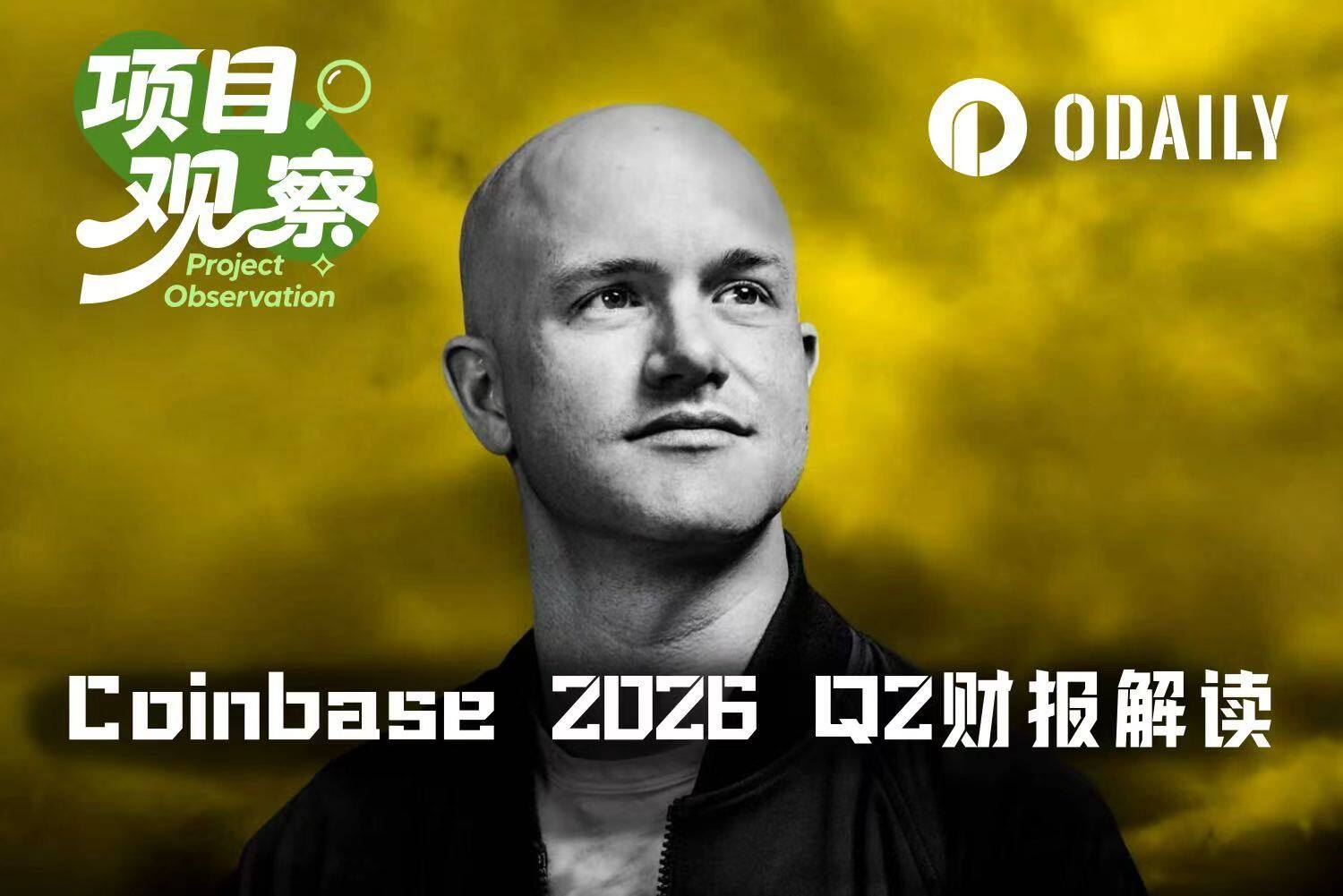
Cyclical Stock or Growth Stock? Coinbase's Q2 Earnings Report Reveals 'Valuation Disagreement'

Coinbase's Q2 2026 financial results revealed a mixed performance, reigniting debate over whether the company should be valued as a cyclical stock tied to crypto markets or a growth stock with future potential. Total revenue missed expectations at $1.22 billion, down 19% year-over-year. Transaction revenue fell to $599 million, with retail crypto spot trading revenue dropping 30% to $452 million, back to 2023 levels. The company reported a net loss of $359 million, marking its third consecutive quarterly loss. Despite CEO Brian Armstrong's positive commentary on metrics like a 10.3% overall crypto trading market share and 106% growth in prediction markets, the market reacted negatively, with shares dropping over 5% after-hours. A key issue is the decline in core retail trading. While Coinbase touted record market share, this figure includes derivatives and new products. Its traditional crypto spot trading share is likely shrinking. New ventures like prediction markets, while growing, contributed less than $30 million, insufficient to offset the core revenue decline. The valuation debate hinges on perspective. As a cyclical stock, Coinbase remains deeply tied to the crypto bear market, with user attrition and competitive pressures justifying a lower valuation. The company's strategy appears focused on surviving until the next bull cycle. Viewed as a growth stock, however, Coinbase shows promising diversification. Subscription and service revenue reached $555 million, nearly matching transaction revenue. Stablecoin revenue, its second-largest source at $292 million, remains strong through its partnership with Circle. Critically, Coinbase is positioning itself as a leader in the emerging on-chain "agent economy." Over 90% of agent-based stablecoin transactions occur on its Base network, which it believes could handle trillions in future agent transactions. The recent acquisition of Deribit also aims to boost its international derivatives offering. In summary, Coinbase's present struggles are clear, but its future hinges on whether its investments in revenue diversification, stablecoins, and the agent economy can ultimately transform its business model and justify a growth premium.

Odaily星球日报Há 1m

Cyclical Stock or Growth Stock? Coinbase's Q2 Earnings Report Reveals 'Valuation Disagreement'

Odaily星球日报Há 1m

Global Market Share Survey: Japanese Firms Lead in Semiconductor Materials

Global Market Share Survey: Japanese Firms Lead in Semiconductor Materials According to the 2025 "Major Goods and Services Market Share Survey" by Nikkei, Japanese companies maintain strong positions in semiconductor-related materials. In silicon wafers, Shin-Etsu Chemical ranks first with a 26.3% share, followed by SUMCO at 17.8%. Together, they hold 44.1% of the market, widening their lead over competitors from Taiwan, Germany, and South Korea. In photoresists, Tokyo Ohka Kogyo, JSR, and Shin-Etsu Chemical occupy the top three spots, with a combined share of 60.5%. Despite their strength in materials, Japanese firms have a weaker presence in core semiconductor segments like DRAM and NAND flash memory, where South Korean and U.S. companies dominate. For instance, SK Hynix and Samsung lead in DRAM, while China’s CXMT doubled its share to 6% in 2025. The semiconductor market is projected to grow rapidly, with WSTS forecasting a 90% increase to $1.5112 trillion by 2026. Major players like Samsung, SK Hynix, and Micron are making massive investments to expand capacity. To maintain their edge in materials, Japanese companies must similarly commit to large-scale, risk-taking investments. In contrast, Japan’s automotive sector shows stagnation. Toyota remains the global leader but with only a slight share increase to 12.3%, while Japanese brands are absent from the top five in the EV market. In shipbuilding, Imabari Shipbuilding rose to third place globally with a 7.2% share, benefiting from large container ship deliveries. However, Chinese and South Korean firms dominate the sector, holding the top two positions. Japan aims to revitalize its shipbuilding industry through government and corporate efforts, targeting a near doubling of output by 2035. Addressing labor shortages and adopting advanced technologies like physical AI will be critical for competitiveness.

marsbitHá 26m

Global Market Share Survey: Japanese Firms Lead in Semiconductor Materials

marsbitHá 26m

STRC Major De-pegging's First Financial Report, How Will Strategy Repair Its Capital Flywheel?

Bitcoin treasury company Strategy released its Q2 2026 earnings report on July 31. Despite a 6.9% year-over-year revenue increase to $122 million, the company recorded a net loss of $8.22 billion, largely due to $8.32 billion in unrealized losses from Bitcoin price fluctuations. As of quarter-end, Strategy holds 843,775 BTC with an average cost of $75,000 per coin, and Bitcoin per share increased. The report highlights a critical shift in Strategy's capital model following the de-pegging of its key financing tool, STRC (Strategic Coin), which fell below its $100 target. Management's top priority is restoring STRC to its target value, aiming for a recovery by September 8. They rule out discounted STRC issuances and plan to maintain its dividend yield at 12%, instead focusing on bolstering its $3.75 billion cash reserve. Strategy has moved from a one-way "buy-and-hold" Bitcoin strategy to active capital management. This new approach, part of its "Digital Credit Capital Framework," involves flexibly managing its balance sheet across four elements: BTC, USD cash, common stock (MSTR), and digital credit securities like STRC. This allows for BTC monetization (having sold $218.4 million in BTC so far), strategic repurchases of discounted securities, and debt optimization, as seen with a $1.5 billion convertible bond buyback. The company's future hinges on two key tests: successfully re-pegging STRC to restore market confidence in its digital credit system, and a long-term recovery in Bitcoin's price to ultimately support its growth thesis.

marsbitHá 1h

STRC Major De-pegging's First Financial Report, How Will Strategy Repair Its Capital Flywheel?

marsbitHá 1h

Trading

Spot
活动图片