Blockchain has finally begun sailing toward the main channel after 18 years

链捕手Publicado em 2026-06-15Última atualização em 2026-06-15

Resumo

After 18 years of development, blockchain technology is beginning to move from a specialized niche into mainstream adoption, according to a recent industry analysis. The shift is reflected in the changing strategies of major crypto venture capital firms, which are expanding their focus beyond pure "digital ownership" towards broader themes like "autonomy." The report highlights that leading VC firms like Variant, Paradigm, Haun Ventures, and YZi Labs are broadening their investment mandates to include not only crypto but also artificial intelligence (AI), robotics, biotech, and other frontier technologies. This reflects a recognition that the isolated "crypto investment" narrative is losing appeal to limited partners (LPs) as capital and attention increasingly flow toward AI and other high-growth tech sectors. A key emerging thesis is that blockchain's most significant future application may not be as a consumer-facing product, but as the underlying economic and settlement infrastructure for the AI era. As AI agents and autonomous systems become more prevalent, they will require programmable, global, and low-cost payment networks (like stablecoins), verifiable digital identities, and secure wallets to manage transactions and assets on behalf of users. The investment by stablecoin issuer Tether into robotics company NEURA, with plans to integrate its wallet technology, is cited as a prime example of this convergence. However, the article cautions that simply labeling projec...

Author: Gu Yu, ChainCatcher

Earlier this month, veteran crypto venture capital firm Variant announced the completion of a new fundraise of $222 million, further expanding its fund theme from the previous "digital ownership" to "autonomy."

This may seem like just another ordinary fundraise, but the signal behind it is not ordinary.

Jesse Walden, a partner at Variant, stated that in the future, the label of "crypto investor" may gradually disappear, becoming akin to "internet investors." In other words, crypto is no longer an independent, closed investment vertical, but more like an underlying technological paradigm, embedded within main channels such as AI, finance, social media, robotics, data, content, and consumer products.

This is perhaps also the most pragmatic response from crypto VCs facing the impact of AI: not to compete with AI for narratives, but to attempt to become the underlying financial rails of the AI world.

1. Crypto VCs Begin Blurring Boundaries

In recent years, the fundraising logic of crypto VCs has been primarily built on one premise: blockchain will give rise to a new set of platforms, protocols, and applications independent of the Web2 world.

As narratives such as DeFi, NFTs, GameFi, Layer1, Layer2, modularization, restaking, DePin, and RWA emerged one after another, this logic was once highly convincing. Funds that entered new narratives early enough could potentially reap returns far exceeding traditional equity investments through secondary market liquidity of tokens.

However, this logic is now faltering. The core reason is the significant weakening of the wealth effect within the crypto market itself. Bitcoin has fallen sharply this year, with many market views citing fund outflows from crypto ETFs, macro liquidity pressures, and investors shifting towards AI and large tech IPOs as important reasons. Meanwhile, AI and hard tech companies like SpaceX, OpenAI, and Anthropic continue to capture the attention of LPs and the secondary market, significantly undermining the scarcity of crypto assets in "growth stories."

This means crypto funds are not just competing with other crypto funds, but with all assets representing future growth. AI, robotics, space, defense tech, and energy infrastructure are all competing for the same pool of LP risk budget.

Against this backdrop, "investing only in crypto" has gradually transformed from a professional label into a potential constraint.

If LPs believe AI is the most important technological variable of the next decade, it's difficult for a fund to prove its irreplaceability solely by saying "we understand tokenomics better." Especially considering that over the past cycles, many crypto projects have failed to demonstrate real revenue, user retention, and application scenarios, instead leaving behind structural issues like high FDV, low circulation, airdrop farming, and on-chain zombie applications.

This is why more and more crypto VCs are proactively blurring their boundaries.

YZi Labs has already expanded its investment scope to three major directions: Web3, AI, and biotechnology, and this year participated in a $52 million funding round for AI industrial robotics company RoboForce.

According to a February report by The Wall Street Journal, Paradigm is seeking to raise up to about $1.5 billion for its next fund, expanding its investment scope from crypto to "frontier tech" such as AI and robotics, while continuing to invest in the crypto sector. In May, AI manufacturing company SendCutSend completed a $110 million funding round with participation from Paradigm.

In May, Haun Ventures announced the completion of a $1 billion new fundraise, expanding its investment scope to the AI agent space. Its founder Katie Haun stated that AI will "increasingly represent us in economic activities," and services need to adapt for this future.

2. AI Agents Could Be Crypto's True Large-Scale Adoption Application

In the past, crypto projects often tried to get users to use products for the sake of "decentralization," but reality has proven that the vast majority of users do not change their behavior based on ideology.

Today, the crypto industry finds itself in an awkward position: it still possesses unique capabilities like globalization, open finance, composability, asset issuance, and censorship resistance, but these capabilities have long lacked truly high-frequency, essential, and large-scale application entry points.

What is more likely to happen in the future is that users will not know they are using crypto, but AI agents, robots, financial applications, games, or content platforms will invoke stablecoins, wallets, smart contracts, and on-chain identities in the background.

From Variant's perspective, autonomy is not just automation. Automation solves whether machines can complete tasks for humans, while autonomy focuses on whether users truly control their own assets, identity, data, and decision-making power. Variant stated in an article that building autonomous systems requires solving a series of issues such as incentive mechanisms, law, governance, security, verification, policy, and geopolitical interfaces in adversarial markets, with digital ownership being an important pillar of autonomy.

"The ideas that fueled the Web3 movement will find new momentum in the AI era. We did a lot of experiments, and crypto initially wanted to be seen as the product itself. But ultimately, we found that crypto is the rails that underpin many products, and its growth story is just beginning," Jesse Walden said.

This is perhaps the most important cognitive correction in the crypto industry in recent years.

Crypto does not have to be the front-end application users open every day; it can become the economic settlement layer between machines and machines, humans and machines, and applications and applications in the AI era.

If an AI agent is to perform tasks on behalf of users, it needs a wallet; if it needs to autonomously purchase APIs, call computing power, pay for data, and subscribe to services, it needs a low-cost, global, programmable payment network; if it needs to carry identity, reputation, and assets across multiple platforms, it needs an open account system; if it needs the external world to trust the results of its actions, it needs verification and audit mechanisms.

These issues are precisely within the scope of capabilities crypto has accumulated over the past decade-plus.

3. The Tether Investment Case

The crypto giant Tether's investment in NEURA Robotics is a typical case of this trend.

On June 10th, German robotics company NEURA Robotics completed a $1.4 billion funding round with investors including Tether, Amazon, Nvidia, Qualcomm, Bosch, Schaeffler, and the European Investment Bank, among others. NEURA stated that the funds will be used to scale the commercialization of cognitive robots and humanoid robots, with plans to produce millions of robots by 2030. The company also disclosed that its order backlog already exceeds $1 billion.

On the surface, this is an investment in AI robotics; but for Tether, it's clearly more than just a financial bet.

According to the related press release, NEURA's robot platform is expected to integrate Tether's Wallet Development Kit (WDK), embedding self-custody wallet functionality directly into the robot system. This means that robots in the future may receive micropayments for completing tasks, conduct transactions with other systems, or perform economic activities within human-preset parameters.

This is precisely one of the most imaginative new use cases for stablecoins.

In the past, the biggest users of stablecoins were traders, cross-border payment users, gray arbitrageurs, and some residents of emerging markets. It solved the problems of transfer, settlement, and value storage between humans. But if AI agents and robots begin to become economic actors, the usage frequency and scenarios for stablecoins could be significantly amplified.

A robot could accept orders, complete transportation, and receive USDT micropayments; an AI agent could automatically purchase data, invoke models, and pay for SaaS services; an automated supply chain system could automatically settle after goods arrive, sensors verify, and contracts confirm. Compared to traditional banking systems, on-chain payments are inherently suited for this high-frequency, small-amount, cross-border, machine-readable economic activity.

This is also why AI is not merely a competitive threat to crypto. AI is diverting crypto's capital attention, but it may also create the real demand that crypto has been lacking.

4. AI + Crypto is Not a Universal Formula

Of course, AI + Crypto does not inherently make sense.

Over the past two years, the market has seen too many crudely combined projects: connecting ChatGPT to a Telegram group is called an AI agent; packaging a model API call as token economics; cramming data annotation, computing power leasing, and agent platforms into a whitepaper. The problems with many of these projects are essentially no different from the last cycle's GameFi and SocialFi: big concept, small revenue, heavy tokenomics, light product.

Truly valuable AI + Crypto projects should meet at least one condition: they would not exist without crypto, or they are significantly better with crypto.

For example, agents need self-custody wallets and permission management; AI-generated content requires verifiable provenance and ownership; model, computing, and data markets need open settlement and incentive mechanisms; robot economies need machine-readable payment networks; autonomous organizations need transparent governance and enforceable rules. In these scenarios, crypto is not a marketing label slapped on the outside; it is a fundamental component required for the system to operate.

This is also the question crypto projects and VCs need to answer next.

If they simply change their fund intro pages to AI + Crypto just because it's easier to raise money, it won't change the industry's predicament. The market will eventually realize that most so-called integration projects have neither AI moats nor crypto necessity.

But if they can find the real intersection points in AI agents, robotics, data markets, financial automation, and on-chain identity, the crypto industry may indeed usher in a new application cycle.

This time, growth may not come from more retail investors rushing into exchanges to buy new coins, but from more machines, applications, and enterprises using on-chain rails in the background.

5. Conclusion

Faced with the impact of AI, the answer from crypto VCs is already clear: stop viewing crypto as an isolated vertical, but reinterpret it within larger technological waves.

This is both proactive evolution and a forced pivot.

When LP funds flow to AI, when entrepreneurs' attention flows to AI, when secondary market risk appetite flows to AI, crypto funds that continue to talk only about Layer1, DeFi, NFTs, crypto gaming, and airdrop growth will find their survival space increasingly narrow.

But this doesn't mean the crypto story is over. On the contrary, if AI agents truly become new internet users, if robots truly become new economic participants, and if automated systems truly begin to execute more and more transactions on behalf of humans, then the wallets, stablecoins, smart contracts, on-chain identities, and open financial networks built by crypto over many years may for the first time encounter high-frequency, essential, non-speculative use cases.

The crypto industry needs new narratives more than ever, but it needs new real demand even more.

Perguntas relacionadas

QAccording to the article, how is the investment focus of crypto VCs shifting in response to the rise of AI?

ACrypto VCs are shifting from treating crypto as an independent, closed investment sector to viewing it as an underlying technological paradigm. They are expanding their investment scope beyond pure crypto into broader areas like AI, robotics, biotech, and frontier tech. They aim to integrate crypto's capabilities, such as open finance and digital ownership, as foundational infrastructure within these mainstream technological domains, particularly as the economic settlement layer for the AI world.

QWhat does the article suggest is the 'most realistic answer' crypto VCs have given to the impact of AI?

AThe most realistic answer is not to compete with AI for narrative dominance, but to attempt to become the underlying financial infrastructure or 'rails' of the AI world. Instead of crypto being the front-end product users interact with, it aims to serve as the backend economic settlement layer for AI agents, robots, and automated systems.

QUsing Tether's investment in NEURA Robotics as an example, what new potential application scenario for stablecoins is highlighted?

AThe investment highlights the potential for stablecoins to be used in machine-to-machine and AI agent economies. With NEURA's robots integrating Tether's wallet tools, machines could autonomously earn micropayments for completing tasks, trade with other systems, or execute economic behaviors within human-set parameters. This represents a shift from stablecoins serving human users for transfers and storage to facilitating high-frequency, small-amount, cross-border, and machine-readable economic activities.

QWhat key condition does the article propose for a valuable 'AI + Crypto' project?

AA valuable 'AI + Crypto' project should satisfy at least one condition: it either cannot exist without crypto, or it becomes significantly better with crypto. Crypto should not be just a marketing label but an essential foundational component required for the system to operate, such as providing self-custody wallets for AI agents, verifiable provenance for AI-generated content, or open settlement for data markets.

QWhat fundamental problem does the article identify with the previous logic of crypto investment, and why is it failing now?

AThe previous logic was based on the premise that blockchain would spawn new platforms, protocols, and applications independent of the Web2 world, offering outsized returns through secondary market token liquidity. This logic is failing because the crypto market's own wealth effect has significantly weakened. Crypto assets are losing their scarcity in 'growth stories' as capital, LP attention, and investor risk appetite flow towards AI, large tech IPOs, and other frontier technologies like robotics and space tech.

Leituras Relacionadas

Xpeng and NIO Compete on Computing Power, Li Auto Shifts Architecture

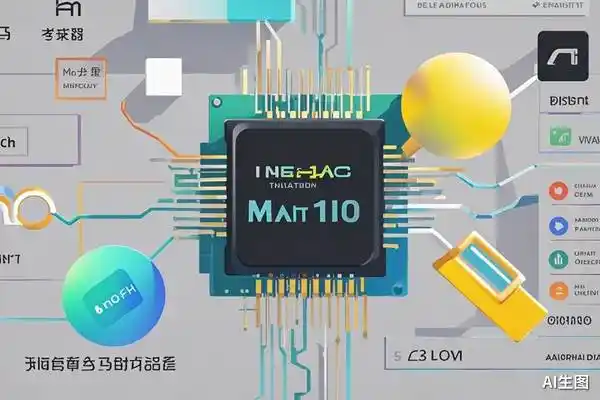
On June 15, 2026, Li Auto unveiled details of its self-developed chip, Mahe M100, for its new L9 Livis model. CTO Xie Yan stated the goal was not just a faster chip, but a fundamentally different one, targeting the chip architecture itself. While competitors like NIO, Xpeng, and Huawei highlight TOPS (computing power) figures for their self-developed chips, Li Auto’s Mahe M100 focuses on redesigning the underlying architecture. It employs a "dynamic data flow architecture" to address memory bandwidth bottlenecks in large model inference, claiming up to 3x the effective computing power of Nvidia's Thor U for its specific workloads and a 40% reduction in latency. The chip's design was peer-reviewed and accepted at ISCA 2026. However, this performance is highly optimized for Li Auto's own VLA2.1 algorithm, meaning it may not generalize as well to other tasks. Li Auto aims to achieve full-stack in-house development with Mahe M100, covering chip, compiler, OS, AI algorithms, and domain controller—a level of vertical integration few competitors match. Beyond the chip, CEO Li Xiang introduced a new strategic narrative: the "embodied intelligent vehicle," defined as an integration of an EV, a professional driver, an AI computer, and a life assistant. This shifts competition from features like large screens to systemic AI capabilities. A key commitment was that Li Auto's Mahe VLA autonomous driving model will match Tesla's FSD V14 by Q4 2026, with specific OTA milestones set for July, September, and December. Financially, Li Auto faces pressure with declining revenue and vehicle gross margins since Q4 2025, while maintaining high R&D investment (approx. ¥12B in 2026, 50% AI-related). Its 2026 sales target is 550,000 vehicles, up from 406,000 in 2025. The new L9 Livis garnered over 10,000 pre-orders in two weeks. The effectiveness of these strategic moves—new products, OTAs, and the novel chip architecture—will begin to show in Q3 2026 financial results, with the year-end FSD V14 benchmark being the ultimate test.

marsbitHá 37m

Xpeng and NIO Compete on Computing Power, Li Auto Shifts Architecture

marsbitHá 37m

The Year of AI Applications: Saying 'Yes' While Ignoring Risks? A Comprehensive Open Source Log of Software Development's Journey

The Year of AI Applications: Blindly Saying "Yes" While Ignoring Risks? A Software Development Log Goes Fully Open Source. AI-generated code harbors risks hidden within seemingly correct programs, potentially leading to data leaks or asset loss. The open-source project "Narwhal AI Code Risks," from Peking University's Narwhal-Lab, compiles real-world cases, early warning signs, and typical risk pathways. Its goal is to help developers identify potential hazards early and avoid repeating past mistakes. In 2026, code is generated faster than ever but deployed with less scrutiny. The danger often lies not in glaring errors, but in code that appears normal—syntactically correct, passing all checks—yet introduces subtle but critical flaws like non-existent dependencies, excessive permissions, or exposed databases. A stark example is the Moonwell cbETH oracle incident. A configuration file error, where a cryptocurrency price was set to ~$1.12 instead of ~$2,200, slipped through 28 checks and a pull request signed by both AI (Claude, Copilot) and human developers. This "semantic deviation" resulted in a loss of $1.78 million. The risk is that AI can produce functionally valid code that is semantically wrong for the business context. As AI moves beyond simple code completion to modifying configurations, installing dependencies, and operating via autonomous agents, it traverses longer, less traceable paths within software engineering, blurring traditional boundaries and oversight points. The Narwhal AI Code Risks project structures information into three layers: `/cases` for documented real-world incidents, `/inferred` for early warning signals, and `/scenarios` for clear, generalized risk patterns not yet tied to specific events. This aims to create a lasting, public record to prevent collective amnesia about past AI-coding pitfalls. Risks are categorized into seven areas: Software Supply Chain (e.g., recommending fake packages), Code-Level Vulnerabilities (e.g., reintroducing path traversal bugs), Cloud & Infrastructure Misconfiguration (e.g., overly permissive settings), Agent Risks (from autonomous tool execution), Vertical Domain Risks (e.g., in finance, healthcare), Intellectual Property & Compliance issues, and Human Factors (like over-reliance on AI output). The project's core value is transforming isolated incidents into reusable knowledge—a foundational resource for developers to spot similar issues, for security researchers to build upon, for toolmakers to create detection rules, and for the community to contribute new findings. As AI integration accelerates, this open-source "logbook" serves as a crucial navigational aid, charting past errors to help future projects steer clear of the same traps.

marsbitHá 37m

The Year of AI Applications: Saying 'Yes' While Ignoring Risks? A Comprehensive Open Source Log of Software Development's Journey

marsbitHá 37m

The Foundation of SpaceX's Trillion-Dollar Valuation: Who is Dividing Up Musk's Annual Tens of Billions in Capital Expenditure?

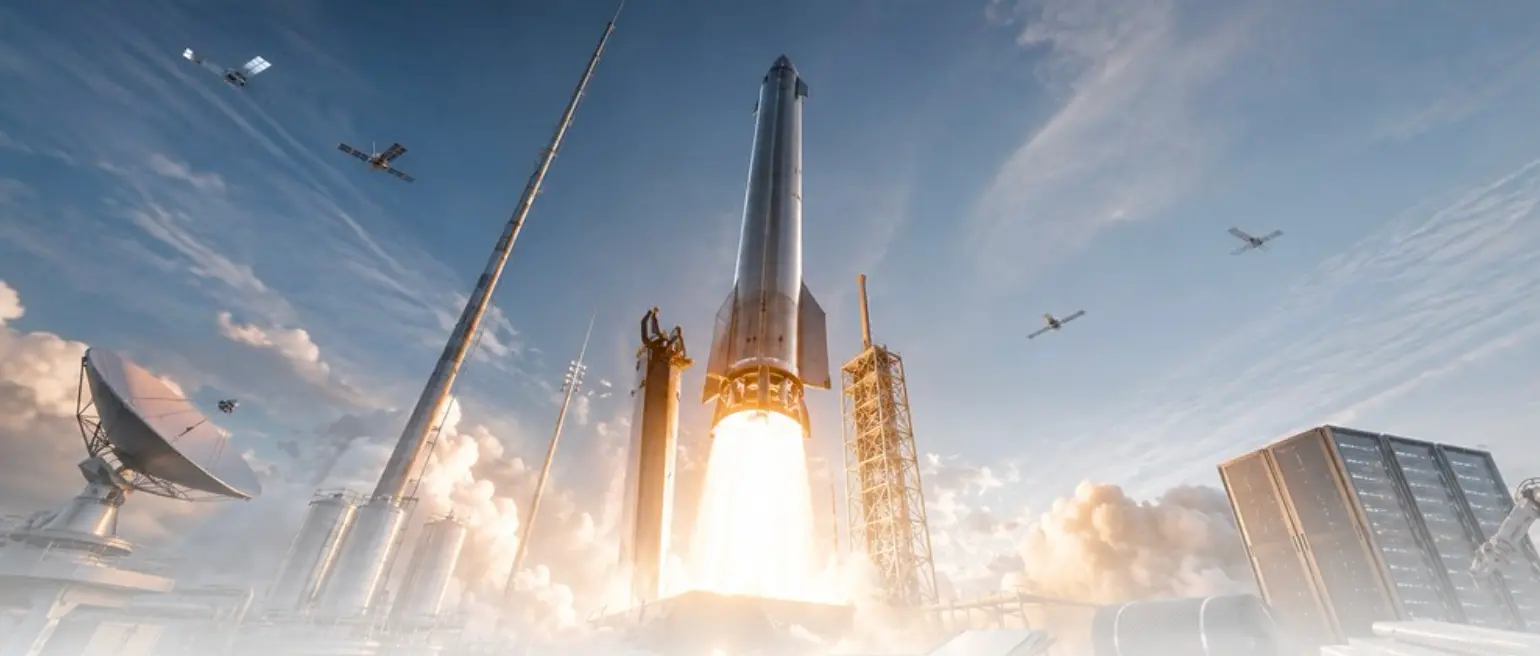
SpaceX's trillion-dollar valuation is built on its three core businesses: Starlink (profitable, 60% of revenue), rockets (driving down launch costs), and AI (a major investment area). This creates a financial cycle: Starlink funds rocket development, which enables low-cost launches for AI hardware, generating future revenue. This cycle fuels annual capital expenditures of tens of billions, flowing to a vast supply chain. Suppliers are categorized by their replaceability. The first group includes irreplaceable players like NVIDIA (GPU/CUDA ecosystem), Eutelsat (critical radio spectrum), Filtronic (specialized amplifiers), Materion (strategic beryllium), and STMicroelectronics (antenna chips). The second group consists of hard-to-replace suppliers due to high switching costs, such as Honeywell (flight control), Carpenter Technology (specialty alloys), Hexcel (carbon fiber), Broadcom (data exchange), and Linde (industrial gases). The third group comprises high-volume, cost-critical suppliers for mass-produced items like Starlink terminals. Key names include Wistron NeWeb (primary manufacturer) and several A-share companies like Shenzhen Sunway (connectors), Pies New Materials (forgings), Western Superconducting (alloys), and Yingliu (castings). Other niche players include Trimble (timing), Astronics (power distribution), and CTS (thermal management). The article argues that investing in these suppliers, rather than SpaceX stock directly, offers an alternative opportunity. The rationale is threefold: procurement is just beginning to scale, SpaceX's IPO brings new transparency to its supply chain, and the situation mirrors early stages of past "super terminal" ecosystems like Apple or Tesla. While risks exist (commodity cycles, geopolitical factors, technology shifts), the core thesis is that SpaceX's massive, ongoing procurement will translate into reliable revenue for its key suppliers, regardless of its own stock price volatility.

marsbitHá 1h

The Foundation of SpaceX's Trillion-Dollar Valuation: Who is Dividing Up Musk's Annual Tens of Billions in Capital Expenditure?

marsbitHá 1h

SpaceX's Trillion-Dollar Valuation Base: Who's Sharing in Musk's Annual Tens of Billions in Capital Expenditure?

**Title: The Foundation of SpaceX's Trillion-Dollar Valuation: Who Benefits from Musk's Annual $100 Billion Capital Expenditure?** This article argues that investors seeking to benefit from SpaceX's growth might find greater opportunities in its supply chain rather than directly investing in the company itself, drawing parallels to historical successes with Apple, Tesla, and NVIDIA suppliers. **SpaceX's Business Model & Cash Flow:** SpaceX generates revenue from three main areas: 1. **Starlink:** Its profitable core, earning $11.3B in 2023 (60% of revenue), funding other ventures. 2. **Rockets (Falcon/Starship):** Requires $3B+ in annual R&D but achieves the world's lowest launch costs. 3. **AI:** Currently unprofitable (-$6B+ in 2023), investing heavily in ground-based supercomputers (220,000 GPUs) and future orbital data centers. The cycle is: Starlink profits → fund cheaper rockets → low-cost launches deploy AI hardware → AI compute rentals generate future revenue. This cycle drives annual procurement spending of tens of billions of dollars. **The Supply Chain Beneficiaries:** Suppliers are categorized by their replaceability: **1. Nearly Irreplaceable (High Barriers to Entry):** * **NVIDIA:** Powers the Colossus supercomputer; its CUDA ecosystem creates immense switching costs. * **Eutelsat (SATS):** Controls critical radio spectrum for satellite communications; holds a ~3% stake in SpaceX. * **Filtronic (FTC):** Supplies millimeter-wave signal amplifiers for Starlink satellites; SpaceX constitutes 83% of its revenue. * **Materion (MTRN):** Global leader in beryllium production, a strategic material used in Starship structures. * **STMicroelectronics (STM):** Supplies phased-array antenna chips for Starlink satellites. **2. Replaceable, but Switching Cost is Prohibitively High:** * **Honeywell (HON):** Provides flight control and inertial navigation systems with decades of certification. * **Carpenter Technology (CRS):** Manufactures ultra-pure specialty steel alloys for Raptor engines. * **Hexcel (HXL):** Supplies custom carbon fiber composites developed over a decade with SpaceX. * **Broadcom (AVGO):** Manages high-speed data switching. * **Linde Group:** Supplies industrial gases (liquid oxygen/nitrogen) from facilities built near SpaceX launch sites. **3. High-Volume, Cost-Critical Manufacturing:** Focuses on mass-producing components like Starlink user terminals (target: 30 million units). * **Key Players:** Wistron NeWeb (6285, primary terminal manufacturer), several Chinese A-share companies (e.g., Sunway Communication, PAX New Materials, Western Metal Materials, Yingliu Co.), and smaller US firms like Trimble (TRMB, timing systems). **Why Now?** Three factors make the supply chain opportunity timely: 1. **Volume Ramp-Up:** SpaceX plans 100 launches in 2026, aims for 30 million Starlink terminals, and will deploy AI data centers, meaning procurement will accelerate. 2. **Increased Transparency:** The IPO provides public financial data, allowing investors to track supplier order growth. 3. **Historical Precedent:** The current phase is likened to Tesla's early mass-production stage (circa 2018), suggesting a long growth runway for suppliers. **Conclusion:** The article posits that while investing in SpaceX stock is betting on Elon Musk's ambitious vision at a high valuation, investing in its established suppliers is a bet on the tangible, recurring revenue from its massive procurement budget, which is largely decoupled from day-to-day stock price volatility.

链捕手Há 1h

SpaceX's Trillion-Dollar Valuation Base: Who's Sharing in Musk's Annual Tens of Billions in Capital Expenditure?

链捕手Há 1h

Trading

Spot
Futuros
活动图片