BlackRock vs. Strategy: Who Will Win the Bitcoin Accumulation Battle?

marsbitPublicado em 2026-03-20Última atualização em 2026-03-20

Resumo

BlackRock and Strategy (formerly MicroStrategy) are engaged in an unprecedented race to accumulate Bitcoin. As of March 16, 2026, BlackRock’s iShares Bitcoin Trust (IBIT) holds 784,062 BTC, while Strategy holds 761,068 BTC—a gap of 22,994 coins that could close within days given Strategy’s aggressive purchasing pace. BlackRock accumulates Bitcoin indirectly through its IBIT ETF, where investor inflows drive purchases. In contrast, Strategy actively raises capital via debt, equity, and preferred stock offerings to buy and hold Bitcoin directly, with no intention of selling. This competition highlights two distinct models: BlackRock offers a regulated, low-complexity vehicle for institutional exposure, while Strategy employs leverage and corporate strategy for accelerated accumulation. Both are rapidly reducing Bitcoin’s available supply, intensifying market scarcity. Strategy faces higher risks, including significant debt and sensitivity to Bitcoin’s declines, whereas BlackRock’s model is more resilient to sentiment shifts. The outcome symbolizes broader institutional adoption, fueled by regulatory clarity and new accounting rules. Ultimately, both entities reinforce Bitcoin’s growing legitimacy and supply squeeze, impacting all market participants.

Author: Jawad Hussain

Compiled by: Plain Language Blockchain
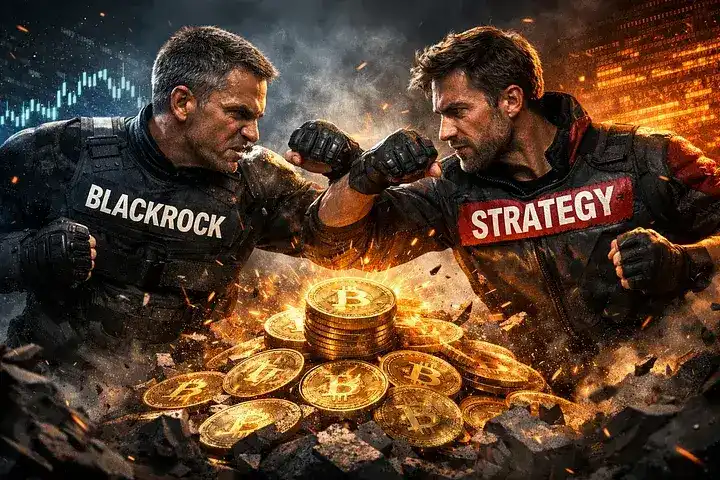
The world's largest asset manager and a 37-year-old software company that has pivoted its entire balance sheet to digital assets are locked in an unprecedented race to accumulate Bitcoin on a massive scale in the crypto market.

As of March 16, 2026, BlackRock's iShares Bitcoin Trust (IBIT) held 784,062 Bitcoin. Meanwhile, Strategy (formerly MicroStrategy) held 761,068 Bitcoin.

The gap between them is approximately 22,994 coins. At Strategy's current purchasing rate, this gap could disappear within days.

This is more than just a footnote in digital asset history. It is one of the most influential financial stories of 2026.

Two entities with different structures, motivations, and risk profiles are competing for the same finite asset. Bitcoin has a fixed supply cap of 21 million coins.

Every coin purchased by these institutions is one coin no longer available for sale. The race between BlackRock and Strategy is accelerating the supply squeeze long predicted by Bitcoin traders.

BlackRock vs. Strategy: Who Will Win the Bitcoin Accumulation War?

Here, we will break down how each participant accumulates Bitcoin, what drives their purchasing speed, the risks for both sides, and what the outcome of this race means for off-exchange investors. Whether you hold IBIT shares, MSTR stock, Bitcoin directly, or none of the above, this race directly impacts the market you participate in.

Two Entities, Two Completely Different Models

Both BlackRock and Strategy hold massive amounts of Bitcoin. But their reasons for holding, the mechanisms, and the associated obligations are completely different.

How BlackRock Accumulates Bitcoin

BlackRock does not buy Bitcoin for itself. The company launched the iShares Bitcoin Trust (ticker: IBIT) on Nasdaq in January 2024, providing investors with a regulated instrument to gain Bitcoin exposure by directly holding the asset. When investors buy IBIT shares, Authorized Participants (large financial institutions) buy Bitcoin on the open market and deliver it to the fund. When investors sell IBIT, the process occurs: the fund sells Bitcoin back into the market.

This means BlackRock's Bitcoin holdings are a function of investor demand. IBIT's holdings grow when institutional and retail buyers want Bitcoin exposure purely through traditional accounts. When sentiment turns bearish and investors redeem, the holdings shrink. BlackRock has no strategic mandate to accumulate Bitcoin; it is a custodian. The Bitcoin it holds economically belongs to IBIT shareholders, not BlackRock itself.

According to SoSoValue data, since its launch, IBIT has attracted cumulative net inflows of $63.21 billion. In the week of March 9 to March 13 alone, IBIT garnered net inflows of $600.1 million, accounting for 78% of the net Bitcoin inflows into ETFs that week. The fund has maintained positive inflows every day since March 9, momentum highlighting the institutional demand driving BlackRock's Bitcoin accumulation.

How Strategy Accumulates Bitcoin

Strategy's model is the complete opposite. The company does not wait for investor funds; it proactively raises capital specifically for buying Bitcoin. This capital primarily comes from three sources: convertible notes (debt instruments convertible into MSTR common stock); at-the-market (ATM) equity offerings (selling new shares directly to the market); and preferred stock instruments, recently the STRC Preferred Shares with an 11.5% annual yield, sold to investors who provide funds directly for Bitcoin purchases in exchange for monthly payments.

Once Strategy secures cash, it purchases Bitcoin through institutional trading desks (primarily Coinbase Prime), storing the coins in secure cold wallets. The company does not trade these coins or hedge. There is a simple directive: buy and hold. This means Strategy's Bitcoin holdings only move in one direction. Unlike IBIT, which can shrink due to redemptions, Strategy's Bitcoin inventory grows with every capital raise, regardless of market conditions.

According to Michael Saylor, in the first week of March 2026, Strategy acquired 40,332 Bitcoin, increasing its holdings by 3.0%. As of mid-March 2026, the company had accumulated 88,568 Bitcoin year-to-date, a 3.4% increase. These numbers reflect an accumulation speed never before attempted by a public company.

The Current Numbers: A Race That Could Conclude in Days

The current gap is the smallest since BlackRock briefly surpassed Strategy's holdings in July 2025. As of March 16, 2026, BlackRock held 784,062, Strategy held 761,068, a gap of 22,994.

At Strategy's recent weekly purchase rate of 22,337 coins, the company could almost erase the entire gap in one week. At its daily rate of approximately 2,881 coins, it would take about 7 to 8 days to surpass BlackRock's current holdings *if IBIT inflows completely stopped*. This last condition is key: IBIT is not standing still; the fund takes in money daily, meaning the target is constantly moving upward as Strategy closes the gap.

The race became a true nail-biter in mid-March because MSTR's purchase speed coincided precisely with a weekly slowdown in BlackRock's growth. This contraction narrowed the gap faster than most analysts expected. Bitcoin Magazine reported on March 17 that MSTR's stock price was approaching $1,500, suggesting market participants are watching the race and betting on Strategy's thesis.

The more core issue is not just who crosses the holding threshold first, but the impact these two entities' continuous purchasing has on the available supply in the open market. According to Checkonchain data, by the end of February 2026, U.S. spot ETFs held a combined reserve of 1.29 million Bitcoin. Adding Strategy's 761,000, these institutional vehicles have absorbed over 2 million Bitcoin. Exchange inventories are declining. The supply shock driving long-term price appreciation is not a theoretical future event; it is happening.

The Financial Architecture Behind Each Model

BlackRock's Structural Advantages

BlackRock operates the world's most liquid Bitcoin investment product. According to its own disclosures, IBIT is the highest-volume Bitcoin exchange-traded product since issuance. The fund manages over $55 billion in Bitcoin assets, offers daily liquidity to investors, and charges a 0.25% annual management fee. It leverages the credibility of a company managing over $14 trillion in assets.

For institutional investors, IBIT eliminates the operational complexity of Bitcoin custody. Bitcoin is held by Coinbase Custody Trust Company, a qualified custodian regulated under New York banking law. Investors access it through existing accounts, without managing wallets, private keys, or operational processes. This simplicity is invaluable for the pension funds, sovereign wealth funds, and family offices driving IBIT's inflows.

BlackRock also benefits from a structural isolation that Strategy lacks. Since IBIT's holdings are tied to investor demand rather than the company's balance sheet, a collapse in investor sentiment triggers redemptions, not bankruptcy. BlackRock the company does not face solvency risk from a Bitcoin price crash. Its IBIT fee income would shrink, but its own financial health is isolated from the assets it holds on behalf of others.

Strategy's Structural Advantages

Strategy's advantage over BlackRock is its ability to act without waiting for market permission. IBIT's purchases depend on the sentiment of millions of investors, while Strategy can buy whenever it successfully raises capital.

VanEck research highlighted Strategy's debt structure as its "silent engine." By early 2026, the company held significant zero-coupon convertible notes issued at near-zero interest rates. These instruments gave Strategy access to nearly a billion dollars at virtually zero cost, all used to buy Bitcoin. The company also noted that IBIT shareholders pay a 0.25% annual fee, making MSTR a cheaper vehicle for leveraged exposure than paying ongoing ETF fees.

Strategy's model also benefits from what analysts call the mNAV premium. When its market capitalization exceeds the market value of its Bitcoin holdings, the premium allows the company to raise equity capital at a price that supplements the Bitcoin value, meaning each new share issued adds more Bitcoin value than it dilutes. This flywheel can accelerate accumulation rapidly when the premium is high and sentiment is bullish. The company leveraged this dynamic to raise $25.3 billion in 2025, almost entirely for Bitcoin purchases.
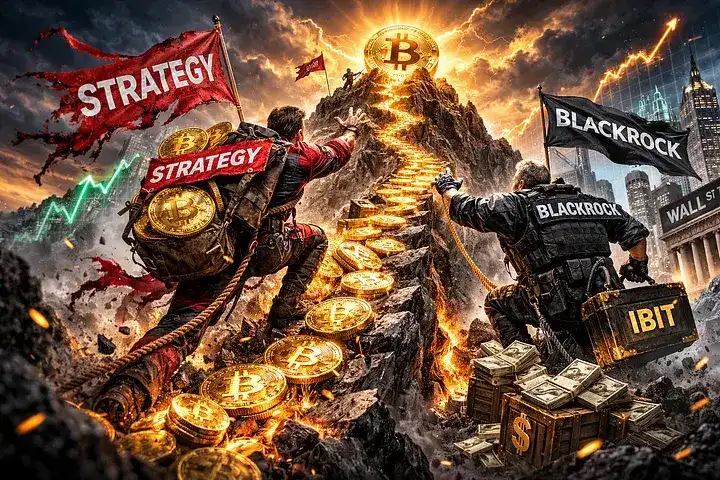
Risks Borne by Each Party

Strategy's Risks

Strategy's risks are real and well-documented. The company carries total debt exceeding $8.2 billion, and preferred stock obligations add significant annual cash requirements. The STRC Preferred Shares alone carry an 11.5% annualized yield. Although the company has built a relief reserve covering approximately 23 months, this reserve is not infinite, and the burden increases with each new issuance.

mNAV compression is the most visible near-term risk indicator. Strategy's market-to-net-asset-value (mNAV) ratio peaked at 3.4x in 2024 and had compressed to 1.20x by mid-March 2026. This compression is critical because the premium is key to its value-accretive equity financing. When the premium trends towards 1.0x or below, its "raise funds to buy coins" flywheel fails.

Furthermore, Strategy's strategic breakeven point warrants attention. According to research, if the Bitcoin price falls and sustains below approximately $40,000, its ability to credit or refinance debt would be challenged; if it falls below approximately $20,000, the risk of forced asset sales gradually increases. Strategy's rating is designated as "non-investment grade (junk)" by major agencies, meaning its borrowing costs are higher and it lacks access to investment-grade institutional capital.

IBIT's Risks

BlackRock's risks are smaller in absolute terms but not non-existent. IBIT's inflows are driven by market sentiment, and sentiment can reverse. During the downturn in early 2026, IBIT recorded outflow weeks.

IBIT's structural risk comes from competitive pressure from other Bitcoin ETFs. Fidelity's FBTC, Grayscale's GBTC, and new entrants are all vying for the same capital. If a competitor offers lower fees or more attractive features, IBIT could lose market share. Additionally, while highly unlikely, a regulatory reversal would impact IBIT, a regulated product, more severely than a direct holder like Strategy.

Implications for Bitcoin Market Structure

The race between BlackRock and Strategy is more than a story about two companies; it is altering the structural dynamics of the Bitcoin market.

Both entities are removing Bitcoin from circulation. Coins purchased by Strategy and stored in cold wallets are permanently off the market barring a corporate collapse. Bitcoin absorbed by IBIT is also typically held long-term in custody. Currently, U.S. spot ETFs plus Strategy control approximately 2 million Bitcoin, nearly 10% of the total supply.

Bernstein analysts described Strategy as the "central bank and lender of last resort for Bitcoin." This is not an exaggeration; it provides a foundation of institutional confidence that prevents disorderly market crashes. BlackRock's IBIT plays a different role: it is the gateway and on-ramp, converting institutional interest into actual demand.

The Investor's Choice: IBIT, MSTR, or Direct Holding?

Reasons to Choose IBIT

IBIT suits investors who want Bitcoin exposure but wish to avoid operational complexity, corporate risk, or leverage volatility. It provides a 1:1 relationship with the Bitcoin price (minus the 0.25% fee) and can be held in retirement accounts, brokerage portfolios.

Reasons to Choose MSTR

MSTR is for investors seeking leveraged exposure and willing to accept additional corporate risk for potentially higher returns. When Bitcoin rallies sharply, MSTR has historically significantly outperformed IBIT due to the leverage embedded in its capital structure. But note, in a sustained bear market, MSTR's risk factors amplify losses.

Reasons to Hold Bitcoin Directly

Direct holding eliminates annual fees and corporate risk, giving investors complete sovereignty. For investors seeking pure, unleveraged exposure and who are comfortable with self-custody, this remains the structurally cleanest option.

What Happens After Strategy Surpasses BlackRock?

When Strategy's holdings surpass BlackRock's, it will be a significant symbolic milestone. It will be the first time a corporate treasury holds more Bitcoin than the world's largest institutionalized ETF product. Based on current trends, this could happen within the next few weeks.

But this event, while publicly notable, changes no fundamental dynamics. The race does not end. More importantly, in less than three years, the scale of institutional commitment to Bitcoin has become one of the fastest institutionalizations of any asset class in finance.

The Bigger Picture: Corporate Adoption Beyond

Beyond this, the corporate Bitcoin treasury model is spreading. Japanese investment firm Metaplanet held over 10,000 coins in early 2026; Tesla holds approximately 11,509; Block holds about 8,883; SpaceX holds about 8,285.

New FASB fair value accounting rules effective in 2025 removed the biggest financial hurdle for corporate Bitcoin holdings, allowing companies to reflect fair value gains quarterly. Furthermore, the U.S. political environment is strongly supportive, with the SEC officially classifying Bitcoin as a digital commodity on March 17, providing clear regulatory guidance.

Conclusion: Two Models, One Asset, One Direction

The core of the race between BlackRock and Strategy is two different answers to the same investment thesis: Bitcoin's supply is fixed, demand is growing, and the best time to accumulate is before the next cycle peaks.

BlackRock answers through distribution: it built a democratized product for millions to participate.

Strategy answers through conviction: it leverages every financial tool to keep buying, without waiting for market sentiment.

Who holds more on any given day is less important than the collective long-term impact these two entities are having on the market structure. This force is massive, accelerating, and shows no signs of abating.

Perguntas relacionadas

QWhat are the key differences between BlackRock's and Strategy's models for accumulating Bitcoin?

ABlackRock's iShares Bitcoin Trust (IBIT) acts as a custodian, accumulating Bitcoin based on investor demand through its ETF, with holdings potentially decreasing due to redemptions. Strategy (formerly MicroStrategy) actively raises capital through debt and equity to purchase and hold Bitcoin indefinitely, with its holdings only increasing and never being sold or hedged.

QAs of March 16, 2026, what was the gap in Bitcoin holdings between BlackRock and Strategy, and how quickly could it close?

AAs of March 16, 2026, BlackRock held 784,062 BTC and Strategy held 761,068 BTC, a gap of 22,994 coins. At Strategy's then-current weekly purchase rate of approximately 22,337 BTC, it could close the gap in just over a week, assuming IBIT's inflows stopped.

QWhat are the primary financial risks associated with Strategy's Bitcoin accumulation strategy?

AStrategy's primary risks include its significant debt burden of over $8.2 billion, high annual cash requirements from preferred stock obligations (e.g., an 11.5% annual yield on STRC preferred shares), the potential failure of its funding 'flywheel' if its market-to-NAV premium compresses to 1.0x or below, and the risk of forced asset sales if Bitcoin's price falls significantly below $40,000.

QHow does the article describe the broader impact of BlackRock's and Strategy's accumulation on the Bitcoin market?

AThe article states that both entities are removing Bitcoin from circulation, accelerating a long-predicted supply squeeze. Combined, U.S. spot ETFs and Strategy control approximately 2 million BTC, nearly 10% of the total supply, significantly impacting market structure and reducing available liquidity.

QWhat was a key regulatory and accounting development in 2025 that supported corporate Bitcoin adoption?

AA key development was the生效 (effective) FASB fair value accounting rules, which allowed companies to mark their Bitcoin holdings to market value each quarter, eliminating a major financial reporting obstacle for corporate treasuries holding Bitcoin.

Leituras Relacionadas

First Batch of Keynote Speakers and Partners Announced! Web2+3 Summit: Defining the Next Generation of Digital Economy

Web2+3 Summit: Defining the Next Generation of Digital Economy The 6th BEYOND International Technology Innovation Expo (BEYOND Expo 2026), Asia's largest tech and ecosystem exhibition, is launching a dedicated Web2+3 stage for the first time. Co-hosted by BEYOND Expo and ChainNeXT Group, the Web3 Summit will take place from May 28–30, 2026. Against the backdrop of accelerating global tech integration, the boundaries between Web2 and Web3 are rapidly blurring. With clearer global regulations for blockchain-driven internet (Web3) and the special issuance of a Hong Kong dollar stable币 license by the Hong Kong SAR government on April 10, 2026, Web3's decentralized principles are quickly merging with traditional industries (Web2) such as e-commerce, finance, and artificial intelligence. Focused on blockchain-driven digital economy elements, the summit will center on three core principles—implementability, commercial viability, and compliance. It will bring together top Web3 experts to discuss key integration areas like stablecoin payment finance (PayFi), real-world asset tokenization (RWA), and decentralized AI (DeAI), unveiling new opportunities for industrial innovation. The first wave of confirmed speakers includes Jack Kong (Director of Hong Kong Cyberport, Chairman of Nano Labs), Yat Siu (Chairman of Animoca Brands), Michael Wu (Co-founder & CEO of Amber Group), Michael Heinrich (Co-founder & CEO of 0G), and Art Abal (Co-founder of Vana). More Web3 ecosystem pioneers, AI, and fintech experts will be announced soon. Core forum topics include: - Web2+DeAI: New AI Paradigms Driven by Decentralized Infrastructure - Web2+RWA: Real-World Asset Tokenization and Global Liquidity - Web2+PayFi: Cross-Border Payments and Financial Innovation Powered by Crypto Infrastructure - Web2+3 AI: Autonomous Agents and the Crypto Economy - Web2+3 Wealth: On-Chain and Off-Chain Integrated Investment Ecosystems - Web2+3 Commerce: A New Landscape for Global Trade Driven by Stablecoins Additional agenda details will be released in the near future.

marsbitHá 1h

First Batch of Keynote Speakers and Partners Announced! Web2+3 Summit: Defining the Next Generation of Digital Economy

marsbitHá 1h

Trading

Spot
Futuros

Artigos em Destaque

O que é BITCOIN

Compreender o HarryPotterObamaSonic10Inu (ERC-20) e a Sua Posição no Espaço Cripto Nos últimos anos, o mercado de criptomoedas assistiu a um aumento na popularidade das moedas meme, cativando não apenas os traders, mas também aqueles que procuram envolvimento comunitário e valor de entretenimento. Entre estes tokens únicos está o HarryPotterObamaSonic10Inu (ERC-20), um projeto intrigante que mistura referências culturais no tecido das criptomoedas. Este artigo explora os principais aspetos do HarryPotterObamaSonic10Inu, examinando os seus mecanismos, a sua ética orientada pela comunidade e o seu envolvimento com o vasto panorama cripto. O que é o HarryPotterObamaSonic10Inu (ERC-20)? Como o nome sugere, o HarryPotterObamaSonic10Inu é uma moeda meme construída na blockchain Ethereum, classificada sob o padrão ERC-20. Ao contrário das criptomoedas tradicionais, que podem enfatizar a utilidade prática ou o potencial de investimento, este token prospera no valor de entretenimento e na força da sua comunidade. O projeto visa promover um ambiente onde utilizadores envolvidos possam reunir-se, partilhar ideias e participar em atividades inspiradas por diversos fenómenos culturais. Uma característica notável do HarryPotterObamaSonic10Inu é a zero taxa sobre transações. Este elemento atraente visa encorajar a negociação e o envolvimento da comunidade, isento de encargos adicionais que podem desencorajar os traders de pequena escala. A oferta total da moeda está fixada em mil milhões de tokens, uma cifra que marca a sua intenção de manter uma circulação substancial dentro da comunidade. Criador do HarryPotterObamaSonic10Inu (ERC-20) As origens do HarryPotterObamaSonic10Inu estão um pouco envoltas em mistério; os detalhes sobre o criador permanecem desconhecidos. O desenvolvimento deste token carece de uma equipa identificável ou de um plano explícito, o que não é raro no setor das moedas meme. Em vez disso, o projeto surgiu de forma orgânica, com o seu progresso a depender fortemente do entusiasmo e da participação da sua comunidade. Investidores do HarryPotterObamaSonic10Inu (ERC-20) No que diz respeito a investimentos externos e apoios, o HarryPotterObamaSonic10Inu também permanece ambíguo. O token não lista quaisquer fundações de investimento conhecidas ou apoio organizacional significativo. Em vez disso, o “sangue vital” do projeto é a sua comunidade de base, que informa o seu crescimento e sustentabilidade através da ação coletiva e do envolvimento no espaço cripto. Como Funciona o HarryPotterObamaSonic10Inu (ERC-20)? Como uma moeda meme, o HarryPotterObamaSonic10Inu opera principalmente fora dos quadros tradicionais que muitas vezes governam o valor dos ativos. Existem vários aspetos distintivos que definem como o projeto funciona: Transações Sem Taxas: Sem taxas sobre transações, os utilizadores podem comprar e vender o token livremente, sem a preocupação de custos ocultos. Envolvimento da Comunidade: O projeto prospera na interação da comunidade, aproveitando plataformas de redes sociais para criar entusiasmo e facilitar a participação. Discussões, partilha de conteúdo e envolvimento são elementos cruciais que ajudam a expandir o seu alcance e a fomentar a lealdade entre os apoiantes. Sem Utilidade Prática: Deve ser notado que o HarryPotterObamaSonic10Inu não oferece utilidade concreta dentro do ecossistema financeiro. Em vez disso, é classificado como um token principalmente para entretenimento e atividades comunitárias. Referência Cultural: O token incorpora de forma inteligente elementos da cultura popular para atrair interesse, conectando-se tanto com entusiastas de memes como com seguidores de criptomoedas. HarryPotterObamaSonic10Inu exemplifica como as moedas meme operam de forma diferente de projetos de criptomoedas mais tradicionais, entrando no mercado como construções sociais inovadoras em vez de ativos utilitários. Linha do Tempo do HarryPotterObamaSonic10Inu (ERC-20) A história do HarryPotterObamaSonic10Inu é marcada por vários marcos notáveis: Criação: O token surgiu de um meme viral, capturando a imaginação de muitos entusiastas de criptomoedas. Datas específicas de criação não estão disponíveis, sublinhando a sua ascensão orgânica. Listagem em Exchanges: O HarryPotterObamaSonic10Inu conseguiu entrar em várias exchanges, permitindo um acesso e negociação mais fáceis pela comunidade. Iniciativas de Envolvimento da Comunidade: Atividades contínuas direcionadas a melhorar a interação comunitária, incluindo concursos, campanhas em redes sociais e geração de conteúdo por fãs e defensores. Planos de Expansão Futura: O roteiro do projeto inclui o lançamento de uma coleção de NFTs, mercadorias e um site de eCommerce relacionado aos seus temas culturais, envolvendo ainda mais a comunidade e tentando adicionar mais dimensões ao seu ecossistema. Pontos-Chave sobre o HarryPotterObamaSonic10Inu (ERC-20) Natureza Orientada pela Comunidade: O projeto prioriza a contribuição coletiva e a criatividade, assegurando que o envolvimento dos utilizadores está na vanguarda do seu desenvolvimento. Classificação como Moeda Meme: Representa o epítome da criptomoeda baseada em entretenimento, destacando-se dos veículos de investimento tradicionais. Sem Afiliação Direta com o Bitcoin: Apesar da semelhança no nome do ticker, o HarryPotterObamaSonic10Inu é distinto e não tem qualquer relação com o Bitcoin ou outras criptomoedas estabelecidas. Foco na Colaboração: O HarryPotterObamaSonic10Inu é projetado para criar um espaço de colaboração e partilha de histórias entre os seus detentores, proporcionando uma via para a criatividade e o fortalecimento da comunidade. Perspectivas Futuras: A ambição de expandir além da sua premissa inicial para NFTs e mercadorias delineia um caminho para o projeto potencialmente entrar em avenidas mais mainstream dentro da cultura digital. À medida que as moedas meme continuam a capturar a imaginação da comunidade cripto, HarryPotterObamaSonic10Inu (ERC-20) destaca-se devido aos seus laços culturais e abordagem centrada na comunidade. Embora possa não se encaixar no molde típico de um token orientado para utilidade, a sua essência reside na alegria e camaradagem fomentadas entre os seus apoiantes, destacando a natureza em evolução das criptomoedas em uma era cada vez mais digital. À medida que o projeto continua a desenvolver-se, será importante observar como as dinâmicas comunitárias influenciam a sua trajetória no panorama em constante mudança da tecnologia blockchain.

1.1k Visualizações TotaisPublicado em {updateTime}Atualizado em 2024.12.03

O que é BITCOIN

Como comprar BTC

Bem-vindo à HTX.com!Tornámos a compra de Bitcoin (BTC) simples e conveniente.Segue o nosso guia passo a passo para iniciar a tua jornada no mundo das criptos.Passo 1: cria a tua conta HTXUtiliza o teu e-mail ou número de telefone para te inscreveres numa conta gratuita na HTX.Desfruta de um processo de inscrição sem complicações e desbloqueia todas as funcionalidades.Obter a minha contaPasso 2: vai para Comprar Cripto e escolhe o teu método de pagamentoCartão de crédito/débito: usa o teu visa ou mastercard para comprar Bitcoin (BTC) instantaneamente.Saldo: usa os fundos da tua conta HTX para transacionar sem problemas.Terceiros: adicionamos métodos de pagamento populares, como Google Pay e Apple Pay, para aumentar a conveniência.P2P: transaciona diretamente com outros utilizadores na HTX.Mercado de balcão (OTC): oferecemos serviços personalizados e taxas de câmbio competitivas para os traders.Passo 3: armazena teu Bitcoin (BTC)Depois de comprar o teu Bitcoin (BTC), armazena-o na tua conta HTX.Alternativamente, podes enviá-lo para outro lugar através de transferência blockchain ou usá-lo para transacionar outras criptomoedas.Passo 4: transaciona Bitcoin (BTC)Transaciona facilmente Bitcoin (BTC) no mercado à vista da HTX.Acede simplesmente à tua conta, seleciona o teu par de trading, executa as tuas transações e monitoriza em tempo real.Oferecemos uma experiência de fácil utilização tanto para principiantes como para traders experientes.

3.8k Visualizações TotaisPublicado em {updateTime}Atualizado em 2025.03.21

Como comprar BTC

O que é $BITCOIN

OURO DIGITAL ($BITCOIN): Uma Análise Abrangente Introdução ao OURO DIGITAL ($BITCOIN) OURO DIGITAL ($BITCOIN) é um projeto baseado em blockchain que opera na rede Solana, com o objetivo de combinar as características dos metais preciosos tradicionais com a inovação das tecnologias descentralizadas. Embora partilhe um nome com o Bitcoin, frequentemente referido como “ouro digital” devido à sua percepção como uma reserva de valor, o OURO DIGITAL é um token separado projetado para criar um ecossistema único dentro da paisagem Web3. O seu objetivo é posicionar-se como um ativo digital alternativo viável, embora os detalhes sobre as suas aplicações e funcionalidades ainda estejam em desenvolvimento. O que é o OURO DIGITAL ($BITCOIN)? OURO DIGITAL ($BITCOIN) é um token de criptomoeda explicitamente projetado para uso na blockchain Solana. Em contraste com o Bitcoin, que fornece um papel amplamente reconhecido como armazenamento de valor, este token parece focar em aplicações e características mais amplas. Aspectos notáveis incluem: Infraestrutura Blockchain: O token é construído na blockchain Solana, conhecida pela sua capacidade de lidar com transações de alta velocidade e baixo custo. Dinâmicas de Oferta: O OURO DIGITAL tem um fornecimento máximo limitado a 100 quatrilhões de tokens (100P $BITCOIN), embora os detalhes sobre o seu fornecimento circulante ainda não tenham sido divulgados. Utilidade: Embora as funcionalidades precisas não estejam explicitamente delineadas, existem indicações de que o token poderia ser utilizado para várias aplicações, potencialmente envolvendo aplicações descentralizadas (dApps) ou estratégias de tokenização de ativos. Quem é o Criador do OURO DIGITAL ($BITCOIN)? Neste momento, a identidade dos criadores e da equipa de desenvolvimento por trás do OURO DIGITAL ($BITCOIN) permanece desconhecida. Esta situação é típica entre muitos projetos inovadores no espaço da blockchain, particularmente aqueles alinhados com finanças descentralizadas e fenómenos de moedas meme. Embora tal anonimato possa fomentar uma cultura orientada pela comunidade, intensifica as preocupações sobre governança e responsabilidade. Quem são os Investidores do OURO DIGITAL ($BITCOIN)? As informações disponíveis indicam que o OURO DIGITAL ($BITCOIN) não tem apoiantes institucionais conhecidos ou investimentos proeminentes de capital de risco. O projeto parece operar num modelo peer-to-peer focado no apoio e adoção da comunidade, em vez de rotas de financiamento tradicionais. A sua atividade e liquidez estão principalmente situadas em exchanges descentralizadas (DEXs), como a PumpSwap, em vez de plataformas de negociação centralizadas estabelecidas, destacando ainda mais a sua abordagem de base. Como Funciona o OURO DIGITAL ($BITCOIN) A mecânica operacional do OURO DIGITAL ($BITCOIN) pode ser elaborada com base no seu design de blockchain e nas características da rede: Mecanismo de Consenso: Ao aproveitar o exclusivo proof-of-history (PoH) da Solana combinado com um modelo de proof-of-stake (PoS), o projeto assegura uma validação eficiente das transações, contribuindo para o alto desempenho da rede. Tokenomics: Embora mecanismos deflacionários específicos não tenham sido extensivamente detalhados, o vasto fornecimento máximo de tokens implica que pode atender a microtransações ou casos de uso de nicho que ainda estão por definir. Interoperabilidade: Existe o potencial para integração com o ecossistema mais amplo da Solana, incluindo várias plataformas de finanças descentralizadas (DeFi). No entanto, os detalhes sobre integrações específicas permanecem não especificados. Cronologia de Eventos Chave Aqui está uma cronologia que destaca marcos significativos relacionados ao OURO DIGITAL ($BITCOIN): 2023: O lançamento inicial do token ocorre na blockchain Solana, marcado pelo seu endereço de contrato. 2024: O OURO DIGITAL ganha visibilidade ao tornar-se disponível para negociação em exchanges descentralizadas como a PumpSwap, permitindo que os utilizadores o negociem contra SOL. 2025: O projeto testemunha atividade de negociação esporádica e potencial interesse em envolvimentos liderados pela comunidade, embora não tenham sido documentadas parcerias ou avanços técnicos notáveis até ao momento. Análise Crítica Forças Escalabilidade: A infraestrutura subjacente da Solana suporta altos volumes de transações, o que pode aumentar a utilidade do $BITCOIN em vários cenários de transação. Acessibilidade: O potencial preço de negociação baixo por token pode atrair investidores de retalho, facilitando uma participação mais ampla devido a oportunidades de propriedade fracionada. Riscos Falta de Transparência: A ausência de apoiantes, desenvolvedores ou um processo de auditoria publicamente conhecidos pode gerar ceticismo em relação à sustentabilidade e confiabilidade do projeto. Volatilidade do Mercado: A atividade de negociação depende fortemente do comportamento especulativo, o que pode resultar em volatilidade significativa dos preços e incerteza para os investidores. Conclusão O OURO DIGITAL ($BITCOIN) surge como um projeto intrigante, mas ambíguo, dentro do ecossistema em rápida evolução da Solana. Embora tente aproveitar a narrativa do “ouro digital”, a sua divergência do papel estabelecido do Bitcoin como reserva de valor sublinha a necessidade de uma diferenciação mais clara da sua utilidade pretendida e estrutura de governança. A aceitação e adoção futuras dependerão provavelmente da abordagem da atual opacidade e da definição mais explícita das suas estratégias operacionais e económicas. Nota: Este relatório abrange informações sintetizadas disponíveis até outubro de 2023, e desenvolvimentos podem ter ocorrido além do período de pesquisa.

92 Visualizações TotaisPublicado em {updateTime}Atualizado em 2025.05.13

O que é $BITCOIN

Discussões

Bem-vindo à Comunidade HTX. Aqui, pode manter-se informado sobre os mais recentes desenvolvimentos da plataforma e obter acesso a análises profissionais de mercado. As opiniões dos utilizadores sobre o preço de BTC (BTC) são apresentadas abaixo.

活动图片