BitMart Exchange Faces New Allegations of Insolvency

cryptonews.ruPublicado em 2026-08-11Última atualização em 2026-08-11

Resumo

Updated: August 10, 2026. Matthew, co-founder of OpenGradient, has raised new concerns about cryptocurrency exchange BitMart's solvency, as his team remains unable to withdraw funds stuck on the platform. He suggested the freeze might be a tactic for BitMart to attract additional liquidity, further fueling market doubts about the company's ability to meet its obligations despite a lack of confirmation or comment from BitMart. Earlier, BitMart founder Sheldon Xia asserted the exchange had "not run away" and had "no plans to run," attributing withdrawal issues to an ongoing asset inventory. In late July, BitMart announced the phased shutdown of its global exchange, having halted new client registrations, deposits, and spot trading. All spot, futures, and other trading services are set to cease on August 26, with the trading platform planned for complete termination by January 31, 2027.

Updated: 2026-08-10

OpenGradient co-founder Matthew has raised doubts about the solvency of the BitMart exchange, as his team still cannot withdraw the funds stuck there.

Matthew speculated that the blockage was necessary for BitMart to attract additional liquidity to the platform. Although there is no confirmation of his words, nor any comments from the exchange itself, this guess further intensifies market participants' doubts about the company's ability to meet its obligations.

Earlier, BitMart founder Sheldon Xia stated that the exchange has "not run away" and "does not intend to run away." He explained the withdrawal issues by saying the platform was conducting an asset inventory.

At the end of July, BitMart announced the phased closure of its global exchange, as previously reported by Happy Coin News. The platform stopped accepting new clients, cryptocurrency and fiat deposits, as well as new spot orders, while futures accounts transitioned to close-only mode. It was reported that all spot, futures, and other trading services would cease on August 26, and BitMart plans to completely shut down its trading platform by January 31, 2027.

end-content
Perguntas relacionadas

QWhat new doubts were raised about BitMart's solvency according to the article?

AThe co-founder of OpenGradient, Matthew, expressed doubts about BitMart's solvency because his team has been unable to withdraw funds stuck on the exchange.

QWhat reason did BitMart's founder, Sheldon Xia, give for the withdrawal issues?

ABitMart's founder, Sheldon Xia, explained the withdrawal problems by stating that the platform was conducting an inventory of its assets.

QWhen did BitMart announce the phased closure of its global exchange, and what key dates were provided?

ABitMart announced the phased closure of its global exchange at the end of July. Key dates include the cessation of all trading services on August 26th and the planned complete shutdown of its trading platform on January 31, 2027.

QWhat specific operational changes did BitMart implement as part of its closure process?

AAs part of its closure, BitMart stopped accepting new clients, cryptocurrency and fiat deposits, and new spot orders. Futures accounts entered close-only mode.

QWhat was Matthew's speculation regarding the reason for the fund freeze at BitMart?

AMatthew speculated that the freeze on withdrawals was necessary for BitMart to attract additional liquidity to its platform.

Leituras Relacionadas

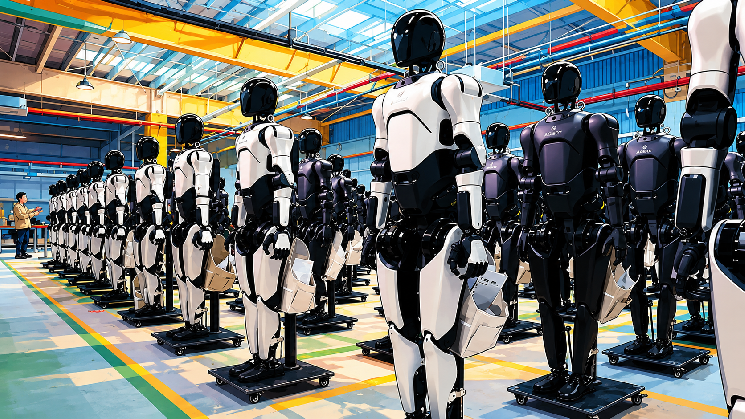
China Monopolizes the Humanoid Market: The U.S. is Forced to Defend Itself

China accounted for over 97% of global humanoid robot shipments in the first half of 2026, according to research firm Smart Analytics Global (SAG). Global shipments reached approximately 19,100 units, a 272% increase year-over-year, with China itself representing over 85% of global demand. Shanghai-based AGIBOT led the market with a 44% share, followed by Hangzhou's Unitree Robotics at 31%. Together, these two Chinese firms controlled about 75% of global supply. Demand is shifting from research to practical applications, with industrial and commercial uses now comprising over 70% of shipments. SAG forecasts full-year 2026 shipments near 60,000 units. In response, the U.S. Federal Communications Commission (FCC) banned federal agencies and subsidy recipients from purchasing foreign "advanced robotic devices," including humanoids, citing national security concerns. Analysts attribute China's dominance to strong state support, abundant funding, expanding manufacturing capacity, IPO waves, and a vast domestic ecosystem for testing and deployment. Over 90% of key components for Chinese humanoid robots are now sourced domestically. The AI analysis notes potential risks beyond export controls, such as reputational issues for Chinese firms linked to the defense sector and parallels to past trade conflicts in sectors like solar panels, where rapid Chinese market capture led to protectionist measures. The low average robot price could fuel adoption but also invite dumping accusations.

cryptonews.ruHá 5m

China Monopolizes the Humanoid Market: The U.S. is Forced to Defend Itself

cryptonews.ruHá 5m

DeepSeek's Next Battlefield: The War Quietly Begins in This Fifth-Tier City

DeepSeek and other major AI players are quietly shifting their battle for supremacy to the infrastructure front, with Wulanchabu, a small city in Inner Mongolia, emerging as a key battleground. The article details a visit to the massive data center clusters there, highlighting the industry's pivot from a light-asset model of renting computing power to a strategic race to build and control foundational AI infrastructure. Wulanchabu's advantages—low electricity costs (around ¥0.32-0.35 per kWh, 90% green energy), cool climate, and proximity to Beijing—have made it China's largest AI computing cluster. Companies like Alibaba Cloud are deploying modular, prefabricated data center "cabins" that can be assembled on-site in as little as 100 days, dramatically accelerating deployment compared to traditional multi-year construction. This "new Foxconn" model standardizes components for mass production. The drive for efficiency is paramount. Alibaba’s latest architecture flattens design, integrating power distribution, backup batteries, and liquid-cooled server racks into single modules. The ultimate bottleneck is power. As AI training and, increasingly, inference demand skyrocket, electricity cost and availability become decisive competitive factors. The industry faces the challenge of aligning fast-paced computing demand with slower power grid planning. DeepSeek's significant investment in building its own computing center in Wulanchabu underscores this trend: securing large-scale, low-cost dedicated computing power is now a prerequisite for survival in the AI race. The article concludes that this Chinese manufacturing-supported paradigm for AI infrastructure, focused on modular, rapidly deployable, and cost-optimized data centers, could reshape the global AI landscape as it scales.

marsbitHá 7m

DeepSeek's Next Battlefield: The War Quietly Begins in This Fifth-Tier City

marsbitHá 7m

Trading

Spot
活动图片