Bitcoin's fourth block reward halving occurred on April 20, 2024, at block height 840,000, reducing the block reward from 6.25 BTC to 3.125 BTC. This process strictly follows the pre-defined issuance mechanism in the Bitcoin protocol, automatically triggered every 210,000 blocks.
This supply adjustment is automatically executed by Bitcoin's consensus rules, requiring no governance votes or human intervention, further reinforcing the deterministic, transparent, and unalterable nature of Bitcoin's monetary policy.
Bitcoin's Daily New Issuance Decreases by 50%
After the April 2024 halving, Bitcoin's daily new issuance mathematically decreased from approximately 900 BTC/day to about 450 BTC/day. This change is based on the fixed 3.125 BTC block reward and an average block time of about 10 minutes.
On an annualized basis, Bitcoin's yearly new issuance dropped from about 328,500 BTC/year to approximately 164,250 BTC/year. This supply contraction is permanent and entirely independent of market demand, miner behavior, or macroeconomic conditions.
Annualized Supply Inflation Rate Drops Below 1%
As a direct result of the April 2024 halving, Bitcoin's annualized supply inflation rate fell to approximately 0.83%. This figure is calculated based on the circulating supply at the time and the new issuance rate post-halving.
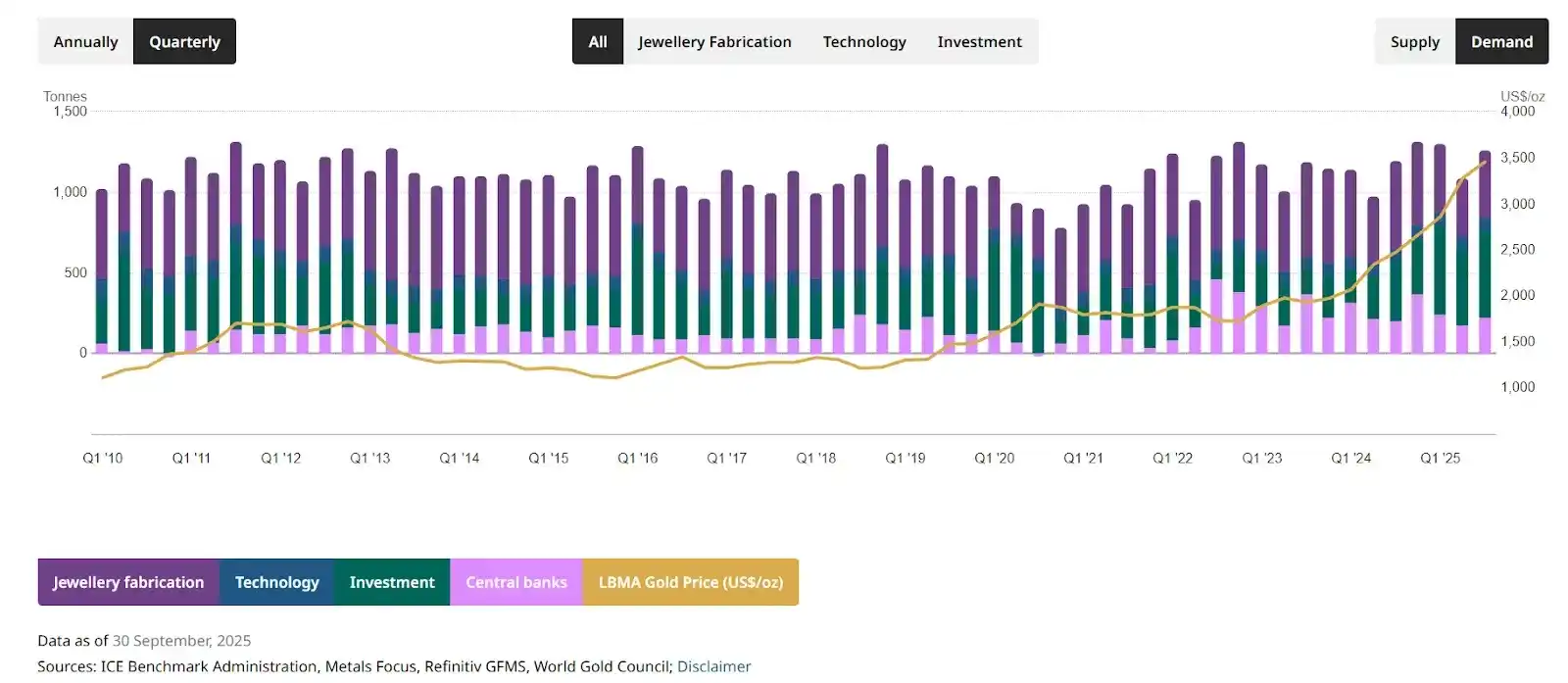
In comparison, gold's annual supply growth rate is typically estimated to be in the 1%–2% range, while the monetary expansion speed of fiat systems depends on central bank policies, not pre-coded fixed rules.
As of the End of 2024, Bitcoin's Circulating Supply Is Approximately 19.7 Million Coins
Blockchain data shows that as of December 31, 2024, Bitcoin's circulating supply was approximately 19.7 million BTC. This leaves less than 1.3 million BTC yet to be mined before reaching the protocol's maximum supply cap of 21 million BTC.
At this stage, over 93.8% of all Bitcoin has been issued, meaning the impact of future halvings on the absolute supply quantity will continue to diminish, but their proportional significance will become even more pronounced.
Post-Halving, Miner Revenue Structure Changes
The halving event cut miners' block subsidy income in half overnight, significantly increasing the relative proportion of transaction fees in their total revenue.
In the months following the halving, the share of transaction fees in miner revenue saw a noticeable increase compared to the pre-halving period. This shift aligns with Bitcoin's original long-term design expectation, where network security will gradually transition from being block subsidy-driven to an economic model primarily based on transaction fees.
Supply Is Fixed, Adjustment Is Complete
Unlike the adjustable policies of traditional financial systems based on economic conditions, the supply change after the April 2024 Bitcoin halving is final and irreversible. There is no mechanism to accelerate issuance during rising demand or slow it down during market downturns.
By the end of 2024, the market no longer faces an "upcoming halving event" but rather an already adjusted, low-issuance baseline that will persist until the next halving. The next halving is expected to occur around 2028, when the block reward will drop again to 1.5625 BTC.
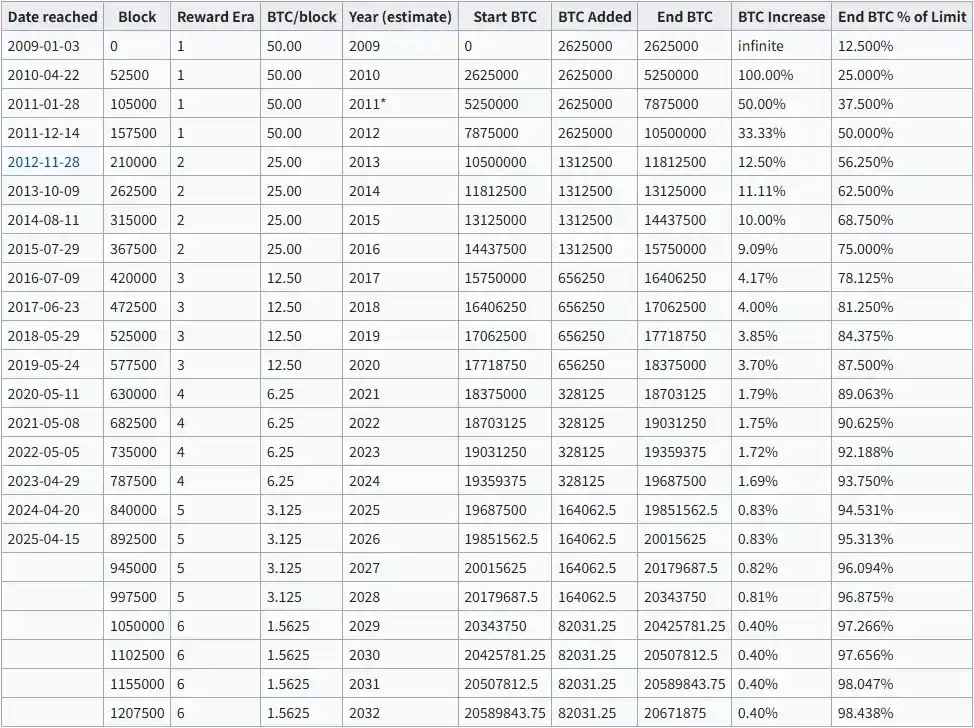
This chart shows the number of bitcoins that will exist in the near future. The Year is a forecast and may be slightly off.
From Event to Baseline Condition
With the fourth halving fully implemented, Bitcoin's low issuance rate is no longer a short-term narrative driver but has become a long-term foundational condition. It reshapes the supply structure in a transparent, predictable manner that can be independently verified by any participant running a full node.
This change does not rely on market sentiment, policy signals, or the pace of institutional adoption. Instead, it is directly written into Bitcoin's code and enforced by network consensus, making the post-halving supply mechanism one of the few variables in the global financial system that can be precisely described mathematically.