Bitcoin Shifts to Building a Bottom, with Selling Pressure from Long-Term Holders Significantly Easing

Foresight NewsPublicado em 2026-07-16Última atualização em 2026-07-16

Resumo

Bitcoin is transitioning into a basing phase, with significant selling pressure from long-term holders showing signs of easing. The market is testing overhead resistance, with Bitcoin responding more positively to favorable macro data like soft inflation reports than major equity indices. Its correlation with stocks is weakening while its inverse relationship with the US dollar strengthens, indicating a shift in primary drivers towards liquidity factors rather than risk sentiment. On-chain analysis reveals that long-term holder profit-taking has largely dried up, and the wave of capitulation selling from this cohort has peaked and begun to recede. Buyers successfully absorbed selling pressure at the June lows. Bitcoin currently trades between the network's average realized price (a support floor) and the short-term holder cost basis near $69k, which will be a key resistance level. A breakout above this level is needed to signal a more sustained recovery. In derivatives markets, traders are unwinding bearish bets, with put/call ratios falling and crash protection premiums declining. However, this futures and options positioning adjustment has not been accompanied by significant spot buying. US spot ETF outflows have slowed but not reversed. Volatility has compressed to low levels. In summary, the foundations for a bottom are forming: long-term holder selling is subsiding, demand absorbed the recent low, and the market is reacting to positive catalysts. However, confirmation...


By: Glassnode

Compiled by: AididiaoJP, Foresight News


The bottom for Bitcoin is still under construction, but its characteristics are quietly changing. The capitulation selling by long-term holders is starting to cool, buy orders successfully absorbed the June lows, and the price is gradually recovering, challenging the area that previously suppressed it.


Executive Summary


  • The market has begun testing the resistance above.
  • Bitcoin's reaction to weak inflation data was much stronger than any major stock index, the most positive response to good news in weeks.
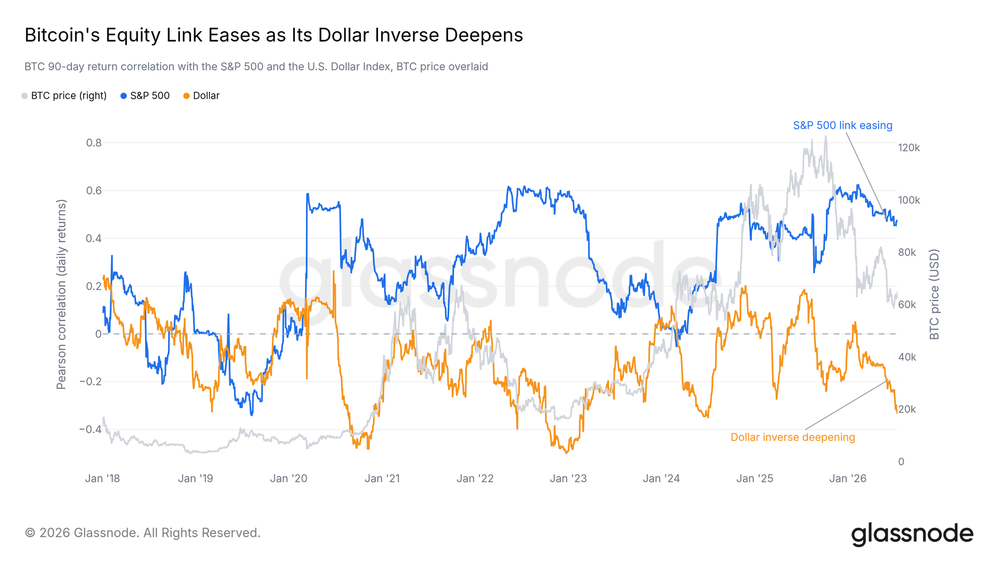
  • Correlation with equities is loosening, while the inverse link with the dollar is deepening – the current driver is liquidity, not risk appetite.
  • Selling by long-term holders – the primary source of selling pressure this year – has retreated from its peak.
  • Profit-taking behavior has decreased significantly. Buy orders have completely absorbed the selling at the June lows, reducing the supply pressure faced by each rally.
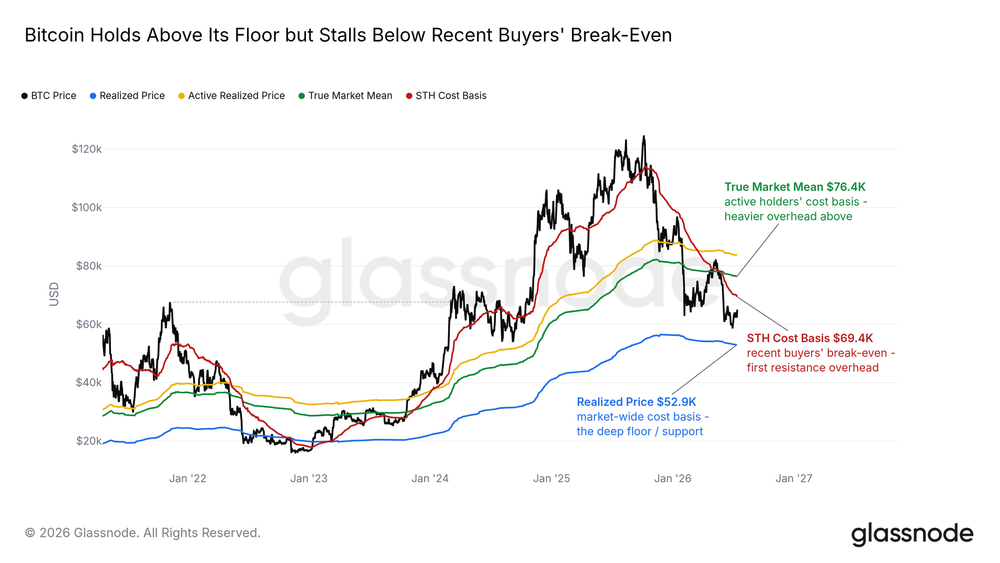
  • The cost basis of short-term holders is near $69,000, the breakeven line for recent buyers, which will be the next significant resistance; a strong reaction is expected there.
  • Derivative traders are unwinding bearish positions, but spot buying has not yet followed, which is the missing link in the current recovery.


Macro Insights


The pressure on Bitcoin this quarter has been essentially a real rate story, not risk-off. The 10-year real yield has risen near its 2026 high of around 2.4%, and the dollar has stayed above its 200-day moving average since May. However, broader risk assets show no stress: equities are near highs, credit spreads are low, and volatility remains modest.
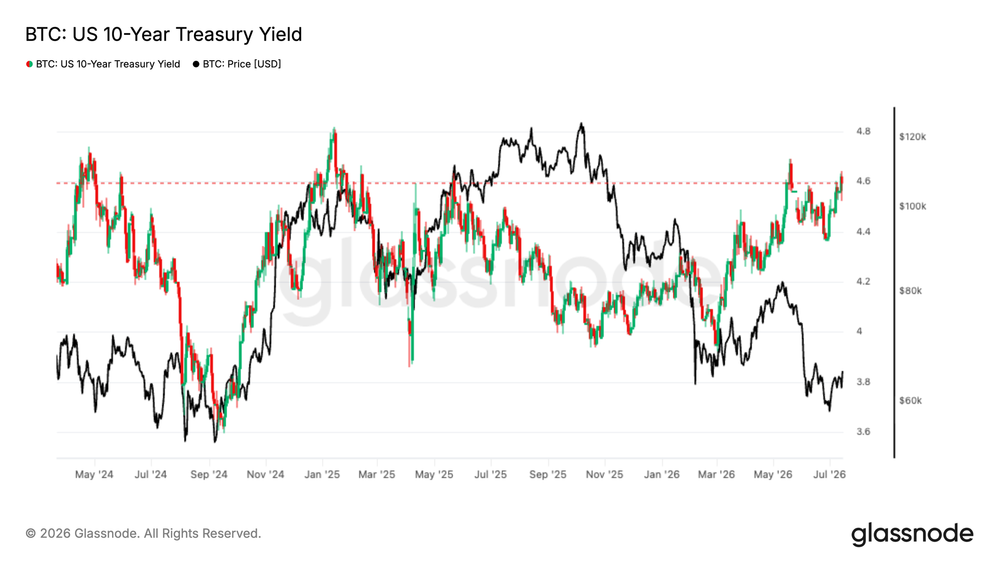


Bitcoin Leads the Rebound


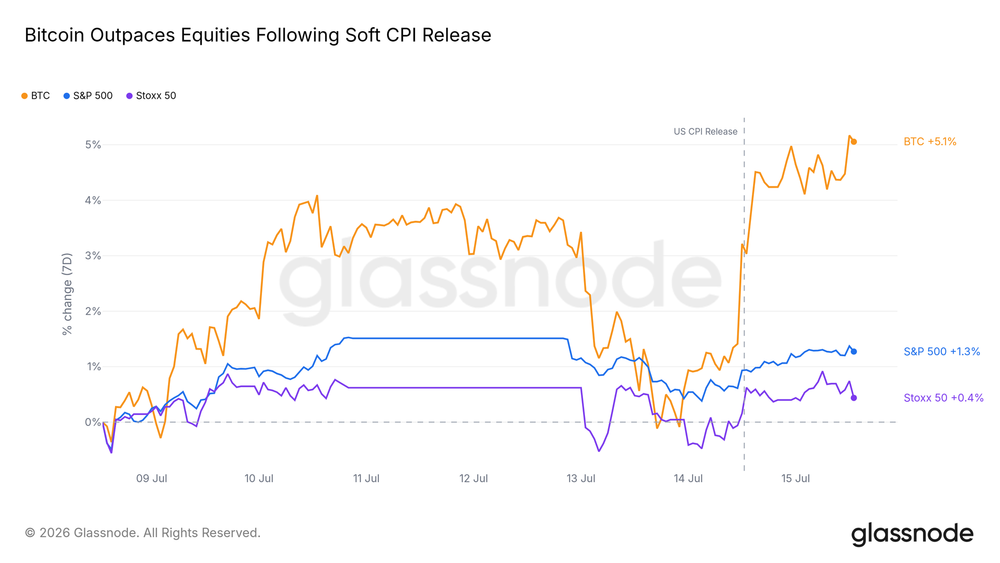
Following Tuesday's soft inflation data, Bitcoin rallied more than any other major asset. It jumped immediately after the data release, significantly outperforming US and European stocks for the week. After a month of sideways movement at lower levels, the market is once again responding positively to good news.


This sensitivity is itself a signal: a market eager to rise on just one inflation report often indicates that sellers are exhausted and buyers are just waiting for a reason.


A Shift in Macro Drivers


Underneath the rebound, Bitcoin's drivers are changing. Since winter, its correlation with US stocks has been weakening, while its inverse relationship with the dollar has been deepening. Bitcoin is acting less like an equity proxy and more like an asset that strengthens when the dollar weakens.


It hasn't detached from the risk asset universe, but the dollar and liquidity channels now exert more influence than stock market sentiment. If the macro environment loosens from here, this channel is most likely to be the first to transmit it.


On-Chain Insights


Between Floor and Ceiling


The cost basis map accurately depicts the current position. The Bitcoin price is above the network-wide average Realized Price – the natural floor support in bear markets; and below the Short-Term Holder cost basis (near $69,000) – the average entry price of buyers over the past five months. The current recovery is climbing towards this breakeven resistance level, with many trapped buyers waiting above.


The first touch of this level is likely to trigger a strong reaction, as the group most inclined to sell is precisely those about to break even. Successfully reclaiming it would open space for the recovery; rejection would confirm the continuation of the range-bound pattern.


Sellers Stop Taking Profits


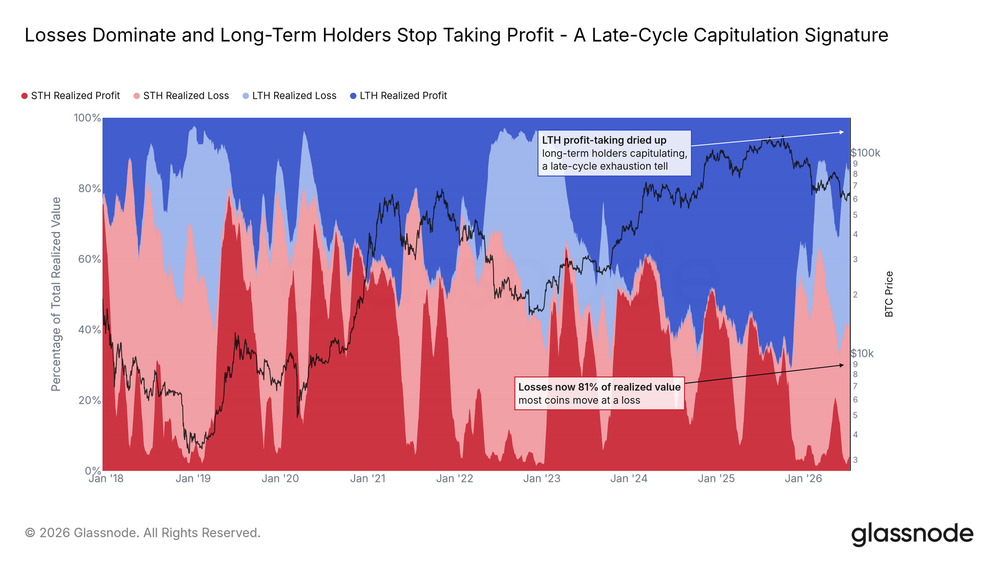
The Long-Term / Short-Term Holder Realized Profit/Loss Relative metric categorizes all on-chain selling into four types: veterans and newcomers, each selling while in profit or loss. For most of this cycle, profit-taking by long-term holders dominated selling. Now this flow has almost completely dried up; the old hands are now selling mostly loss-making positions.


Loss-making sales from both groups constitute the main on-chain transaction characteristic, a typical late-bear-market signal. The key change is that the proportion of selling by long-term holders has stopped growing. The wave of selling pressure that met every rally this year is no longer expanding.


Capitulation Selling Begins to Cool


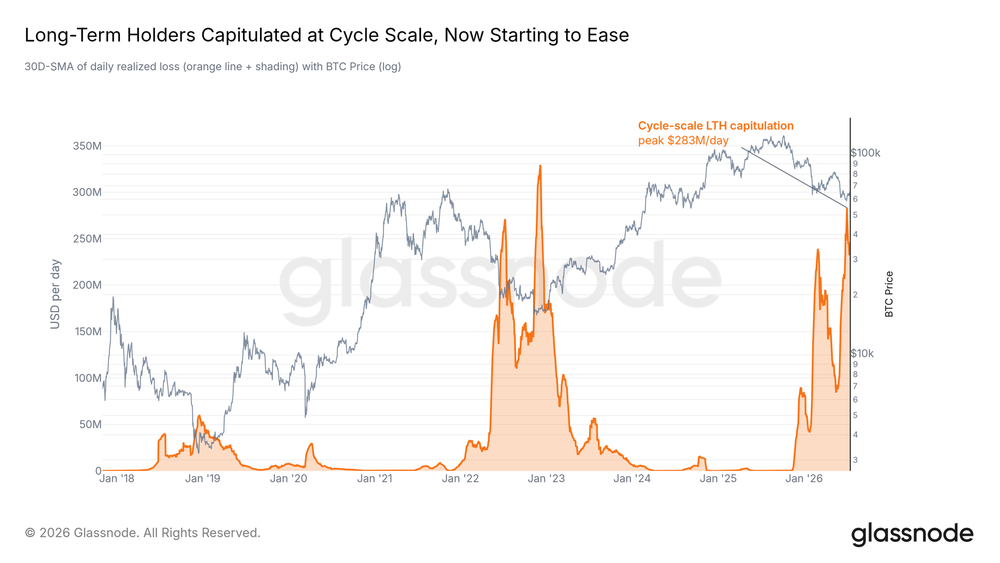
This capitulation pace is the most important current indicator. The Entity-Adjusted Long-Term Holder Realized Loss metric filters out internal transfers, truly reflecting the amount old hands actually give up each day. This metric hit its cycle peak two weeks ago. In last week's report, we clearly stated that the cooling of this indicator is a prerequisite for any lasting recovery.


It has now begun to decline. One pullback doesn't prove complete exhaustion, and new shocks could restart selling. But in this cycle, it's the first time the core indicator defining the bottoming process has turned from rising to falling. The main sellers driving this bear market are drying up at the margin.


Demand Absorbs Low-Point Selling


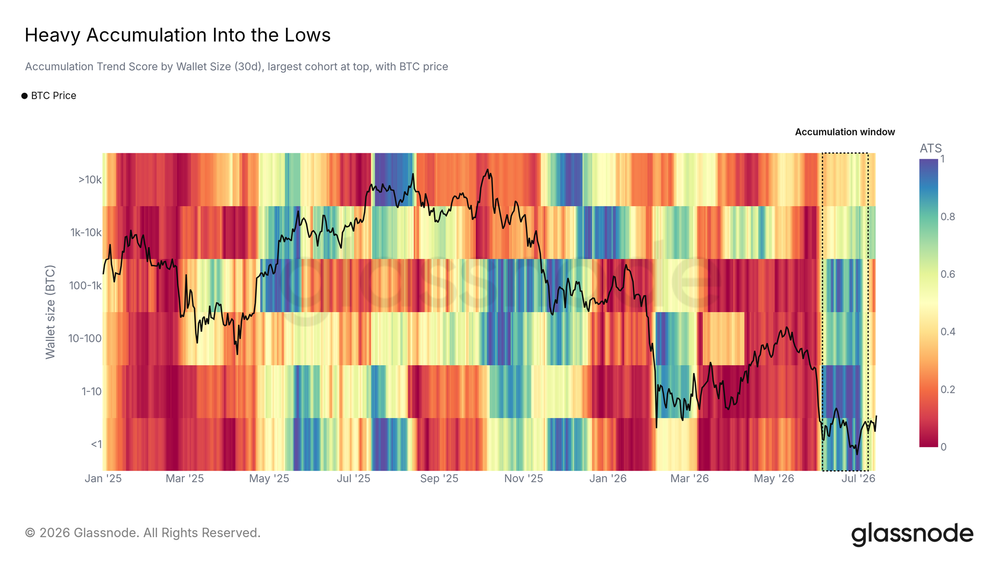
As the old hands capitulated, buyers stepped in promptly. The Accumulation Trend Score by wallet size shows a broad and strong wave of buying during the June lows, covering wallets from small to large. After price stabilization, this intensity weakened, and the market entered a wait-and-see mode.


The coins sold at the lows found takers. Whether these buyers return with equal force in the next move will determine if this bottom can hold.


Off-Chain / Derivatives Insights


ETF Outflows Slow


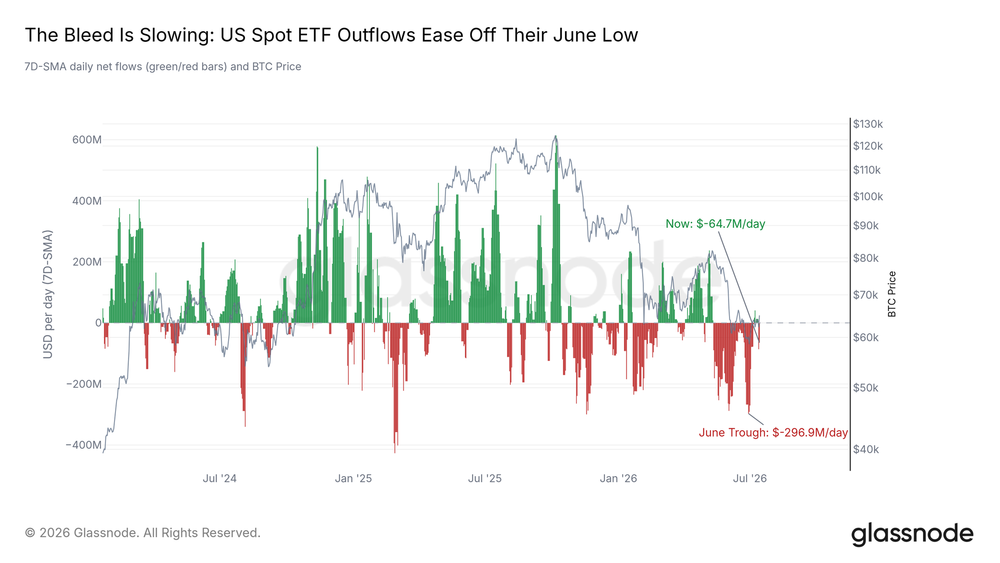
US spot ETFs tell the same story of easing but unresolved pressure. Redemption pressure has retreated significantly from June's extreme levels, trending towards stabilization. However, the channel is not fully repaired: a day this week still saw the largest single-day outflow in weeks, followed by partial recovery the next day.


Until inflows truly return and stabilize, this remains a market where institutions have stopped fleeing but not yet started buying.


Bears Abandon Resistance


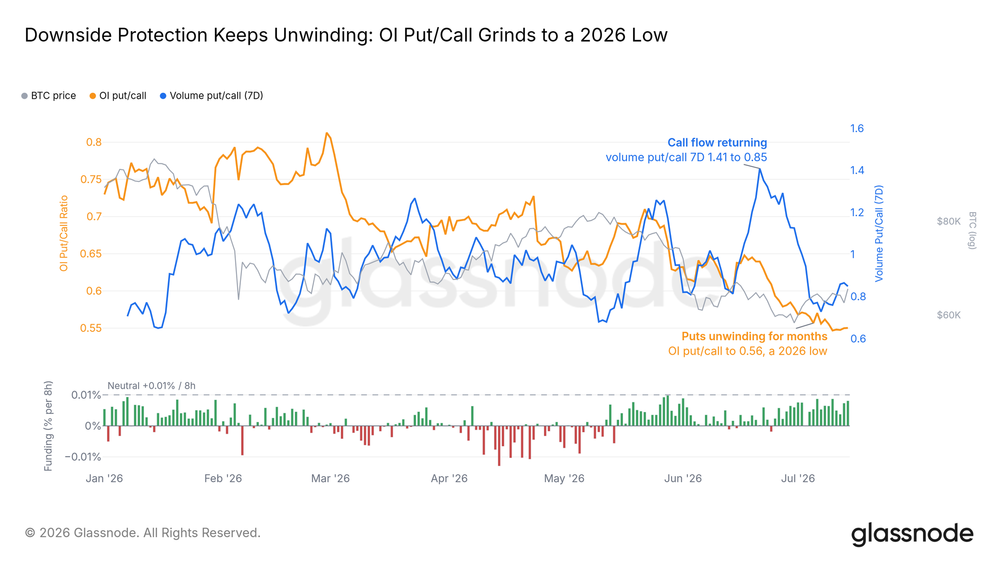
Derivatives markets have been moving in the opposite direction for weeks. The options put/call ratio has dropped to its yearly low, with traders letting bearish protection expire; perpetual funding rates are only slightly above neutral, far from crowded long levels. Bearish bets are quietly and steadily exiting.


But this unwinding hasn't brought actual buying. Position adjustments by futures and options traders are not equivalent to capital entering the spot market, which is the clearest caveat in the current recovery.


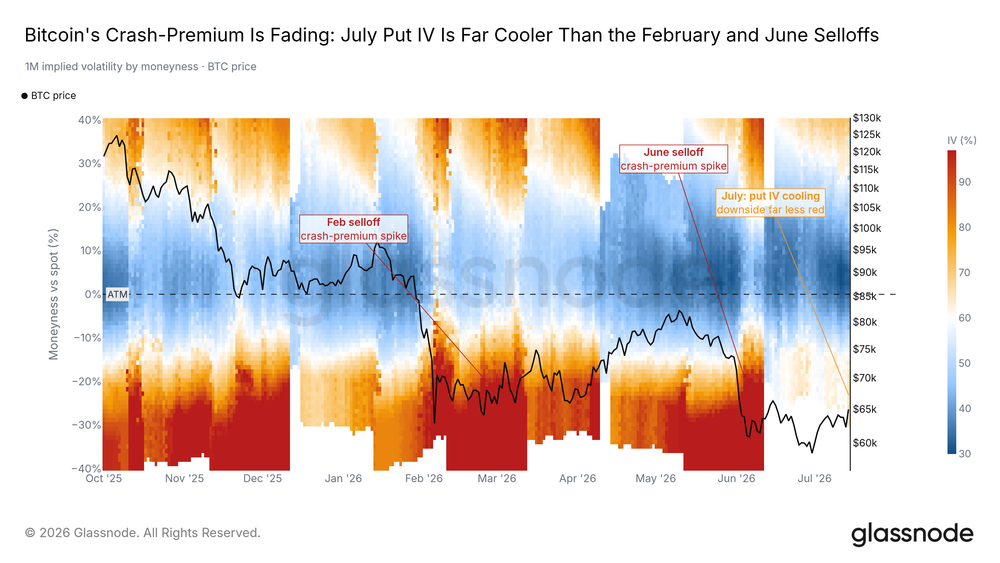
Panic Premium Eases


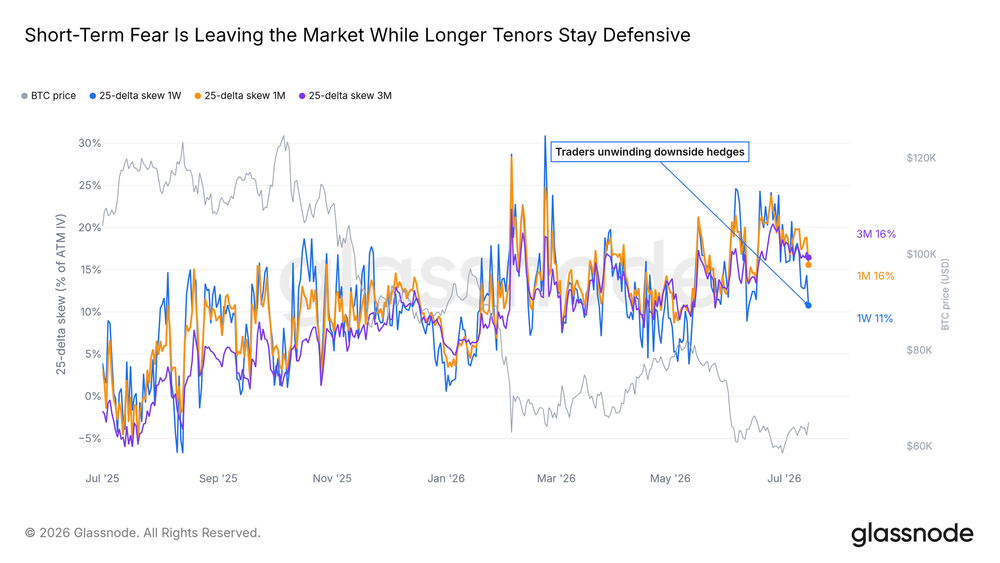
The premium for crash protection in the options market (measured by 25-Delta Skew) surged during the June sell-off and has been declining since, now well below February's extreme levels. The cost of hedging each pullback is significantly lower than a month ago.


Protection demand still exists – as it should when lows are unconfirmed – but the overall direction is normalizing.


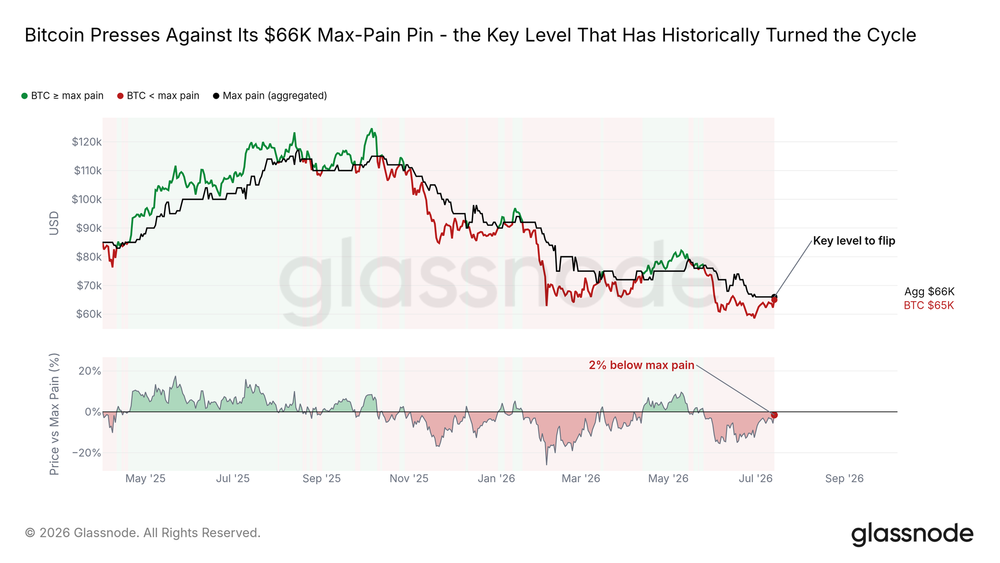
Approaching Max Pain


Max Pain is the price at which the largest share of open options expire worthless. The spot price has oscillated around it all year. Bitcoin is currently just below it, challenging it for the first time in weeks.


Historically, reclaiming Max Pain has often coincided with a market turn towards a friendlier environment, though the shift takes time. A clean break above this level would be the first structural signal of an upside breakout from the range; rejection would confirm the cautious sentiment still priced by options markets.


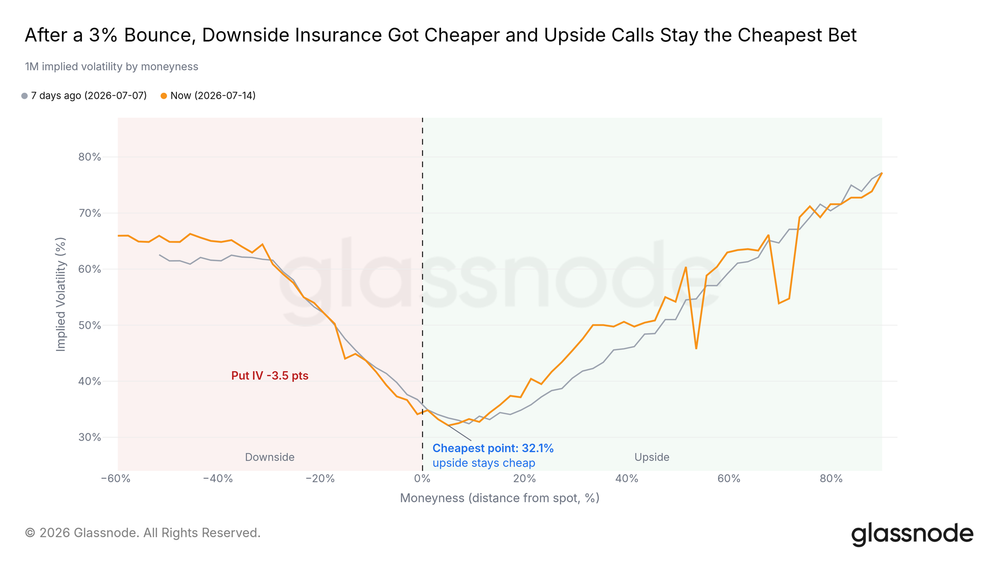
Crash Protection Costs Decline


Absolute protection costs also confirm the easing trend. Throughout the recovery, the one-month crash protection price has steadily declined, with hedging demand weakening. The market still pays a premium for the downside, but far lower than at the lows.


Volatility Enters a Calm Period


A longer-term view shows how calm the market has become. The Bitcoin Volatility Index (DVOL) is near yearly lows, and the deep put pressure that erupted in February and June has faded from the volatility surface. Such compression rarely lasts; it is often the backdrop before the next decisive move begins.


Conclusion


The bottom is still under construction, and this week it started responding. Long-term holder capitulation has retreated from its peak, profit-taking has dried up, and the June lows were absorbed by broad buying. Bitcoin reacted more strongly to macro good news than other assets, is approaching Max Pain from below, and is nearing the Short-Term Holder cost base above – which will be the first real test for the recovery.


Confirmation signals are still absent: ETF outflows have slowed but not reversed, derivative unwinding lacks spot follow-through, volatility compression awaits a catalyst. The key signal for a change in judgment is spot-driven buying pushing the price to effectively break and hold above the Short-Term Holder cost basis. If long-term holder losses accelerate again, or if price is pushed back near the Realized Price, the market will return to range-bound action.


The foundation is laid; the follow-through has yet to arrive.

Criptomoedas em alta

Perguntas relacionadas

QAccording to the Glassnode article, what are the key changes in selling behavior that signal a potential bottoming process for Bitcoin?

AKey changes include a significant reduction in profit-taking by long-term holders and a cooling-off of capitulation selling from this group. The Long-Term Holder Realized Loss metric, which measures daily amounts effectively surrendered by veteran holders, has peaked and started to decline. While loss-selling remains the dominant on-chain transaction type, the wave of selling pressure that met previous rallies is no longer expanding, indicating a potential exhaustion of the primary sellers driving this bear market.

QWhat is identified as the next major resistance level for Bitcoin's price in the article, and why is it significant?

AThe next major resistance level is the Short-Term Holder Cost Basis, which is close to $69,000. This level is significant because it represents the average entry price of buyers from the past five months, acting as their break-even line. A test of this level is expected to trigger a strong reaction, as this group of recent buyers is most likely to sell to exit their positions at breakeven. A successful reclaim of this level would open up space for further recovery, while rejection would confirm a continuation of the range-bound consolidation phase.

QHow has Bitcoin's macroeconomic driver shifted recently, as described in the text?

ABitcoin's macroeconomic driver has shifted from being primarily correlated with stock market risk sentiment to having a deepening inverse correlation with the US Dollar. The article notes that Bitcoin's correlation with equities has been weakening since winter, while its negative relationship with the Dollar has strengthened. This suggests Bitcoin is behaving less like a proxy for stocks and more like an asset that strengthens when the Dollar weakens, with liquidity channels now having more influence than equity market sentiment.

QWhat is the current state of the US spot Bitcoin ETF market, and what does it indicate about institutional activity?

AThe US spot Bitcoin ETF market shows pressure easing but not resolved. Outflow pressures have significantly decreased from the extreme levels seen in June, trending toward stabilization. However, the channel is not fully repaired, as evidenced by one of the largest single-day outflows in weeks occurring recently, followed by a partial inflow the next day. The market is currently characterized by institutions stopping their exodus but not yet beginning to buy in a sustained way. A true and steady return of inflows is needed for a clearer signal of repair.

QWhat does the article identify as the 'clearest caution flag' for the current market recovery?

AThe 'clearest caution flag' for the current recovery is the lack of actual spot buying accompanying the unwinding of bearish derivative positions. While derivatives traders have been steadily closing their short bets (evident in the lowest put/call ratio of the year and near-neutral funding rates), this positioning adjustment is not equivalent to capital entering the spot market. The recovery is missing this critical component of spot-driven buying pressure.

Leituras Relacionadas

Gold Rush Handbook | Rialto Teams Up with Robinhood Crypto, Targeting Order Routing Rights

**Summary** Rialto is positioning itself as an on-chain spot exchange focused on order routing and execution quality for a range of assets, including cryptocurrencies and tokenized stocks/ETFs. It operates primarily on the Robinhood Chain network. Its core mechanism revolves around **propAMMs** – on-chain market makers that use proprietary inventory and pricing logic, referencing external markets (like underlying stock exchanges for tokenized equities) rather than relying solely on automated market maker (AMM) formulas. For each user order, Rialto's aggregator solicits real-time quotes from multiple liquidity sources, including its own propAMM (Rivo Altus) and traditional DEX pools. It then selects and atomically executes the path offering the best net output after costs, potentially splitting orders across sources. Rialto's key competitive claim is turning **order routing control into a service for better execution**. Instead of users manually finding the best liquidity, the system automatically compares and routes to the optimal source(s) for each trade. It has launched a partner program for integrations and its swap API is already used by several protocols. Challenges ahead include expanding the asset base on Robinhood Chain, ensuring Rivo Altus's price competitiveness, attracting diverse external liquidity, and consistently delivering superior net execution compared to manual routing. Success in these areas would see Rialto competing for the crucial "order routing right" in the emerging on-chain market for tokenized real-world assets.

Foresight NewsHá 38m

Gold Rush Handbook | Rialto Teams Up with Robinhood Crypto, Targeting Order Routing Rights

Foresight NewsHá 38m

Bitwise: RWA and Prediction Markets Continue to Gain Momentum, Crypto is Bottoming Out

Bitwise's Q2 2026 report highlights a challenging crypto market. The Bitwise 10 Crypto Index fell 15.4%, and spot Bitcoin ETFs saw a record $4.9 billion in quarterly outflows as Bitcoin dropped below $60,000. Overall sentiment is described as one of the worst in eight years. Despite the downturn, key sectors show resilience and growth. Real-World Asset (RWA) tokenization reached a record $33 billion, up 45% year-to-date. Prediction markets also hit new highs, with open interest at $1.8 billion and quarterly volume hitting $43 billion, driven partly by political events. Crypto equities outperformed, with the Bitwise Crypto Innovators 30 Index rising 30.6%, largely fueled by AI-related Bitcoin miners. These stocks exhibited low correlation with other major asset classes. Major DeFi protocols like Aave demonstrated strong revenue generation, with the top ten crypto applications collectively earning $5.9 billion over the past year. The report notes that while prices and on-chain activity are down from peaks, fundamental metrics like stablecoin supply (~$300B) and Ethereum transaction activity are significantly higher than at the 2022 bear market bottom. Key Q3 factors include the fate of the CLARITY Act, final rules for the GENIUS stablecoin act, and policy signals from the new Fed Chair. The conclusion is that the industry is building a stronger foundation—with greater adoption, institutional involvement, and real utility—even at depressed prices, setting the stage for the next cycle.

Odaily星球日报Há 1h

Bitwise: RWA and Prediction Markets Continue to Gain Momentum, Crypto is Bottoming Out

Odaily星球日报Há 1h

Trading

Spot

Artigos em Destaque

O que é BITCOIN

Compreender o HarryPotterObamaSonic10Inu (ERC-20) e a Sua Posição no Espaço Cripto Nos últimos anos, o mercado de criptomoedas assistiu a um aumento na popularidade das moedas meme, cativando não apenas os traders, mas também aqueles que procuram envolvimento comunitário e valor de entretenimento. Entre estes tokens únicos está o HarryPotterObamaSonic10Inu (ERC-20), um projeto intrigante que mistura referências culturais no tecido das criptomoedas. Este artigo explora os principais aspetos do HarryPotterObamaSonic10Inu, examinando os seus mecanismos, a sua ética orientada pela comunidade e o seu envolvimento com o vasto panorama cripto. O que é o HarryPotterObamaSonic10Inu (ERC-20)? Como o nome sugere, o HarryPotterObamaSonic10Inu é uma moeda meme construída na blockchain Ethereum, classificada sob o padrão ERC-20. Ao contrário das criptomoedas tradicionais, que podem enfatizar a utilidade prática ou o potencial de investimento, este token prospera no valor de entretenimento e na força da sua comunidade. O projeto visa promover um ambiente onde utilizadores envolvidos possam reunir-se, partilhar ideias e participar em atividades inspiradas por diversos fenómenos culturais. Uma característica notável do HarryPotterObamaSonic10Inu é a zero taxa sobre transações. Este elemento atraente visa encorajar a negociação e o envolvimento da comunidade, isento de encargos adicionais que podem desencorajar os traders de pequena escala. A oferta total da moeda está fixada em mil milhões de tokens, uma cifra que marca a sua intenção de manter uma circulação substancial dentro da comunidade. Criador do HarryPotterObamaSonic10Inu (ERC-20) As origens do HarryPotterObamaSonic10Inu estão um pouco envoltas em mistério; os detalhes sobre o criador permanecem desconhecidos. O desenvolvimento deste token carece de uma equipa identificável ou de um plano explícito, o que não é raro no setor das moedas meme. Em vez disso, o projeto surgiu de forma orgânica, com o seu progresso a depender fortemente do entusiasmo e da participação da sua comunidade. Investidores do HarryPotterObamaSonic10Inu (ERC-20) No que diz respeito a investimentos externos e apoios, o HarryPotterObamaSonic10Inu também permanece ambíguo. O token não lista quaisquer fundações de investimento conhecidas ou apoio organizacional significativo. Em vez disso, o “sangue vital” do projeto é a sua comunidade de base, que informa o seu crescimento e sustentabilidade através da ação coletiva e do envolvimento no espaço cripto. Como Funciona o HarryPotterObamaSonic10Inu (ERC-20)? Como uma moeda meme, o HarryPotterObamaSonic10Inu opera principalmente fora dos quadros tradicionais que muitas vezes governam o valor dos ativos. Existem vários aspetos distintivos que definem como o projeto funciona: Transações Sem Taxas: Sem taxas sobre transações, os utilizadores podem comprar e vender o token livremente, sem a preocupação de custos ocultos. Envolvimento da Comunidade: O projeto prospera na interação da comunidade, aproveitando plataformas de redes sociais para criar entusiasmo e facilitar a participação. Discussões, partilha de conteúdo e envolvimento são elementos cruciais que ajudam a expandir o seu alcance e a fomentar a lealdade entre os apoiantes. Sem Utilidade Prática: Deve ser notado que o HarryPotterObamaSonic10Inu não oferece utilidade concreta dentro do ecossistema financeiro. Em vez disso, é classificado como um token principalmente para entretenimento e atividades comunitárias. Referência Cultural: O token incorpora de forma inteligente elementos da cultura popular para atrair interesse, conectando-se tanto com entusiastas de memes como com seguidores de criptomoedas. HarryPotterObamaSonic10Inu exemplifica como as moedas meme operam de forma diferente de projetos de criptomoedas mais tradicionais, entrando no mercado como construções sociais inovadoras em vez de ativos utilitários. Linha do Tempo do HarryPotterObamaSonic10Inu (ERC-20) A história do HarryPotterObamaSonic10Inu é marcada por vários marcos notáveis: Criação: O token surgiu de um meme viral, capturando a imaginação de muitos entusiastas de criptomoedas. Datas específicas de criação não estão disponíveis, sublinhando a sua ascensão orgânica. Listagem em Exchanges: O HarryPotterObamaSonic10Inu conseguiu entrar em várias exchanges, permitindo um acesso e negociação mais fáceis pela comunidade. Iniciativas de Envolvimento da Comunidade: Atividades contínuas direcionadas a melhorar a interação comunitária, incluindo concursos, campanhas em redes sociais e geração de conteúdo por fãs e defensores. Planos de Expansão Futura: O roteiro do projeto inclui o lançamento de uma coleção de NFTs, mercadorias e um site de eCommerce relacionado aos seus temas culturais, envolvendo ainda mais a comunidade e tentando adicionar mais dimensões ao seu ecossistema. Pontos-Chave sobre o HarryPotterObamaSonic10Inu (ERC-20) Natureza Orientada pela Comunidade: O projeto prioriza a contribuição coletiva e a criatividade, assegurando que o envolvimento dos utilizadores está na vanguarda do seu desenvolvimento. Classificação como Moeda Meme: Representa o epítome da criptomoeda baseada em entretenimento, destacando-se dos veículos de investimento tradicionais. Sem Afiliação Direta com o Bitcoin: Apesar da semelhança no nome do ticker, o HarryPotterObamaSonic10Inu é distinto e não tem qualquer relação com o Bitcoin ou outras criptomoedas estabelecidas. Foco na Colaboração: O HarryPotterObamaSonic10Inu é projetado para criar um espaço de colaboração e partilha de histórias entre os seus detentores, proporcionando uma via para a criatividade e o fortalecimento da comunidade. Perspectivas Futuras: A ambição de expandir além da sua premissa inicial para NFTs e mercadorias delineia um caminho para o projeto potencialmente entrar em avenidas mais mainstream dentro da cultura digital. À medida que as moedas meme continuam a capturar a imaginação da comunidade cripto, HarryPotterObamaSonic10Inu (ERC-20) destaca-se devido aos seus laços culturais e abordagem centrada na comunidade. Embora possa não se encaixar no molde típico de um token orientado para utilidade, a sua essência reside na alegria e camaradagem fomentadas entre os seus apoiantes, destacando a natureza em evolução das criptomoedas em uma era cada vez mais digital. À medida que o projeto continua a desenvolver-se, será importante observar como as dinâmicas comunitárias influenciam a sua trajetória no panorama em constante mudança da tecnologia blockchain.

1.7k Visualizações TotaisPublicado em {updateTime}Atualizado em 2024.12.03

O que é BITCOIN

Como comprar BTC

Bem-vindo à HTX.com!Tornámos a compra de Bitcoin (BTC) simples e conveniente.Segue o nosso guia passo a passo para iniciar a tua jornada no mundo das criptos.Passo 1: cria a tua conta HTXUtiliza o teu e-mail ou número de telefone para te inscreveres numa conta gratuita na HTX.Desfruta de um processo de inscrição sem complicações e desbloqueia todas as funcionalidades.Obter a minha contaPasso 2: vai para Comprar Cripto e escolhe o teu método de pagamentoCartão de crédito/débito: usa o teu visa ou mastercard para comprar Bitcoin (BTC) instantaneamente.Saldo: usa os fundos da tua conta HTX para transacionar sem problemas.Terceiros: adicionamos métodos de pagamento populares, como Google Pay e Apple Pay, para aumentar a conveniência.P2P: transaciona diretamente com outros utilizadores na HTX.Mercado de balcão (OTC): oferecemos serviços personalizados e taxas de câmbio competitivas para os traders.Passo 3: armazena teu Bitcoin (BTC)Depois de comprar o teu Bitcoin (BTC), armazena-o na tua conta HTX.Alternativamente, podes enviá-lo para outro lugar através de transferência blockchain ou usá-lo para transacionar outras criptomoedas.Passo 4: transaciona Bitcoin (BTC)Transaciona facilmente Bitcoin (BTC) no mercado à vista da HTX.Acede simplesmente à tua conta, seleciona o teu par de trading, executa as tuas transações e monitoriza em tempo real.Oferecemos uma experiência de fácil utilização tanto para principiantes como para traders experientes.

4.3k Visualizações TotaisPublicado em {updateTime}Atualizado em 2026.06.02

Como comprar BTC

O que é $BITCOIN

OURO DIGITAL ($BITCOIN): Uma Análise Abrangente Introdução ao OURO DIGITAL ($BITCOIN) OURO DIGITAL ($BITCOIN) é um projeto baseado em blockchain que opera na rede Solana, com o objetivo de combinar as características dos metais preciosos tradicionais com a inovação das tecnologias descentralizadas. Embora partilhe um nome com o Bitcoin, frequentemente referido como “ouro digital” devido à sua percepção como uma reserva de valor, o OURO DIGITAL é um token separado projetado para criar um ecossistema único dentro da paisagem Web3. O seu objetivo é posicionar-se como um ativo digital alternativo viável, embora os detalhes sobre as suas aplicações e funcionalidades ainda estejam em desenvolvimento. O que é o OURO DIGITAL ($BITCOIN)? OURO DIGITAL ($BITCOIN) é um token de criptomoeda explicitamente projetado para uso na blockchain Solana. Em contraste com o Bitcoin, que fornece um papel amplamente reconhecido como armazenamento de valor, este token parece focar em aplicações e características mais amplas. Aspectos notáveis incluem: Infraestrutura Blockchain: O token é construído na blockchain Solana, conhecida pela sua capacidade de lidar com transações de alta velocidade e baixo custo. Dinâmicas de Oferta: O OURO DIGITAL tem um fornecimento máximo limitado a 100 quatrilhões de tokens (100P $BITCOIN), embora os detalhes sobre o seu fornecimento circulante ainda não tenham sido divulgados. Utilidade: Embora as funcionalidades precisas não estejam explicitamente delineadas, existem indicações de que o token poderia ser utilizado para várias aplicações, potencialmente envolvendo aplicações descentralizadas (dApps) ou estratégias de tokenização de ativos. Quem é o Criador do OURO DIGITAL ($BITCOIN)? Neste momento, a identidade dos criadores e da equipa de desenvolvimento por trás do OURO DIGITAL ($BITCOIN) permanece desconhecida. Esta situação é típica entre muitos projetos inovadores no espaço da blockchain, particularmente aqueles alinhados com finanças descentralizadas e fenómenos de moedas meme. Embora tal anonimato possa fomentar uma cultura orientada pela comunidade, intensifica as preocupações sobre governança e responsabilidade. Quem são os Investidores do OURO DIGITAL ($BITCOIN)? As informações disponíveis indicam que o OURO DIGITAL ($BITCOIN) não tem apoiantes institucionais conhecidos ou investimentos proeminentes de capital de risco. O projeto parece operar num modelo peer-to-peer focado no apoio e adoção da comunidade, em vez de rotas de financiamento tradicionais. A sua atividade e liquidez estão principalmente situadas em exchanges descentralizadas (DEXs), como a PumpSwap, em vez de plataformas de negociação centralizadas estabelecidas, destacando ainda mais a sua abordagem de base. Como Funciona o OURO DIGITAL ($BITCOIN) A mecânica operacional do OURO DIGITAL ($BITCOIN) pode ser elaborada com base no seu design de blockchain e nas características da rede: Mecanismo de Consenso: Ao aproveitar o exclusivo proof-of-history (PoH) da Solana combinado com um modelo de proof-of-stake (PoS), o projeto assegura uma validação eficiente das transações, contribuindo para o alto desempenho da rede. Tokenomics: Embora mecanismos deflacionários específicos não tenham sido extensivamente detalhados, o vasto fornecimento máximo de tokens implica que pode atender a microtransações ou casos de uso de nicho que ainda estão por definir. Interoperabilidade: Existe o potencial para integração com o ecossistema mais amplo da Solana, incluindo várias plataformas de finanças descentralizadas (DeFi). No entanto, os detalhes sobre integrações específicas permanecem não especificados. Cronologia de Eventos Chave Aqui está uma cronologia que destaca marcos significativos relacionados ao OURO DIGITAL ($BITCOIN): 2023: O lançamento inicial do token ocorre na blockchain Solana, marcado pelo seu endereço de contrato. 2024: O OURO DIGITAL ganha visibilidade ao tornar-se disponível para negociação em exchanges descentralizadas como a PumpSwap, permitindo que os utilizadores o negociem contra SOL. 2025: O projeto testemunha atividade de negociação esporádica e potencial interesse em envolvimentos liderados pela comunidade, embora não tenham sido documentadas parcerias ou avanços técnicos notáveis até ao momento. Análise Crítica Forças Escalabilidade: A infraestrutura subjacente da Solana suporta altos volumes de transações, o que pode aumentar a utilidade do $BITCOIN em vários cenários de transação. Acessibilidade: O potencial preço de negociação baixo por token pode atrair investidores de retalho, facilitando uma participação mais ampla devido a oportunidades de propriedade fracionada. Riscos Falta de Transparência: A ausência de apoiantes, desenvolvedores ou um processo de auditoria publicamente conhecidos pode gerar ceticismo em relação à sustentabilidade e confiabilidade do projeto. Volatilidade do Mercado: A atividade de negociação depende fortemente do comportamento especulativo, o que pode resultar em volatilidade significativa dos preços e incerteza para os investidores. Conclusão O OURO DIGITAL ($BITCOIN) surge como um projeto intrigante, mas ambíguo, dentro do ecossistema em rápida evolução da Solana. Embora tente aproveitar a narrativa do “ouro digital”, a sua divergência do papel estabelecido do Bitcoin como reserva de valor sublinha a necessidade de uma diferenciação mais clara da sua utilidade pretendida e estrutura de governança. A aceitação e adoção futuras dependerão provavelmente da abordagem da atual opacidade e da definição mais explícita das suas estratégias operacionais e económicas. Nota: Este relatório abrange informações sintetizadas disponíveis até outubro de 2023, e desenvolvimentos podem ter ocorrido além do período de pesquisa.

137 Visualizações TotaisPublicado em {updateTime}Atualizado em 2025.05.13

O que é $BITCOIN

Discussões

Bem-vindo à Comunidade HTX. Aqui, pode manter-se informado sobre os mais recentes desenvolvimentos da plataforma e obter acesso a análises profissionais de mercado. As opiniões dos utilizadores sobre o preço de BTC (BTC) são apresentadas abaixo.

活动图片