Bitcoin ETF Two Years On: The Financialization Journey from Breakthrough to Convergence

marsbitPublicado em 2026-01-12Última atualização em 2026-01-12

Resumo

Two years after the launch of Bitcoin spot ETFs, the financialization of Bitcoin has accelerated significantly, with total assets under management (AUM) reaching $124.85 billion. The top five ETFs—IBIT, GBTC, FBTC, ARKB, and BITB—account for 96.6% of the market, highlighting strong institutional dominance. Trading volume surpassed $2 trillion, with the second trillion taking only 8 months compared to 16 months for the first. Bitcoin ETFs have significantly outperformed Ethereum ETFs in net inflows, reinforcing Bitcoin’s leading position in the crypto ETF market. The approval of Bitcoin spot ETFs in January 2024 marked a milestone after over a decade of regulatory scrutiny, reflecting maturation in market infrastructure, custody, and investor protection frameworks. Unlike the first gold ETF, which took years to gain traction, Bitcoin ETFs achieved rapid adoption, accelerating liquidity and institutional participation. ETFs have simplified Bitcoin investment, enabling regulated, accessible exposure without direct asset management. Major institutions like BlackRock and Fidelity have facilitated broader acceptance, integrating Bitcoin into mainstream portfolios and retirement plans. However, financialization introduces challenges, including Bitcoin’s inherent volatility and ETF management fees. Beyond price speculation, alternative participation methods like cloud mining offer cost-stable Bitcoin acquisition and support network infrastructure. In summary, Bitcoin ETFs have fa...

In January 2024, the spot Bitcoin ETF was officially approved.

For the crypto industry, this was a milestone moment that had been awaited for over a decade, and the news quickly captured the focus of global financial markets.

Two years have passed in the blink of an eye, and the spot Bitcoin ETF is no longer a novel topic. A set of solid data is quietly reshaping the market's understanding of the boundaries of this asset class.

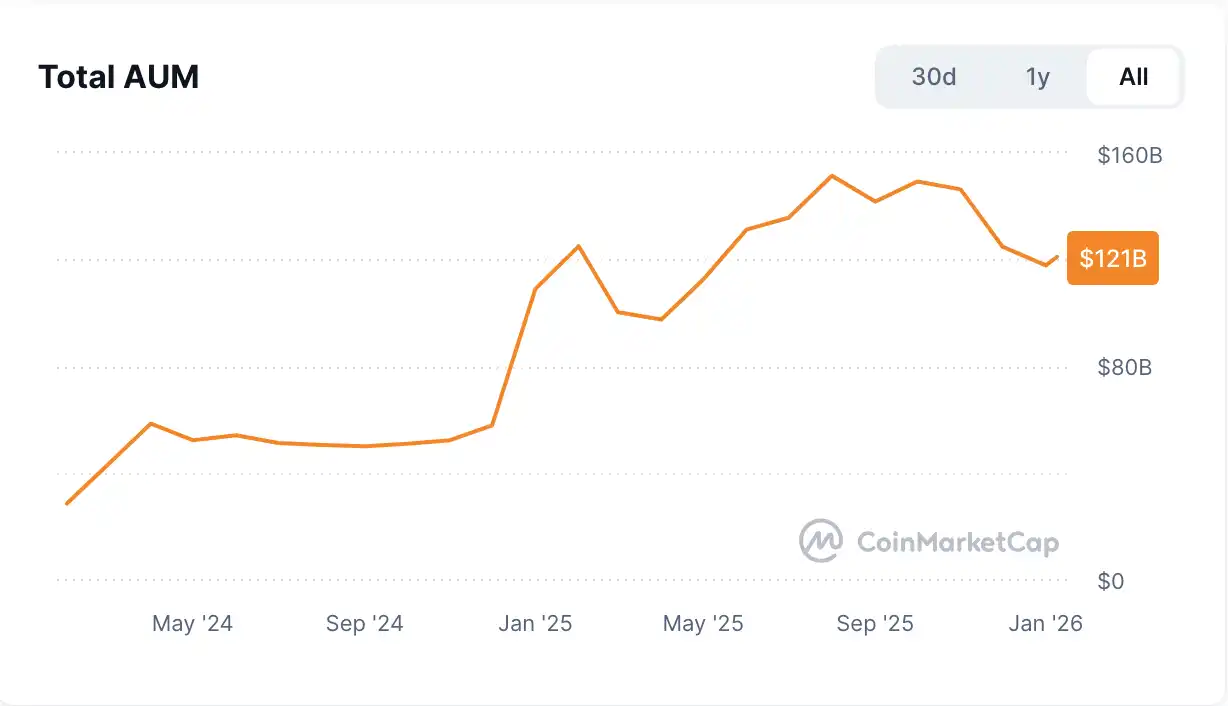
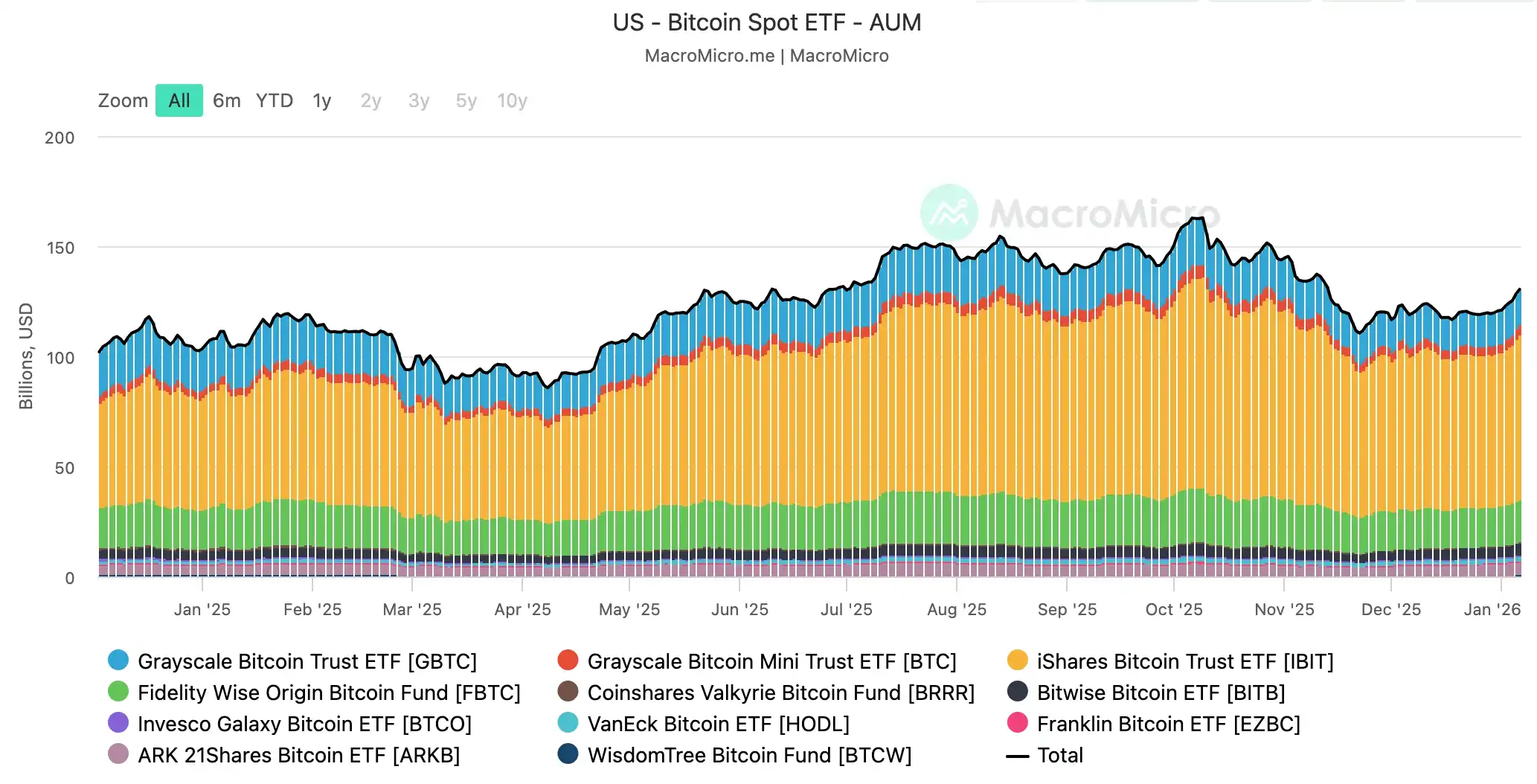
As of now, the total assets under management (AUM) of Bitcoin ETFs have climbed to $124.5 billion. The concentration is extremely significant: five products—IBIT ($74.11 billion), GBTC ($16.4 billion), FBTC ($18.89 billion), ARKB ($5.81 billion), and BITB ($5.35 billion)—collectively manage $120.56 billion in assets, accounting for 96.6% of the total market, clearly outlining an institutionally-dominated market structure.

The trading activity has also exceeded expectations. According to data from The Block, the cumulative trading volume of U.S. spot cryptocurrency ETFs officially surpassed $2 trillion on January 2nd. Looking back at this progression: it took a full 16 months to first reach $1 trillion on May 6th, 2025; but it took only 8 months to go from $1 trillion to $2 trillion, with the growth rate doubling. Among them, BlackRock's IBIT remains firmly in the top spot, accounting for a whopping 70% of the trading volume.

The divergence in fund flows is also very clear. In 2025, U.S. spot Bitcoin ETFs accounted for the majority of the net inflows in the cryptocurrency ETF market, performing far better than Ethereum ETFs, further solidifying Bitcoin's dominant position in the crypto ETF space.

If the approval of the Bitcoin ETF symbolized Bitcoin officially knocking on the door of the mainstream financial system; then these figures today prove that it has become a structurally significant allocation asset in institutional investment portfolios. Behind these numbers is not just a leap in scale, but also institutional-level recognition: Bitcoin is integrating into the常规 operational framework of the global financial system at an unprecedented speed.
History of the Bitcoin ETF: A Breakthrough That Was No Accident

The launch of the spot Bitcoin ETF was not a sudden act of regulatory goodwill, but the result of a long-term game.

Before 2024, the core concerns of regulators regarding Bitcoin ETF applications and rejections always focused on three points: whether the underlying market was mature and could effectively prevent manipulation; whether the asset custody, clearing, and audit mechanisms were reliable; and whether the investor protection system was complete. These issues were not about judging Bitcoin's intrinsic value, but were institutional thresholds that any asset must cross to be incorporated into the formal financial product system.

Tracing the timeline, the demand for a Bitcoin ETF can be traced back to 2013. At that time, Bitcoin's price began to enter the public eye, and some investors and brokers found it difficult for ordinary investors to access this emerging asset within a compliant framework, leading to the earliest conceptions of a Bitcoin ETF. However, for many years thereafter, the U.S. Securities and Exchange Commission (SEC) consistently rejected related proposals, citing reasons revolving around the three core issues of market manipulation risk, custody security, and information transparency.

It wasn't until October 2021 that the SEC first relented, approving the ProShares Bitcoin Strategy ETF (BITO). But this product was based on futures contracts, not a true spot ETF, and was more like a regulatory test.

The real turning point occurred on January 10, 2024. The SEC approved 10 spot Bitcoin ETFs at once, including those from BlackRock, Fidelity, Grayscale, Ark Invest, and Invesco. This decision marked the official entry of U.S. crypto asset investment into the spot ETF era and became the most important institutional link between the traditional financial system and crypto assets.

The arrival of this moment was no accident. By 2024, the infrastructure around Bitcoin, including trading systems, custody mechanisms, compliance frameworks, and information disclosure standards, had developed to a stage acceptable to regulators. The emergence of the ETF was essentially the financial system's recognition and response to this market maturity.

From a longer-cycle perspective, this is by no means the end point of Bitcoin's financialization, but a clearly visible, officially confirmed阶段性 node in its financialization process.

Beyond Gold: Bitcoin ETF Presses the "Fast-Forward" Button

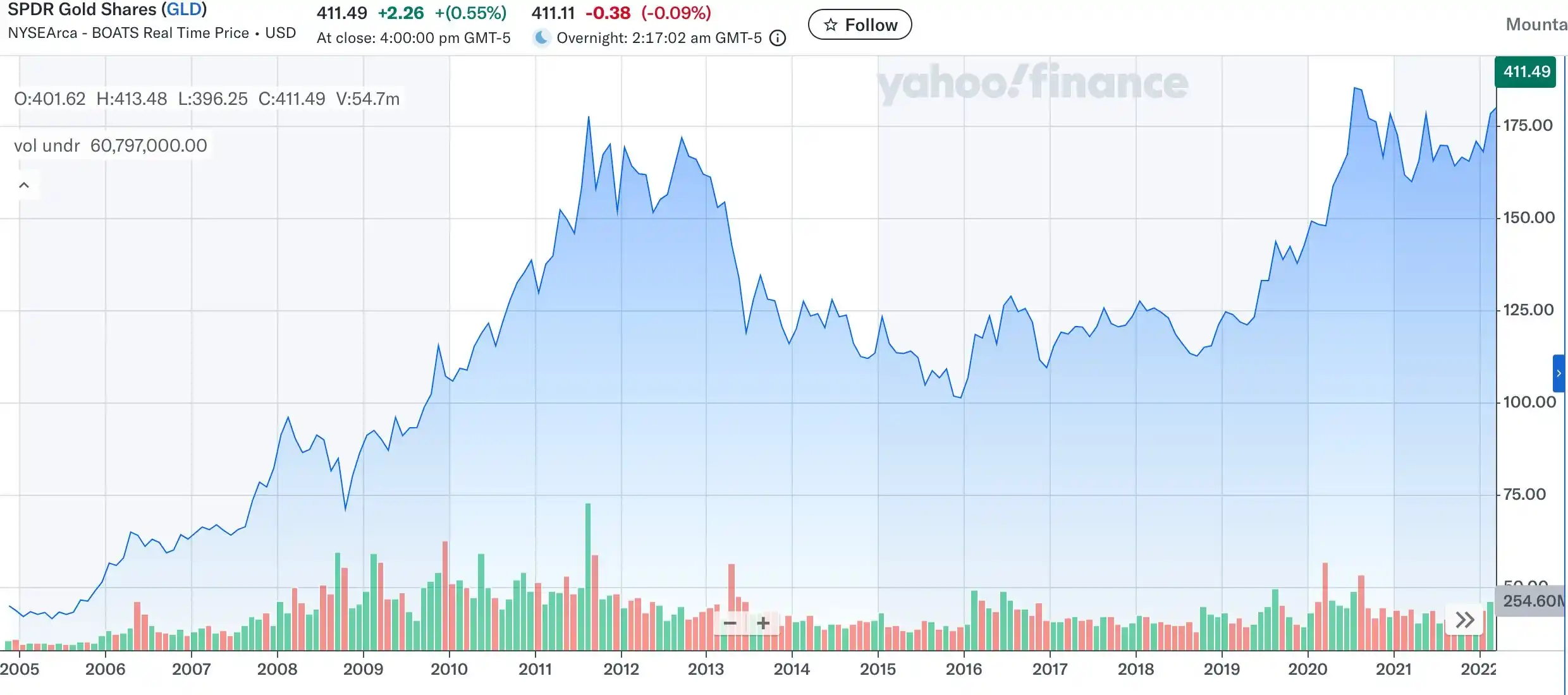
In 2004, the SPDR Gold Trust ETF (GLD) was approved, becoming the first spot gold ETF in history. At that time, the global market capitalization of gold was approximately $1 to $2 trillion. Subsequently, driven by ETFs and related financial instruments, gold's financialization process began to accelerate. By 2025, the global AUM of gold ETFs had climbed to $559 billion, and the average daily trading volume of the gold market reached about $361 billion, both hitting record highs.

With this history as a backdrop, when the spot Bitcoin ETF was approved in 2024, many market participants naturally compared the two. Everyone had a similar question in mind: could the ETF once again play the role of a "catalyst," injecting unprecedented liquidity and vitality into the Bitcoin market?

Now, two years later, the Bitcoin ETF has given a clear answer.

According to data from Chainalysis, the pace of fund flows into Bitcoin ETFs has already surpassed the early-stage inflow speed of the first *net* gold ETF (inflation-adjusted) launched in 2005.

After the launch of the spot gold ETF, not only did its own scale rise rapidly, but it also spurred activity across the entire gold ecosystem: the trading volumes of spot, futures, options, and even various derivative markets achieved quantum growth in the following years.

This history provides a vivid reference for understanding the potential impact of the Bitcoin ETF. It confirms that ETFs, as a financial medium, inherently possess a kind of "leverage effect," capable of rapidly increasing an asset's liquidity and attracting broader market participation.

Therefore, the Bitcoin ETF is not simply retreading gold's old path. It has demonstrated a faster market acceptance rate in a shorter time and received a more enthusiastic response from capital.
The Significance of ETFs: Accelerators of the Financialization Process

Looking at the development over two years, spot Bitcoin ETFs have promoted Bitcoin's financialization process on multiple levels.

First, the method of participation has been institutionalized.

Spot Bitcoin ETFs provide investors with a regulated, standardized participation path, significantly reducing technical and operational barriers. Investors can participate in its price fluctuations without directly holding, storing, or managing Bitcoin, making Bitcoin investment more aligned with the usage habits of mainstream financial markets.

Second, the investment process has been greatly simplified.

Investors can buy and sell Bitcoin ETF shares like stocks or other ETFs, using market or limit orders, improving both convenience and security, thereby making it easier for Bitcoin to be incorporated into常规 investment portfolio systems.

Third, mainstream acceptance of Bitcoin as an asset class continues to increase.

Spot Bitcoin ETFs have significantly enhanced market recognition of Bitcoin as an independent asset class, gradually moving it from within the crypto market into the mainstream asset allocation and wealth management discussion framework, and beginning to appear in some long-term investment and retirement planning scenarios.

Fourth, institutional capital and global market participation have been systematically opened up.

The participation of global top asset management institutions like BlackRock and Fidelity has turned Bitcoin ETFs from symbolic compliant products into important entry points for institutional funds into the crypto market. Meanwhile, the successive advancement of spot Bitcoin ETFs in markets like the U.S. and Hong Kong also indicates that this financialization process is showing a trend of global diffusion.

Structural Challenges and Diversified Participation Paths Under Accelerated Financialization

The rapid development of Bitcoin ETFs has significantly accelerated Bitcoin's financialization process, but it has also simultaneously amplified some long-standing structural challenges.

First, from a market perspective, spot Bitcoin ETFs are still directly exposed to Bitcoin's inherent high volatility, and rapid price changes can lead to short-term valuation fluctuations;同时, the management fees and operational costs of ETFs will also affect the investment return structure in the long run.

More importantly, the high degree of financialization represented by ETFs is itself a double-edged sword. On one hand, it significantly amplifies Bitcoin's market liquidity and participation scale; on the other hand, it can easily cause the market to focus more on price performance at the financial product level, thereby overlooking the fact that the Bitcoin network itself still requires continuous investment in computing power and infrastructure construction to maintain its long-term security and stability.

From an investor's perspective, ways to participate in Bitcoin are not limited to price-level trading and holding. Besides obtaining price returns through spot, spot ETFs, or trading strategies, cloud mining offers another approach: participating in Bitcoin through a path of locking in costs and stabilizing output.

Through cloud mining, investors can lock in hashrate and costs in advance, obtaining relatively stable Bitcoin output over a certain period. This model essentially equates to locking in the cost of acquiring Bitcoin for a future period, allowing investors to establish a more controllable cost structure and return expectations in a highly volatile market, and also providing another potential path to outperform the spot price over a cycle.

同时, this method also allows individual capital to continue participating in the Bitcoin network's hashrate system, rather than staying only at the level of financial price speculation. Cloud mining is both a way to acquire Bitcoin and a form of continuous support for the network infrastructure. Against the backdrop of deepening financialization, it preserves a richer, more diverse participation structure for the market.

As Bitcoin continues to integrate into the global financial system, different levels and forms of participation will together form an important foundation for its long-term operation and development.
Conclusion

Two years is enough for a new financial product to undergo a complete market test. This journey of the spot Bitcoin ETF clearly tells us: the speed at which Bitcoin is entering the mainstream financial track is much faster than most people initially imagined.

But this is clearly not the终点. The ETF is more like a lit beacon, making Bitcoin's financialization path clear from模糊, and预示着 that more institutionalized forms will appear ahead.

In the future, Bitcoin will continue to evolve between financial markets, technological systems, and infrastructure. Different forms of participation will共同塑造 its long-term position in the global financial system.

Two years is just the prologue. This journey is still extending, and the new pages truly worth writing may have just been turned.

Leituras Relacionadas

You Bet on the News, the Pros Read the Rules: The True Cognitive Gap in Losing Money on Polymarket

The article explains that the key to profiting on Polymarket, a prediction market platform, lies not just predicting real-world events correctly, but in meticulously understanding the specific rules that govern how each market will be resolved. It illustrates this with examples, such as a market on Venezuela's 2026 leader, where the official rules defining "officially holds" the office overruled the intuitive answer of who was in practical control. Other examples include debates over the definition of a "token" or what constitutes an "agreement." The core argument is that a "reality vs. rules" gap creates pricing discrepancies that savvy traders ("车头" or "whales") exploit. The platform has a formal dispute resolution process managed by UMA token holders to settle ambiguous outcomes. This process involves proposal submission, a challenge window, a discussion period, and a final vote. However, the article highlights a critical flaw in this system compared to a traditional court: the lack of separation between the arbiters (UMA voters) and the interested parties (traders with financial stakes in the outcome). This conflict of interest undermines the discussion phase, leads to herd mentality, and results in opaque final decisions without explanatory rulings. Consequently, the system lacks a body of precedent, making it difficult for users to learn from past disputes. The ultimate takeaway is that success on Polymarket requires a lawyer-like scrutiny of the rules to identify and capitalize on the cognitive gap between how events appear and how they are contractually defined for settlement.

marsbitHá 1h

You Bet on the News, the Pros Read the Rules: The True Cognitive Gap in Losing Money on Polymarket

marsbitHá 1h

Trading

Spot
Futuros

Artigos em Destaque

O que é BITCOIN

Compreender o HarryPotterObamaSonic10Inu (ERC-20) e a Sua Posição no Espaço Cripto Nos últimos anos, o mercado de criptomoedas assistiu a um aumento na popularidade das moedas meme, cativando não apenas os traders, mas também aqueles que procuram envolvimento comunitário e valor de entretenimento. Entre estes tokens únicos está o HarryPotterObamaSonic10Inu (ERC-20), um projeto intrigante que mistura referências culturais no tecido das criptomoedas. Este artigo explora os principais aspetos do HarryPotterObamaSonic10Inu, examinando os seus mecanismos, a sua ética orientada pela comunidade e o seu envolvimento com o vasto panorama cripto. O que é o HarryPotterObamaSonic10Inu (ERC-20)? Como o nome sugere, o HarryPotterObamaSonic10Inu é uma moeda meme construída na blockchain Ethereum, classificada sob o padrão ERC-20. Ao contrário das criptomoedas tradicionais, que podem enfatizar a utilidade prática ou o potencial de investimento, este token prospera no valor de entretenimento e na força da sua comunidade. O projeto visa promover um ambiente onde utilizadores envolvidos possam reunir-se, partilhar ideias e participar em atividades inspiradas por diversos fenómenos culturais. Uma característica notável do HarryPotterObamaSonic10Inu é a zero taxa sobre transações. Este elemento atraente visa encorajar a negociação e o envolvimento da comunidade, isento de encargos adicionais que podem desencorajar os traders de pequena escala. A oferta total da moeda está fixada em mil milhões de tokens, uma cifra que marca a sua intenção de manter uma circulação substancial dentro da comunidade. Criador do HarryPotterObamaSonic10Inu (ERC-20) As origens do HarryPotterObamaSonic10Inu estão um pouco envoltas em mistério; os detalhes sobre o criador permanecem desconhecidos. O desenvolvimento deste token carece de uma equipa identificável ou de um plano explícito, o que não é raro no setor das moedas meme. Em vez disso, o projeto surgiu de forma orgânica, com o seu progresso a depender fortemente do entusiasmo e da participação da sua comunidade. Investidores do HarryPotterObamaSonic10Inu (ERC-20) No que diz respeito a investimentos externos e apoios, o HarryPotterObamaSonic10Inu também permanece ambíguo. O token não lista quaisquer fundações de investimento conhecidas ou apoio organizacional significativo. Em vez disso, o “sangue vital” do projeto é a sua comunidade de base, que informa o seu crescimento e sustentabilidade através da ação coletiva e do envolvimento no espaço cripto. Como Funciona o HarryPotterObamaSonic10Inu (ERC-20)? Como uma moeda meme, o HarryPotterObamaSonic10Inu opera principalmente fora dos quadros tradicionais que muitas vezes governam o valor dos ativos. Existem vários aspetos distintivos que definem como o projeto funciona: Transações Sem Taxas: Sem taxas sobre transações, os utilizadores podem comprar e vender o token livremente, sem a preocupação de custos ocultos. Envolvimento da Comunidade: O projeto prospera na interação da comunidade, aproveitando plataformas de redes sociais para criar entusiasmo e facilitar a participação. Discussões, partilha de conteúdo e envolvimento são elementos cruciais que ajudam a expandir o seu alcance e a fomentar a lealdade entre os apoiantes. Sem Utilidade Prática: Deve ser notado que o HarryPotterObamaSonic10Inu não oferece utilidade concreta dentro do ecossistema financeiro. Em vez disso, é classificado como um token principalmente para entretenimento e atividades comunitárias. Referência Cultural: O token incorpora de forma inteligente elementos da cultura popular para atrair interesse, conectando-se tanto com entusiastas de memes como com seguidores de criptomoedas. HarryPotterObamaSonic10Inu exemplifica como as moedas meme operam de forma diferente de projetos de criptomoedas mais tradicionais, entrando no mercado como construções sociais inovadoras em vez de ativos utilitários. Linha do Tempo do HarryPotterObamaSonic10Inu (ERC-20) A história do HarryPotterObamaSonic10Inu é marcada por vários marcos notáveis: Criação: O token surgiu de um meme viral, capturando a imaginação de muitos entusiastas de criptomoedas. Datas específicas de criação não estão disponíveis, sublinhando a sua ascensão orgânica. Listagem em Exchanges: O HarryPotterObamaSonic10Inu conseguiu entrar em várias exchanges, permitindo um acesso e negociação mais fáceis pela comunidade. Iniciativas de Envolvimento da Comunidade: Atividades contínuas direcionadas a melhorar a interação comunitária, incluindo concursos, campanhas em redes sociais e geração de conteúdo por fãs e defensores. Planos de Expansão Futura: O roteiro do projeto inclui o lançamento de uma coleção de NFTs, mercadorias e um site de eCommerce relacionado aos seus temas culturais, envolvendo ainda mais a comunidade e tentando adicionar mais dimensões ao seu ecossistema. Pontos-Chave sobre o HarryPotterObamaSonic10Inu (ERC-20) Natureza Orientada pela Comunidade: O projeto prioriza a contribuição coletiva e a criatividade, assegurando que o envolvimento dos utilizadores está na vanguarda do seu desenvolvimento. Classificação como Moeda Meme: Representa o epítome da criptomoeda baseada em entretenimento, destacando-se dos veículos de investimento tradicionais. Sem Afiliação Direta com o Bitcoin: Apesar da semelhança no nome do ticker, o HarryPotterObamaSonic10Inu é distinto e não tem qualquer relação com o Bitcoin ou outras criptomoedas estabelecidas. Foco na Colaboração: O HarryPotterObamaSonic10Inu é projetado para criar um espaço de colaboração e partilha de histórias entre os seus detentores, proporcionando uma via para a criatividade e o fortalecimento da comunidade. Perspectivas Futuras: A ambição de expandir além da sua premissa inicial para NFTs e mercadorias delineia um caminho para o projeto potencialmente entrar em avenidas mais mainstream dentro da cultura digital. À medida que as moedas meme continuam a capturar a imaginação da comunidade cripto, HarryPotterObamaSonic10Inu (ERC-20) destaca-se devido aos seus laços culturais e abordagem centrada na comunidade. Embora possa não se encaixar no molde típico de um token orientado para utilidade, a sua essência reside na alegria e camaradagem fomentadas entre os seus apoiantes, destacando a natureza em evolução das criptomoedas em uma era cada vez mais digital. À medida que o projeto continua a desenvolver-se, será importante observar como as dinâmicas comunitárias influenciam a sua trajetória no panorama em constante mudança da tecnologia blockchain.

1.2k Visualizações TotaisPublicado em {updateTime}Atualizado em 2024.12.03

O que é BITCOIN

Como comprar BTC

Bem-vindo à HTX.com!Tornámos a compra de Bitcoin (BTC) simples e conveniente.Segue o nosso guia passo a passo para iniciar a tua jornada no mundo das criptos.Passo 1: cria a tua conta HTXUtiliza o teu e-mail ou número de telefone para te inscreveres numa conta gratuita na HTX.Desfruta de um processo de inscrição sem complicações e desbloqueia todas as funcionalidades.Obter a minha contaPasso 2: vai para Comprar Cripto e escolhe o teu método de pagamentoCartão de crédito/débito: usa o teu visa ou mastercard para comprar Bitcoin (BTC) instantaneamente.Saldo: usa os fundos da tua conta HTX para transacionar sem problemas.Terceiros: adicionamos métodos de pagamento populares, como Google Pay e Apple Pay, para aumentar a conveniência.P2P: transaciona diretamente com outros utilizadores na HTX.Mercado de balcão (OTC): oferecemos serviços personalizados e taxas de câmbio competitivas para os traders.Passo 3: armazena teu Bitcoin (BTC)Depois de comprar o teu Bitcoin (BTC), armazena-o na tua conta HTX.Alternativamente, podes enviá-lo para outro lugar através de transferência blockchain ou usá-lo para transacionar outras criptomoedas.Passo 4: transaciona Bitcoin (BTC)Transaciona facilmente Bitcoin (BTC) no mercado à vista da HTX.Acede simplesmente à tua conta, seleciona o teu par de trading, executa as tuas transações e monitoriza em tempo real.Oferecemos uma experiência de fácil utilização tanto para principiantes como para traders experientes.

3.8k Visualizações TotaisPublicado em {updateTime}Atualizado em 2025.03.21

Como comprar BTC

O que é $BITCOIN

OURO DIGITAL ($BITCOIN): Uma Análise Abrangente Introdução ao OURO DIGITAL ($BITCOIN) OURO DIGITAL ($BITCOIN) é um projeto baseado em blockchain que opera na rede Solana, com o objetivo de combinar as características dos metais preciosos tradicionais com a inovação das tecnologias descentralizadas. Embora partilhe um nome com o Bitcoin, frequentemente referido como “ouro digital” devido à sua percepção como uma reserva de valor, o OURO DIGITAL é um token separado projetado para criar um ecossistema único dentro da paisagem Web3. O seu objetivo é posicionar-se como um ativo digital alternativo viável, embora os detalhes sobre as suas aplicações e funcionalidades ainda estejam em desenvolvimento. O que é o OURO DIGITAL ($BITCOIN)? OURO DIGITAL ($BITCOIN) é um token de criptomoeda explicitamente projetado para uso na blockchain Solana. Em contraste com o Bitcoin, que fornece um papel amplamente reconhecido como armazenamento de valor, este token parece focar em aplicações e características mais amplas. Aspectos notáveis incluem: Infraestrutura Blockchain: O token é construído na blockchain Solana, conhecida pela sua capacidade de lidar com transações de alta velocidade e baixo custo. Dinâmicas de Oferta: O OURO DIGITAL tem um fornecimento máximo limitado a 100 quatrilhões de tokens (100P $BITCOIN), embora os detalhes sobre o seu fornecimento circulante ainda não tenham sido divulgados. Utilidade: Embora as funcionalidades precisas não estejam explicitamente delineadas, existem indicações de que o token poderia ser utilizado para várias aplicações, potencialmente envolvendo aplicações descentralizadas (dApps) ou estratégias de tokenização de ativos. Quem é o Criador do OURO DIGITAL ($BITCOIN)? Neste momento, a identidade dos criadores e da equipa de desenvolvimento por trás do OURO DIGITAL ($BITCOIN) permanece desconhecida. Esta situação é típica entre muitos projetos inovadores no espaço da blockchain, particularmente aqueles alinhados com finanças descentralizadas e fenómenos de moedas meme. Embora tal anonimato possa fomentar uma cultura orientada pela comunidade, intensifica as preocupações sobre governança e responsabilidade. Quem são os Investidores do OURO DIGITAL ($BITCOIN)? As informações disponíveis indicam que o OURO DIGITAL ($BITCOIN) não tem apoiantes institucionais conhecidos ou investimentos proeminentes de capital de risco. O projeto parece operar num modelo peer-to-peer focado no apoio e adoção da comunidade, em vez de rotas de financiamento tradicionais. A sua atividade e liquidez estão principalmente situadas em exchanges descentralizadas (DEXs), como a PumpSwap, em vez de plataformas de negociação centralizadas estabelecidas, destacando ainda mais a sua abordagem de base. Como Funciona o OURO DIGITAL ($BITCOIN) A mecânica operacional do OURO DIGITAL ($BITCOIN) pode ser elaborada com base no seu design de blockchain e nas características da rede: Mecanismo de Consenso: Ao aproveitar o exclusivo proof-of-history (PoH) da Solana combinado com um modelo de proof-of-stake (PoS), o projeto assegura uma validação eficiente das transações, contribuindo para o alto desempenho da rede. Tokenomics: Embora mecanismos deflacionários específicos não tenham sido extensivamente detalhados, o vasto fornecimento máximo de tokens implica que pode atender a microtransações ou casos de uso de nicho que ainda estão por definir. Interoperabilidade: Existe o potencial para integração com o ecossistema mais amplo da Solana, incluindo várias plataformas de finanças descentralizadas (DeFi). No entanto, os detalhes sobre integrações específicas permanecem não especificados. Cronologia de Eventos Chave Aqui está uma cronologia que destaca marcos significativos relacionados ao OURO DIGITAL ($BITCOIN): 2023: O lançamento inicial do token ocorre na blockchain Solana, marcado pelo seu endereço de contrato. 2024: O OURO DIGITAL ganha visibilidade ao tornar-se disponível para negociação em exchanges descentralizadas como a PumpSwap, permitindo que os utilizadores o negociem contra SOL. 2025: O projeto testemunha atividade de negociação esporádica e potencial interesse em envolvimentos liderados pela comunidade, embora não tenham sido documentadas parcerias ou avanços técnicos notáveis até ao momento. Análise Crítica Forças Escalabilidade: A infraestrutura subjacente da Solana suporta altos volumes de transações, o que pode aumentar a utilidade do $BITCOIN em vários cenários de transação. Acessibilidade: O potencial preço de negociação baixo por token pode atrair investidores de retalho, facilitando uma participação mais ampla devido a oportunidades de propriedade fracionada. Riscos Falta de Transparência: A ausência de apoiantes, desenvolvedores ou um processo de auditoria publicamente conhecidos pode gerar ceticismo em relação à sustentabilidade e confiabilidade do projeto. Volatilidade do Mercado: A atividade de negociação depende fortemente do comportamento especulativo, o que pode resultar em volatilidade significativa dos preços e incerteza para os investidores. Conclusão O OURO DIGITAL ($BITCOIN) surge como um projeto intrigante, mas ambíguo, dentro do ecossistema em rápida evolução da Solana. Embora tente aproveitar a narrativa do “ouro digital”, a sua divergência do papel estabelecido do Bitcoin como reserva de valor sublinha a necessidade de uma diferenciação mais clara da sua utilidade pretendida e estrutura de governança. A aceitação e adoção futuras dependerão provavelmente da abordagem da atual opacidade e da definição mais explícita das suas estratégias operacionais e económicas. Nota: Este relatório abrange informações sintetizadas disponíveis até outubro de 2023, e desenvolvimentos podem ter ocorrido além do período de pesquisa.

92 Visualizações TotaisPublicado em {updateTime}Atualizado em 2025.05.13

O que é $BITCOIN

Discussões

Bem-vindo à Comunidade HTX. Aqui, pode manter-se informado sobre os mais recentes desenvolvimentos da plataforma e obter acesso a análises profissionais de mercado. As opiniões dos utilizadores sobre o preço de BTC (BTC) são apresentadas abaixo.

活动图片