Not long ago, a 26-year-old trader in Hong Kong, employed for only six months, was arrested.
Between January 9 and July 20, 2026, he had without authorization used his company's account to misappropriate HK$50 million as margin financing to purchase the Hong Kong-listed stock 7709, "CSOP SK Hynix Daily Leverage (2x) ETF."
When South Korean stocks surged in the first half of the year, this position once yielded substantial floating profits. No one anticipated that the reversal would come so swiftly. From June to July, the South Korean stock market triggered successive trading halts due to limit-down moves, leading to a chain reaction of leveraged position liquidations. Countless individuals saw their paper wealth evaporate within just a few weeks.
By using the company's account and employing double leverage, the aforementioned trader incurred a massive loss of HK$150 million during the crash.
This young man's ordeal is merely a representative example brought to the forefront in the dramatic shift of the South Korean stock market in 2026, from "wealth creation for all" to "collective margin calls."
From the viral essays proclaiming "the golden era for Korean girls has arrived" to the widespread lament of "wiped out by margin calls, weeping in despair," the South Korean stock market completed a bull-to-bear transition in six months that would take years in other markets. This extreme market movement, fueled by the AI storage dividend, structural flaws in the index, rampant leverage, and retail sentiment, is teaching all participants a costly lesson in risk.
"A Once-in-a-Lifetime Chance to Get Rich"
In the first half of 2026, AI computing power demand exploded, leading to a shortage of high-end HBM memory chips and driving prices ever higher. As the global duopoly in memory chips, Samsung Electronics and SK Hynix saw their performance soar in tandem, with their stock prices surging up to 2x and 3x respectively at their peaks during the year. This directly propelled the sustained bull run of South Korea's KOSPI index, making it one of the world's best-performing major markets in the first half.
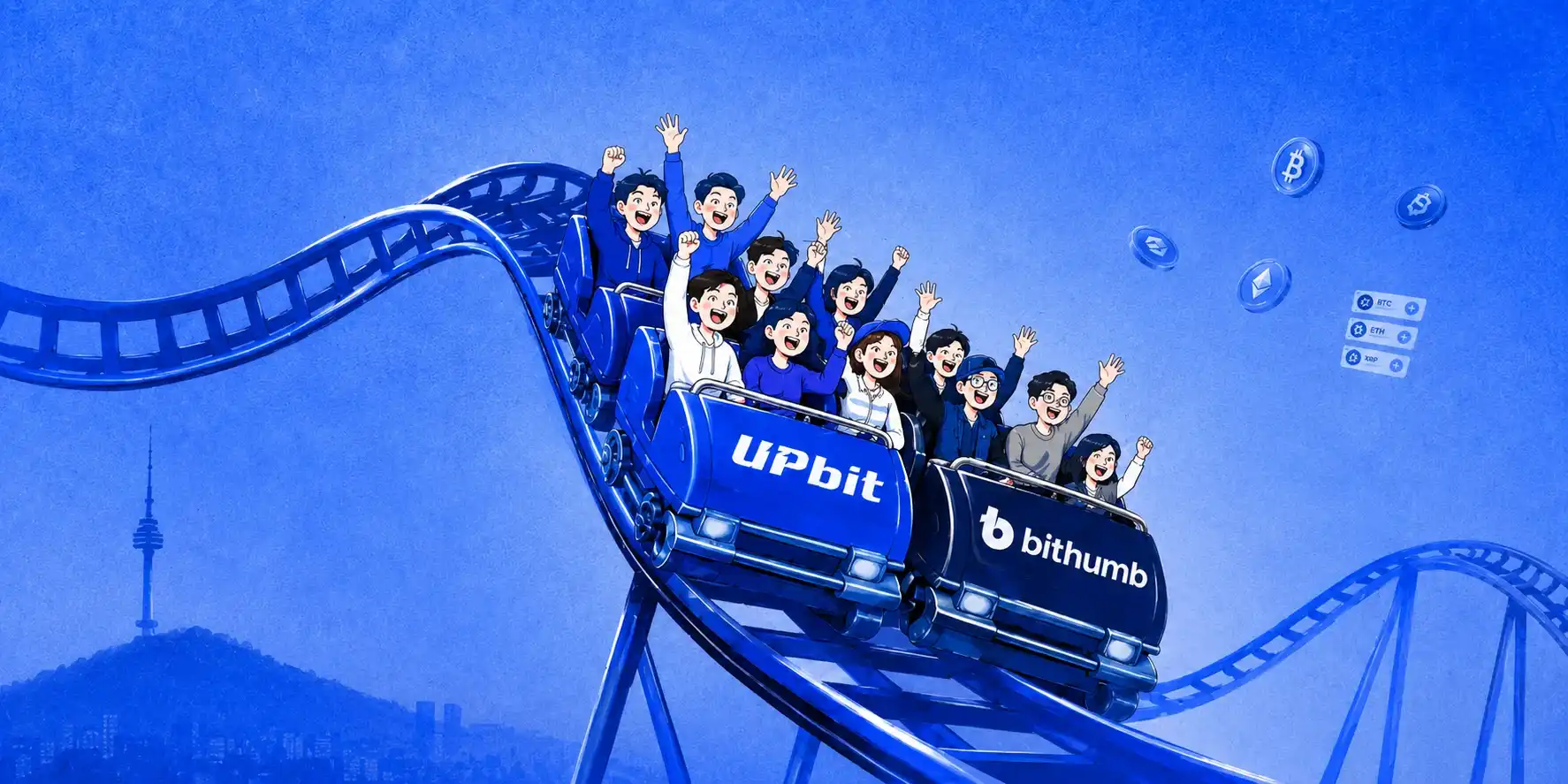
The first to be ignited were local South Korean retail investors. Amidst a social atmosphere of nationwide stock trading in Korea, discussions about Samsung and Hynix stock prices were everywhere—from social media platforms to office pantry chats, involving everyone from university freshmen to ordinary office workers. Some invested all their savings, others opened margin accounts with brokers to chase the rally with leverage, and some even took out personal loans to plunge into the stock market.
A Seoul-based internet worker shared on social media that after investing 20 million won in SK Hynix stock at the beginning of the year, their floating profit had exceeded 50 million won by the market peak in June. "It felt like holding for another six months would be enough for a down payment on an apartment in Gangnam District."
A migrant worker in South Korea also told BaoBian News that they casually followed the trend and bought a few shares of Samsung, SK Hynix, and some index funds at the start of the year. Later, checking their account, they found it had more than tripled. "I wish I had bought more back then."
Wealth-creation stories were everywhere, constantly stoking the fear of missing out (FOMO) among onlookers and driving more people to rush into the market. Simon Shi, an investor who has long observed cross-border markets, was deeply impressed: "They seemed to think this was a once-in-a-lifetime chance to get rich overnight, investing everything they had, even using significant leverage, to buy these stocks."
The wealth effect soon spilled beyond South Korea's borders, attracting global investors eager to grab a slice of the feast.
The Hong Kong market was one of the hubs for cross-border capital targeting South Korean stocks. The two leveraged ETFs listed on the Hong Kong Exchange—CSOP 2x Long SK Hynix and CSOP 2x Long Samsung Electronics—launched in mid-2025, perfectly timing the start of the rally. Within just a year, they became the hottest cross-border investment tools in Hong Kong.
For ordinary Hong Kong investors, as most mainstream brokers did not support direct trading of South Korean individual stocks, these two ETFs with built-in double leverage were the most convenient channel to participate in the Korean stock rally.
More uniquely, both products were approved by the Hong Kong Securities and Futures Commission (SFC) and were included in the list of financial assets eligible for investment immigration, attracting high-net-worth capital with dual needs for asset appreciation and residency planning. With the influx of both speculative and allocation funds, the scale and trading volume of these two ETFs skyrocketed.
Participation from mainland Chinese investors was relatively more restrained. Limited by compliance channels, most mainland investors gained indirect exposure through index products like China-South Korea Semiconductor ETFs.
Xiao Jiu, a university student who entered the stock market in 2023, began focusing on and allocating to the South Korean market in the second half of 2025. South Korea-related assets accounted for about 30% of his investment portfolio, all held indirectly through compliant products like public funds and ETFs. Within six months, his few-thousand-yuan holdings multiplied several times, with floating profits once nearing 20,000 yuan.
In his view, channel barriers were the biggest obstacle for mainland investors to directly participate in Korean stocks. Precisely because of this, most mainland investors were not deeply exposed to the extreme volatility of the Korean market.
Some maintained a wait-and-see attitude throughout. A domestic investor long focused on the tech sector never took a heavy position in Korean stocks: "The Korean stock market is so volatile precisely because leverage is too rampant, which is related to the nationwide stock trading culture in Korea. When it keeps rising non-stop, I don't feel comfortable investing, so I didn't invest."
During the nationwide frenzy in the first half of the year, such restraint seemed out of place. However, it soon proved crucial for avoiding risks during the sharp correction in the South Korean stock market.
Circuit Breaker, Then Another Circuit Breaker
The turning point arrived quietly in June, with the initial signals failing to raise much alarm.
On June 8, the South Korean stock market triggered a circuit breaker amid this wave. Market sentiment was still high at the time, and most institutions and retail investors interpreted it as a normal "technical correction," believing the rally would resume after a brief pause. Few realized this was just the beginning of a continuous plunge.
Half a month later, on June 23, Samsung Electronics and SK Hynix both plummeted over 12%. The collective sell-off of these two heavyweight stocks directly dragged down the broader market.
Just three days later, on June 26, the KOSPI index triggered another circuit breaker. Panic began to creep into the market, yet many retail investors still chose to buy the dip, firmly believing that the long-term logic of AI memory was far from over and that the pullback was a buying opportunity.
Entering July, the downward momentum not only failed to stop but intensified. On July 13, overnight bloodshed in the US chip sector transmitted panic across the Pacific to the South Korean market. The KOSPI index quickly slid after opening, triggering the circuit breaker mechanism once again. Each circuit breaker eroded market confidence further; the voices calling to buy the dip grew weaker, while the selling pressure grew stronger.
The most extreme action occurred at the end of July. On July 28 and 29, the KOSPI index triggered circuit breakers for two consecutive trading days, marking the darkest moments of this adjustment phase. Local South Korean media covered the stock market crash extensively. Major brokerages added psychological counseling services for investors to console distraught retail clients; many ordinary investors who had entered the market with leverage at highs not only lost all their principal but also incurred debt to their brokers.
This crash also rippled across the sea to the Hong Kong market, leading to the incident described at the beginning of the article. A trader in Hong Kong's Central district misappropriated HK$50 million from his company, made a high-stakes bet with double leverage, and ultimately incurred a book loss of HK$150 million. The financial hole could no longer be concealed. After the incident came to light, it shocked the entire Hong Kong asset management circle.
Why, given the same semiconductor theme, did the South Korean stock market exhibit volatility unmatched globally, frequently triggering its unique circuit breaker scenarios?
Rampant leverage was the most direct trigger. Korean retail investors commonly use leverage for stock trading. The Korean government has also actively promoted many leveraged funds, most of which are concentrated in Samsung and Hynix stocks. During extreme market movements, this often creates a chain reaction. During the uptrend, leveraged funds continuously pour in, accelerating the rise in stock prices; during the downtrend, batch forced liquidations create successive waves of selling pressure, trapping the market in a vicious cycle.
Inherent flaws in index composition further amplified systemic risk. Currently, Samsung Electronics and SK Hynix collectively account for nearly half of the KOSPI Composite Index's weighting. The entire market's movement is almost entirely tied to these two memory giants. In a normal market, sectors like consumer goods and finance can hedge against corrections in the tech sector. But in the Korean market, the cyclical fluctuations of the memory industry equate directly to systemic risk for the entire market, accelerating index gains during rallies and leaving no buffer zone during declines.
Even more insidious than structural issues and leverage was the widespread cognitive trap among retail investors regarding cyclical stock valuation. Memory chips are inherently a strong cyclical industry with typical commodity-like characteristics, where supply-demand dynamics determine price and profit cycles. Yet, many retail investors applied the valuation logic of growth stocks to these cyclical plays.
Simon Shi noted that cyclical stocks cannot be judged solely by P/E ratios. At the peak of a cyclical industry's boom, when corporate profits are at their highest, the corresponding P/E ratio is often at its lowest. This恰恰 is a signal of the industry's peak, not a buying opportunity. Professional institutions, well-versed in cyclical valuation logic, gradually exit at what retail investors perceive as "low-valuation highs," while blindly chasing retail investors easily become the bag holders.
The previously mentioned cautious investor harbored deep concerns about the sustainability of the memory price increases, a direct reflection of cyclical patterns. "Memory prices have risen too high now, severely impacting consumer purchasing power for electronic products like phones and computers. Price hikes driven by AI demand will suppress consumer demand."
From the golden rally at the beginning of the year to the current Korean memory stock saga, the same script keeps repeating. And when only one narrative dominates the entire network, when everyone firmly believes prices can only go up, the market reaches its inflection point.
After the Tide Recedes
By early August, with regulators stepping in to restrict leveraged products and positive South Korean semiconductor export data emerging, the Korean stock market entered a phase of震荡 consolidation.
However, the aftermath of this crash is far from over. On social media, public sentiment has swiftly shifted from boasting about the "golden era" to lamenting "weeping in despair," with the reversal occurring faster than the market movement itself.
Investors caught in the turmoil are also adjusting their strategies and positions after the tide has receded.
Xiao Jiu did not choose to increase his Korean stock holdings after the pullback. Instead, he gradually reduced his related exposure, shifting funds towards undervalued traditional assets in A-shares and Hong Kong stocks that were mistakenly sold off, seeking higher returns by allocating to some traditional industries.
He summarized that the biggest lesson from this extreme market episode was learning to treat market frenzy as a contrarian indicator: "When everyone around you shares a unanimous consensus, one should be even more vigilant." In the future, he hopes to better track major industry trends,尽量 extend holding periods, and avoid "selling too early" due to short-term volatility.
As a value investor with a decade of experience, Simon Shi never participated in the speculative frenzy at the highs of Korean stocks, adhering to the principles of "not predicting short-term movements" and "sticking to valuation safety margins." Based on current valuation and gain data, he judges Korean stocks as overvalued and potentially still subject to剧烈 volatility. Therefore, he is primarily allocating capital to undervalued Hong Kong stocks.
His investment philosophy remains unchanged:坚决 avoid leverage, invest contrarianly, stay within one's circle of competence, and prioritize safety margins above all. "When the market is extremely pessimistic and loses信心, it might反而 be a good buying opportunity; when the market is very亢奋 and炽热, it's反而 time to sell."
The investor who remained cautious throughout has also begun to观察 potential entry windows. "Now that the overbought condition has also eased, I think it's possible to invest."
However, she still hasn't made a large-scale entry. Her core观察 points remain the price trends of memory chips and changes in supply-demand dynamics. In her view, memory prices cannot rise indefinitely; suppressed consumer demand and gradually releasing capacity will drive prices back—this is the inevitable规律 of cyclical industries. The principles she adhered to throughout this episode were: not participating in情绪-driven herd behavior, not being swayed by狂热 or panic, and坚持 making judgments based on industry fundamentals.
From the nationwide狂欢 of the "golden era" to the market恐慌 of "weeping in despair," the extreme movement in Korean stocks was the inevitable outcome of the interplay between leverage, cycles, and sentiment. For ordinary investors, both the wealth-creation神话 and the margin-call悲剧 of Korean stocks serve as the same reminder: High returns永远 come with high risks. The more疯狂 a leveraged rally is, the more惨烈 the aftermath when the tide recedes. Rejecting leverage, respecting cycles, and警惕 unanimous consensus remain the core principles for navigating market volatility.
This article is from the WeChat public account "BaoBian News" (ID: baobiannews), author: Gao Ze