Before You Jump on Any ICO Bandwagon, Read This First

深潮Publicado em 2025-12-16Última atualização em 2025-12-16

Resumo

Before participating in any ICO, it's crucial to understand that most projects fail, and only a few achieve success. The recent hype around ICOs, driven by projects like MegaETH and Plasma, often leads to impulsive investments without proper due diligence. Here are key points to consider: 1. **Product Fundamentals**: Evaluate if the product solves a real problem and has genuine innovation. Avoid projects based on future promises or testnet data without a working product. 2. **Team Experience**: The team's track record matters. Experienced teams can adapt to market changes, while weak teams may disappear when hype fades. 3. **Investors and Valuation**: Check if reputable VCs are involved and assess the valuation. Avoid projects where insiders have low valuations, leaving retail investors at risk. 4. **Authentic Data**: Look beyond surface metrics like TVL or user numbers. Ensure data is genuine and not inflated by incentives or fake activity. 5. **Marketing and Narrative**: Strong projects control their narrative and attract organic attention. Poor projects rely on buzzwords without substance. 6. **Tokenomics**: Understand token unlock schedules, vesting, and fully diluted valuation (FDV). Avoid structures that favor insiders and shift risk to retail. 7. **Market Conditions**: Market cycles significantly impact valuation and returns. The same project may perform differently in a bull vs. bear market. ICO investments are not free money. Avoid FOMO-driven decisions and p...

Written by: Ola Ξlixir

Compiled by: AididiaoJP, Foresight News

ICOs are the hottest topic on crypto Twitter right now, and everyone is talking about them.

Everyone thinks they've found the next MegaETH or Plasma.

But most people are overlooking one key point:

Only a small fraction of these ICOs will actually make money; that's how the crypto market has always been.

One project pioneers a model, and it succeeds.

Then ten teams copy it, thinking they can replicate that success, but it's hard to duplicate, and eight or nine out of ten will fail.

Right now, every team wants to do an ICO, just because MegaETH and Plasma are hot.

They figure, instead of giving you an airdrop, why not have you pay to "get in."

However, those two projects succeeded because they were well-planned before execution.

So, before you invest in any ICO, consider the following points.

1. The Product is Fundamental

Ignore the flashy PowerPoints and the hype posts from KOLs.

Just ask a simple question:

Does this product actually solve a real problem today? Does it have genuine innovation? Why do they need to issue a token?

If the product only exists in a "future story" or requires a bunch of assumptions to work, that's dangerous.

Good ICOs usually have something actually running, not just empty promises or testnet data.

If they can't explain what the product does in one sentence, that's your first red flag.

2. The Team Matters

The quality of a project depends on the strength of the team behind it.

Look at the team's track record:

Have they built products before, in crypto or elsewhere?

Experience is a plus; it shows they've been down this road.

An anonymous team isn't necessarily a bad thing,

but they must deliver exceptional results to earn trust.

When the market shifts, strong teams adapt;

weak teams vanish as soon as the hype dies down. This is an "attention economy."

3. Investors and Valuation

Who invested in this project? Top-tier VCs or third-rate funds?
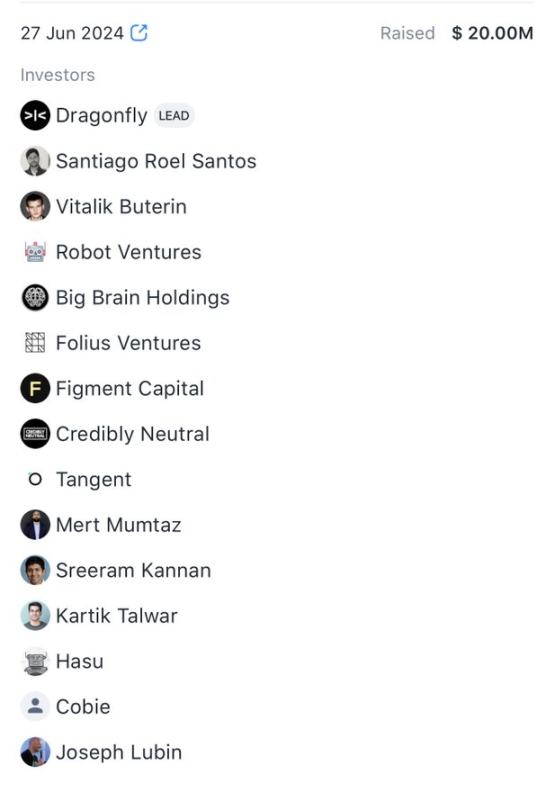
How much did they raise? What's the valuation? This is more important than many think.

If insiders and early investors got in at extremely low valuations, you're likely their "exit liquidity."

A good ICO's valuation makes sense even without hype;

a bad ICO relies on buzz and vanity metrics to justify its price.

4. Look at Real Data, Not Surface Numbers

Do they have real revenue? What are the active user numbers and Total Value Locked (TVL)?

Most importantly, the quality of this data—any data can be faked.

Testnet data is meaningless if it's easy to manipulate.

A dashboard full of fake activity won't magically turn into real usage—Monad is a prime example.

See if user demand is organic: are people willing to use the product without incentives,

or are they just there for a potential airdrop?

5. Marketing and Narrative Power

Marketing is more important than many realize.

MegaETH's marketing was executed masterfully.

The team controlled everything, perfectly steering the narrative.

Everyone was actively discussing MegaETH.

In the Web3 world, attention is everything.

If an ICO gets no attention before launch, don't expect miracles afterward—again, think Monad.

Good projects know how to tell their story clearly from the start.

Bad projects hide behind buzzwords: "We're building Web3's next ChatGPT + Nvidia + prediction market..." Nice story.

6. Offering Terms and Valuation

Read the terms carefully:

  • Token unlock rules

  • Vesting schedule

  • Circulating supply

  • Fully Diluted Valuation (FDV) at listing

Understanding the full tokenomics is crucial. If you can't, use AI tools to help analyze it.

If the ICO structure heavily favors insiders and dumps all the risk on retail, stay away.

A fair launch doesn't mean cheap; it means the interests of the project and participants are aligned.

7. Market Conditions are Key

This is the most easily overlooked point.

In a real bull market, a decent project can hit a $500M to $1B FDV on narrative alone.

Right now, even the hottest projects often cap out at $100M to $300M valuations.

This directly impacts your risk-reward calculation.

The same project can have wildly different outcomes in different markets.

Timing isn't everything, but it's never irrelevant.

Final Thoughts

ICOs are not free money; they never were.

The current trend will create some winners and leave a long list of lessons.

Don't buy just because everyone else is, or because a KOL you like is shilling it.

Don't assume every promoted project will be the next MegaETH.

The worst projects will just exploit your FOMO and hype-chasing mentality, with zero substance.

Perguntas relacionadas

QWhat is the main reason many ICOs fail to replicate the success of projects like MegaETH or Plasma?

AMost ICOs fail because they are merely copying a successful model without proper planning, execution, or innovation, unlike the original projects which were well-planned from the start.

QAccording to the article, what should be the primary focus when evaluating an ICO?

AThe primary focus should be on the product itself—whether it solves a real problem, has actual innovation, and has a working product rather than just promises or testnet data.

QWhy is the team behind an ICO important, as mentioned in the article?

AThe team's experience and track record are crucial because a strong team can adapt to market changes, while a weak one may disappear when hype fades. Anonymous teams need to deliver exceptional results to gain trust.

QWhat does the article suggest about ICO valuations and investor alignment?

AThe article warns that if insiders and early investors get in at very low valuations, retail investors might become 'exit liquidity.' A good ICO should have a logical valuation and fair terms that align interests between the project and participants.

QHow does market timing affect the outcome of an ICO, based on the article?

AMarket timing is critical—the same project can have vastly different results in a bull market versus the current environment. Valuations and risk-reward ratios are heavily influenced by the overall market conditions.

Leituras Relacionadas

Agent Race Ends, Super Workbench Takes Over

The era of fragmented AI agents is ending. Over the past month, China's tech giants—Tencent, Alibaba, and ByteDance—have simultaneously shifted strategy: instead of launching new, standalone AI agents, they are consolidating their various agent projects into unified "super workbenches." Tencent integrated its QClaw teams into WorkBuddy, a strategic product hailed as a potential third flagship after QQ and WeChat. Alibaba is merging its QoderWork, Wukong, and MuleRun agents into a new "Qianwen Office" platform under DingTalk's leadership. ByteDance rebranded its TRAE SOLO coding agent to TRAE Work, signaling a broader focus on workflow collaboration. This convergence marks a pivotal industry consensus. The initial exploration phase, where companies rapidly built numerous overlapping agents for different scenarios, proved costly and inefficient. With open-source tools eroding technical barriers, competition has shifted from agent creation to resource consolidation and cost control. Historically, platform wars are won not by creating more products, but by simplifying them—as seen with browsers unifying web access and super-apps consolidating services. Now, the "super workbench" aims to become the unified AI entry point for work. This reflects a deeper market realization: the primary audience for AI is no longer just programmers (a market in the tens of millions) but all knowledge workers (a market of billions). The real opportunity lies in augmenting everyday tasks—managing emails, documents, data, and meetings—across the entire workday. The core battleground is becoming control over the primary AI entry point that employees use daily. Tencent's WorkBuddy leverages WeChat and Tencent Docs; Alibaba's Qianwen Office taps into DingTalk's organizational data; ByteDance's TRAE Work integrates with Feishu's workflows. Whoever owns this "super workbench" gains strategic control over orchestrating enterprise data and APIs. This shift is redefining enterprise software. Traditional SaaS applications, valued for their user interfaces, will recede into the background. Their core functionalities will be exposed as standardized "Skills" or APIs for the super workbench's agents to invoke. Software value will shift from selling user seats to charging based on API calls and outcomes delivered. The evolution of agents is moving through clear stages: first as novel standalone products, then as consolidated primary work entry points, and finally as pervasive, invisible capabilities embedded into the digital fabric. The recent moves by major tech firms signal the transition from the first stage into the second, accelerating toward the third. In the end, the most successful agent technology may become invisible—like electricity or the HTTP protocol—a fundamental, unnamed infrastructure powering work itself.

marsbitHá 6m

Agent Race Ends, Super Workbench Takes Over

marsbitHá 6m

Michael Saylor: 110 Reasons to Oppose BIP-110

Michael Saylor presents 110 arguments against Bitcoin Improvement Proposal (BIP) 110, a soft fork aimed at restricting certain non-monetary data storage uses (like inscriptions) on the Bitcoin blockchain. He acknowledges the proponents' valid concerns—such as node costs, fee pressure, and preserving Bitcoin's monetary focus—but fundamentally disagrees with the proposed solution. Saylor argues that BIP 110 represents a dangerous precedent of using consensus rules to enforce value judgments on transaction validity, moving away from Bitcoin's core principles of neutrality and permissionless innovation. His key objections are organized into eleven categories: 1) It violates neutrality and hard consensus by banning currently valid transactions. 2) It fails to meet the high burden of proof required for a consensus change, lacking concrete data on the alleged crisis. 3) Its seven bundled technical restrictions are overly broad, targeting generic script functionalities and blocking future upgrade paths. 4) It sacrifices compatibility and future optionality by closing off designed upgrade hooks. 5) Its temporary rules add significant complexity (grandfathering, expiry states) without sufficient justification. 6) The economic and security impacts, particularly on miner revenue and fee markets, are uncertain and unmodeled. 7) Superior, market-based tools (fee markets, relay/mining policies) already exist to manage blockchain load. 8) It stifles innovation by creating a chilling effect for developers. 9) Its modified activation mechanism (55% threshold, forced signaling) is aggressive and risks network splits. 10) The precedent it sets—using consensus to suppress disliked but legal uses—is more dangerous than the problem it aims to solve. 11) A better path exists: improving measurements, refining resource-based policies, and allowing market forces to work. Saylor concludes that Bitcoin's strength lies in its neutral rules, open markets, and hard consensus. Changing these foundational elements to target specific use cases is an unnecessary and risky "iatrogenic" intervention. He advocates for guarding Bitcoin's neutrality rather than acting as its redeemer.

marsbitHá 22m

Michael Saylor: 110 Reasons to Oppose BIP-110

marsbitHá 22m

Trading

Spot
活动图片


