Avalanche Quietly Becomes an RWA Public Chain

Foresight NewsPublicado em 2026-07-16Última atualização em 2026-07-16

Resumo

Avalanche has strategically shifted its focus towards becoming a leading blockchain for Real-World Asset (RWA) tokenization and payments, moving beyond its initial gaming-centric reputation. Data from RWA.xyz shows Avalanche ranks third among blockchains when considering networks used for settlement, thanks to its unique subnet architecture (now independent Avalanche L1s following the Avalanche9000 and Granite upgrades). These upgrades drastically reduced operational costs and increased autonomy for validators, making it an attractive, cost-effective EVM-compatible Layer 1 for institutional partners. Major institutions like Securitize (which hosts tokenized versions of funds like BlackRock's BUIDL), Galaxy (issuing a $75M CLO), and FinChain have launched significant RWA projects on Avalanche. Its combination of low transaction costs, fast finality, and high customizability through its L1 stack appeals to traditional finance. This is further evidenced by partnerships with entities like NHN KCP, NEC, Progmat, and the formation of the Avalanche Payments Collective with members including Franklin Templeton and VanEck. Recent proofs-of-concept, such as a cross-border settlement for Hyundai, demonstrate practical utility. While Avalanche's ecosystem and institutional adoption are rapidly expanding, its native token (AVAX) price has not reflected this growth, as the protocol prioritizes network flexibility and adoption over immediate tokenomics adjustments like buybacks.


Written by: Eric, Foresight News


Perhaps in many people's impressions, Avalanche is still a public chain focused on gaming. While it can't be said to have completely abandoned gaming now, it's evident that the currently hot topics of RWA tokenization and payments have become Avalanche's signature strengths.


According to data from RWA.xyz, the total value of tokenized RWA assets on the Avalanche network has reached $2.1 billion, ranking second only to Ethereum, BNB Chain, Solana, and Stellar.
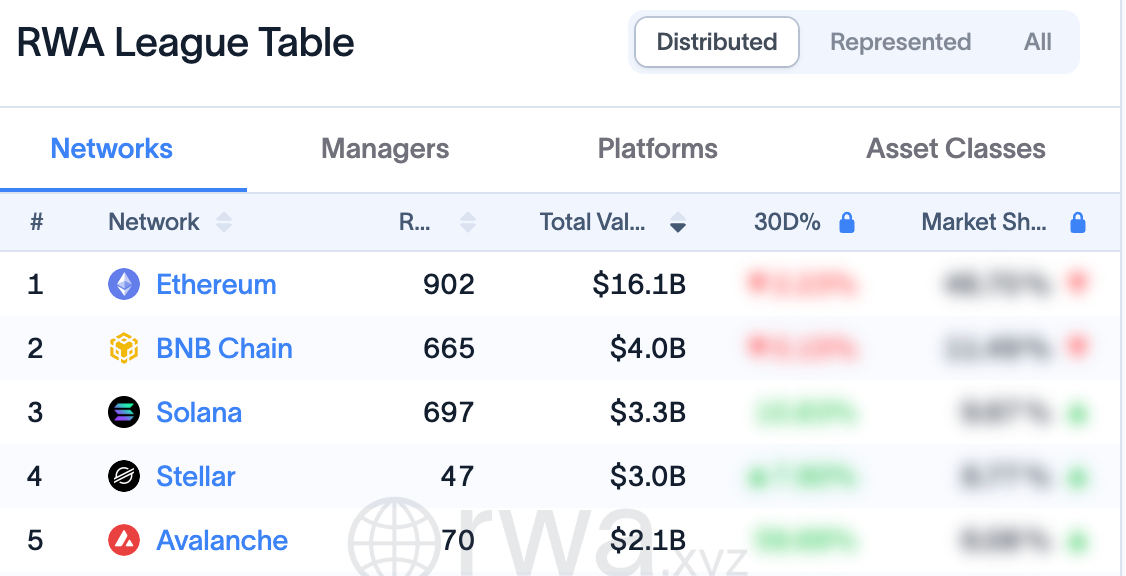


However, this ranking only accounts for these chains acting as 'distribution networks,' meaning the scenario where tokenized RWA assets are directly issued on the mainnet of these chains. If we calculate the situation where the chain is used solely as a 'settlement network,' Avalanche's rank rises to third place.
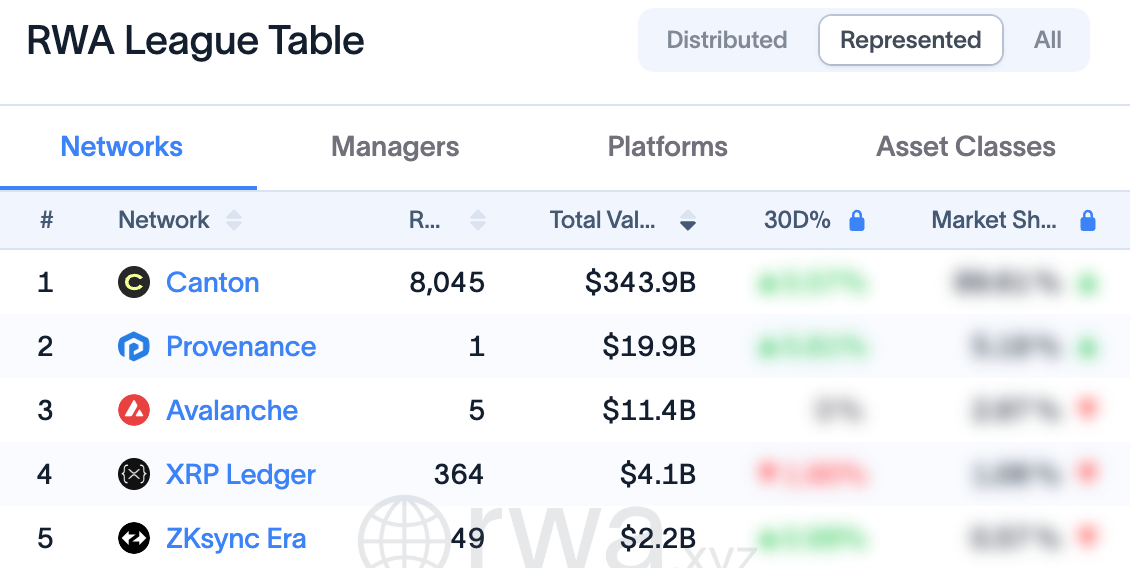


Thanks to its unique subnet mechanism, Avalanche has become the preferred choice for many traditional financial institutions. And all of this began with an upgrade at the end of 2024.


In December 2024, the Avalanche9000 upgrade was officially activated on the Avalanche mainnet. The core changes of this upgrade primarily included:


Restructuring Subnets into independent Avalanche L1s;

Removing the 2000 AVAX staking requirement for L1 validators, replacing it with a subscription fee of approximately 1.33 AVAX per month;

Reducing the minimum base Gas fee on the C-Chain from 25 nAVAX to 1 nAVAX (a decrease of about 96%).


Previously, to establish an Avalanche subnet, each validator needed to stake 2000 AVAX. A subnet with 20 validators would require staking 40,000 AVAX. After switching to the monthly subscription model of 1.33 AVAX, the same 20 validators only need fees of 26.6 AVAX per month. It would take over 125 years of continuous payments to reach the 40,000 AVAX level.


This greatly increased the cost-effectiveness and autonomy of building a dedicated chain based on the Avalanche stack. Before this change, besides staking 2000 AVAX, subnet validators also needed to participate in the consensus of the mainnet's X-Chain, P-Chain, and C-Chain, forcing synchronization between the mainnet and subnet states. After the update, L1 validators only need to sync the latest P-Chain state, with the purpose of tracking their validator weight (for consensus) and validating ICM (Interchain Messaging) messages.


Of course, the downside of this approach is evident: Avalanche L1s are responsible for their own security. The mainnet becomes a coordination layer and does not provide security support, similar to the relationship between Ethereum and sidechains. However, this trade-off facilitated the explosion of RWA tokenization and payments.


One year after the completion of the Avalanche9000 upgrade, Avalanche underwent the Granite upgrade, introducing dynamic block times, biometric login, cheaper cross-chain message passing, and achieving sub-second finality.


With the infrastructure upgrades complete, Avalanche began its rapid sprint on the path of integration with traditional finance.


In November 2025, Securitize received authorization under the EU's DLT Pilot Regime, enabling it to issue, trade, and settle tokenized securities at the market infrastructure level, and linking this with its U.S. operations as a broker-dealer, digital transfer agent, and alternative trading system. For the deployment of this system, Securitize chose Avalanche.
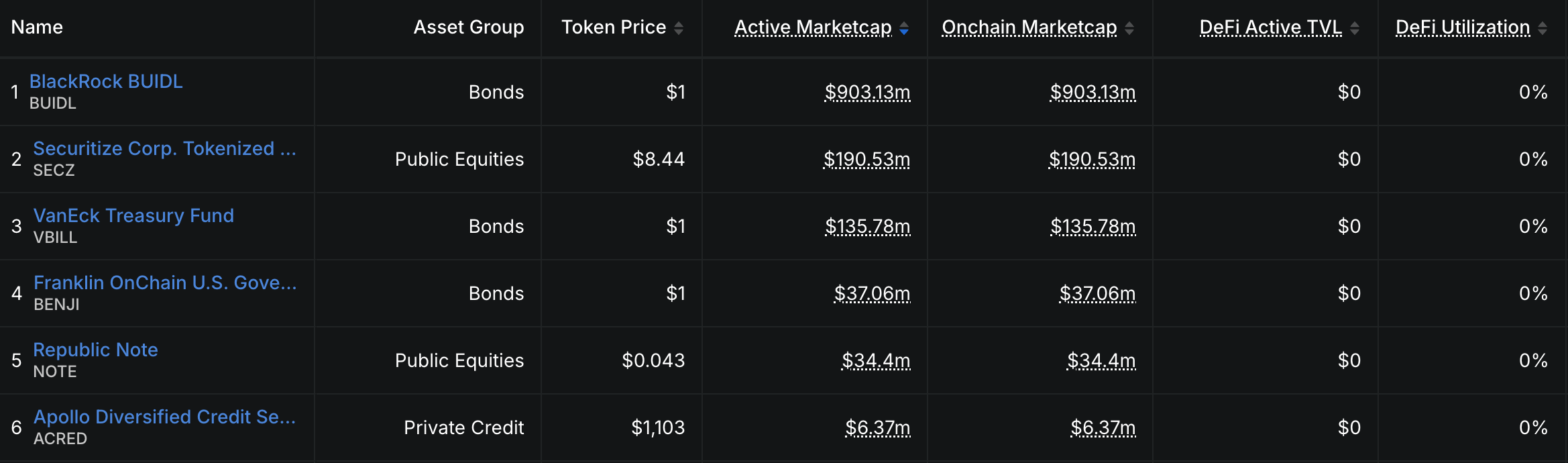


Securitize, which listed on the NYSE earlier this month, had actually chosen Avalanche as early as 2020. On the very day of its listing, Securitize launched tokenized versions of its own stock on both Avalanche and Solana. Beyond that, tokenized assets issued on or custodized by Securitize, such as the BlackRock BUIDL fund, ParaFi's tokenized venture fund, and the Apollo ACRED fund, form the main source of the $2.1 billion in tokenized RWA assets on the Avalanche mainnet.


In addition to Securitize, Galaxy also issued a total of $75 million in tokenized Collateralized Loan Obligation (CLO) notes, 'Galaxy CLO 2025-1,' on Avalanche in early 2026. FinChain, the Web3 brand under Fosun Wealth, also launched the yield-bearing RWA stablecoin FUSD on Avalanche at the beginning of the year.
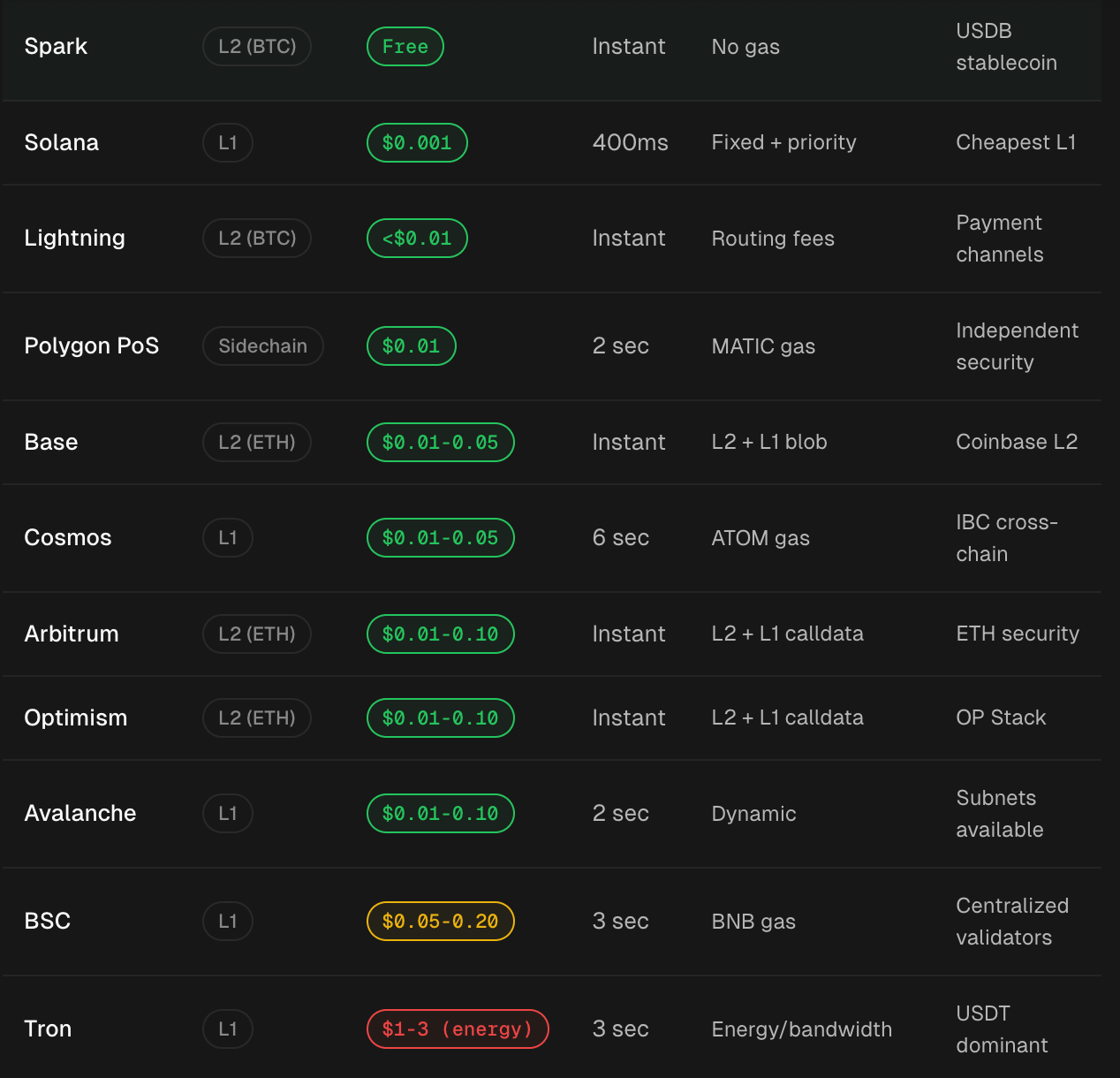


From a Gas fee perspective, Solana is almost peerless. However, many institutions choose Avalanche because it can be considered the most cost-effective choice in the realm of EVM-compatible chains.


How to understand 'cost-effectiveness'? Base, Arbitrum, and OP Mainnet also offer native EVM environments with costs comparable to Avalanche, or even slightly advantageous. However, the final confirmation of transactions on these L2s requires waiting for L1 block production, giving Avalanche, as an L1, a clear advantage in transaction 'finality.' Compared to Ethereum and BNB Chain, Avalanche again holds a cost advantage.
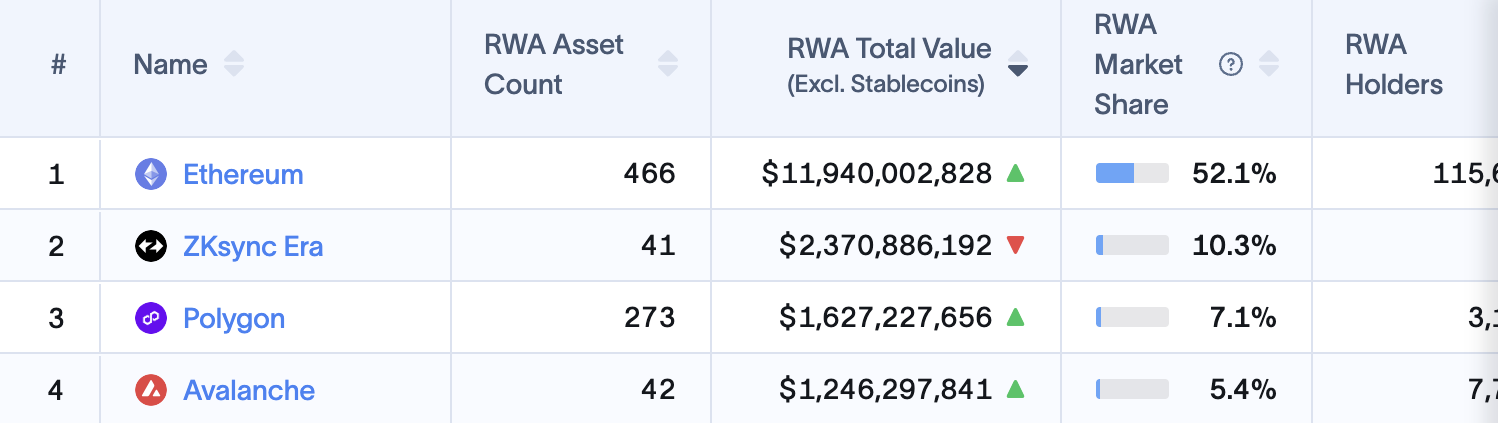


This advantage in settlement speed and 'finality' also once gave Polygon and ZKsync a head start. Polygon, as a sidechain, is inherently more independent, while ZKsync's ZKPs can almost guarantee 'finality' even before L1 confirmation. By the end of 2025, ZKsync and Polygon ranked just behind Ethereum in terms of total tokenized RWA asset value and were ahead of Avalanche.


After discussing the advantages of the mainnet, let's move on to Avalanche subnets, now known as the updated Avalanche L1s.


Avalanche L1s provide partners with a comprehensive development stack and a high degree of freedom, allowing participants to build personalized L1s at a very low cost to meet various needs. In April of this year, South Korean payment service provider NHN KCP signed a memorandum of understanding with Ava Labs, planning to jointly build an L1 network for payment scenarios based on Ava Cloud.


Then, in July, NEC Corporation and Japan's largest security token platform, Progmat, also turned to Avalanche. NEC aims to explore on-chain services combining its biometric digital identity technology with Avalanche's multi-chain architecture, with the core feature being that biometric data is not stored on-chain, only the proof of successful verification is submitted. This primarily serves in-store stablecoin payments for foreign tourists in Japan. Progmat is transitioning from a Corda 5-based consortium chain to a dedicated Avalanche L1, involving active tokenized assets exceeding 452 billion yen (approximately $27 billion).


On June 18th, the Avalanche Payments Collective was formally launched, with 28 institutions including Franklin Templeton, VanEck, WisdomTree, Paxos, and Kraken joining. It aims to establish an ecosystem covering settlement, stablecoins, fund infrastructure, foreign exchange, asset management, compliance, and global payments.


Less than a month after the organization's establishment, Hyundai Motor America (HMA) and Hyundai Motor Mexico (HMM) completed their first Proof-of-Concept (POC) for enterprise-level cross-border settlement via the Axiym platform on the Avalanche network. In this test, HMA converted $20,000 into USDT and transferred it to HMM, which then converted it back to USD. The complete cross-border transfer and verification process took an average of 7 minutes, compared to the 3 to 4+ hours typically required for traditional interbank transfers.


Looking back now, Avalanche has built a 'Mainnet + Avalanche L1' system that can cover nearly all aspects from tokenized RWAs to the payment field. Correspondingly, Aave has also chosen Avalanche as the first station for its multi-chain deployment of Aave V4, pointing to the potential of combining traditional finance with DeFi.


In this wave of enthusiasm, Avalanche has transformed and adapted incredibly fast, carving out its own path without the hype of Solana or the resources of BNB Chain. However, somewhat mismatched with the actual progress, the price of AVAX has returned to levels seen in late 2020 and early 2021.
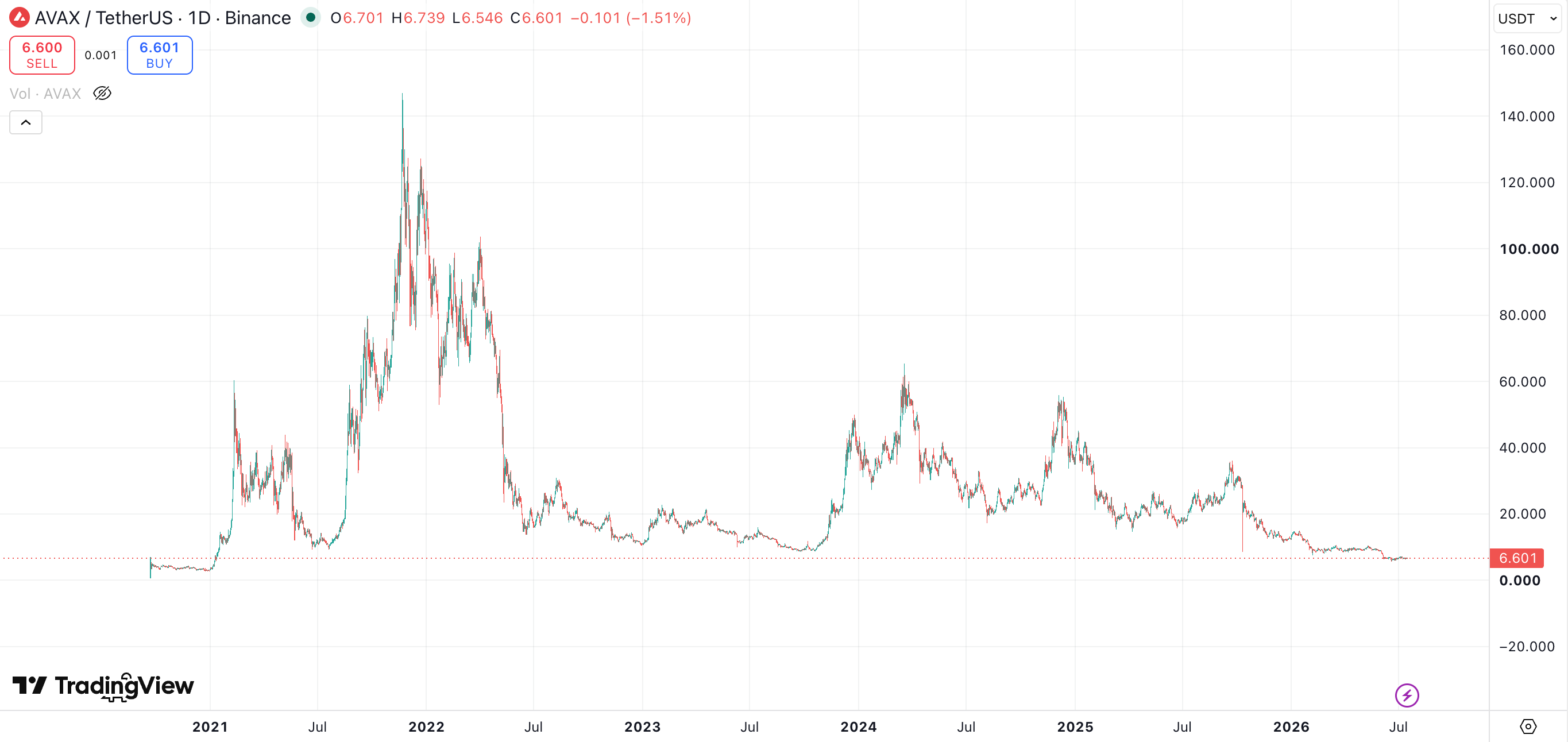


Avalanche's token economic model has not seen major recent adjustments, nor has it introduced buyback and burn mechanisms to stimulate token price. Avalanche L1s are relatively independent chains and do not require AVAX for Gas fees; the activity on the Avalanche C-Chain has not fundamentally changed either. To date, the fee burn based on EIP-1559 has only reduced approximately 5.1 million AVAX, less than 1% of the total supply of 720 million.


But as mentioned earlier, for a team with such strong execution capability, this might just be a temporary trade-off. Reducing the economic burden on partners and granting more autonomy to increase Avalanche's activity levels is the more important direction for now. Hastily introducing buyback and burn mechanisms could reduce the funding flexibility for protocol teams, potentially forcing the Foundation or Ava Labs to sell large amounts of tokens to maintain operations, which would ultimately be detrimental to the protocol's long-term development.

Criptomoedas em alta

Perguntas relacionadas

QAccording to the article, what is Avalanche's primary focus area now, and how does this differ from its previous perception?

AAccording to the article, Avalanche's primary focus area now is Real World Asset (RWA) tokenization and payments, which has become its 'golden hallmark.' This differs from its previous perception, where many people saw it as a blockchain primarily focused on gaming.

QWhat were the key changes introduced by the Avalanche9000 upgrade in December 2024, and how did they benefit RWA development on the network?

AThe key changes of the Avalanche9000 upgrade included: restructuring Subnets into independent Avalanche L1s, replacing the 2000 AVAX staking requirement for L1 validators with a monthly subscription fee of about 1.33 AVAX, and reducing the minimum base Gas fee on the C-Chain by 96%. These changes drastically lowered the cost and increased the autonomy for building dedicated chains, which provided significant convenience for the explosion of RWA tokenization and payments on Avalanche.

QWhat major traditional financial institution used Avalanche for its DLT pilot mechanism authorization, and what significant tokenized assets are linked to this institution on Avalanche?

ASecuritize, which has now listed on the NYSE, obtained EU DLT pilot mechanism authorization and deployed its system on Avalanche. Major tokenized assets linked to Securitize on Avalanche include BlackRock's BUIDL fund, ParaFi's tokenized venture fund, and Apollo's ACRED fund, which form the main source of the $2.1 billion in tokenized RWA assets on Avalanche's mainnet.

QHow does the article explain Avalanche's 'cost-effectiveness' advantage for institutions compared to other EVM-compatible chains and Layer 2 solutions?

AThe article explains that Avalanche is considered highly cost-effective in the EVM-compatible space. Compared to other L1s like Ethereum and BNB Chain, it has a cost advantage. Compared to Layer 2s like Base, Arbitrum, and OP Mainnet, which have comparable costs, Avalanche as an L1 has a clear advantage in transaction 'finality' speed, as L2 transactions need to wait for L1 block confirmations for final settlement.

QWhat recent development involves Avalanche in the payments sector, and which notable collective was formed to advance this ecosystem?

AA recent development in the payments sector involved Hyundai Motor America (HMA) and Hyundai Motor Mexico (HMM) conducting a Proof-of-Concept for cross-border corporate settlement on Avalanche via the Axiym platform. Furthermore, the Avalanche Payments Collective was launched, with 28 institutions including Franklin Templeton, VanEck, and Paxos, aiming to build an ecosystem covering settlement, stablecoins, capital infrastructure, and global payments.

Leituras Relacionadas

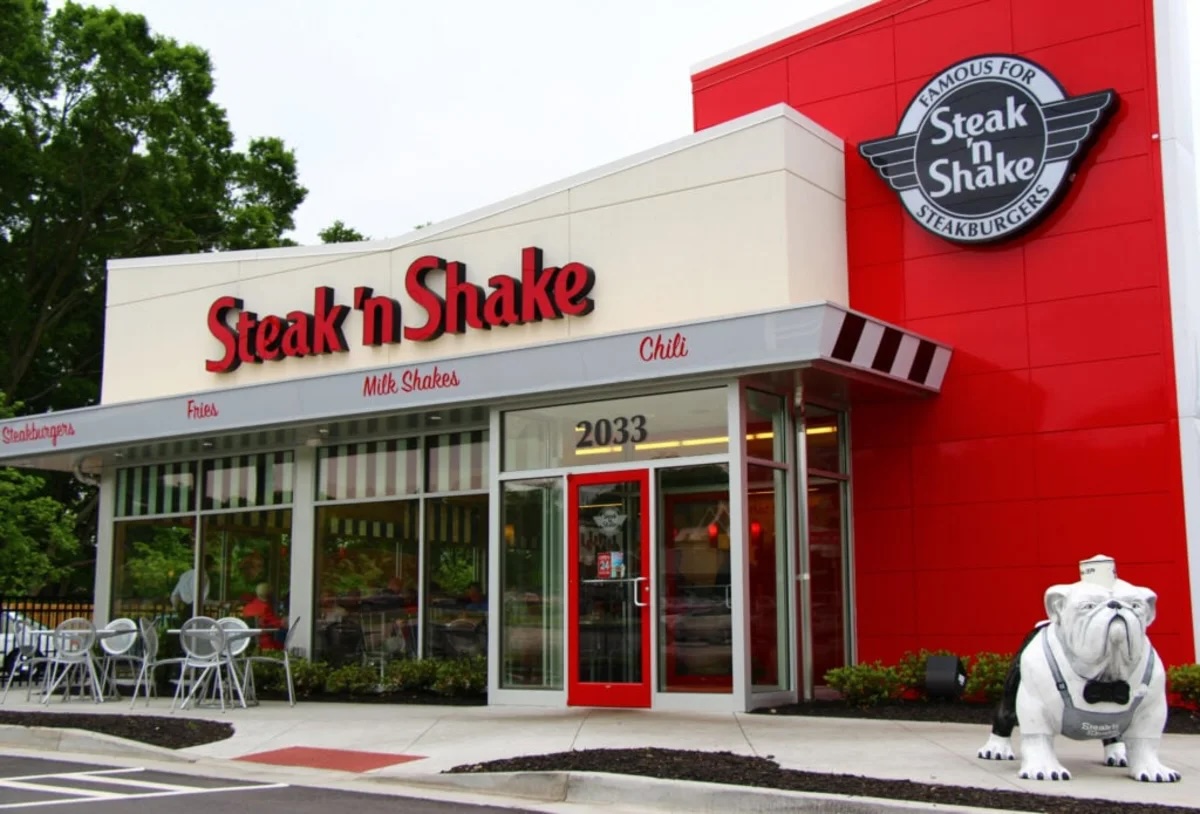
Revenue Soars 16%, Restaurant Chain Credits Bitcoin: Real Growth or PR Stunt?

Steak ’n Shake, a U.S. fast-food chain, attributed a 16% year-over-year increase in July same-store sales partly to its adoption of Bitcoin as a payment method. However, the company has not disclosed key data points, such as the actual number of Bitcoin transactions, total sales volume processed in Bitcoin, or the exact amount saved on payment processing fees. This lack of detailed information makes it difficult to isolate Bitcoin's direct impact on sales growth from other contributing factors like marketing campaigns, menu updates, promotional discounts, and operational changes. While the brand highlights the cost advantage of Bitcoin transactions—estimated to be about 50% cheaper per transaction than credit card fees—it has not provided evidence that a significant volume of sales actually uses this payment method. Steak ’n Shake’s parent company, Biglari Holdings, had already reported strong sales growth earlier in the year, driven by factors such as product upgrades and operational improvements, with no mention of Bitcoin in prior shareholder communications. The article questions whether the primary value of Bitcoin for Steak ’n Shake lies more in its public relations and branding benefits—attracting crypto enthusiasts and generating media attention—rather than in tangible business gains. To validate Bitcoin's role as a genuine growth driver and provide a replicable model for other merchants, the company would need to share comprehensive data, including Bitcoin transaction share, customer retention metrics, and detailed cost savings, allowing for a clearer analysis of its true contribution to revenue.

Foresight NewsHá 19m

Revenue Soars 16%, Restaurant Chain Credits Bitcoin: Real Growth or PR Stunt?

Foresight NewsHá 19m

The Price of DeFi Mass Adoption: Understanding the Profit Distribution and Hidden Risks of Aave Stable Vaults

**Title:** The Price of DeFi Mass Adoption: Understanding Aave Stable Vaults' Profit Distribution and Hidden Risks **Summary:** Aave Labs' new "Stable Vaults" product aims to simplify DeFi for mainstream users by offering fixed yields, a rarity in crypto. The model inserts a middleman layer between users and Aave's underlying lending pools. This layer, often a fintech app or digital bank, absorbs interest rate volatility, guaranteeing users a pre-set stable return while capturing any excess yield from Aave's underlying pools. In exchange for this predictable "peace of mind" and services like customer support and simplified onboarding, users sacrifice potential higher yields and take on new counterparty risks from the operating entity and its infrastructure. The article illustrates this with the example of payroll provider Rise, which transparently passes through most Aave yield, versus the higher profit margins possible through Stable Vaults. While a rational trade-off for many non-expert users prioritizing simplicity and security, the system centralizes risk and obfuscates true market yields. Aave benefits by attracting sticky, non-speculative capital crucial for its long-term economic model, highlighting the industry's shift towards catering to fundamental human preferences for convenience over complex, self-managed financial systems.

Foresight NewsHá 1h

The Price of DeFi Mass Adoption: Understanding the Profit Distribution and Hidden Risks of Aave Stable Vaults

Foresight NewsHá 1h

Trading

Spot

Artigos em Destaque

Como comprar PEOPLE

Bem-vindo à HTX.com!Tornámos a compra de ConstitutionDAO (PEOPLE) simples e conveniente.Segue o nosso guia passo a passo para iniciar a tua jornada no mundo das criptos.Passo 1: cria a tua conta HTXUtiliza o teu e-mail ou número de telefone para te inscreveres numa conta gratuita na HTX.Desfruta de um processo de inscrição sem complicações e desbloqueia todas as funcionalidades.Obter a minha contaPasso 2: vai para Comprar Cripto e escolhe o teu método de pagamentoCartão de crédito/débito: usa o teu visa ou mastercard para comprar ConstitutionDAO (PEOPLE) instantaneamente.Saldo: usa os fundos da tua conta HTX para transacionar sem problemas.Terceiros: adicionamos métodos de pagamento populares, como Google Pay e Apple Pay, para aumentar a conveniência.P2P: transaciona diretamente com outros utilizadores na HTX.Mercado de balcão (OTC): oferecemos serviços personalizados e taxas de câmbio competitivas para os traders.Passo 3: armazena teu ConstitutionDAO (PEOPLE)Depois de comprar o teu ConstitutionDAO (PEOPLE), armazena-o na tua conta HTX.Alternativamente, podes enviá-lo para outro lugar através de transferência blockchain ou usá-lo para transacionar outras criptomoedas.Passo 4: transaciona ConstitutionDAO (PEOPLE)Transaciona facilmente ConstitutionDAO (PEOPLE) no mercado à vista da HTX.Acede simplesmente à tua conta, seleciona o teu par de trading, executa as tuas transações e monitoriza em tempo real.Oferecemos uma experiência de fácil utilização tanto para principiantes como para traders experientes.

511 Visualizações TotaisPublicado em {updateTime}Atualizado em 2026.06.02

Como comprar PEOPLE

Discussões

Bem-vindo à Comunidade HTX. Aqui, pode manter-se informado sobre os mais recentes desenvolvimentos da plataforma e obter acesso a análises profissionais de mercado. As opiniões dos utilizadores sobre o preço de PEOPLE (PEOPLE) são apresentadas abaixo.

活动图片