Artemis Crypto Payment Card Report: $18 Billion Market Size, The Silent Explosion of Crypto Payments

marsbitPublicado em 2026-01-21Última atualização em 2026-01-21

Resumo

Artemis Research reveals that the crypto payments card market has grown into a $18 billion industry, with monthly transaction volumes increasing 15-fold since early 2023. The report breaks down the crypto card stack into three layers: Networks (Visa and Mastercard), Issuers & Program Managers (e.g., Baanx, Bridge), and Consumer Apps (wallets and exchanges like MetaMask and Phantom). Visa dominates with over 90% of on-chain card transaction volume, largely due to early infrastructure partnerships. A key structural shift is the rise of full-stack issuers like Rain and Reap, which now issue cards and settle directly as Visa Principal Members—bypassing sponsor banks for greater control and better economics. Geographic usage varies: In India, crypto cards serve as collateralized credit solutions, while in Argentina, they function as inflation-hedged stablecoin debit cards. In developed markets, crypto cards target high-value users who hold significant stablecoin balances and seek to spend them. The report concludes that as stablecoin adoption grows, crypto cards will scale accordingly, acting as essential infrastructure for bringing digital dollars into the real economy.

Author: Artemis

Compiled by: Deep Tide TechFlow

Deep Tide Guide:

Crypto payments are undergoing a silent "great power shift." The latest research from Artemis shows that the crypto card market has surged from the fringes in early 2023 to a massive $18 billion annualized size, with monthly transaction volume increasing 15-fold in just two years.

This article deconstructs the three layers of the crypto payment stack and reveals a surprising figure: Visa accounts for over 90% of on-chain card transaction volume. More importantly, the industry is experiencing a structural shift towards "full-stack issuance." Companies like Rain and Reap are bypassing traditional banks by connecting directly to Visa, completely rewriting the economic model. From crypto-collateralized credit in India to daily stablecoin payments in Argentina, crypto cards are becoming key infrastructure for bringing digital dollars into the real world.

Full text as follows:

Big news: We just released the industry's most detailed research report on Crypto Cards.

Not because it's a niche market, but because it has quietly grown into an $18 billion market. In early 2023, monthly transaction volume for crypto cards was only around $100 million. Today, that number has exceeded $1.5 billion.

To do this, we spent weeks digging deep into the data, the infrastructure, and the companies actually building this stack. Here are our key findings:
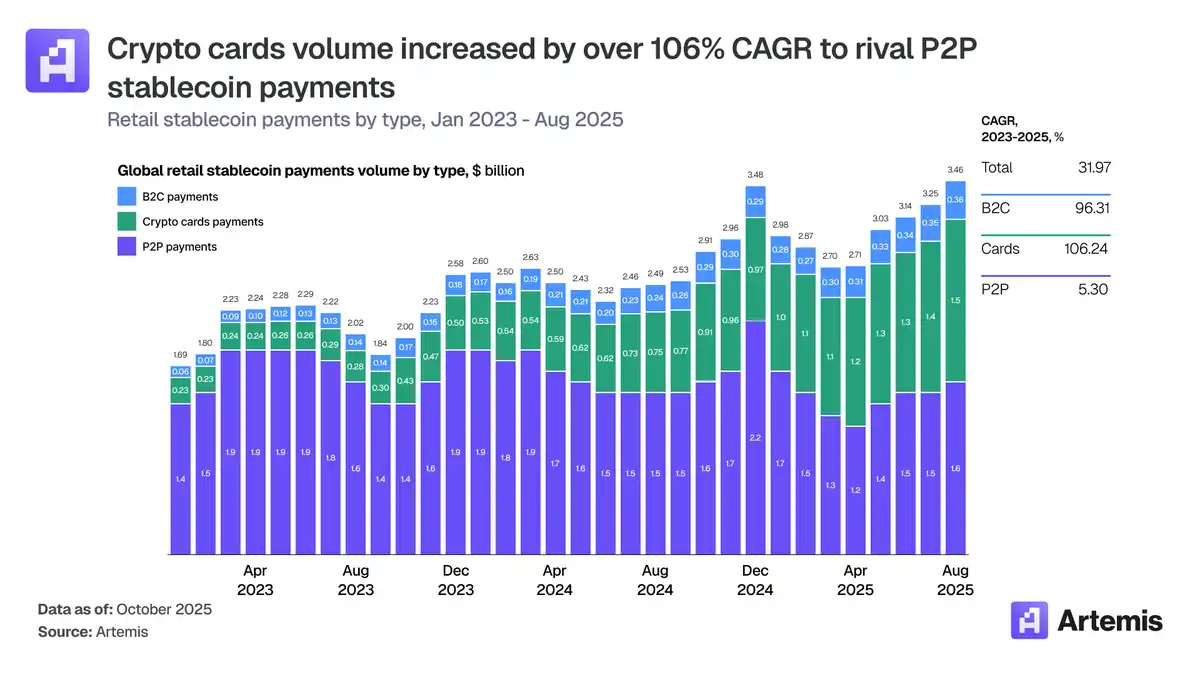
First, let's look at what's actually happening. Crypto cards aren't about replacing Visa or Mastercard; they're about leveraging them.

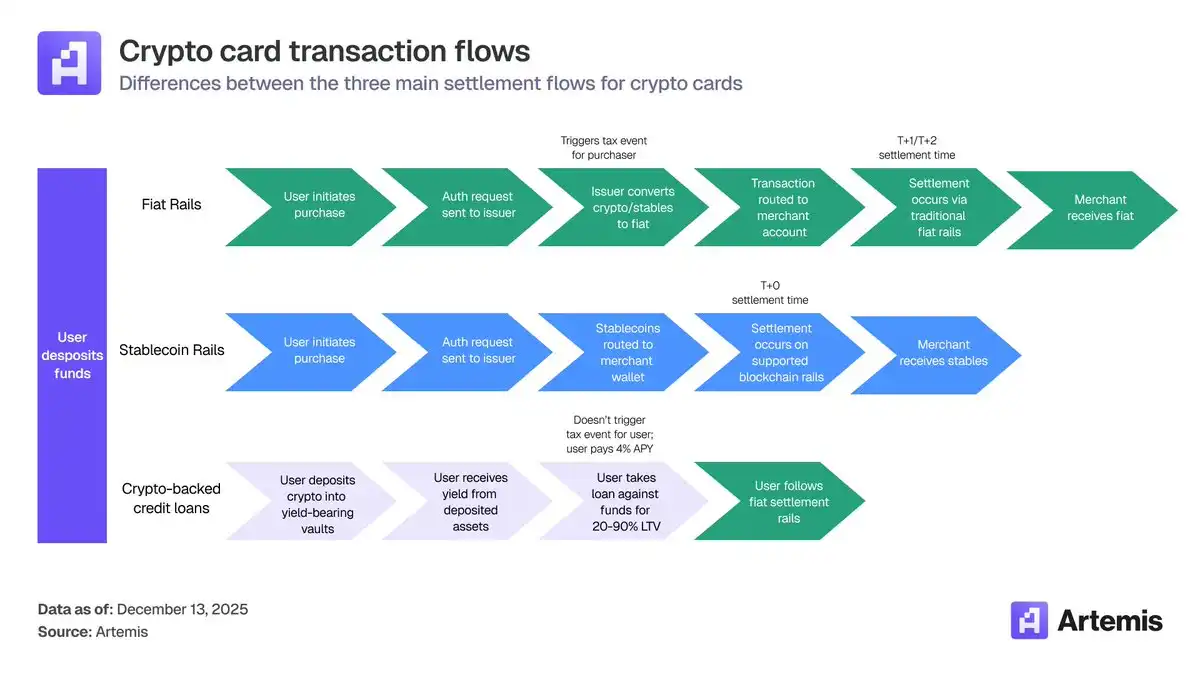
Stablecoins fund the transactions, and Cards provide the merchant acceptance environment.
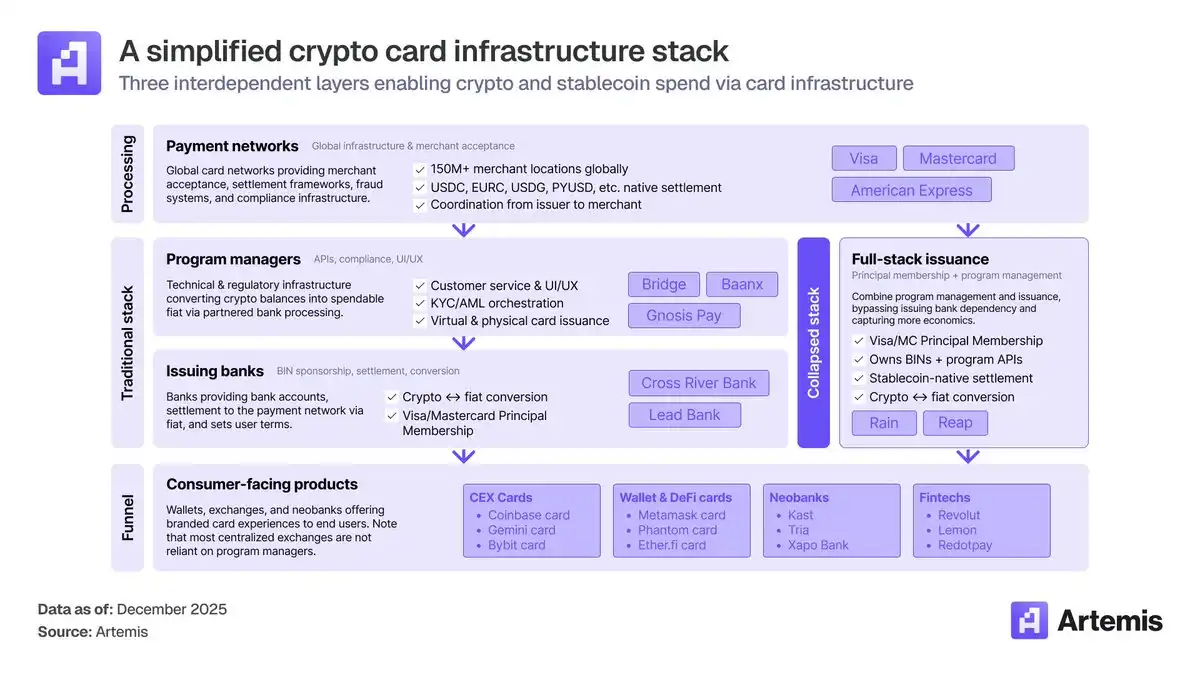
The stack is divided into 3 layers:

  • Network Layer: Visa, Mastercard
  • Issuers & Program Managers Layer: Baanx, Bridge, etc.
  • Consumer Apps Layer: Wallets, Exchanges (e.g., MetaMask, Phantom)

This is precisely where the power struggle is most intense.
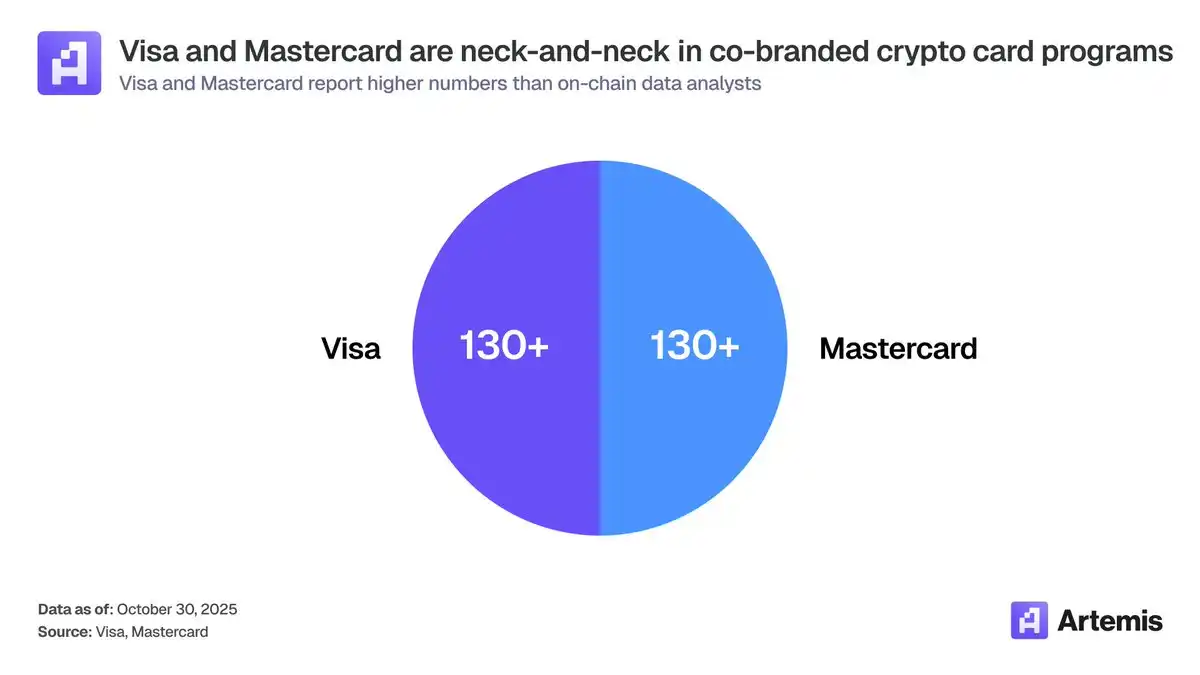
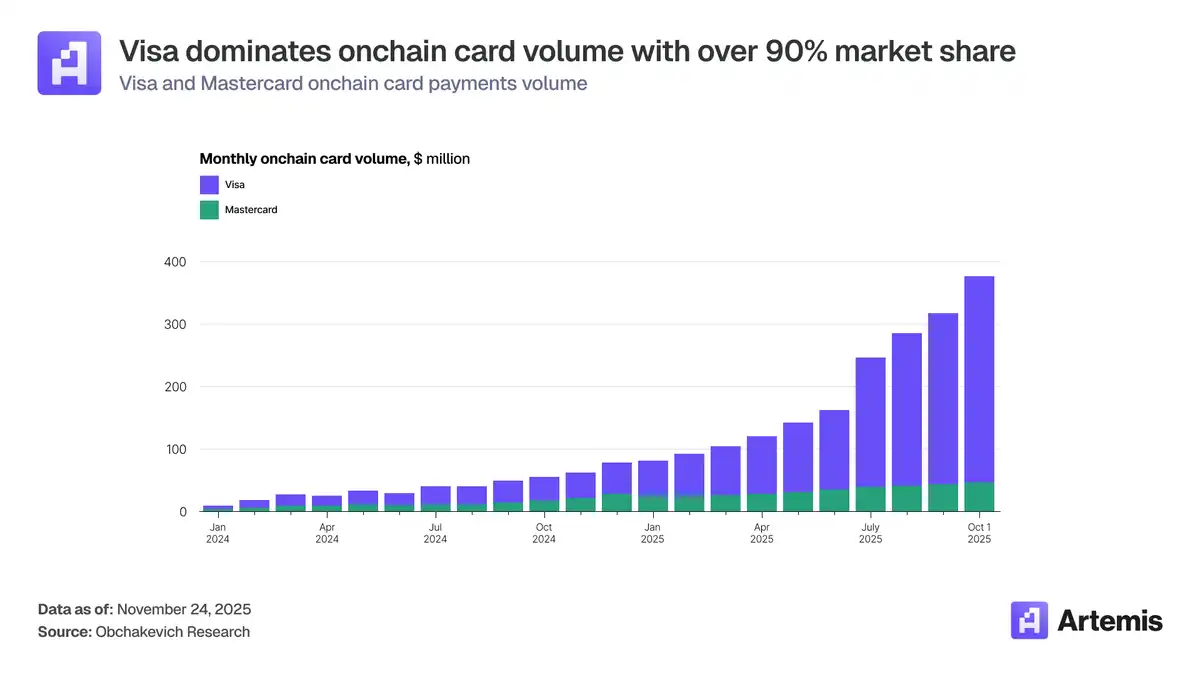
Although both Visa and Mastercard each have over 130 crypto partnerships...

Visa accounts for over 90% of on-chain card transaction volume. The reason lies in its early and deep partnerships with the Infrastructure Layer.
The biggest structural shift: Full-stack issuers.

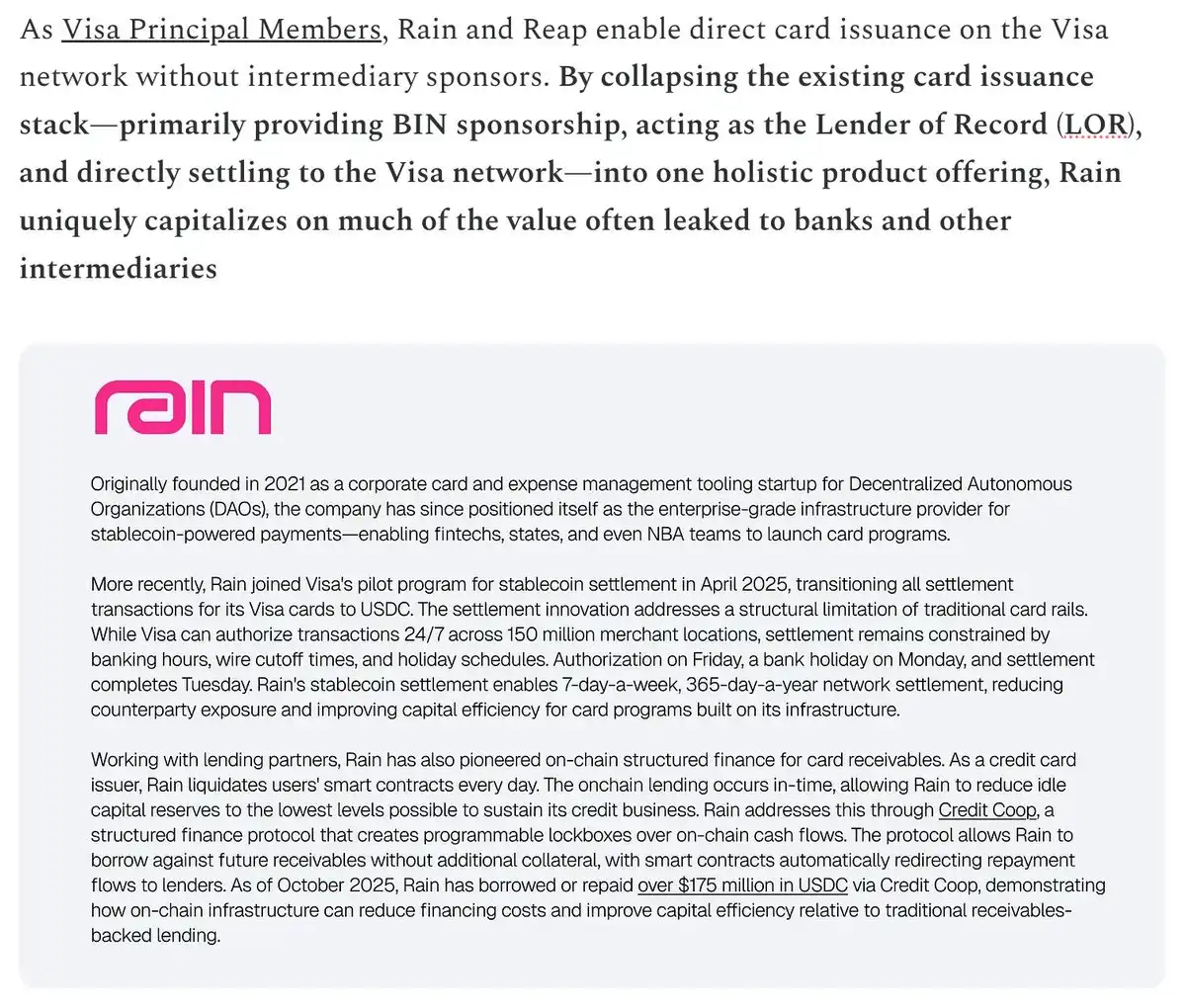
Companies like Rain and Reap can now issue cards and settle directly as Visa Principal Members.

No sponsor bank needed. More control. Better economics.
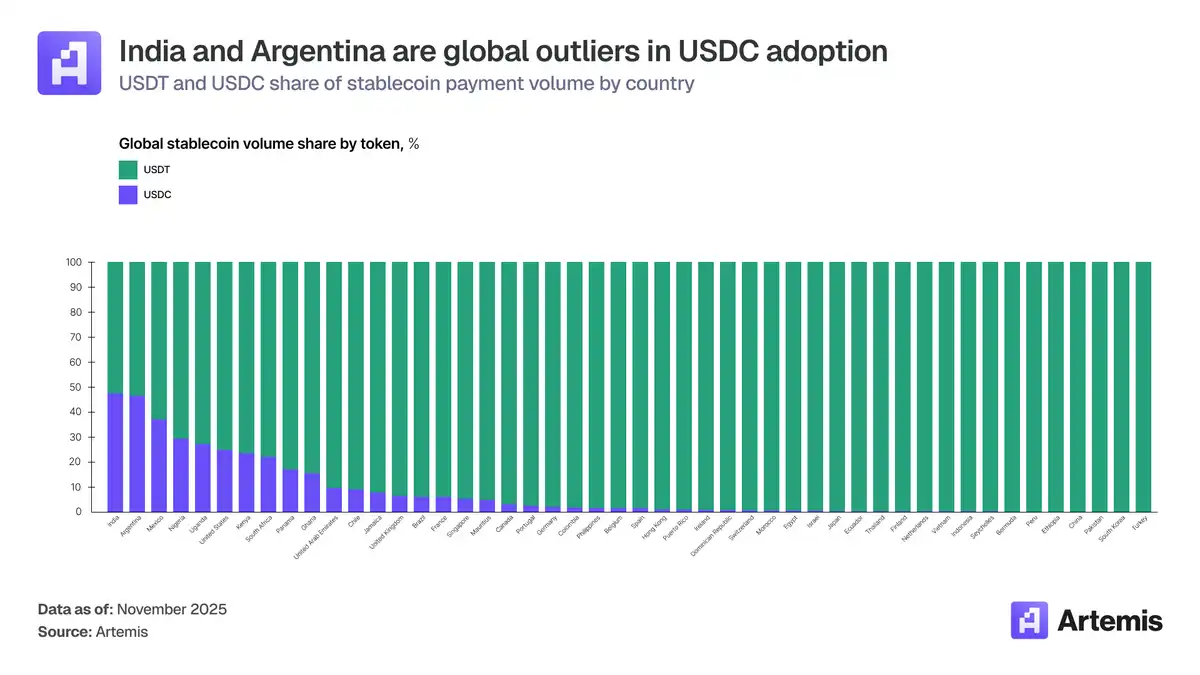
Geographic distribution reveals the real use cases. India: With $338 billion in cryptocurrency inflows. The opportunity here is crypto-collateralized credit (because UPI has already won in debit payments). Argentina: The practical application is stablecoin debit cards as an inflation hedge.
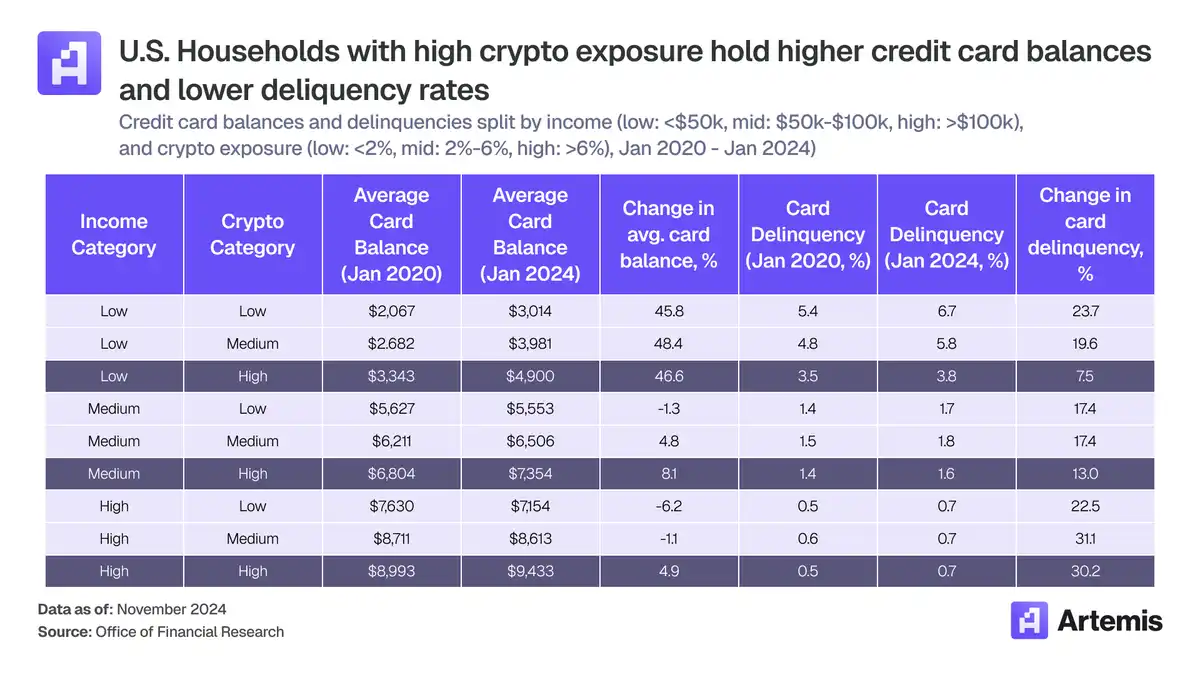
In developed markets, crypto cards don't solve a "critical need."

They target a new, high-value user base: those who already hold significant stablecoin balances and want to spend them.
Our view is simple: Stablecoins will continue to grow, and crypto cards will scale accordingly.

They are the infrastructure for bringing digital dollars into the real world.

This post is just the key highlights. Read the full report for the complete deep dive.
Leituras Relacionadas

Once-Popular Web3 Enters Wave of Layoffs

The once-hot Web3 industry is experiencing a severe wave of layoffs. While many companies attribute job cuts to AI-driven restructuring, the primary reason is often financial pressure. The Web3 sector, at the intersection of tech and finance, has been hit particularly hard. Employees at major cryptocurrency exchanges report sudden, impersonal layoffs—often with system access revoked overnight—and minimal or no severance. Common tactics include setting impossible performance targets or terminating employees for minor policy violations. The working atmosphere has become toxic, marked by intense monitoring, excessive meetings, and management obsessed with control and internal politics rather than product innovation. The industry's core business model is collapsing. Exchange revenue from trading fees and listing charges has plummeted due to a decline in quality projects and retail investor exodus. Events like the massive forced liquidation on October 10th further shattered confidence. Competition from on-chain derivatives platforms and prediction markets is intensifying the downturn. As layoffs continue, displaced workers struggle to find new opportunities. Many transition to the AI sector, but face significant bias from traditional finance and even some AI firms, which view crypto industry experience with suspicion. The current downturn appears more structural than cyclical, driven by unsustainable practices, internal strife, and a failure to innovate, raising questions about the industry's future trajectory.

marsbitHá 46m

Once-Popular Web3 Enters Wave of Layoffs

marsbitHá 46m

Sales Drop 26% But Prices Rise? Xiaomi's Dilemma

Xiaomi, facing a significant 26.3% year-on-year decline in global smartphone shipments in Q2 2026, has implemented its third price hike of the year. On August 2nd, prices were raised for nine models, including the flagship Mi 17 series (up 400-500 yuan) and Redmi K90/Turbo 5 series (up 300 yuan). This move completes a pattern where cost pressure, originating from surging memory chip prices, has climbed from entry-level to mid-range and now flagship products. The primary driver is a severe supply squeeze on consumer-grade DRAM and NAND flash memory, as major manufacturers like Samsung shift advanced capacity to more profitable HBM for AI applications. According to Xiaomi President Lu Weibing, memory prices for the same configuration have skyrocketed nearly fourfold since Q1 2025, adding roughly 1500 yuan to the cost of a mainstream 12GB+512GB phone. IDC estimates consumer memory costs have risen nearly 300% year-on-year. While the price increases hurt demand and contributed to the sales slump, Xiaomi's strategy of reducing entry-level models and upgrading its product mix also played a role. Domestically, its market share in China fell to 12% (5th place), while leaders Huawei and Apple saw shipments grow over 24%. To mitigate future risks, Xiaomi is accelerating its in-house "Surge" chip development and optimizing memory configurations across its lineup. Xiaomi is not alone; major brands like OPPO, vivo, and Apple have already raised prices in 2026, with industry insiders predicting another round of increases (200-800 yuan) in the second half. A full-scale industry-wide涨价 cycle is underway, forcing both manufacturers and consumers to recalibrate their strategies and purchasing decisions amid sustained cost pressures.

marsbitHá 57m

Sales Drop 26% But Prices Rise? Xiaomi's Dilemma

marsbitHá 57m

Trading

Spot
活动图片