Arizona lawmaker proposes barring taxes on crypto and blockchain

cointelegraphPublicado em 2025-12-22Última atualização em 2025-12-22

Resumo

Arizona State Senator Wendy Rogers has introduced two bills and a resolution to change how digital assets are taxed in the state. The proposals include exempting virtual currency from taxation (SB 1044), preventing local governments from taxing or fining blockchain node operators (SB 1045), and amending the state constitution to exclude digital assets from property tax (SCR 1003). While the node bill may pass through the legislature, the tax exemption and constitutional change would require voter approval in the 2026 general election. Arizona is among a small group of states, including New Hampshire and Texas, with laws establishing digital asset reserve policies. The move follows broader U.S. state-level efforts to create supportive regulatory frameworks for cryptocurrency.

Arizona state Senator Wendy Rogers has proposed two bills and a resolution in an effort to change the state’s laws on taxing digital assets.

In legislation prefiled with the Arizona Senate on Friday, Rogers proposed amending state statues to exempt virtual currency from taxation (SB 1044), barring counties, cities and towns from taxing or fining entities running blockchain nodes (SB 1045), and amending the state constitution’s definition of property taxes to clarify rules on digital assets (SCR 1003).

The blockchain node bill may move through the state legislature, but the crypto tax bill and resolution would require a vote by Arizona voters during the next general election, in November 2026.

SCR 1003 would amend Arizona’s constitution to specifically exclude virtual currency from property tax, while SB 1044 would add similar language to the state’s statutes. SB 1045 would prohibit cities, towns and counties in the state from imposing “a tax or fee on a person that runs a node on blockchain technology.”
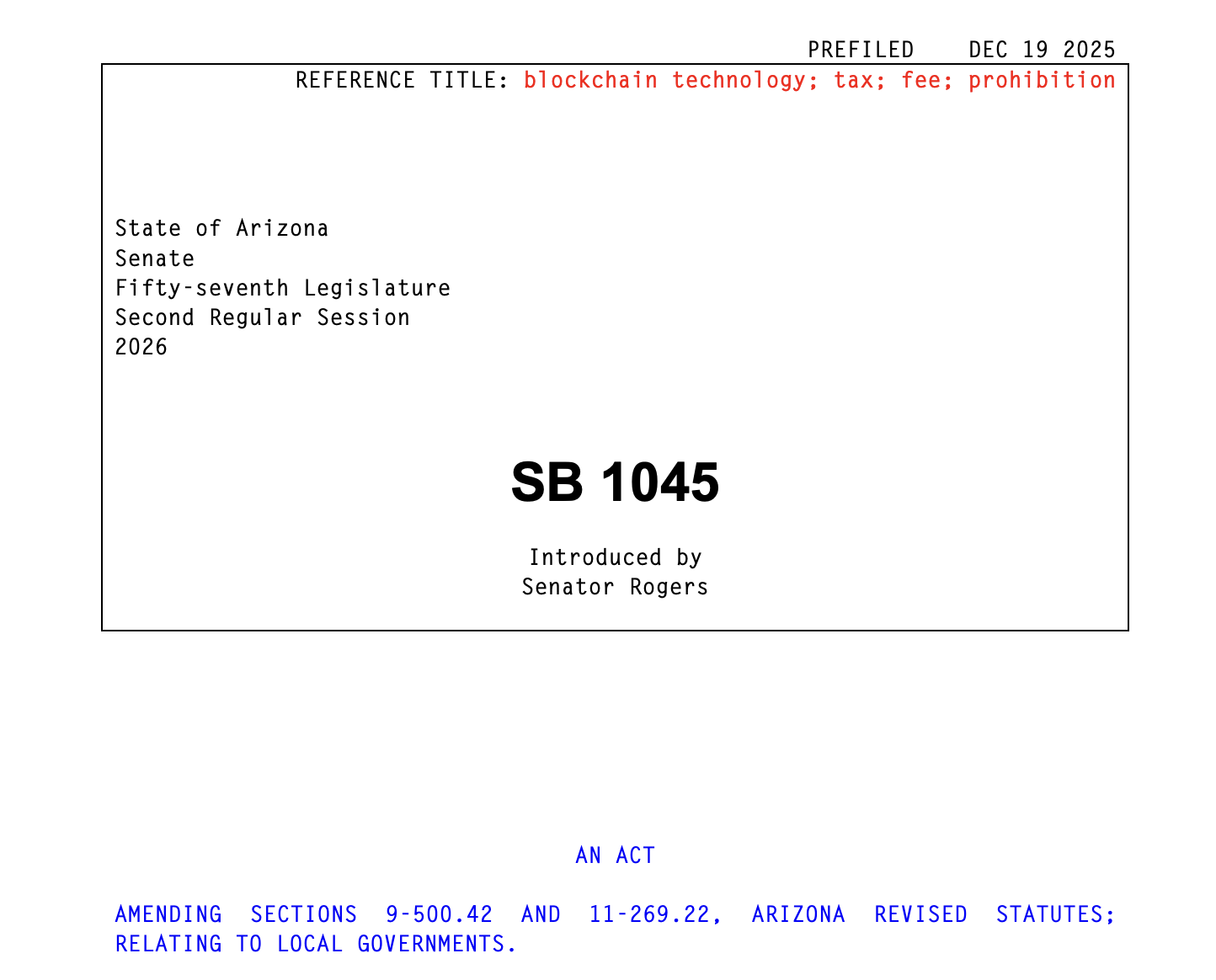
Bill barring cities or towns from taxing blockchain node activity: Source: Arizona legislature

Arizona is one of the few US states that has a law on the books allowing the government to claim ownership of digital assets that have been abandoned for at least three years. The law was part of efforts by crypto advocates to establish a digital asset reserve in Arizona, but there are other proposals to give the state more authority to invest in cryptocurrencies like Bitcoin (BTC).

Related: New Hampshire governor signs crypto reserve bill into law

Rogers was one of the co-sponsors of a Bitcoin reserve bill vetoed by Arizona Governor Katie Hobbs in May. The senator condemned the move and said she would refile the bill during the next session. Cointelegraph reached out to Rogers for comment but had not received a response at the time of publication.

US states adopt crypto reserve bills, different digital asset policies

Arizona remains one of the few US states with a law establishing a digital asset reserve, along with New Hampshire and Texas. Although some lawmakers in other states have been attempting to gather support for similar bills, there are also many suggesting a different approach to digital asset taxation.

For example, Ohio’s House of Representatives passed a bill that could exempt crypto transactions under $200 from the state’s capital gain taxes. The legislation does not appear to have advanced since June.

New York Assemblymember Phil Steck proposed adding a 0.2% excise tax on “digital asset transactions, including the sale or transfer of digital assets” for the state’s residents. The bill was referred to the ways and means committee and did not appear to have advanced since August.

At the federal level, Wyoming Senator Cynthia Lummis submitted a draft bill in July proposing a de minimis exemption for digital asset transactions and capital gains of $300 or less. Lummis announced on Friday that she would retire from the US Senate in January 2027.

Magazine: When privacy and AML laws conflict: Crypto projects’ impossible choice

Perguntas relacionadas

QWhat are the three legislative actions proposed by Arizona state Senator Wendy Rogers regarding digital assets?

ASenator Wendy Rogers proposed two bills and one resolution: SB 1044 to exempt virtual currency from taxation, SB 1045 to bar counties, cities, and towns from taxing or fining blockchain node operators, and SCR 1003 to amend the state's constitution to clarify property tax rules for digital assets.

QWhich of Senator Rogers' proposals would require a vote by Arizona voters in the 2026 general election?

AThe crypto tax bill (SB 1044) and the resolution to amend the state constitution (SCR 1003) would require a vote by Arizona voters in the November 2026 general election.

QWhat does SB 1045 specifically prohibit local governments in Arizona from doing?

ASB 1045 prohibits cities, towns, and counties in Arizona from imposing a tax or fee on any person running a node on blockchain technology.

QWhich other US states have laws establishing a digital asset reserve, similar to Arizona?

ANew Hampshire and Texas are the other US states that have laws establishing a digital asset reserve, similar to Arizona.

QWhat federal-level proposal did Wyoming Senator Cynthia Lummis make regarding digital asset transactions in July?

AIn July, Wyoming Senator Cynthia Lummis submitted a draft bill proposing a de minimis exemption for digital asset transactions and capital gains of $300 or less at the federal level.

Leituras Relacionadas

Bitcoin Withdrawals Continue: 8 Years of Storage in a Coldcard Cold Wallet Ended in Zero

Coldcard Hardware Wallet Hacked: Losses Mount Due to Vulnerable Seed Generation A critical vulnerability in Coldcard hardware wallets has led to a continued wave of fund thefts. According to Galaxy Research, the total stolen has reached 1,367.05 BTC (approx. $88.6 million) from 4,585 addresses, a significant increase from the initial 594.5 BTC reported on July 30, 2026. Most of the stolen funds remain on the attackers' addresses. The issue is not with the current firmware, which Coinkite has updated, but with seed phrases generated on vulnerable devices between March 2021 and the release of fixed firmware versions. Due to a programmer error, devices switched from using a hardware random number generator to the software-based Yasmarang generator, which was initialized with publicly accessible data like the chip's serial number. This made the seed phrases predictable through offline brute-force attacks, meaning wallets remain at risk until funds are moved to a new wallet generated with the patched firmware. Affected devices include Mk2/Mk3 with firmware 4.0.1–4.1.9 (and up to 5.0.3), Mk4/Mk5 up to version 5.6.0, and Q models up to 1.5.0Q. The only exceptions are seeds created with a high-entropy method like at least 50 independent dice rolls or a strong unique BIP-39 passphrase. All other owners must generate a new seed on the fixed firmware and transfer their assets. A case highlighting the human impact involves a 39-year-old long-term investor who lost 2 BTC (approx. $130,000) in minutes. He had accumulated the Bitcoin over eight years through physical labor, viewing it as a financial lifeline and a retirement plan in a country suffering from hyperinflation. His story underscores that even conservative "buy and hold in cold storage" strategies can be compromised by such underlying technical flaws. From a technical perspective, this incident echoes historical failures where weak random number generators undermined cryptographic security, challenging the assumption that offline storage is automatically foolproof.

cryptonews.ruHá 2h

Bitcoin Withdrawals Continue: 8 Years of Storage in a Coldcard Cold Wallet Ended in Zero

cryptonews.ruHá 2h

Trading

Spot
活动图片