Are People Who Hold Cryptocurrency Really Filing Taxes?

marsbitPublicado em 2026-04-15Última atualização em 2026-04-15

Resumo

A study analyzing IRS data from 2013 to 2021 suggests that many cryptocurrency investors in the U.S. may be evading taxes. Researchers found that only 6.5% of taxpayers reported crypto transactions during this period, despite surveys indicating that 12–21% of American adults held crypto. The study, published in a Springer Nature accounting journal, describes crypto investors as typically having lower incomes, being younger, and more likely to invest in meme stocks compared to traditional investors. Many also trade without considering tax implications, possibly due to a lack of expertise or the highly volatile nature of cryptocurrencies. However, stricter IRS reporting rules are set to take effect in 2026, requiring exchanges like Coinbase to issue tax forms and potentially improving compliance.

Written by: Olga Kharif

Compiled by: Saoirse, Foresight News

The Internal Revenue Service building in Washington, D.C. Photographer: Eric Lee / Bloomberg

Tyler Menzer says that to gain a deeper understanding of the situation of cryptocurrency investors, he has been sifting through IRS data for several years and has concluded that these investors may be deliberately evading taxes.

Just like a widely circulated internet meme from a few years ago—the late Arizona Cardinals coach Dennis Green once angrily said about a winning opponent, "They are who we thought they were!"—when it comes to fulfilling tax obligations to Uncle Sam, the typical cryptocurrency player is probably the same. (Meaning, as expected, cryptocurrency players don't want to pay taxes to the IRS.)

Tyler Menzer is an assistant professor in the accounting department at the Neely School of Business at Texas Christian University and has access to millions of anonymous taxpayer data provided by the IRS for research. He and his co-authors of a recently published study found that, at least from 2013 to 2021, very few taxpayers reported cryptocurrency transactions on their tax returns; even when they did, this group was significantly different from traditional stock investors.

"Cryptocurrency holders are more likely to hold meme stocks than other investors," Menzer said in an interview. "They are younger and likely have lower incomes. The core conclusion of our paper is that this is a distinct group of taxpayers and investors. Their trading methods are different, and their compliance performance may also be different. Many are probably not reporting their crypto assets to the IRS."
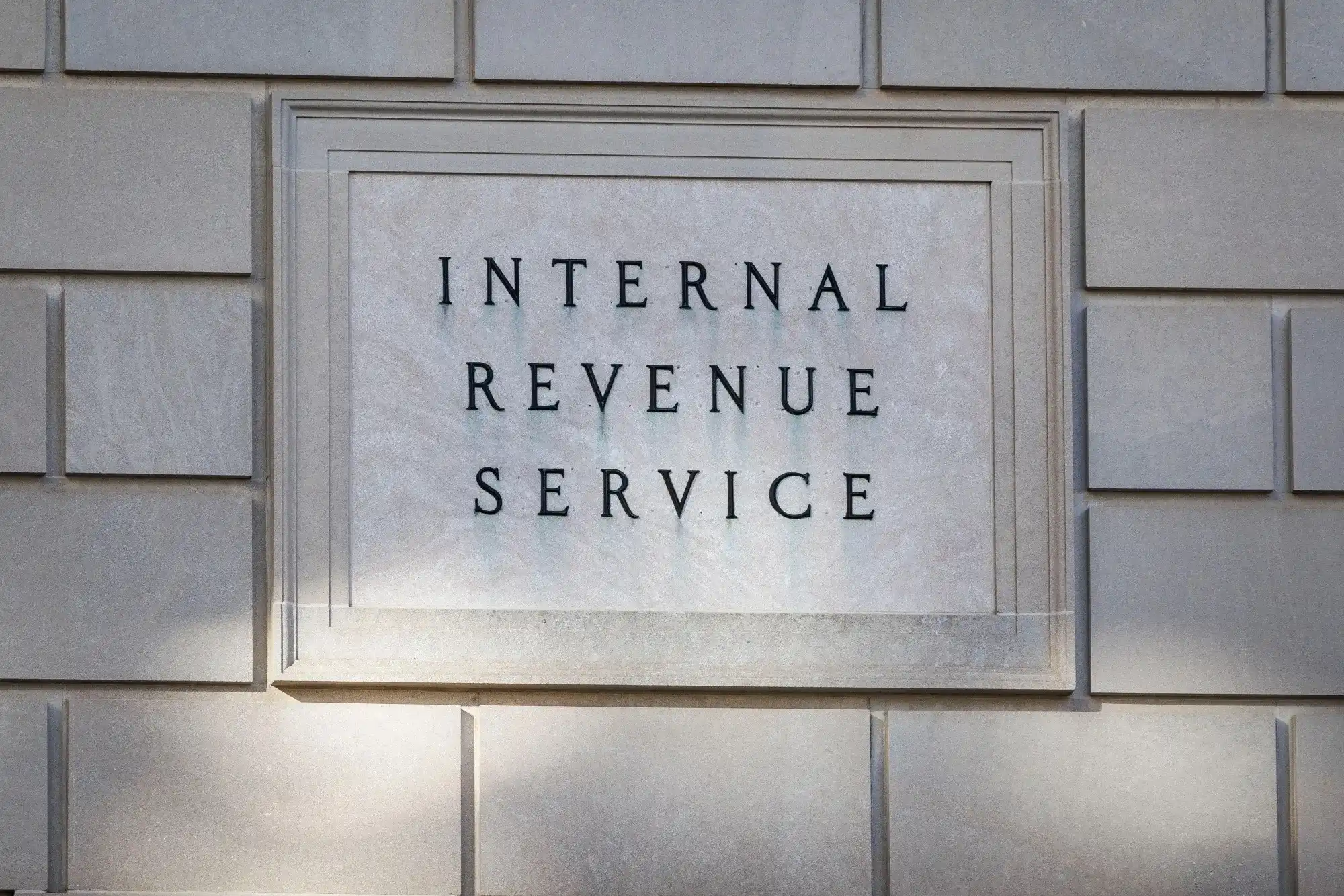
The Internal Revenue Service building in Washington, D.C. Photographer: Samuel Corum / Bloomberg

Other surveys and studies show that by 2021, about 12% to 21% of U.S. adults had held cryptocurrency, but Menzer and his team found that only 6.5% had reported cryptocurrency transactions to the IRS. The study's timeframe predates the approval of U.S. ETFs to hold physical cryptocurrencies in early 2024, a policy that has since completely reshaped the overall investor landscape.

The paper, titled "Who Reports Cryptocurrency to the IRS?", was co-authored by University of North Carolina at Chapel Hill professor Jeffrey Hoopes, Tyler Menzer, and University of Iowa accounting professor Jaron Wilde. It was published in March of this year in the accounting research journal under Springer Nature. The research primarily focused on Bitcoin and Ethereum transactions.

The IRS did not immediately respond to a request for comment.

Data from cryptocurrency investment tracking and tax compliance software company CoinTracker shows that in 2025, digital asset accounts held for less than one year averaged a loss of $636; transactions for assets held for more than one year averaged a profit of $2,692. In the 2025 tax year, cryptocurrency investors averaged 836 transactions that required tax reporting.

Cryptocurrency traders also often sell their holdings without considering the tax implications at all, a phenomenon Menzer attributes to a lack of investor sophistication and the high volatility of crypto assets themselves. The market bellwether Bitcoin has fallen about 40% since hitting an all-time high in October. Many traditional stock investors, however, deliberately time their sales to qualify for lower tax rates.

However, this situation is about to change soon. The IRS has tightened reporting requirements for the 2026 tax year, moving cryptocurrency regulation closer to the stock market system. U.S. exchanges like Coinbase are required to issue transaction forms, and taxpayers must truthfully report whether they hold cryptocurrency, regardless of whether they receive the new Form 1099-DA. Rules regarding wash sales and other compliance loopholes are also under review.

style="text-align: start;">Whether the libertarian anti-tax sentiment that has prevailed in the crypto space since its inception can persist remains to be seen, especially as tax day approaches.


Criptomoedas em alta

Perguntas relacionadas

QWhat did Tyler Menzer and his co-authors discover about cryptocurrency investors and tax filing from 2013 to 2021?

AThey discovered that very few taxpayers reported cryptocurrency transactions on their tax returns during this period. Even when they did, this group was distinctly different from traditional stock investors, with characteristics such as being younger, having potentially lower incomes, and being more likely to hold meme stocks. The core conclusion was that this is a distinct group of taxpayers and investors who are likely non-compliant, with many probably not reporting their crypto assets to the IRS.

QAccording to the article, what percentage of US adults had held cryptocurrency by 2021, and what percentage actually reported it to the IRS?

AVarious surveys and studies showed that between 12% to 21% of US adults had held cryptocurrency by 2021. However, the research by Menzer and his team found that only 6.5% of people reported cryptocurrency transactions to the IRS.

QWhat changes is the IRS implementing for the 2026 tax year regarding cryptocurrency reporting?

AThe IRS is tightening reporting requirements for the 2026 tax year to bring cryptocurrency regulations more in line with the stock market. US exchanges like Coinbase will be required to issue new 1099-DA forms, and taxpayers must report whether they hold cryptocurrency, regardless of whether they receive this form. Rules regarding wash sales and other compliance loopholes are also under consideration.

QHow did the profitability of cryptocurrency investments differ based on holding period in 2025, according to CoinTracker?

AAccording to CoinTracker data from 2025, digital asset accounts held for less than one year averaged a loss of $636. In contrast, assets held for more than one year averaged a profit of $2,692.

QWhat reason does Tyler Menzer suggest for why cryptocurrency traders often sell their holdings without considering the tax implications?

AMenzer attributes this behavior to a combination of investor inexperience and the highly volatile nature of the crypto assets themselves, which can lead to impulsive trading decisions without regard for tax consequences.

Leituras Relacionadas

The Verdict in Choi Tae-won's Divorce Case: Revealing the Inheritance Undercurrent Behind SK Hynix's Trillion-Won Empire

SK Group Chairman Chey Tae-won's high-profile divorce case, involving a record 1.38 trillion won settlement, has drawn attention to the succession plans for Korea's second-largest conglomerate, especially its crown jewel, SK hynix. Unlike traditional chaebol scripts centered on the eldest son, Chey's three children from his marriage to former President Roh Tae-woo's daughter, Roh Soh-yeong, are carving distinct, non-traditional paths. Eldest daughter Chey Yun-jung (b. 1989) is seen as the most evident successor. With a scientific and consulting background, she holds executive roles at SK bioscience and SK Inc.'s growth support department, focusing on future strategy and biopharma. Her marriage is to an AI infrastructure entrepreneur, not a traditional business alliance. Second daughter Chey Min-jung (b. 1991) took a unique route, voluntarily serving as a South Korean naval officer, including an anti-piracy deployment. She later worked on policy and strategy for SK hynix in Washington D.C. before co-founding an AI-driven healthcare startup. She married a former U.S. Marine Corps officer, connecting her to U.S. defense and policy circles—networks crucial for a global semiconductor giant. The only son, Chey In-geun (b. 1995), who studied physics like his father, worked briefly at SK E&S before joining McKinsey. Despite fitting the traditional "heir" profile as the eldest son, he remains silent and holds no public position or shares in SK, suggesting the old succession playbook is obsolete. As SK hynix's valuation soars, becoming a geopolitical asset in the AI era, the heirs' legitimacy is no longer automatic. They must prove themselves in fields like AI biotech, global policy, and strategic consulting. Their marriages also reflect new elite networks in tech and defense, not old political alliances. Their inheritance is the complex challenge of navigating a globalized, tech-driven world, not just a corporate throne.

marsbitHá 11h

The Verdict in Choi Tae-won's Divorce Case: Revealing the Inheritance Undercurrent Behind SK Hynix's Trillion-Won Empire

marsbitHá 11h

From OpenSea to OpenRouter: Is Alex Atallah Repeating His 'Exit at the Peak' Playbook?

From OpenSea to OpenRouter: Is Alex Atallah Repeating His "Exit at the Peak" Playbook? According to the Wall Street Journal, payments giant Stripe is in talks to acquire the AI model aggregation platform OpenRouter in a potential deal valuing the company near $100 billion. This would mark founder Alex Atallah's second creation of a company reaching a $100 billion valuation, following his co-founding of NFT marketplace OpenSea. OpenRouter, founded just over three years ago, has grown rapidly by acting as a unified gateway for developers to access over 400 AI models. It currently has about 10 million users and processes over 200 trillion tokens monthly. While the platform's annualized revenue is around $50 million, its valuation has skyrocketed from $1.3 billion in March 2026. The potential acquisition by Stripe, a company OpenRouter's founder once likened it to, represents a major expansion into AI infrastructure for the payments leader. This move echoes Atallah's previous timing with OpenSea, where he departed before the NFT market's significant downturn. For OpenRouter, selling now may be strategic. Despite its scale, its business model—charging a 5-5.5% fee on AI inference calls—faces pressure from competition, open-source models, and potential price wars among model providers, limiting its profitability narrative for an IPO. A key asset for potential acquirers like Stripe is OpenRouter's vast repository of real-world AI usage data, which offers unique insights into model performance and developer preferences that are difficult to replicate. Whether this potential deal signifies a new valuation benchmark for AI infrastructure or another market peak signal remains to be seen.

链捕手Há 11h

From OpenSea to OpenRouter: Is Alex Atallah Repeating His 'Exit at the Peak' Playbook?

链捕手Há 11h

Trading

Spot

Artigos em Destaque

Como comprar PEOPLE

Bem-vindo à HTX.com!Tornámos a compra de ConstitutionDAO (PEOPLE) simples e conveniente.Segue o nosso guia passo a passo para iniciar a tua jornada no mundo das criptos.Passo 1: cria a tua conta HTXUtiliza o teu e-mail ou número de telefone para te inscreveres numa conta gratuita na HTX.Desfruta de um processo de inscrição sem complicações e desbloqueia todas as funcionalidades.Obter a minha contaPasso 2: vai para Comprar Cripto e escolhe o teu método de pagamentoCartão de crédito/débito: usa o teu visa ou mastercard para comprar ConstitutionDAO (PEOPLE) instantaneamente.Saldo: usa os fundos da tua conta HTX para transacionar sem problemas.Terceiros: adicionamos métodos de pagamento populares, como Google Pay e Apple Pay, para aumentar a conveniência.P2P: transaciona diretamente com outros utilizadores na HTX.Mercado de balcão (OTC): oferecemos serviços personalizados e taxas de câmbio competitivas para os traders.Passo 3: armazena teu ConstitutionDAO (PEOPLE)Depois de comprar o teu ConstitutionDAO (PEOPLE), armazena-o na tua conta HTX.Alternativamente, podes enviá-lo para outro lugar através de transferência blockchain ou usá-lo para transacionar outras criptomoedas.Passo 4: transaciona ConstitutionDAO (PEOPLE)Transaciona facilmente ConstitutionDAO (PEOPLE) no mercado à vista da HTX.Acede simplesmente à tua conta, seleciona o teu par de trading, executa as tuas transações e monitoriza em tempo real.Oferecemos uma experiência de fácil utilização tanto para principiantes como para traders experientes.

548 Visualizações TotaisPublicado em {updateTime}Atualizado em 2026.06.02

Como comprar PEOPLE

Discussões

Bem-vindo à Comunidade HTX. Aqui, pode manter-se informado sobre os mais recentes desenvolvimentos da plataforma e obter acesso a análises profissionais de mercado. As opiniões dos utilizadores sobre o preço de PEOPLE (PEOPLE) são apresentadas abaixo.

活动图片