Analysis: HYPE at $37 Current Price, Still Undervalued in a Bear Market

marsbitPublicado em 2026-03-14Última atualização em 2026-03-14

Resumo

Analysis: HYPE at $37 is undervalued even in a bear market. Hyperliquid's 2025 revenue is 15% of CME's, yet its market cap is only 10% of CME's. The market is not pricing in the trillion-dollar TAM potential from HIP-3, which enables permissionless perpetual contracts for any asset. The Iran war weekend served as a stress test, with Hyperliquid's oil futures providing real-time global pricing while CME was closed. A four-scenario DCF model shows that even in a bear case (0.01% capture of the $1.74T daily TAM), HYPE's implied price is $60—well above the current $37. This suggests the base exchange business alone is undervalued. The base case (0.10% capture) implies $72, and the bull case (0.50% capture) implies $124. HIP-3 already contributes ~10% of fees just five months after launch. Hyperliquid's liquidity depth, execution quality, and lack of US-centric regulatory dependency strengthen its position. With a P/S ratio of 10-13x vs. traditional exchanges at 20-25x, HYPE is poised for re-rating as it captures migrating traditional finance volume.

Author: DCo (@Decentralisedco)

Compiled by: Deep Tide TechFlow

Deep Tide Guide: Hyperliquid's 2025 revenue is 15% of CME's, but its market cap is only 10% of CME's—behind this valuation discount, the market has completely failed to price in the trillion-dollar TAM opened up by HIP-3. The Iran war weekend was a stress test for this thesis: when CME was closed, on-chain oil futures alone supported global real-time pricing. This article uses a four-scenario DCF model to illustrate that HYPE's current price of $37 has already fallen below the bear market target price of $60, meaning that even if HIP-3 makes almost no progress, this pricing itself is already undervaluing the basic exchange business.

HYPE's Valuation Framework

CME's 2025 revenue was $6.5 billion, with an average daily trading volume of 28.1 million contracts, and a market cap of $114 billion. Hyperliquid recorded $960 million in revenue in 2025 on approximately $3 trillion in trading volume, with a market cap of $12.5 billion. Hyperliquid's current revenue is about 15% of CME's, but its market cap is only 10% of CME's. The key opportunity lies in: to what extent can traditional financial trading volume migrate to decentralized platforms like Hyperliquid?

From Crypto DEX to Global Derivatives Exchange

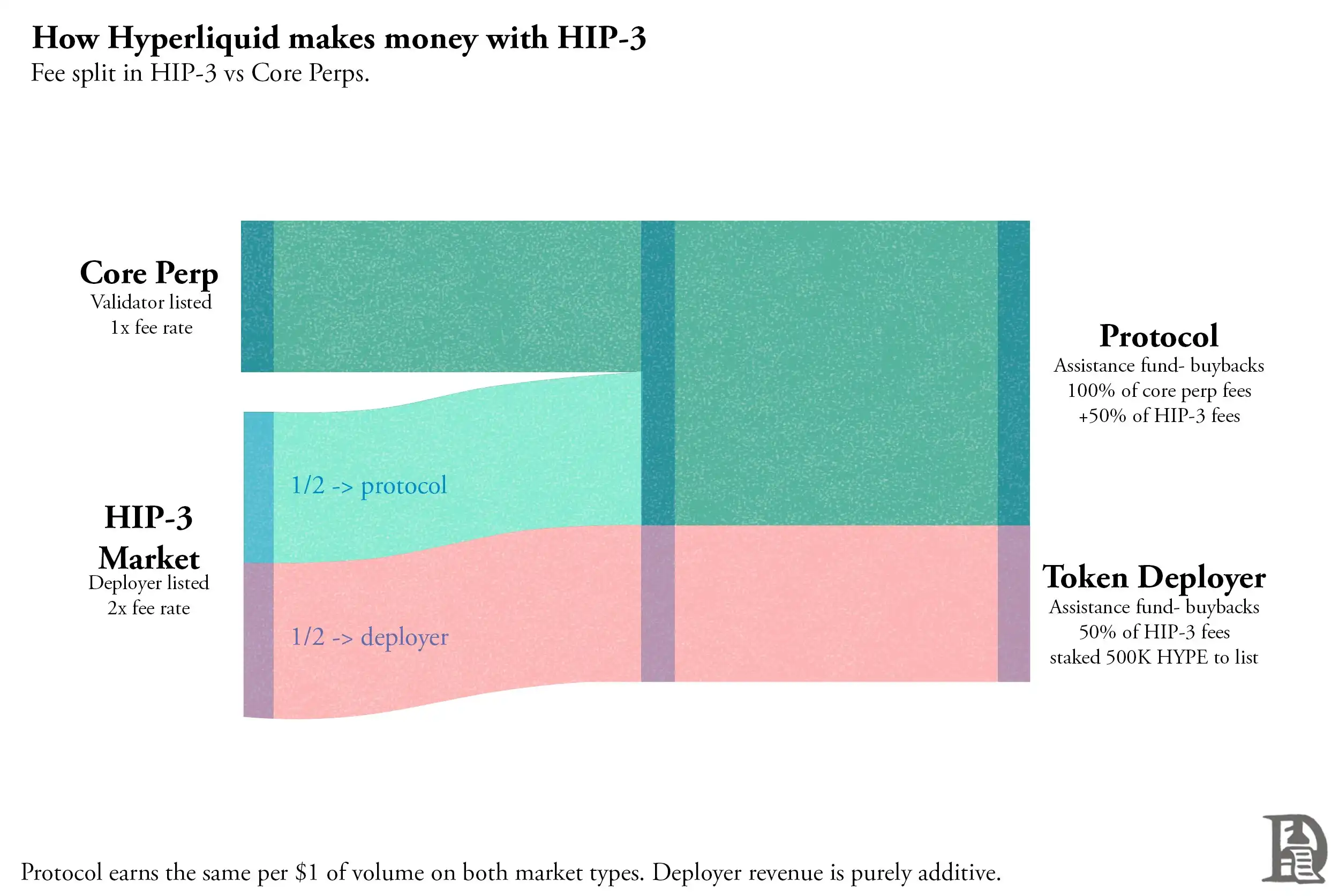
HIP-3 launched in October 2025, supporting permissionless listing of perpetual contracts. Deployment parties staking 500,000 HYPE (approximately $18.5 million at $37 per token) can launch custom markets on HyperCore. The fees for these markets are twice those of Hyperliquid's core listed perpetual contracts, with half going to the deployment party and the other half to the Hyperliquid protocol for buybacks. Therefore, the protocol's revenue per dollar of trading volume is the same as for the core markets, with the deployment party additionally receiving an equal amount of profit as an incentive for listing and maintaining the markets.
Within five months, HIP-3 trading volume reached $100 billion, and open interest hit a record $1.2 billion on March 10, significantly up from $260 million the previous month.

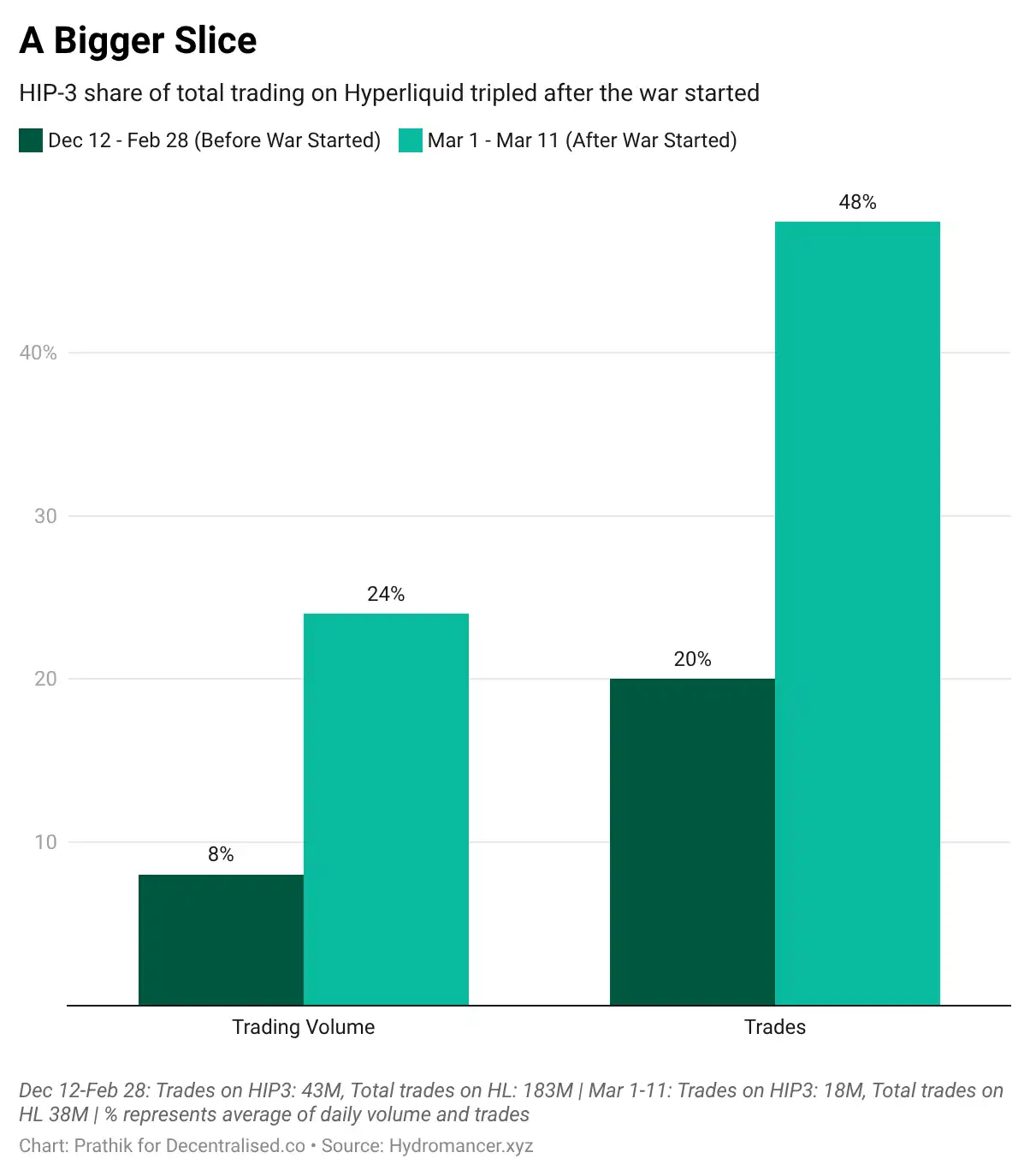
HIP-3 can list any asset: commodities, stock indices, forex pairs, pre-IPO tokens, etc. In the past two weeks, HIP-3's share of Hyperliquid's total trading volume increased from 8% to 23%, with nearly half of all trading now occurring on HIP-3 markets.
Iran War as Proof of Concept

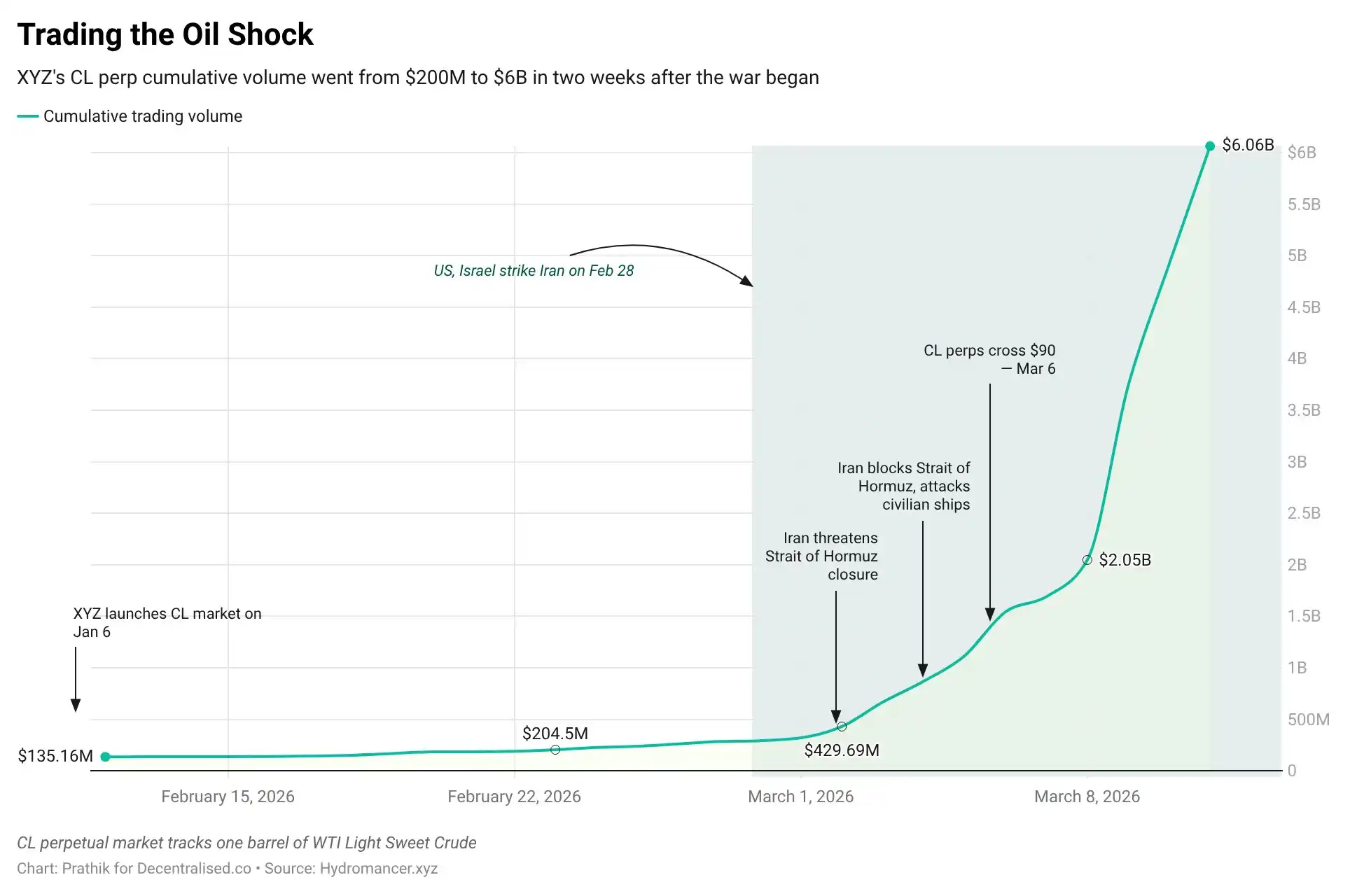
On February 28, the US and Israel launched strikes against Iran during traditional market closing hours. Within hours, oil-pegged perpetual contracts on Hyperliquid surged 5%, with traders pricing the impact in real-time. The following week, after WTI recorded its largest weekly gain since 1983, the 24-hour trading volume of oil perpetual contracts on Hyperliquid exceeded $1.2 billion, with liquidations reaching $40 million. The cumulative trading volume of CL perpetual contracts rose from $200 million to $6 billion over two weeks. Bitcoin hovered around $68,000. The main battlefield for macro trading was on Hyperliquid, not the spot crypto market.

When CME reopened on Monday, it confirmed the pricing direction that Hyperliquid had established over the entire weekend. If tokenized oil perpetual contracts can handle such volume with an effective price discovery mechanism, the same can be done for gold, SPX, and forex perpetual contracts.
CME + 0DTE Options as TAM for HIP-3

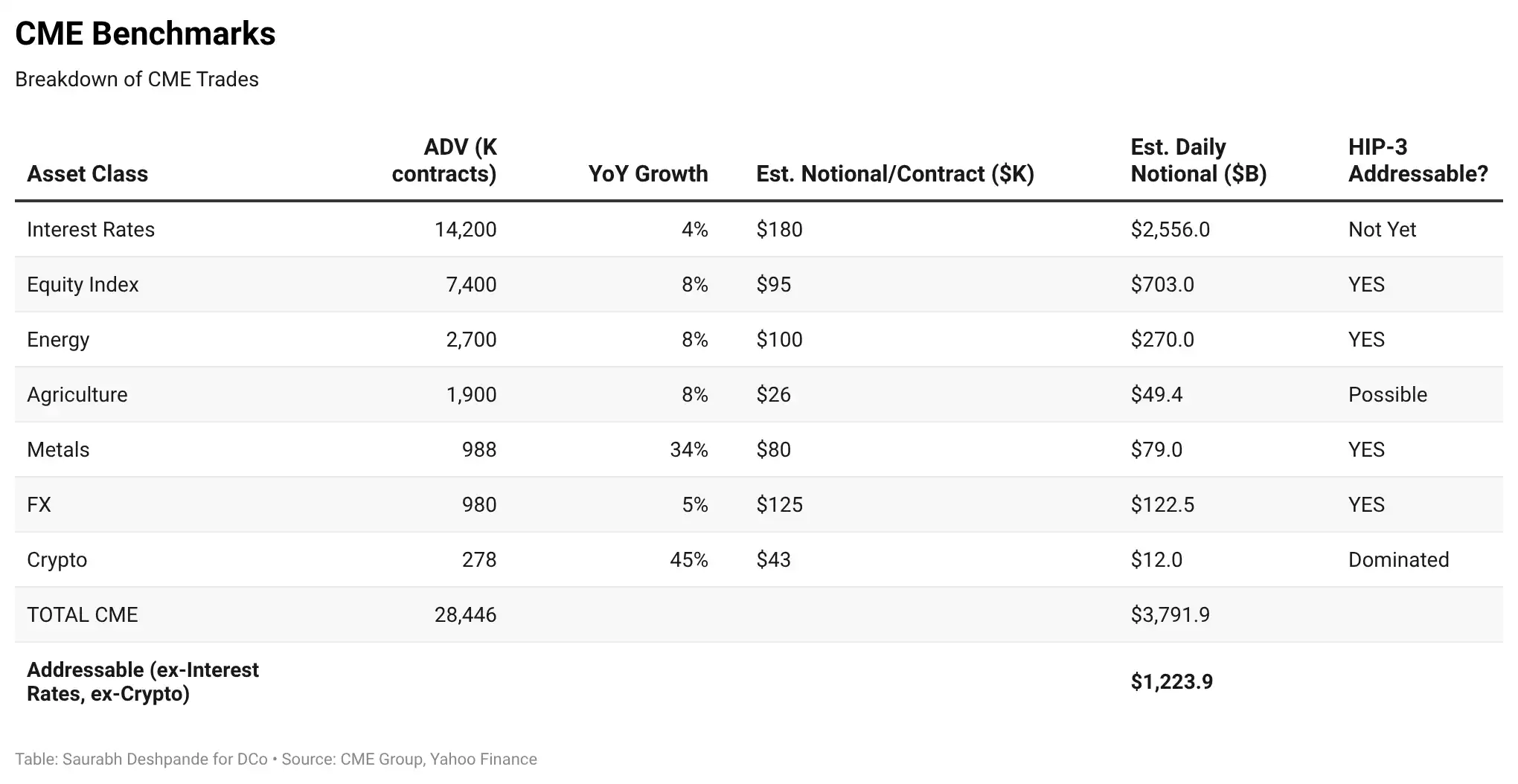
CME's average daily trading volume across all asset classes is $3.8 trillion. Excluding structurally complex interest rate products that are difficult to migrate in the short term, and crypto products already dominated by Hyperliquid, the addressable average daily trading volume in stock indices, energy, metals, agriculture, and forex on CME is approximately $1.2 trillion.
Additionally, we factor in the 0DTE (zero days to expiration) options market. Just the SPX 0DTE options had an average daily notional value of over $1.2 trillion in May 2025. Considering that SPY 0DTE accounts for 45% of all SPY options volume, FalconX estimates the total notional value of 0DTE at $1.5 to $2 trillion daily. From a behavioral perspective, these are perpetual contract traders using options infrastructure—because stock perpetual contracts do not currently exist in regulated markets. Perpetual contracts eliminate the complexity and cost of 0DTE options.

A key adjustment: The notional value of 0DTE options overestimates the equivalent volume for perpetual contracts. We apply a 30% conversion factor to the 0DTE notional value to estimate the actual perpetual contract equivalent volume that might migrate. The total addressable market for HIP-3 is therefore approximately $1.74 trillion daily: $1.2 trillion from CME's addressable volume, plus about $540 billion from converted 0DTE volume.

Scenario Analysis

We constructed four scenarios based on the percentage of the $1.74 trillion daily TAM that Hyperliquid captures through HIP-3, modeled using a three-year discounted cash flow framework.

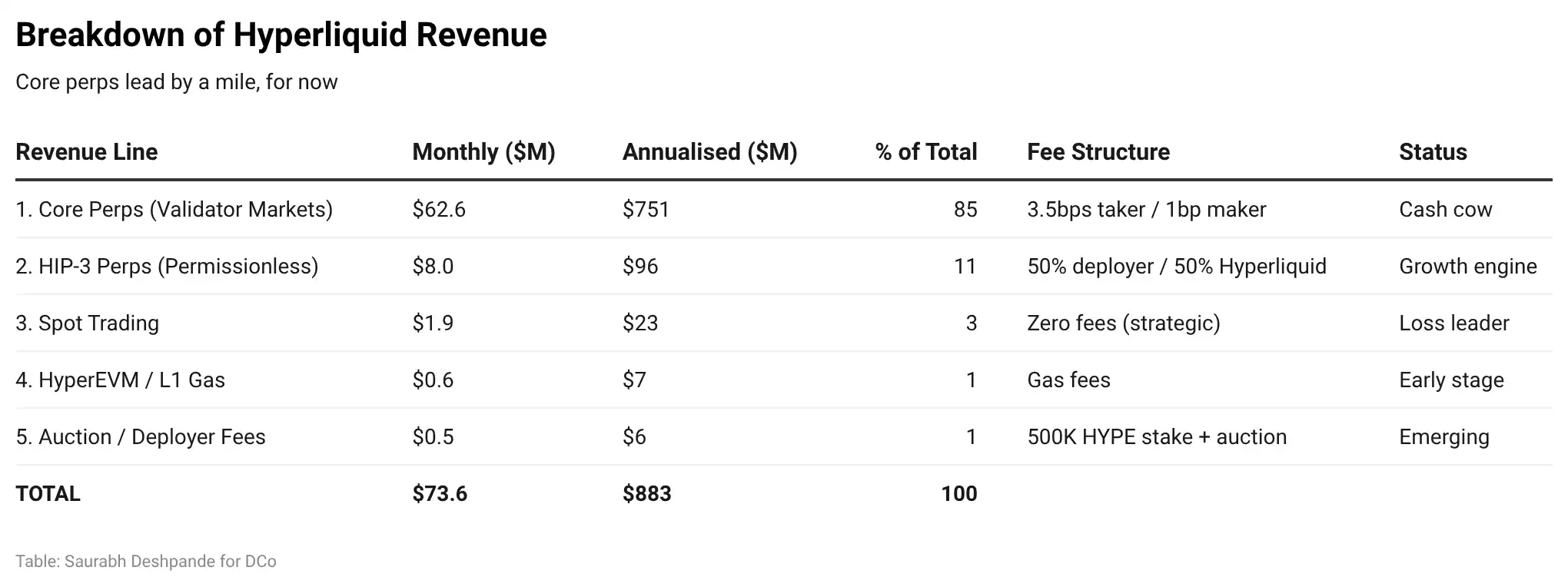
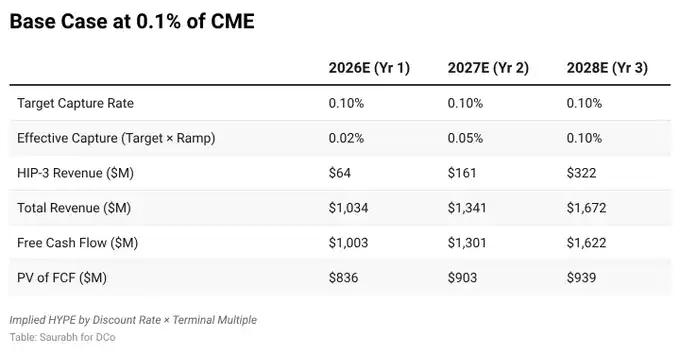
Each scenario assumes a gradual ramp-up in penetration: Year 1 (2026) reaches 20% of the target, Year 2 (2027) reaches 50%, Year 3 (2028) reaches 100%, to realistically reflect the gradual accumulation of market share. Baseline revenue from core crypto perpetuals, spot, EVM Gas, and auction fees is forecasted separately from the revenue waterfall model, growing from $970 million in 2026 to $1.35 billion in 2028.
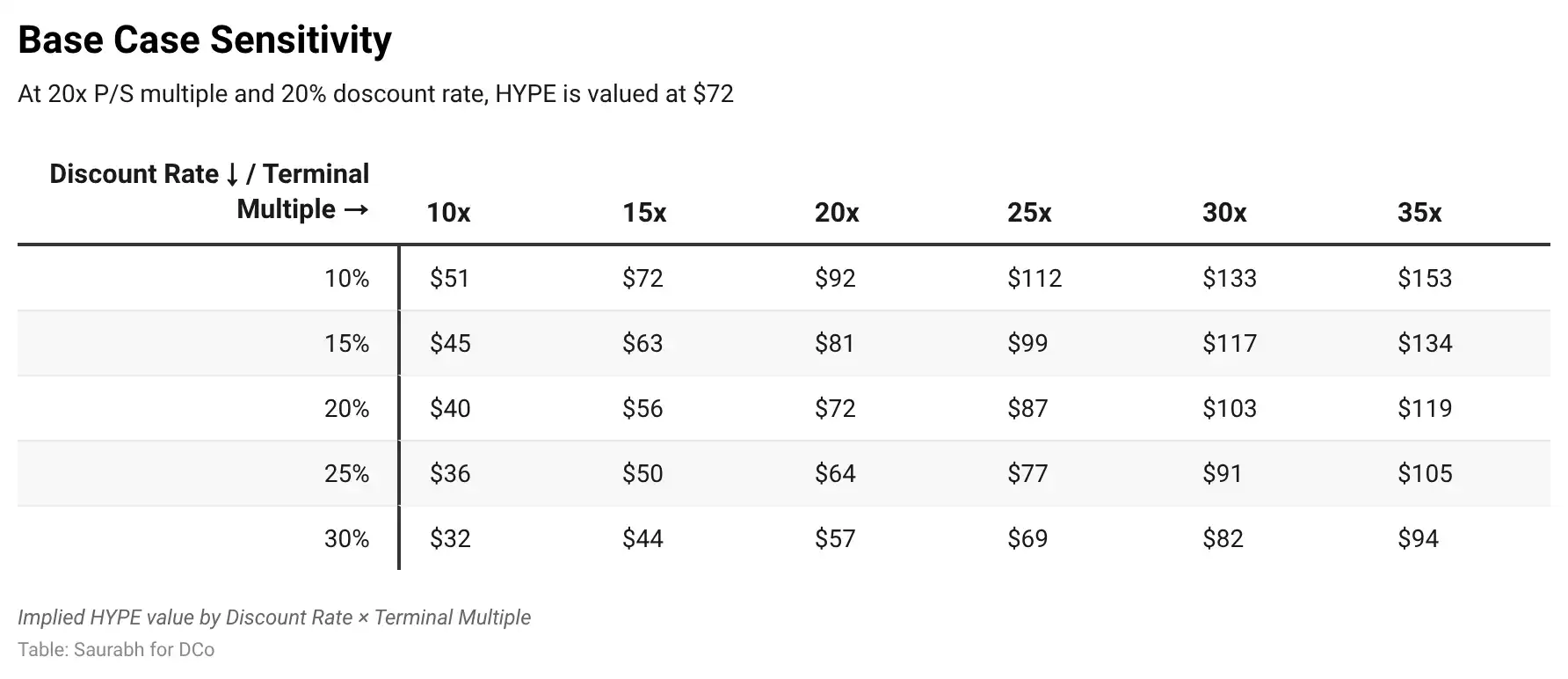
We use a 20% discount rate and a terminal multiple of 20 times Year 3 revenue—a modest premium to CME's current 17.5x EV/Revenue, reflecting Hyperliquid's higher growth trajectory. The 20% discount rate embodies crypto protocol risk but also acknowledges that Hyperliquid is a profitable enterprise with auditable on-chain cash flows, not a pre-product stage token. A sensitivity table allows for stress testing at discount rates as high as 30%.
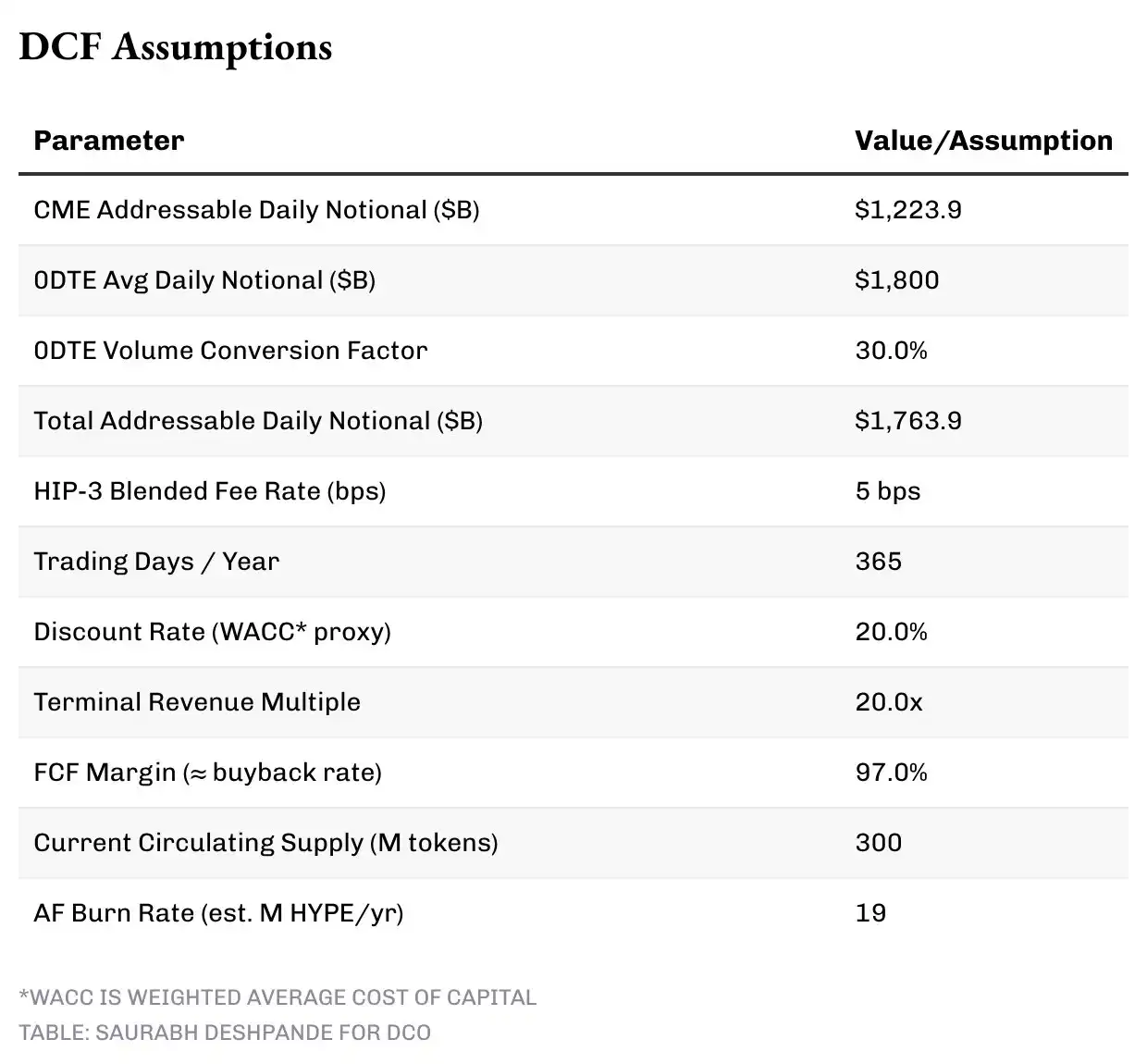
The model also considers expected changes in circulating supply. On the supply side, approximately 23.8% of the total HYPE supply is allocated to core contributors, locked for one year followed by a 24-month linear unlock. Co-founder Iliensinc confirmed that distributions (if any) occur on the 6th of each month, adding that "unlocks are not linear." The actual pace varies significantly: about 2.6 million in December (with 850,000 re-locked), 1.2 million in January, and the team slashed the February unlock by 90% to just 1,400 tokens. As Arthur Hayes pointed out, 66.6% of contributor tokens remain locked until 2027-2028, with no investor unlocks at all.

We don't anchor to peaks or troughs but use the monthly average since distributions began—about 1 million HYPE, or 12 million annually—as the baseline assumption. Validator staking emissions, at the current ~400 million staked tokens and a 2.37% reward rate, contribute an additional ~10 million annually.

On the other hand, the Aid Fund (AF) has cumulatively burned 42.8 million HYPE over about 16 months since genesis (November 2024), with an observed annualized burn rate of about 32 million. The AF receives about 97% of trading fees through an automated buyback mechanism, and its wallet additionally holds 42.1 million HYPE awaiting burn. The historical burn rate includes periods when HYPE was in a lower price range (mostly $10-25 throughout 2025), meaning more tokens could be retired per dollar of fees.

At the current price of $37 and approximately $2 million in daily trading fees, the forward-looking annualized burn rate is closer to 19 million HYPE. We use this 19 million forward-looking estimate as the forecast baseline in the model, although the historical 32 million figure illustrates the AF's aggressive operation in low-price environments. Importantly, AF burns are endogenously linked to revenue: in good markets, higher fee income means significantly more tokens are bought back and burned. This creates a reflexive dynamic that static supply forecasts cannot fully capture.

The net effect is only a slight increase in circulating supply. Starting from today's ~300 million, team unlocks average ~1 million monthly, plus ~10 million annual validator emissions, totaling ~22 million new tokens annually; while ~19 million are retired annually via AF burns. We forecast ~302 million at end-2026, ~305 million at end-2027, and ~308 million at end-2028—a net increase of ~3 million annually. The buyback engine almost completely offsets new issuance, with an annual dilution rate of about 1%. The implied HYPE price is calculated based on the Year 3 forecasted supply.

In the Bear scenario (0.01% capture), HIP-3 generates $32 million in annual fees at full run-rate on the conversion-adjusted TAM. Combined with the $1.35 billion baseline revenue, the DCF yields an enterprise value of approximately $18 billion based on the terminal value of total Year 3 revenue.
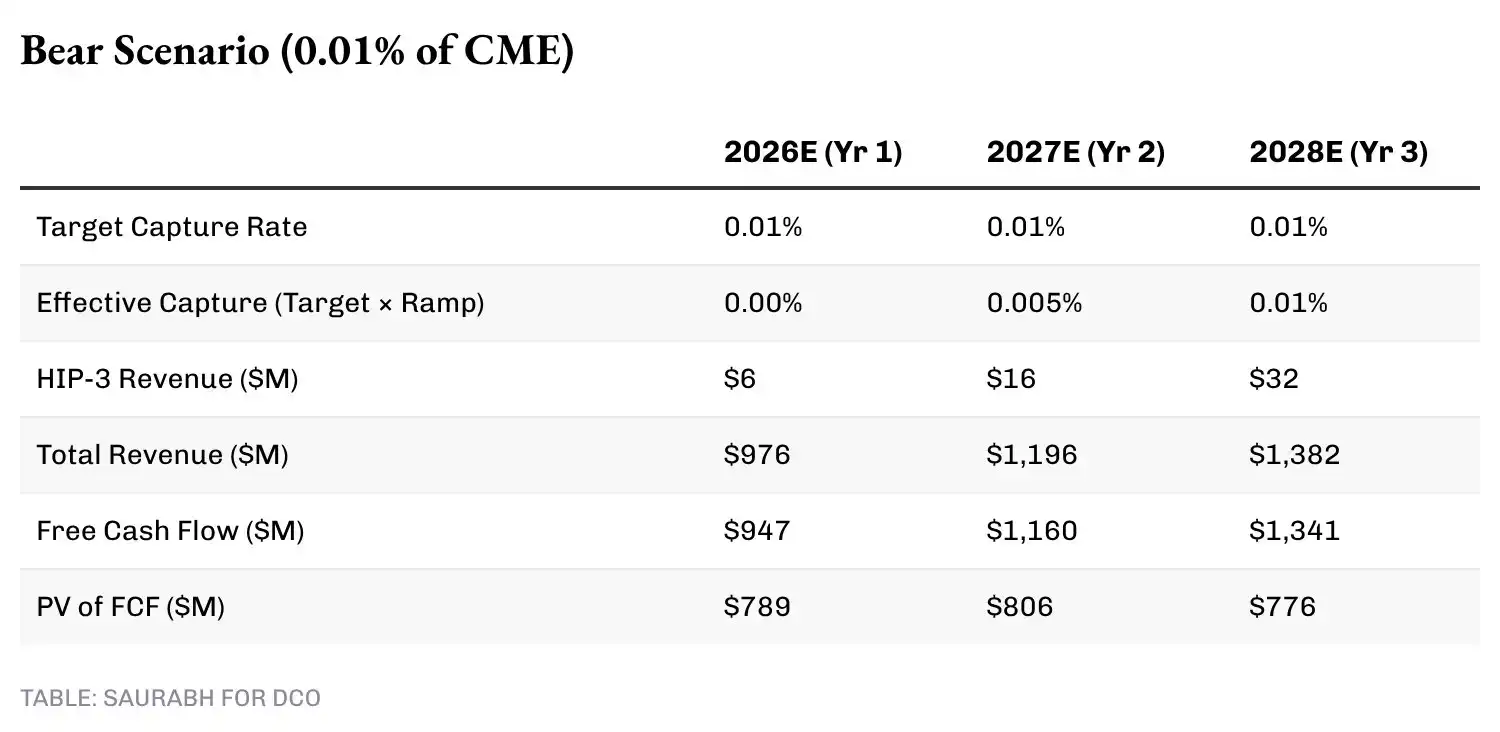
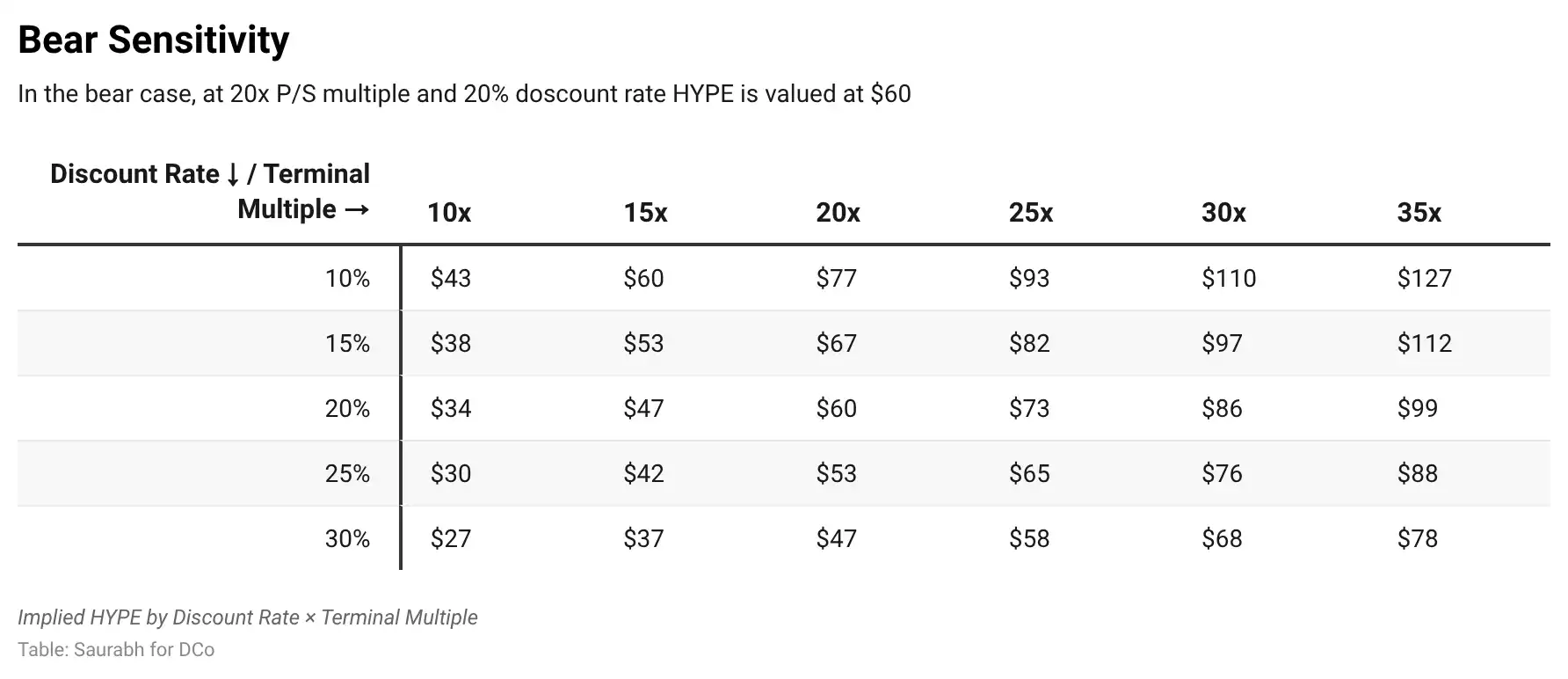
Corresponding to the forecasted Year 3 supply of 308 million (slightly increased from today's 300 million), the implied HYPE price is about $60—still a significant premium to the current $37, meaning that even with extremely limited HIP-3 progress, the basic exchange economics alone justify a higher price.
In the Base scenario (0.10% capture), Year 3 HIP-3 revenue reaches $322 million, total revenue is about $1.7 billion, corresponding to an enterprise value of approximately $22 billion, and an implied HYPE price of about $72.
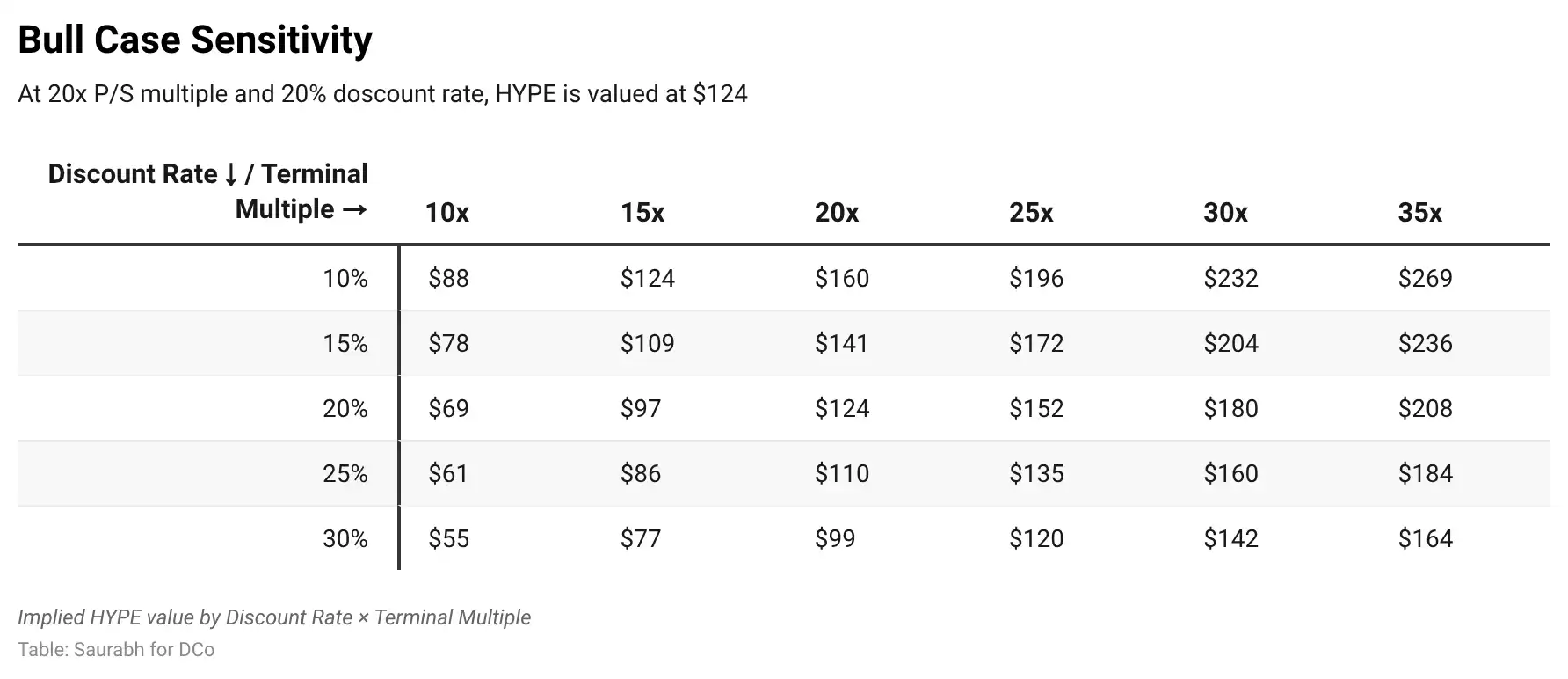
In the Bull scenario (0.50% capture), Year 3 HIP-3 fees reach $1.6 billion, total revenue is $3.0 billion, enterprise value is $38 billion, implied price is about $124, and fully diluted valuation is approximately $124 billion.
In the Extreme scenario (1.00% capture), Year 3 total revenue reaches $4.6 billion, enterprise value is $59 billion, HYPE approaches $190, and FDV is in the ~$190 billion range.
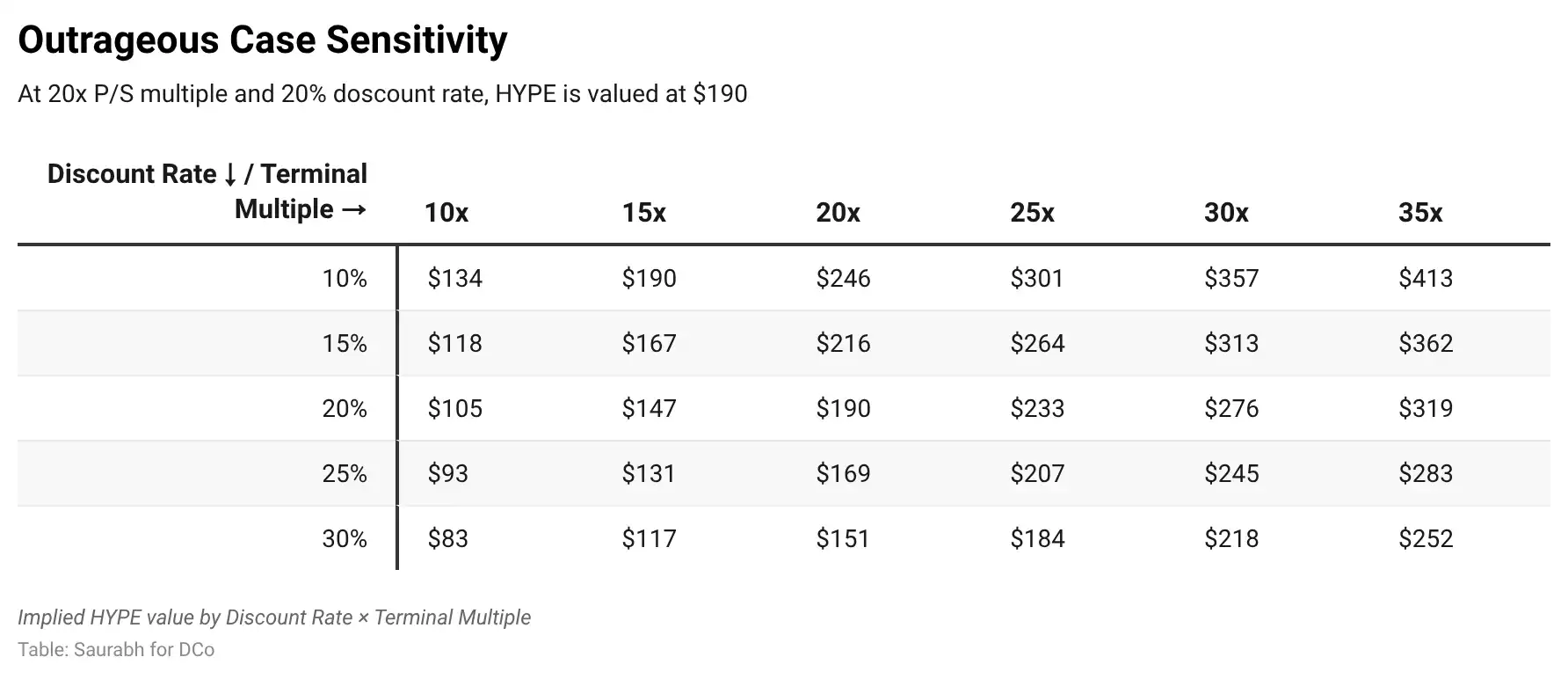
At this level, Hyperliquid's P/S ratio would be about 13x, still below CME's current 17.5x—indicating that the terminal multiple assumption is conservative for a business growing this fast.

At the default 20% discount rate and 20x multiple, the current price of $37 is far below the bear market target of $60, suggesting the market has not priced in any meaningful HIP-3 contribution and can be considered to undervalue the basic crypto exchange business itself. The base scenario target of $72 implies about 93% upside from current levels, requiring only a 0.10% capture of the addressable volume. Hayes' $150 target falls between our Bull ($124) and Extreme ($190) scenarios, requiring a 0.50% to 1.00% capture rate. Considering HIP-3 has only been live for five months and already accounts for ~10% of fee revenue, these three-year capture targets are ambitious but not unfounded.

Why Hyperliquid, Not Other Platforms

A natural skepticism of the HIP-3 thesis is: if traditional derivatives volume migrates on-chain, it could go anywhere. We believe this underestimates the inertia of liquidity concentration.

First, look at the competitive landscape. At the end of 2025, Lighter briefly surpassed Hyperliquid in 30-day perpetual volume while operating with zero fees and running one of the most aggressive incentive campaigns in the market. Then the $LIT airdrop landed on December 30; $250 million was withdrawn within 24 hours, and within three weeks Lighter's volume collapsed, compressing its market share to 8.1%. Despite Lighter still charging no fees, volume flowed back to Hyperliquid. The moat is in liquidity depth and execution quality, not price. The open interest to volume ratio confirms this: Hyperliquid at 0.64 (capital retention), Aster at 0.18, Lighter at 0.12.

Next, consider centralized alternatives. Coinbase is preparing to launch compliant perpetuals, but think about the users: if you want to trade stock index or commodity exposure, you already have Robinhood, Schwab, and Interactive Brokers. Coinbase launching SPX perpetuals doesn't solve a pain point for its users. Hyperliquid solves a different problem: 24/7 settlement, no market hour restrictions, cross-margin with crypto assets, permissionless listing. It is a complement to the existing system, not an inferior version of what traditional institutions already offer.

HYPE is Undervalued

Hyperliquid faces risks. HIP-3 needs stock index and commodity perpetuals to sustain volume after the novelty wears off. The 0DTE crowd needs a compelling reason to switch from options to perpetuals, not just lower fees. The matching engine must perform as well at $50 billion daily volume as it did at $8 billion. These are not existential risks. The core product works. The Iran war weekend proved the demand for 24/7 commodity price discovery is real.

US regulatory clarity on tokenized perpetuals is not a prerequisite for this thesis to work. Hyperliquid's volume is likely largely non-US. But US recognition or approval would only accelerate the category's growth. Every dollar migrating from traditional derivatives to permissionless infrastructure expands the total addressable market, and Hyperliquid, with its liquidity depth, execution quality, and market maker infrastructure, is positioned to capture a disproportionate share. HIP-4, introducing prediction markets and option-style contracts, opens yet another new dimension of volume.

HYPE currently trades at 10-13x P/S, while CME is at 25x, ICE at 23x, CBOE at 22x. Those are mature single-digit growth businesses. Hyperliquid did $960 million revenue in its first full year, is debt-free, has no personnel baggage, and has a buyback mechanism returning almost all fees to token holders. No traditional exchange does this. We expect HYPE to be re-rated as exchange equity, with a hybrid multiple reflecting dual crypto and traditional derivatives revenue. This implies the current $37 HYPE is below its potential fair value.

This article was inspired by published analysis from @FalconXGlobal.

Disclaimer: DCo holds a HYPE position. This article does not constitute investment advice.

Perguntas relacionadas

QAccording to the article, what is the key reason why HYPE is considered undervalued at $37?

AThe article states that even in the bear case scenario where HIP-3 captures only 0.01% of the Total Addressable Market (TAM), the DCF model yields a target price of $60 per HYPE. This means the current price of $37 is undervalued based on the fundamental exchange business alone, with the market pricing in almost no progress from HIP-3.

QWhat event served as a 'proof of concept' for Hyperliquid's oil perpetual contracts and its role in global price discovery?

AThe Iran war weekend served as the proof of concept. When the US and Israel launched strikes against Iran after traditional markets had closed, oil-pegged perpetual contracts on Hyperliquid surged 5% within hours, with traders pricing the impact in real-time. CME confirmed this pricing direction when it reopened on Monday.

QHow does the article define the Total Addressable Market (TAM) for HIP-3, and what is its estimated daily volume?

AThe TAM is defined as the combination of CME's addressable daily volume (approx. $1.2T across stock indices, energy, metals, agriculture, and forex) and a converted volume from the 0DTE options market (approx. $540B, after applying a 30% conversion factor to a $1.5-2T nominal value). This results in a total estimated TAM of approximately $1.74 trillion per day.

QWhat mechanism does the Hyperliquid protocol use to return value to HYPE token holders and counteract token dilution?

AThe protocol uses the Aid Fund (AF), which receives approximately 97% of all trading fees. The AF uses these funds to automatically buy back and burn HYPE tokens from the market. This creates a reflexive dynamic where higher fee revenue leads to more tokens being repurchased and destroyed, almost completely hedging against new token emissions from team unlocks and validator staking rewards.

QWhy does the article argue that Hyperliquid has a competitive advantage over platforms like Coinbase for capturing traditional derivatives volume?

AThe article argues that Hyperliquid's advantage lies in solving a different problem: it offers 24/7 settlement, no market hour restrictions, cross-margin with crypto assets, and permissionless listing. It is a complement to the existing system, not an inferior version of what traditional brokers like Robinhood already offer. Its moat is built on liquidity depth and execution quality, not just price, as evidenced by its high open interest to volume ratio (0.64) compared to competitors.

Leituras Relacionadas

Seeking Alpha's Hot Article: Why Might the U.S. Stock Market Crash in June?

In a recent Seeking Alpha article, financial professor and analyst Damir Tokic argues that the US stock market may be poised for a significant crash in June 2026. The core thesis centers on a "mega-bubble" in equities, particularly within the technology sector, which has driven the S&P 500 to near-record valuations, with a Shiller P/E ratio exceeding 40—a level comparable to the 2000 dot-com bubble. Tokic identifies two primary catalysts for a potential collapse. First, he points to unsustainable market exuberance fueled by what he terms the "Trump Stimulus"—massive AI capital expenditure by tech giants, which he believes is politically driven and cannot last. Second, and more urgently, he highlights the escalating Iran war as a critical threat. The ongoing closure of the Strait of Hormuz has created a severe global energy supply crunch. Strategic petroleum reserves are projected to hit critically low operational levels by June, potentially causing oil prices to spike above $200 per barrel and triggering a severe, supply-driven inflationary shock. This scenario, Tokic warns, would force the Federal Reserve's hand. Despite currently maintaining a dovish bias, the Fed would likely be compelled to officially pivot to a hawkish stance at its June FOMC meeting to combat soaring inflation and bond yields. He contends that such a shift—or even a failure to act, which would destroy Fed credibility—could be the trigger that punctures the market bubble. The resulting downturn, he concludes, could rival the bear markets of 2000 and 2008, advising investors to prepare for a major correction.

marsbitHá 10m

Seeking Alpha's Hot Article: Why Might the U.S. Stock Market Crash in June?

marsbitHá 10m

AI PC Battle: Bet on the Toll Booth, Not the Camp

**Title:** The AI PC Battle: Don't Bet on Sides, Bet on the Tollbooth **Summary:** The AI PC competition is moving beyond simple "x86 vs. Arm" narratives. The core investment thesis should focus on identifying which players can sustain margins, cash flow, and pricing power throughout the upgrade cycle, rather than backing a particular architecture. The opportunity is analyzed in three layers: 1. **The Advanced Foundry Tollbooth:** TSMC is positioned to collect "tolls" regardless of which chip designer wins, due to its dominant ~70% share in advanced semiconductor manufacturing, which is essential for high-end AI PC chips. 2. **Compute & Platform Spillover:** AMD represents an offensive in the x86 CPU+GPU space, while NVIDIA leverages its GPU and CUDA software stack dominance. Both benefit from the demand for increased local AI compute. 3. **Architecture Diffusion & Turnaround Plays:** ARM and Intel offer potential for significant upside (elasticity), but investments here require stricter discipline due to higher execution risks and competitive challenges. The industry is transitioning from concept to shipment validation. While short-term forecasts for AI PC adoption have been revised down slightly due to tariffs and procurement delays, the long-term trend towards AI becoming a standard PC feature remains intact. The key driver for upgrade cycles will be whether compelling enterprise applications (e.g., privacy-sensitive computing, low-latency inference) emerge beyond consumer-focused features like meeting summarization. Investment strategy should prioritize companies with platform-level advantages and recurring revenue streams. TSMC offers high certainty as the foundational tollbooth. AMD presents a strong offensive play within the established ecosystem. ARM and Intel are higher-risk, higher-potential-reward turnaround bets. The report cautions against chasing short-term hype and emphasizes a disciplined, long-term approach focused on buying ecosystem strength and cash-flow certainty after market enthusiasm subsides. **Key Risks:** Underwhelming AI PC applications slowing upgrade cycles; slow improvement in Windows on Arm compatibility; macro/tariff impacts on PC demand; potential advanced node supply-demand mismatches affecting TSMC; high overall AI sector valuations making stocks vulnerable to a risk-off shift in markets.

marsbitHá 24m

AI PC Battle: Bet on the Toll Booth, Not the Camp

marsbitHá 24m

Ten-Thousand-Word Analysis: From $10 to $290, MRVL Wins the Entire AI Era by 'Not Making GPUs'

Marvell Technology's stock price surged from under $10 in 2016 to a record $290 in June 2026, fueled not by making GPUs, but by dominating AI infrastructure connectivity. This analysis argues the market misvalues MRVL as merely a smaller Broadcom in custom AI chips, overlooking its true, unique position. Marvell's core strength lies in enabling high-speed data flow for AI clusters through three interconnected businesses. First, it holds a commanding ~70% market share in high-speed optical DSPs (essential for data center light modules), a deep-moat business with accelerating growth. Second, its custom AI chip design business serves hyperscalers like AWS, Microsoft, and Google, with a significant revenue pipeline despite lower margins. Third, stable cash flows come from Ethernet switch chips and enterprise storage controllers. Together, they form a full-stack "AI data movement" platform. CEO Matt Murphy's transformative leadership since 2016, involving strategic divestments, key acquisitions (like Inphi for optical DSPs), and securing long-term agreements with major cloud providers, repositioned the company. A pivotal $2 billion strategic investment from NVIDIA in 2026 underscored Marvell's critical role in the AI ecosystem, particularly through collaborations like NVLink Fusion. While Marvell faces risks—including client concentration (losing the Amazon Trainium3 design), lower-margin business mix, competitive threats, insider selling, and complex supply chains—its fundamentals remain strong. The optical interconnect moat is widening with the acquisition of Celestial AI (photonics fabric), and financial metrics show accelerating revenue growth and operating leverage. With a PEG ratio suggesting undervaluation relative to its growth, the thesis is that the market undervalues Marvell's monopolistic position in AI "plumbing" while overemphasizing its competitive custom chip segment. The story transcends investing, symbolizing how in any complex system—from the internet to AI—the value of "connection" ultimately surpasses that of individual "nodes."

marsbitHá 54m

Ten-Thousand-Word Analysis: From $10 to $290, MRVL Wins the Entire AI Era by 'Not Making GPUs'

marsbitHá 54m

AI Relay Stations Spark Heated Debate on Zhihu: Behind Cheap Tokens, What Are Users Really Worried About?

A discussion on Zhihu about "AI relay stations" shifted the niche developer topic of "cheap tokens" into broader user awareness. Users moved beyond simply questioning the legitimacy of these services to focus on practical concerns: Where do cheap tokens truly come from? Is the model being accessed the real one? Can relay stations see prompts, code, and API keys? For occasional users, are the risks worth it? The core debate centered less on price and more on trust. A primary worry is model authenticity—the risk of "model swapping," where users paying for a premium model might be routed to a cheaper one, creating an information asymmetry. Others argued that cost comparisons matter; while cheaper than official pay-as-you-go APIs, relay stations may not be the lowest-cost option versus subscriptions, domestic models, or free tiers, making user needs assessment crucial. Speculation about token sources ranged from legitimate bulk discounts to gray-area methods like account sharing or exploiting regional pricing. This opacity makes risk assessment difficult for users. Data security emerged as a critical concern, especially for enterprise use. When processing sensitive information like code, contracts, or client data, the inability to verify a relay station's data handling, retention, or access policies poses significant compliance and confidentiality risks. The evolving consensus suggests relay stations can be used cautiously for low-sensitivity, disposable tasks (e.g., summarizing public info, simple translation). However, they should not be the default for sensitive, professional, or production workflows involving proprietary data, Agents, or automated systems. Recommendations include avoiding large prepayments, not relying on a single service, using test prompts to monitor quality, anonymizing data where possible, and keeping official channels as backups. Ultimately, the discussion framed tokens not just as a billing unit but as a measure of real cost encompassing price, model integrity, data security, and service stability. The popularity of relay stations highlights user demand for affordable access, but the debate underscores a key trade-off: the savings from cheap tokens may come at the price of trust, transparency, and control over one's data and AI experience.

marsbitHá 1h

AI Relay Stations Spark Heated Debate on Zhihu: Behind Cheap Tokens, What Are Users Really Worried About?

marsbitHá 1h

Trading

Spot
Futuros

Artigos em Destaque

Como comprar HYPE

Bem-vindo à HTX.com!Tornámos a compra de Hyperliquid (HYPE) simples e conveniente.Segue o nosso guia passo a passo para iniciar a tua jornada no mundo das criptos.Passo 1: cria a tua conta HTXUtiliza o teu e-mail ou número de telefone para te inscreveres numa conta gratuita na HTX.Desfruta de um processo de inscrição sem complicações e desbloqueia todas as funcionalidades.Obter a minha contaPasso 2: vai para Comprar Cripto e escolhe o teu método de pagamentoCartão de crédito/débito: usa o teu visa ou mastercard para comprar Hyperliquid (HYPE) instantaneamente.Saldo: usa os fundos da tua conta HTX para transacionar sem problemas.Terceiros: adicionamos métodos de pagamento populares, como Google Pay e Apple Pay, para aumentar a conveniência.P2P: transaciona diretamente com outros utilizadores na HTX.Mercado de balcão (OTC): oferecemos serviços personalizados e taxas de câmbio competitivas para os traders.Passo 3: armazena teu Hyperliquid (HYPE)Depois de comprar o teu Hyperliquid (HYPE), armazena-o na tua conta HTX.Alternativamente, podes enviá-lo para outro lugar através de transferência blockchain ou usá-lo para transacionar outras criptomoedas.Passo 4: transaciona Hyperliquid (HYPE)Transaciona facilmente Hyperliquid (HYPE) no mercado à vista da HTX.Acede simplesmente à tua conta, seleciona o teu par de trading, executa as tuas transações e monitoriza em tempo real.Oferecemos uma experiência de fácil utilização tanto para principiantes como para traders experientes.

291 Visualizações TotaisPublicado em {updateTime}Atualizado em 2026.06.02

Como comprar HYPE

Discussões

Bem-vindo à Comunidade HTX. Aqui, pode manter-se informado sobre os mais recentes desenvolvimentos da plataforma e obter acesso a análises profissionais de mercado. As opiniões dos utilizadores sobre o preço de HYPE (HYPE) são apresentadas abaixo.

活动图片