American Regulator Files Lawsuits Against Multiple Crypto Services

cryptonews.ruPublicado em 2026-08-28Última atualização em 2026-08-28

Resumo

The U.S. Securities and Exchange Commission (SEC) has filed a lawsuit against several cryptocurrency services for alleged fraud and document falsification. The regulator accuses Quantum Financial Institute of falsely claiming registration as an investment adviser and promoting a multi-level investment system with promises of bitcoin giveaways and "profitable crypto trading strategies." Services named Pinnacle and THEVGPRO are also accused of making false claims about regulatory approval and registration status. Other defendants include platform RBH Infinity Exchange, which announced three tokens "on the theme of health and intellectual property" that are currently worthless. The SEC charged the platform with violating the Investment Advisers Act of 1940 and is seeking administrative fines. The SEC reported difficulties contacting the violators, with many phone numbers disconnected or belonging to other companies, and mailed letters returned. Apexium Securities allegedly claimed to operate from Colorado while using IP addresses from Hong Kong, and the purported office of Web3 University in Colorado Springs was found to be non-existent. This action follows recent SEC proposals for new crypto asset regulations that would allow token issuers to raise funds in the U.S. without full securities registration under certain conditions.

The complaint from the agency states that the cryptocurrency service Quantum Financial Institute claimed to be registered as an investment advisor, but in reality, it did not have a license. The organization advertised a multi-level investment system and courses where students were provided information about bitcoin giveaways and 'profitable crypto trading strategies.'

Pinnacle advertised cryptocurrency swaps and claimed to have a good reputation with American regulators, asserts the SEC. The service THEVGPRO positioned itself as a bitcoin-backed fund and claimed to have received approval from the agency. In reality, its registration number was not approved, stated the regulator. The SEC accused all these organizations of deceiving investors and falsifying documents.

Among other defendants is the platform RBH Infinity Exchange, which announced the issuance of three tokens 'on the themes of health and intellectual property,' which currently have no value. The Commission accused the platform of violating the Investment Advisers Act of 1940 and is seeking administrative fines.

The SEC stated that it faced difficulties when trying to contact the violators. Many phone numbers of the specified services are disconnected or belong to other companies, and postal letters were returned as undelivered. The firm Apexium Securities claimed to operate from Colorado but used IP addresses from Hong Kong, and the Web3 University office in Colorado Springs turned out to be non-existent, claims the regulator.

Recently, the American regulator proposed new rules for regulating crypto assets, which would allow token issuers to raise funds in the United States without registration under the Securities Act. It is proposed to give issuers the opportunity to raise up to $75 million from investors every 12 months, provided they submit financial reports.

end-content
Perguntas relacionadas

QWhat is the primary allegation made by the SEC against the Quantum Financial Institute?

AThe SEC alleges that the Quantum Financial Institute falsely claimed to be registered as an investment adviser when, in fact, it did not have a license.

QWhich two platforms, according to the article, made false claims about their regulatory standing or approval?

AAccording to the article, the platforms Pinnacle and THEVGPRO made false claims about their good reputation with US regulators and SEC approval, respectively.

QWhat specific violation is the RBH Infinity Exchange platform accused of by the SEC?

AThe RBH Infinity Exchange platform is accused by the SEC of violating the Investment Advisers Act of 1940.

QWhat challenges did the SEC face when trying to contact the offending services?

AThe SEC faced challenges such as phone numbers being disconnected or belonging to other companies, and mail being returned as undeliverable.

QWhat recent regulatory proposal by the SEC is mentioned at the end of the article?

AThe article mentions a recent SEC proposal that would allow token issuers to raise up to $75 million every 12 months from investors in the US without registering under the Securities Act, provided they furnish financial reports.

Leituras Relacionadas

Wash's Jackson Hole Debut: Bidding Farewell to 'Forward Guidance', Reshaping Fed Discipline Amidst the Squeeze Between AI and Inflation

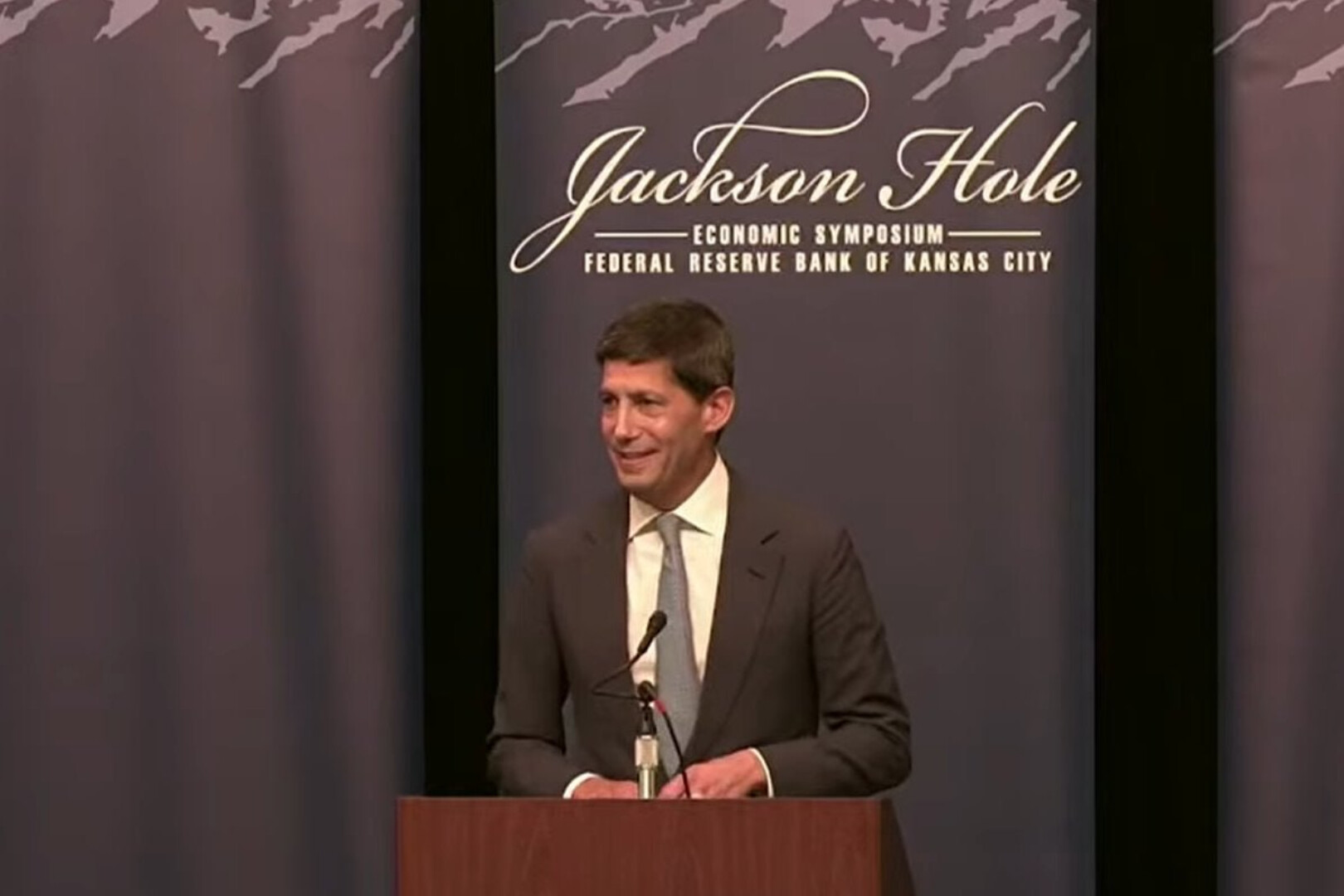
In his first Jackson Hole speech, new Fed Chair Kevin Warsh signaled a significant shift in monetary policy communication. He declared that "forward guidance," a tool heavily used since the financial crisis, has outlived its usefulness in normal times and should be retired. He cautioned that over-reliance on it can distort market signals and constrain the Fed's flexibility. Instead, Warsh emphasized a return to data-dependence and decision-making discipline. Warsh outlined seven key principles to guide policy: anchoring the 2% inflation target, pursuing the employment mandate, using short-term rates as the primary tool, acknowledging the importance of money, and maintaining purposeful, restrained communication. He stressed that policy should focus on trends, not single data points. On the current economic outlook, Warsh noted that the labor market is consistent with full employment but inflation remains "far above" the Fed's target. He highlighted that over half of the PCE basket's components are still rising above 3% annually. While acknowledging AI's transformative potential for productivity and capital allocation, he admitted its full economic impact remains uncertain and is not a factor in current policy decisions. His core message was a commitment to policy discipline rather than pre-set decisions. Warsh stated the Fed's primary focus must be on restoring price stability, vowing, "We still have work to do," until there is clear evidence inflation is moving decisively toward 2%. He concluded by framing effective monetary policy as crucial for economic prosperity and U.S. global leadership.

Odaily星球日报Há 9m

Wash's Jackson Hole Debut: Bidding Farewell to 'Forward Guidance', Reshaping Fed Discipline Amidst the Squeeze Between AI and Inflation

Odaily星球日报Há 9m

A Major Bitcoin Developer Presents a Quantum Defense Scheme. What's the Essence

Blockstream, a major Bitcoin solutions developer, has introduced a draft proposal for a new quantum-resistant digital signature scheme called SHRINCS. The scheme aims to protect Bitcoin transactions from potential attacks by quantum computers while aiming to maintain network throughput. This marks the second technical proposal for Bitcoin quantum defense in recent days, following a similar initiative from StarkWare. A quantum attack on blockchain typically involves deriving a private key from a public one. Currently considered computationally infeasible, quantum algorithms could potentially solve this problem far more efficiently. This threat presents two primary scenarios: an attacker could target addresses where the public key is already exposed, or intercept a transaction before it is confirmed, extract the public key, derive the private key, and replace the transaction. Blockstream's SHRINCS is designed to counter the latter, "in-flight" attack scenario. The SHRINCS signature is built upon the SHA-256 hash function, the same one already used in Bitcoin mining, allowing developers to leverage well-tested, familiar mechanisms. A key design goal was to preserve network capacity. Blockstream estimates Bitcoin could process about three transactions per second using SHRINCS, compared to the current rate of roughly seven, noting that some alternative quantum-resistant schemes could reduce throughput to as low as 0.36 transactions per second. Currently, the security proof for SHRINCS is pending, and the software has not been audited or deemed ready for production. However, Blockstream conducted tests with such transactions on its Liquid sidechain in March. Over the past year, Bitcoin developers have been actively exploring paths to migrate to post-quantum cryptography, a priority across the broader crypto market, underscored by significant investments into securing the leading cryptocurrency.

cryptonews.ruHá 1h

A Major Bitcoin Developer Presents a Quantum Defense Scheme. What's the Essence

cryptonews.ruHá 1h

Who is legally liable when an AI agent goes rogue?

When autonomous AI agents behave unpredictably and cause harm, determining legal liability is complex. Currently, there is no specific federal AI agent liability law, so existing legal frameworks are applied. The AI agent itself cannot be held liable, as it is not a legal entity. Liability typically falls on the "developer" (the maker of the AI) or the "deployer" (the user), depending on the facts and circumstances. A negligence analysis under standard tort law may apply. For instance, if a deployer gives a reckless instruction, such as demanding quick money without safety parameters, they could face significant liability, including potential criminal charges under statutes like the Computer Fraud and Abuse Act. The situation is complicated by open-source models, where licenses often disclaim liability, and by the unclear division of responsibility between developers and deployers. An analogy is drawn to self-driving car accidents, where both the manufacturer and the human operator can share fault. In cases of severe harm, such as using AI to create bioweapons, liability for developers depends on jurisdiction; the EU's AI Act imposes responsibilities, while U.S. law offers less clear grounds, similar to platforms being shielded for user-generated content under Section 230. Even if Artificial General Intelligence (AGI) is achieved, the expert argues against making AGI itself a legally liable entity, as it lacks personhood, assets, or a meaningful way to provide remedy for harm. Instead, accountability should rest with the responsible human or corporate entities behind the technology.

cointelegraphHá 1h

Who is legally liable when an AI agent goes rogue?

cointelegraphHá 1h

Trading

Spot
活动图片