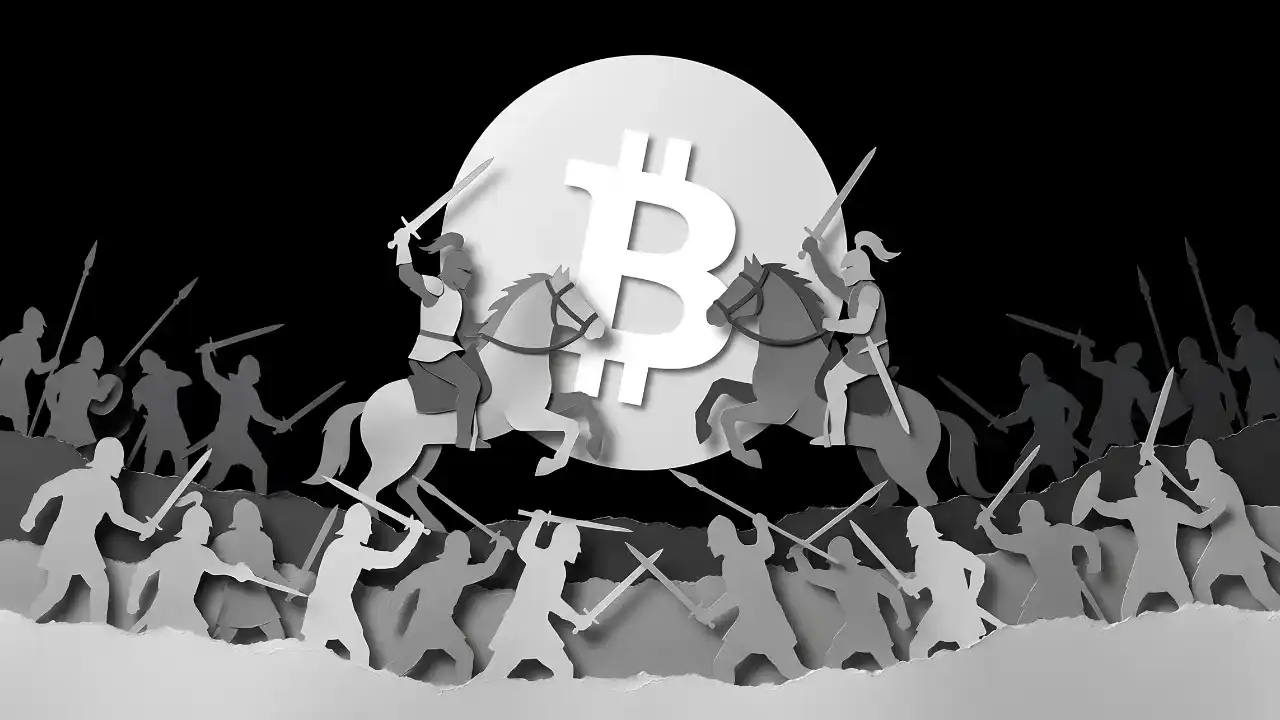
American economic magazine Forbes stated that bitcoin could become a neutral reserve asset for the global economy!

cryptonews.ruPublicado em 2026-08-20Última atualização em 2026-08-20

Resumo

American business and economic magazine Forbes has suggested that Bitcoin could potentially play a significant role as a neutral reserve asset in the global financial system. According to the publication, Bitcoin might offer an alternative to the growing debates surrounding the US dollar's status as the world's reserve currency and the current system's reliance on US government bonds. Forbes notes that the dollar's reserve status grants the US significant advantages but also highlights the inherent "Triffin dilemma," where the US struggles to balance its domestic economic needs with global demand for the reserve currency. The current system draws global capital to the US, allowing for cheaper imports but weakening domestic competitiveness and worsening the trade deficit. The post-gold standard system has been sustained by US bonds, yet fundamental contradictions remain. The magazine argues that stablecoins cannot fully address the reserve asset issue as they are largely backed by US Treasuries. While gold is a neutral reserve asset, it has limitations regarding mobility, verification, and transactional efficiency. In contrast, Bitcoin, with its fixed supply, lack of need for state credit guarantees, and ease of global verification and transfer, is presented as a potential next-generation neutral reserve asset. Forbes states that while the US dollar will continue to be used in international trade, Bitcoin could eventually assume the reserve asset role, reducing the global e...

American business and economic magazine Forbes suggested that Bitcoin could play a significant role as a neutral reserve asset in the global financial system in the future. According to the magazine, Bitcoin potentially offers an alternative to the growing debates surrounding the status of the US dollar as a reserve currency and the current system's dependency on US government bonds.

Forbes's assessment states that the dollar's status as the world's reserve currency provides the United States with significant advantages. While this status makes it easier for the US to obtain financing, it also highlights a structural problem known as the 'Triffin Dilemma'. According to this concept, it is becoming increasingly difficult for the US to simultaneously meet its own economic needs and manage global demand for a reserve currency.

The magazine noted that the current system attracts global capital to the US and allows American consumers to access imported goods at lower prices, but this weakens domestic competitiveness and exacerbates the trade deficit. It was also noted that after the abolition of the gold standard, the system has been largely supported by US bonds, yet fundamental contradictions remain unresolved.

Forbes argued that stablecoins also cannot fully solve the problem of reserve assets, as these assets are largely backed by US government bonds. While gold is a neutral reserve asset, it has some limitations in terms of mobility, verification, and transaction efficiency.

In contrast, it is argued that Bitcoin, due to its fixed supply, lack of need for state credit guarantees, as well as ease of global verification and transfer, could become the next generation of neutral reserve assets.

According to Forbes, while the dollar will continue to be used in international trade, Bitcoin may ultimately assume the role of a reserve asset, reducing the global economy's dependence on the debt instruments of any single country. However, the magazine also emphasized that obstacles such as price volatility and limited institutional adoption need to be overcome.

*This is not investment advice.

end-content

Perguntas relacionadas

QWhat significant role does Forbes suggest Bitcoin could play in the future global financial system?

AForbes suggests that Bitcoin could play a significant role as a neutral reserve asset in the global financial system.

QWhat structural problem related to the U.S. dollar's reserve currency status is highlighted by the article?

AThe article highlights the structural problem known as the 'Triffin dilemma,' where it's increasingly difficult for the U.S. to meet its own economic needs while managing global demand for the reserve currency.

QAccording to the article, why are stablecoins not a complete solution to the reserve asset problem?

AStablecoins are not a complete solution because these assets are largely backed by U.S. government bonds, which does not break the dependency on a single country's debt instruments.

QWhat are the key characteristics of Bitcoin that Forbes argues could make it a next-generation neutral reserve asset?

AForbes argues Bitcoin's fixed supply, lack of need for state credit guarantees, and ease of global verification and transfer are key characteristics for a next-generation neutral reserve asset.

QWhat major obstacles must be overcome for Bitcoin to potentially assume a reserve asset role, as noted by Forbes?

AForbes notes that major obstacles such as price volatility and limited institutional adoption must be overcome for Bitcoin to potentially assume a reserve asset role.

Leituras Relacionadas

Jameson Lopp's BIP-110 Postmortem: Bitcoin Is Driven by Game Theory, Not Morality

Jameson Lopp's analysis concludes that BIP-110, a proposal to restrict arbitrary data (like inscriptions) on Bitcoin, failed due to economic and technical realities, not moral arguments. The proposal, championed by Luke Dashjr and others, aimed to "cleanse" the chain but never reached its 55% miner activation threshold. Upon its forced signaling deadline in August, only the OCEAN pool (with ~1% hash rate) supported it, creating a short-lived fork that quickly died as miners faced unredeemable block rewards. Lopp's earlier predictions about its economic infeasibility were proven correct. Technically, BIP-110 was flawed; workarounds to embed data compliant with its rules were demonstrated almost immediately, proving it couldn't achieve its stated goal. The debate often devolved into moralistic rhetoric, with supporters accusing opponents of supporting child exploitation material—a tactic Lopp criticizes as ineffective for building consensus. Lopp argues Bitcoin is driven by incentives and game theory, not morality. Past forks like Bitcoin Cash promised economic benefits, while BIP-110 offered only restrictions and reduced miner fees, gaining no substantial support from major economic players. He predicts the "puritans" behind the failed fork will continue complaining but their new chain will remain insignificant. The episode reaffirms that attempting to censor data on a permissionless, anti-censorship network like Bitcoin is a futile battle.

marsbitHá 51m

Jameson Lopp's BIP-110 Postmortem: Bitcoin Is Driven by Game Theory, Not Morality

marsbitHá 51m

Tokenization Scale Soars to $4.3 Billion, But Why Did Securitize Incur a $5.5 Million Loss?

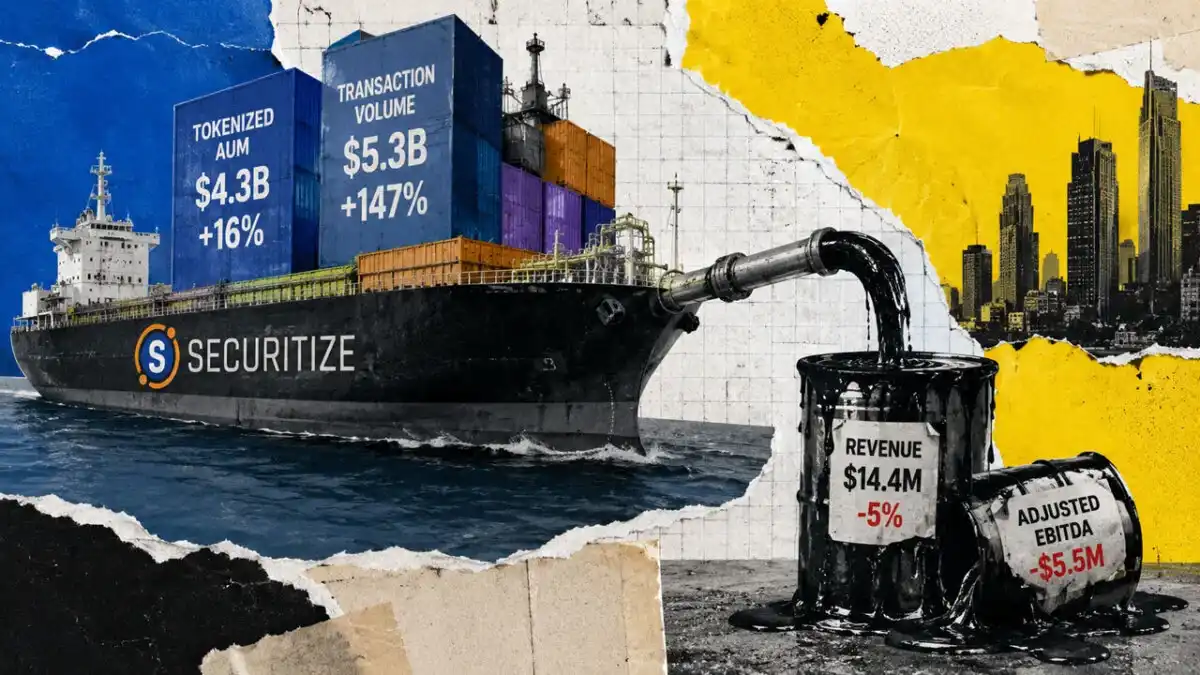
Securitize's first quarterly report post-IPO reveals a paradox: while its tokenized assets under management hit a record $4.3 billion (up 16% YoY) and platform trading volume surged 147% to $5.3 billion, total revenue fell 5% to $14.4 million. Tokenization revenue specifically dropped ~12% to $7.8 million, leading to an adjusted EBITDA loss of $5.5 million. CFO Francisco Flores explained that most trading volume is not yet monetized, with the majority of tokenization revenue still coming from one-time projects like new protocol integrations. In contrast, asset servicing revenue, a more recurring stream, grew slightly to $6.6 million. The company has lowered its full-year revenue guidance to $70-$80 million from an initial projection of $110 million. Industry experts note this highlights a structural challenge for the tokenization sector. Scaling assets on-chain doesn't automatically scale a profitable business model. Current implementations often rely on costly, customized projects for each new asset or jurisdiction. The future, they argue, lies in building standardized infrastructure that generates recurring "infrastructure revenue" from post-issuance activities like compliance, distributions, and secondary trading—similar to enterprise software. Analysts caution against misinterpreting high trading volumes as indicative of a mature fee-based model, as Securitize's broad volume metric includes many non-monetized actions. The key test for the industry is whether adding billions in new assets can generate sustainable revenue without constant new custom projects.

marsbitHá 53m

Tokenization Scale Soars to $4.3 Billion, But Why Did Securitize Incur a $5.5 Million Loss?

marsbitHá 53m

The Five Paradoxes of Artificial Intelligence

**Five Paradoxes of Artificial Intelligence** Artificial intelligence (AI) is an era filled with paradoxes, which we navigate as we advance. **1. The Prediction Paradox** AI experts, from pioneers like Marvin Minsky to contemporary figures like Geoffrey Hinton and Demis Hassabis, have a history of inaccurate forecasts regarding AI's capabilities and timelines, such as achieving human-level machine intelligence or surpassing radiologists. Predictions about Artificial General Intelligence (AGI) vary wildly between optimistic entrepreneurs and skeptical academics, highlighting the inherent unpredictability of technological futures. **2. The Employment Quantification Paradox** Despite numerous studies from institutions like the OECD, IMF, and McKinsey attempting to quantify AI's impact on jobs, estimates of affected employment range from 0.4% to 67%, revealing vast inconsistencies. This paradox arises because isolating AI's effect from other economic, social, and technological factors is virtually impossible, and forecasts depend on static assumptions about a dynamically evolving technology. **3. The Productivity Paradox** While AI is a transformative General Purpose Technology, significant productivity growth has not yet materialized in major economies like the EU and has only matched historical averages in the US. This disconnect between rapid innovation and slow productivity gains, reminiscent of the "Solow Paradox" from the computer age, is often explained by time lags. History shows it takes decades for such technologies to diffuse and trigger complementary innovations that boost productivity. **4. The Data Value Paradox** Data is hailed as the "new oil" and critical for AI, yet its economic value is paradoxical. Its worth is realized only in use, not in straightforward trade. Despite policy emphasis and initiatives for data asset recognition on corporate balance sheets in China, the monetized value remains negligible—accounting for only about 0.06% of major telecom operators' total assets—highlighting the gap between perceived utility and financial valuation. **5. The Industrial Revolution Paradox** For decades, nearly every major new technology, from the internet and nanotechnology to blockchain and now AI, has been proclaimed as the driver of a "Fourth Industrial Revolution." This constant reassignment suggests prior labels were premature. True industrial revolutions are typically identified in hindsight, not in real-time. Furthermore, the coexistence of such a proclaimed transformative revolution with ongoing economic crises would be historically anomalous. Whether AI truly defines a new industrial revolution remains a narrative for the future to decide.

marsbitHá 56m

The Five Paradoxes of Artificial Intelligence

marsbitHá 56m

Trading

Spot
活动图片