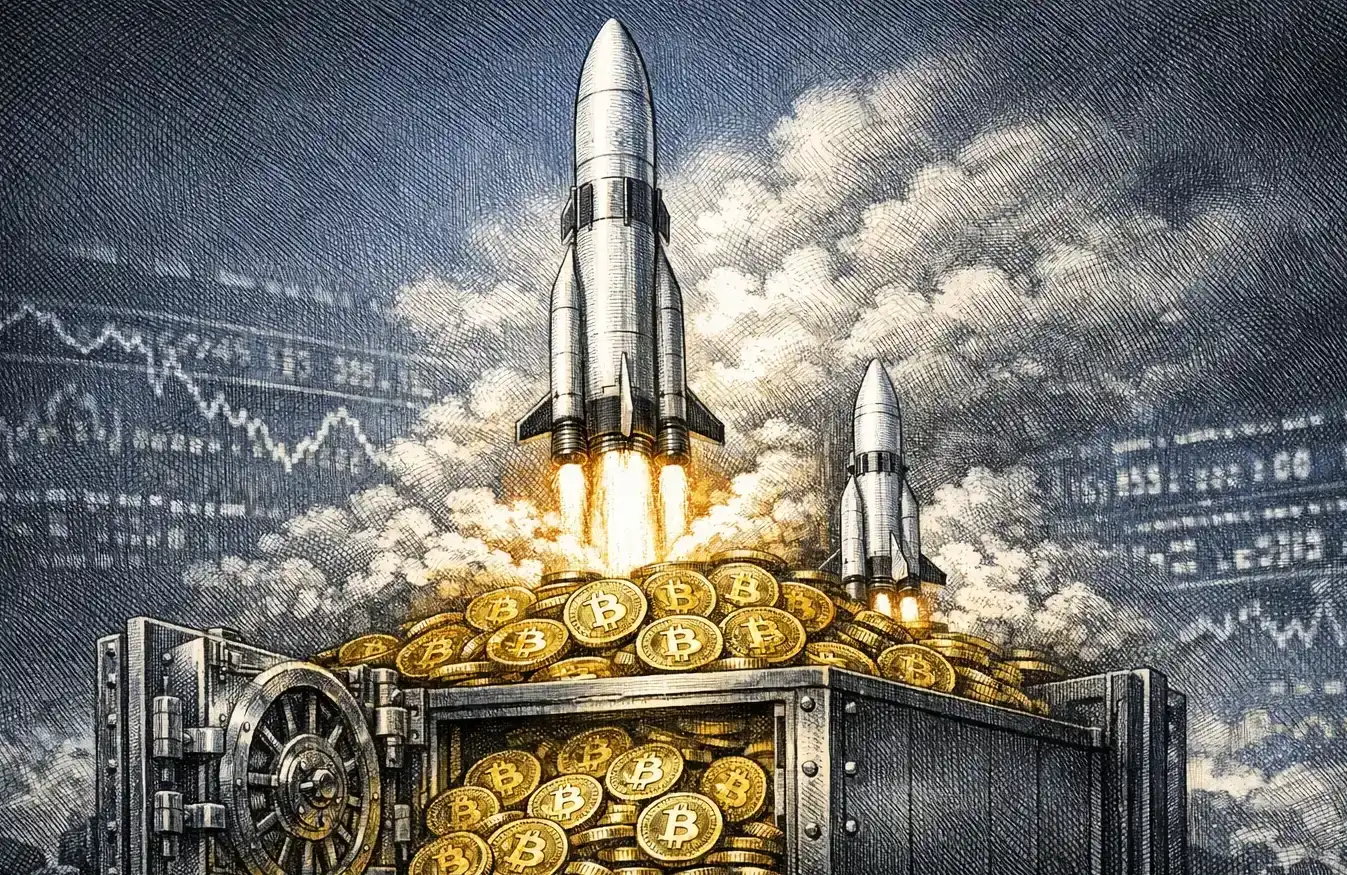
Altman Drops Bombshell While Musk is Away: He Once Wanted His Children to Inherit OpenAI

marsbitPublicado em 2026-05-13Última atualização em 2026-05-13

Resumo

In a California court, Sam Altman testified for the first time in the ongoing legal battle between Elon Musk and OpenAI. Altman made a striking claim: Musk once suggested that control of OpenAI could one day be passed down to his children. This statement reframes the long-standing conflict not as a simple governance dispute but as a foundational power struggle. Altman sought to counter the narrative that OpenAI betrayed its original non-profit, idealistic mission. He argued that from the beginning, it was Musk who sought increasing control over the organization, including a larger equity stake and ultimate decision-making authority. Altman opposed this, citing OpenAI's core principle that AGI should not be controlled by any single individual. He also addressed the key point of contention about OpenAI's shift to a for-profit structure, claiming Musk was aware of and initially supportive of exploring such a model to secure the massive funding needed for advanced AI research. Altman framed the change as a practical necessity, not a betrayal. Further testimony revealed internal concerns after Musk left OpenAI's board, with worries he might take retaliatory action. Altman critiqued Musk's management style as unsuitable for a research lab, damaging morale and culture. Throughout his testimony, Altman's focus appeared to shift from technological idealism to the realities of organizational governance and resource requirements. Regarding his brief ouster in 2023, Altman stated he ...

While Musk was away on a trans-Pacific business trip, Altman, who made his first court appearance in the "OpenAI Fruit Theft Lawsuit," uttered a statement in a California courtroom that shocked everyone:

Musk once believed that the future control of OpenAI could be passed on to his children.

Wow, with one sentence, this long-running drama among OpenAI's founding team has shifted from a "corporate governance dispute" to an AI version of "Succession."

Hello everyone, welcome to Week Three of the trial: Musk vs. the OpenAI Brothers (Altman and Brockman).

Today, Altman himself testified for the first time.

In recent years, a relatively mainstream narrative has surrounded OpenAI: that OpenAI is becoming increasingly commercialized, more like a super AI company; Altman is increasingly acting like a capital manipulator; and (regardless of motive) Musk is the one who left angrily and later reported OpenAI for "betraying its original mission."

But in this trial, Altman attempted to completely reframe this story.

In his account, OpenAI is not the organization that betrayed its idealism.

From the very beginning, the person who wanted to control OpenAI and monopolize power was Musk.

Altman's First Full Account: Why OpenAI and Musk Parted Ways

The feud between Musk and OpenAI has been ongoing for quite some time, argued in the media, on social platforms, and now in court.

This trial is almost the first time Altman has stood from his perspective to give the outside world a taste of the early internal power struggles at OpenAI.

According to him, from its founding, OpenAI firmly believed and executed the principle that "AGI should not be controlled by any single individual."

To prevent super AI from being monopolized by a few in the future, OpenAI adopted a non-profit structure at its inception.

But how fickle humans are!

According to Altman's description, as time went on, Musk increasingly desired greater control, including a higher share of equity, final decision-making power over the future organization, and dominance over OpenAI's development direction.

The most explosive part was the "pass it to the children" statement.

According to Altman, there was once an internal discussion about what would happen if the person controlling OpenAI in the future passed away.

Musk's idea at the time was, "Let's just make it hereditary. If we're gone, pass the control to our kids."

Altman stated that he was very opposed to this idea at the time.

Originally, the public found it hard to grasp something like an "OpenAI organizational structure dispute," and even grew a bit tired of the drama. But "AGI control rights being hereditary" immediately lit up the eyes of gossip enthusiasts!

Especially since Musk has long cultivated a persona of upholding ideals like "open AI, humanity's future, preventing AI from being controlled by a few."

Then Altman shot a knowing smile at Musk, who was flying his plane toward China—Buddy, nobody knew, but what you envisioned back then wasn't "OpenAI for all humanity," but "OpenAI for my family."

Besides the control issue, Altman also mentioned another key event: that Musk once wanted OpenAI to merge with Tesla.

Altman strongly opposed this at the time.

In court, Altman explained that Tesla is essentially a car company with its own commercial goals, while OpenAI carries a different mission, more focused on long-term research and future infrastructure.

If merged into Tesla, OpenAI's development direction would likely be skewed by commercial objectives.

"Musk Knew All Along OpenAI Would Move Toward a For-Profit Structure"

In this trial, Altman also vehemently denied the accusation that "OpenAI betrayed its original mission."

This accusation is essentially the core narrative Musk has used to condemn and criticize OpenAI in the past.

Musk's public stance has consistently been:

OpenAI started as a non-profit with a mission to develop AI safely for humanity; but later it gradually turned into a super AI company, deeply tied to Microsoft and profit-driven.

But Altman stated in court: "Musk didn't find out later that OpenAI would move toward a for-profit structure."

According to his testimony, Musk not only knew about the relevant discussions back then, but even supported OpenAI exploring for-profit models.

During their second meeting at Tesla headquarters, he and Musk reviewed many documents outlining the creation of a for-profit company by OpenAI. Those "term sheets" detailed how much the non-profit would contribute to the new entity and what it would receive in return, including an "economic interest" in the for-profit venture.

Altman said Musk praised this move, saying the lab desperately needed massive funding.

Reuters wrote in an article about the trial that OpenAI believes Musk filed the lawsuit mainly out of jealousy over OpenAI's success after he left, and his failure to gain control of the company.

Altman also mentioned that OpenAI has now raised a cumulative $175 billion from investors for model training and computing power.

Many founders have stated that at this stage, without huge funds and massive computing power, it's impossible to continue advancing cutting-edge AI research.

OpenAI's later shift to a for-profit structure, in his view, was more a matter of practical necessity than a betrayal of idealism.

Fearing Retaliatory Action from Musk

That day, Altman also shared many details that had never been fully disclosed before.

Much of the content redefined his relationship with Musk.

For example, he mentioned that after Musk left the OpenAI board, there was internal concern that he might take some kind of retaliatory action.

Even Shivon Zilis—a member of OpenAI's founding team and the mother of four of Musk's children—advised Altman in private communications on how to consider business proposals without "upsetting" Musk.

Altman didn't elaborate with more specifics, but the statement itself is intriguing enough.

Meanwhile, during the trial, he also commented that Musk "doesn't know how to run a good research lab".

Musk's management style might work for engineering and manufacturing, but it was ineffective at OpenAI.

In his account, Musk made some key researchers feel demoralized. He asked Brockman and Ilya to list some researchers and their achievements, rank them, and then proceeded with a management style akin to a chainsaw.

"This caused enormous, long-term damage to the organizational culture," Altman said.

This is also one of the most fundamental differences Altman wanted to highlight between OpenAI and Musk.

Musk's management style has long leaned toward an "engineering iron army" model, emphasizing speed, pressure, and results; but OpenAI's core group of researchers is, by nature, closer to an academic research organization.

Conflict between the two cultures was inevitable.

Finally, it's worth noting that many attendees observed that throughout the trial, Altman talked less about "technological ideals" and increasingly used the lenses of "organizational governance" and "practical resources" to explain matters related to OpenAI.

Altman is indeed becoming more like the CEO of a large tech organization, rather than the AGI idealist entrepreneur he was in the early days.

One More Thing

Apart from OpenAI's history, part of the trial involved the famous "Altman ouster incident" of 2023.

(BTW, Ilya testified a few days ago, stating firmly that he had no regrets about participating in Altman's removal.)

Altman stated that after being removed, he seriously considered leaving OpenAI to go to Microsoft.

But he ultimately decided to return because OpenAI was too important to him.

He said, "I would run back into a burning building to save it."

References:

[1]nytimes.com/live/2026/05/12/technology/openai-trial-sam-altman-elon-musk/this-is-sam-altmans-first-time-testifying-in-court

[2]https://www.businessinsider.com/sam-altman-faces-awkward-grilling-over-toxic-culture-of-lying-2026-5

[3]https://techcrunch.com/2026/05/12/musk-mulled-handing-openai-to-his-children-altman-testifies/

[4]https://www.wired.com/story/ilya-sutskever-testifies-musk-v-altman-trial/

This article is from the WeChat public account "QbitAI," author: Heng Yu

Perguntas relacionadas

QWhat explosive statement did Sam Altman make about Elon Musk in court?

ASam Altman testified that Elon Musk once believed future control of OpenAI could be passed on to his own children.

QWhat was the core disagreement about the control of OpenAI according to Altman's testimony?

AAccording to Altman, Musk increasingly wanted greater control over OpenAI, including a larger share of equity, ultimate decision-making authority, and dominance over its direction, which conflicted with OpenAI's founding principle that AGI should not be controlled by a single individual.

QHow did Sam Altman respond to the accusation that OpenAI betrayed its founding non-profit mission?

AAltman denied the accusation, stating that Musk was aware and even supportive of OpenAI's exploration of for-profit models early on, and that the shift was a practical necessity for funding advanced AI research, not a betrayal of idealism.

QWhat critique did Altman level against Elon Musk's management style at OpenAI?

AAltman criticized Musk's management, stating it was suited for engineering and manufacturing but ineffective for a research lab. He claimed it demoralized key researchers and caused long-term damage to OpenAI's organizational culture.

QWhy did Altman return to OpenAI after being ousted in 2023?

AAltman stated that although he seriously considered moving to Microsoft, he decided to return to OpenAI because it was too important to him, comparing his decision to running back into a burning building to save it.

Leituras Relacionadas

Will the Next Crypto Bull Run Start with On-Chain Trading of SpaceX?

This article presents a scenario-based forecast for the crypto industry from 2026 to 2029, arguing that the next major cycle will be driven not by technological narratives but by legal access to real-world assets. The author predicts that by mid-2026, pre-IPO perpetual contracts for top private companies like SpaceX, OpenAI, and Anthropic on platforms like Hyperliquid will become the primary gateway for accessing quality assets, as most crypto-native tokens fail to capture real value. The much-hyped AI x Crypto intersection largely fails except for prediction markets, which thrive on betting on AI model supremacy. By 2027, public blockchain foundations are forced to choose between catering to retail speculation or building compliant infrastructure for institutions, with many opting for the latter. Growth in stablecoins and tokenized private credit/equity hits a "triple ceiling" due to regulatory and political uncertainty rather than market demand. The pivotal shift is forecast for 2028. A major liquidation event in pre-IPO perpetuals exposes the structural flaw of synthetic markets lacking a real underlying asset anchor. In response, regulatory changes finally allow the public solicitation of private securities resales to verified accredited investors. This creates a legitimate secondary market for real company equity, which then becomes the core asset class of the new bull market, relegating synthetic perps to a niche role. By 2029, the industry becomes "boring" but foundational. Tokens without claims on real cash flows or assets cease trading. Stablecoin growth is steady but politically capped. Crypto infrastructure fades from view as it gets absorbed into traditional finance backends. The article's central thesis is that the key bottleneck for crypto's next phase is legal and regulatory channels for real asset ownership, not technology.

marsbitHá 22m

Will the Next Crypto Bull Run Start with On-Chain Trading of SpaceX?

marsbitHá 22m

The Value Distribution of Stablecoins

**Summary: The Value Distribution of Stablecoins** The article argues that stablecoins are evolving from mere trading tools into broader channels for dollar access. It divides the stablecoin ecosystem into four layers to analyze how value is distributed: 1. **Issuance Layer:** Mints stablecoins, holds reserve assets, and captures the spread between reserve yield and user costs (e.g., Tether, Circle). This layer currently earns the largest profit margin. 2. **Infrastructure Layer:** Connects stablecoins to the traditional financial system, handling fiat on/off-ramps, banking integration, compliance (KYC/AML), and asset management (e.g., Bridge, BVNK). This is the "unglamorous" but critical work, building the essential bridges between crypto and real-world finance. 3. **Acquiring/Distribution Layer:** Integrates stablecoins into merchant systems, manages payment flows, and provides enterprise financial software (e.g., Stripe, Coinbase). They act as the access point for businesses. 4. **Application Layer:** The end-users and businesses that ultimately use stablecoins for payments, settlements, or as a store of value. They benefit from convenience but have little pricing power. The core thesis is that while the issuance layer currently dominates profits, the often-overlooked **infrastructure layer holds significant long-term potential**. The real challenge and barrier to mass adoption is not the on-chain transfer of stablecoins (which is simple), but the complex "last mile" integration into existing business workflows, banking systems, and regulatory frameworks across different countries. Companies in this layer are currently in a "land grab" phase, investing heavily to build networks, secure bank partnerships, and establish compliance pathways. While their position is currently pressured by the profitable issuers above and distribution platforms below, the article suggests that if stablecoins become a default financial rail for businesses, the infrastructure providers who have done the hard work of integration will ultimately gain strong pricing power and become entrenched, essential players.

marsbitHá 7h

The Value Distribution of Stablecoins

marsbitHá 7h

The Value Distribution of Stablecoins

The Value Distribution of Stablecoins The article argues that stablecoins are evolving from a mere trading tool into a broad "dollar channel." It analyzes the industry's value chain through four layers: 1. **Issuance Layer (e.g., Tether, Circle):** The top layer that mints stablecoins, holds reserve assets, and captures the thickest interest rate spread. 2. **Infrastructure Layer (e.g., Bridge, BVNK):** Connects stablecoins to the traditional financial system, handling critical but complex "dirty work" like fiat on/off-ramps, banking integration, compliance (KYC/AML), and cross-border settlement. 3. **Acquiring/Distribution Layer (e.g., Stripe, Coinbase):** Embeds stablecoins into merchant systems, manages payment flows, and integrates with enterprise software. 4. **Application Layer:** End-users and businesses that ultimately use stablecoins for payments, settlement, or storing value. The author posits that while the issuance layer currently captures the most profit, the most overlooked and potentially critical layer is infrastructure. The core challenge for stablecoin adoption isn't the on-chain transfer (which is simple), but bridging the gap between blockchain and the real-world financial system. This involves solving practical problems for businesses: fiat conversion, reconciliation, tax handling, and user onboarding. Infrastructure companies are currently in a difficult "land-grab" phase—building networks, securing banking relationships, and achieving compliance country-by-country. They face pressure from both the profitable issuance layer above and distribution platforms below. However, the author suggests this layer is building a crucial moat. Once stablecoins become a default business rail, the infrastructure players who have done the hard work of integration may gain significant, durable value and pricing power.

链捕手Há 7h

The Value Distribution of Stablecoins

链捕手Há 7h

Trading

Spot
Futuros
活动图片