Claude has entered the field of protein design, delivering an impressive report card in its first battle.
Just now, Company A published a new blog post, detailing the entire process of its Mythos and Opus models teaming up to boldly venture into the AI4S track.
Quickly flipping to the results page, it indeed shows something remarkable:
This time, Claude designed 1320 protein candidates from scratch, which were then sent to external laboratories for production and validation.
The result was that 354 successfully bound to their targets, securing 14 out of 15 targets, with a highest hit rate of 35.1%.
It's important to know that the typical hit rate for current protein design projects is usually only 10% to 15%.
Even more impressive, after designing the new molecules, it wasn't ready to clock out.
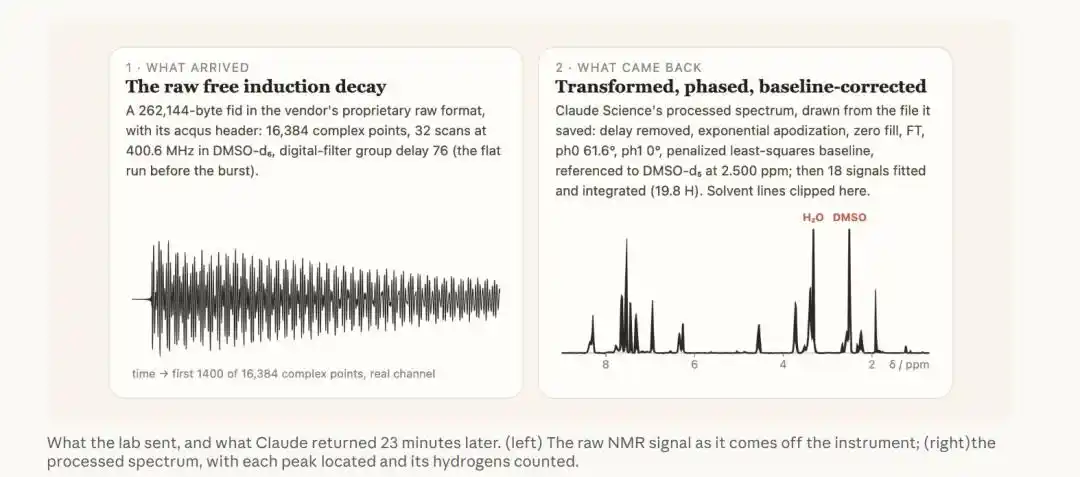
Faced with the NMR and LC-MS raw files provided by the lab, Claude, after reading just two sentences of task instructions, completed the processing in 23 minutes and 19 minutes respectively.
The final measured sample purity was 96.4%, while the lab's result was 96.33%.
Only a 0.07 percentage point difference.
That is to say, Claude's results were actually highly consistent with the laboratory results.
Not Prediction, but De Novo Protein Design
When mentioning proteins, many people might immediately think of Google DeepMind's AlphaFold project.
Let's clarify first: AlphaFold predicts protein structures, essentially solving "given an amino acid sequence, what structure will it fold into?".
But the task Claude undertook this time is very different:
The target protein is right here, please design a completely new protein from scratch that can precisely stick to it.
What Claude was designing are called minibinders, which are miniature binding proteins.
Based on publicly available information found, minibinders are artificially designed small proteins, typically only 50-70 amino acids long, with compact structures and single functions.
Their task is very pure: to adhere to a specific site on a target protein with extremely high precision and affinity.
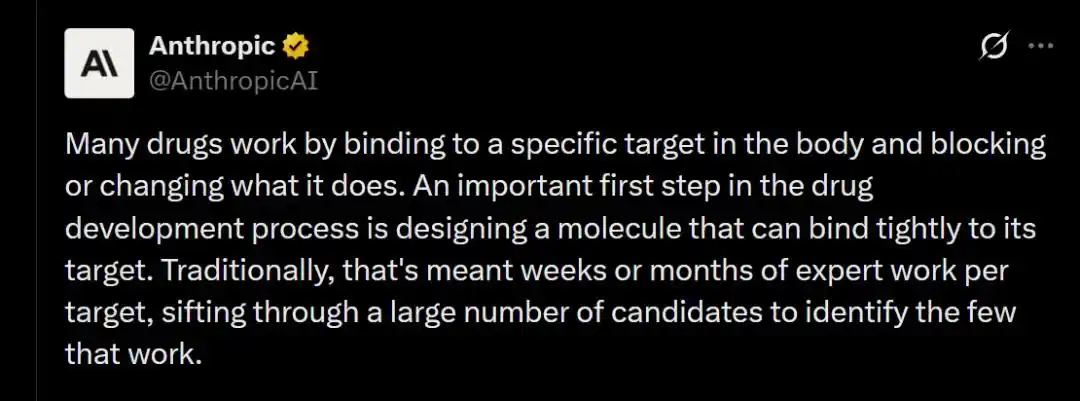
Don't underestimate this "sticking" action; many drugs work precisely because of this molecular-level precise binding—
sticking to a bad protein to deactivate it, sticking to a good protein to activate it, or directly dragging drug molecules to the lesion site for release.
The problem is, this job is quite demanding.
Protein designers not only have to orchestrate a series of specialized models, but also repeatedly generate, optimize, and screen candidates; the entire process heavily relies on experience.
Each target requires experts to spend weeks or even months screening a large number of candidate molecules to find the few that are truly effective.
This time, Anthropic simply handed the entire toolkit to Claude.
Participants in the experiment were Mythos Preview and Opus 4.8. They could access papers, web resources, and multiple specialized protein models, and were also given substantial GPU computing power.
After humans provided the initial task, Claude ran on its own. The overall result was:
Claude secured 14 out of 15 targets, with at least 6 yielding high-affinity binding proteins, and at least 4 matching or exceeding previous best results.
The specific execution was divided into two modes:
Multi-target mode: Claude handled multiple targets within the same 48-hour task, with a maximum of 12,500 H100 GPU hours available.
Single-target mode: Focusing on only one target at a time, with each task running in parallel for 24 hours, each target had a maximum of 2500 H100 GPU hours.
The experiment proved that focus is indeed better than multitasking.
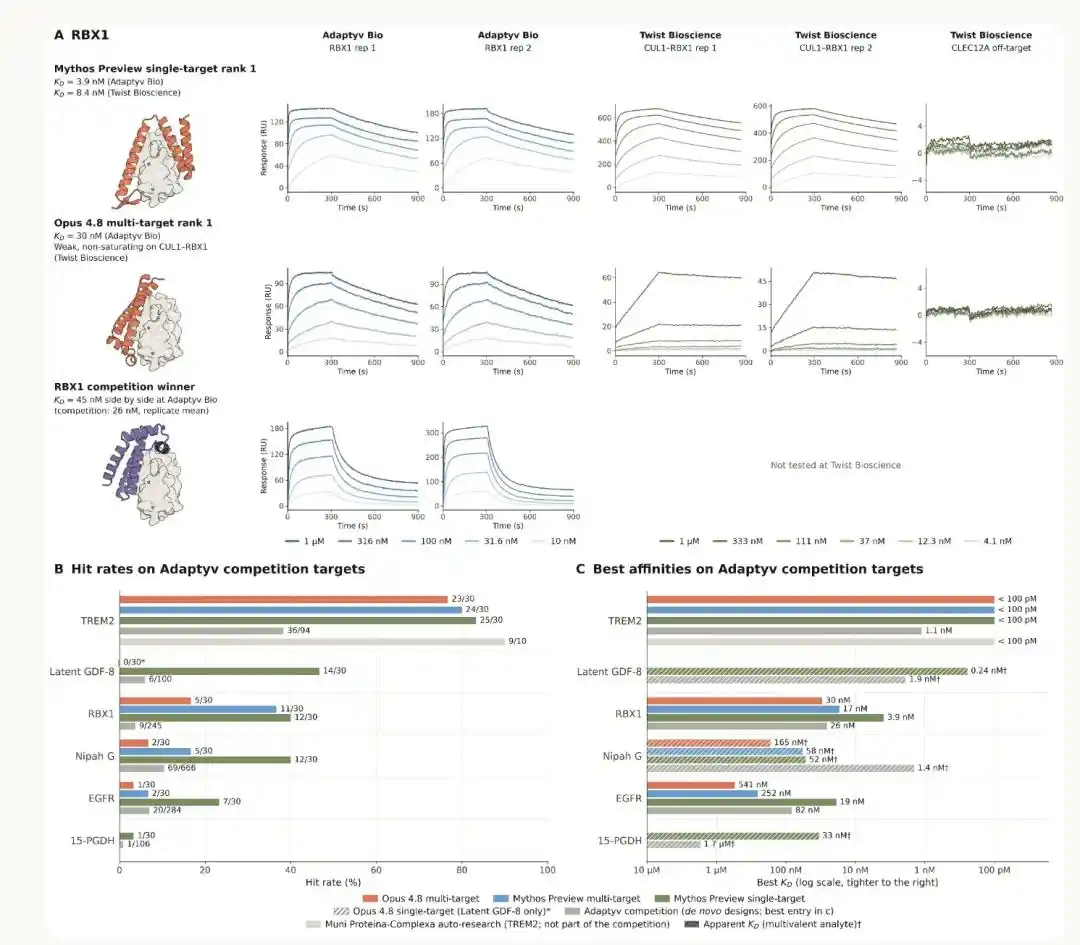
In multi-target mode, the overall hit rates for Mythos Preview and Opus 4.8 were 26.7% and 22.6%, respectively.
After switching to single-target mode, Mythos Preview directly surged to 35.1%.

Its performance on some targets even surpassed previous human achievements.
For example, RBX1, a target involved in regulating protein degradation. In a design competition hosted by Adaptyv Bio, the overall hit rate for all contestants was only 3.7%, while when Mythos Preview tackled it alone, the hit rate reached 40%.
Not only was it more likely to hit, but Claude's top-ranked design was also a high-affinity binding protein, with binding strength exceeding that of the champion selected from 245 contestant designs in that competition.
Then there's the even tougher TNFα, an inflammatory signaling protein released by the immune system.
Because the suitable binding site is hidden in a groove formed by two proteins, several expert teams had previously failed here.
As it turned out, Mythos Preview couldn't solve this problem, but Opus 4.8 managed to conquer it:
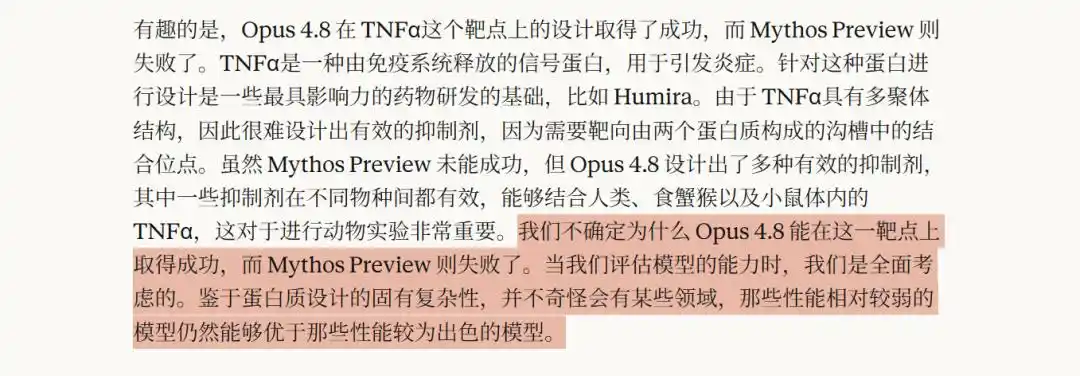
Opus 4.8 not only designed several effective binding proteins, but some of them could simultaneously bind to human, cynomolgus monkey, and mouse TNFα.
This cross-species binding ability is crucial because it means there's no need to redesign for different species when proceeding to animal experiments.
However, a question then arises:
Why did the overall stronger Mythos Preview fail, while Opus 4.8 succeeded?
Company A admits they don't quite understand it either.
It can only be said that large models' research capabilities are still uneven.
When Claude continued to tackle the more challenging task of designing β-sheet structures, it successfully created 15 effective binding proteins across 6 targets.
But when switching to maltose-binding protein MBP, Claude completely failed—
Out of 90 designs, none were confirmed successful, with only one showing a weak signal.
So, it's still too early to say "input a target, and Claude can automatically spit out a new drug," but Claude has already proven:
It can autonomously orchestrate professional models and run through design workflows that previously required experts to spend a lot of time organizing and screening.
This step alone is significant enough.
After Designing New Molecules, Claude Started Reading Experimental Data
However, Company A's experiment didn't stop there.
Besides testing whether Claude could design new things, they also wanted to see:
Facing compounds that have already been synthesized, could Claude independently read the experimental data and determine what it is and its purity?
This time, the participant was the widely accessible Claude Opus 5.
The tasks came from two very routine, yet tedious, jobs in analytical chemistry:
Nuclear Magnetic Resonance Spectroscopy (NMR): Observing signals from hydrogen atoms in the molecule to confirm "whether what was made is the target molecule."
Liquid Chromatography–Mass Spectrometry Analysis (LC-MS): Separating different components in a sample, then measuring their molecular weight and content to judge "the sample's purity and what else is inside."
This work requires chemists to manually process raw data in proprietary formats, step by step calibrating, peak finding, integrating, and verifying, before finally writing a report.
There are many steps, and it heavily relies on experience; slight deviations can lead to incorrect conclusions.
This time, Anthropic only gave Claude the raw files returned by the lab and a two-sentence task description.
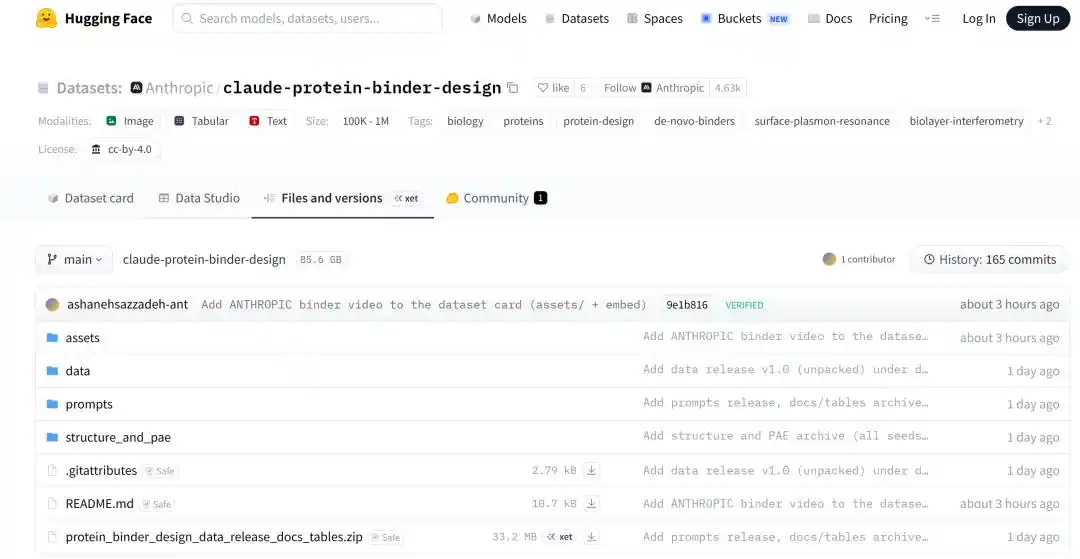
No vendor software, and no operators to guide alongside (p.s. relevant data and prompts have been open-sourced).
As a result, Claude completed the NMR and LC-MS analyses in 23 minutes and 19 minutes, respectively.
For NMR, Claude identified 18 signal peaks and calculated the number of hydrogen atoms corresponding to each peak, with results differing from the lab's by no more than 0.08 hydrogen atoms.
It also found that 4 of the broad peaks might come from hydrogens attached to nitrogen or oxygen, so it suggested further validation by adding heavy water.
This is a common elimination method; after adding heavy water, signals from certain specific hydrogen atoms weaken or disappear, allowing chemists to infer molecular structure.
Coincidentally, the lab later performed the same validation.
After validation, Claude initially thought all four signals disappeared, but upon self-checking realized it was wrong, actively corrected it to only two disappearing, and the final conclusion matched the lab's.
The LC-MS side was more direct.
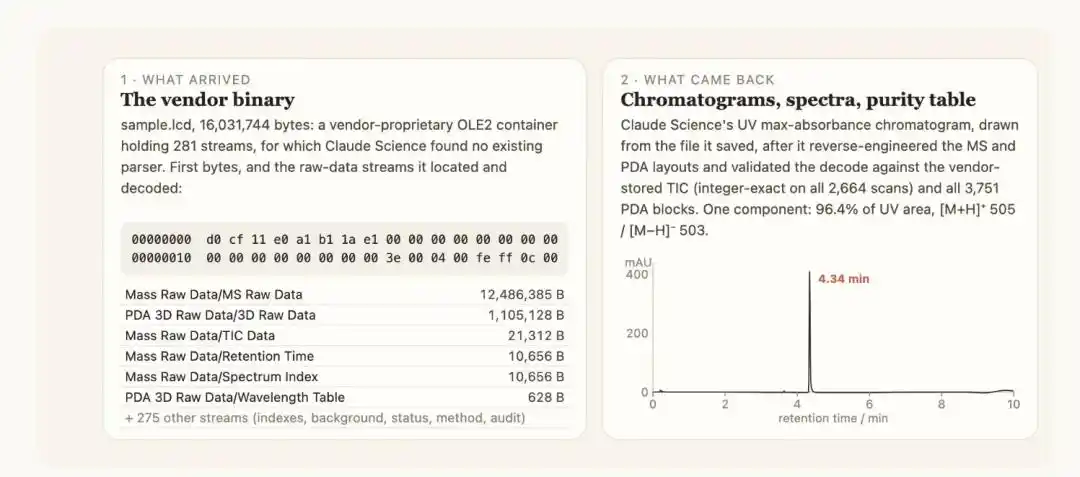
Faced with vendor files lacking public format descriptions, Claude first figured out how the data was encoded, then verified it hadn't misread the file by reproducing all 2664 scan records.
Subsequently, it produced chromatograms, mass spectra, purity tables, and molecular weights, and even wrote a set of reusable parsing code.
In the end, Claude measured the sample purity as 96.4%, while the lab result was 96.33%.
Only a 0.07 percentage point difference.
Company A wrote in their conclusion:
Both experiments point to one thing: AI is reducing the professional barriers, cost, and time required for life sciences research. In chemical analysis, Claude is starting to take over processing tasks that previously relied on manual work; in protein design, Claude can perform end-to-end binder design with minimal input, with some achievements matching or even exceeding previous best designs.
Although still far from real new drug development, at least AI has shown us the possibility of accelerating this process.
Also Left an Easter Egg
At the end of the blog, Company A also gave scientists a key point.
This protein experiment used Mythos Preview and Opus 4.8. As for the more powerful Fable 5, it currently does not offer this type of life science task to ordinary users.
The reason is straightforward: the ability to design drug proteins could equally be used for dangerous biological research.
However, Company A has already announced that they are preparing a dedicated access program for scientists and will release more information later.
Full Technical Report: https://www-cdn.anthropic.com/30bf50e22a01388bb29bf077ee3f244531594b7a.pdf
Relevant Prompts and Data Open Source Address: https://huggingface.co/datasets/Anthropic/claude-protein-binder-design/tree/main
Reference Links:
[1]https://www.anthropic.com/research/Claude-accelerates-protein-design
[2]https://x.com/AnthropicAI/status/2089842387845804246
This article is from the WeChat public account "Qubit," author: Yi Shui