AI Trading Cools, South Korean Stocks Plunge 1.8%, Spot Gold Rises 1%, Bitcoin Dives

华尔街日报Publicado em 2026-06-04Última atualização em 2026-06-04

Resumo

A sell-off in AI-related stocks, triggered by Broadcom's disappointing earnings forecast, sent shockwaves through global markets. South Korea's KOSPI led Asia's decline, plunging 1.8% as the risks from concentrated chip stock gains and surging leveraged investments came to the fore. The tech-heavy Nasdaq 100 futures fell 0.5% following Broadcom's 14% after-hours plunge, which signaled a slower-than-expected transition to AI clients. This pullback extended Wall Street's weakness, halting the S&P 500's nine-day rally amid hawkish Fed signals and renewed Middle East tensions. South Korean authorities convened an emergency meeting, pledging "immediate measures" against market volatility and warning of record-high stock margin debt. The adjustment rippled across assets: Bitcoin fell to around $64,000, its lowest since February, while safe-haven gold rose 1% on bargain hunting. Oil prices dipped on Middle East ceasefire news. Market analysts noted the sell-off was driven by profit-taking after massive gains, particularly in chip stocks like Samsung and SK Hynix, which now dominate the KOSPI. Wall Street banks are divided on Korea's outlook, with Goldman Sachs raising its target while Citigroup and others warn of overvaluation and a potential bubble. Bridgewater's Ray Dalio noted that great technological shifts often create bubbles. Meanwhile, Fed officials' hints at potential future rate hikes added to the cautious mood ahead of key U.S. jobs data.

Broadcom's disappointing earnings outlook triggered a rapid cooling of the global artificial intelligence (AI) trade. South Korea's KOSPI led the decline in the Asia-Pacific market on Thursday, abruptly pushing the accumulated bubble risks from highly concentrated chip stocks and rapidly expanding leveraged funds to the forefront.

Nasdaq 100 index futures slipped 0.5%, after Broadcom plunged 14% in after-hours trading. Its latest earnings outlook fell far short of investor expectations and signaled a slower-than-expected transition progress towards AI customers. UBS Group's AI Winners Basket Index fell 1.4% on Wednesday, ending a four-day winning streak. The Asian decline extended Wall Street's weak performance on Wednesday—the S&P 500's nine-day rally came to a halt, pressured by a combination of hawkish signals from Fed officials and renewed U.S.-Iran tensions, further suppressing risk appetite.

According to a Wall Street Journal article, South Korean Finance Minister Koo Yun-cheol held a joint meeting with central bank governor Shin Hyun-song, Financial Services Commission chairman Lee Eog-weon, and Financial Supervisory Service governor Lee Chan-jin. They pledged to take "immediate measures" if necessary to respond to sharp volatility in the foreign exchange market. At the same time, officials warned about stock margin loan balances hitting a nearly 20-year high, highlighting authorities' high concern for market stability.

This adjustment affected global assets: Bitcoin slid to around $64,000, its lowest level since February this year; gold rose about 1% as bargain-hunting buying flowed in; Brent crude oil ended a three-day rally on news of an Israel-Lebanon ceasefire agreement, falling about 1% to around $97 per barrel; European stocks were mixed, with investors cautiously awaiting Friday's U.S. non-farm payrolls data.

  • European stocks opened mixed, with the Euro Stoxx 50 up 0.13%, the UK's FTSE 100 down 0.12%, France's CAC 40 up 0.10%, and Germany's DAX up 0.20%.
  • Japan's Nikkei 225 closed down 1.4% at 67,470.69 points. The Topix index closed down 1.1% at 3,951.85 points. South Korea's KOSPI closed down 1.8% at 8,639.41 points.
  • The U.S. Dollar Spot Index was little changed.
  • The yen rose 0.1% to 159.86 per dollar.
  • The yield on the 10-year U.S. Treasury note fell two basis points to 4.48%.
  • The yield on the 10-year Japanese government bond rose 3 basis points to 2.670%.
  • WTI crude oil fell 0.8% to $95.27 per barrel.
  • Spot gold rose 1% to $4,479.64 per ounce.
  • Bitcoin fell 0.9% to $64,312.09.

Nasdaq 100 index futures slipped 0.5%, after Broadcom plunged 14% in after-hours trading, as its latest earnings outlook fell short of investor expectations. Broadcom also signaled that its transition towards AI customers was progressing slower than expected, though the direction is correct, it faces excessively high market expectations. UBS Group's AI Winners Basket Index fell 1.4% on Wednesday, ending a four-day winning streak.
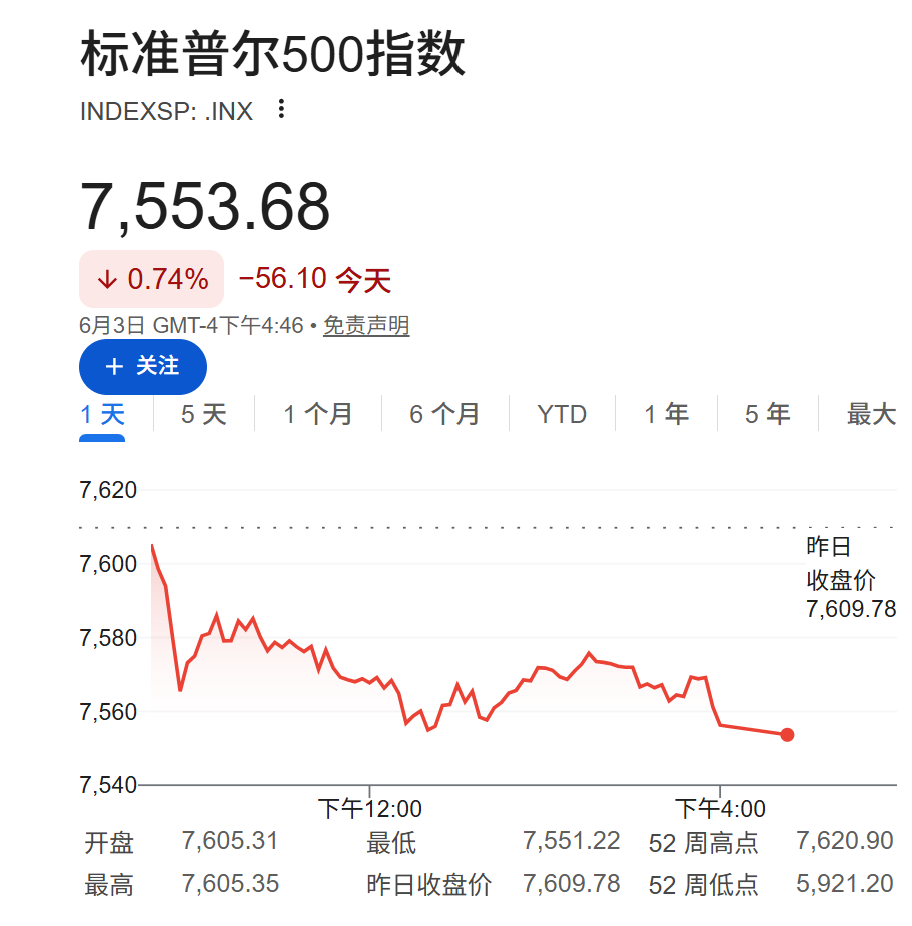
The Asian decline extended Wall Street's weak performance on Wednesday—the S&P 500's nine-day rally ended abruptly, as renewed U.S.-Iran conflict weighed on market risk sentiment. European stocks also faced downward pressure, with Bitcoin sliding to around $64,000, its lowest level since February this year. News of an Israel-Lebanon ceasefire agreement brought some local relief, leading Brent crude oil to end its three-day rally and fall about 1% to around $97 per barrel; gold rose 0.6% to around $4,460 per ounce as bargain-hunting buying flowed in.

Billy Leung, an investment strategist at Global X Management, said, "Chip stocks had rallied sharply before the earnings reports were released. Investors holding significant paper gains don't need much reason to take profits."

South Korea's KOSPI opened with a dive on Thursday, becoming one of the worst-performing major indices in the Asia-Pacific region. Although the KOSPI is still up over 100% year-to-date and has gained over 200% since June 2025, ranking first among major global stock indices, the nearly 2% drop on the day still drew high-level attention from authorities.
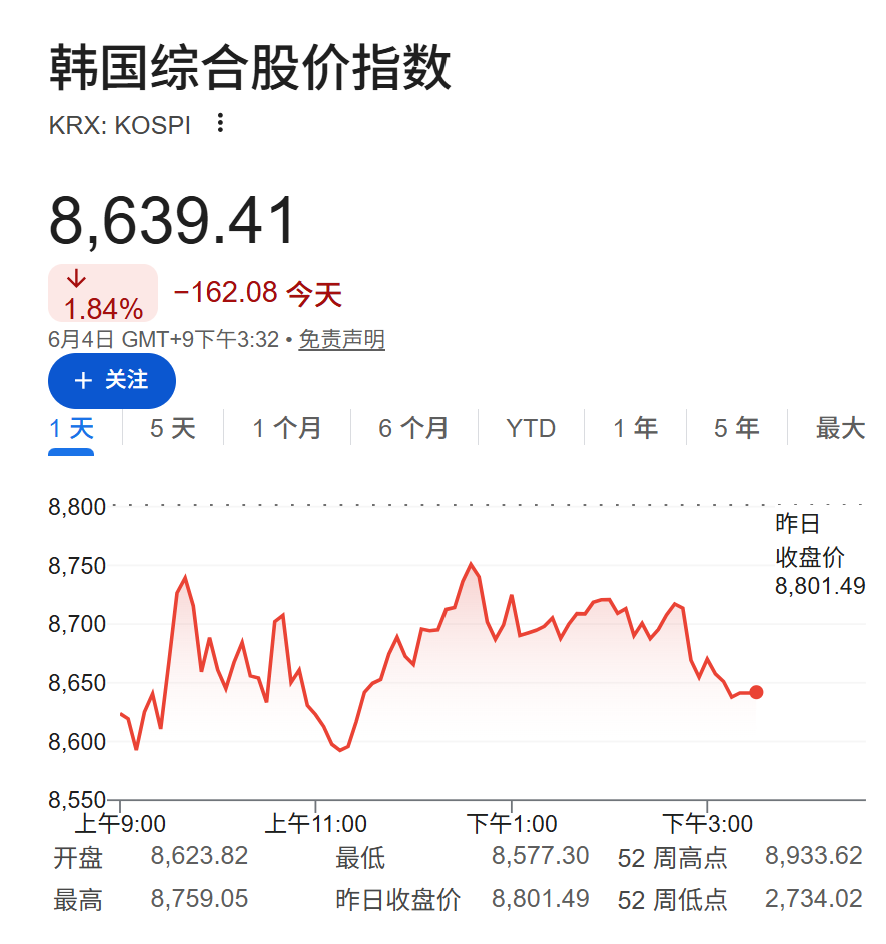
According to Yonhap News Agency, Koo Yun-cheol stated after the meeting that the government is maintaining high vigilance to prevent external uncertainties from turning into widespread market panic. "(The government) will take immediate measures if necessary to respond to excessive market volatility," he added. Attending officials believe the recent market volatility is closely related to the ongoing conflict in the Middle East and continuous net selling by foreign investors in the stock market. South Korea's Ministry of Finance stated in a declaration, "The recent rapid rise in the Korean stock market has led to temporary rebalancing by foreign investors, with profit-taking activities intensifying market volatility."

While officials emphasized the robustness of South Korea's economic fundamentals—May exports surged 53.2% year-on-year, and the total stock market capitalization has risen to the sixth largest globally—they also warned that the rise in stock margin loan scale could pose potential risks to the economy and will closely monitor related developments to protect investor interests.

The stellar performance of the KOSPI masks severe divergence among its components. Among the 835 constituent stocks, only 373 have risen this year, less than half; Samsung Electronics and SK Hynix have surged about 200% and 250% year-to-date, respectively, each with market capitalization exceeding $1 trillion, together accounting for over 40% of the KOSPI's weighting, while the remaining over 800 stocks contribute less than 30% to the index's gain.

Accompanying the highly concentrated rally is a sharp expansion of leveraged speculative funds. Data from South Korea's Financial Supervisory Service shows that as of Q1 2026, the margin loan balance at the top ten securities firms has approached 36 trillion won, nearly doubling from a year ago, hitting a nearly 20-year high; investors aged 50 and above account for as high as 62.3% of this, with the loan balance for the over-60 group surging from about 3 trillion won to over 8 trillion won within a year. In Q1 2026, the number of new securities accounts opened by individuals under 18 in South Korea increased nearly tenfold compared to the same period last year.

Data from the Korea Exchange shows that the total number of circuit breaker triggers in the main board market this year has risen to the highest level since the 2008 financial crisis—a total of 20 "sidecar" program trading suspension orders have been issued this year, only 6 less than the 26 issued in all of 2008. According to the rules, program trading is suspended for 5 minutes when the KOSPI 200 futures index fluctuates by 5% or more for at least 1 minute.

Faced with the KOSPI's rapid rise, major Wall Street institutions have shown clear divergence in their stances. Goldman Sachs raised its KOSPI target from 9,000 points to 12,000 points, stating in a report that the rally in AI chipmaker stocks may continue, but warning that correction risks are rising; strategists including Timothy Moe, the bank's chief Asia-Pacific equity strategist, wrote in the report, "We prefer North Asia, where earnings growth is the strongest."

Citi warned that South Korean stock valuations are at high levels among major global markets, coupled with institutional risks in labor relations, which could dampen long-term foreign investment allocation interest. It believes the current rally is more driven by short-term sentiment. The global chief investment officer at Standard Chartered Bank pointed out that going long on South Korea has become a "highly crowded trade" and has downgraded the semiconductor sector from "overweight" to "neutral," believing a short-term correction is entirely reasonable.

Billionaire and Bridgewater Associates founder Ray Dalio said in a Bloomberg TV interview on Wednesday, "All great technological transformations create bubbles." Rob Marshall Lee, emerging markets investor and founding partner & chief investment officer at Cusana Capital, was more blunt: "The Korean market is a huge bubble." He pointed out that most Korean companies have extremely low return on equity, and the AI era will not bring fundamental change; he warned that when the cycle reverses, the profit margins of related companies could plummet from 70% to negative. "Short-term, I wouldn't short; but looking five years out, you'd likely lose a lot of money," he said.

Hawkish remarks from Fed officials simultaneously cooled market sentiment. Dallas Fed President Lorie Logan said policymakers may need to raise interest rates later this year to bring inflation back to target; New York Fed President John Williams told Yahoo Finance that the interest rate outlook remains uncertain.

According to Bloomberg, recent data showed U.S. companies added the most new jobs since January 2025, indicating hiring momentum remains strong despite rising energy costs. If Friday's non-farm payrolls data confirms this, market expectations for Fed rate hikes will strengthen further. The yield on the 10-year U.S. Treasury note fell slightly by 2 basis points to 4.48% on Thursday, after rising significantly earlier due to high oil prices and labor market resilience. Investors on Thursday will also receive the weekly initial jobless claims data to further gauge the direction of the job market.

Fawad Razaqzada, an analyst at Forex.com, said, "If U.S. economic data continues to positively exceed expectations, investors may express a more hawkish Fed expectation by betting on a stronger U.S. dollar, especially against low-yield or zero-yield assets like the yen and gold." Meanwhile, according to Bloomberg citing informed sources, Bank of Japan officials are considering raising the benchmark interest rate by 25 basis points this month and assessing the possibility of further hikes within the year, driving the yen to strengthen against the dollar on Thursday.

Perguntas relacionadas

QWhat was the immediate trigger for the global AI trade cooling and the subsequent market sell-off?

AThe immediate trigger was Broadcom's disappointing earnings outlook, which fell significantly below investor expectations and signaled a slower-than-anticipated transition to AI customers. This caused its stock to plunge 14% in after-hours trading and triggered a broader sell-off in AI and chip-related stocks.

QWhy did the South Korean KOSPI index fall significantly, and what specific market risks did this highlight?

AThe KOSPI fell 1.8% due to the global tech/AI sell-off and domestic factors. It highlighted the risks of a highly concentrated and leveraged market bubble. Specifically, the index's performance was driven almost entirely by massive gains in two chip giants (Samsung and SK Hynix), while over 800 other components contributed little. Concurrently, margin loan balances hit a near 20-year high, indicating speculative, debt-fueled investment, particularly among older retail investors.

QHow did the market movements described affect major global assets like gold, oil, and Bitcoin?

AThe risk-off sentiment led to a flight to safety, boosting gold, which rose 1%. Oil (Brent crude) fell about 1% on news of an Israel-Lebanon ceasefire. Bitcoin, often viewed as a risk asset, dropped to around $64,000, its lowest level since February, as speculative capital fled.

QWhat were the contrasting views of major Wall Street institutions (e.g., Goldman Sachs, Citigroup) on the South Korean market rally?

AThere was significant divergence. Goldman Sachs was optimistic, raising its KOSPI target to 12,000 and believing the AI chip rally could continue, albeit with rising correction risks. In contrast, Citigroup warned that high valuations and structural labor risks could deter long-term foreign investment, viewing the rally as driven by short-term sentiment.

QWhat key factors are currently influencing U.S. monetary policy expectations and currency markets according to the article?

ATwo main factors are at play: 1) Strong U.S. economic data, especially a resilient labor market (e.g., strong private payrolls), which could compel the Federal Reserve to maintain or even consider future rate hikes, as hinted by officials like Lorie Logan. 2) High energy prices putting upward pressure on inflation. This is strengthening expectations for a hawkish Fed, which could support the U.S. dollar, particularly against low-yield currencies like the Japanese Yen.

Leituras Relacionadas

Will the Next Crypto Bull Run Start with On-Chain Trading of SpaceX?

This article presents a scenario-based forecast for the crypto industry from 2026 to 2029, arguing that the next major cycle will be driven not by technological narratives but by legal access to real-world assets. The author predicts that by mid-2026, pre-IPO perpetual contracts for top private companies like SpaceX, OpenAI, and Anthropic on platforms like Hyperliquid will become the primary gateway for accessing quality assets, as most crypto-native tokens fail to capture real value. The much-hyped AI x Crypto intersection largely fails except for prediction markets, which thrive on betting on AI model supremacy. By 2027, public blockchain foundations are forced to choose between catering to retail speculation or building compliant infrastructure for institutions, with many opting for the latter. Growth in stablecoins and tokenized private credit/equity hits a "triple ceiling" due to regulatory and political uncertainty rather than market demand. The pivotal shift is forecast for 2028. A major liquidation event in pre-IPO perpetuals exposes the structural flaw of synthetic markets lacking a real underlying asset anchor. In response, regulatory changes finally allow the public solicitation of private securities resales to verified accredited investors. This creates a legitimate secondary market for real company equity, which then becomes the core asset class of the new bull market, relegating synthetic perps to a niche role. By 2029, the industry becomes "boring" but foundational. Tokens without claims on real cash flows or assets cease trading. Stablecoin growth is steady but politically capped. Crypto infrastructure fades from view as it gets absorbed into traditional finance backends. The article's central thesis is that the key bottleneck for crypto's next phase is legal and regulatory channels for real asset ownership, not technology.

marsbitHá 9m

Will the Next Crypto Bull Run Start with On-Chain Trading of SpaceX?

marsbitHá 9m

The Value Distribution of Stablecoins

**Summary: The Value Distribution of Stablecoins** The article argues that stablecoins are evolving from mere trading tools into broader channels for dollar access. It divides the stablecoin ecosystem into four layers to analyze how value is distributed: 1. **Issuance Layer:** Mints stablecoins, holds reserve assets, and captures the spread between reserve yield and user costs (e.g., Tether, Circle). This layer currently earns the largest profit margin. 2. **Infrastructure Layer:** Connects stablecoins to the traditional financial system, handling fiat on/off-ramps, banking integration, compliance (KYC/AML), and asset management (e.g., Bridge, BVNK). This is the "unglamorous" but critical work, building the essential bridges between crypto and real-world finance. 3. **Acquiring/Distribution Layer:** Integrates stablecoins into merchant systems, manages payment flows, and provides enterprise financial software (e.g., Stripe, Coinbase). They act as the access point for businesses. 4. **Application Layer:** The end-users and businesses that ultimately use stablecoins for payments, settlements, or as a store of value. They benefit from convenience but have little pricing power. The core thesis is that while the issuance layer currently dominates profits, the often-overlooked **infrastructure layer holds significant long-term potential**. The real challenge and barrier to mass adoption is not the on-chain transfer of stablecoins (which is simple), but the complex "last mile" integration into existing business workflows, banking systems, and regulatory frameworks across different countries. Companies in this layer are currently in a "land grab" phase, investing heavily to build networks, secure bank partnerships, and establish compliance pathways. While their position is currently pressured by the profitable issuers above and distribution platforms below, the article suggests that if stablecoins become a default financial rail for businesses, the infrastructure providers who have done the hard work of integration will ultimately gain strong pricing power and become entrenched, essential players.

marsbitHá 6h

The Value Distribution of Stablecoins

marsbitHá 6h

The Value Distribution of Stablecoins

The Value Distribution of Stablecoins The article argues that stablecoins are evolving from a mere trading tool into a broad "dollar channel." It analyzes the industry's value chain through four layers: 1. **Issuance Layer (e.g., Tether, Circle):** The top layer that mints stablecoins, holds reserve assets, and captures the thickest interest rate spread. 2. **Infrastructure Layer (e.g., Bridge, BVNK):** Connects stablecoins to the traditional financial system, handling critical but complex "dirty work" like fiat on/off-ramps, banking integration, compliance (KYC/AML), and cross-border settlement. 3. **Acquiring/Distribution Layer (e.g., Stripe, Coinbase):** Embeds stablecoins into merchant systems, manages payment flows, and integrates with enterprise software. 4. **Application Layer:** End-users and businesses that ultimately use stablecoins for payments, settlement, or storing value. The author posits that while the issuance layer currently captures the most profit, the most overlooked and potentially critical layer is infrastructure. The core challenge for stablecoin adoption isn't the on-chain transfer (which is simple), but bridging the gap between blockchain and the real-world financial system. This involves solving practical problems for businesses: fiat conversion, reconciliation, tax handling, and user onboarding. Infrastructure companies are currently in a difficult "land-grab" phase—building networks, securing banking relationships, and achieving compliance country-by-country. They face pressure from both the profitable issuance layer above and distribution platforms below. However, the author suggests this layer is building a crucial moat. Once stablecoins become a default business rail, the infrastructure players who have done the hard work of integration may gain significant, durable value and pricing power.

链捕手Há 6h

The Value Distribution of Stablecoins

链捕手Há 6h

Trading

Spot
Futuros

Artigos em Destaque

O que é BITCOIN

Compreender o HarryPotterObamaSonic10Inu (ERC-20) e a Sua Posição no Espaço Cripto Nos últimos anos, o mercado de criptomoedas assistiu a um aumento na popularidade das moedas meme, cativando não apenas os traders, mas também aqueles que procuram envolvimento comunitário e valor de entretenimento. Entre estes tokens únicos está o HarryPotterObamaSonic10Inu (ERC-20), um projeto intrigante que mistura referências culturais no tecido das criptomoedas. Este artigo explora os principais aspetos do HarryPotterObamaSonic10Inu, examinando os seus mecanismos, a sua ética orientada pela comunidade e o seu envolvimento com o vasto panorama cripto. O que é o HarryPotterObamaSonic10Inu (ERC-20)? Como o nome sugere, o HarryPotterObamaSonic10Inu é uma moeda meme construída na blockchain Ethereum, classificada sob o padrão ERC-20. Ao contrário das criptomoedas tradicionais, que podem enfatizar a utilidade prática ou o potencial de investimento, este token prospera no valor de entretenimento e na força da sua comunidade. O projeto visa promover um ambiente onde utilizadores envolvidos possam reunir-se, partilhar ideias e participar em atividades inspiradas por diversos fenómenos culturais. Uma característica notável do HarryPotterObamaSonic10Inu é a zero taxa sobre transações. Este elemento atraente visa encorajar a negociação e o envolvimento da comunidade, isento de encargos adicionais que podem desencorajar os traders de pequena escala. A oferta total da moeda está fixada em mil milhões de tokens, uma cifra que marca a sua intenção de manter uma circulação substancial dentro da comunidade. Criador do HarryPotterObamaSonic10Inu (ERC-20) As origens do HarryPotterObamaSonic10Inu estão um pouco envoltas em mistério; os detalhes sobre o criador permanecem desconhecidos. O desenvolvimento deste token carece de uma equipa identificável ou de um plano explícito, o que não é raro no setor das moedas meme. Em vez disso, o projeto surgiu de forma orgânica, com o seu progresso a depender fortemente do entusiasmo e da participação da sua comunidade. Investidores do HarryPotterObamaSonic10Inu (ERC-20) No que diz respeito a investimentos externos e apoios, o HarryPotterObamaSonic10Inu também permanece ambíguo. O token não lista quaisquer fundações de investimento conhecidas ou apoio organizacional significativo. Em vez disso, o “sangue vital” do projeto é a sua comunidade de base, que informa o seu crescimento e sustentabilidade através da ação coletiva e do envolvimento no espaço cripto. Como Funciona o HarryPotterObamaSonic10Inu (ERC-20)? Como uma moeda meme, o HarryPotterObamaSonic10Inu opera principalmente fora dos quadros tradicionais que muitas vezes governam o valor dos ativos. Existem vários aspetos distintivos que definem como o projeto funciona: Transações Sem Taxas: Sem taxas sobre transações, os utilizadores podem comprar e vender o token livremente, sem a preocupação de custos ocultos. Envolvimento da Comunidade: O projeto prospera na interação da comunidade, aproveitando plataformas de redes sociais para criar entusiasmo e facilitar a participação. Discussões, partilha de conteúdo e envolvimento são elementos cruciais que ajudam a expandir o seu alcance e a fomentar a lealdade entre os apoiantes. Sem Utilidade Prática: Deve ser notado que o HarryPotterObamaSonic10Inu não oferece utilidade concreta dentro do ecossistema financeiro. Em vez disso, é classificado como um token principalmente para entretenimento e atividades comunitárias. Referência Cultural: O token incorpora de forma inteligente elementos da cultura popular para atrair interesse, conectando-se tanto com entusiastas de memes como com seguidores de criptomoedas. HarryPotterObamaSonic10Inu exemplifica como as moedas meme operam de forma diferente de projetos de criptomoedas mais tradicionais, entrando no mercado como construções sociais inovadoras em vez de ativos utilitários. Linha do Tempo do HarryPotterObamaSonic10Inu (ERC-20) A história do HarryPotterObamaSonic10Inu é marcada por vários marcos notáveis: Criação: O token surgiu de um meme viral, capturando a imaginação de muitos entusiastas de criptomoedas. Datas específicas de criação não estão disponíveis, sublinhando a sua ascensão orgânica. Listagem em Exchanges: O HarryPotterObamaSonic10Inu conseguiu entrar em várias exchanges, permitindo um acesso e negociação mais fáceis pela comunidade. Iniciativas de Envolvimento da Comunidade: Atividades contínuas direcionadas a melhorar a interação comunitária, incluindo concursos, campanhas em redes sociais e geração de conteúdo por fãs e defensores. Planos de Expansão Futura: O roteiro do projeto inclui o lançamento de uma coleção de NFTs, mercadorias e um site de eCommerce relacionado aos seus temas culturais, envolvendo ainda mais a comunidade e tentando adicionar mais dimensões ao seu ecossistema. Pontos-Chave sobre o HarryPotterObamaSonic10Inu (ERC-20) Natureza Orientada pela Comunidade: O projeto prioriza a contribuição coletiva e a criatividade, assegurando que o envolvimento dos utilizadores está na vanguarda do seu desenvolvimento. Classificação como Moeda Meme: Representa o epítome da criptomoeda baseada em entretenimento, destacando-se dos veículos de investimento tradicionais. Sem Afiliação Direta com o Bitcoin: Apesar da semelhança no nome do ticker, o HarryPotterObamaSonic10Inu é distinto e não tem qualquer relação com o Bitcoin ou outras criptomoedas estabelecidas. Foco na Colaboração: O HarryPotterObamaSonic10Inu é projetado para criar um espaço de colaboração e partilha de histórias entre os seus detentores, proporcionando uma via para a criatividade e o fortalecimento da comunidade. Perspectivas Futuras: A ambição de expandir além da sua premissa inicial para NFTs e mercadorias delineia um caminho para o projeto potencialmente entrar em avenidas mais mainstream dentro da cultura digital. À medida que as moedas meme continuam a capturar a imaginação da comunidade cripto, HarryPotterObamaSonic10Inu (ERC-20) destaca-se devido aos seus laços culturais e abordagem centrada na comunidade. Embora possa não se encaixar no molde típico de um token orientado para utilidade, a sua essência reside na alegria e camaradagem fomentadas entre os seus apoiantes, destacando a natureza em evolução das criptomoedas em uma era cada vez mais digital. À medida que o projeto continua a desenvolver-se, será importante observar como as dinâmicas comunitárias influenciam a sua trajetória no panorama em constante mudança da tecnologia blockchain.

1.7k Visualizações TotaisPublicado em {updateTime}Atualizado em 2024.12.03

O que é BITCOIN

Como comprar BTC

Bem-vindo à HTX.com!Tornámos a compra de Bitcoin (BTC) simples e conveniente.Segue o nosso guia passo a passo para iniciar a tua jornada no mundo das criptos.Passo 1: cria a tua conta HTXUtiliza o teu e-mail ou número de telefone para te inscreveres numa conta gratuita na HTX.Desfruta de um processo de inscrição sem complicações e desbloqueia todas as funcionalidades.Obter a minha contaPasso 2: vai para Comprar Cripto e escolhe o teu método de pagamentoCartão de crédito/débito: usa o teu visa ou mastercard para comprar Bitcoin (BTC) instantaneamente.Saldo: usa os fundos da tua conta HTX para transacionar sem problemas.Terceiros: adicionamos métodos de pagamento populares, como Google Pay e Apple Pay, para aumentar a conveniência.P2P: transaciona diretamente com outros utilizadores na HTX.Mercado de balcão (OTC): oferecemos serviços personalizados e taxas de câmbio competitivas para os traders.Passo 3: armazena teu Bitcoin (BTC)Depois de comprar o teu Bitcoin (BTC), armazena-o na tua conta HTX.Alternativamente, podes enviá-lo para outro lugar através de transferência blockchain ou usá-lo para transacionar outras criptomoedas.Passo 4: transaciona Bitcoin (BTC)Transaciona facilmente Bitcoin (BTC) no mercado à vista da HTX.Acede simplesmente à tua conta, seleciona o teu par de trading, executa as tuas transações e monitoriza em tempo real.Oferecemos uma experiência de fácil utilização tanto para principiantes como para traders experientes.

4.2k Visualizações TotaisPublicado em {updateTime}Atualizado em 2026.06.02

Como comprar BTC

O que é $BITCOIN

OURO DIGITAL ($BITCOIN): Uma Análise Abrangente Introdução ao OURO DIGITAL ($BITCOIN) OURO DIGITAL ($BITCOIN) é um projeto baseado em blockchain que opera na rede Solana, com o objetivo de combinar as características dos metais preciosos tradicionais com a inovação das tecnologias descentralizadas. Embora partilhe um nome com o Bitcoin, frequentemente referido como “ouro digital” devido à sua percepção como uma reserva de valor, o OURO DIGITAL é um token separado projetado para criar um ecossistema único dentro da paisagem Web3. O seu objetivo é posicionar-se como um ativo digital alternativo viável, embora os detalhes sobre as suas aplicações e funcionalidades ainda estejam em desenvolvimento. O que é o OURO DIGITAL ($BITCOIN)? OURO DIGITAL ($BITCOIN) é um token de criptomoeda explicitamente projetado para uso na blockchain Solana. Em contraste com o Bitcoin, que fornece um papel amplamente reconhecido como armazenamento de valor, este token parece focar em aplicações e características mais amplas. Aspectos notáveis incluem: Infraestrutura Blockchain: O token é construído na blockchain Solana, conhecida pela sua capacidade de lidar com transações de alta velocidade e baixo custo. Dinâmicas de Oferta: O OURO DIGITAL tem um fornecimento máximo limitado a 100 quatrilhões de tokens (100P $BITCOIN), embora os detalhes sobre o seu fornecimento circulante ainda não tenham sido divulgados. Utilidade: Embora as funcionalidades precisas não estejam explicitamente delineadas, existem indicações de que o token poderia ser utilizado para várias aplicações, potencialmente envolvendo aplicações descentralizadas (dApps) ou estratégias de tokenização de ativos. Quem é o Criador do OURO DIGITAL ($BITCOIN)? Neste momento, a identidade dos criadores e da equipa de desenvolvimento por trás do OURO DIGITAL ($BITCOIN) permanece desconhecida. Esta situação é típica entre muitos projetos inovadores no espaço da blockchain, particularmente aqueles alinhados com finanças descentralizadas e fenómenos de moedas meme. Embora tal anonimato possa fomentar uma cultura orientada pela comunidade, intensifica as preocupações sobre governança e responsabilidade. Quem são os Investidores do OURO DIGITAL ($BITCOIN)? As informações disponíveis indicam que o OURO DIGITAL ($BITCOIN) não tem apoiantes institucionais conhecidos ou investimentos proeminentes de capital de risco. O projeto parece operar num modelo peer-to-peer focado no apoio e adoção da comunidade, em vez de rotas de financiamento tradicionais. A sua atividade e liquidez estão principalmente situadas em exchanges descentralizadas (DEXs), como a PumpSwap, em vez de plataformas de negociação centralizadas estabelecidas, destacando ainda mais a sua abordagem de base. Como Funciona o OURO DIGITAL ($BITCOIN) A mecânica operacional do OURO DIGITAL ($BITCOIN) pode ser elaborada com base no seu design de blockchain e nas características da rede: Mecanismo de Consenso: Ao aproveitar o exclusivo proof-of-history (PoH) da Solana combinado com um modelo de proof-of-stake (PoS), o projeto assegura uma validação eficiente das transações, contribuindo para o alto desempenho da rede. Tokenomics: Embora mecanismos deflacionários específicos não tenham sido extensivamente detalhados, o vasto fornecimento máximo de tokens implica que pode atender a microtransações ou casos de uso de nicho que ainda estão por definir. Interoperabilidade: Existe o potencial para integração com o ecossistema mais amplo da Solana, incluindo várias plataformas de finanças descentralizadas (DeFi). No entanto, os detalhes sobre integrações específicas permanecem não especificados. Cronologia de Eventos Chave Aqui está uma cronologia que destaca marcos significativos relacionados ao OURO DIGITAL ($BITCOIN): 2023: O lançamento inicial do token ocorre na blockchain Solana, marcado pelo seu endereço de contrato. 2024: O OURO DIGITAL ganha visibilidade ao tornar-se disponível para negociação em exchanges descentralizadas como a PumpSwap, permitindo que os utilizadores o negociem contra SOL. 2025: O projeto testemunha atividade de negociação esporádica e potencial interesse em envolvimentos liderados pela comunidade, embora não tenham sido documentadas parcerias ou avanços técnicos notáveis até ao momento. Análise Crítica Forças Escalabilidade: A infraestrutura subjacente da Solana suporta altos volumes de transações, o que pode aumentar a utilidade do $BITCOIN em vários cenários de transação. Acessibilidade: O potencial preço de negociação baixo por token pode atrair investidores de retalho, facilitando uma participação mais ampla devido a oportunidades de propriedade fracionada. Riscos Falta de Transparência: A ausência de apoiantes, desenvolvedores ou um processo de auditoria publicamente conhecidos pode gerar ceticismo em relação à sustentabilidade e confiabilidade do projeto. Volatilidade do Mercado: A atividade de negociação depende fortemente do comportamento especulativo, o que pode resultar em volatilidade significativa dos preços e incerteza para os investidores. Conclusão O OURO DIGITAL ($BITCOIN) surge como um projeto intrigante, mas ambíguo, dentro do ecossistema em rápida evolução da Solana. Embora tente aproveitar a narrativa do “ouro digital”, a sua divergência do papel estabelecido do Bitcoin como reserva de valor sublinha a necessidade de uma diferenciação mais clara da sua utilidade pretendida e estrutura de governança. A aceitação e adoção futuras dependerão provavelmente da abordagem da atual opacidade e da definição mais explícita das suas estratégias operacionais e económicas. Nota: Este relatório abrange informações sintetizadas disponíveis até outubro de 2023, e desenvolvimentos podem ter ocorrido além do período de pesquisa.

92 Visualizações TotaisPublicado em {updateTime}Atualizado em 2025.05.13

O que é $BITCOIN

Discussões

Bem-vindo à Comunidade HTX. Aqui, pode manter-se informado sobre os mais recentes desenvolvimentos da plataforma e obter acesso a análises profissionais de mercado. As opiniões dos utilizadores sobre o preço de BTC (BTC) são apresentadas abaixo.

活动图片





