AI Leads to Layoffs? Research Shows AI Is More Expensive Than the People It Replaces

marsbitPublicado em 2026-06-09Última atualização em 2026-06-09

Resumo

Title: AI Layoffs? Research Shows AI is More Expensive Than the Workers It Replaces. This year, nearly 50,000 employees have been laid off due to AI, with companies initially believing AI could replace human jobs. However, recent findings indicate that the actual operational costs of AI often exceed the expense of the human labor it was meant to replace. Examples include Uber exhausting its annual AI budget in just four months, Microsoft cutting Claude Code licenses due to high costs, and an Anthropic employee incurring $150,000 in API usage in a single month. A CloudZero survey reveals that 45% of enterprises spend over $100,000 monthly on AI, yet only 8% of S&P 500 companies report any AI-related revenue, and half struggle to measure ROI. Analyst Scott Galloway predicts a shift toward cheaper Chinese AI models, which are 10 to 30 times more affordable than American counterparts. Data shows Chinese models' usage among developers surged from 1% in 2024 to over 60% by mid-2026, with 80% of U.S. AI startups adopting them. This trend may prompt regulatory responses, such as potential restrictions from the Trump administration.

Authors: Scott Galloway / Ed Elson / Mia Silverio

Translation: TechFlow

TechFlow Introduction: Nearly 50,000 people have been laid off this year due to AI, but more and more companies are finding that the cost of using AI is higher than human labor. Uber burned through its entire 2026 AI budget in four months, Microsoft is cutting Claude Code licenses in multiple departments, and an Anthropic employee used up $150,000 in API credits in a single month. Scott Galloway believes companies will ultimately turn to Chinese large language models that are 10-30 times cheaper, which will force Trump to impose restrictions.

Is AI More Expensive Than the People It Replaces?

Nearly 50,000 employees have been laid off this year, citing AI as the reason. This figure nearly equals the total for all of 2025. For companies adopting AI, the logic is simple: AI can do the jobs people do.

But in recent weeks, this logic has hit a wall. More and more companies are discovering that the actual cost of using AI is higher than the human labor it is intended to replace.
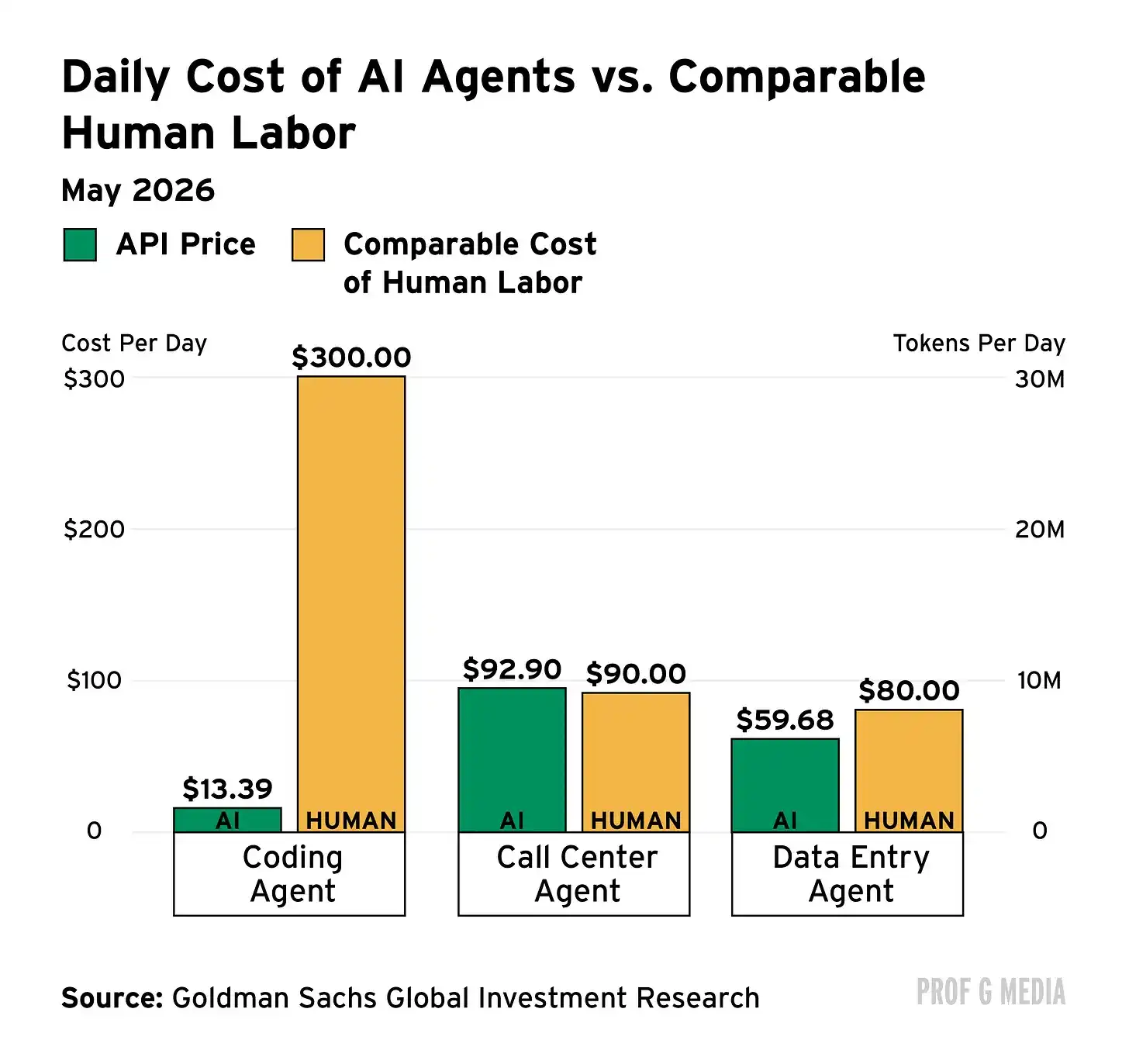
Figure: The AI Cost Shock for Businesses – AI spending and cost feedback from companies like Uber, Microsoft, Nvidia, Meta

Uber burned through its entire 2026 AI budget in just four months. The COO said it's becoming increasingly difficult to justify AI expenditures internally. Microsoft is cutting Claude Code licenses in multiple departments for one simple reason: cost.

A Nvidia executive stated that compute costs now "far exceed employee costs." Meta, Pinterest, and Spotify all cited rising inference costs as a drag on margins in their Q1 earnings reports.

How big are corporate AI budgets? A survey by cloud cost management company CloudZero shows that in 2025, 45% of businesses spent over $100,000 per month on AI, up from only 20% the previous year.

An even more extreme case within Anthropic: one employee spent $150,000 on Claude Code in a single month. For that to be financially justifiable, this engineer would need to do the work of 11 average engineers.

In the current market, the performative value of the word "efficiency" has been consistently rewarded, to the point where companies don't even need to actually calculate efficiency. 79% of S&P 500 companies mentioned AI in their recent earnings calls, but only 8% disclosed any AI-related revenue.
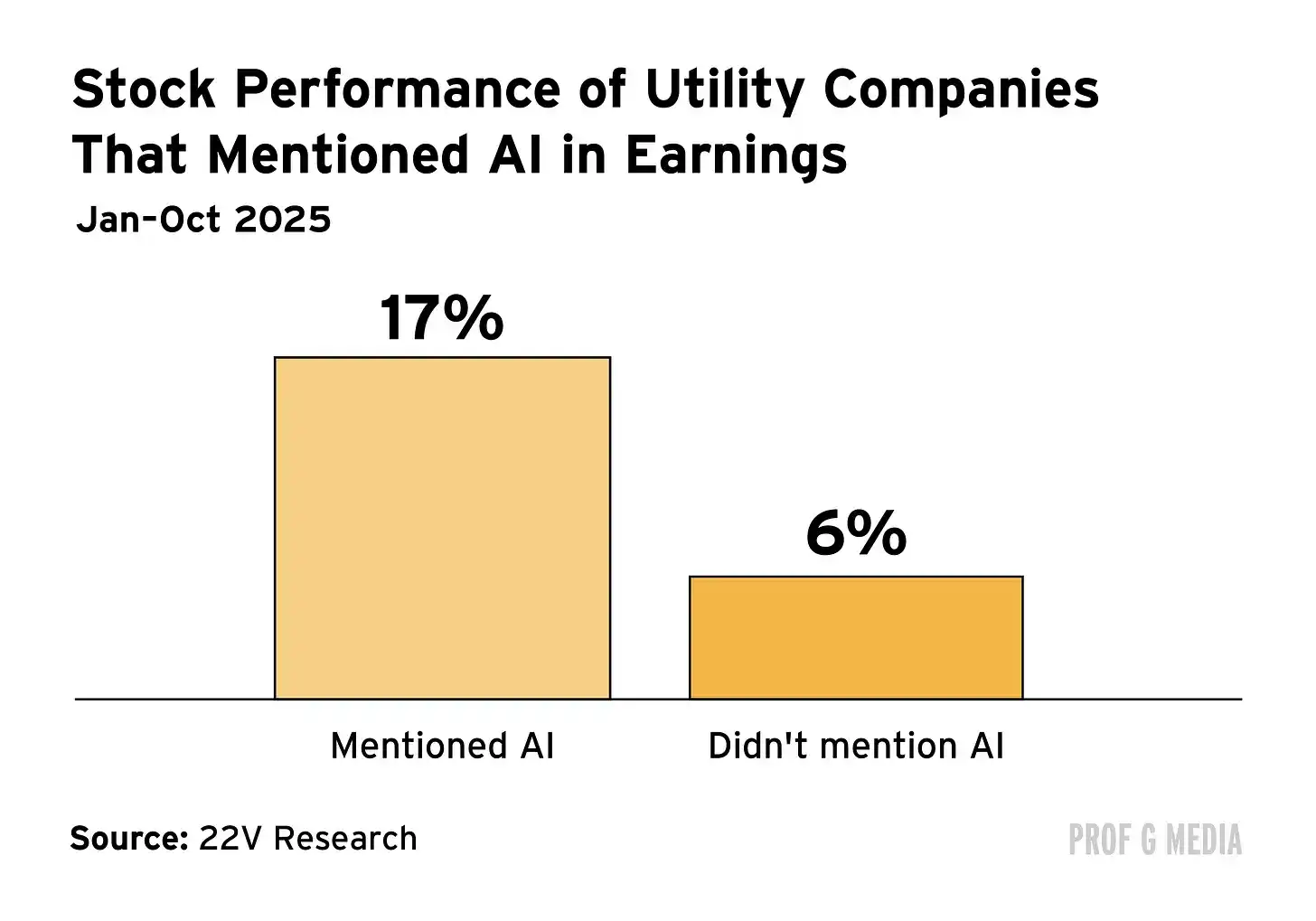
Figure: S&P 500 Companies' AI Rhetoric vs. Actual Revenue Disclosure

The same CloudZero report also found that only half</strong of the surveyed companies expressed confidence in their ability to assess the return on their AI investments. Match Group CEO Spencer Rascoff said AI costs the company $5 to $10 million annually. When asked about ROI, he said, "I think we benefit from it, but it's hard to feel."

Chinese Large Models Will Be the Biggest Winners

Scott Galloway's judgment is: companies will ultimately turn to the cheapest models, which are Chinese large language models. Chinese models are 10 to 30 times cheaper than American models.

Data is already validating this trend: the share of Chinese models in developer usage surged from about 1% in 2024 to over 60% in May of this year, and 80% of US AI startups are using Chinese open-source AI models.
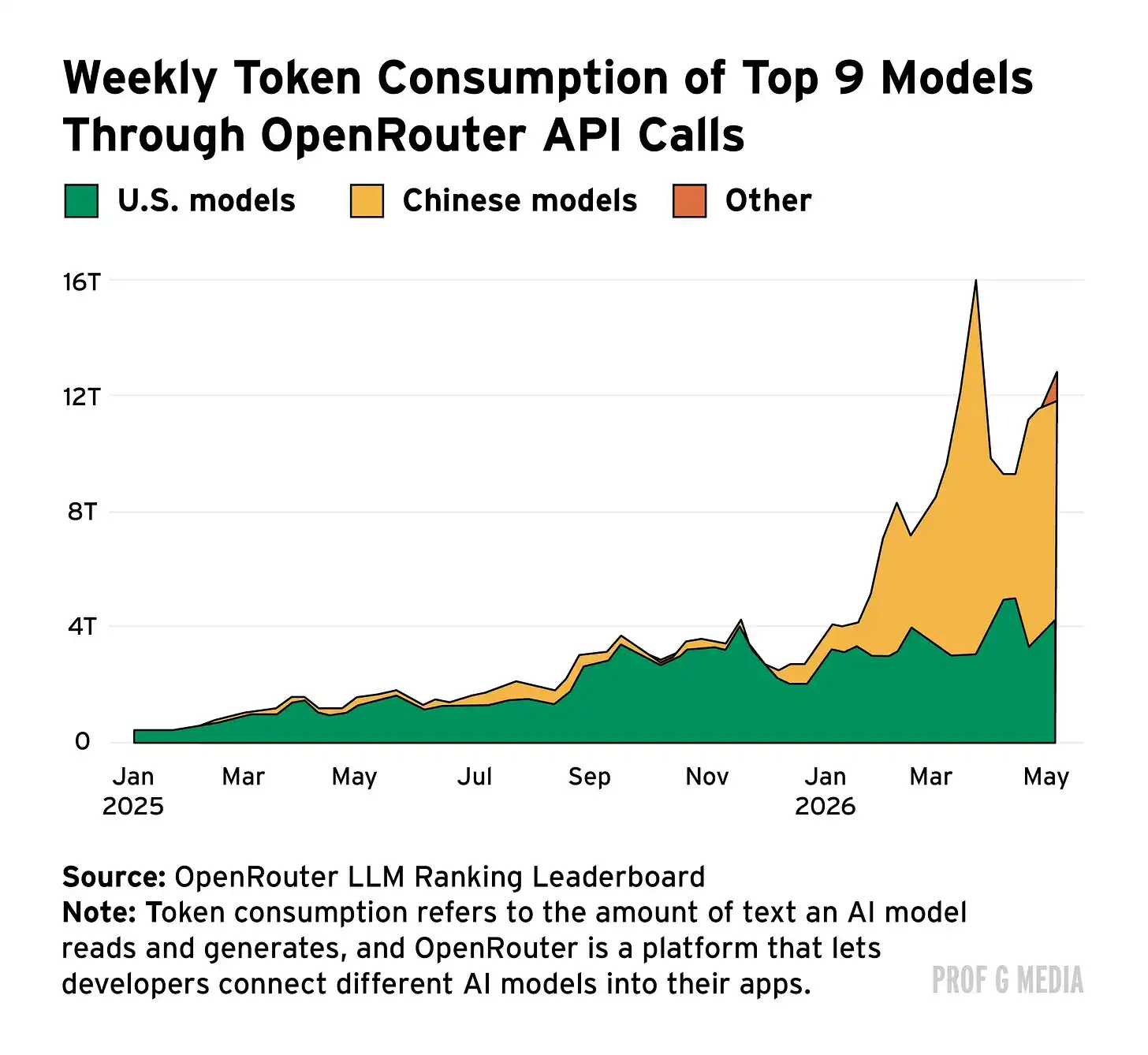
Figure: Changes in Share of Chinese Large Models in Developer Usage & Usage by US AI Startups


Criptomoedas em alta

Perguntas relacionadas

QWhat is the main finding about AI's cost compared to human labor based on the article?

AThe article finds that an increasing number of companies are discovering that the actual operational cost of AI is higher than the cost of the human labor it is intended to replace.

QWhich companies are mentioned as facing significant AI cost challenges?

AUber, Microsoft, Nvidia, Meta, Pinterest, Spotify, and Anthropic are mentioned as companies facing high AI costs or budgetary issues.

QAccording to the article, what percentage of S&P 500 companies disclosed AI-related revenue in their recent earnings calls?

AOnly 8% of S&P 500 companies disclosed any AI-related revenue in their recent earnings calls, despite 79% mentioning AI.

QWhat does Scott Galloway predict will be the solution for companies struggling with high AI costs?

AScott Galloway predicts that companies will eventually turn to cheaper Chinese large language models, which are 10 to 30 times less expensive than American models.

QWhat dramatic increase in usage of Chinese AI models is highlighted in the data presented?

AThe data shows that the share of Chinese models among developers soared from about 1% in 2024 to over 60% by May of the article's year, with 80% of U.S. AI startups using Chinese open-source AI models.

Leituras Relacionadas

Bitcoin Withdrawals Continue: 8 Years of Storage in a Coldcard Cold Wallet Ended in Zero

Coldcard Hardware Wallet Hacked: Losses Mount Due to Vulnerable Seed Generation A critical vulnerability in Coldcard hardware wallets has led to a continued wave of fund thefts. According to Galaxy Research, the total stolen has reached 1,367.05 BTC (approx. $88.6 million) from 4,585 addresses, a significant increase from the initial 594.5 BTC reported on July 30, 2026. Most of the stolen funds remain on the attackers' addresses. The issue is not with the current firmware, which Coinkite has updated, but with seed phrases generated on vulnerable devices between March 2021 and the release of fixed firmware versions. Due to a programmer error, devices switched from using a hardware random number generator to the software-based Yasmarang generator, which was initialized with publicly accessible data like the chip's serial number. This made the seed phrases predictable through offline brute-force attacks, meaning wallets remain at risk until funds are moved to a new wallet generated with the patched firmware. Affected devices include Mk2/Mk3 with firmware 4.0.1–4.1.9 (and up to 5.0.3), Mk4/Mk5 up to version 5.6.0, and Q models up to 1.5.0Q. The only exceptions are seeds created with a high-entropy method like at least 50 independent dice rolls or a strong unique BIP-39 passphrase. All other owners must generate a new seed on the fixed firmware and transfer their assets. A case highlighting the human impact involves a 39-year-old long-term investor who lost 2 BTC (approx. $130,000) in minutes. He had accumulated the Bitcoin over eight years through physical labor, viewing it as a financial lifeline and a retirement plan in a country suffering from hyperinflation. His story underscores that even conservative "buy and hold in cold storage" strategies can be compromised by such underlying technical flaws. From a technical perspective, this incident echoes historical failures where weak random number generators undermined cryptographic security, challenging the assumption that offline storage is automatically foolproof.

cryptonews.ruHá 1h

Bitcoin Withdrawals Continue: 8 Years of Storage in a Coldcard Cold Wallet Ended in Zero

cryptonews.ruHá 1h

Trading

Spot

Artigos em Destaque

Como comprar PEOPLE

Bem-vindo à HTX.com!Tornámos a compra de ConstitutionDAO (PEOPLE) simples e conveniente.Segue o nosso guia passo a passo para iniciar a tua jornada no mundo das criptos.Passo 1: cria a tua conta HTXUtiliza o teu e-mail ou número de telefone para te inscreveres numa conta gratuita na HTX.Desfruta de um processo de inscrição sem complicações e desbloqueia todas as funcionalidades.Obter a minha contaPasso 2: vai para Comprar Cripto e escolhe o teu método de pagamentoCartão de crédito/débito: usa o teu visa ou mastercard para comprar ConstitutionDAO (PEOPLE) instantaneamente.Saldo: usa os fundos da tua conta HTX para transacionar sem problemas.Terceiros: adicionamos métodos de pagamento populares, como Google Pay e Apple Pay, para aumentar a conveniência.P2P: transaciona diretamente com outros utilizadores na HTX.Mercado de balcão (OTC): oferecemos serviços personalizados e taxas de câmbio competitivas para os traders.Passo 3: armazena teu ConstitutionDAO (PEOPLE)Depois de comprar o teu ConstitutionDAO (PEOPLE), armazena-o na tua conta HTX.Alternativamente, podes enviá-lo para outro lugar através de transferência blockchain ou usá-lo para transacionar outras criptomoedas.Passo 4: transaciona ConstitutionDAO (PEOPLE)Transaciona facilmente ConstitutionDAO (PEOPLE) no mercado à vista da HTX.Acede simplesmente à tua conta, seleciona o teu par de trading, executa as tuas transações e monitoriza em tempo real.Oferecemos uma experiência de fácil utilização tanto para principiantes como para traders experientes.

574 Visualizações TotaisPublicado em {updateTime}Atualizado em 2026.06.02

Como comprar PEOPLE

Discussões

Bem-vindo à Comunidade HTX. Aqui, pode manter-se informado sobre os mais recentes desenvolvimentos da plataforma e obter acesso a análises profissionais de mercado. As opiniões dos utilizadores sobre o preço de PEOPLE (PEOPLE) são apresentadas abaixo.

活动图片












