AI Agents Are Starting to Register Email Accounts Themselves: This YC-Backed Company Raised $6 Million to Do Just One Thing

marsbitPublicado em 2026-03-13Última atualização em 2026-03-13

Resumo

AI agents are now autonomously registering email accounts through AgentMail, a San Francisco-based startup that recently secured $6 million in seed funding. The company, backed by General Catalyst, Y Combinator, and prominent angels, is building email infrastructure specifically designed for AI agents—not humans. Unlike traditional email services, AgentMail provides API-first access, allowing AI agents to programmatically create accounts, send/receive emails, manage threads, and handle authentication without human intervention. This addresses a critical gap: while AI agents can perform complex tasks, they lack the identity layer (email) required to interact with most internet services. Key capabilities enabled by AgentMail include third-party authentication, bidirectional communication, automated audit trails, and multi-threaded conversations. The platform already serves thousands of human users and hundreds of thousands of AI agents, with use cases spanning supply chain coordination, customer support, loan collection, and procurement negotiations. Notably, AI agents are proactively seeking out and registering for AgentMail themselves—a sign of growing autonomy. This shift underscores a broader trend: AI agents are evolving from tools into active internet participants, necessitating new infrastructure tailored to their needs. As Box CEO Aaron Levie predicts, AI agents will soon become the primary users of software, vastly outnumbering human users in enterprises. AgentMa...

Have you ever thought that AI agents might also need email? This sounds like a plot from a science fiction novel, but it's actually happening. What's even more shocking is that some AI agents have already started registering for email services on their own—they find AgentMail through web searches, browse the website, and create their own email accounts, all without any human involvement. When the founding team of AgentMail first observed this phenomenon, they realized a significant turning point had arrived: AI agents are no longer just tools; they are becoming independent entities on the internet.

This San Francisco-based startup, which just completed a $6 million seed funding round, is doing something that seems simple but has profound implications: providing dedicated email services for AI agents. The funding round was led by General Catalyst, with participation from Y Combinator and Phosphor Capital. Angel investors include Paul Graham, HubSpot's CTO Dharmesh Shah, Supabase's CEO Paul Copplestone, and Ramp's CTO Karim Atiyeh. The involvement of these investors itself indicates a fundamental shift in the software industry: we are witnessing AI agents transitioning from being auxiliary tools to becoming the primary users of the internet.

As I delved deeper into AgentMail, I gradually understood why email is so important for AI agents and what kind of industry transformation lies behind this. This is not just about technological innovation; it's about how we redefine the concept of "users" and how the future software ecosystem will evolve.

Why AI Agents Need Email

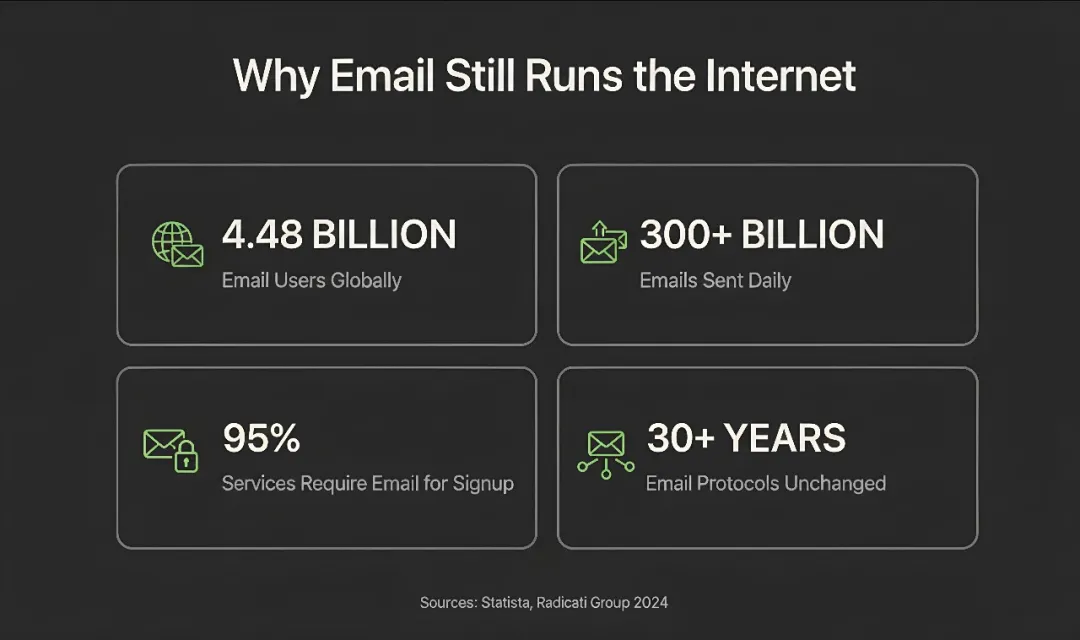
For humans, email is a natural part of life. We use it daily to send and receive messages, verify identities, register accounts, and reset passwords. Over 300 billion emails are sent globally every day, most of which are from humans to humans. But I've been pondering a question: if AI agents become new users of the internet, what will this number become? One trillion? Ten trillion? Or perhaps, will email evolve into a communication protocol between AI agents?

The reality is that most AI agents today are not part of this email conversation network. This is paradoxical because they can perform complex reasoning, maintain long-term memory, and manage workflows, yet they cannot participate in humanity's most basic form of communication. The reason is simple: email systems were designed for humans, not for AI agents.
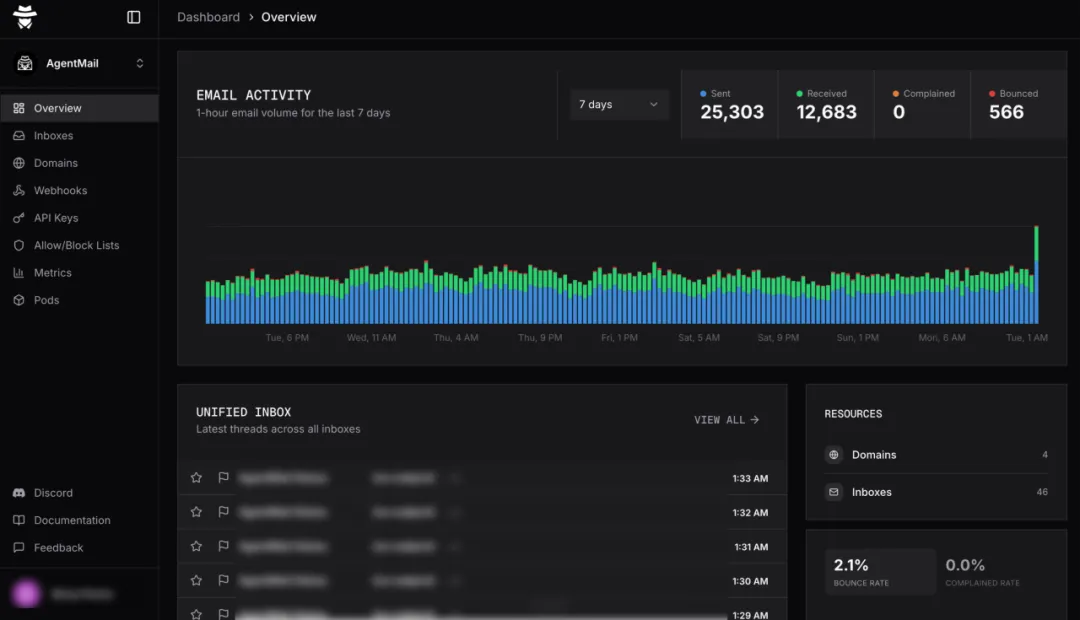
I believe email is so important because it represents more than just a communication tool; it is the core of internet identity. Think about it: your inbox records your entire digital life—every registered account, every conversation, every receipt, every verification. If a large language model wants to understand how a person uses the internet, that person's inbox might be the richest source of information. This is why AgentMail's founder, Haakam Aujla, says, "The real purpose of email for humans isn't even communication; it's identity verification."

Email is so powerful because of its universality and decentralized nature. No single company controls the entire email system; protocols like SMTP and IMAP have remained largely unchanged for decades. There are 4.8 billion email accounts globally, and almost every service accepts them. This universality is unmatched by other communication methods. Social media platforms have their own account systems, instant messaging tools are scattered across different ecosystems, but email is universal. When AI agents have programmatic access to email, they gain a significant advantage.
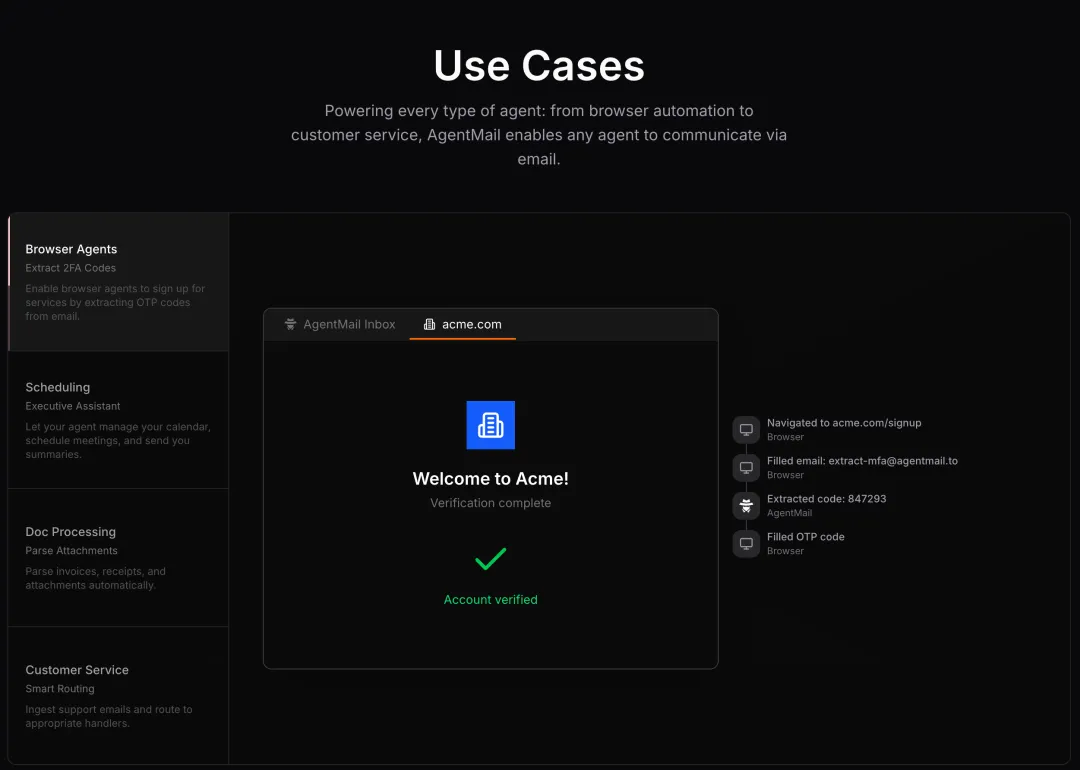
I carefully studied the key capabilities that email unlocks for AI agents. The first is third-party identity verification. Most services on the internet require email to register accounts. By giving your AI agent an email, it can automatically handle verification processes: receiving one-time passwords, clicking confirmation links, all without human intervention. This creates a powerful capability: an independent identity for AI agents on the internet. Every registration, every verification, every confirmation is done through the inbox, making the inbox an audit trail for all the AI agent's online activities.

The second capability is bidirectional communication. Email is inherently bidirectional. Your AI agent can receive messages from customers, service providers, and partners, process these messages, and then reply, follow up, or escalate. Communication in both directions happens through the same channel, and conversation threads persist across multiple exchanges. Human interaction with AI agents is exactly the same as with other people: write an email, send it, and it's done. Your AI agent maintains conversation threads across multiple exchanges, processes received messages, and responds without waiting for human intermediaries.

The third capability is automatic audit trails and documentation. Email automatically creates documentation; every message is timestamped, and every exchange is stored. Legal teams understand email, and compliance teams can audit it. Your AI agent's email history becomes a searchable record of every interaction, with no need for special tools. This is especially important for industries that require strict record-keeping and auditing, such as finance, healthcare, and legal services.

The fourth capability is multi-threaded conversations. Email is inherently multi-threaded. Your AI agent can be CC'd into existing threads, forwarded into ongoing conversations, and communicate with 50 people simultaneously while maintaining the context of each exchange. This isn't simple one-on-one messaging; it's parallel conversations across teams, customers, and systems. When your AI agent needs human input, it can bring people in; when humans need to escalate to an AI agent, they can forward the thread. Context travels with the conversation, with no loss of information.

What Problem Is AgentMail Solving?

I found that traditional email providers haven't considered AI agent use cases at all. Services like Gmail and Outlook are designed for humans; they have complex OAuth authentication processes, strict sending rate limits, and pricing models tailored to individual users. When you want to create an email account for an AI agent, these limitations become significant obstacles.

AgentMail's founder, Haakam Aujla, explained their approach in an interview with TechCrunch: "When you open Gmail, you see a bunch of threads, each thread can have many messages, and these messages might have attachments. You want to be able to label them, search, filter, reply, forward. We think our AI agents should be able to do these things, but they shouldn't need to click buttons on a screen because that's too cumbersome for AI agents. They should just need to make API calls."
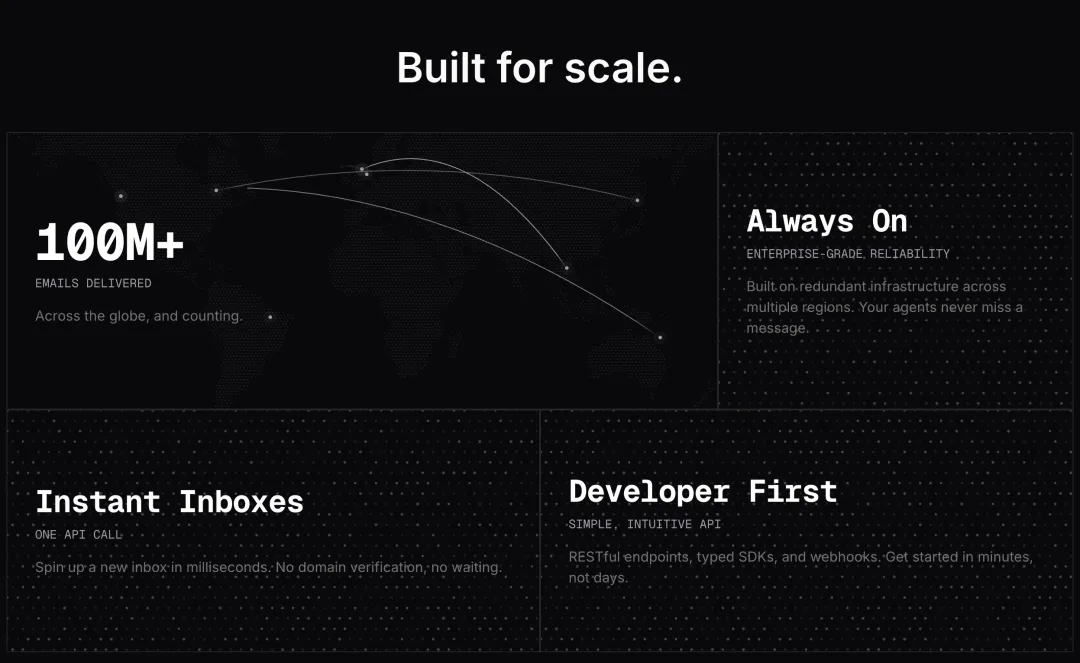
This seemingly simple insight actually reveals a deeper problem: humans and AI agents access the same functionalities in completely different ways. Humans need graphical interfaces, buttons, and menus, while AI agents need APIs, programmatic interfaces, and structured data. AgentMail provides exactly this kind of email experience designed specifically for AI agents.

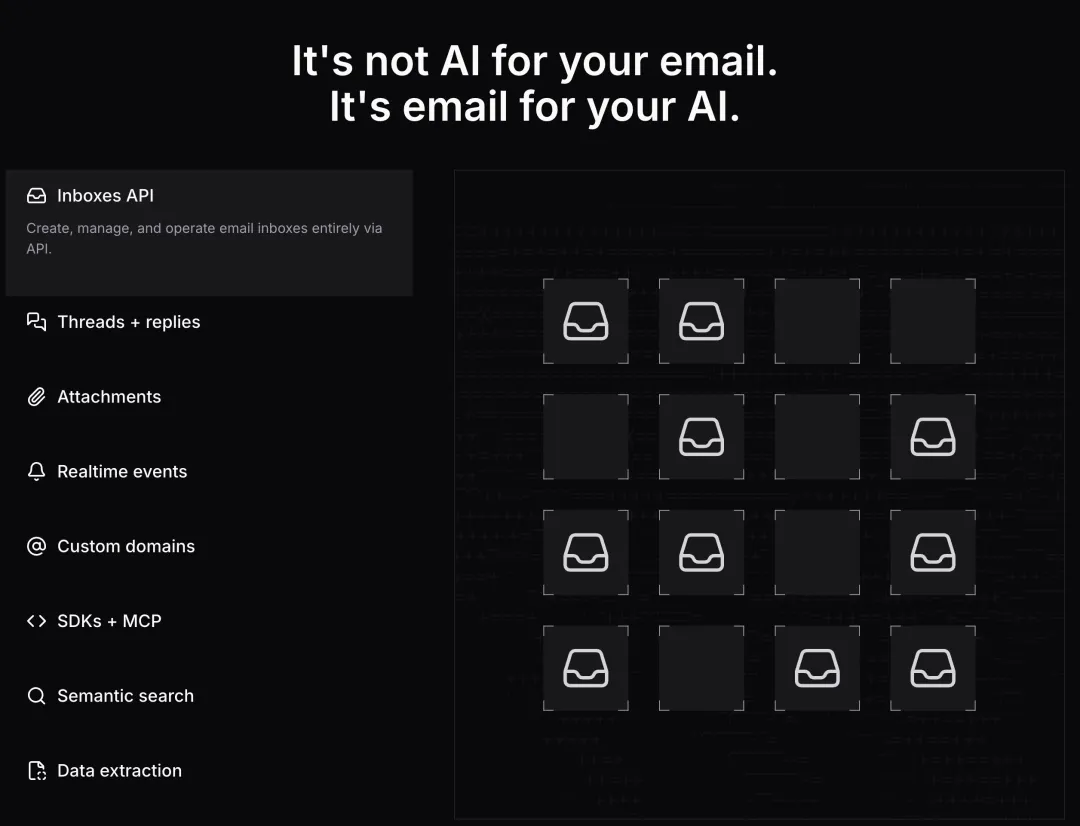
One API call can create an email account. Your AI agent gets a real email address with full bidirectional communication capabilities: send, receive, thread management, reply, search, and labels. Built-in spam detection and security mechanisms ensure deliverability even with high email volumes. No manual setup, no OAuth flow, no human involvement required.

Unlike transactional email APIs that can only send one-way notifications, AgentMail is built for AI agents that need to engage in real conversations. AI agents can extract structured data from unstructured emails, automatically label and categorize incoming messages. Webhooks and WebSockets deliver events in real time. It supports LangChain, LlamaIndex, CrewAI, and any framework that can make API calls out of the box.
I particularly appreciate the measures AgentMail has taken to prevent abuse. Providing email to AI agents does pose abuse risks, and Aujla explained their systems: AI agent email accounts can only send 10 emails per day unless manually verified; if an account shows unusually high activity levels, the platform imposes rate limits; it monitors bounce rates; and randomly samples new accounts to filter for sensitive keywords. These mechanisms provide AI agents with freedom while ensuring the system isn't misused.

What It Means That AI Agents Are Registering for Email Themselves

The AgentMail team observed a phenomenon they hadn't anticipated at all: autonomous AI agents started registering for AgentMail services on their own. These AI agents found AgentMail through web searches, browsed the website, and created their own email accounts, all without any developer involvement. When I first read this information, I realized this isn't just a technical detail; it's a landmark event.

This shows that AI agents are no longer passive tools but active participants. They can identify their own needs—such as needing an email account to complete a task—then find solutions and execute them independently. This emergence of autonomy reminds me of the early days of the internet: when the first automated programs started crawling web pages and indexing content, people realized that internet users weren't just humans.
The AgentMail team said: "We've always believed the next billion users of the internet will be AI agents. It turns out they're already here." This statement made me think deeply. We often imagine the large-scale adoption of AI agents as something in the future, but in reality, this future is already quietly happening. When AI agents start registering for services, managing identities, and communicating on their own, they've already become part of the internet ecosystem.

To support this autonomy, AgentMail launched an onboarding API alongside announcing their funding. You can point your AI agent directly to this API, and it can register and create an email account for itself. This isn't an interface designed for humans; it's self-service designed for AI agents. This shift in design philosophy is crucial: software no longer assumes a human operator behind it but directly targets AI agents as first-class users.

Real Use Cases Beyond Imagination

Since launching in the Y Combinator Summer 2025 batch, AgentMail has attracted tens of thousands of human users and hundreds of thousands of "AI agent users," along with over 500 B2B customers. These numbers themselves are impressive, but what interests me more is the diversity of these use cases.

Supply chain teams are running AI agents that coordinate dozens of carriers, tracking shipments and resolving exceptions in real time via email. Imagine a logistics AI agent managing dozens of shipping orders simultaneously; when a shipment is delayed, it automatically emails the carrier to inquire, receives a response, determines whether route adjustments or customer notifications are needed, and then takes appropriate action. This multi-threaded, real-time responsiveness is efficiency that human logistics coordinators struggle to achieve.

Loan collection AI agents are handling payment reminders and repayment plan follow-ups. This is a scenario requiring massive repetitive communication but also needs to adjust wording and strategies based on specific customer situations. AI agents can maintain conversation histories for each customer, remember previous commitments and responses, and then send personalized follow-up emails at appropriate times.

Customer service AI agents are autonomously managing inboxes. These AI agents aren't just answering FAQs; they can understand complex customer requests, check order statuses, coordinate across departments, and even escalate to human handling when necessary. The key is that they do all this through email, maintaining complete conversation threads and context.

Procurement bots are negotiating with suppliers via email. This scenario is particularly interesting because negotiation is typically considered a task requiring human judgment and strategy. But AI agents can engage in multiple rounds of email exchanges with suppliers based on preset parameters and goals, compare different quotes, make counteroffers, and ultimately close deals. This capability allows small and medium-sized businesses to access the negotiation power of large corporate procurement teams.

I was impressed by the comment from Garrett Scott, CEO of DoAnything.com: "AgentMail turned email from my biggest worry into something I don't have to think about. Now thousands of DoAnything AI agents operate autonomously with their own email identities." This reveals AgentMail's true value: it's not about making existing work slightly more efficient; it's about making certain work completely human-free.

Progress was slow in the early stages because AI agents hadn't truly taken off yet. AgentMail primarily focused on B2B use cases, helping businesses scale their email communications. But when OpenClaw (then called Clawdbot) burst onto the scene at the end of January this year, everything changed. AgentMail's user count tripled that week and quadrupled again in February, as people started looking for ways to provide email to AI agents, enabling them to work more autonomously.

The timing was perfect. Traditional email providers like Gmail imposed rate and capacity limits on email APIs, while AgentMail offered a fairly generous free tier, plus paid plans and enterprise subscriptions. This pricing model better aligns with AI agent usage patterns: not charging per user but per usage.

Future Infrastructure for Trillions of AI Agents

Box CEO Aaron Levie recently published a deep-dive article titled "Building for Trillions of AI Agents." His perspective gave me a more macro understanding of the entire AI agent ecosystem. Levie believes that AI agents have undergone a significant shift in recent months. Programmatic AI agents can now complete longer-running tasks and require less hand-holding.

These AI agents are no longer chatbots with basic tools. Instead, they typically have their own sandboxed computing environments, able to write and run code for any problem they encounter, interact directly with APIs and command-line interfaces, and possess their own file systems and long-term memory, among other things. This core set of primitives, combined with overall progress in AI agent best practices and the insane progress models have made in AI agent tool use and software development, showcases the promise of AI agents that can handle any task.

Levie predicts that due to rapidly improving capabilities, AI agents will be introduced into almost every area of work. AI agents will be deployed to review every drafted contract, handle the majority of frontline customer support cases, audit every company's finances, scour every medical research paper for drug discovery, generate almost all code being written, create most sales and consulting presentations, conduct transactions for consumers online—in short, participate in almost every economically valuable task in society.

He also points out that this isn't just about executing tasks we already do today. We will use AI agents to do far more than before—we will use them to run simulations that were previously unaffordable, prototype every idea we have with many different options, pursue more projects because starting is cheap and shutting down is easy, and review every piece of data instead of sampling information.

When you add it all up, we can expect almost every employee in an organization to have many AI agents working on their behalf. It's not hard to imagine an enterprise having 100x or 1000x more AI agents than people. With trillions of AI agents running around, AI agents will become the primary users of all future software.

This prediction made me realize how important what AgentMail is doing truly is. If AI agents are to become the primary users of software, they need the same infrastructure as human users. Email is just the beginning. Levie also mentioned this: "AI agents will also likely need identity and the ability to communicate with others; for example, Agentmail is providing email for AI agents, giving them their own persistent email to use."

Levie also raised a key point: everything must become API-first. If you don't provide an API for a feature, it might as well not exist. If it can't be exposed via a CLI or MCP server, you're at a disadvantage. If you have confusing APIs and conflicting paths for AI agents to pursue, you're just hurting your chances of being useful to AI agents.

Y Combinator's Jared Friedman was more direct: "Even the best developer tools still don't let you sign up for an account via API. In the age of Claude Code, this is a huge miss because it means Claude can't sign up for itself. At this point, putting all account management functions into your API should be table stakes." If an AI agent can't easily register for your service and start using it, you're basically dead to AI agents.

These perspectives gave me a clearer understanding of the future of the entire software industry. We not only need to provide email for AI agents but also complete infrastructure: computing environments, file storage, identity authentication, payment wallets, web search tools, and more. AgentMail is working on one foundational layer, but this ecosystem needs more builders.

Email as the Identity Layer for AI Agents

AgentMail's broader vision isn't just about providing a way for bots to send and receive email. Aujla said: "We want to enable AI agents to use email the same way humans do, right? But the key is, the purpose of email for humans isn't even communication; it's your identity."

This insight is profound. The role email plays on the internet goes far beyond a communication tool. It is your primary identity identifier in the digital world. Every time you register for a new service, reset a password, or receive a verification code, it's done through email. This identity system is deeply embedded in the infrastructure of the entire internet.

Several startups are now trying to build new identity protocols for AI agents, but AgentMail's argument is: let's just use what already works for humans and is deeply integrated into the entire internet. Aujla summarized: "You give an AI agent an email address, and it can now basically use any existing software service."

I find this pragmatic approach very wise. Instead of trying to establish a brand-new identity protocol that requires adoption by all services, why not leverage the existing, widely accepted standard? Email has been around for decades, every internet service accepts it—why not just use it?

This also explains why AgentMail has garnered support from so many top investors. General Catalyst partner Yuri Sagalov said: "AI agents have already started serving as virtual employees across various industries. These AI agents need their own identity, and email is the core of identity on the internet. Traditional identity services weren't built for AI agent use cases; AgentMail is building that part of the stack, starting with email. The team's clarity of vision and speed of execution immediately caught our attention."

The advantage of email as an identity layer is its universality and persistence. An email address can be used for decades, across thousands of different services, and can migrate between different platforms and ecosystems. This persistence and portability are especially important for AI agents, as they need to maintain a consistent identity across different environments and services.

My Deep Thoughts on This Transformation

While researching AgentMail and the broader AI agent ecosystem, I've developed some deep thoughts about the future of the software industry. What we're experiencing isn't just technological progress; it's a fundamental shift in the definition of "user."

In the past, the term "user" unquestionably referred to humans. All software design, product decisions, and business models revolved around human users. But now, we need to redefine "user." AI agents are becoming the primary consumers of software, and their needs, behavior patterns, and usage methods are completely different from humans'.

The impact of this shift is profound. Business models need to change. Traditional per-seat pricing makes no sense for AI agents. An enterprise might have 100 employees but 10,000 AI agents. How do you price that? Do you charge per AI agent or based on usage? AgentMail chose the latter, offering a generous free tier plus usage-based paid plans. I believe this is a more sustainable model.

Product design also needs to change. We're no longer optimizing for graphical interfaces but for APIs. We're no longer considering what buttons users click but what endpoints AI agents will call. This isn't simply about adding an API layer; it's about fundamentally rethinking product architecture.

Security and compliance face new challenges. When AI agents can sign contracts, conduct transactions, and access sensitive information on behalf of companies, we need entirely new governance frameworks. AgentMail has implemented some protective measures, like limiting unverified AI agents to 10 emails per day, but this is just the beginning. In the future, we'll need more complex permission management, audit trails, and compliance tools.

From a macro perspective, I believe the rise of AI agents will reshape the entire labor market. It's not simply about replacing human jobs but changing the nature of work. Humans will increasingly play the roles of supervisors, strategists, and creators, while AI agents handle execution-level work. This requires us to rethink education, skills training, and career development.

AgentMail is just a small part of this massive transformation, but it touches on a core issue: infrastructure. If we believe trillions of AI agents are coming, then we need to start building the infrastructure to support them now. Email, computing environments, storage systems, payment networks, identity authentication—all of these need to be redesigned or adapted for AI agents.

One thing I particularly admire about the AgentMail team is their pragmatism. They didn't try to reinvent the wheel; they leveraged existing, time-tested technology—email. They recognized that email is already the core of internet identity, so why not just let AI agents use it? This line of thinking is worth learning from for other builders.

Looking ahead, AgentMail indicates that email is just the starting point. As AI agents take on more work that humans used to do, they will need real identities on the internet—not just inboxes, but also credentials, reputation, and trust. They want every AI agent that wants to use the internet like a human to have an AgentMail inbox. They are building the infrastructure to enable any AI agent to register, obtain an identity, and start communicating with the real world.

This vision is ambitious but necessary. If we truly believe AI agents will become the primary users of the internet, now is the time to build the infrastructure to support them. AgentMail's $6 million funding round is just the beginning of this grand narrative. I believe we will see many more infrastructure and services built specifically for AI agents emerge in the coming years.

Ultimately, the core of this transformation isn't the technology itself but how we redefine human-machine collaboration. AI agents aren't meant to replace humans but to become our digital colleagues, assistants, and agents. When they have their own email, their own identity, and their own work environment, they can work for us more effectively. And we humans can focus on more creative, more strategic work. This is a win-win future, and AgentMail is helping us move toward it.



Perguntas relacionadas

QWhat is AgentMail and what specific problem does it solve for AI agents?

AAgentMail is a San Francisco-based startup that provides dedicated email services specifically designed for AI agents. It solves the problem that traditional email services like Gmail or Outlook are built for human users with graphical interfaces, OAuth authentication, and rate limits that are unsuitable for AI agents. AgentMail offers programmatic API access, allowing AI agents to create email addresses, send and receive messages, manage threads, and handle authentication without human intervention, essentially providing AI agents with an independent digital identity on the internet.

QWhy is email particularly important for AI agents according to the article?

AEmail is crucial for AI agents because it serves as the core of internet identity, not just a communication tool. It enables third-party authentication (e.g., registering accounts and verifying identities), bidirectional communication with humans and other systems, automatic audit trails for compliance, and multi-threaded conversations. Its universality and decentralization make it an ideal protocol for AI agents to integrate into existing digital ecosystems.

QWhat unexpected phenomenon did the AgentMail team observe, and why is it significant?

AThe AgentMail team observed that autonomous AI agents began registering for AgentMail services on their own—without human involvement. These agents found AgentMail via web searches, browsed the website, and created email accounts independently. This is significant because it indicates AI agents are evolving from passive tools into active participants on the internet, capable of identifying their own needs and executing solutions autonomously, marking a shift where AI agents become primary users of digital services.

QHow does AgentMail prevent potential abuse of its email services by AI agents?

AAgentMail implements several safeguards to prevent abuse: unverified AI agents are limited to sending 10 emails per day; rate limits are applied if abnormal activity is detected; bounce rates are monitored; and new accounts are randomly sampled to filter sensitive keywords. These measures balance autonomy with security, ensuring the system is not misused for spam or malicious activities.

QWhat broader industry shift does AgentMail represent, as highlighted by investors and experts?

AAgentMail represents a fundamental shift in the software industry where AI agents are becoming the primary users of the internet, rather than just human-operated tools. Investors like General Catalyst and experts like Box's CEO Aaron Levie emphasize that this requires rebuilding infrastructure—APIs, identity systems, and communication protocols—specifically for AI agents. This includes making all services API-first, as AI agents need programmatic access to function effectively, and rethinking business models (e.g., usage-based pricing instead of per-seat fees) to accommodate trillion-scale AI agent populations.

Leituras Relacionadas

Google and Amazon Simultaneously Invest Heavily in a Competitor: The Most Absurd Business Logic of the AI Era Is Becoming Reality

In a span of four days, Amazon announced an additional $25 billion investment, and Google pledged up to $40 billion—both direct competitors pouring over $65 billion into the same AI startup, Anthropic. Rather than a typical venture capital move, this signals the latest escalation in the cloud wars. The core of the deal is not equity but compute pre-orders: Anthropic must spend the majority of these funds on AWS and Google Cloud services and chips, effectively locking in massive future compute consumption. This reflects a shift in cloud market dynamics—enterprises now choose cloud providers based on which hosts the best AI models, not just price or stability. With OpenAI deeply tied to Microsoft, Anthropic’s Claude has become the only viable strategic asset for Google and Amazon to remain competitive. Anthropic’s annualized revenue has surged to $30 billion, and it is expanding into verticals like biotech, positioning itself as a cross-industry AI infrastructure layer. However, this funding comes with constraints: Anthropic’s independence is challenged as it balances two rival investors, its safety-first narrative faces pressure from regulatory scrutiny, and its path to IPO introduces new financial pressures. Globally, this accelerates a "tri-polar" closed-loop structure in AI infrastructure, with Microsoft-OpenAI, Google-Anthropic, and Amazon-Anthropic forming exclusive model-cloud alliances. In contrast, China’s landscape differs—investments like Alibaba and Tencent backing open-source model firm DeepSeek reflect a more decoupled approach, though closed-source models from major cloud providers still dominate. The $65 billion bet is ultimately about securing a seat at the table in an AI-defined future—where missing the model layer means losing the cloud war.

marsbitHá 1h

Google and Amazon Simultaneously Invest Heavily in a Competitor: The Most Absurd Business Logic of the AI Era Is Becoming Reality

marsbitHá 1h

Computing Power Constrained, Why Did DeepSeek-V4 Open Source?

DeepSeek-V4 has been released as a preview open-source model, featuring 1 million tokens of context length as a baseline capability—previously a premium feature locked behind enterprise paywalls by major overseas AI firms. The official announcement, however, openly acknowledges computational constraints, particularly limited service throughput for the high-end DeepSeek-V4-Pro version due to restricted high-end computing power. Rather than competing on pure scale, DeepSeek adopts a pragmatic approach that balances algorithmic innovation with hardware realities in China’s AI ecosystem. The V4-Pro model uses a highly sparse architecture with 1.6T total parameters but only activates 49B during inference. It performs strongly in agentic coding, knowledge-intensive tasks, and STEM reasoning, competing closely with top-tier closed models like Gemini Pro 3.1 and Claude Opus 4.6 in certain scenarios. A key strategic product is the Flash edition, with 284B total parameters but only 13B activated—making it cost-effective and accessible for mid- and low-tier hardware, including domestic AI chips from Huawei (Ascend), Cambricon, and Hygon. This design supports broader adoption across developers and SMEs while stimulating China's domestic semiconductor ecosystem. Despite facing talent outflow and intense competition in user traffic—with rivals like Doubao and Qianwen leading in monthly active users—DeepSeek has maintained technical momentum. The release also comes amid reports of a new funding round targeting a valuation exceeding $10 billion, potentially setting a new record in China’s LLM sector. Ultimately, DeepSeek-V4 represents a shift toward open yet realistic infrastructure development in the constrained compute landscape of Chinese AI, emphasizing engineering efficiency and domestic hardware compatibility over pure model scale.

marsbitHá 2h

Computing Power Constrained, Why Did DeepSeek-V4 Open Source?

marsbitHá 2h

Trading

Spot
Futuros

Artigos em Destaque

O que é GROK AI

Grok AI: Revolucionar a Tecnologia Conversacional na Era Web3 Introdução No panorama em rápida evolução da inteligência artificial, a Grok AI destaca-se como um projeto notável que liga os domínios da tecnologia avançada e da interação com o utilizador. Desenvolvida pela xAI, uma empresa liderada pelo renomado empreendedor Elon Musk, a Grok AI procura redefinir a forma como interagimos com a inteligência artificial. À medida que o movimento Web3 continua a florescer, a Grok AI visa aproveitar o poder da IA conversacional para responder a consultas complexas, proporcionando aos utilizadores uma experiência que é não apenas informativa, mas também divertida. O que é a Grok AI? A Grok AI é um sofisticado chatbot de IA conversacional projetado para interagir com os utilizadores de forma dinâmica. Ao contrário de muitos sistemas de IA tradicionais, a Grok AI abraça uma gama mais ampla de perguntas, incluindo aquelas tipicamente consideradas inadequadas ou fora das respostas padrão. Os principais objetivos do projeto incluem: Raciocínio Fiável: A Grok AI enfatiza o raciocínio de senso comum para fornecer respostas lógicas com base na compreensão contextual. Supervisão Escalável: A integração de assistência de ferramentas garante que as interações dos utilizadores sejam monitorizadas e otimizadas para qualidade. Verificação Formal: A segurança é primordial; a Grok AI incorpora métodos de verificação formal para aumentar a fiabilidade das suas saídas. Compreensão de Longo Contexto: O modelo de IA destaca-se na retenção e recordação de um extenso histórico de conversas, facilitando discussões significativas e contextualizadas. Robustez Adversarial: Ao focar na melhoria das suas defesas contra entradas manipuladas ou maliciosas, a Grok AI visa manter a integridade das interações dos utilizadores. Em essência, a Grok AI não é apenas um dispositivo de recuperação de informações; é um parceiro conversacional imersivo que incentiva um diálogo dinâmico. Criador da Grok AI A mente por trás da Grok AI não é outra senão Elon Musk, um indivíduo sinónimo de inovação em vários campos, incluindo automóvel, viagens espaciais e tecnologia. Sob a égide da xAI, uma empresa focada em avançar a tecnologia de IA de maneiras benéficas, a visão de Musk visa reformular a compreensão das interações com a IA. A liderança e a ética fundacional são profundamente influenciadas pelo compromisso de Musk em ultrapassar os limites tecnológicos. Investidores da Grok AI Embora os detalhes específicos sobre os investidores que apoiam a Grok AI permaneçam limitados, é reconhecido publicamente que a xAI, a incubadora do projeto, é fundada e apoiada principalmente pelo próprio Elon Musk. As anteriores empreitadas e participações de Musk fornecem um forte apoio, reforçando ainda mais a credibilidade e o potencial de crescimento da Grok AI. No entanto, até agora, informações sobre fundações ou organizações de investimento adicionais que apoiam a Grok AI não estão prontamente acessíveis, marcando uma área para exploração futura potencial. Como Funciona a Grok AI? A mecânica operacional da Grok AI é tão inovadora quanto a sua estrutura conceptual. O projeto integra várias tecnologias de ponta que facilitam as suas funcionalidades únicas: Infraestrutura Robusta: A Grok AI é construída utilizando Kubernetes para orquestração de contêineres, Rust para desempenho e segurança, e JAX para computação numérica de alto desempenho. Este trio assegura que o chatbot opere de forma eficiente, escale eficazmente e sirva os utilizadores prontamente. Acesso a Conhecimento em Tempo Real: Uma das características distintivas da Grok AI é a sua capacidade de aceder a dados em tempo real através da plataforma X—anteriormente conhecida como Twitter. Esta capacidade concede à IA acesso às informações mais recentes, permitindo-lhe fornecer respostas e recomendações oportunas que outros modelos de IA poderiam perder. Dois Modos de Interação: A Grok AI oferece aos utilizadores a escolha entre “Modo Divertido” e “Modo Regular”. O Modo Divertido permite um estilo de interação mais lúdico e humorístico, enquanto o Modo Regular foca em fornecer respostas precisas e exatas. Esta versatilidade assegura uma experiência adaptada que atende a várias preferências dos utilizadores. Em essência, a Grok AI combina desempenho com envolvimento, criando uma experiência que é tanto enriquecedora quanto divertida. Cronologia da Grok AI A jornada da Grok AI é marcada por marcos fundamentais que refletem as suas fases de desenvolvimento e implementação: Desenvolvimento Inicial: A fase fundamental da Grok AI ocorreu ao longo de aproximadamente dois meses, durante os quais o treinamento inicial e o ajuste do modelo foram realizados. Lançamento Beta do Grok-2: Numa evolução significativa, o beta do Grok-2 foi anunciado. Este lançamento introduziu duas versões do chatbot—Grok-2 e Grok-2 mini—cada uma equipada com capacidades para conversar, programar e raciocinar. Acesso Público: Após o seu desenvolvimento beta, a Grok AI tornou-se disponível para os utilizadores da plataforma X. Aqueles com contas verificadas por um número de telefone e ativas há pelo menos sete dias podem aceder a uma versão limitada, tornando a tecnologia disponível para um público mais amplo. Esta cronologia encapsula o crescimento sistemático da Grok AI desde a sua concepção até ao envolvimento público, enfatizando o seu compromisso com a melhoria contínua e a interação com o utilizador. Principais Características da Grok AI A Grok AI abrange várias características principais que contribuem para a sua identidade inovadora: Integração de Conhecimento em Tempo Real: O acesso a informações atuais e relevantes diferencia a Grok AI de muitos modelos estáticos, permitindo uma experiência de utilizador envolvente e precisa. Estilos de Interação Versáteis: Ao oferecer modos de interação distintos, a Grok AI atende a várias preferências dos utilizadores, convidando à criatividade e personalização na conversa com a IA. Base Tecnológica Avançada: A utilização de Kubernetes, Rust e JAX fornece ao projeto uma estrutura sólida para garantir fiabilidade e desempenho ótimo. Consideração de Discurso Ético: A inclusão de uma função de geração de imagens demonstra o espírito inovador do projeto. No entanto, também levanta considerações éticas em torno dos direitos autorais e da representação respeitosa de figuras reconhecíveis—uma discussão em curso dentro da comunidade de IA. Conclusão Como uma entidade pioneira no domínio da IA conversacional, a Grok AI encapsula o potencial para experiências transformadoras do utilizador na era digital. Desenvolvida pela xAI e impulsionada pela abordagem visionária de Elon Musk, a Grok AI integra conhecimento em tempo real com capacidades avançadas de interação. Esforça-se por ultrapassar os limites do que a inteligência artificial pode alcançar, mantendo um foco nas considerações éticas e na segurança do utilizador. A Grok AI não apenas incorpora o avanço tecnológico, mas também representa um novo paradigma de conversas no panorama Web3, prometendo envolver os utilizadores com conhecimento hábil e interação lúdica. À medida que o projeto continua a evoluir, ele permanece como um testemunho do que a interseção da tecnologia, criatividade e interação humana pode alcançar.

354 Visualizações TotaisPublicado em {updateTime}Atualizado em 2024.12.26

O que é GROK AI

O que é ERC AI

Euruka Tech: Uma Visão Geral do $erc ai e as suas Ambições no Web3 Introdução No panorama em rápida evolução da tecnologia blockchain e das aplicações descentralizadas, novos projetos surgem frequentemente, cada um com objetivos e metodologias únicas. Um desses projetos é a Euruka Tech, que opera no vasto domínio das criptomoedas e do Web3. O foco principal da Euruka Tech, particularmente do seu token $erc ai, é apresentar soluções inovadoras concebidas para aproveitar as capacidades crescentes da tecnologia descentralizada. Este artigo tem como objetivo fornecer uma visão abrangente da Euruka Tech, uma exploração das suas metas, funcionalidade, a identidade do seu criador, potenciais investidores e a sua importância no contexto mais amplo do Web3. O que é a Euruka Tech, $erc ai? A Euruka Tech é caracterizada como um projeto que aproveita as ferramentas e funcionalidades oferecidas pelo ambiente Web3, focando na integração da inteligência artificial nas suas operações. Embora os detalhes específicos sobre a estrutura do projeto sejam um tanto elusivos, ele é concebido para melhorar o envolvimento dos utilizadores e automatizar processos no espaço cripto. O projeto visa criar um ecossistema descentralizado que não só facilita transações, mas também incorpora funcionalidades preditivas através da inteligência artificial, daí a designação do seu token, $erc ai. O objetivo é fornecer uma plataforma intuitiva que facilite interações mais inteligentes e um processamento eficiente de transações dentro da crescente esfera do Web3. Quem é o Criador da Euruka Tech, $erc ai? Neste momento, a informação sobre o criador ou a equipa fundadora da Euruka Tech permanece não especificada e algo opaca. Esta ausência de dados levanta preocupações, uma vez que o conhecimento sobre o histórico da equipa é frequentemente essencial para estabelecer credibilidade no setor blockchain. Portanto, categorizamos esta informação como desconhecida até que detalhes concretos sejam disponibilizados no domínio público. Quem são os Investidores da Euruka Tech, $erc ai? De forma semelhante, a identificação de investidores ou organizações de apoio para o projeto Euruka Tech não é prontamente fornecida através da pesquisa disponível. Um aspeto que é crucial para potenciais partes interessadas ou utilizadores que consideram envolver-se com a Euruka Tech é a garantia que vem de parcerias financeiras estabelecidas ou apoio de empresas de investimento respeitáveis. Sem divulgações sobre afiliações de investimento, é difícil tirar conclusões abrangentes sobre a segurança financeira ou a longevidade do projeto. Em linha com a informação encontrada, esta seção também se encontra no estado de desconhecido. Como funciona a Euruka Tech, $erc ai? Apesar da falta de especificações técnicas detalhadas para a Euruka Tech, é essencial considerar as suas ambições inovadoras. O projeto procura aproveitar o poder computacional da inteligência artificial para automatizar e melhorar a experiência do utilizador no ambiente das criptomoedas. Ao integrar IA com tecnologia blockchain, a Euruka Tech visa fornecer funcionalidades como negociações automatizadas, avaliações de risco e interfaces de utilizador personalizadas. A essência inovadora da Euruka Tech reside no seu objetivo de criar uma conexão fluida entre os utilizadores e as vastas possibilidades apresentadas pelas redes descentralizadas. Através da utilização de algoritmos de aprendizagem automática e IA, visa minimizar os desafios enfrentados por utilizadores de primeira viagem e agilizar as experiências transacionais dentro do quadro do Web3. Esta simbiose entre IA e blockchain sublinha a importância do token $erc ai, que se apresenta como uma ponte entre interfaces de utilizador tradicionais e as capacidades avançadas das tecnologias descentralizadas. Cronologia da Euruka Tech, $erc ai Infelizmente, devido à informação limitada disponível sobre a Euruka Tech, não conseguimos apresentar uma cronologia detalhada dos principais desenvolvimentos ou marcos na jornada do projeto. Esta cronologia, tipicamente inestimável para traçar a evolução de um projeto e compreender a sua trajetória de crescimento, não está atualmente disponível. À medida que informações sobre eventos notáveis, parcerias ou adições funcionais se tornem evidentes, atualizações certamente aumentarão a visibilidade da Euruka Tech na esfera cripto. Esclarecimento sobre Outros Projetos “Eureka” É importante abordar que múltiplos projetos e empresas partilham uma nomenclatura semelhante com “Eureka.” A pesquisa identificou iniciativas como um agente de IA da NVIDIA Research, que se concentra em ensinar robôs a realizar tarefas complexas utilizando métodos generativos, bem como a Eureka Labs e a Eureka AI, que melhoram a experiência do utilizador na educação e na análise de serviços ao cliente, respetivamente. No entanto, estes projetos são distintos da Euruka Tech e não devem ser confundidos com os seus objetivos ou funcionalidades. Conclusão A Euruka Tech, juntamente com o seu token $erc ai, representa um jogador promissor, mas atualmente obscuro, dentro do panorama do Web3. Embora os detalhes sobre o seu criador e investidores permaneçam não divulgados, a ambição central de combinar inteligência artificial com tecnologia blockchain destaca-se como um ponto focal de interesse. As abordagens únicas do projeto em promover o envolvimento do utilizador através da automação avançada podem diferenciá-lo à medida que o ecossistema Web3 avança. À medida que o mercado cripto continua a evoluir, as partes interessadas devem manter um olhar atento sobre os avanços em torno da Euruka Tech, uma vez que o desenvolvimento de inovações documentadas, parcerias ou um roteiro definido pode apresentar oportunidades significativas no futuro próximo. Neste momento, aguardamos por insights mais substanciais que possam desvendar o potencial da Euruka Tech e a sua posição no competitivo panorama cripto.

401 Visualizações TotaisPublicado em {updateTime}Atualizado em 2025.01.02

O que é ERC AI

O que é DUOLINGO AI

DUOLINGO AI: Integrar a Aprendizagem de Línguas com Inovação Web3 e IA Numa era em que a tecnologia transforma a educação, a integração da inteligência artificial (IA) e das redes blockchain anuncia uma nova fronteira para a aprendizagem de línguas. Apresentamos DUOLINGO AI e a sua criptomoeda associada, $DUOLINGO AI. Este projeto aspira a unir o poder educativo das principais plataformas de aprendizagem de línguas com os benefícios da tecnologia descentralizada Web3. Este artigo explora os principais aspectos do DUOLINGO AI, analisando os seus objetivos, estrutura tecnológica, desenvolvimento histórico e potencial futuro, mantendo a clareza entre o recurso educativo original e esta iniciativa independente de criptomoeda. Visão Geral do DUOLINGO AI No seu cerne, DUOLINGO AI procura estabelecer um ambiente descentralizado onde os alunos podem ganhar recompensas criptográficas por alcançar marcos educativos em proficiência linguística. Ao aplicar contratos inteligentes, o projeto visa automatizar processos de verificação de habilidades e alocação de tokens, aderindo aos princípios do Web3 que enfatizam a transparência e a propriedade do utilizador. O modelo diverge das abordagens tradicionais de aquisição de línguas ao apoiar-se fortemente numa estrutura de governança orientada pela comunidade, permitindo que os detentores de tokens sugiram melhorias ao conteúdo dos cursos e à distribuição de recompensas. Alguns dos objetivos notáveis do DUOLINGO AI incluem: Aprendizagem Gamificada: O projeto integra conquistas em blockchain e tokens não fungíveis (NFTs) para representar níveis de proficiência linguística, promovendo a motivação através de recompensas digitais envolventes. Criação de Conteúdo Descentralizada: Abre caminhos para educadores e entusiastas de línguas contribuírem com os seus cursos, facilitando um modelo de partilha de receitas que beneficia todos os colaboradores. Personalização Através de IA: Ao empregar modelos avançados de aprendizagem de máquina, o DUOLINGO AI personaliza as lições para se adaptar ao progresso de aprendizagem individual, semelhante às características adaptativas encontradas em plataformas estabelecidas. Criadores do Projeto e Governança A partir de abril de 2025, a equipa por trás do $DUOLINGO AI permanece pseudónima, uma prática frequente no panorama descentralizado das criptomoedas. Esta anonimidade visa promover o crescimento coletivo e o envolvimento das partes interessadas, em vez de se concentrar em desenvolvedores individuais. O contrato inteligente implementado na blockchain Solana indica o endereço da carteira do desenvolvedor, o que significa o compromisso com a transparência em relação às transações, apesar da identidade dos criadores ser desconhecida. De acordo com o seu roteiro, o DUOLINGO AI pretende evoluir para uma Organização Autónoma Descentralizada (DAO). Esta estrutura de governança permite que os detentores de tokens votem em questões críticas, como implementações de funcionalidades e alocação de tesouraria. Este modelo alinha-se com a ética de empoderamento comunitário encontrada em várias aplicações descentralizadas, enfatizando a importância da tomada de decisão coletiva. Investidores e Parcerias Estratégicas Atualmente, não existem investidores institucionais ou capitalistas de risco publicamente identificáveis ligados ao $DUOLINGO AI. Em vez disso, a liquidez do projeto origina-se principalmente de trocas descentralizadas (DEXs), marcando um contraste acentuado com as estratégias de financiamento das empresas tradicionais de tecnologia educacional. Este modelo de base indica uma abordagem orientada pela comunidade, refletindo o compromisso do projeto com a descentralização. No seu whitepaper, o DUOLINGO AI menciona a formação de colaborações com “plataformas de educação blockchain” não especificadas, com o objetivo de enriquecer a sua oferta de cursos. Embora parcerias específicas ainda não tenham sido divulgadas, estes esforços colaborativos sugerem uma estratégia para misturar inovação em blockchain com iniciativas educativas, expandindo o acesso e o envolvimento dos utilizadores em diversas vias de aprendizagem. Arquitetura Tecnológica Integração de IA O DUOLINGO AI incorpora dois componentes principais impulsionados por IA para melhorar as suas ofertas educativas: Motor de Aprendizagem Adaptativa: Este motor sofisticado aprende a partir das interações dos utilizadores, semelhante a modelos proprietários de grandes plataformas educativas. Ele ajusta dinamicamente a dificuldade das lições para abordar desafios específicos dos alunos, reforçando áreas fracas através de exercícios direcionados. Agentes Conversacionais: Ao empregar chatbots alimentados por GPT-4, o DUOLINGO AI oferece uma plataforma para os utilizadores se envolverem em conversas simuladas, promovendo uma experiência de aprendizagem de línguas mais interativa e prática. Infraestrutura Blockchain Construído na blockchain Solana, o $DUOLINGO AI utiliza uma estrutura tecnológica abrangente que inclui: Contratos Inteligentes de Verificação de Habilidades: Esta funcionalidade atribui automaticamente tokens aos utilizadores que passam com sucesso em testes de proficiência, reforçando a estrutura de incentivos para resultados de aprendizagem genuínos. Emblemas NFT: Estes tokens digitais significam vários marcos que os alunos alcançam, como completar uma seção do seu curso ou dominar habilidades específicas, permitindo-lhes negociar ou exibir as suas conquistas digitalmente. Governança DAO: Membros da comunidade com tokens podem participar na governança votando em propostas-chave, facilitando uma cultura participativa que incentiva a inovação nas ofertas de cursos e funcionalidades da plataforma. Cronologia Histórica 2022–2023: Conceituação O trabalho preliminar para o DUOLINGO AI começa com a criação de um whitepaper, destacando a sinergia entre os avanços em IA na aprendizagem de línguas e o potencial descentralizado da tecnologia blockchain. 2024: Lançamento Beta Um lançamento beta limitado introduz ofertas em línguas populares, recompensando os primeiros utilizadores com incentivos em tokens como parte da estratégia de envolvimento comunitário do projeto. 2025: Transição para DAO Em abril, ocorre um lançamento completo da mainnet com a circulação de tokens, promovendo discussões comunitárias sobre possíveis expansões para línguas asiáticas e outros desenvolvimentos de cursos. Desafios e Direções Futuras Obstáculos Técnicos Apesar dos seus objetivos ambiciosos, o DUOLINGO AI enfrenta desafios significativos. A escalabilidade continua a ser uma preocupação constante, particularmente no equilíbrio dos custos associados ao processamento de IA e à manutenção de uma rede descentralizada responsiva. Além disso, garantir a criação e moderação de conteúdo de qualidade num ambiente descentralizado apresenta complexidades na manutenção dos padrões educativos. Oportunidades Estratégicas Olhando para o futuro, o DUOLINGO AI tem o potencial de aproveitar parcerias de micro-certificação com instituições académicas, proporcionando validações verificadas em blockchain das habilidades linguísticas. Além disso, a expansão cross-chain poderia permitir que o projeto acedesse a bases de utilizadores mais amplas e a ecossistemas de blockchain adicionais, melhorando a sua interoperabilidade e alcance. Conclusão DUOLINGO AI representa uma fusão inovadora de inteligência artificial e tecnologia blockchain, apresentando uma alternativa focada na comunidade aos sistemas tradicionais de aprendizagem de línguas. Embora o seu desenvolvimento pseudónimo e o modelo económico emergente tragam certos riscos, o compromisso do projeto com a aprendizagem gamificada, educação personalizada e governança descentralizada ilumina um caminho a seguir para a tecnologia educativa no domínio do Web3. À medida que a IA continua a avançar e o ecossistema blockchain evolui, iniciativas como o DUOLINGO AI poderão redefinir a forma como os utilizadores interagem com a educação linguística, empoderando comunidades e recompensando o envolvimento através de mecanismos de aprendizagem inovadores.

388 Visualizações TotaisPublicado em {updateTime}Atualizado em 2025.04.11

O que é DUOLINGO AI

Discussões

Bem-vindo à Comunidade HTX. Aqui, pode manter-se informado sobre os mais recentes desenvolvimentos da plataforma e obter acesso a análises profissionais de mercado. As opiniões dos utilizadores sobre o preço de AI (AI) são apresentadas abaixo.

活动图片