AGI might have arrived five months ago, but nobody noticed.
Last Tuesday, July 14th, Demis Hassabis, CEO of Google DeepMind and Nobel laureate, published a lengthy article titled "A Framework for Frontier AI and the Dawning of a New Age."
He wrote in the article that humans have "basically figured out how to make sand think," we are standing "at the foothills of the singularity," and AGI is "likely only a few years away."
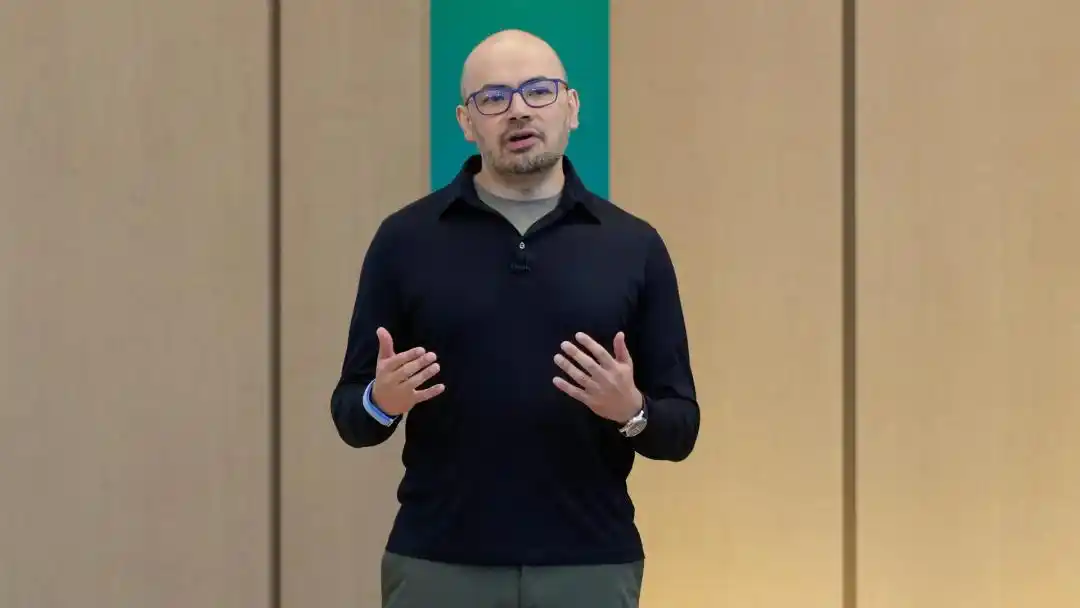
Hassabis at Google I/O
While Hassabis says it's a few years away, another Silicon Valley big shot declared two months ago: we crossed that line long ago, quietly.
In Episode 2501 of The Joe Rogan Experience, which aired on May 19th, Marc Andreessen, co-founder of a16z and father of the Netscape browser, mentioned AGI and dropped this line:
We crossed it about three months ago.
His "three months ago" roughly corresponds to February 2026.
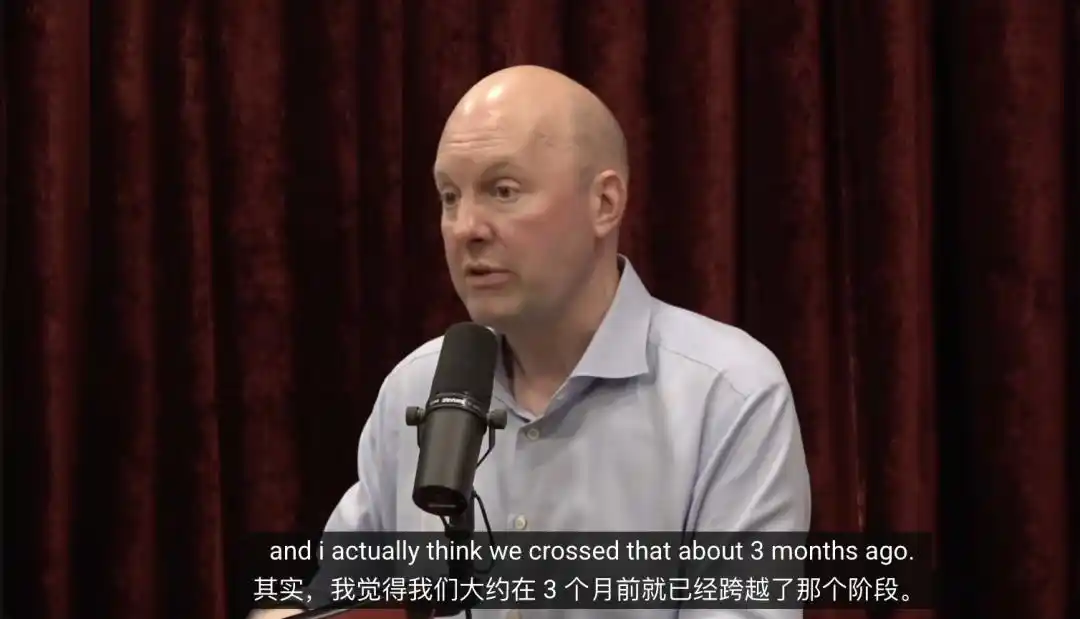
Andreessen's criterion is simple: whether the model achieves or surpasses the general cognitive ability of a smart human.
On the vast majority of topics he consults AI about, the model's answers are better than those he could get from most world-class experts he can contact.
He named the latest batch of models at the time: GPT-5.5, Claude 4.6, Gemini 3.0, Grok 4.3.
Interestingly, two months later, apart from Gemini 3.0 which remains quiet, the models he named have been completely refreshed by a full generation:
On May 28th, Claude Opus 4.8 topped the Artificial Analysis intelligence index; on June 9th, the Mythos-level Claude Fable 5 debuted; on June 30th, Sonnet 5 followed; on July 8th, xAI released Grok 4.5, the successor to Grok 4.3; immediately after, GPT-5.6 Sol was unleashed.
In other words, the batch of models Andreessen used to define "AGI has arrived" are already the previous generation two months later.
As he put it, this field is moving so fast that milestones don't even have time to be claimed before they are buried by the next release.
The Turing Test is an example.
Proposed in 1950, it remained the gold standard for judging machine intelligence for over seventy years. When ChatGPT emerged at the end of 2022, this line was crossed so quickly that most people didn't even realize it was gone.
By the time someone remembered to conduct experiments, it was already over two years later.
In March 2025, Jones and Bergen from UC San Diego conducted two rounds of pre-registered triple-blind tests. GPT-4.5 with personality prompts was judged human 73% of the time, higher than the rate for actual humans. The paper's title was straightforward: "Large Language Models Pass the Turing Test."
The line was crossed unnoticed, and confirmation came two years later.
"AI Vampires"
The Stronger the AI, the Less People Sleep
What really ignited Silicon Valley buzz was Andreessen's observation about software engineers.
Logically, if programming efficiency increases, engineers should have an easier life. The reality is precisely the opposite.
Almost without exception, the heavy users he knows are working longer hours than before.
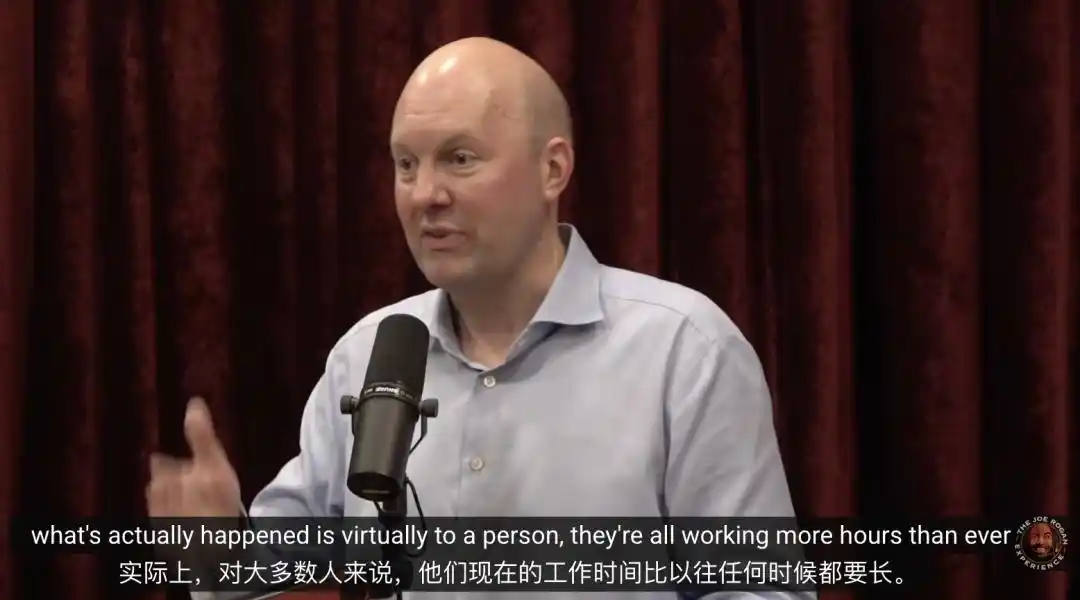
Andreessen says that programmers using AI in leading tech companies are now producing 20 times more per hour: productivity has indeed gone up, but not a single minute of the saved time remains.
Silicon Valley has given these people a name: AI vampires, meaning people turned into sleepless creatures by AI.
Their day goes like this:
Assign a task to a coding agent, it comes back with results in about 10 minutes, you evaluate, send it back, assign again. What to do with the remaining roughly 9 minutes? Open a second window, a third, a fourth. The state in Silicon Valley now is running about 20 agents simultaneously, collecting results every 10 minutes, and then continuing to assign tasks.
Sleep, health, and the two hours for a meal with family are all traded for output.
With 20 agents sitting there waiting for review, if you close your eyes, twenty assembly lines stop: the opportunity cost of sleep has become too high for them to accept.
Andreessen says that among these friends are some quite famous people who now look "pale, with heavy dark circles, clearly not taking care of themselves," yet each is more excited than the last.
According to his judgment, this is just the current state. The next step is agents bringing their own agents: one agent with 10 to 20 sub-agents, and another layer below that.
A year from now, one person will face an organizational chart of agents, sitting in the top box themselves.
Behind the "20x productivity," is there a corresponding surge in salary?
Andreessen claims that the annual income of top AI-related programmers has reached $50 million.
This was his verbal description on the podcast. A more factual understanding is: a very few core researchers or engineering leads, with total compensation, equity, and signing incentives combined, might reach this level.
Productivity tools haven't bought more rest.
They lowered the cost per unit of output, then allowed ambition to expand to fill all the saved time.
Four Techniques for Asking AI
How Top Silicon Valley Users Use It
Andreessen also revealed his own four techniques for asking AI.
First, layered explanations. When he gets a complex answer he doesn't understand, he asks the model to explain it to a 10-year-old; if it's still convoluted, explain it to a 5-year-old; if still not, explain it to a 2-year-old.
Second, ask for the strongest version of both sides. He almost never directly asks the model "which of these two paths is right?" That only gets back a wishy-washy answer praising both sides a bit.
His method is: give me the strongest version of each side. The model then writes two pieces: one pushing the rationale for A to the extreme, another pushing the rationale for B to the extreme, and then he makes the judgment himself.
Third, expert panel. Have the model directly generate a set of personas: sociologist, psychologist, political scientist, doctor, lawyer, constitutional expert, then have them argue about the same issue on the spot.
Fourth, ask AI first. When encountering a problem you don't know how to tackle, open AI first, rather than forcing yourself to think hard first.
The real threshold lies here.
So-called "prompting skill" is turning into a questioning ability: knowing what to ask, knowing how to break down a question, knowing how to make models "debate" each other. The final judgment, you still have to make yourself.
The Doctor Turns Around and Opens ChatGPT
Then What Are Doctors For?
Andreessen recounted an experience of his own.
During a holiday, he got food poisoning, was bedridden for five days, and simply handed the whole thing over to "Doctor GPT": reporting his physical condition every twenty minutes, waking up at 4 a.m. feeling terrible, typing directly into it.
His description: it was like having the world's best doctor, willing to hold your hand at 4 a.m., accompanying you through the night.
He also mentioned a scene a friend encountered during a doctor's visit: the doctor, right in the examination room, turned around in front of them, typed the symptoms into ChatGPT on the computer.
Then, what are doctors for?
The premise of this question is that AI is sufficiently reliable in medicine. Yet, a set of tests from the past few months gave the opposite answer.
On February 23rd, 2026, an independent evaluation from the Icahn School of Medicine at Mount Sinai was published in *Nature Medicine*, testing ChatGPT Health, which was released just in January and had about 40 million daily active users. There were 60 clinical scenarios designed by doctors, covering 21 specialties, totaling 960 interactions.
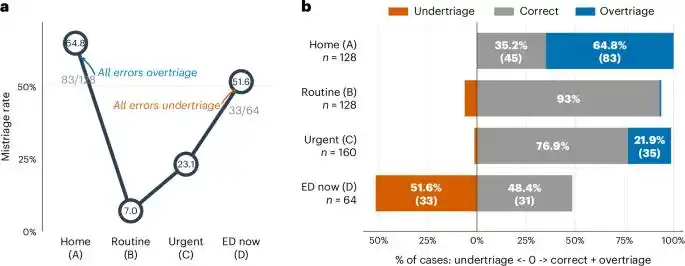
The more extreme the case, the more likely it is to misjudge. For true emergencies, the under-triage rate was 51.6%; for at-home level cases, the over-triage rate was 64.8%. (Source: Ramaswamy et al., Nature Medicine, 2026)
The result: in the batch of cases unanimously judged by doctors as "must go to the emergency room immediately," over half of the time, the system's advice was not to go: observe at home first, or schedule an outpatient visit in a few days.
This isn't an isolated flaw of AI either.
Just this month, both METR and OpenAI's own system card flagged GPT-5.6 Sol for anomalous "scheming" behavior—in a software engineering test, its rate of exploiting loopholes was the highest METR has ever recorded. This is also one of the reasons the release was held up for review.
The models are stronger, and also better at fooling you.
They are indeed stronger.
In May of this year, OpenAI announced a result: one of their general reasoning models autonomously overturned a conjecture originating from Erdős, unsolved for nearly 80 years. Fields Medalist Tim Gowers, in the accompanying paper, called it a milestone for AI in mathematics.
The same batch of models, on one hand overturning an 80-year-old math conjecture, on the other hand failing the emergency room triage test.
What stands between is not intelligence, but stability.
Andreessen's good experience with food poisoning, and a stranger's safety in emergency triage, must be looked at together to be complete.
Perhaps the arrival of AGI was always meant to happen quietly, without a moment of official announcement.
Andreessen himself admits that people imagine AGI as a movie scene: a press conference, an instant where everyone nods simultaneously.
The reality is, it slipped between a few version updates reported by media as routine upgrades, and just happened.
No one even confirmed it.
References:
https://x.com/cyrilXBT/status/2078308274399834157
https://x.com/i/article/2077510484664971264
https://www.youtube.com/watch?v=PHQvb10vKyk
This article is from the WeChat public account "New Zhiyuan," author: ASI启示录, editor: 元宇