Agentized OS: It's Not About AI, It's About the Foundation

marsbitPublicado em 2026-05-27Última atualização em 2026-05-27

Resumo

The Agentic OS: Beyond AI, It's About the Foundational Stack In 2026, major operating systems like Android, iOS, HarmonyOS, and Windows are entering the "Agentic" era, integrating proactive AI assistants deeply into the system layer. However, the real competition lies not in the flashy AI features showcased at events, but in the three-layer foundational stack that enables them: the system-level AI Runtime, proprietary/controllable chips, and the on-device/cloud model matrix. The AI Runtime acts as the central scheduler, managing model inference, resource allocation, and exposing capabilities to apps. Controllable chips (e.g., Apple Silicon, Google Tensor, Huawei Kirin) are crucial for deep hardware-software co-optimization, determining the efficiency and experience limits of on-device Agents. The on-device/cloud model matrix provides the "intelligence," with proprietary, chip-optimized small models (like Gemini Nano, Apple's ~3B model) handling daily tasks locally for low latency, privacy, and reliability, while cloud models tackle complex requests. Deep synergy between these three layers enables key Agent differentiators: ultra-low latency and power efficiency, genuine "on-device first" privacy, access to system-level personal context across apps, and reliable performance as a system service even offline. OS vendors with strong integration across this stack (like Apple, Google, and Huawei) build a deeper moat. Beyond this core stack, long-term competitiveness depends on ...

Article | CloudSurge AI, Author | Huang Yunhao

One. After Google I/O 2026: The Four Major End-Device OS Step into the Agent Era

On May 12, 2026, Google held the Android Show|I/O Edition press conference, an Android-focused event ahead of the I/O conference on May 19. Sameer Samat, President of the Android Ecosystem, set the tone for this conference: Android must transform from an operating system into a smart system. The concept carrying this main thread is Gemini Intelligence – a set of proactive AI capabilities at the Android system layer.
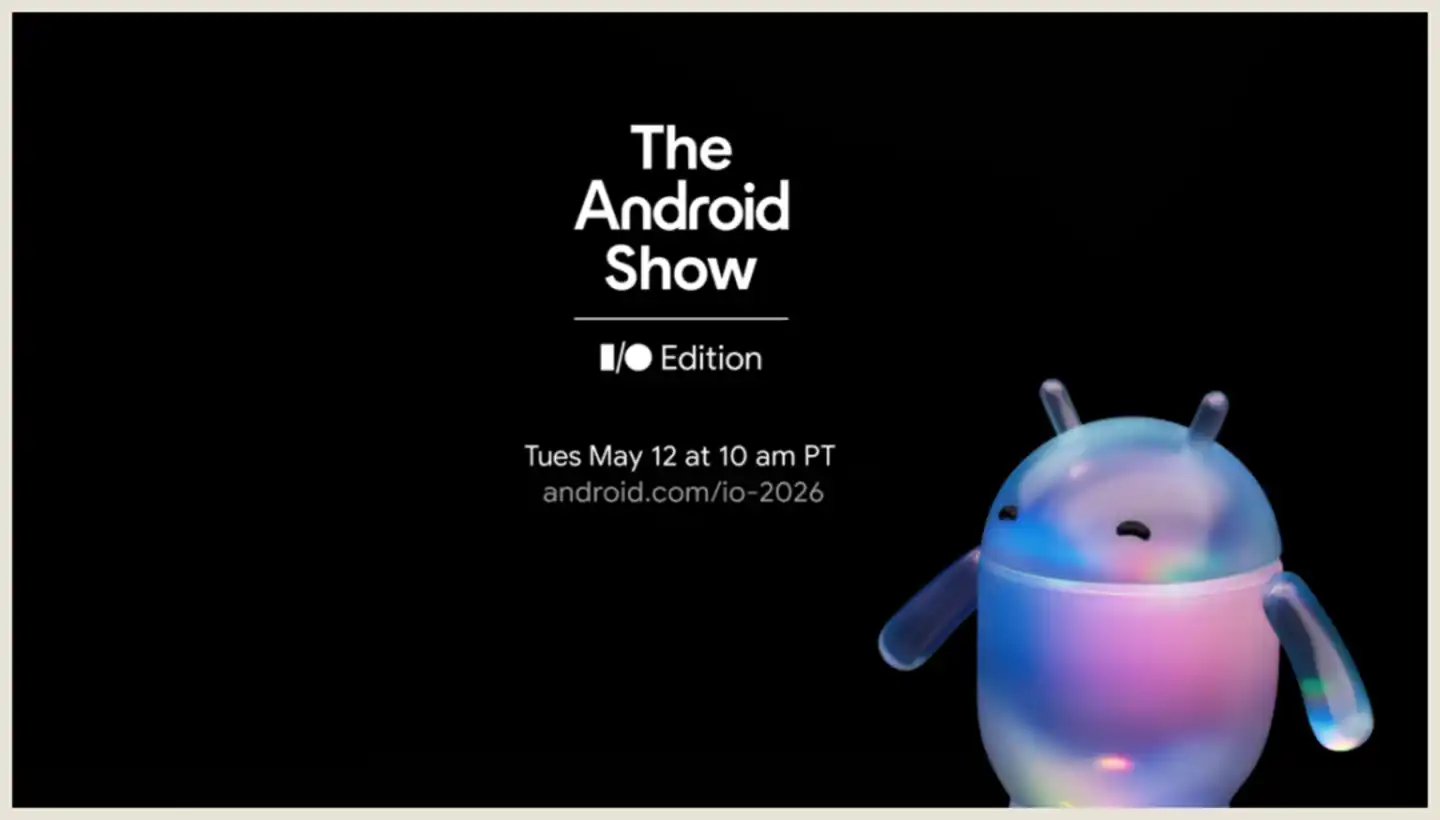
2026 Android Show|I/O Edition Press Conference Poster
Source: Android Heaadlines

Compared to last year's Gemini Nano + AICore combination, this time Google further embedded Agent capabilities for cross-App and contextual processing into the OS layer: cross-App task automation (ordering meals, shopping, placing orders), automatic form filling, webpage summarization, and custom widgets were successively written into the system-level capability list. Google also listed explicit user control, comprehensive data protection, and operational transparency as three product principles.

A week later, on May 19, in the I/O keynote speech, Google CEO Sundar Pichai started along the same line:

Welcome to the agentic Gemini era

In joining the wave of end-device OS agentization, Google was hardly an early starter.

Microsoft introduced Copilot+PC (a new category of Windows 11 devices equipped with 40+ TOPS NPUs) at Build 2024 in May 2024, embedding Agent capabilities into the OS based on three abilities: the on-device small model Phi Silica, the screen Agent capability Click to Do, and the system-level activity memory Recall.

At WWDC24 in June 2024, Apple formally announced "Apple Intelligence," which it positioned as a "personal intelligence system." Some AI-assisted features were subsequently rolled out, but the core Agent capabilities of Apple Intelligence have not yet materialized due to issues like delays in its own large model development and Siri's shortcomings.

Huawei, at HDC 2025 in June 2025, released HarmonyOS 6 and the Harmony Smart Agent Framework (HMAF), followed by the launch of the Xiaoyi Smart Agent Plaza featuring over 80 agents.

The major trend of end-device OS agentization has simultaneously emerged in mainstream operating systems like Android, iOS, HarmonyOS, and Windows.

Press conferences only showcase features; what OS vendors are truly competing over is the three-layered foundational capability underpinning the reliable operation and practical problem-solving of OS Agents: the system-level AI Runtime, controllable chips, and the end-cloud model matrix.

Two. Beyond the Press Conference: The Three-Layered Foundation Supporting OS Agents

System-Level AI Runtime: The Scheduling Hub for On-Device Intelligence

Runtime is the inference engine and system service through which on-device models run within the operating system. Downwards, it directly interfaces with the NPU and system resource scheduling; upwards, it exposes inference capabilities to all Apps via stable APIs. It turns on-device models into "shared intelligence at the OS layer": sharing model weights across Apps, uniformly scheduling computing power and memory, supporting the tool calling, guided generation, context, and permission docking required by Agents. It determines whether an OS Agent is merely a chat button within an App or a resident service on the operating system capable of performing system-level operations.

The most complete example within the Android system is Google's AICore. In December 2023, AICore went live as a system service in Android 14; in August 2025, Gemini Nano was opened to developers via ML Kit GenAI APIs. From a system service foundation to stable APIs for Apps, AICore has been polished for nearly two years.

Other OS vendors are on the same path, with different tempos. Apple opened the Foundation Models framework to developers at WWDC25. The framework comes with decorators like @Generable, tool calling, guided generation, and stateful sessions, connecting to an on-device foundation model of about 3B parameters, supplemented by private cloud computing for cloud support. Microsoft integrated the on-device AI framework Foundry on Windows and Phi Silica into Windows 11, using Windows ML as the underlying inference backend. Huawei released the Agent Framework Kit (Harmony Smart Agent Framework, HMAF) at HDC 2025, opening up the intent system and Agent collaboration protocols.
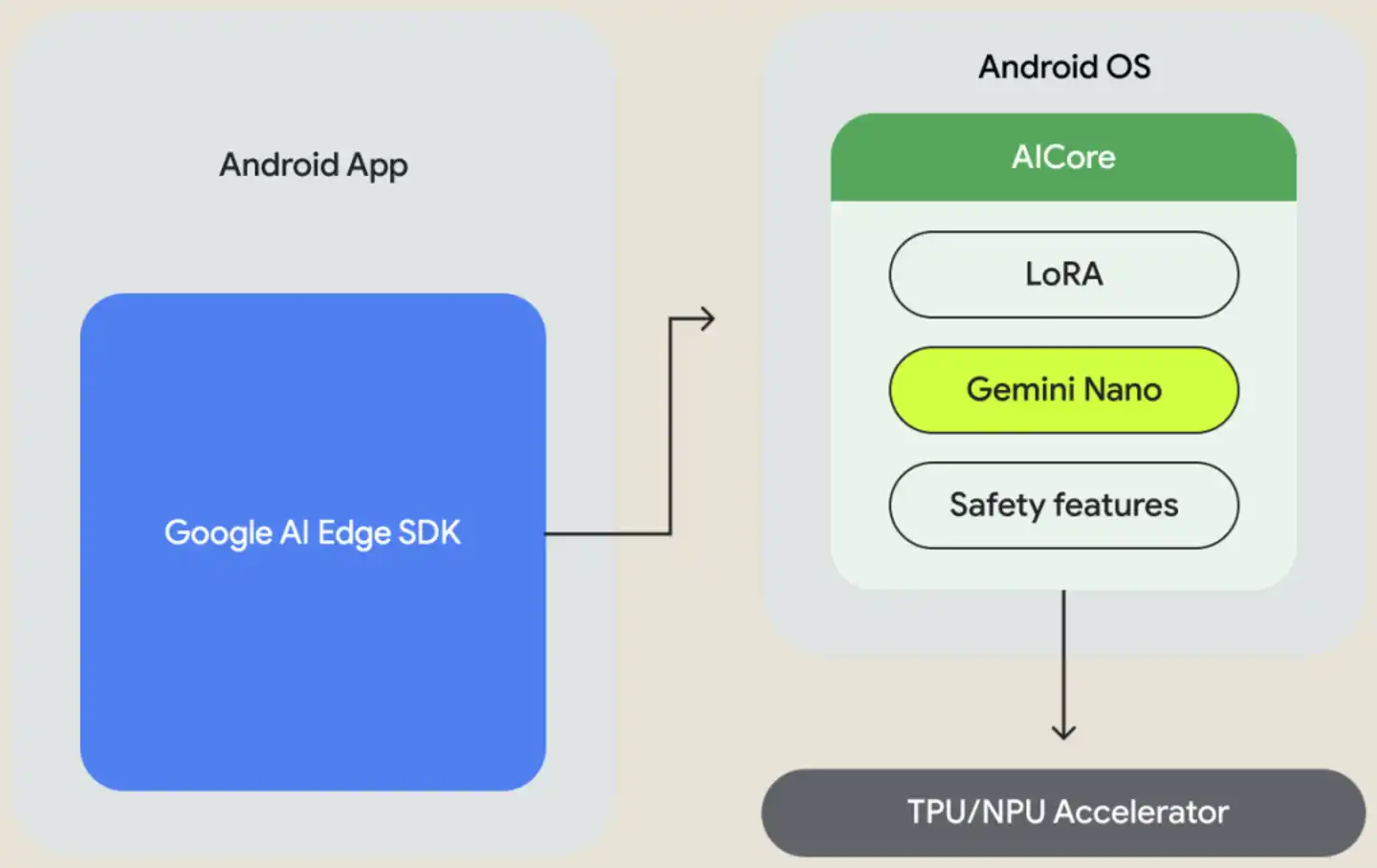
Android AICore as a system service, scheduling Gemini Nano inference on hardware accelerators
Source: Android Developers

Controllable Chips: The Fulcrum of Hardware-Software Synergy

At the Android Show|I/O Edition, Google set clear hardware thresholds for Gemini Intelligence: the full feature set debuted exclusively on a few latest flagships like the Pixel 10 series and Galaxy S26 series, with last year's models not included. This points to a simple fact: AI models are still evolving rapidly, and software continuously imposes new demands on hardware. Controllable chips are the foundation for meeting these demands, and the degree of control determines the space OS vendors have for hardware-software adaptation of end-device OS Agents.

Apple is the exemplar of the integrated hardware-software approach. iOS and macOS have evolved in tandem with the A-series and M-series chips from the start, and Core ML encapsulates the scheduling of CPU, GPU, and ANE into the framework layer. This path continues into the LLM era. Apple Machine Learning Research provided a set of actual measurements: following Core ML's optimization path to deploy Llama 3.1 8B Instruct onto an M1 Max, local decoding speed can reach about 33 tokens/s. The "Apple Intelligence Foundation Language Models" technical report also disclosed that Apple performed architecture-level optimizations like KV cache sharing and 2-bit quantization-aware training for its own chips, enabling the successful opening of the ~3B on-device foundation model to developers via the Foundation Models framework. This level of depth is only achievable when the chip is held in one's own hands – this is precisely the value of controllable chips for OS vendors: it dictates the depth of hardware-software synergy and raises the experience ceiling for end-device OS Agents.

Entering the AI era, Google is doing the same thing – pursuing its self-developed Tensor SoC path since the Pixel 6. The latest Tensor G5 boosts TPU performance by up to 60% and CPU performance by an average of 34%, landing in the Pixel 10 as the first SoC to fully run the latest-generation Gemini Nano. Of course, Tensor G5 also has weaknesses: Android Central's real-world tests show its memory configuration (RAM capacity) remains an AI performance bottleneck, and its Geekbench AI scores trail the Snapdragon 8 Elite; in Macworld's Geekbench 6 tests, G5's single-core and multi-core scores are lower than the A18 Pro's. Google is still catching up, but the synergistic path of self-developed Tensor plus on-device Gemini has taken shape.

Huawei's Kirin paired with the Da Vinci NPU and the Pangu on-device model is another controllable chip path running parallel to Apple and Google. Xiaomi, with its Xuanjue O1, is a newer entrant moving in the direction of controllable chips.

End-Cloud Model Matrix: The Source of Intelligence for Agents

The end-cloud model matrix is the source of "intelligence" for end devices: cloud models support the capability ceiling for complex tasks, while on-device models underpin the baseline for daily operation – latency, battery life, privacy, and stability all rest on the on-device side. Both ends are indispensable; the difference lies in the depth of coupling with the OS. On-device models must be embedded into the OS of every terminal device and deeply coupled with the local NPU, assuming a dual identity within the OS: downwards, they are the local inference backend for the Runtime; upwards, they are exposed as system-level APIs to Apps via the Runtime's framework and SDK.

Self-development makes sense both in the cloud and on-device, but the returns are more tangible on-device. While cloud models can be sourced externally to support the capability ceiling, the advantages of self-development mainly manifest in routing control, commercial terms, and model iteration pace. The on-device side is different. On-device models are embedded into the OS and NPU of every device; the returns on self-development are directly reflected in product performance: KV cache sharing, 2-bit quantization-aware training specifically designed for a chip generation, Per-Layer Embedding (originating from Gemma 3n, incrementally loading embedding parameters layer-by-layer from fast storage), etc. – these are only conveniently realized when the model and hardware are designed synchronously; meanwhile, the synergy tempo is no longer constrained by third-party hardware vendors.

Tensor G5's TPU computing power saw up to a 60% increase over the previous G4, but Gemini Nano's improvement on the G5 far exceeds that – according to Google official and Jon Peddie Research data compilation, local processing speed is 2.6 times that of the previous generation, energy consumption is halved, and the token window expanded from 12,000 to 32,000 (equivalent to digesting about a hundred screenshots at once). These significantly surpassing performance gains stem from the Matryoshka Transformer elastic inference architecture adopted by Gemini Nano v3, combined with synergistic optimizations with the Tensor G5 TPU.
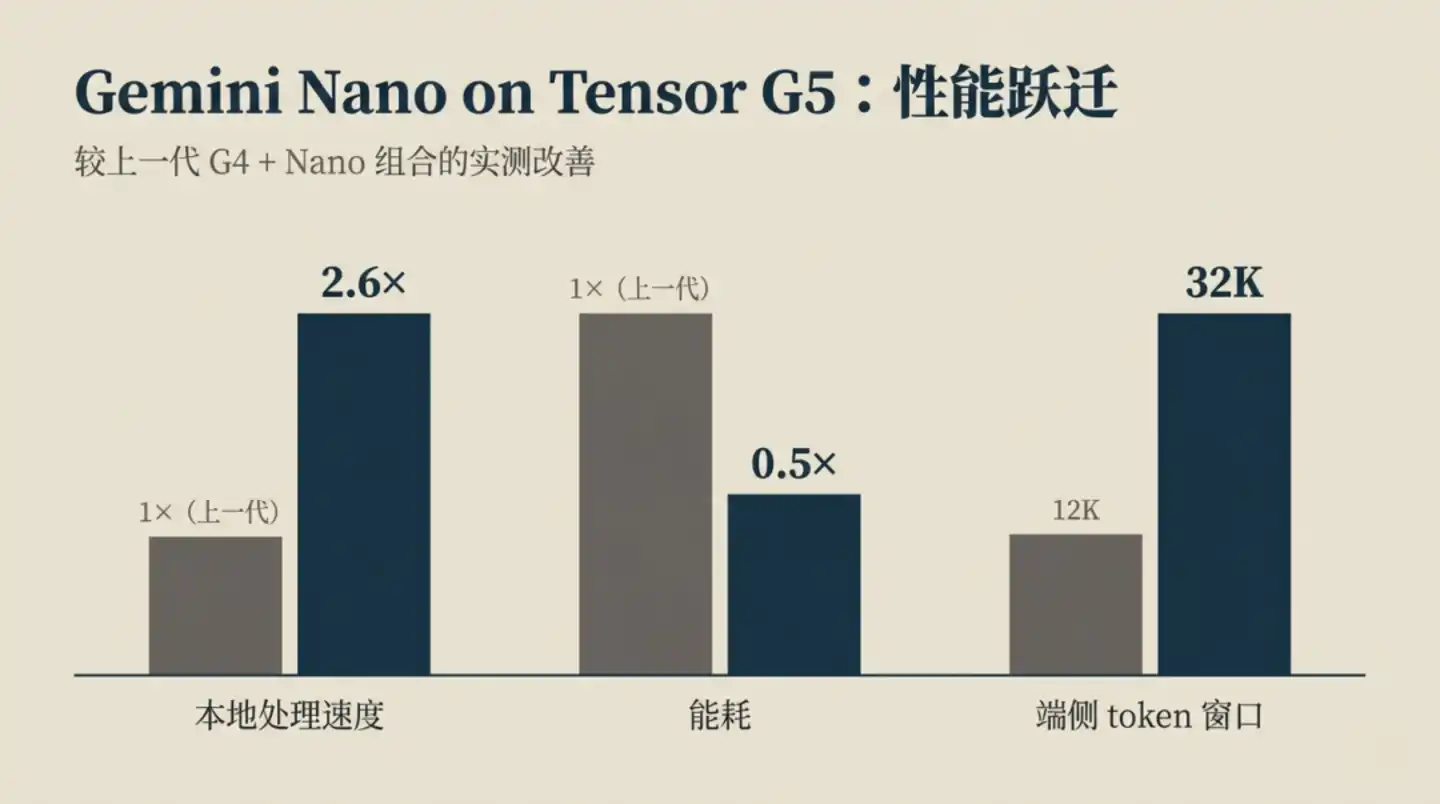
Performance Leap of Gemini Nano on Tensor G5 Compared to Previous Generation
Source: Google/Jon Peddie Research, CloudSurge AI Chart

In this layer of on-device models, the major OS vendors all hold their own cards: Google's Gemini Nano, Apple's ~3B parameter on-device foundation model, Microsoft's Phi Silica, Huawei's Pangu on-device model. Self-development is the default option for this layer.

Three. Between the Layers: Deeper Synergy, Greater Space for Differentiation

The three-layered capability foundation is coupled from bottom to top: Controllable Chip → On-Device/Cloud Models → Runtime → Agent. The controllable chip determines the achievable inference efficiency and power consumption for on-device models; on-device models determine the local intelligence schedulable by the Runtime; the Runtime determines the reliability of the Agent executing cross-App operations as a system service. The deeper the synergy among the three, the greater the product experience differentiation for OS vendors in on-device Agents, and the thicker the moat.

The more tightly the three layers interlock within the same hardware-software system, the more the product capabilities of OS Agents will exhibit differentiation that a single layer cannot achieve.

  • Response latency and power consumption. The 2.6x processing speed and halved energy consumption achieved by Gemini Nano on Tensor G5 rely on mutual adaptation of model architecture, chip design, and Runtime scheduling within the same generation of hardware-software design – improvements of this magnitude only emerge from such synergy.
  • Privacy and trust. Common tasks involving private data are handled locally by on-device models, while complex requests are passed to the cloud – this is the reasonable default posture for OS Agents regarding user data at the current stage. The three-layer coupling determines whether this "on-device first, cloud fallback" can be truly realized: deep adaptation between the NPU and on-device model is the key path for on-device models, still in development, to shoulder daily high-frequency inference; model quantization compression and KV cache sharing for the NPU; Runtime routing between on-device and cloud based on task complexity. If any of the three layers is inadequate, "on-device first" remains mere marketing talk.
  • System-level context. OS vendors reorganizing cross-App and OS-layer user data (semantic indexing, screen perception, long-term memory) into a system-level personal context for the Agent is a prerequisite for the Agent to truly "understand the user" and a core characteristic differentiating OS Agents from single App-level Agents. Implementation depends on the three-layer interlock: the Runtime holds cross-App indexing and permissions, the on-device model resides to handle understanding and inference, and the NPU provides local efficient computing power. Apple's Core Spotlight builds semantic indexes on-device, Apps expose actions and data to the system via App Intents, and Agents will obtain context through Personal Context (Apple announced this capability will come with a future software update); Android's AppFunctions follows a similar path.
  • Reliability as a system service. For an OS Agent to be invoked as a system-level service, it must remain usable in real-world scenarios like being offline, low battery, or thermal throttling. The on-device model residing on the device allows the Agent to work without a network; a highly hardware-software optimized NPU handles low-power inference; the Runtime falls back scheduling based on availability when device resources are tight (switching to lighter models or routing requests to the cloud). If any of the three layers is missing, the OS Agent cannot sustain the form of a system service and can only revert to an App-level chat button.

Apple Intelligence presents a complete synergy paradigm: Apple Silicon, the ~3B on-device foundation model, and the Foundation Models framework interlock from bottom to top, handling common scenarios on-device and transferring complex requests to private cloud computing. Google represents another form. Tensor G5, landing in the Pixel 10 as the first SoC to fully run the latest-generation Gemini Nano, is uniformly scheduled by AICore, enabling system-level Agent features like Magic Cue and Pixel Screenshots to be enabled by default without relying on the cloud. Huawei is an exemplary case of constructing three-layer synergy domestically: Kirin, Da Vinci NPU, Pangu on-device model, and HMAF – all four are self-owned, coupling from bottom to top into a complete three-layer foundation.
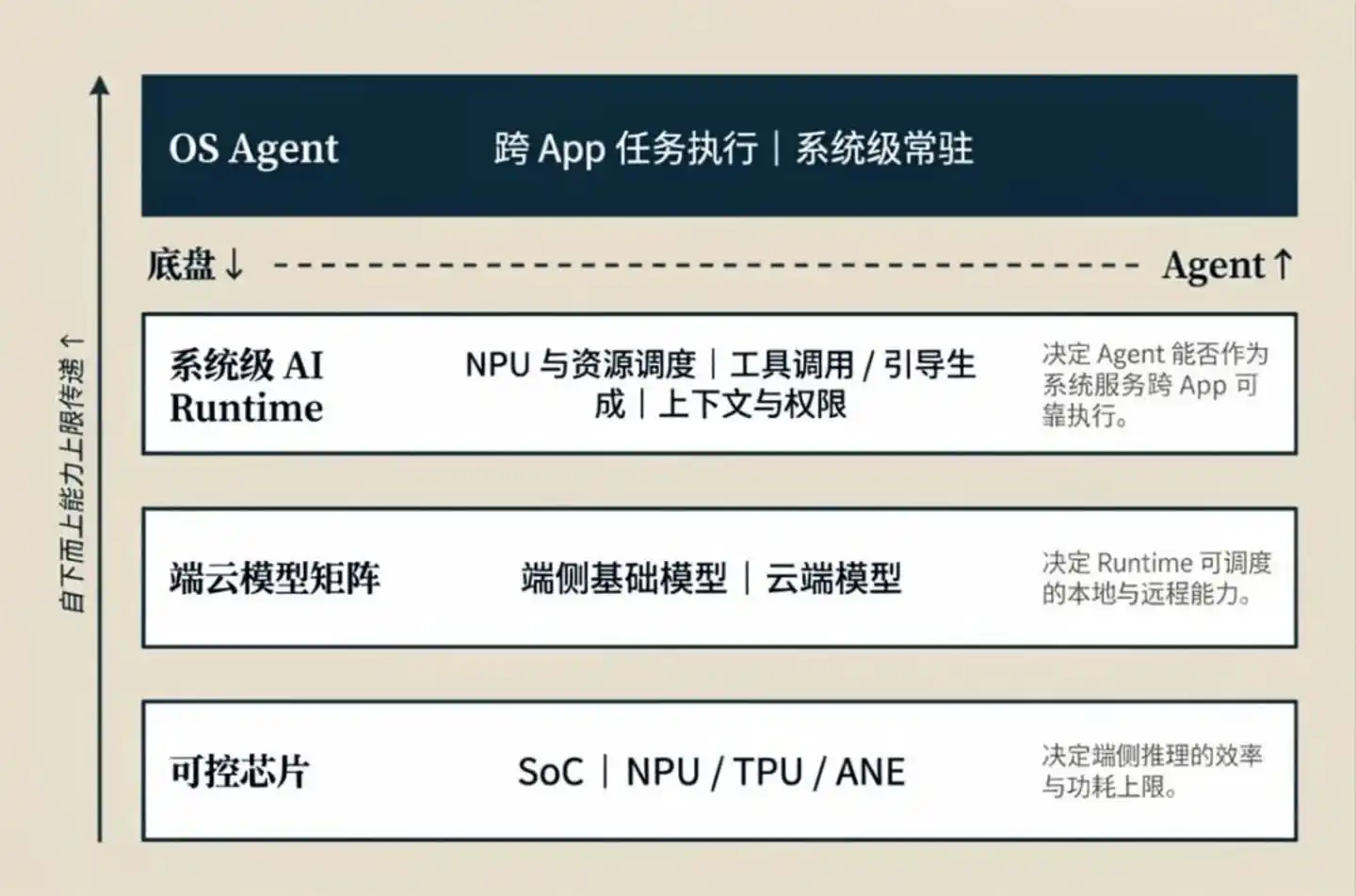
Interlocking Mechanism of the Three-Layered Foundation for End-Device OS Agents
Source: CloudSurge AI


Four.
Above the Foundation: Other Key Variables for the Long-Term Moat

The three-layer synergy builds the core of the moat. Above the foundation, numerous other variables affect product competitiveness in the OS Agent era, including Agent-App interaction capabilities, privacy protection, etc.

The interaction between OS Agents and Apps is at the forefront of the contest between OS vendors and App vendors. Currently, two paths run in parallel. One is screen recognition and automation, including Gemini Live screen sharing, Apple Visual Intelligence, Circle to Search, etc. OS Agents intervene in Apps by reading the screen and clicking buttons. This works for single tasks, but each invocation lacks structured information, making it difficult to build stable multi-step workflows. The other is API deep integration, including Google AppFunctions, Apple App Intents, Huawei Intents Kit, etc. Apps expose core actions as structured interfaces to the system, enabling stable Agent calls and the building of multi-step workflows. Whether the API path can spread depends not on OS vendors but on App vendors. Handing over core functionalities to be called by Agents means users may no longer directly open the App, with risks of brand exposure, ad slots, behavioral data, and payment portals being intercepted by the OS. This will be a core battleground for the distribution of end-user traffic.

Privacy protection is a key value proposition and bottom line for end-device systems. OS vendors hold the deepest system-level permissions and the most sensitive user data on the end-device side. Privacy is both a professional stance and a prerequisite for the long-term advancement of the aforementioned aspects. Apple has built an end-device-based privacy protection system through the integrated hardware-level security design shared between the on-device Secure Enclave independent security chip and Private Cloud Compute nodes. This product strategy has turned "Privacy. That’s Apple." into a core brand label for Apple in the global premium market, thereby winning user trust.
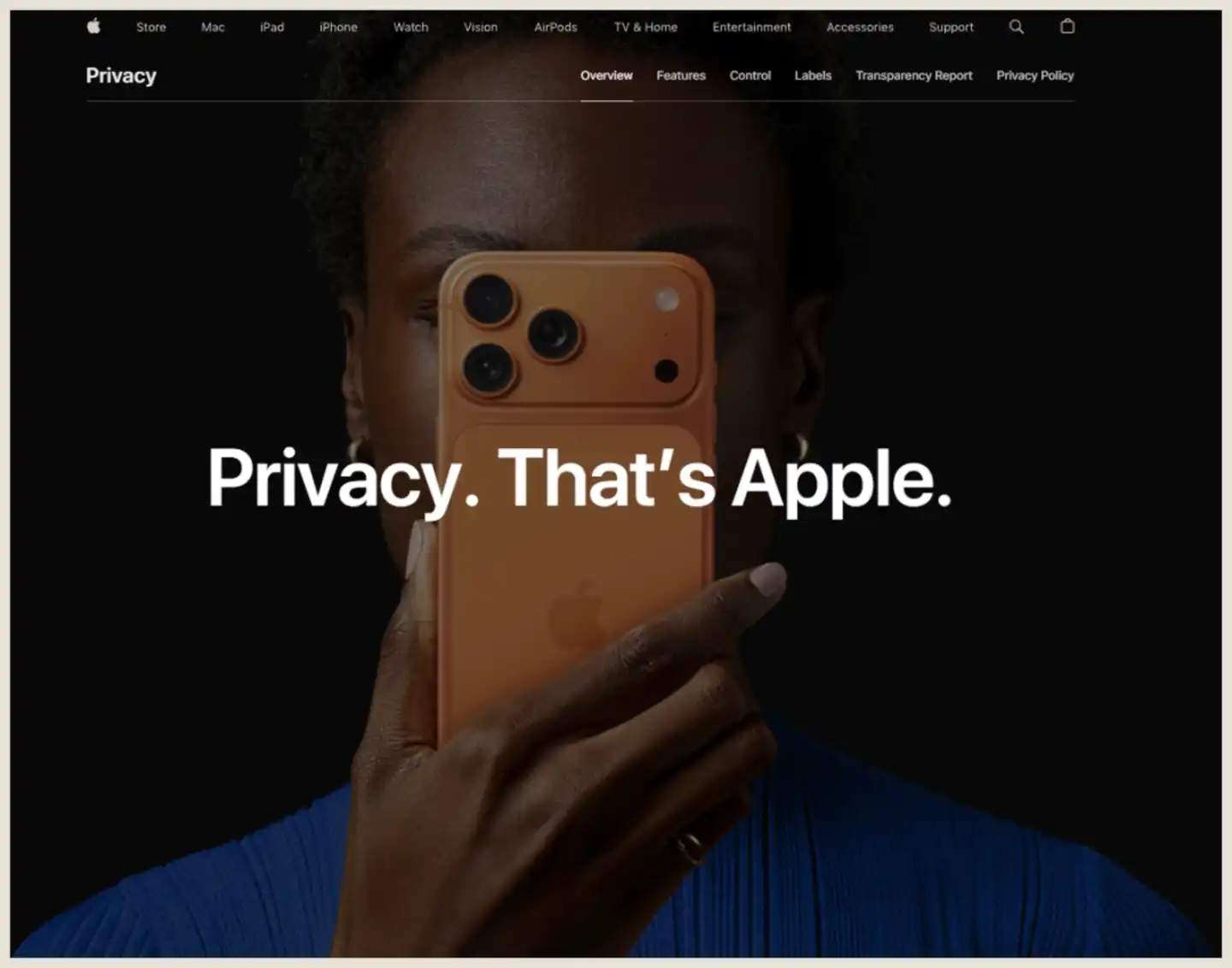
Apple's "Privacy. That’s Apple." Label
Source: Apple Website

The three-layer synergy establishes the core of the moat, and these long-term variables above the foundation influence how deeply it can be fortified.

Five. More Than Just Remaking the OS

Under the trend of end-device OS agentization, the more solid the three-layered foundation of system-level AI Runtime, controllable chips, and the end-cloud model matrix, the higher the product baseline for OS vendors in this battle and the greater their space for differentiation. OS vendors that grasp this trend will have the opportunity to drive a reset in the distribution of traffic at the end-device entry point, securing a stronger competitive position.

This trend extends beyond phones and PCs. The underlying capabilities of OS Agents are spilling over into more terminals along the multi-device ecosystems already built by each company, especially IoT. Controllable chips are moving into scenarios like automotive SoCs; Huawei has already deployed vehicle-grade Kirin chips, and Xiaomi's HyperOS is entering its own vehicle models. On-device models are being lightened for migration to new form-factor hardware like glasses; the Android XR smart glasses jointly developed by Google, Samsung, Gentle Monster, and Warby Parker are set to launch in Fall 2026. Runtime and Agent synergy is expanding to device clusters via the "Super Terminal/Distributed" frameworks already deployed by each company, e.g., Huawei's 1+8+N and Harmony Distributed Soft Bus, Xiaomi's "Human-Vehicle-Home Full Ecosystem" and HyperConnect, Apple's Continuity, and Google's Cross device SDK and Cross device services. The battle over OS Agents is far from limited to the victory or defeat on phones and PCs.

AICore has been polished for nearly two years; Apple's OS and Apple silicon series chips have been co-evolving for over a decade; Tensor has been revised all the way to G5, with the Pixel 10 finally capable of shouldering the burden of Gemini Nano v3. The outcome of this battle never lies in the one or two hours of a press conference, but in the chips, models, and Runtime honed across generations.

References:

  • Gemini Intelligence brings proactive AI to Android|Google Blog
  • I/O 2026: Welcome to the agentic Gemini era|Google Blog
  • Phi Silica, small but mighty on-device SLM|Windows Experience Blog
  • Apple Delays Siri Upgrade Indefinitely|Bloomberg
  • HarmonyOS 6 Developer Beta Launch Press Release (HDC 2025)|Huawei
  • The latest Gemini Nano with on-device ML Kit GenAI APIs|Android Developers Blog
  • Foundation Models framework documentation|Apple Developer
  • Harmony Smart Agent Framework White Paper|Huawei Developer
  • On-Device Llama 3.1 with Core ML|Apple Machine Learning Research
  • Apple Intelligence Foundation Language Models Tech Report 2025|Apple Machine Learning Research
  • Google Tensor G5: Benchmarks and everything you need to know|Android Central
  • Google’s new M5 SoC(Tensor G5 detailed - Matryoshka Transformer)|Jon Peddie Research
  • Private Cloud Compute: A new frontier for AI privacy in the cloud|Apple Security Engineering
  • Overview of AppFunctions|Android Developers
  • App Intents|Apple Developer
  • Introduction to Intents Kit (HarmonyOS)|Huawei Developer
  • The Google Pixel 10 Pro’s Tensor G5 chip is impressive—if you compare it to an iPhone 14|Macworld
  • Gemma 3n model overview|Google AI for Developers

Perguntas relacionadas

QWhat is the core thesis of the article regarding the evolution of operating systems (OS) into the agentic era?

AThe article argues that as major OSes (like Android, iOS, HarmonyOS, Windows) enter the 'Agent era,' the key competition is not just about showcasing flashy AI features in demos. Instead, the real differentiator and long-term moat lie in building a robust three-layer technological 'foundation' that reliably supports these OS-level Agents. This foundation consists of a system-level AI Runtime, controlled/self-developed chips, and a matrix of on-device and cloud AI models. The depth of synergy between these three layers determines the quality, privacy, and reliability of the Agent experience.

QWhat are the three key layers of the foundational 'chassis' that support a reliable OS Agent, according to the article?

A1. System-level AI Runtime: The scheduling hub and inference engine for on-device models. It interfaces directly with the NPU and system resources, providing stable APIs for apps. It enables the Agent to function as a system-level service capable of cross-app operations, rather than just an app-based chatbot. 2. Controlled Chips (SoC/ NPU): Self-developed or deeply controlled hardware (like Apple Silicon, Google Tensor, Huawei Kirin). This allows for deep software-hardware co-design and optimization, which is crucial for achieving high inference efficiency, low power consumption, and unlocking advanced Agent capabilities. 3. On-device/Cloud Model Matrix: The 'intelligence source.' On-device models handle everyday tasks with low latency and high privacy, while cloud models tackle complex requests. The article emphasizes that self-developed on-device models (like Gemini Nano, Apple's ~3B model) are critical for deep integration with the specific hardware and Runtime.

QHow does the article use Google's Gemini Nano on Tensor G5 as an example of deep layer synergy?

AThe article cites Google's Gemini Nano v3 running on the Tensor G5 chip as a prime example of performance gains from deep synergy. While the Tensor G5's TPU saw a maximum 60% performance increase over G4, Gemini Nano's on-device processing speed improved by 2.6x, and energy consumption halved. This disproportionate gain is attributed to the co-design of the model's Matryoshka Transformer architecture with the Tensor G5's TPU, showcasing how tight integration between the chip (Layer 2) and the on-device model (Layer 3), orchestrated by the Runtime (Layer 1), yields superior results that cannot be achieved by improving a single layer in isolation.

QBesides the three-layer foundation, what other long-term variables are mentioned as crucial for OS Agent competitiveness?

AThe article identifies two other key long-term variables: 1. Agent-App Interaction: How the OS Agent accesses app functionality. There's a tension between screen-reading/automation (less reliable) and deep API integration (like Google's AppFunctions, Apple's App Intents). The latter is more powerful but requires app developers to expose their core features, leading to a potential power struggle over user traffic and data. 2. Privacy Protection: This is a fundamental value and a prerequisite for user trust. The article highlights Apple's hardware-level security (Secure Enclave) and Private Cloud Compute as a benchmark, turning privacy into a core brand asset ('Privacy. That’s Apple.') that supports its competitive position in the high-end market.

QAccording to the article, the trend of Agentified OS is not limited to which devices?

AThe article explicitly states that the trend of Agentified OS and the underlying foundational capabilities are not limited to just smartphones and PCs. It is expanding to other terminals, particularly within each company's multi-device ecosystem: - IoT and Smart Homes: Through frameworks like Huawei's '1+8+N' or Xiaomi's 'Human-Vehicle-Home Full Ecosystem.' - Automotive: With controlled chips (e.g., Huawei's car-grade Kirin, Xiaomi's HyperOS) moving into vehicles. - Wearables/XR: On-device models are being adapted for lightweight hardware like smart glasses (e.g., Google's upcoming Android XR glasses). The battle for OS Agents is described as extending far beyond the胜负 (victory or defeat) in the phone and PC markets.

Leituras Relacionadas

Why Sam Altman's 'Water and Electricity Theory' Sparks Copyright Controversy

OpenAI CEO Sam Altman's recent statement that "intelligence will become a utility like electricity or water" has sparked significant controversy, primarily around copyright issues and the nature of AI development. While positioning AI as a utility serves as a compelling narrative for infrastructure investors, critics argue the analogy is flawed in three key areas. First, there's a fundamental "property gap." Traditional utilities like water and power create new, physical infrastructure from scratch. In contrast, major AI models are trained by reorganizing vast amounts of existing human-created content—books, articles, code, etc.—often scraped from the web without explicit permission or compensation to creators. This "free acquisition, paid resale" model is seen by many as ethically problematic. Second, there's a "pricing gap." True public utilities are typically regulated to ensure universal service with non-discriminatory, cost-plus pricing. AI's token-based pricing, however, involves significant price discrimination (e.g., output tokens costing much more than input tokens) and is designed for revenue maximization, not equitable access. Third, a "governance gap" exists. Utilities operate under public oversight, while AI pricing and development are currently controlled by a few private companies. Furthermore, the industry's own shift toward buying licensed training data (e.g., deals with Reddit or news publishers) undermines its previous legal reliance on "fair use" for freely scraped data. In conclusion, while AI is indeed becoming a foundational technology, calling it a public utility remains contentious. The title requires not just scale and a pay-per-use model, but also credible solutions for data provenance, equitable pricing, and public governance.

marsbitHá 1h

Why Sam Altman's 'Water and Electricity Theory' Sparks Copyright Controversy

marsbitHá 1h

From ZEC's Surge to Vitalik's Support: Will the Privacy Narrative Resurface?

From ZEC's surge to Vitalik's endorsement, is privacy making a comeback? The recent rally in ZEC has refocused attention on the crypto privacy sector. This resurgence stems from a growing market realization: while blockchain transparency builds trust, full exposure of user balances, trading strategies, and risk positions can become a vulnerability, especially for large traders and institutions on platforms like Hyperliquid. The privacy landscape has evolved beyond classic anonymity coins like ZEC, XMR, and DASH. It now encompasses privacy infrastructure projects such as Railgun (bringing privacy to DeFi) and Aztec (a privacy-focused L2), as well as newer entrants like Genius Terminal, SilentSwap, and 0xBow that emphasize transaction privacy while attempting to balance compliance. Industry trends confirm privacy is becoming integrated, not a niche feature. Perp DEX Aster has introduced a "Shield Mode," and Vitalik has discussed the need for native privacy at the Ethereum protocol level, including proposals like EIP-8182 for standardized private transfers. In conclusion, this revival is more than a simple sector rotation. It reflects a critical reassessment of transparency's limits. As on-chain finance matures, the challenge is finding a sustainable balance between necessary transparency for trust and essential privacy for protecting assets and strategies, making privacy a potential cornerstone of next-generation infrastructure.

marsbitHá 1h

From ZEC's Surge to Vitalik's Support: Will the Privacy Narrative Resurface?

marsbitHá 1h

Trading

Spot
Futuros

Artigos em Destaque

O que é GROK AI

Grok AI: Revolucionar a Tecnologia Conversacional na Era Web3 Introdução No panorama em rápida evolução da inteligência artificial, a Grok AI destaca-se como um projeto notável que liga os domínios da tecnologia avançada e da interação com o utilizador. Desenvolvida pela xAI, uma empresa liderada pelo renomado empreendedor Elon Musk, a Grok AI procura redefinir a forma como interagimos com a inteligência artificial. À medida que o movimento Web3 continua a florescer, a Grok AI visa aproveitar o poder da IA conversacional para responder a consultas complexas, proporcionando aos utilizadores uma experiência que é não apenas informativa, mas também divertida. O que é a Grok AI? A Grok AI é um sofisticado chatbot de IA conversacional projetado para interagir com os utilizadores de forma dinâmica. Ao contrário de muitos sistemas de IA tradicionais, a Grok AI abraça uma gama mais ampla de perguntas, incluindo aquelas tipicamente consideradas inadequadas ou fora das respostas padrão. Os principais objetivos do projeto incluem: Raciocínio Fiável: A Grok AI enfatiza o raciocínio de senso comum para fornecer respostas lógicas com base na compreensão contextual. Supervisão Escalável: A integração de assistência de ferramentas garante que as interações dos utilizadores sejam monitorizadas e otimizadas para qualidade. Verificação Formal: A segurança é primordial; a Grok AI incorpora métodos de verificação formal para aumentar a fiabilidade das suas saídas. Compreensão de Longo Contexto: O modelo de IA destaca-se na retenção e recordação de um extenso histórico de conversas, facilitando discussões significativas e contextualizadas. Robustez Adversarial: Ao focar na melhoria das suas defesas contra entradas manipuladas ou maliciosas, a Grok AI visa manter a integridade das interações dos utilizadores. Em essência, a Grok AI não é apenas um dispositivo de recuperação de informações; é um parceiro conversacional imersivo que incentiva um diálogo dinâmico. Criador da Grok AI A mente por trás da Grok AI não é outra senão Elon Musk, um indivíduo sinónimo de inovação em vários campos, incluindo automóvel, viagens espaciais e tecnologia. Sob a égide da xAI, uma empresa focada em avançar a tecnologia de IA de maneiras benéficas, a visão de Musk visa reformular a compreensão das interações com a IA. A liderança e a ética fundacional são profundamente influenciadas pelo compromisso de Musk em ultrapassar os limites tecnológicos. Investidores da Grok AI Embora os detalhes específicos sobre os investidores que apoiam a Grok AI permaneçam limitados, é reconhecido publicamente que a xAI, a incubadora do projeto, é fundada e apoiada principalmente pelo próprio Elon Musk. As anteriores empreitadas e participações de Musk fornecem um forte apoio, reforçando ainda mais a credibilidade e o potencial de crescimento da Grok AI. No entanto, até agora, informações sobre fundações ou organizações de investimento adicionais que apoiam a Grok AI não estão prontamente acessíveis, marcando uma área para exploração futura potencial. Como Funciona a Grok AI? A mecânica operacional da Grok AI é tão inovadora quanto a sua estrutura conceptual. O projeto integra várias tecnologias de ponta que facilitam as suas funcionalidades únicas: Infraestrutura Robusta: A Grok AI é construída utilizando Kubernetes para orquestração de contêineres, Rust para desempenho e segurança, e JAX para computação numérica de alto desempenho. Este trio assegura que o chatbot opere de forma eficiente, escale eficazmente e sirva os utilizadores prontamente. Acesso a Conhecimento em Tempo Real: Uma das características distintivas da Grok AI é a sua capacidade de aceder a dados em tempo real através da plataforma X—anteriormente conhecida como Twitter. Esta capacidade concede à IA acesso às informações mais recentes, permitindo-lhe fornecer respostas e recomendações oportunas que outros modelos de IA poderiam perder. Dois Modos de Interação: A Grok AI oferece aos utilizadores a escolha entre “Modo Divertido” e “Modo Regular”. O Modo Divertido permite um estilo de interação mais lúdico e humorístico, enquanto o Modo Regular foca em fornecer respostas precisas e exatas. Esta versatilidade assegura uma experiência adaptada que atende a várias preferências dos utilizadores. Em essência, a Grok AI combina desempenho com envolvimento, criando uma experiência que é tanto enriquecedora quanto divertida. Cronologia da Grok AI A jornada da Grok AI é marcada por marcos fundamentais que refletem as suas fases de desenvolvimento e implementação: Desenvolvimento Inicial: A fase fundamental da Grok AI ocorreu ao longo de aproximadamente dois meses, durante os quais o treinamento inicial e o ajuste do modelo foram realizados. Lançamento Beta do Grok-2: Numa evolução significativa, o beta do Grok-2 foi anunciado. Este lançamento introduziu duas versões do chatbot—Grok-2 e Grok-2 mini—cada uma equipada com capacidades para conversar, programar e raciocinar. Acesso Público: Após o seu desenvolvimento beta, a Grok AI tornou-se disponível para os utilizadores da plataforma X. Aqueles com contas verificadas por um número de telefone e ativas há pelo menos sete dias podem aceder a uma versão limitada, tornando a tecnologia disponível para um público mais amplo. Esta cronologia encapsula o crescimento sistemático da Grok AI desde a sua concepção até ao envolvimento público, enfatizando o seu compromisso com a melhoria contínua e a interação com o utilizador. Principais Características da Grok AI A Grok AI abrange várias características principais que contribuem para a sua identidade inovadora: Integração de Conhecimento em Tempo Real: O acesso a informações atuais e relevantes diferencia a Grok AI de muitos modelos estáticos, permitindo uma experiência de utilizador envolvente e precisa. Estilos de Interação Versáteis: Ao oferecer modos de interação distintos, a Grok AI atende a várias preferências dos utilizadores, convidando à criatividade e personalização na conversa com a IA. Base Tecnológica Avançada: A utilização de Kubernetes, Rust e JAX fornece ao projeto uma estrutura sólida para garantir fiabilidade e desempenho ótimo. Consideração de Discurso Ético: A inclusão de uma função de geração de imagens demonstra o espírito inovador do projeto. No entanto, também levanta considerações éticas em torno dos direitos autorais e da representação respeitosa de figuras reconhecíveis—uma discussão em curso dentro da comunidade de IA. Conclusão Como uma entidade pioneira no domínio da IA conversacional, a Grok AI encapsula o potencial para experiências transformadoras do utilizador na era digital. Desenvolvida pela xAI e impulsionada pela abordagem visionária de Elon Musk, a Grok AI integra conhecimento em tempo real com capacidades avançadas de interação. Esforça-se por ultrapassar os limites do que a inteligência artificial pode alcançar, mantendo um foco nas considerações éticas e na segurança do utilizador. A Grok AI não apenas incorpora o avanço tecnológico, mas também representa um novo paradigma de conversas no panorama Web3, prometendo envolver os utilizadores com conhecimento hábil e interação lúdica. À medida que o projeto continua a evoluir, ele permanece como um testemunho do que a interseção da tecnologia, criatividade e interação humana pode alcançar.

445 Visualizações TotaisPublicado em {updateTime}Atualizado em 2024.12.26

O que é GROK AI

O que é ERC AI

Euruka Tech: Uma Visão Geral do $erc ai e as suas Ambições no Web3 Introdução No panorama em rápida evolução da tecnologia blockchain e das aplicações descentralizadas, novos projetos surgem frequentemente, cada um com objetivos e metodologias únicas. Um desses projetos é a Euruka Tech, que opera no vasto domínio das criptomoedas e do Web3. O foco principal da Euruka Tech, particularmente do seu token $erc ai, é apresentar soluções inovadoras concebidas para aproveitar as capacidades crescentes da tecnologia descentralizada. Este artigo tem como objetivo fornecer uma visão abrangente da Euruka Tech, uma exploração das suas metas, funcionalidade, a identidade do seu criador, potenciais investidores e a sua importância no contexto mais amplo do Web3. O que é a Euruka Tech, $erc ai? A Euruka Tech é caracterizada como um projeto que aproveita as ferramentas e funcionalidades oferecidas pelo ambiente Web3, focando na integração da inteligência artificial nas suas operações. Embora os detalhes específicos sobre a estrutura do projeto sejam um tanto elusivos, ele é concebido para melhorar o envolvimento dos utilizadores e automatizar processos no espaço cripto. O projeto visa criar um ecossistema descentralizado que não só facilita transações, mas também incorpora funcionalidades preditivas através da inteligência artificial, daí a designação do seu token, $erc ai. O objetivo é fornecer uma plataforma intuitiva que facilite interações mais inteligentes e um processamento eficiente de transações dentro da crescente esfera do Web3. Quem é o Criador da Euruka Tech, $erc ai? Neste momento, a informação sobre o criador ou a equipa fundadora da Euruka Tech permanece não especificada e algo opaca. Esta ausência de dados levanta preocupações, uma vez que o conhecimento sobre o histórico da equipa é frequentemente essencial para estabelecer credibilidade no setor blockchain. Portanto, categorizamos esta informação como desconhecida até que detalhes concretos sejam disponibilizados no domínio público. Quem são os Investidores da Euruka Tech, $erc ai? De forma semelhante, a identificação de investidores ou organizações de apoio para o projeto Euruka Tech não é prontamente fornecida através da pesquisa disponível. Um aspeto que é crucial para potenciais partes interessadas ou utilizadores que consideram envolver-se com a Euruka Tech é a garantia que vem de parcerias financeiras estabelecidas ou apoio de empresas de investimento respeitáveis. Sem divulgações sobre afiliações de investimento, é difícil tirar conclusões abrangentes sobre a segurança financeira ou a longevidade do projeto. Em linha com a informação encontrada, esta seção também se encontra no estado de desconhecido. Como funciona a Euruka Tech, $erc ai? Apesar da falta de especificações técnicas detalhadas para a Euruka Tech, é essencial considerar as suas ambições inovadoras. O projeto procura aproveitar o poder computacional da inteligência artificial para automatizar e melhorar a experiência do utilizador no ambiente das criptomoedas. Ao integrar IA com tecnologia blockchain, a Euruka Tech visa fornecer funcionalidades como negociações automatizadas, avaliações de risco e interfaces de utilizador personalizadas. A essência inovadora da Euruka Tech reside no seu objetivo de criar uma conexão fluida entre os utilizadores e as vastas possibilidades apresentadas pelas redes descentralizadas. Através da utilização de algoritmos de aprendizagem automática e IA, visa minimizar os desafios enfrentados por utilizadores de primeira viagem e agilizar as experiências transacionais dentro do quadro do Web3. Esta simbiose entre IA e blockchain sublinha a importância do token $erc ai, que se apresenta como uma ponte entre interfaces de utilizador tradicionais e as capacidades avançadas das tecnologias descentralizadas. Cronologia da Euruka Tech, $erc ai Infelizmente, devido à informação limitada disponível sobre a Euruka Tech, não conseguimos apresentar uma cronologia detalhada dos principais desenvolvimentos ou marcos na jornada do projeto. Esta cronologia, tipicamente inestimável para traçar a evolução de um projeto e compreender a sua trajetória de crescimento, não está atualmente disponível. À medida que informações sobre eventos notáveis, parcerias ou adições funcionais se tornem evidentes, atualizações certamente aumentarão a visibilidade da Euruka Tech na esfera cripto. Esclarecimento sobre Outros Projetos “Eureka” É importante abordar que múltiplos projetos e empresas partilham uma nomenclatura semelhante com “Eureka.” A pesquisa identificou iniciativas como um agente de IA da NVIDIA Research, que se concentra em ensinar robôs a realizar tarefas complexas utilizando métodos generativos, bem como a Eureka Labs e a Eureka AI, que melhoram a experiência do utilizador na educação e na análise de serviços ao cliente, respetivamente. No entanto, estes projetos são distintos da Euruka Tech e não devem ser confundidos com os seus objetivos ou funcionalidades. Conclusão A Euruka Tech, juntamente com o seu token $erc ai, representa um jogador promissor, mas atualmente obscuro, dentro do panorama do Web3. Embora os detalhes sobre o seu criador e investidores permaneçam não divulgados, a ambição central de combinar inteligência artificial com tecnologia blockchain destaca-se como um ponto focal de interesse. As abordagens únicas do projeto em promover o envolvimento do utilizador através da automação avançada podem diferenciá-lo à medida que o ecossistema Web3 avança. À medida que o mercado cripto continua a evoluir, as partes interessadas devem manter um olhar atento sobre os avanços em torno da Euruka Tech, uma vez que o desenvolvimento de inovações documentadas, parcerias ou um roteiro definido pode apresentar oportunidades significativas no futuro próximo. Neste momento, aguardamos por insights mais substanciais que possam desvendar o potencial da Euruka Tech e a sua posição no competitivo panorama cripto.

483 Visualizações TotaisPublicado em {updateTime}Atualizado em 2025.01.02

O que é ERC AI

O que é DUOLINGO AI

DUOLINGO AI: Integrar a Aprendizagem de Línguas com Inovação Web3 e IA Numa era em que a tecnologia transforma a educação, a integração da inteligência artificial (IA) e das redes blockchain anuncia uma nova fronteira para a aprendizagem de línguas. Apresentamos DUOLINGO AI e a sua criptomoeda associada, $DUOLINGO AI. Este projeto aspira a unir o poder educativo das principais plataformas de aprendizagem de línguas com os benefícios da tecnologia descentralizada Web3. Este artigo explora os principais aspectos do DUOLINGO AI, analisando os seus objetivos, estrutura tecnológica, desenvolvimento histórico e potencial futuro, mantendo a clareza entre o recurso educativo original e esta iniciativa independente de criptomoeda. Visão Geral do DUOLINGO AI No seu cerne, DUOLINGO AI procura estabelecer um ambiente descentralizado onde os alunos podem ganhar recompensas criptográficas por alcançar marcos educativos em proficiência linguística. Ao aplicar contratos inteligentes, o projeto visa automatizar processos de verificação de habilidades e alocação de tokens, aderindo aos princípios do Web3 que enfatizam a transparência e a propriedade do utilizador. O modelo diverge das abordagens tradicionais de aquisição de línguas ao apoiar-se fortemente numa estrutura de governança orientada pela comunidade, permitindo que os detentores de tokens sugiram melhorias ao conteúdo dos cursos e à distribuição de recompensas. Alguns dos objetivos notáveis do DUOLINGO AI incluem: Aprendizagem Gamificada: O projeto integra conquistas em blockchain e tokens não fungíveis (NFTs) para representar níveis de proficiência linguística, promovendo a motivação através de recompensas digitais envolventes. Criação de Conteúdo Descentralizada: Abre caminhos para educadores e entusiastas de línguas contribuírem com os seus cursos, facilitando um modelo de partilha de receitas que beneficia todos os colaboradores. Personalização Através de IA: Ao empregar modelos avançados de aprendizagem de máquina, o DUOLINGO AI personaliza as lições para se adaptar ao progresso de aprendizagem individual, semelhante às características adaptativas encontradas em plataformas estabelecidas. Criadores do Projeto e Governança A partir de abril de 2025, a equipa por trás do $DUOLINGO AI permanece pseudónima, uma prática frequente no panorama descentralizado das criptomoedas. Esta anonimidade visa promover o crescimento coletivo e o envolvimento das partes interessadas, em vez de se concentrar em desenvolvedores individuais. O contrato inteligente implementado na blockchain Solana indica o endereço da carteira do desenvolvedor, o que significa o compromisso com a transparência em relação às transações, apesar da identidade dos criadores ser desconhecida. De acordo com o seu roteiro, o DUOLINGO AI pretende evoluir para uma Organização Autónoma Descentralizada (DAO). Esta estrutura de governança permite que os detentores de tokens votem em questões críticas, como implementações de funcionalidades e alocação de tesouraria. Este modelo alinha-se com a ética de empoderamento comunitário encontrada em várias aplicações descentralizadas, enfatizando a importância da tomada de decisão coletiva. Investidores e Parcerias Estratégicas Atualmente, não existem investidores institucionais ou capitalistas de risco publicamente identificáveis ligados ao $DUOLINGO AI. Em vez disso, a liquidez do projeto origina-se principalmente de trocas descentralizadas (DEXs), marcando um contraste acentuado com as estratégias de financiamento das empresas tradicionais de tecnologia educacional. Este modelo de base indica uma abordagem orientada pela comunidade, refletindo o compromisso do projeto com a descentralização. No seu whitepaper, o DUOLINGO AI menciona a formação de colaborações com “plataformas de educação blockchain” não especificadas, com o objetivo de enriquecer a sua oferta de cursos. Embora parcerias específicas ainda não tenham sido divulgadas, estes esforços colaborativos sugerem uma estratégia para misturar inovação em blockchain com iniciativas educativas, expandindo o acesso e o envolvimento dos utilizadores em diversas vias de aprendizagem. Arquitetura Tecnológica Integração de IA O DUOLINGO AI incorpora dois componentes principais impulsionados por IA para melhorar as suas ofertas educativas: Motor de Aprendizagem Adaptativa: Este motor sofisticado aprende a partir das interações dos utilizadores, semelhante a modelos proprietários de grandes plataformas educativas. Ele ajusta dinamicamente a dificuldade das lições para abordar desafios específicos dos alunos, reforçando áreas fracas através de exercícios direcionados. Agentes Conversacionais: Ao empregar chatbots alimentados por GPT-4, o DUOLINGO AI oferece uma plataforma para os utilizadores se envolverem em conversas simuladas, promovendo uma experiência de aprendizagem de línguas mais interativa e prática. Infraestrutura Blockchain Construído na blockchain Solana, o $DUOLINGO AI utiliza uma estrutura tecnológica abrangente que inclui: Contratos Inteligentes de Verificação de Habilidades: Esta funcionalidade atribui automaticamente tokens aos utilizadores que passam com sucesso em testes de proficiência, reforçando a estrutura de incentivos para resultados de aprendizagem genuínos. Emblemas NFT: Estes tokens digitais significam vários marcos que os alunos alcançam, como completar uma seção do seu curso ou dominar habilidades específicas, permitindo-lhes negociar ou exibir as suas conquistas digitalmente. Governança DAO: Membros da comunidade com tokens podem participar na governança votando em propostas-chave, facilitando uma cultura participativa que incentiva a inovação nas ofertas de cursos e funcionalidades da plataforma. Cronologia Histórica 2022–2023: Conceituação O trabalho preliminar para o DUOLINGO AI começa com a criação de um whitepaper, destacando a sinergia entre os avanços em IA na aprendizagem de línguas e o potencial descentralizado da tecnologia blockchain. 2024: Lançamento Beta Um lançamento beta limitado introduz ofertas em línguas populares, recompensando os primeiros utilizadores com incentivos em tokens como parte da estratégia de envolvimento comunitário do projeto. 2025: Transição para DAO Em abril, ocorre um lançamento completo da mainnet com a circulação de tokens, promovendo discussões comunitárias sobre possíveis expansões para línguas asiáticas e outros desenvolvimentos de cursos. Desafios e Direções Futuras Obstáculos Técnicos Apesar dos seus objetivos ambiciosos, o DUOLINGO AI enfrenta desafios significativos. A escalabilidade continua a ser uma preocupação constante, particularmente no equilíbrio dos custos associados ao processamento de IA e à manutenção de uma rede descentralizada responsiva. Além disso, garantir a criação e moderação de conteúdo de qualidade num ambiente descentralizado apresenta complexidades na manutenção dos padrões educativos. Oportunidades Estratégicas Olhando para o futuro, o DUOLINGO AI tem o potencial de aproveitar parcerias de micro-certificação com instituições académicas, proporcionando validações verificadas em blockchain das habilidades linguísticas. Além disso, a expansão cross-chain poderia permitir que o projeto acedesse a bases de utilizadores mais amplas e a ecossistemas de blockchain adicionais, melhorando a sua interoperabilidade e alcance. Conclusão DUOLINGO AI representa uma fusão inovadora de inteligência artificial e tecnologia blockchain, apresentando uma alternativa focada na comunidade aos sistemas tradicionais de aprendizagem de línguas. Embora o seu desenvolvimento pseudónimo e o modelo económico emergente tragam certos riscos, o compromisso do projeto com a aprendizagem gamificada, educação personalizada e governança descentralizada ilumina um caminho a seguir para a tecnologia educativa no domínio do Web3. À medida que a IA continua a avançar e o ecossistema blockchain evolui, iniciativas como o DUOLINGO AI poderão redefinir a forma como os utilizadores interagem com a educação linguística, empoderando comunidades e recompensando o envolvimento através de mecanismos de aprendizagem inovadores.

418 Visualizações TotaisPublicado em {updateTime}Atualizado em 2025.04.11

O que é DUOLINGO AI

Discussões

Bem-vindo à Comunidade HTX. Aqui, pode manter-se informado sobre os mais recentes desenvolvimentos da plataforma e obter acesso a análises profissionais de mercado. As opiniões dos utilizadores sobre o preço de AI (AI) são apresentadas abaixo.

活动图片