After Two Years and 36 Applicants Narrowed to 2! Hong Kong's First Batch of Stablecoin Licenses Issued, HSBC and Standard Chartered Successfully Break Through

Odaily星球日报Publicado em 2026-04-10Última atualização em 2026-04-10

Resumo

Hong Kong has issued its first batch of stablecoin licenses to two institutions after a two-year regulatory process. The Hong Kong Monetary Authority (HKMA) granted approval to HSBC and AnchorFin Tech Limited, a joint venture involving Standard Chartered Bank, HKT, and Animoca Brands. The licensed entities are expected to launch regulated stablecoins by mid-to-late this year. The move marks a major milestone in Hong Kong’s digital asset development, following the introduction of a sandbox arrangement in March 2024 and the formal enactment of the Stablecoin Ordinance in August 2025. Initially, over 70 companies showed interest in applying, but only 36 eventually submitted applications. The HKMA emphasized a cautious and quality-focused approach to licensing. This development is seen as a key step in strengthening Hong Kong’s position as an international digital asset hub. It is expected to promote the use of compliant stablecoins in areas such as cross-border payments, tokenized securities, and decentralized finance (DeFi), while ensuring user protection and risk management. The issuance of the first licenses is viewed not as an endpoint, but as the beginning of a broader expansion of Hong Kong’s stablecoin ecosystem.

Original | Odaily Planet Daily (@OdailyChina)

Author | Golem (@web3_golem)
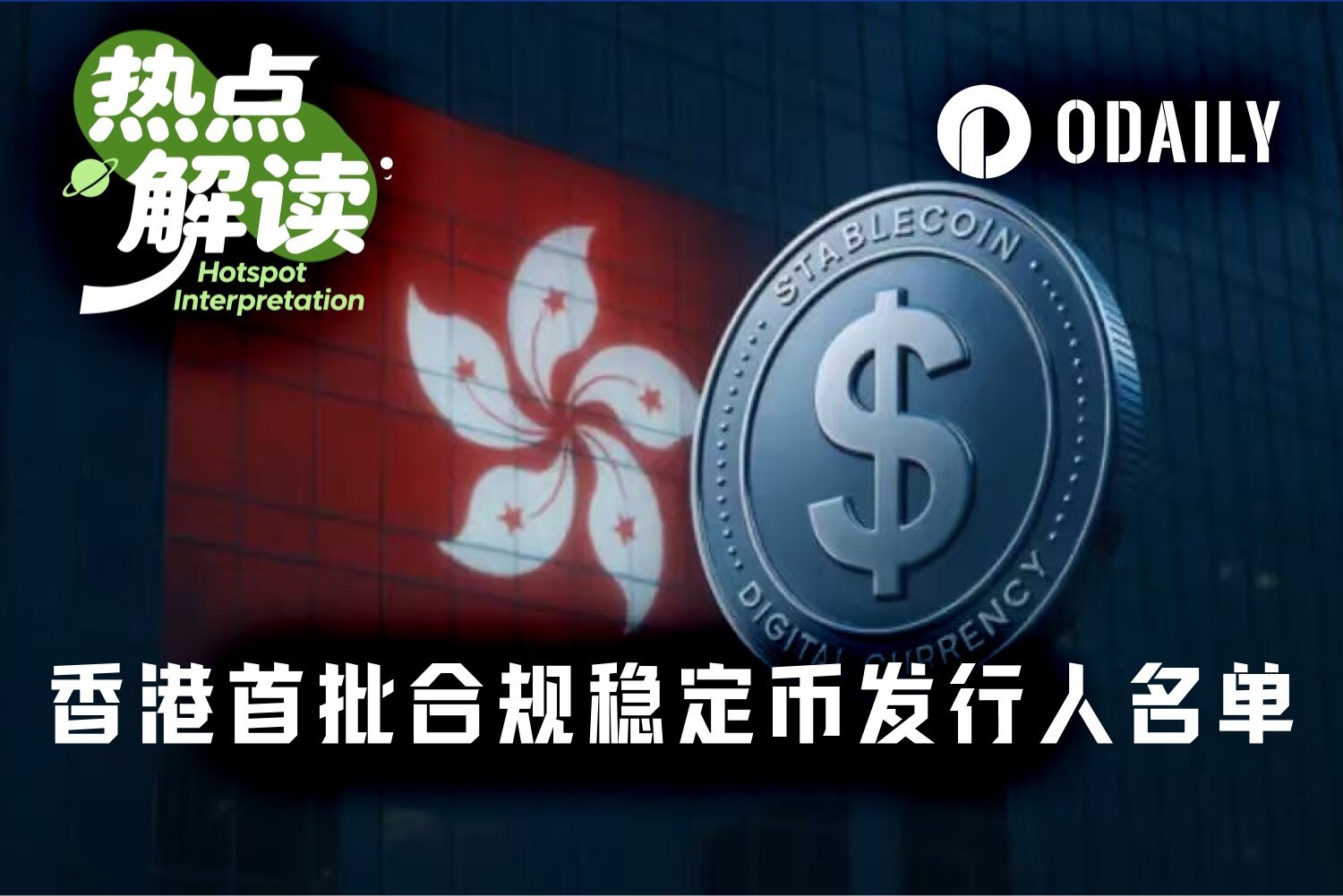
Hong Kong's first batch of stablecoin licenses has finally been issued.

At 5 PM on April 10th, the Hong Kong Monetary Authority (HKMA) announced that the first batch of stablecoin issuer licenses were granted to two institutions: HSBC Bank and Anchor FinTech Company Limited (a joint venture established by Standard Chartered Bank (Hong Kong) Limited, Hong Kong Telecom (HKT), and ANX Group). It also stated that, according to the current business plans of the two institutions, regulated stablecoins in Hong Kong will be launched successively from the middle to the second half of this year.

Mr. Eddie Yue, Chief Executive of the HKMA, said: "The issuance of the stablecoin issuer licenses is an important milestone in the development of digital assets in Hong Kong. The regulatory regime provides an orderly operating environment, allowing stablecoin issuers to apply innovative technology while properly safeguarding user rights and managing related risks, enabling the healthy, responsible, and sustainable development of Hong Kong's stablecoin ecosystem. I look forward to the issuers launching their businesses as planned, actively exploring development opportunities while managing risks well, promoting the application of compliant stablecoins, addressing pain points in financial and economic activities, creating value for the public and enterprises, and driving the healthy development of Hong Kong's digital assets."

Previous news indicated that the HKMA had completed the final review of the first batch of applications in mid-March 2026. The HKMA received a total of 36 applications.

After Two Years, Hong Kong's Compliant Stablecoins Finally Land

The issuance of Hong Kong's first batch of stablecoin licenses marks a new phase in the implementation of Hong Kong's stablecoin regulatory system. However, the market waited a full two years for this compliant stablecoin license to materialize, making it an achievement reached after a precise博弈 (game/balancing act) between financial innovation and regulatory safety in Hong Kong.

Rewind two years to March 2024, when the Hong Kong Monetary Authority (HKMA) officially launched the "Stablecoin Issuer Sandbox Arrangement." This was a crucial starting point for Hong Kong's stablecoin regulation moving towards practical implementation. The market saw the Hong Kong regulator's open attitude towards crypto finance, which attracted applications from multiple institutions, including traditional financial giants and native Web3 enterprises, to participate in the sandbox experiment.

In July of the same year, after four months of review, the HKMA announced the sandbox participants. Five institutions, including JD CoinChain Technology (Hong Kong) Limited, RD InnoTech Limited, Standard Chartered Bank (Hong Kong) Limited, ANX Group Limited, and Hong Kong Telecom (HKT) Limited, obtained participation qualifications. Market expectations were ignited because this indicated that Hong Kong's stablecoin regulation had entered the stage of specific institutional testing and regulatory磨合 (breaking-in/磨合), and Hong Kong was not far from bringing stablecoins into the formal regulatory framework.

Hong Kong's stablecoin sandbox experiment lasted for one year. On August 1, 2025, Hong Kong's "Stablecoin Ordinance" came into effect, and the stablecoin issuer regulatory system was officially implemented. This was a key node in the development of Hong Kong's virtual assets, marking the entry of Hong Kong's stablecoins into the era of licensed regulation.

The second half of 2025 also coincided with the peak of narratives intersecting crypto and traditional finance, such as RWA, stock tokenization, and listed company crypto treasuries. After the Hong Kong "Stablecoin Ordinance" took effect, the market expected Hong Kong's crypto finance to enter a great navigation era. Therefore, when the HKMA opened the first round of stablecoin issuer license applications, it was reported that over 70 companies intended to apply for Hong Kong stablecoin licenses, including financial institutions, Web2 internet companies, and blockchain enterprises.

But just as the situation was heating up, Hong Kong's stablecoin and RWA businesses faced a regulatory cool-down. In September 2025, market rumors emerged that companies involved in stablecoin and RWA businesses in Hong Kong were "warned" to keep a low profile in their business and statements related to stablecoins and RWA. Simultaneously, the participation of Chinese-funded enterprises in Hong Kong's stablecoin business was strictly controlled. According to a Caixin report at the time, because Hong Kong's stablecoin business was still in its infancy, excessive participation by Chinese-funded entities might bring risks, so it was necessary to isolate the risks first.

This temporary incident directly led to a sharp decrease in the number of enterprises applying for Hong Kong stablecoin licenses. Not only did Chinese-funded banks and state-owned enterprises withdraw, but Web2 internet companies also suspended their stablecoin issuance plans. In October 2025, informed sources revealed that Ant Group, affiliated with Alibaba, and JD.com had suspended their related plans to issue stablecoins in Hong Kong. Ultimately, the HKMA received only 36 stablecoin license applications from institutions, and the market calmed down accordingly.

In early February this year, Mr. Eddie Yue, Chief Executive of the HKMA, stated that they aimed to issue Hong Kong's first batch of stablecoin issuer licenses by March this year. He emphasized: "The number of licenses issued in the first batch will certainly be small, with the goal being稳妥 (prudence/safety first)."

Back to the present, it has been over 8 months since the Hong Kong "Stablecoin Ordinance" came into effect. The issuance of Hong Kong's first batch of stablecoin licenses finally landed today. Over these two years, the market has been hyped, capital has been hot, concepts have been speculated on, and regulation has also been controlled. After going through countless hardships, the path for Hong Kong's compliant stablecoins has finally been fully traversed from "sandbox testing — legislative landing — application review — official licensing".

The Great Era of Hong Kong Stablecoins is Coming

Undoubtedly, the issuance of Hong Kong's first batch of stablecoin licenses is another important milestone on its way to becoming an "International Digital Asset Financial Center".

For Hong Kong, this licensing means that stablecoin regulation is no longer just at the institutional level. With the actual launch of stablecoin businesses by licensed institutions, such as cross-border payments, digital securities, and DeFi fields, Hong Kong's digital financial market will gain more vitality and grasp more discourse power in the future world digital financial system, seizing the strategic high ground of "digital currency sovereignty".

Looking more specifically at the market level, after the first batch of licenses are issued, the Hong Kong crypto market has the opportunity to regain some vitality. In the past, many people thought of forums, summits, and expectations when mentioning Hong Kong stablecoins—it was lively, but always half a step away from real business. Now, the first batch of licensed enterprises can finally legally conduct stablecoin businesses, practically exploring the potential of the Hong Kong market in areas such as cross-border payments, institutional settlements, and on-chain finance.

Of course, the issuance of the first batch of licenses does not mean the overall market situation is settled. Although first movers will have a leading advantage, it doesn't mean latecomers cannot catch up. Only when the second and third batches of licenses are issued in the future will the market truly enter the stage of competing on scenarios, execution capabilities, and products and services.

Therefore, the first batch of licenses is not the climax of the Hong Kong stablecoin story; on the contrary, it is just the beginning. The great era of Hong Kong stablecoins is about to begin.


Perguntas relacionadas

QWhich two institutions were granted the first stablecoin issuer licenses in Hong Kong?

AHSBC and AnchorX Financial Technology Limited (a joint venture between Standard Chartered Bank Hong Kong, HKT, and Ant Group).

QWhen did the Hong Kong Monetary Authority (HKMA) announce the issuance of the first stablecoin licenses?

AAt 5 p.m. on April 10th.

QHow many applications did the HKMA receive for the stablecoin issuer license?

AThe HKMA received 36 applications.

QWhat was the name of the regulatory sandbox arrangement launched by the HKMA in March 2024 for stablecoin issuers?

AThe 'stablecoin issuer sandbox arrangement'.

QWhen did Hong Kong's 'Stablecoin Ordinance' officially come into effect?

AThe 'Stablecoin Ordinance' officially came into effect on August 1, 2025.

Leituras Relacionadas

War Trade Unwinding | TradeXYZ Weekend Observations

Weekend markets saw a clear return of risk appetite. Major indices rose broadly, with significant gains in tech and precious metals, while energy sectors fell sharply on the "end of war" narrative. On June 14, oil prices initially rose on reports Iran had not yet finalized a memorandum of understanding. Later, YNET reported Trump might immediately lift the maritime blockade on Iran and the Strait of Hormuz. At 21:30, Trump confirmed on Truth Terminal that a deal with Iran was done, authorizing an immediate end to the US blockade and toll-free opening of the Strait. Iran's deputy foreign minister simultaneously announced an immediate and permanent halt to military actions on multiple fronts. Oil prices had already fallen to weekend boundaries, pre-pricing the news. The S&P 500 subsequently touched 7530. Markets will likely remain in a waiting period until the formal peace deal signing on June 19. At the moment of the deal announcement, gold jumped from ~4,221 to a high of 4,337, and silver from ~67.85 to 70.83, before stabilizing at higher levels. Individual stocks and ETFs like NBIS, RKLB, and LITE performed strongly. NBIS, added to the Nasdaq index, saw a target price increase due to strong AI cloud growth. RKLB, also added to the index, benefited from positive SpaceX valuation sentiment. LITE received a $1,130 target from JPMorgan. SPCX rose quickly after Musk tweeted SpaceX could potentially reach ~$1 trillion in revenue by 2030. In summary, the market shock from the multi-month war is beginning to dissipate. Israel's actions remain the key variable before the June 19 signing. Upcoming events like Fed Chair Warsh's debut and BoJ rate hike expectations will also significantly impact markets this week.

marsbitHá 7m

War Trade Unwinding | TradeXYZ Weekend Observations

marsbitHá 7m

Will the Next Crypto Bull Run Start with On-Chain Trading of SpaceX?

This article presents a scenario-based forecast for the crypto industry from 2026 to 2029, arguing that the next major cycle will be driven not by technological narratives but by legal access to real-world assets. The author predicts that by mid-2026, pre-IPO perpetual contracts for top private companies like SpaceX, OpenAI, and Anthropic on platforms like Hyperliquid will become the primary gateway for accessing quality assets, as most crypto-native tokens fail to capture real value. The much-hyped AI x Crypto intersection largely fails except for prediction markets, which thrive on betting on AI model supremacy. By 2027, public blockchain foundations are forced to choose between catering to retail speculation or building compliant infrastructure for institutions, with many opting for the latter. Growth in stablecoins and tokenized private credit/equity hits a "triple ceiling" due to regulatory and political uncertainty rather than market demand. The pivotal shift is forecast for 2028. A major liquidation event in pre-IPO perpetuals exposes the structural flaw of synthetic markets lacking a real underlying asset anchor. In response, regulatory changes finally allow the public solicitation of private securities resales to verified accredited investors. This creates a legitimate secondary market for real company equity, which then becomes the core asset class of the new bull market, relegating synthetic perps to a niche role. By 2029, the industry becomes "boring" but foundational. Tokens without claims on real cash flows or assets cease trading. Stablecoin growth is steady but politically capped. Crypto infrastructure fades from view as it gets absorbed into traditional finance backends. The article's central thesis is that the key bottleneck for crypto's next phase is legal and regulatory channels for real asset ownership, not technology.

marsbitHá 1h

Will the Next Crypto Bull Run Start with On-Chain Trading of SpaceX?

marsbitHá 1h

The Value Distribution of Stablecoins

**Summary: The Value Distribution of Stablecoins** The article argues that stablecoins are evolving from mere trading tools into broader channels for dollar access. It divides the stablecoin ecosystem into four layers to analyze how value is distributed: 1. **Issuance Layer:** Mints stablecoins, holds reserve assets, and captures the spread between reserve yield and user costs (e.g., Tether, Circle). This layer currently earns the largest profit margin. 2. **Infrastructure Layer:** Connects stablecoins to the traditional financial system, handling fiat on/off-ramps, banking integration, compliance (KYC/AML), and asset management (e.g., Bridge, BVNK). This is the "unglamorous" but critical work, building the essential bridges between crypto and real-world finance. 3. **Acquiring/Distribution Layer:** Integrates stablecoins into merchant systems, manages payment flows, and provides enterprise financial software (e.g., Stripe, Coinbase). They act as the access point for businesses. 4. **Application Layer:** The end-users and businesses that ultimately use stablecoins for payments, settlements, or as a store of value. They benefit from convenience but have little pricing power. The core thesis is that while the issuance layer currently dominates profits, the often-overlooked **infrastructure layer holds significant long-term potential**. The real challenge and barrier to mass adoption is not the on-chain transfer of stablecoins (which is simple), but the complex "last mile" integration into existing business workflows, banking systems, and regulatory frameworks across different countries. Companies in this layer are currently in a "land grab" phase, investing heavily to build networks, secure bank partnerships, and establish compliance pathways. While their position is currently pressured by the profitable issuers above and distribution platforms below, the article suggests that if stablecoins become a default financial rail for businesses, the infrastructure providers who have done the hard work of integration will ultimately gain strong pricing power and become entrenched, essential players.

marsbitHá 8h

The Value Distribution of Stablecoins

marsbitHá 8h

The Value Distribution of Stablecoins

The Value Distribution of Stablecoins The article argues that stablecoins are evolving from a mere trading tool into a broad "dollar channel." It analyzes the industry's value chain through four layers: 1. **Issuance Layer (e.g., Tether, Circle):** The top layer that mints stablecoins, holds reserve assets, and captures the thickest interest rate spread. 2. **Infrastructure Layer (e.g., Bridge, BVNK):** Connects stablecoins to the traditional financial system, handling critical but complex "dirty work" like fiat on/off-ramps, banking integration, compliance (KYC/AML), and cross-border settlement. 3. **Acquiring/Distribution Layer (e.g., Stripe, Coinbase):** Embeds stablecoins into merchant systems, manages payment flows, and integrates with enterprise software. 4. **Application Layer:** End-users and businesses that ultimately use stablecoins for payments, settlement, or storing value. The author posits that while the issuance layer currently captures the most profit, the most overlooked and potentially critical layer is infrastructure. The core challenge for stablecoin adoption isn't the on-chain transfer (which is simple), but bridging the gap between blockchain and the real-world financial system. This involves solving practical problems for businesses: fiat conversion, reconciliation, tax handling, and user onboarding. Infrastructure companies are currently in a difficult "land-grab" phase—building networks, securing banking relationships, and achieving compliance country-by-country. They face pressure from both the profitable issuance layer above and distribution platforms below. However, the author suggests this layer is building a crucial moat. Once stablecoins become a default business rail, the infrastructure players who have done the hard work of integration may gain significant, durable value and pricing power.

链捕手Há 8h

The Value Distribution of Stablecoins

链捕手Há 8h

Trading

Spot
Futuros
活动图片