After 4 Months, Polymarket Helped Trump Catch the Military Operation Leaker, But at a Cost...

marsbitPublicado em 2026-04-25Última atualização em 2026-04-25

Resumo

A U.S. Marine Corps sergeant, Gannon Ken Van Dyke, was arrested by the Department of Justice for insider trading on Polymarket, a prediction market platform. Van Dyke allegedly placed bets totaling $33,933 on events related to a U.S. military operation in Venezuela, including the ousting of President Maduro, before the action occurred in January 2026. He profited over $409,000, a return of more than 1200%. This case marks the first U.S. crackdown on insider trading using confidential government information in prediction markets. Two other addresses also profited from insider knowledge, earning a combined $630,400. In response, Polymarket introduced stricter market integrity rules in March, explicitly banning insider trading, including the use of stolen confidential information or trades by individuals who can influence event outcomes. The platform has implemented monitoring systems and may ban addresses, pursue legal action, or refer cases to authorities. While these measures enhance regulatory compliance, they may reduce Polymarket's edge in forecasting events through early information and raise user concerns about account freezes and financial security. The balance between preventing abuse and maintaining platform freedom remains a challenge.

Original | Odaily Planet Daily (@OdailyChina)

Author | Golem (@web3_golem)
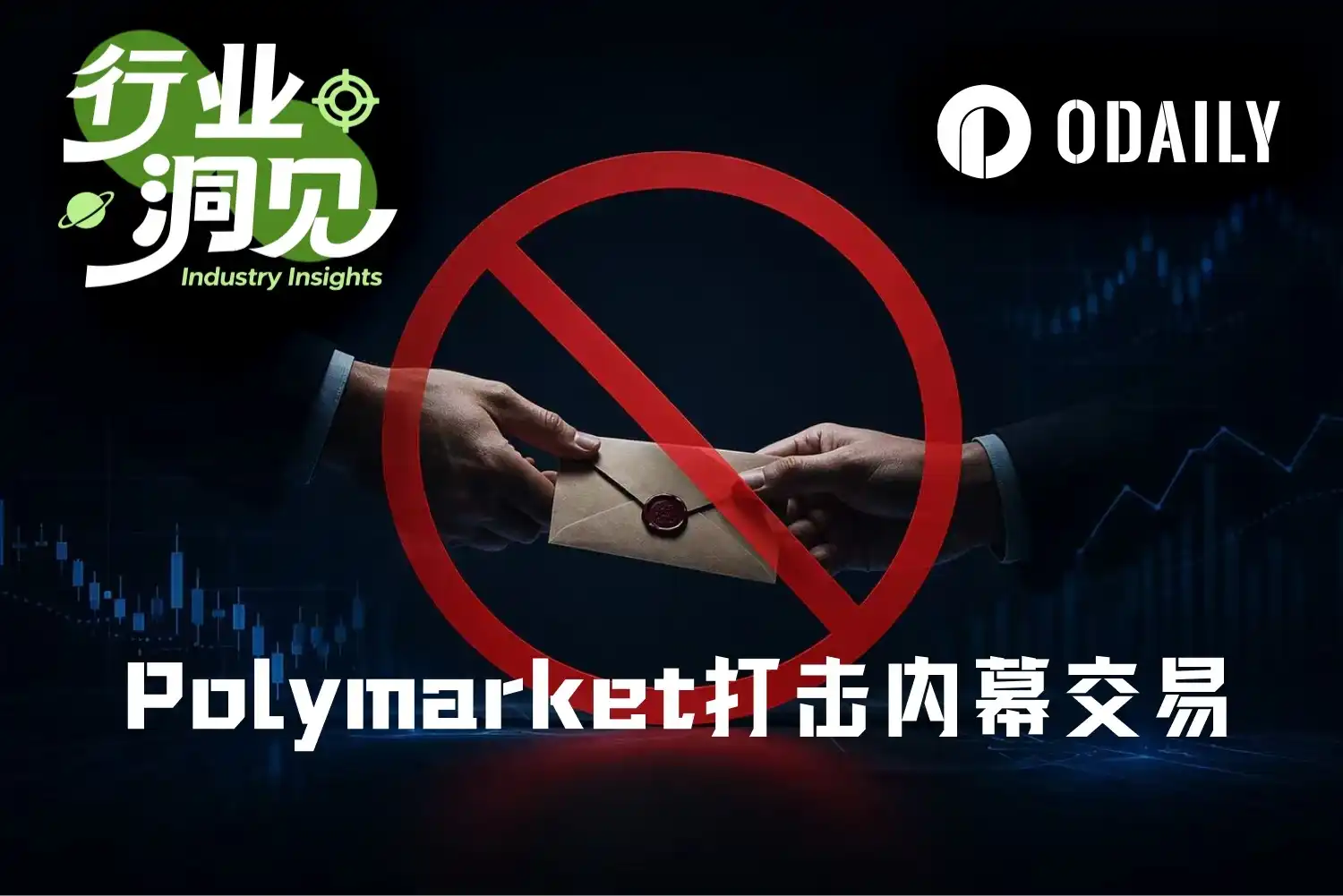
Not long after, facing the jury, Master Sergeant Gannon Ken Van Dyke would surely recall the moment he stood on the deck of the USS Iwo Jima waiting for sunrise.

On the evening of January 2, 2026, Trump ordered the U.S. military to raid Venezuela and capture the Maduro couple. The mission concluded in the early hours of January 3, and the Maduro couple were taken to the USS Iwo Jima to be transported to the United States. Several hours later, the 38-year-old Master Sergeant Van Dyke, holding a rifle, stood on the deck with three other soldiers and took a photo which he shared on social media. The atmosphere was relaxed at that moment, but the joy in his heart could not be shared with anyone.

Because he was a leaker, an insider who used inside information to make huge profits on Polymarket. A few days before the U.S. military operation, Van Dyke placed a series of bets on Polymarket, including whether Maduro would step down before January 31, 2026, and whether the U.S. military would attack Venezuela before January 31, 2026. Van Dyke placed a total bet of $33,933 and ultimately profited over $409,000, with a return rate of over 1200%.

Gannon Ken Van Dyke

Van Dyke was not the only one who profited from inside information during this capture operation. According to monitoring by Odaily Seer Channel, before the arrest of the Venezuelan president, three addresses on Polymarket had placed bets on his stepping down in advance, accumulating profits of $630,400. Among them, address 0x31a5 (0x31a5...8eD9) invested $34,000 and profited $409,000; address 0xa72D (0xa72D...eBd4) invested $5,800 and profited $75,000; address SBet365 invested $25,000 and profited $145,600.

At the time, there was much speculation in the market about the identities of these insider addresses, but it was not known that the address earning the most profit specifically belonged to Van Dyke.

To be safe, after seeing reports about the insider trading related to the mission, Van Dyke also deleted his Polymarket account and changed the email address registered with the cryptocurrency exchange account, attempting to cover up the evidence of the transactions.

Despite this, after nearly 4 months of joint investigation by Polymarket and the U.S. Department of Justice, Van Dyke was still caught.

On April 23, the U.S. Department of Justice announced the arrest of Van Dyke. He was charged with crimes including illegally using government confidential information for personal gain, theft of non-public government information, commodities fraud, wire fraud, and conducting illegal monetary transactions. The Department of Justice stated that Van Dyke is expected to appear in court in North Carolina later, and his defense lawyer information has not yet been announced.

This is the first arrest action by U.S. authorities against an insider who used confidential information to bet on a prediction market. The final verdict may have a profound impact on the large amount of insider trading behavior in future prediction markets.

But before this, in fact, the new enhanced market integrity rules from Polymarket had already made insiders unable to sit comfortably.

Polymarket's Enhanced Market Integrity Rules

On March 23, Polymarket released enhanced market integrity rules and incorporated them into the user terms of service. The new rules clearly state that insider trading and any transactions by personnel who may influence the outcome are strictly prohibited on Polymarket, specifically the following three behaviors:

  • Trading using stolen confidential information: If a user possesses confidential information about the outcome or potential outcome of the subject event, and using this information would violate an existing duty of trust or confidentiality owed to another person or entity, that user must not conduct any contract transactions;
  • Prohibition on trading using illegal insider information: If a user knows or has reason to know that the person providing the information would themselves be prohibited from using it for trading, that user must not use confidential information obtained from a person who owes an existing duty of trust or confidentiality to conduct transactions;
  • Prohibition on trading while able to influence the outcome: If a user has sufficient power or influence to affect the outcome of the subject event, that user must not conduct any contract transactions; users must also not conduct transactions following the instructions of a person with such power or influence.

To help users better understand what kind of behavior would be defined as insider trading, Polymarket also provided specific examples in the market integrity rules on the Polymarket main site and U.S. site, such as military personnel not being allowed to bet on upcoming military operations, political election candidates not being allowed or encouraging anyone to bet on their own election results, company CEOs not being allowed or encouraging anyone to bet on "mention markets" involving themselves, etc.

To effectively combat such insider trading, Polymarket also established a multi-layer monitoring system. When Polymarket or the community (Odaily Note: Any user can now report suspected insider trading behavior) discovers suspicious trading activity, Polymarket will initiate a review, and if necessary, take disciplinary action, ban wallet addresses, initiate legal proceedings, or refer the matter to law enforcement.

Before Van Dyke's arrest, insiders might have thought that Polymarket's market integrity rules were just a bluff, because on a platform with no KYC and settled in cryptocurrency, it would be extremely difficult to penetrate on-chain addresses to uncover the insiders behind the screens, and Polymarket would not be willing to do such a thing.

But this thinking is very naive. First, current regulation and on-chain tracking technology are actually very sophisticated and powerful. Users may not perform KYC on Polymarket, but they will definitely perform KYC on exchanges and other entry/exit channels. Except for top-tier hackers, ordinary users basically have nowhere to hide under such investigation; second, to gain support from U.S. regulators, Polymarket will also actively cooperate with law enforcement in investigating insider trading. For typical insider cases like Van Dyke, they would spare no effort even if it costs manpower and resources.

Analyzing this, if you are a person with inside information on some minor events, you might still侥幸 think that you are not like Van Dyke engaging in insider trading on such a high-profile event or are not a U.S. citizen, so the U.S. regulatory authorities or Polymarket can't do anything to you.

Polymarket and regulatory authorities certainly cannot treat every case of insider trading the same as they did Van Dyke. For some insider trading behaviors with small profits and limited impact, uncovering the true identity of the insider or going through judicial procedures itself seems like "making a mountain out of a molehill". But Polymarket also has a killer move against these insider trades - banning addresses, and this move is the rule that all insiders, all users, really need to fear. It might even be shaking Polymarket's core narrative.

The Cost

On April 23, prediction market Kalshi disclosed that it had fined three congressional candidate who bet on their own election results and banned them from the platform for 5 years. Do you think they made huge profits? Actually, the fines for the three candidates added up to less than $8,000, and one of them only bet $100.

Being able to handle insider trading so quickly is thanks to the KYC and compliance system Kalshi built from its inception. But if such small-amount, low-impact insider trading were to occur on Polymarket, it might not even be noticed, let alone handled.

This is not because Polymarket is subjectively condoning insider trading, but because the self-regulatory difficulty of Polymarket itself is very high. Due to features like no KYC, low account creation barriers, and on-chain anonymity, Polymarket finds it difficult to manage and review users like Kalshi does. This creates a breeding ground for insiders. When the economic incentive for insider trading is high enough and the risk is low enough, human nature cannot withstand the test.

Odaily Planet Daily previously analyzed when insiders used Polymarket to gain illegal profits during the Maduro capture operation that insider trading is a double-edged sword for Polymarket (related reading:When War is Settled Before the News: How Prediction Markets "Priced" the Maduro Capture Action 6 Days in Advance).

On one hand, insider trading often means releasing information ahead of mainstream media, which brings trading volume and information disclosure speed超越 media to Polymarket. Pricing and predicting event outcomes in advance have gradually become Polymarket's core narrative; but on the other hand, insider trading also means information is leaked early, and interested parties will naturally resist it. Especially when regulators believe that insider trading threatens traditional information security, Polymarket needs to choose between its own security and the advantages brought by insider trading.

Judging from the outcome, the introduction of the enhanced market integrity rules has already表明 Polymarket's stance, but the cost is that user trust in the platform may also be lost.

Banning user addresses is itself a sensitive issue for a decentralized platform, because once abused or if there are误伤, it will cause user resentment and concerns about fund safety. All along, allowing people from all over the world to participate in prediction markets and ensuring free entry and exit of funds has also been one of Polymarket's core competencies. But when Polymarket赋予 itself the power to ban suspicious user accounts, not only will insiders no longer dare to trade on Polymarket, but normal profitable users will also worry whether the platform will use this as an excuse to prevent withdrawals. Once the door to banning accounts is opened, it may never be closed again.

In summary, although cracking down hard on insider trading can ensure Polymarket's safety at the regulatory level, it will inevitably weaken Polymarket's前瞻性 and accuracy in predicting event outcomes, and will also make users worry more about the safety of their funds. In the end, the matured Polymarket will become an平庸 adult.


Criptomoedas em alta

Perguntas relacionadas

QWhat was the key event that led to the arrest of Gannon Ken Van Dyke?

AGannon Ken Van Dyke was arrested for using classified information about a U.S. military operation in Venezuela to place profitable bets on the prediction market Polymarket.

QHow much profit did Van Dyke make from his insider trading on Polymarket?

AVan Dyke made a profit of over $409,000 from an initial investment of $33,933, achieving a return of over 1200%.

QWhat are the three main behaviors prohibited under Polymarket's enhanced market integrity rules?

AThe three prohibited behaviors are: 1. Trading using stolen confidential information that violates a duty of trust. 2. Trading using illegal insider information obtained from someone who is prohibited from using it. 3. Trading by individuals who have the power to influence the outcome of an event.

QWhat is the potential negative consequence for Polymarket in cracking down on insider trading?

AThe crackdown could undermine user trust, as the platform's ability to ban addresses might be seen as a threat to financial security and its core narrative of free and open participation. It may also reduce the market's predictive edge by limiting the flow of non-public information.

QWhich other prediction market recently took action against insider trading, and what was the penalty?

AThe prediction market Kalshi recently fined three congressional candidates and banned them from the platform for five years for betting on their own election outcomes, with the total fines amounting to less than $8,000.

Leituras Relacionadas

Must-Watch Events Next Week|CLARITY Act Could Face Senate Vote; SpaceX, Circle to Report Earnings (8.3-8.9)

**Summary: Key Events and Developments to Watch (August 3-9)** The upcoming week is marked by significant financial disclosures, key legislative deadlines, and notable product updates. **Major Financial Events:** Several companies are scheduled to release their Q2 2026 earnings. American Bitcoin (ABTC) will report on August 3, followed by SpaceX and Hut 8 Mining Corp. on August 4, and Circle on August 5. Notably, a significant portion of SpaceX shares (up to 12% of total shares) will be unlocked on August 6 following their earnings release. **Key Legislative Deadline:** The U.S. Senate faces an August 7 deadline to secure 60 votes for the CLARITY Act, a bipartisan bill aiming to establish a federal regulatory framework for cryptocurrencies. The Senate may hold a full vote on the bill during the week. **Economic Data:** The U.S. July Non-Farm Payrolls report will be released on August 7, providing crucial labor market data. **Technology & Product Updates:** * **Shutdowns:** DeFi portfolio tracker Zapper and wallet app Ctrl Wallet will cease operations on August 3. * **Upgrades:** LayerZero will deprecate its v1 relayers on August 3. XRP Ledger's new version 3.3.0, featuring five new functions, is expected next week. * **AI:** Elon Musk announced that the advanced Grok 4.6 AI model is set for release around August 7. * **Bitcoin:** The BIP-110 forced signaling for a potential Bitcoin network change is scheduled to begin around August 8. **Other Notable Events:** Chinese robotics firm Unitree Tech has set its preliminary price inquiry for its IPO for August 5. South Korean exchange Upbit will delist AQT and AERGO tokens on August 3.

marsbitHá 57m

Must-Watch Events Next Week|CLARITY Act Could Face Senate Vote; SpaceX, Circle to Report Earnings (8.3-8.9)

marsbitHá 57m

Stocks Are Plummeting More Sharply Than Cryptocurrencies. Where Has the Money Gone?

Stock Markets Plunge Deeper Than Cryptocurrencies: Where Did the Money Go? In late July, Seoul's Kospi index triggered circuit breakers for two consecutive days, plummeting over 40% from its June high. The collapse was led by heavyweight stocks like SK Hynix, whose record profits still disappointed investors, and devastating leveraged ETFs, with one major product losing over 83% of its value. This signaled a global, forced deleveraging targeting the most crowded trades. Interestingly, while stocks exhibited extreme volatility akin to crypto markets, Bitcoin rose nearly 15% in July after a prior steep drop. Analysis shows the money fleeing equities did not flow into Bitcoin. Instead, Bitcoin had already absorbed its sell-off in May-June, when U.S. spot Bitcoin ETFs saw historic outflows. The true safe-haven beneficiary was gold, whose price rose over 20% year-on-year, highlighting a decoupling between Bitcoin and gold as "digital gold." The sell-off was a targeted unwinding of leveraged positions in tech and semiconductors, accelerated by broker-dealer risk management and shifts in the AI narrative, including new competition from Chinese memory chipmakers. The retreat path was clear: from high-valuation tech stocks to cash and U.S. Treasuries, then to gold. For Bitcoin to attract sustained institutional inflows, conditions like eased global liquidity pressure, a "soft-landing" Fed rate cut, and U.S. regulatory clarity via legislation like the stalled CLARITY Act are needed. Currently, Bitcoin is not a safe haven but an already-cleared asset. Its low correlation with tech stocks, however, makes it a potential diversification play for institutional portfolios once the storm passes. The money isn't here yet, but the positioning is underway.

marsbitHá 57m

Stocks Are Plummeting More Sharply Than Cryptocurrencies. Where Has the Money Gone?

marsbitHá 57m

In Conversation with Ray Dalio: We Are Currently in an AI Bubble, with 1% of My Portfolio in Bitcoin

Ray Dalio, founder of Bridgewater Associates, warns in an interview that the current AI boom shows classic bubble characteristics, which could lead to significant economic downturns as seen in past cycles like 1929 or 2000. He explains that speculative enthusiasm, fueled by debt and overvaluation, often precedes a crash when rising rates or taxation force asset sales, causing widespread losses and recession. Dalio also outlines his "Big Cycle" theory, describing an approximate 80-year pattern where widening wealth gaps, massive government deficits, and shifting geopolitical power (like China's rise) create internal conflict and global instability. He emphasizes that we are in a late-cycle, transitional phase where traditional powers like the US and UK face decline. For personal wealth protection, Dalio advises diversification beyond cash into assets like stocks, bonds, real estate, and particularly gold, which he prefers over Bitcoin. While he holds about 1% of his portfolio in Bitcoin as a non-printable hard asset, he views gold as more secure from technological or governmental threats. Regarding AI's impact, Dalio believes it will disproportionately benefit capital owners, worsening inequality by replacing both physical and cognitive labor. He suggests that human intuition and emotional intelligence, combined with AI, will be key for future workers. On taxation, Dalio argues that wealth taxes are impractical and risk triggering asset sell-offs, reducing productive investment. He points to the UK as a cautionary example of debt, low productivity, and political strife. Geopolitically, Dalio foresees a more regionalized world, with the US showing weakness in prolonged conflicts like with Iran, akin to past imperial declines. The ideal outcome, he suggests, is coexisting powerful blocs (e.g., Americas, China-Asia Pacific) without major war.

marsbitHá 4h

In Conversation with Ray Dalio: We Are Currently in an AI Bubble, with 1% of My Portfolio in Bitcoin

marsbitHá 4h

Trading

Spot

Artigos em Destaque

Como comprar 4

Bem-vindo à HTX.com!Tornámos a compra de 4 (4) simples e conveniente.Segue o nosso guia passo a passo para iniciar a tua jornada no mundo das criptos.Passo 1: cria a tua conta HTXUtiliza o teu e-mail ou número de telefone para te inscreveres numa conta gratuita na HTX.Desfruta de um processo de inscrição sem complicações e desbloqueia todas as funcionalidades.Obter a minha contaPasso 2: vai para Comprar Cripto e escolhe o teu método de pagamentoCartão de crédito/débito: usa o teu visa ou mastercard para comprar 4 (4) instantaneamente.Saldo: usa os fundos da tua conta HTX para transacionar sem problemas.Terceiros: adicionamos métodos de pagamento populares, como Google Pay e Apple Pay, para aumentar a conveniência.P2P: transaciona diretamente com outros utilizadores na HTX.Mercado de balcão (OTC): oferecemos serviços personalizados e taxas de câmbio competitivas para os traders.Passo 3: armazena teu 4 (4)Depois de comprar o teu 4 (4), armazena-o na tua conta HTX.Alternativamente, podes enviá-lo para outro lugar através de transferência blockchain ou usá-lo para transacionar outras criptomoedas.Passo 4: transaciona 4 (4)Transaciona facilmente 4 (4) no mercado à vista da HTX.Acede simplesmente à tua conta, seleciona o teu par de trading, executa as tuas transações e monitoriza em tempo real.Oferecemos uma experiência de fácil utilização tanto para principiantes como para traders experientes.

701 Visualizações TotaisPublicado em {updateTime}Atualizado em 2026.06.02

Como comprar 4

Discussões

Bem-vindo à Comunidade HTX. Aqui, pode manter-se informado sobre os mais recentes desenvolvimentos da plataforma e obter acesso a análises profissionais de mercado. As opiniões dos utilizadores sobre o preço de 4 (4) são apresentadas abaixo.

活动图片