Aave's Internal Conflict Escalates, Morpho Quietly Doubles: Is the Lending Throne About to Change Hands?

Odaily星球日报Publicado em 2026-03-01Última atualização em 2026-03-01

Resumo

The article discusses the escalating internal conflicts within Aave and the rising prominence of Morpho in the decentralized lending space. While Aave remains the largest lending protocol by total value locked (TVL), it is facing significant governance disputes, including a controversial $51 million funding proposal and accusations of poor fund utilization by its team. These issues have slowed decision-making and created internal division. In contrast, Morpho has gained attention due to its modular, permissionless lending infrastructure, Morpho Blue, which allows for isolated markets with independent risk parameters set by curators rather than relying on slow global governance. This design reduces friction and enables faster adaptation. Morpho’s metrics show strong growth: TVL surpassed $9.5 billion in late 2025, active loans exceeded $3.5 billion, and quarterly active addresses grew from 30,000 to 400,000. Protocol revenue remained stable around $50 million per quarter. A major catalyst for Morpho is the involvement of traditional finance. Apollo Global Management plans to acquire up to 90 million MORPHO tokens (9% of supply) over four years, worth approximately $162 million at current prices. This signals institutional interest, potentially using Morpho’s leveraging RWA (real-world asset) products for higher yields. Despite Morpho’s growth, it still trails Aave in TVL. However, Aave’s governance challenges may provide an opportunity for Morpho to capture market share. Th...

Original | Odaily Planet Daily (@OdailyChina)

Author | DingDang (@XiaMiPP)
Altcoins are dead—this is a consensus that crypto users have been reluctant to admit but have had to face over the past year. Even former blue-chip tokens have fallen into prolonged sideways movement or gradual declines amid the continuous market weakness, showing little sign of recovery.

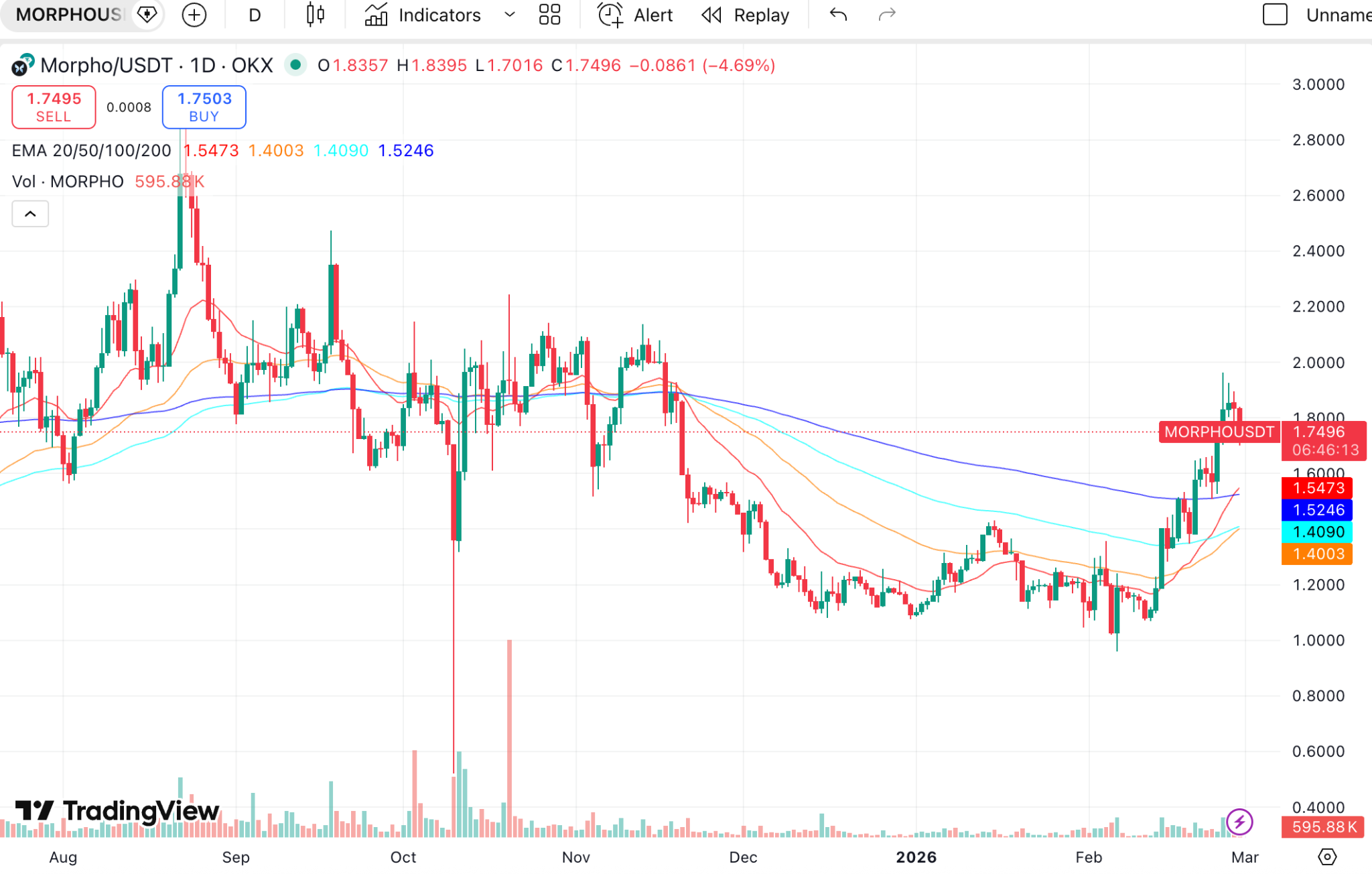
However, amidst this overall slump, the MORPHO token has rebounded from a low of $0.96 in early February to the $1.8-$1.9 range, doubling against the trend. From the daily chart perspective, this rebound has largely formed a rounded bottom pattern, potentially signaling a bottom reversal. Is this surge merely driven by short-term market sentiment, or is it the start of a trend fueled by fundamental and structural factors?
When the Old Dynasty Begins to Consume Itself

Morpho is a lending protocol launched in 2021. Initially, its mechanism was similar to lending protocols like Aave and Compound. However, in 2023, Morpho began rolling out Morpho Blue (now its main version), completely transforming into an independent, permissionless lending base layer, firmly positioning itself among the top lending protocols in the Ethereum ecosystem.

That said, in the lending sector, Aave remains the largest by volume and the strongest in brand—an undeniable fact. But recently, Aave has once again found itself in serious governance controversy due to a $51 million "Aave Will Win" funding framework proposed by its founder, Stani.

This fund was originally intended to support new product development, and the proposal explicitly stated that future related brand revenue would be 100% returned to the DAO treasury—a move that seemed like an ideal operation of "surrendering control and benefiting the community" by the project team. However, it unexpectedly ignited long-simmering internal conflicts within the DAO.

The reason is that DAO governance representative and ACI founder Marc Zeller publicly released an "audit" report on February 25, accusing Labs of low fund utilization, having taken approximately $86 million from the DAO over the past few years without transparent disclosure. Meanwhile, core DAO developer BGD Labs announced it would exit in April 2026 due to governance friction. The founder's high voting power once again dominated the controversial proposal, further pushing the entire DAO into an open tug-of-war over power and fund distribution. As early as December last year, cracks had already appeared within the Aave community. For details, refer to Can You Still Buy AAVE Amid Deep Divisions After the Second-Largest Holder Dumped Their Bag?.

Now, as Aave slows down due to governance friction, the "simplicity" of Morpho's governance model is beginning to catch many people's attention. Aave can be considered the first-generation lending governance paradigm of "DAO-led, global parameter adjustment," where all risk parameters (such as collateral factors and liquidation thresholds) are determined by global DAO voting. While this design ensures overall robustness, it easily leads to governance bottlenecks—any minor parameter adjustment requires broad community consensus, and any disagreement can delay decisions, especially during contentious periods, potentially paralyzing decision-making.

In contrast, Morpho follows a second-generation path of modularity and market-driven mechanisms: the protocol itself is highly permissionless, allowing anyone to create isolated markets at any time. The risk parameters for each market (such as LTV, interest rate curves, and liquidation incentives) are set by independent professional risk managers (curators), rather than relying on全网 DAO voting. This means risks are strictly localized within individual markets, with responsibility分散 to specific curators, significantly speeding up decision-making. Curators can quickly iterate parameters based on actual market conditions without waiting for global consensus. The advantage of this design is that it greatly reduces governance friction and decision delays.

When the old dynasty begins to consume itself, it may be an opportunity for new forces to overtake on the curve.

Data Verification: Does It Deserve This Window?

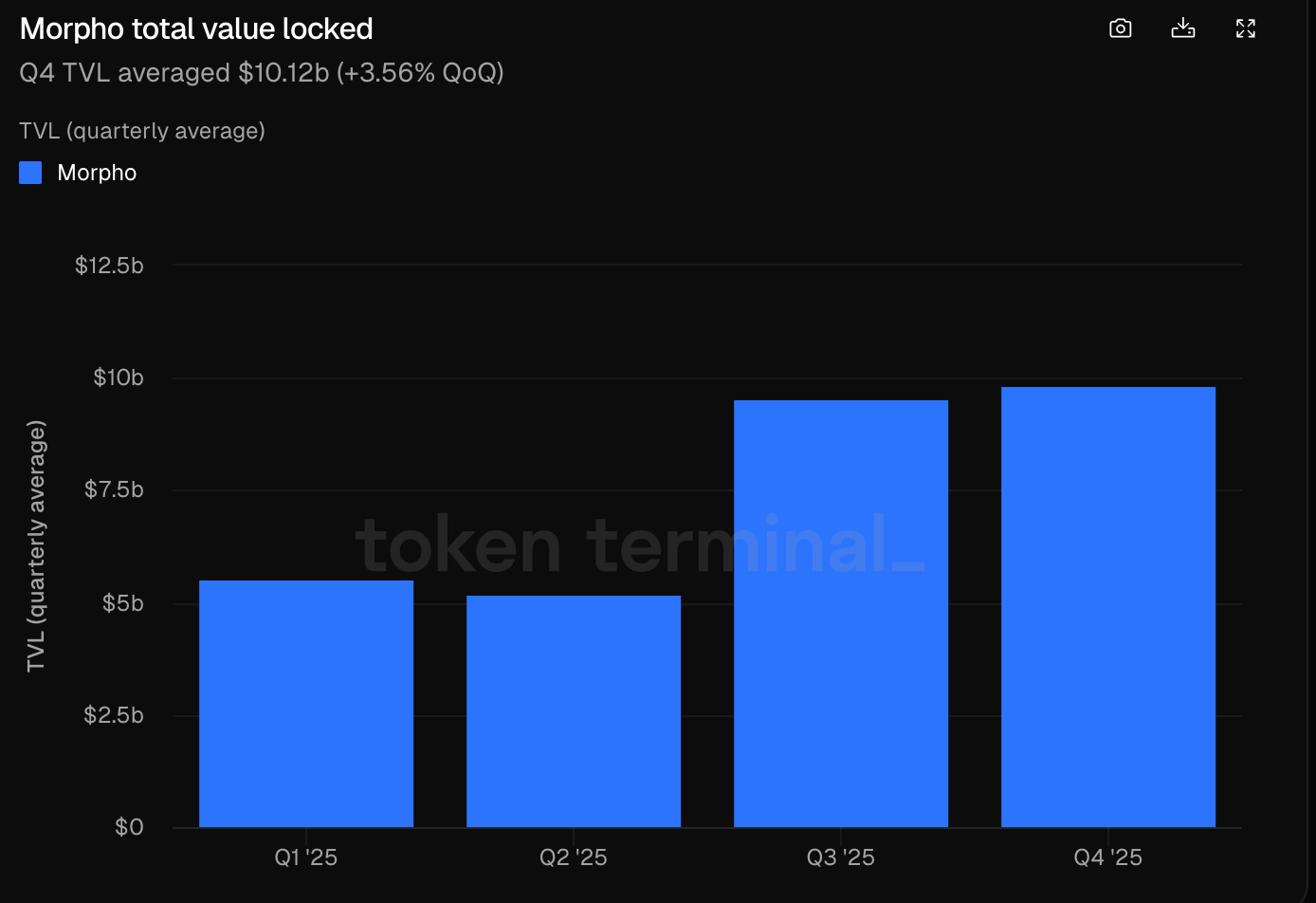
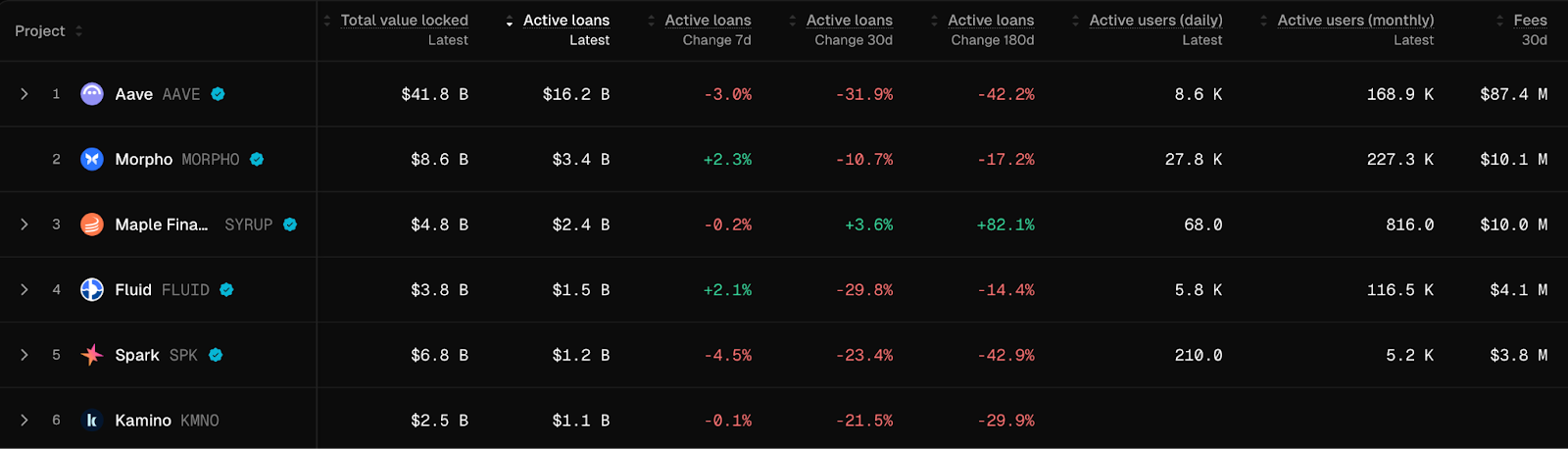
Let's look at Morpho's fundamentals to see if it has the potential to challenge Aave's lending throne. According to Tokenterminal data, in Q3 and Q4 of 2025, Morpho's protocol TVL remained above $9.5 billion, an increase of about 80% compared to the first half of the year.
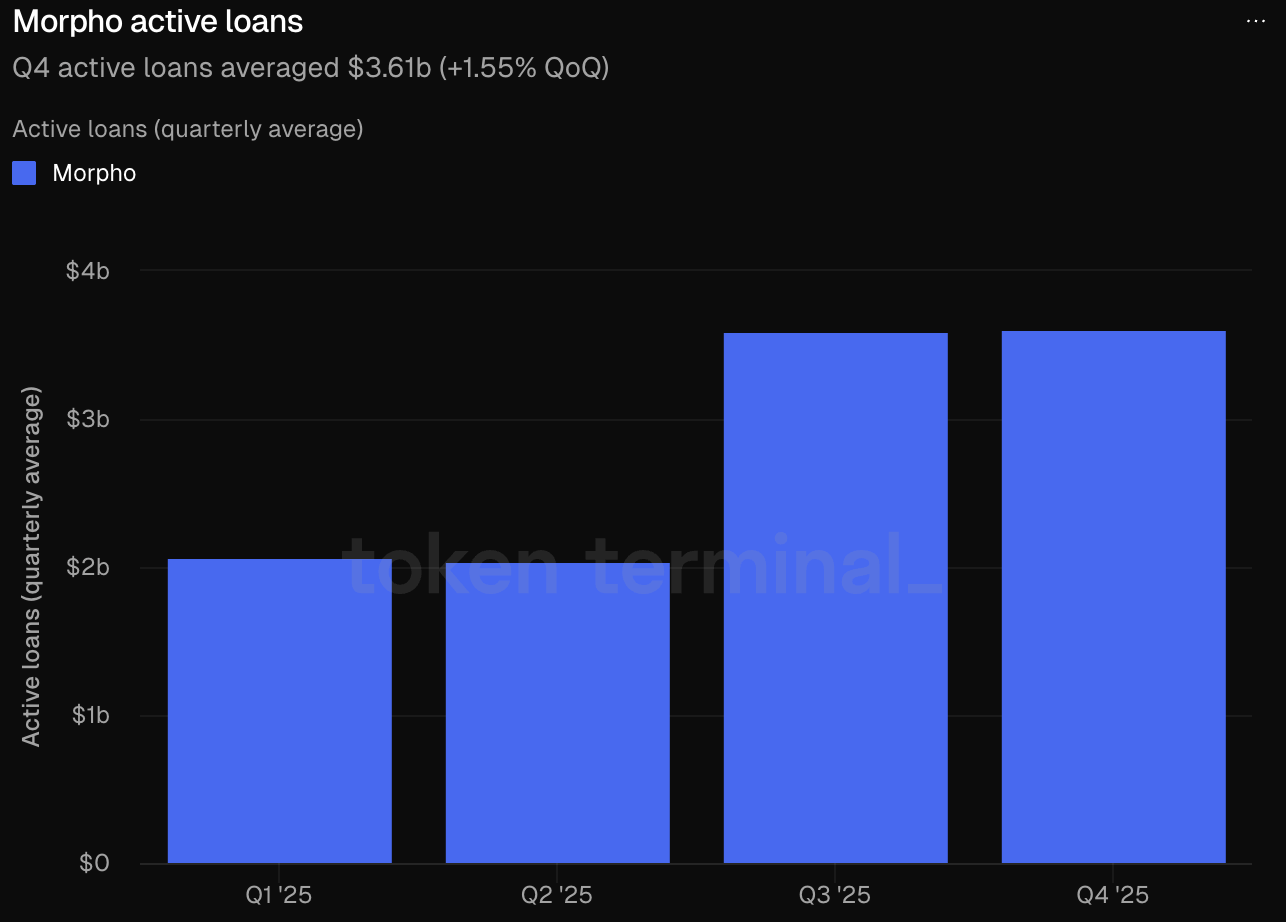
The active loan size within the protocol also stayed above $3.5 billion in both Q3 and Q4, a year-on-year increase of about 80%.
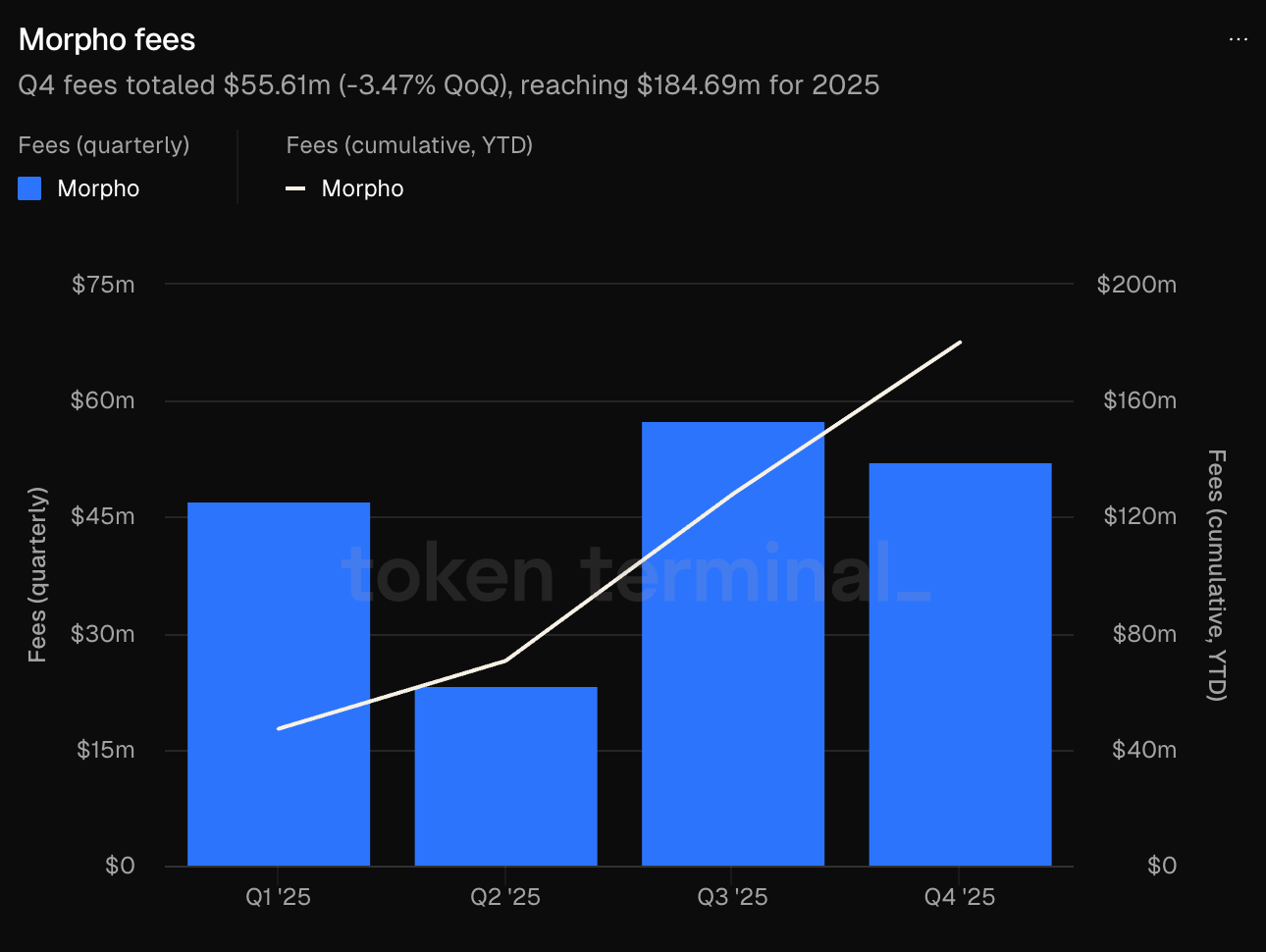
In terms of protocol revenue—one of the core metrics for DeFi protocols—aside from relatively weak performance in Q2, it remained stable at around $50 million in other quarters.
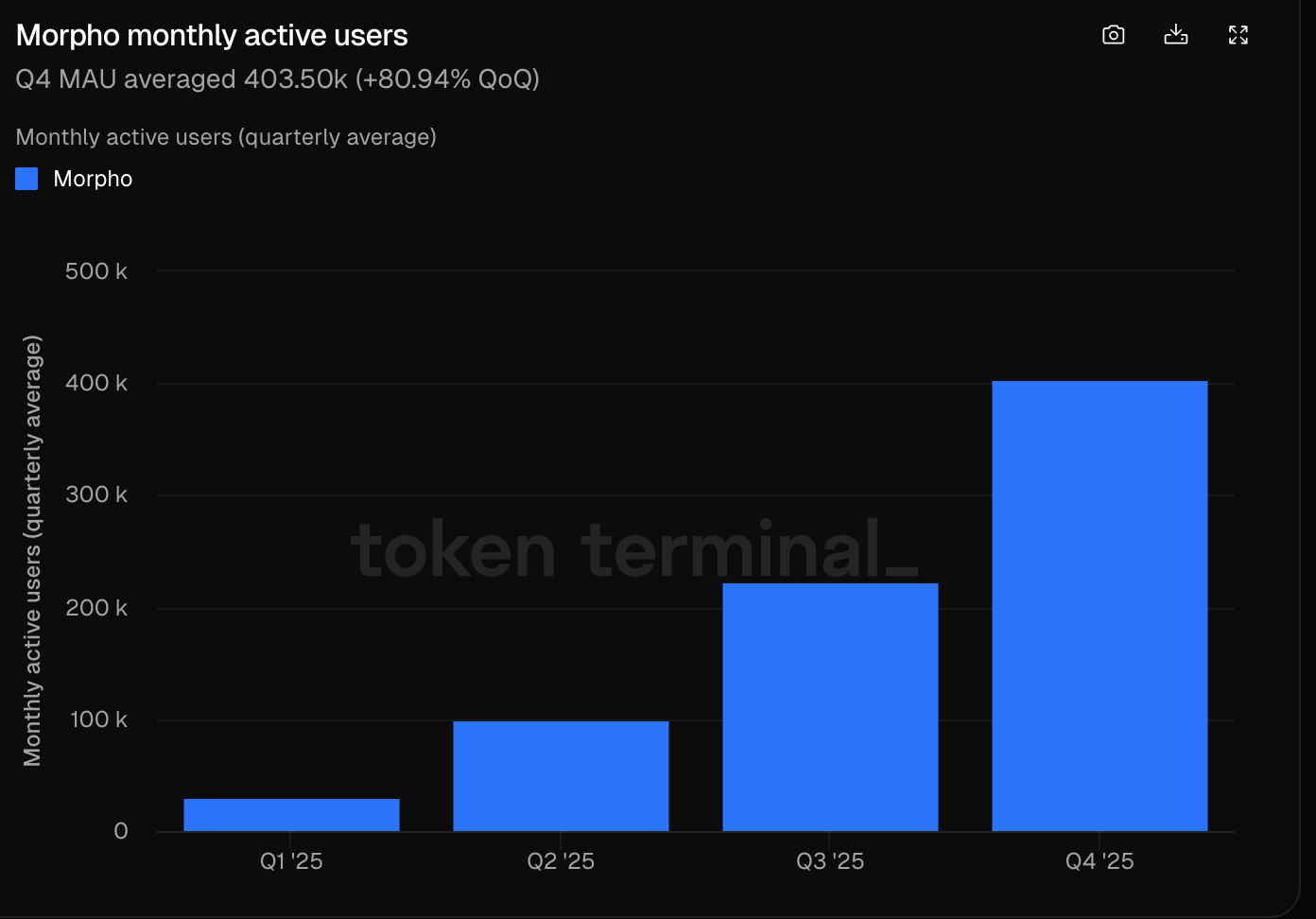
User growth is even more直观, with its quarterly active addresses rapidly expanding from about 30,000 in Q1 to the 400,000 level, showing strong organic growth momentum.
Although Morpho's current TVL and active loan size still lag behind Aave's, its user growth rate has made it one of the most aggressive "dark horses" in the lending sector. Especially against the backdrop of the entire DeFi sector generally under pressure and experiencing阵痛 in 2025, Morpho's performance can be considered achieving counter-trend high growth,足以证明 its product model has withstood market tests. Protocols that can continuously attract funds and users during bear markets often possess stronger爆发力 in the next cycle.
Institutional Variable: When Traditional Capital Starts Betting

Good fundamental data performance only proves that the protocol has a solid foundation, but the bigger catalyst that truly changes the market cap curve is the entry of traditional financial giants.

On February 13, Wall Street asset management giant Apollo Global Management signed a重磅 cooperation agreement with the Morpho Association, the non-profit organization behind Morpho. Specifically,strong> Apollo plans to gradually acquire up to 90 million MORPHO tokens over the next 48 months, equivalent to approximately 9% of Morpho's total supply. At the current price of $1.8, this is worth about $162 million.

From a trading perspective alone, this will bring sustained buying demand for MORPHO. But if you know Apollo, you'll understand that this is more like its strategic penetration into DeFi.

Apollo manages assets close to $940 billion, and its private credit business is known for pursuing high yields. The on-chain world can provide opportunities for leverage amplification and global instant liquidity. Since 2024, it has begun testing the waters in the crypto industry, with RWA as its main battlefield. It partnered with Securitize to tokenize its diversified credit strategy into ACRED, which now reached a scale of $130 million.
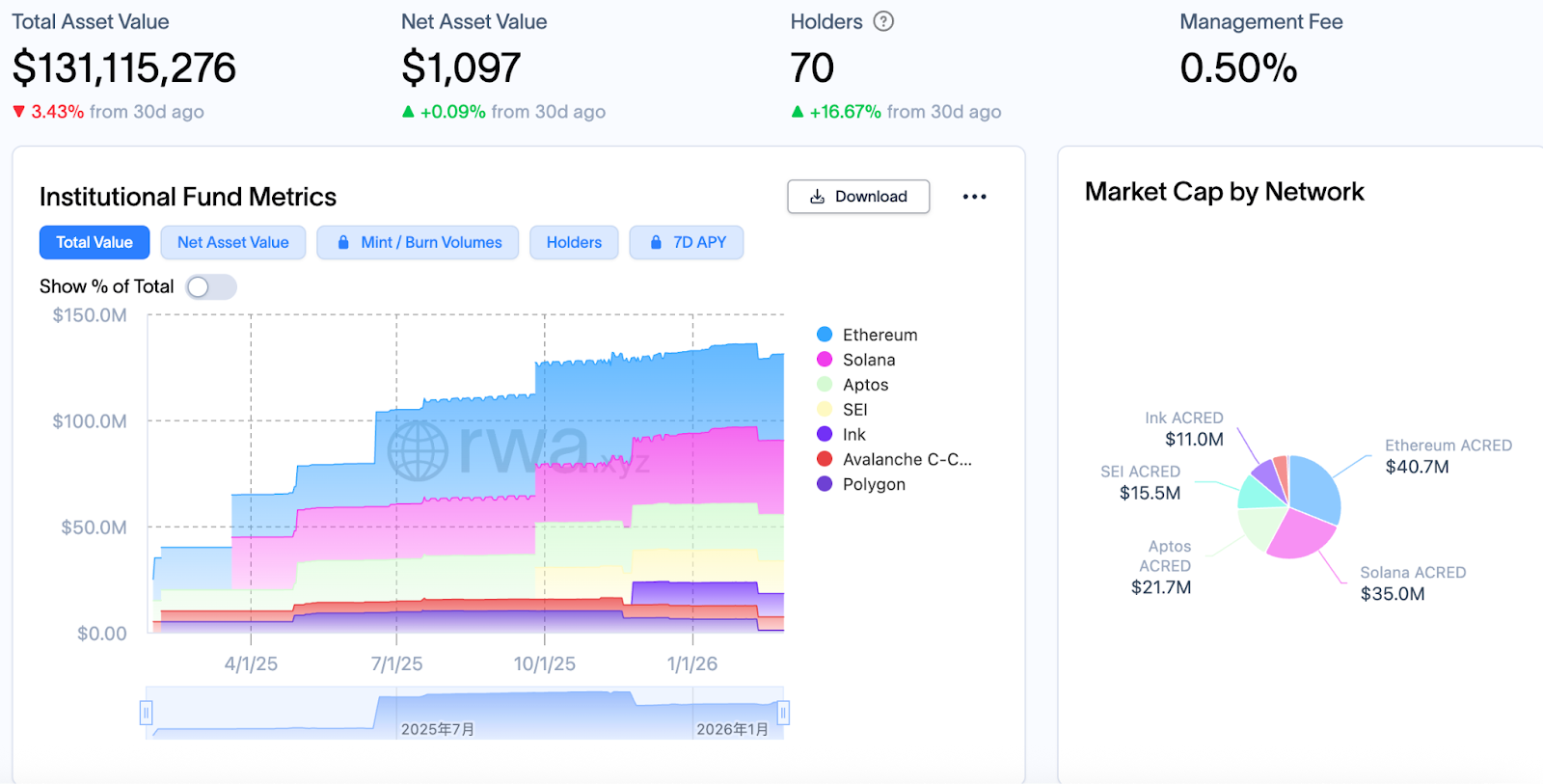
However, the core challenge after onboarding RWA has never been issuance but liquidity release. Assets can be tokenized, but without efficient lending markets and leverage environments, their yield potential is difficult to unleash. From Apollo's布局, it is not unreasonable to speculate that it likely intends to use Morpho's lending markets to amplify the yield of its credit products. Because Morpho's modular lending structure provides a天然适配场景 for RWA—isolated markets, independent risk parameters, and customizable leverage environments. These mechanisms are far more attractive to institutions than parameter games under unified governance.

This speculation is not without basis, because although Morpho is highly permissionless, key parameter options still need to be expanded through Morpho DAO governance. If Apollo holds a significant amount of MORPHO tokens, it will gain corresponding voting power and may promote the addition of RWA-friendly parameters. If Apollo's intentions materialize as推测, Morpho's modular design could attract more institutional funds, accelerating inflows and making it key infrastructure for amplifying institutional credit products on-chain. This institutional-level endorsement would not only strengthen Morpho's competitive advantage but also narrow the gap with Aave—especially when Aave is deeply mired in internal governance issues.

Conclusion

Aave's governance crisis may continue to drag down its market cap and liquidity in the short term, while Morpho, leveraging its product structural advantages and institutional catalysts, is quietly rewriting the competitive landscape of the lending sector. However, whether Morpho can truly shake Aave's throne still depends on its continued TVL追赶 and more TradFi players joining the fray. But至少 for now, the power transition for the "second-generation lending leader" has already begun.

Risk提示: MORPHO tokens will undergo a large unlock in March, belonging to the Morpho DAO, Morpho Association reserve, and core contributors. Short-term liquidity impact requires attention.


Perguntas relacionadas

QWhat is the main reason for the recent governance controversy within Aave?

AThe controversy stems from founder Stani's proposal for a $51 million 'Aave Will Win' funding framework, which ignited existing tensions over fund allocation and transparency, particularly after an audit report accused Labs of low fund utilization and lack of disclosure after receiving approximately $86 million from the DAO.

QHow does Morpho's governance model differ from Aave's approach?

AMorpho uses a modular, market-driven model where independent risk managers (curators) set parameters for isolated markets, reducing governance friction. In contrast, Aave relies on global DAO voting for all risk parameter adjustments, which can lead to decision-making bottlenecks.

QWhat significant partnership has contributed to Morpho's recent growth and potential?

AApollo Global Management signed an agreement to acquire up to 90 million MORPHO tokens (approx. 9% of supply) over 48 months, valued around $162 million at current prices, signaling major institutional backing and potential integration for RWA yield strategies.

QWhat key metric demonstrates Morpho's strong user growth despite market conditions?

AMorpho's quarterly active addresses grew from around 30,000 in Q1 to 400,000 by Q4, showing robust organic user expansion even during a period of general DeFi market pressure.

QWhat is a potential short-term risk for MORPHO token investors mentioned in the article?

AThe MORPHO token faces a significant unlocking event in March, with releases to the Morpho DAO, Morpho Association treasury, and core contributors, which could create short-term liquidity pressure on the price.

Leituras Relacionadas

7 Months After the Collapse of Huiwang, Southeast Asia's Escrow Platforms Undergo a Major Reshuffle

Following the collapse of Huione Pay—dubbed the "Alipay of Southeast Asia"—seven months ago, the region's underground financial guarantee platform sector is undergoing a significant reshuffle. This power vacuum has been swiftly filled by emerging platforms such as XinBi, Tiger/Navigator, JinBei (renamed JinBo), Dali/Tiancheng, and FullyLight. These platforms, operating largely via Telegram and offering services like escrow for illicit transactions, have absorbed the vast user base and markets left behind by Huione. While positioning themselves as "trust intermediaries," their primary clientele consists of networks involved in online scams, money laundering, illegal gambling, and even human trafficking. For instance, the Tiger/Navigator platform explicitly provides "escrow" services for kidnapping-for-ransom operations ("强押车交易"). Data underscores the immense scale: Huione alone processed over $103 billion in cryptocurrency payments and facilitated over $31 billion through its escrow market before its downfall, linking it to Cambodia's notorious Prince Group. Since its collapse, competitors have seen explosive growth. For example, the XinBi platform has accumulated over $1.6 billion in total USDT revenue, while platforms like NewPay, OkPay (under Dali), and FullyLight Wallet collectively processed over $4.8 billion in USDT in a single year. This ecosystem thrives in regions like Cambodia and Myanmar, where regulatory gaps allow these platforms to act as critical financial infrastructure for sprawling cybercrime industries, from scam compounds to online casinos. The article concludes that the moniker "Southeast Asian Alipay" is a misnomer, obscuring the platforms' fundamental role in enabling serious criminal enterprises rather than representing legitimate financial innovation.

Odaily星球日报Há 36m

7 Months After the Collapse of Huiwang, Southeast Asia's Escrow Platforms Undergo a Major Reshuffle

Odaily星球日报Há 36m

The Changing Landscape: What Are Crypto VCs Experiencing?

Title: The Shifting Landscape of Crypto Venture Capital The era of dedicated crypto venture capital funds is undergoing a significant transformation. Once essential for navigating the sector's complexity and high risk, these specialized funds are now facing an identity crisis as the market matures. This shift mirrors historical patterns in other specialized investment classes like cleantech and SPACs, where initial information advantages dissipate as technologies become mainstream and integrated into existing industry frameworks. The article argues that crypto is reaching a critical inflection point, transitioning from a "building phase" to an "integration phase." Major players like Stripe, BlackRock, and Visa now engage with crypto not for its novel mechanics but as a foundational financial infrastructure. Their needs—regulatory compliance, banking partnerships, distribution channels—align with traditional fintech, a domain easily understood by large, generalist funds like Sequoia and Founders Fund. This evolution creates a "barbell effect" within the VC landscape. On one end are massive, diversified platforms that can incorporate crypto as one vertical among many. On the other are small, nimble funds focused on niche, experimental projects. The middle ground—medium-sized dedicated crypto funds—is being squeezed out. Their typical fund size makes it impossible to generate sufficient returns solely from early-stage crypto bets, yet they cannot compete with giants for later-stage deals. Consequently, leading crypto-native firms like Paradigm and Framework Ventures are expanding into AI, robotics, and other sectors, driven partly by LP pressure for better returns amid a broader VC DPI crisis. Others, like Dragonfly and a16z, have narrowed their crypto focus predominantly to financial infrastructure like stablecoins, reframing the sector's core narrative. For crypto entrepreneurs, this consolidation presents challenges. While generalist funds offer larger checks and broader resources, crypto projects now compete fiercely with AI for attention and capital within these firms. Furthermore, the long-term, non-commercial foundational work that built the ecosystem—funded by dedicated crypto VCs—is less likely to attract generalist capital focused on direct returns. The conclusion is that "crypto investor" as a standalone category is becoming obsolete, akin to "internet investor." Crypto is becoming a baseline infrastructure layer. The future will see a barbell structure: large-scale growth financing handled by generalist funds, while pioneering, speculative projects are funded by small, specialized vehicles. The dedicated crypto funds of the 2017-2021 boom, which incubated core infrastructure, are giving way to this new, bifurcated reality.

Foresight NewsHá 54m

The Changing Landscape: What Are Crypto VCs Experiencing?

Foresight NewsHá 54m

As Consensus Accelerates, What Are Young Investors Betting On?

Title: As Consensus Forms Faster, What Are Young Investors Betting On? In the rapid evolution of tech investment, a new generation of young investors is navigating a landscape where AI, robotics, commercial aerospace, and quantum computing are advancing simultaneously. Traditional investment logic based on financial models is giving way to a need for deep technical understanding and the ability to act before industry consensus forms. An analysis of trends from the "WAIC FUTURE TECH" list of young investment leaders reveals key shifts in focus. The first major trend is the movement of AI from the digital screen into the physical world. Investment is shifting from large language models and chatbots towards embodied AI, robotics, AI hardware, and edge computing. While demonstrations generate excitement, the real challenge lies in achieving scalable, reliable, and cost-effective delivery in complex real-world environments like factories and logistics. Success depends not just on algorithms but on the integration of sensors, actuators, and control systems. Second, the competitive focus for large models is moving beyond raw capability toward building an "intelligence flywheel." The goal is to create self-reinforcing systems where user interaction generates data, improving the model, which in turn enhances the user experience and attracts more engagement. Companies that successfully embed AI into workflows to create these closed-loop systems can build lasting value that isn't easily erased by the next model upgrade. Third, facing a potential bottleneck in high-quality human-generated data, investors are looking at new underlying technologies. Reinforcement learning and self-play, as demonstrated by AlphaGo Zero, offer paths for AI to generate its own experience. Scientific foundation models, which aim to build general AI capabilities for fields like life sciences and materials discovery, represent a non-consensus direction that could unlock new frontiers of knowledge and data. Finally, in deep-tech areas like quantum computing, commercial aerospace, and space-based infrastructure, patient capital is essential. These fields have long, uncertain development and validation cycles involving complex engineering, supply chains, and regulations. Investment here requires a long-term view, focusing on foundational team capabilities and the eventual emergence of market demand, even if commercial returns are distant. Collectively, these trends illustrate how young investors are adapting to a new era. They are learning to make earlier, technically-informed judgments, balance hype with real-world viability, and provide the patient capital needed to build the deep-tech foundations of the future.

marsbitHá 1h

As Consensus Accelerates, What Are Young Investors Betting On?

marsbitHá 1h

Trading

Spot
活动图片




