a16z Infographic: AI Costs Halved, Usage Doubled, US 30-Year-Olds Enter the Era of 'Delayed Adulthood'

marsbitPublicado em 2026-03-02Última atualização em 2026-03-02

Resumo

This a16z report analyzes four key trends through data visualization. First, while the "DExit" narrative suggests companies are leaving Delaware due to legal shifts, the data reveals a more nuanced picture; Delaware's overall share of businesses has actually grown, though specific entities like Wyoming LLCs are gaining traction. Second, AI sector demonstrates the Jevons Paradox: as the cost of AI tokens halved, their usage doubled, and demand for older GPUs remains strong, indicating the AI-driven economy is still in its early stages. Third, AI capital expenditure is massive, comparable to total US bank lending and significantly larger than corporate tax income or the military budgets of other G7 nations. Finally, prediction markets like Kalshi are now outperforming professional forecasters in predicting Federal Funds Rates. The report concludes with a societal trend: 30-year-olds are increasingly delaying traditional life milestones like marriage, homeownership, and having children, with college enrollment being the only metric that has risen sharply, though its value is now being questioned.

Deep Tide Guide: This edition of a16z's Chart Weekly covers four topics, each worthy of a standalone article: the Jevons Effect triggered by falling AI costs, the true scale of tech giants' capital expenditures, Kalshi prediction markets outperforming professional forecasting agencies, and the comprehensive postponement of life milestones among 30-year-olds in the US. With solid data sources and a calm, restrained perspective, it serves as a high-quality reference for understanding the intersection of current tech and macro trends.

DExit......Real Trend or Illusion?

Delaware remains the preferred state for US corporate registration, but this status is quietly loosening:
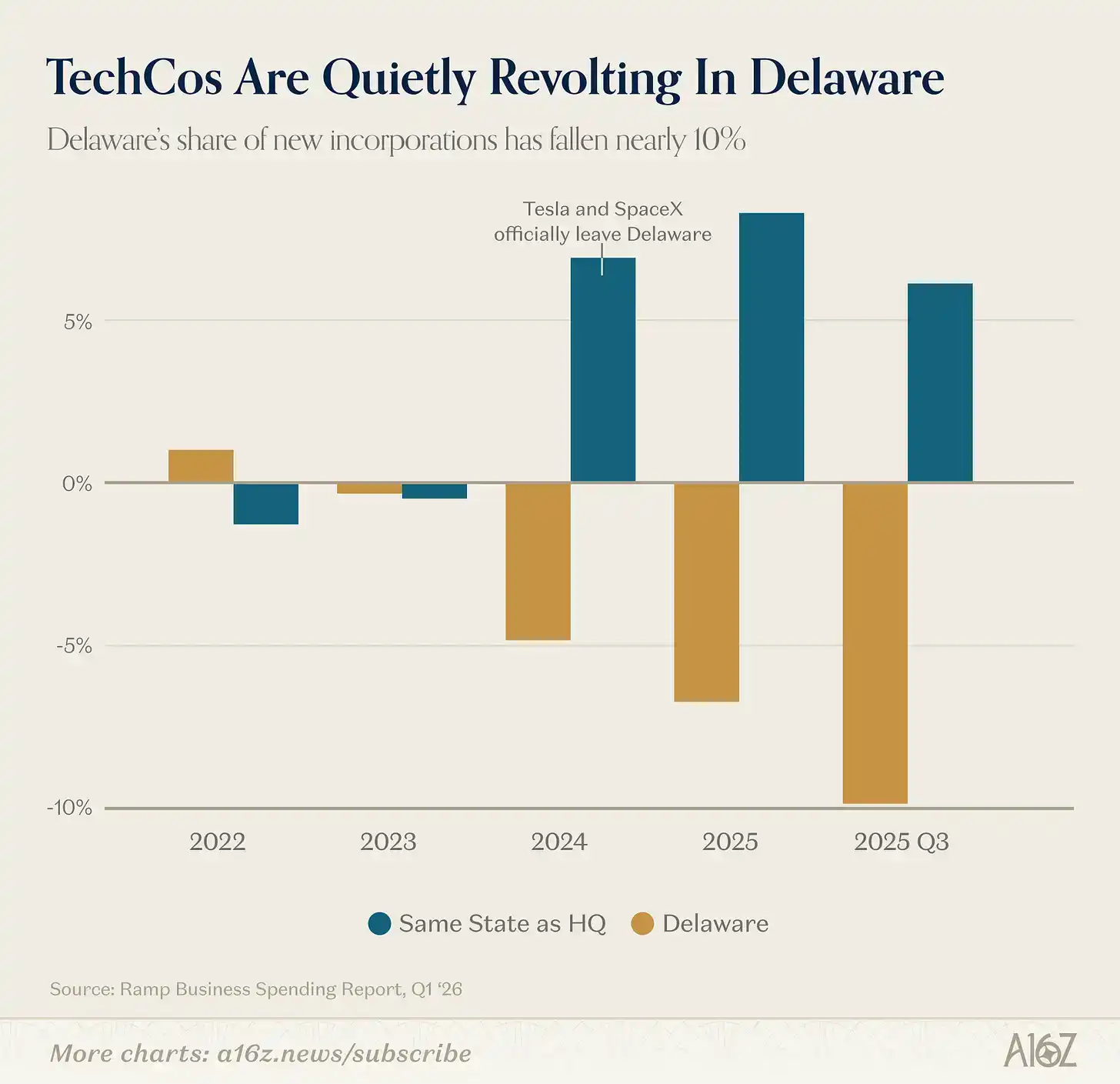
According to Ramp's data, Delaware's share of new company registrations has been declining since 2023, with a drop of about 10% in Q3 2025.

History doesn't repeat itself exactly, but it often rhymes......maybe.

Delaware wasn't always the holy land for corporate registration.

About a century ago, Delaware replaced New Jersey—the original "Mother of Trusts"—as the preferred state for incorporation. New Jersey lost its edge because then-Governor Woodrow Wilson tried to curb "corporate abuses," severely worsening the state's business environment. Delaware's corporate law was modeled on pre-Wilson era New Jersey law and was happy to welcome fleeing businesses. It then spent nearly 100 years, alongside the Delaware Court of Chancery, building a reputation as a mature and fair venue for resolving disputes between companies and investors.

However, what took a century to build began to shake in just a few years. Rightly or wrongly, the Delaware Court of Chancery has recently taken a more lenient stance on shareholder lawsuits (including, but not limited to, several high-profile cases like Tesla), and companies have genuinely started moving their registrations elsewhere. Goodnight, and good luck, Delaware.

This is at least the mainstream narrative, but other data shows a more complex picture.

First, even Delaware's founding myth isn't entirely accurate.

It wasn't until the 1980s (about 60 years after Governor Wilson's term) that Delaware truly surpassed New Jersey to become the number one state for US corporate registrations:
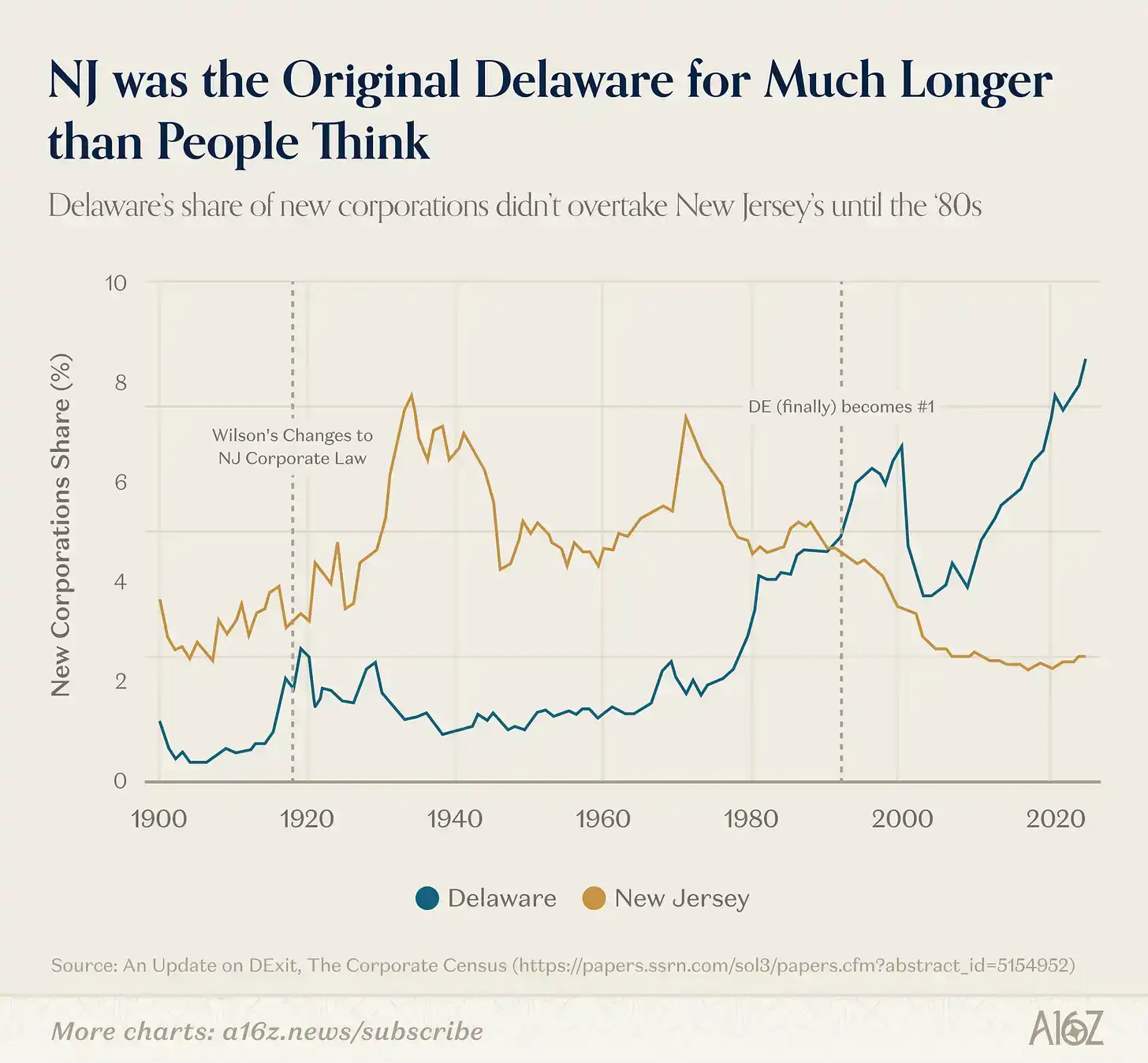
New Jersey's dominance lasted much longer than the mainstream narrative suggests. The catalyst for Delaware's eventual overtaking was likely its passage of a series of laws related to director liability, which were particularly favored by public companies, coupled with self-reinforcing network effects that created their own inertia.

Second, regardless of what's happening with high-profile public companies (and the companies in Ramp's data), Delaware as a whole still seems to be doing well, even more than well:
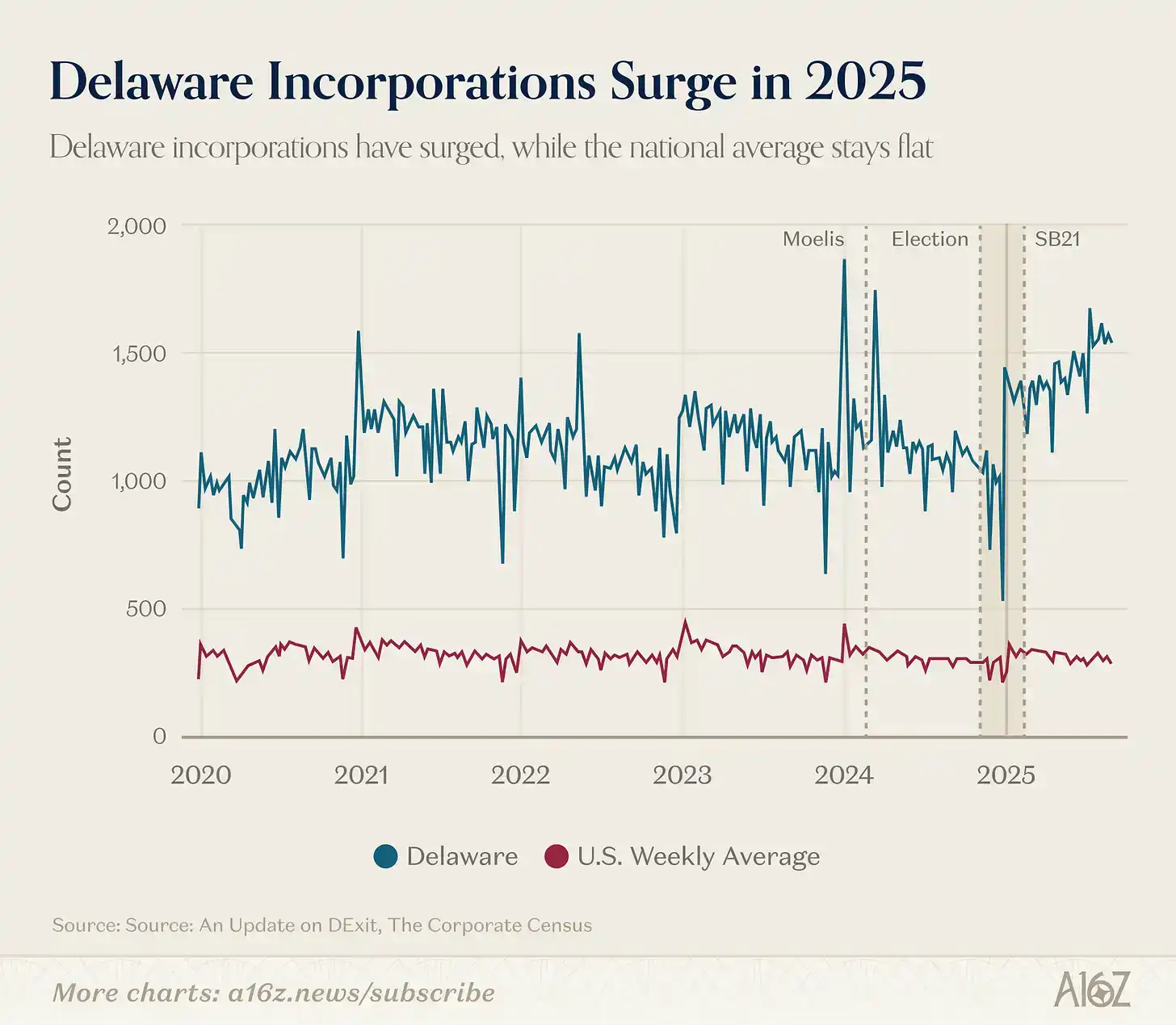
According to data published by the Harvard Law School Forum on Corporate Governance, Delaware's share of the total number of US businesses actually grew significantly from late 2024 into 2025.

In fact, if you're looking for a clear case of "DExit," it's probably this one, and it has nothing to do with Tesla, but rather a specific type of company structure:
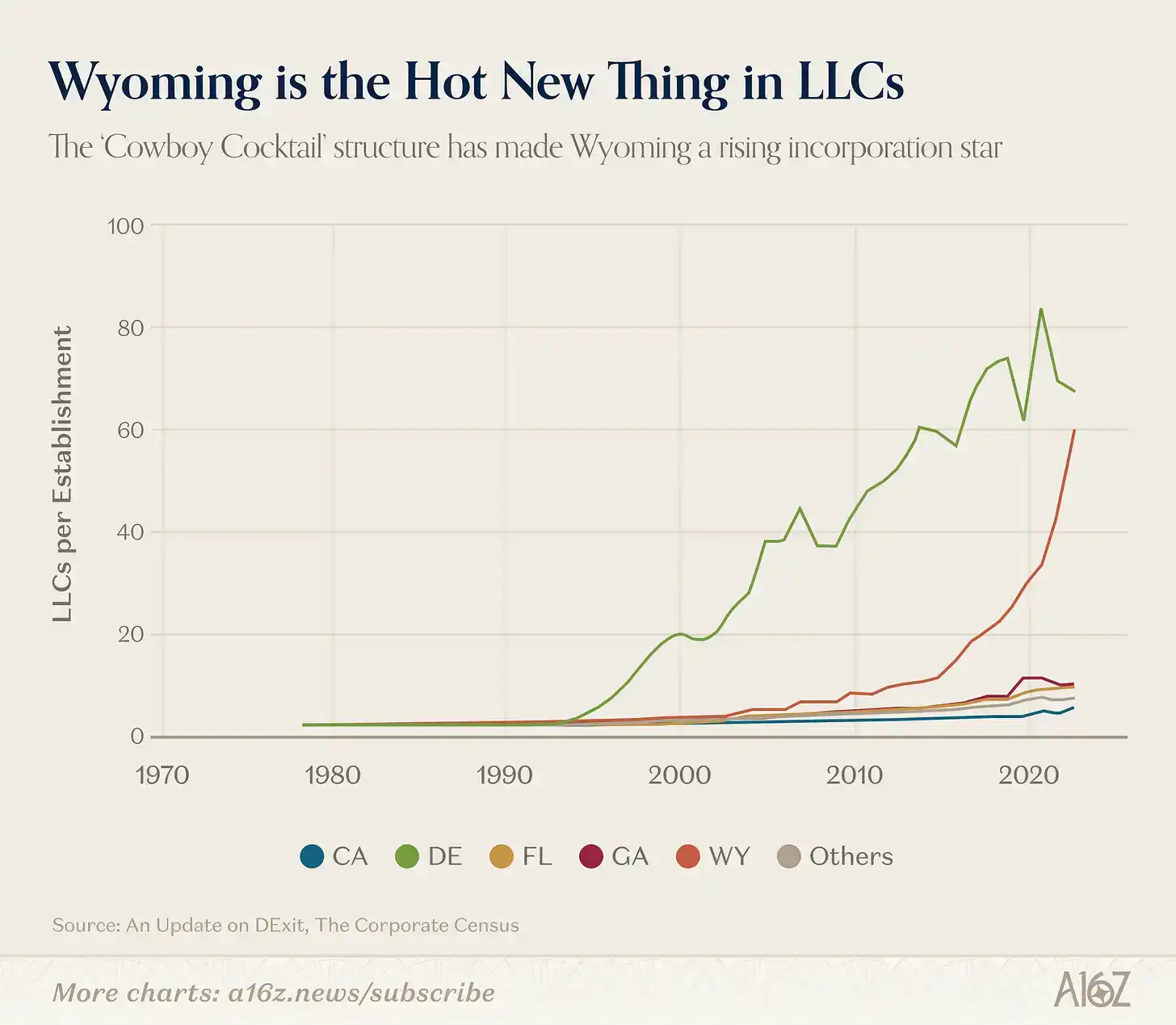
Wyoming LLCs began to surge around 2015.

Why? This is likely related to specific asset protection and privacy provisions in Wyoming's LLC law, which the state itself promotes as a "cowboy cocktail."

In short, the point here isn't that DExit isn't happening (because at least some data suggests it is—even if it's just a few high-profile companies moving out, it's significant), but the reality is certainly more complex than the mainstream narrative presents.

The reality is that Delaware still enjoys the advantage of being the default option, not to mention all the network effects tied to it, and these are very hard to shake.

We published an earlier version of this chart before, but as more data comes in, the effect becomes more striking.

Token costs fall, Token consumption rises:
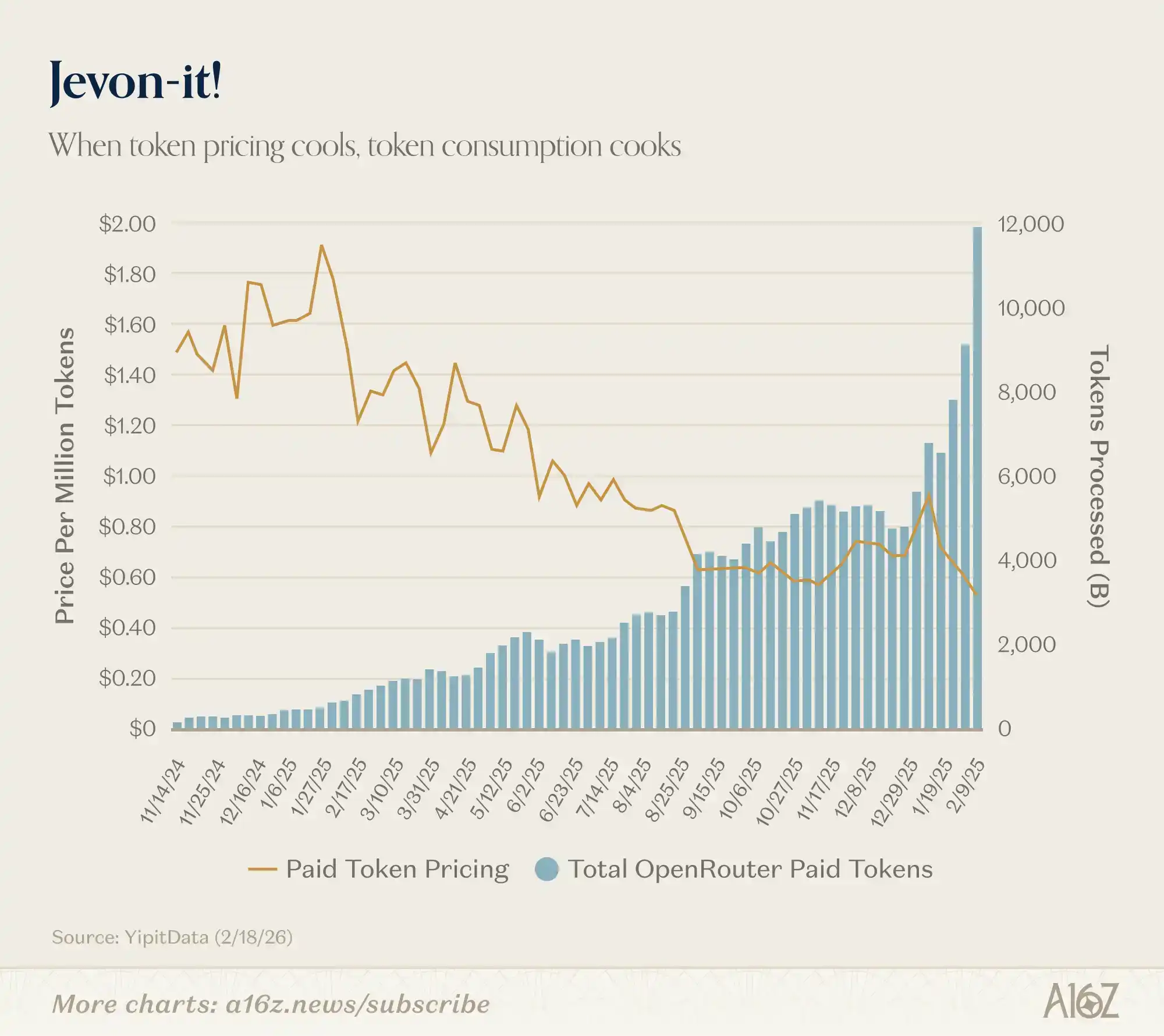
Since the beginning of this year, paid Token pricing has dropped from about 90 cents per million Tokens to 50 cents, while the number of Tokens processed has nearly doubled, from about 6,000 to 12,000.

This is a classic Jevons effect. The cheaper AI gets, the more AI we use. Delightful.

Remember when people said that when newer, better GPUs hit the market, the old ones would become worthless?

That doesn't seem to be the case either:
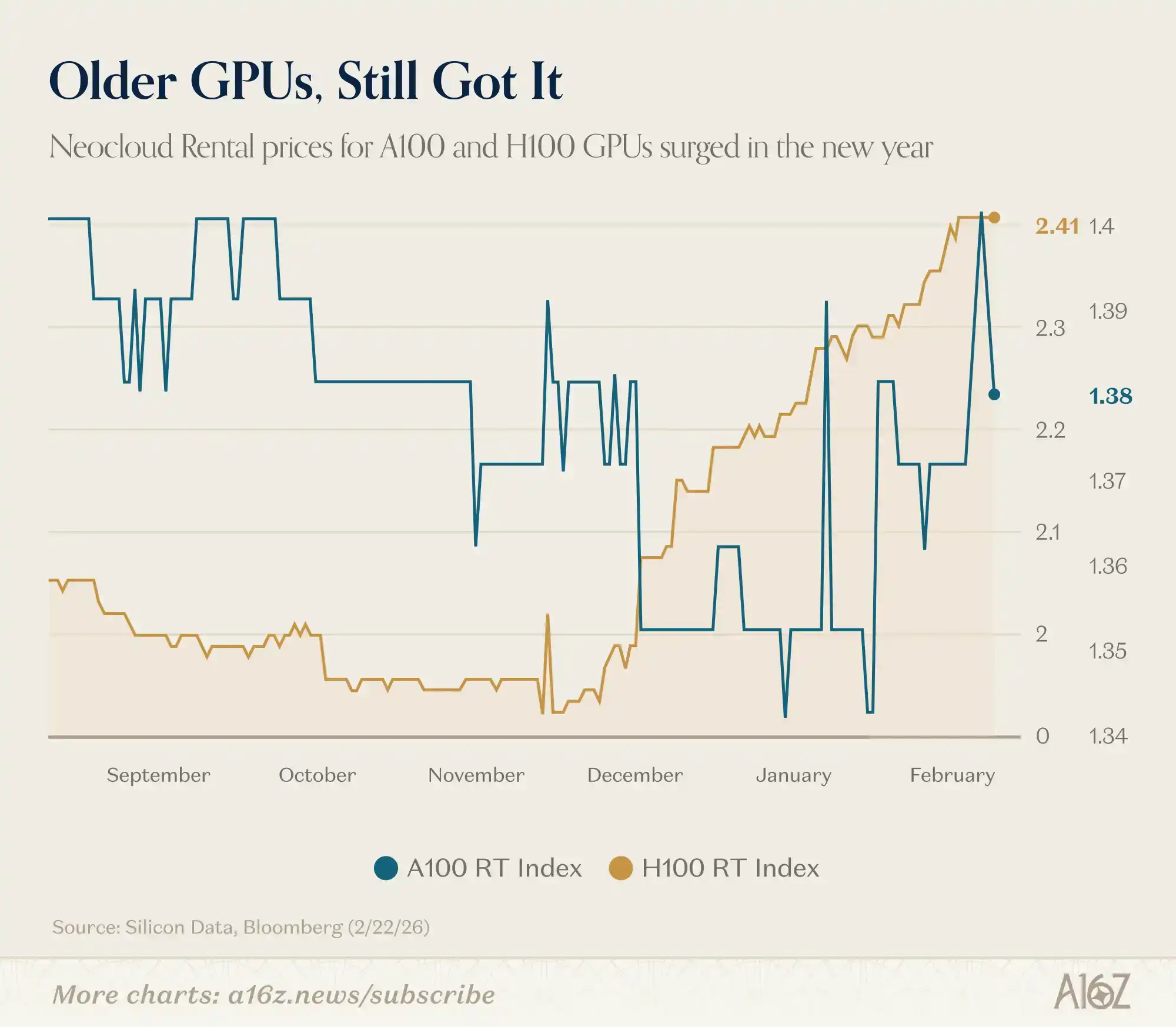
According to Silicon Data, rental prices for NVIDIA's H100 and A100 have both increased this year.

The market is far from showing signs of a compute oversupply; instead, it seems we haven't even scratched the surface of existing demand.

This comparison isn't a perfect analogy, but if history is any guide, it might take us a while longer to truly "see" what an AI-driven "economy" actually looks like:
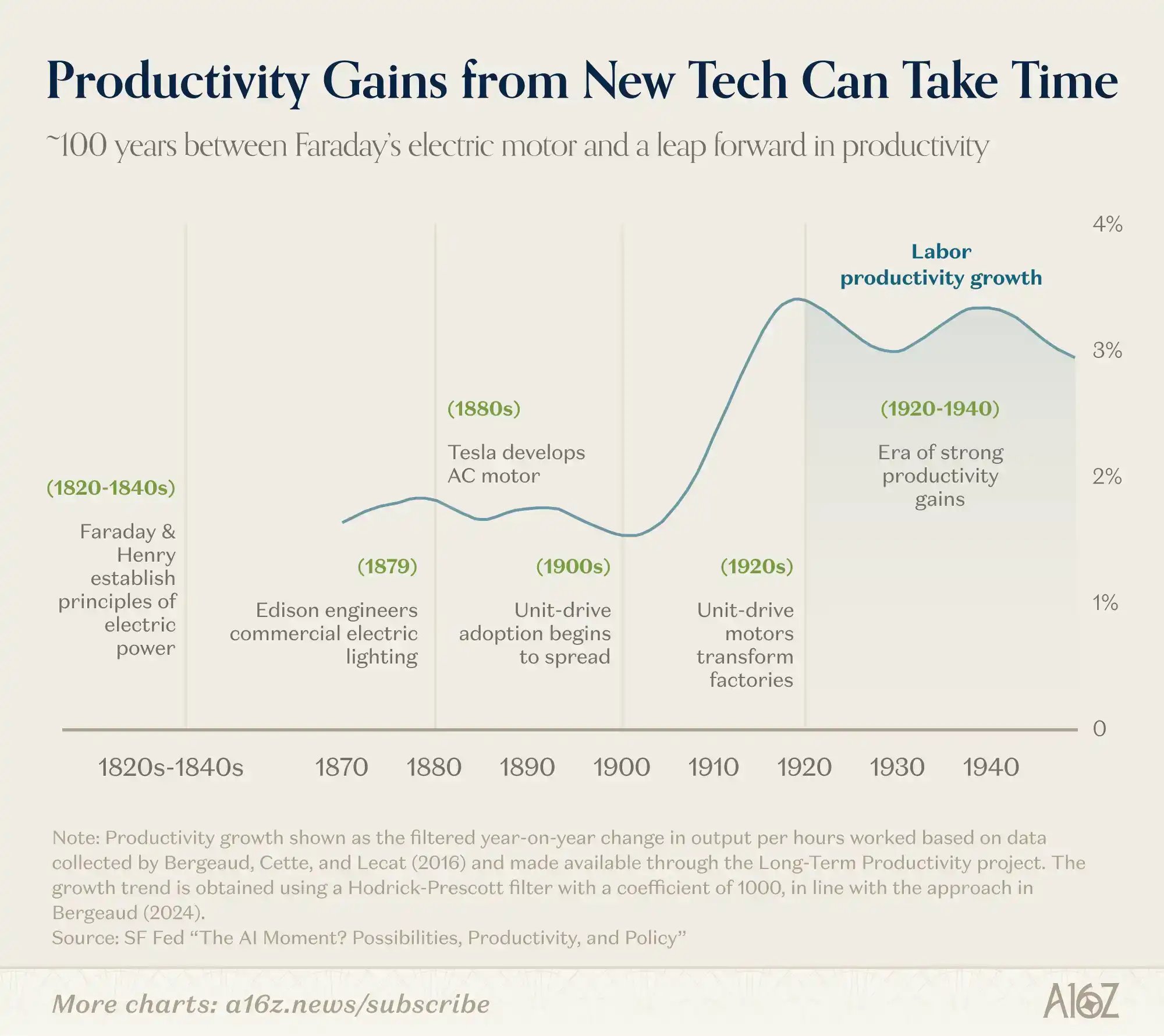
From the initial discussions of electric current by Faraday and Henry to the true explosion of industrial productivity in the first half of the 20th century, it took about 100 years.

Technology iteration cycles have indeed accelerated since the 1820s, but the variables involved in a platform-level shift remain extremely numerous.

Roy Amara famously said: "We tend to overestimate the effect of a technology in the short run and underestimate the effect in the long run."

Capital Expenditure, Put on the Axis

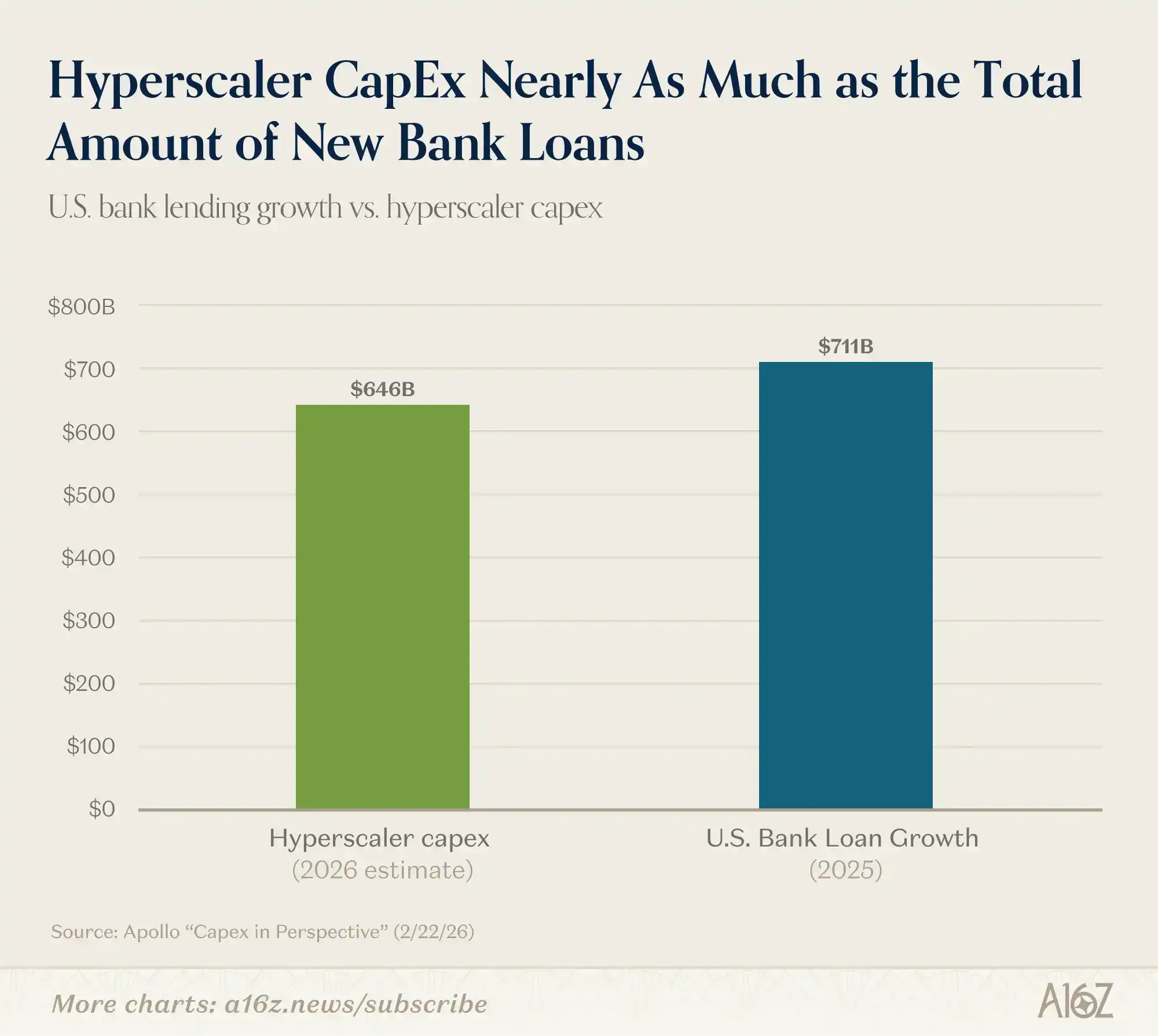
Here's a set of data that will never gets old: AI capital expenditure is huge.

Consider these comparisons:

2026 AI capex is projected to be close to the total net new lending by all US banks in 2025:
Capex is about 33% higher than total US corporate income tax revenue and about 3 times the total tariff revenue:
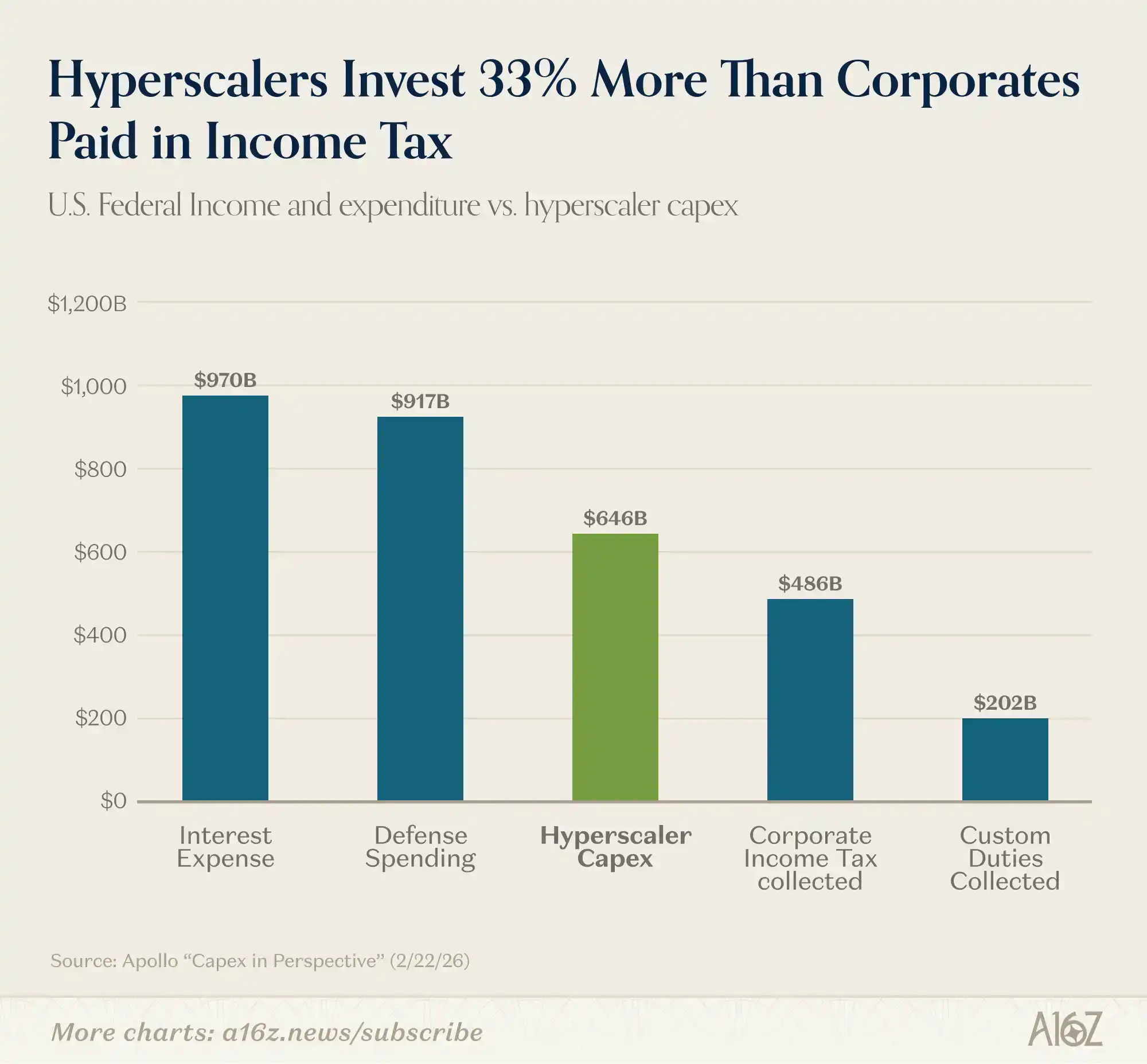
Capex is about 6 times the total military budget of any non-US G7 member country:
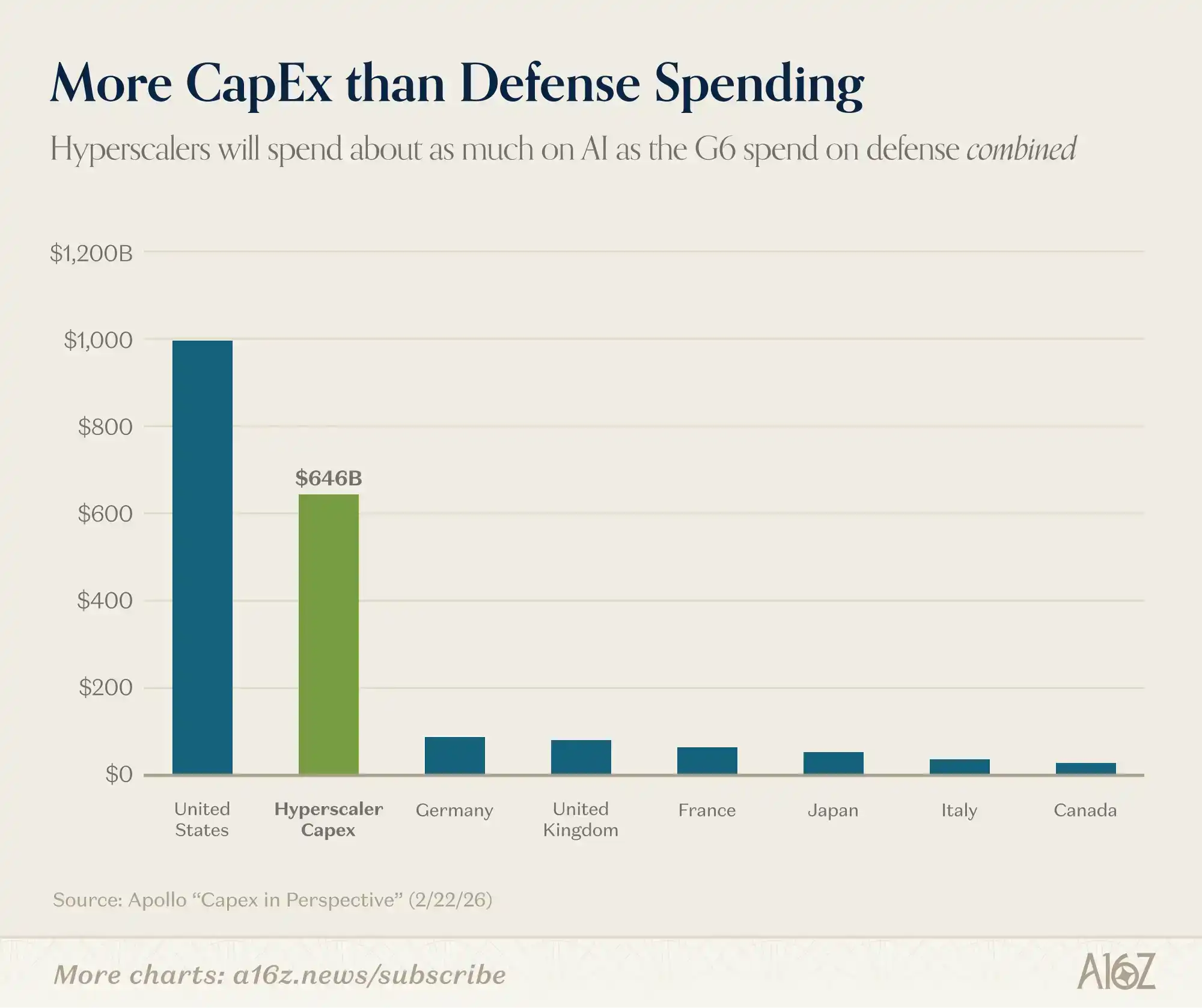
So, yes, capital expenditure is really huge.

Kalshi Moves into Macro Forecasting

Federal Reserve researchers think prediction markets are pretty good.

At least on one metric, Kalshi's predictions for the federal funds rate have already outperformed professional forecasting agencies:
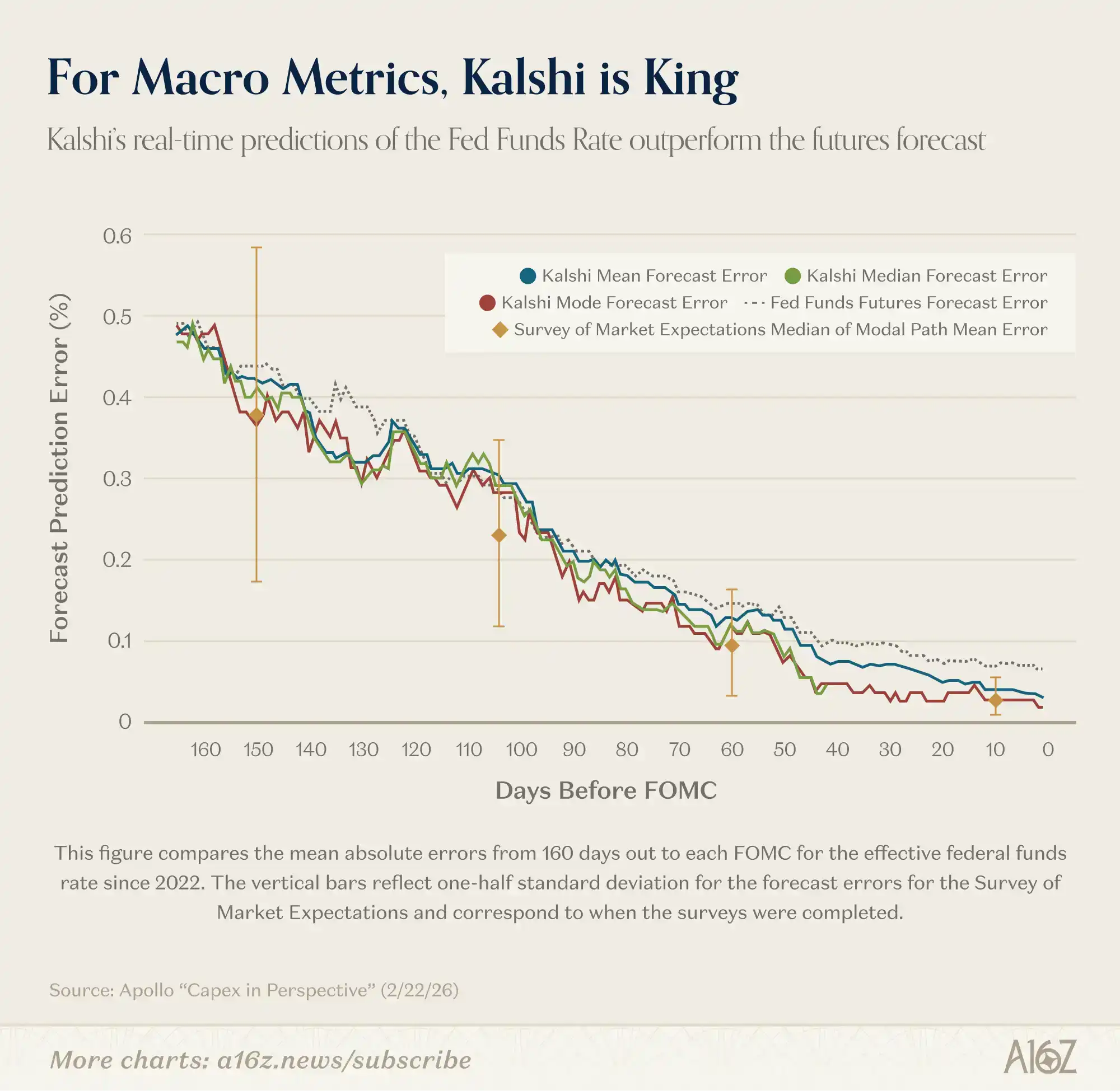
For predictions of the federal funds rate 150 days later (i.e., after 3 FOMC meetings), Kalshi's mean absolute error is very close to that of professional forecasters. But unlike surveys that provide only a snapshot of the modal path every six weeks, Kalshi provides a continuously updated full probability distribution......We find that Kalshi's median and mode predictions have a perfect track record on the day before FOMC meetings, which is a statistically significant improvement over federal funds futures predictions.

In other words, while all predictors start out similar, Kalshi's continuously updated predictions optimize over time, eventually achieving a perfect prediction record the day before the rate is officially announced. Furthermore, Kalshi's performance is also better than predictions from futures markets.

Kalshi's advantage extends beyond the federal funds rate. As the Fed researchers point out, since there are no other options markets for macro indicators like inflation, growth, and unemployment, Kalshi is the only place that provides a "high-frequency, continuously updated, probability distribution-rich 'baseline' reflecting 'crowd' judgments on the direction of these economic indicators.

Sounds pretty important.

The Delay of Adulthood

Here is a thought-provoking chart, with (a little) commentary:
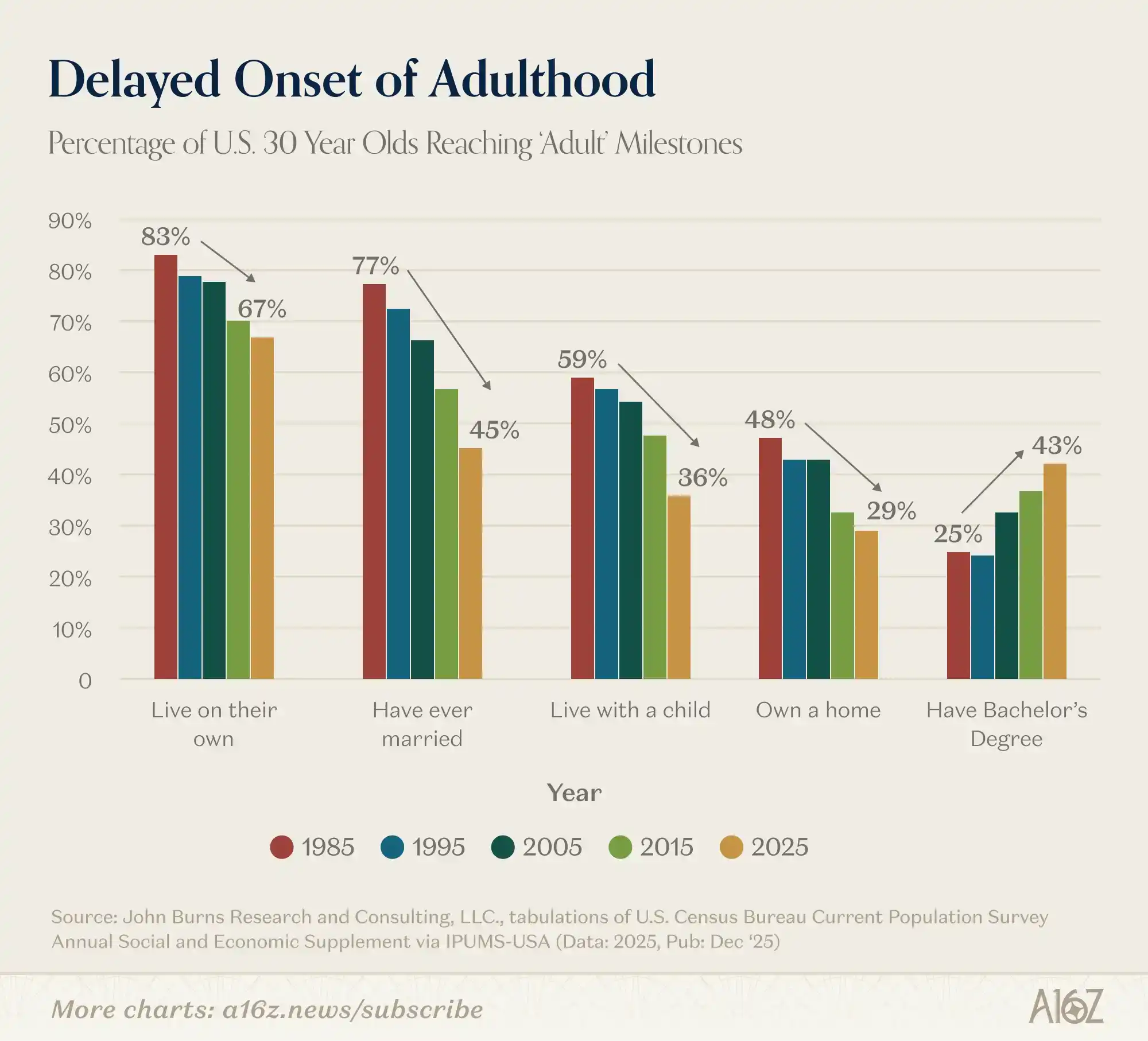
The proportion of 30-year-olds achieving major life milestones has been declining quite steeply since at least the 1980s.

Fewer and fewer 30-year-olds:

Live independently;

Have ever been married;

Live with children;

Own their home.

The only exception is college enrollment—the proportion of 30-year-olds with a bachelor's degree has almost doubled since 1995.

So, is college worth it?
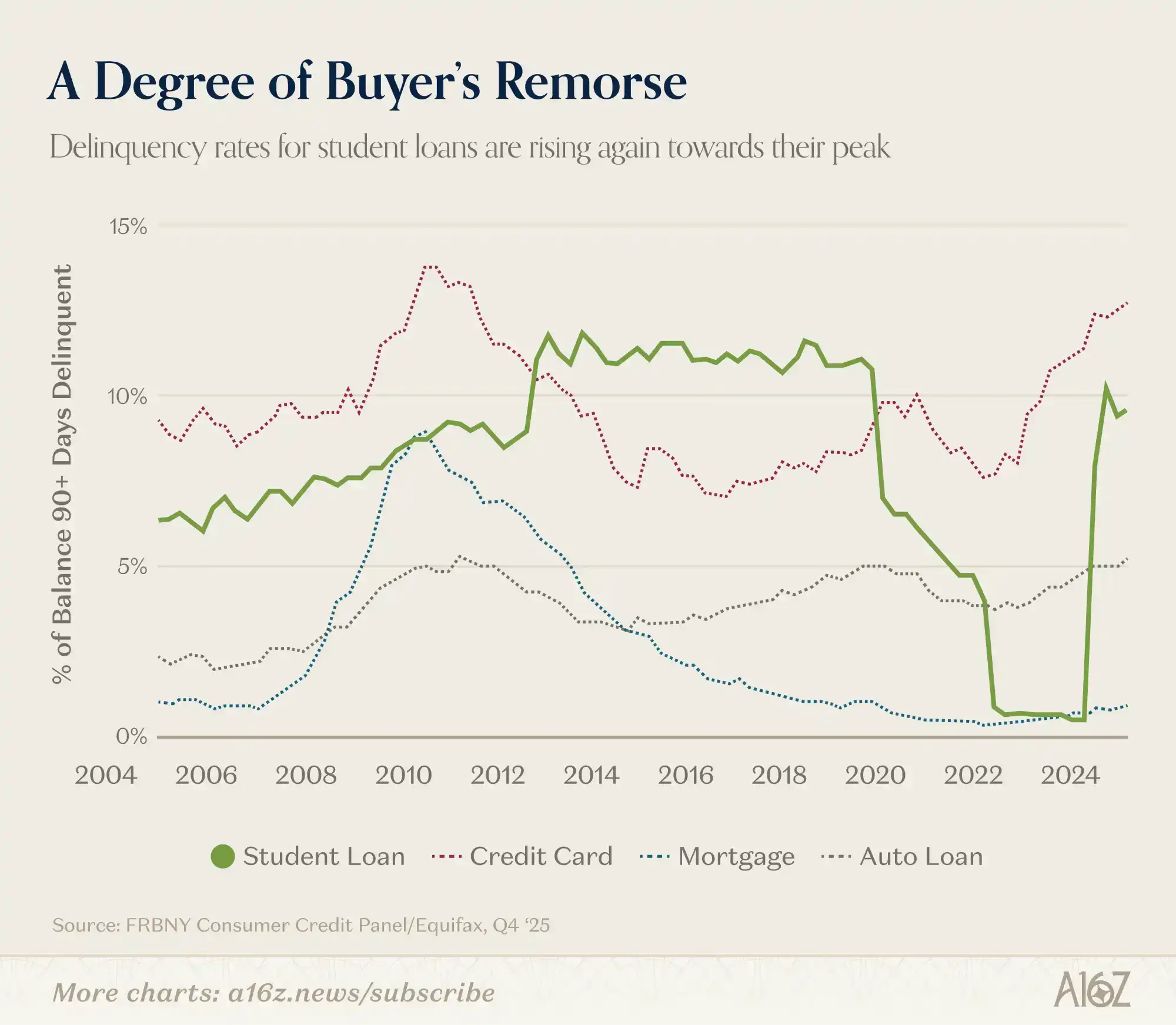
Milestones? More like milestones around the neck, right?!

Maybe, maybe not, but a sense of "buyer's remorse" seems to be in the air.

Criptomoedas em alta

Perguntas relacionadas

QWhat is the Jevons effect in the context of AI, as mentioned in the article?

AThe Jevons effect refers to the phenomenon where as AI becomes cheaper (with token costs dropping from about $0.90 to $0.50 per million tokens), its usage increases significantly (nearly doubling from around 6,000 to 12,000 tokens processed). This demonstrates that lower costs drive higher consumption of AI resources.

QAccording to the article, what is the 'DExit' trend and is it fully supported by data?

AThe 'DExit' trend suggests that companies are increasingly leaving Delaware as their state of incorporation, partly due to perceived looser stances in shareholder litigation by the Delaware Court of Chancery. However, data shows the situation is more complex: while some high-profile companies have moved out, Delaware's overall share of U.S. businesses has actually grown significantly, indicating it remains the default choice for many due to network effects and historical advantages.

QHow does Kalshi's prediction market performance compare to professional forecasting agencies for Federal Funds rates?

AKalshi's prediction market has outperformed professional forecasting agencies for Federal Funds rates. While initial predictions are similar, Kalshi's continuously updated probability distributions improve over time, achieving a perfect prediction record the day before FOMC meetings. This performance is statistically significant and better than futures market predictions.

QWhat major life milestones are declining among 30-year-olds in the U.S., based on the article?

AAmong 30-year-olds in the U.S., there has been a decline in the proportions who are living independently, have ever been married, live with children, and own a home. The only exception is college enrollment, where the rate has nearly doubled since 1995.

QHow does AI capital expenditure in 2026 compare to other major economic metrics mentioned in the article?

AAI capital expenditure in 2026 is projected to be nearly equivalent to the net new lending by all U.S. banks in 2025, about 33% higher than total U.S. corporate income tax revenue, roughly three times the total tariff revenue, and about six times the military budget of any non-U.S. G7 country, highlighting its massive scale.

Leituras Relacionadas

Misjudged A-Shares: Resilience, Expectations, and Confidence

China's A-share market recently faced selling pressure, especially in tech sectors, initially triggered by a global tech sell-off that began in South Korea. However, the article argues this is a case of "mistaken injury" and highlights the market's underlying resilience. This resilience stems from three main pillars: **1) Tech Sector Fundamentals:** Unlike Korea's market dominated by a few memory chip stocks, China's tech sector is diversified across computing, communications, electronics, and semiconductors, supported by dual narratives of global AI supply chains and domestic substitution. Core areas like optical modules and fiber optics continue to show strong earnings growth. **2) "National Team" Support:** State-backed institutions and large corporations have made significant market purchases and announced buybacks, providing liquidity and signaling confidence. This is seen as a stabilizing policy signal, often associated with market bottoms. **3) Broader Market Pillars:** Other major sectors are showing endogenous recovery momentum. Consumer stocks benefit from stabilizing CPI and signs of sector recovery (e.g., liquor price hikes). Cyclical sectors like aluminum have high earnings, potential price increases due to tight supply, and low valuations. The financial sector offers stable dividends and low valuations. The conclusion is that the sell-off was driven by external contagion, not a collapse in fundamentals. With strong policy support and recovering momentum across key sectors, the A-share market possesses the toughness to regain stability.

marsbitHá 25m

Misjudged A-Shares: Resilience, Expectations, and Confidence

marsbitHá 25m

The Clarity Act's Journey Through Congress: The Thorny Path of Bipartisan Compromise in the U.S.

The U.S. Congress is struggling to advance the crypto market structure bill known as the Clarity Act, with bipartisan compromise proving difficult. Key hurdles include unresolved disputes over "yield" products and, more critically, the inclusion of strong ethics provisions for elected officials—a non-negotiable demand for many Democrats. While a compromise on yield was reached in May, securing only limited Democratic support in committee, the separate Senate Agriculture Committee version later passed with no Democratic votes due to the ethics impasse. As Republicans push for a full Senate vote in July, demands for ethics rules have expanded, and other contentious issues like developer protections and concerns from law enforcement and large banks further complicate negotiations. Despite consensus on the need for legislation, the path forward is unclear. Recent discussions between senators and White House officials aim to find acceptable ethics language. Some lawmakers question whether a compromise text can garner enough bipartisan support, with one Democrat stating the current proposal lacks the strong ethics provisions required for their vote. Potential short-term goals for the crypto community include symbolic Senate action before the August recess, a longer-term aim for passage by 2026, or establishing a detailed framework that addresses ethics and other compromises. The process remains arduous, relying on the traditional, vote-by-vote effort to build bipartisan support.

marsbitHá 44m

The Clarity Act's Journey Through Congress: The Thorny Path of Bipartisan Compromise in the U.S.

marsbitHá 44m

Are Kalshi and Polymarket Founders at Odds? This Business Rivalry Is More Brutal Than You Think

"The Rivalry Between Kalshi and Polymarket Founders Turns Bitter and Litigious" The intense feud between Tarek Mansour, CEO of Kalshi, and Shayne Coplan, founder of Polymarket, has escalated far beyond typical business competition into personal animosity and regulatory battles. Both lead billion-dollar prediction market platforms, but their approaches differ sharply. Kalshi positions itself as the compliant operator, securing U.S. regulatory approval before launching. In contrast, Polymarket initially operated offshore, allowing U.S. users to access its platform via VPN, which drew regulatory scrutiny. The conflict reached a peak in November 2024 when FBI agents raided Coplan's New York apartment. While Coplan publicly blamed political motives, his team privately suspected Kalshi was involved. According to sources, Kalshi's lawyers had previously reported Polymarket's operations to federal prosecutors, highlighting its accessibility to U.S. users despite a ban. This incident fueled mutual accusations and underhanded tactics, including social media smear campaigns and attempts to sabotage each other's major business deals. Their rivalry also played out in Washington, influencing regulatory debates. Kalshi actively lobbied against Polymarket's practices, framing them as illegal and unethical. Polymarket, after facing a CFTC fine and investigation, later acquired a licensed U.S. firm to launch a domestic app, regaining a foothold. Despite the hostility, both companies have seen massive growth, with combined trading volumes soaring. However, increased regulatory scrutiny, particularly around insider trading on Polymarket's platform, continues to pose challenges. The founders' deep-seated mutual disdain ensures their battle for market dominance remains as much a personal vendetta as a commercial one.

marsbitHá 53m

Are Kalshi and Polymarket Founders at Odds? This Business Rivalry Is More Brutal Than You Think

marsbitHá 53m

Trading

Spot

Artigos em Destaque

Como comprar ERA

Bem-vindo à HTX.com!Tornámos a compra de Caldera (ERA) simples e conveniente.Segue o nosso guia passo a passo para iniciar a tua jornada no mundo das criptos.Passo 1: cria a tua conta HTXUtiliza o teu e-mail ou número de telefone para te inscreveres numa conta gratuita na HTX.Desfruta de um processo de inscrição sem complicações e desbloqueia todas as funcionalidades.Obter a minha contaPasso 2: vai para Comprar Cripto e escolhe o teu método de pagamentoCartão de crédito/débito: usa o teu visa ou mastercard para comprar Caldera (ERA) instantaneamente.Saldo: usa os fundos da tua conta HTX para transacionar sem problemas.Terceiros: adicionamos métodos de pagamento populares, como Google Pay e Apple Pay, para aumentar a conveniência.P2P: transaciona diretamente com outros utilizadores na HTX.Mercado de balcão (OTC): oferecemos serviços personalizados e taxas de câmbio competitivas para os traders.Passo 3: armazena teu Caldera (ERA)Depois de comprar o teu Caldera (ERA), armazena-o na tua conta HTX.Alternativamente, podes enviá-lo para outro lugar através de transferência blockchain ou usá-lo para transacionar outras criptomoedas.Passo 4: transaciona Caldera (ERA)Transaciona facilmente Caldera (ERA) no mercado à vista da HTX.Acede simplesmente à tua conta, seleciona o teu par de trading, executa as tuas transações e monitoriza em tempo real.Oferecemos uma experiência de fácil utilização tanto para principiantes como para traders experientes.

515 Visualizações TotaisPublicado em {updateTime}Atualizado em 2026.06.02

Como comprar ERA

Discussões

Bem-vindo à Comunidade HTX. Aqui, pode manter-se informado sobre os mais recentes desenvolvimentos da plataforma e obter acesso a análises profissionais de mercado. As opiniões dos utilizadores sobre o preço de ERA (ERA) são apresentadas abaixo.

活动图片













