A Crypto Gamble That Split a Century-Old Swiss Private Bank?

marsbitPublicado em 2026-03-23Última atualização em 2026-03-23

Resumo

An internal conflict over cryptocurrency strategy has led to a generational split within the Swiss private banking family behind Banque Syz. Marc Syz left the bank, led by his father Eric Syz, after the board rejected his proposal to integrate Future Holdings AG—a crypto treasury firm—into the bank’s alternative asset division, Syz Capital. Marc, who previously headed Syz Capital, is now pursuing a dual IPO for Future Holdings in Sweden and Switzerland, aiming to build one of Europe’s largest corporate Bitcoin treasuries. The dispute reflects broader tensions within Switzerland’s wealth management sector, where traditional private banks face intense competition and divergent views on innovation. Marc advocated for greater focus on digital assets and AI, warning that some banks rely too heavily on Switzerland’s reputation as a financial safe haven without adapting to new trends. Following the rejection of the merger, Marc and his business partner Richard Byworth resigned from Syz Capital and are launching a new asset management firm focused on alternative investments. Meanwhile, Banque Syz reaffirmed its commitment to alternative investments as a core business pillar and recently appointed Eric’s other son, Nicolas Syz, as CEO. The split underscores both the difficulties of family business governance and the high-stakes divergence in strategy between traditional finance and emerging digital asset models in Switzerland.

Written by: Allegra Catelli

Compiled by: Luffy, Foresight News

A Swiss private banking dynasty is embroiled in a generational conflict over differing visions for the company's future.

Marc Syz has left Banque Syz SA, based in Geneva and led by his father Eric Syz, to start a new venture with business partner Richard Byworth. The core of their disagreement lies in Marc's plan to incorporate the crypto treasury company Future Holdings AG into the bank's alternative assets division, Syz Capital, which Marc previously managed. He has now shifted focus to pursuing a dual listing for Future Holdings, aiming to build Europe's leading Bitcoin treasury institution.
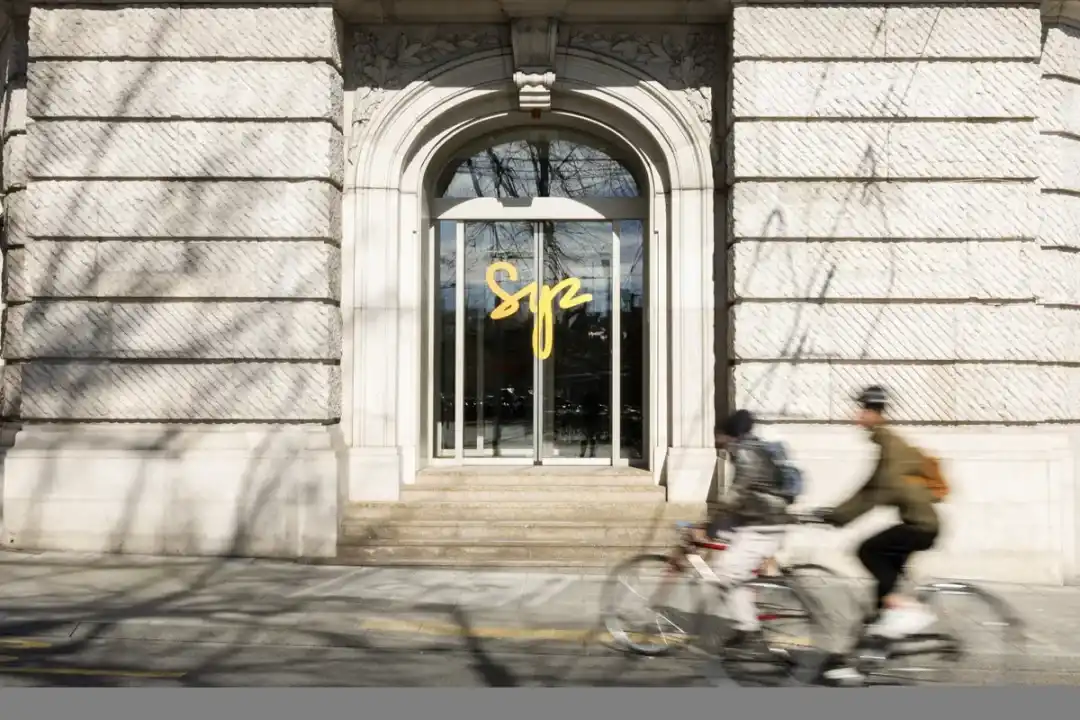
The logo of Banque Syz SA in Geneva

This family split highlights both the challenges of managing a family business and the ideological struggles within Switzerland's wealth management industry. Local boutique private banks not only face fierce competition from numerous domestic peers but also often hold divergent views on the industry's future. Marc stated that he had advocated for increased investment in alternative assets, artificial intelligence, and digital assets, expressing concern that some competitors rely too heavily on Switzerland's safe-haven reputation and lack innovative breakthroughs.

The bank and Eric Syz responded through a spokesperson, confirming only that Marc and Byworth had left and stating that "alternative investments have always been a core business of Banque Syz," without commenting on the specific reasons for their departure. Marc detailed the sequence of events in a phone interview.

Syz Capital was established in 2018 under Marc's leadership and managed assets of around 20 billion Swiss francs (equivalent to $25 billion) at the time of his departure, with some outflows occurring subsequently. The original Syz Capital team remains, now managed by Syz Group's Chief Financial Officer, Christoph Raninger. The bank has seen other recent executive departures, including Chief Operating Officer Boris Chave.

The catalyst for the worsening rift in the father-son relationship was the bank's board's rejection of the application to merge Future Holdings into Syz Capital on grounds of excessive risk. Marc said that subsequently, he and Byworth were asked to resign from their positions as directors of Syz Capital, ultimately leading to their complete departure from the wealth management firm.

It is currently unclear whether Marc, who holds about a 20% stake in Syz Capital, and Byworth, who holds about 5%, will retain their shareholder status.

Preparing for a Dual Listing

According to informed sources, the two are working with Stifel Financial Corp to advance a dual IPO for Future Holdings in Sweden and Switzerland, with plans later for an independent listing on the main board of the Swiss Exchange. The company is considering further Bitcoin acquisitions before this, aiming to hold over 3,500 bitcoins and striving to become one of Europe's largest corporate holders of cryptocurrency.

Marc Syz

The reporter has not yet received a response to calls or emails from Stifel.

Earlier this year, Future Holdings merged with the Swedish-listed Bitcoin treasury company H100 Group AB, expanding its crypto asset reserves to pave the way for a potential listing.

The crypto treasury model was pioneered by Michael Saylor's MicroStrategy Inc during the pandemic bull market. Companies raise funds by issuing additional shares to accumulate large amounts of Bitcoin, providing investors with equity exposure to Bitcoin without directly holding the tokens. US spot Bitcoin ETFs were not approved and launched until early 2024.

The crypto treasury sector exploded last year, with Trump's election win reigniting the bull market, pushing the valuations of several institutions far above the net value of their crypto holdings at their peak. Now, as the market has corrected and token prices have fallen from their highs, the market capitalizations of many listed Bitcoin treasury companies have dropped to at or below their net asset value.

However, Marc Syz and Byworth believe that Switzerland's overall crypto-friendly regulatory environment, combined with structural advantages like low interest rates and Europe's third-most liquid stock market, will provide favorable support for Future Holdings' listing.

The 2020 Restructuring

Prior to these personnel changes, Banque Syz had undergone several rounds of reform in recent years. In 2020, Eric led a restructuring that spun off the retail asset management business, Oyster. This was followed by a prolonged power transition, culminating in Eric appointing his other son, Nicolas Syz, as CEO in February of this year.

Eric Syz comes from a textile industry family whose business dates back to the 1850s. He co-founded Banque Syz in 1996 with Alfredo Piacentini and Paolo Luban, who have since left. The bank is controlled by Eric and high-end jewelry designer Suzanne Syz, who also serves as a director.

The bank's total assets under management have remained largely stable over the past five years, increasing by nearly 12% in 2024 from 23.1 billion Swiss francs the previous year to 25.8 billion Swiss francs, roughly level with the total assets at the end of 2020. The bank has continued to grow its presence in Zurich in recent years, adding office space and recruiting new teams, stating last year its intention to "expand asset size across all business lines and firmly advance growth plans."

As for Marc and Byworth, besides operating Future Holdings, the two plan to establish an independent asset management firm to compete with Syz Capital. The new firm will focus on alternative investment strategies, emphasizing capital preservation and appreciation.

Whether investors will embrace listed Bitcoin treasury vehicles after market volatility remains uncertain. But for Marc Syz, this is both a bet on the digital asset sector and a complete break with a venerable Swiss private banking dynasty.


Criptomoedas em alta

Perguntas relacionadas

QWhat was the core disagreement that led to Marc Syz leaving Banque Syz SA?

AThe core disagreement was over the future direction of the bank, specifically Marc Syz's plan to integrate the crypto treasury company Future Holdings AG into the bank's alternative asset division, Syz Capital, which the bank's board rejected due to high risk.

QWhat is the new venture that Marc Syz and Richard Byworth are pursuing after leaving Banque Syz?

AThey are pursuing a dual IPO for Future Holdings AG in Sweden and Switzerland, aiming to make it one of Europe's largest corporate holders of Bitcoin, and plan to establish a new independent asset management firm focused on alternative investment strategies.

QHow did the bank's board react to Marc Syz's proposal for Future Holdings AG?

AThe bank's board rejected the proposal to integrate Future Holdings AG into Syz Capital, citing that the venture was too risky.

QWhat is a Bitcoin treasury company, as mentioned in the article?

AA Bitcoin treasury company is a model, pioneered by Michael Saylor's MicroStrategy, where a company raises capital by issuing shares to accumulate large amounts of Bitcoin, providing investors with equity exposure to Bitcoin without directly holding the cryptocurrency.

QWhat broader industry conflict in Swiss private banking does this family dispute reflect?

AIt reflects a conflict of ideas within the Swiss wealth management industry, where some practitioners advocate for innovation and increased investment in areas like digital assets and AI, while others prefer to rely on Switzerland's traditional reputation as a safe haven and are resistant to such changes.

Leituras Relacionadas

Agent Race Ends, Super Workbench Takes Over

The era of fragmented AI agents is ending. Over the past month, China's tech giants—Tencent, Alibaba, and ByteDance—have simultaneously shifted strategy: instead of launching new, standalone AI agents, they are consolidating their various agent projects into unified "super workbenches." Tencent integrated its QClaw teams into WorkBuddy, a strategic product hailed as a potential third flagship after QQ and WeChat. Alibaba is merging its QoderWork, Wukong, and MuleRun agents into a new "Qianwen Office" platform under DingTalk's leadership. ByteDance rebranded its TRAE SOLO coding agent to TRAE Work, signaling a broader focus on workflow collaboration. This convergence marks a pivotal industry consensus. The initial exploration phase, where companies rapidly built numerous overlapping agents for different scenarios, proved costly and inefficient. With open-source tools eroding technical barriers, competition has shifted from agent creation to resource consolidation and cost control. Historically, platform wars are won not by creating more products, but by simplifying them—as seen with browsers unifying web access and super-apps consolidating services. Now, the "super workbench" aims to become the unified AI entry point for work. This reflects a deeper market realization: the primary audience for AI is no longer just programmers (a market in the tens of millions) but all knowledge workers (a market of billions). The real opportunity lies in augmenting everyday tasks—managing emails, documents, data, and meetings—across the entire workday. The core battleground is becoming control over the primary AI entry point that employees use daily. Tencent's WorkBuddy leverages WeChat and Tencent Docs; Alibaba's Qianwen Office taps into DingTalk's organizational data; ByteDance's TRAE Work integrates with Feishu's workflows. Whoever owns this "super workbench" gains strategic control over orchestrating enterprise data and APIs. This shift is redefining enterprise software. Traditional SaaS applications, valued for their user interfaces, will recede into the background. Their core functionalities will be exposed as standardized "Skills" or APIs for the super workbench's agents to invoke. Software value will shift from selling user seats to charging based on API calls and outcomes delivered. The evolution of agents is moving through clear stages: first as novel standalone products, then as consolidated primary work entry points, and finally as pervasive, invisible capabilities embedded into the digital fabric. The recent moves by major tech firms signal the transition from the first stage into the second, accelerating toward the third. In the end, the most successful agent technology may become invisible—like electricity or the HTTP protocol—a fundamental, unnamed infrastructure powering work itself.

marsbitHá 13m

Agent Race Ends, Super Workbench Takes Over

marsbitHá 13m

Michael Saylor: 110 Reasons to Oppose BIP-110

Michael Saylor presents 110 arguments against Bitcoin Improvement Proposal (BIP) 110, a soft fork aimed at restricting certain non-monetary data storage uses (like inscriptions) on the Bitcoin blockchain. He acknowledges the proponents' valid concerns—such as node costs, fee pressure, and preserving Bitcoin's monetary focus—but fundamentally disagrees with the proposed solution. Saylor argues that BIP 110 represents a dangerous precedent of using consensus rules to enforce value judgments on transaction validity, moving away from Bitcoin's core principles of neutrality and permissionless innovation. His key objections are organized into eleven categories: 1) It violates neutrality and hard consensus by banning currently valid transactions. 2) It fails to meet the high burden of proof required for a consensus change, lacking concrete data on the alleged crisis. 3) Its seven bundled technical restrictions are overly broad, targeting generic script functionalities and blocking future upgrade paths. 4) It sacrifices compatibility and future optionality by closing off designed upgrade hooks. 5) Its temporary rules add significant complexity (grandfathering, expiry states) without sufficient justification. 6) The economic and security impacts, particularly on miner revenue and fee markets, are uncertain and unmodeled. 7) Superior, market-based tools (fee markets, relay/mining policies) already exist to manage blockchain load. 8) It stifles innovation by creating a chilling effect for developers. 9) Its modified activation mechanism (55% threshold, forced signaling) is aggressive and risks network splits. 10) The precedent it sets—using consensus to suppress disliked but legal uses—is more dangerous than the problem it aims to solve. 11) A better path exists: improving measurements, refining resource-based policies, and allowing market forces to work. Saylor concludes that Bitcoin's strength lies in its neutral rules, open markets, and hard consensus. Changing these foundational elements to target specific use cases is an unnecessary and risky "iatrogenic" intervention. He advocates for guarding Bitcoin's neutrality rather than acting as its redeemer.

marsbitHá 29m

Michael Saylor: 110 Reasons to Oppose BIP-110

marsbitHá 29m

Trading

Spot

Artigos em Destaque

O que é $BANK

Bank AI: Um Passo Revolucionário no Futuro da Banca Introdução Em uma era marcada por avanços rápidos na tecnologia, o Bank AI está na interseção da inteligência artificial (IA) e dos serviços bancários. Este projeto inovador visa redefinir o panorama financeiro, melhorando a eficiência operacional, as medidas de segurança e as experiências dos clientes através do poder da IA. Ao embarcarmos nesta exploração do Bank AI, iremos aprofundar no que o projeto implica, suas dinâmicas operacionais, seu contexto histórico e marcos significativos. O que é o Bank AI? No seu cerne, o Bank AI representa uma iniciativa transformadora com o objetivo de integrar a inteligência artificial em várias operações bancárias. Este projeto aproveita as capacidades da IA para automatizar processos, melhorar os protocolos de gestão de risco e melhorar a interação com os clientes através de serviços personalizados. Os principais objetivos do Bank AI incluem: Automatização das Funções Bancárias: Ao aproveitar as tecnologias de IA, o Bank AI visa automatizar tarefas rotineiras, reduzindo o peso sobre os recursos humanos e aumentando a eficiência. Gestão de Risco Melhorada: O projeto utiliza algoritmos de IA para prever e identificar riscos, fortalecendo assim as medidas de segurança contra fraudes e outras ameaças. Personalização dos Serviços Bancários: O Bank AI foca em oferecer produtos e serviços financeiros ajustados, analisando dados e comportamentos dos clientes. Melhoria da Experiência do Cliente: A implementação de soluções impulsionadas por IA, como chatbots e assistentes virtuais, visa proporcionar aos usuários interações mais humanizadas, revolucionando a forma como os clientes se envolvem com os bancos. Com esses objetivos, o Bank AI posiciona-se como um ator crucial para tornar a banca mais eficiente, segura e centrada no usuário. Quem é o Criador do Bank AI? Os detalhes sobre o criador do Bank AI permanecem desconhecidos. Assim, nenhuma pessoa ou organização específica foi identificada nas informações disponíveis. O anonimato que cerca a origem do projeto levanta questões, mas não diminui a sua ambiciosa visão e objetivos. Quem são os Investidores do Bank AI? Semelhante ao criador do projeto, informações específicas sobre os investidores ou organizações que apoiam o Bank AI não foram divulgadas. Sem essas informações, é difícil delinear o apoio financeiro e institucional que pode estar impulsionando o projeto para frente. No entanto, a importância de ter uma sólida base de investimento é fundamental para sustentar o desenvolvimento em um campo tão inovador. Como Funciona o Bank AI? O Bank AI opera em várias frentes inovadoras, focando em fatores únicos que o diferenciam das estruturas bancárias tradicionais. Abaixo estão as principais características operacionais: Automatização: Ao aplicar algoritmos de aprendizado de máquina, o Bank AI automatiza vários processos manuais dentro dos bancos. Isso resulta na redução dos custos operacionais e permite que os trabalhadores humanos redirecionem os seus esforços para atividades mais estratégicas. Gestão de Risco Avançada: A integração da IA nas práticas de gestão de risco equipa os bancos com ferramentas para prever com precisão potenciais ameaças, como fraudes, garantindo que as informações e ativos dos clientes permaneçam seguros. Recomendações Financeiras Personalizadas: Através do aprendizado contínuo a partir das interações com os clientes, os sistemas de IA desenvolvem uma compreensão sutil das necessidades dos usuários, permitindo oferecer conselhos adaptados sobre decisões financeiras. Interações Melhoradas com os Clientes: Utilizando chatbots e assistentes virtuais alimentados por IA, o Bank AI permite uma experiência de cliente mais envolvente, permitindo que os usuários tenham suas dúvidas resolvidas rapidamente, reduzindo assim os tempos de espera e melhorando os níveis de satisfação. Juntas, estas características operacionais posicionam o Bank AI como um pioneiro no setor bancário, estabelecendo novos padrões para a prestação de serviços e a excelência operacional. Cronologia do Bank AI Compreender a trajetória do Bank AI requer uma análise do seu contexto histórico. Abaixo está uma cronologia que destaca marcos e desenvolvimentos importantes: Início de 2010: A conceituação da integração da IA nos serviços bancários começou a ganhar atenção à medida que instituições bancárias reconheciam os potenciais benefícios. 2018: Ocorreu um aumento significativo na implementação de tecnologias de IA, quando os bancos começaram a usar ferramentas de IA como chatbots para atendimento ao cliente básico e sistemas de gestão de risco para melhorar o tratamento de segurança. 2023: A sofisticação da IA continuou a avançar, com a introdução de IA generativa para tarefas mais complexas, como processamento de documentos e análise de investimentos em tempo real. Este ano marcou um salto significativo nas capacidades proporcionadas aos bancos pela tecnologia de IA. 2024-Estado Atual: Neste ano, o Bank AI está em uma trajetória ascendente, com pesquisas e desenvolvimentos em andamento prontos para aprimorar ainda mais as capacidades nas operações bancárias. A exploração contínua das aplicações de IA sugere desenvolvimentos emocionantes por vir. Pontos Chave Sobre o Bank AI Integração da IA na Banca: O Bank AI foca na adoção da inteligência artificial para simplificar os processos bancários e melhorar as experiências dos usuários. Automatização e Foco em Gestão de Risco: O projeto enfatiza fortemente essas áreas, visando transferir o peso das tarefas rotineiras enquanto melhora as estruturas de segurança através de análises preditivas. Soluções Bancárias Personalizadas: Ao aproveitar os dados dos clientes, o Bank AI possibilita serviços bancários ajustados que atendem às necessidades individuais dos usuários. Compromisso com o Desenvolvimento: O Bank AI permanece comprometido com contínuas pesquisas e esforços de desenvolvimento, garantindo a sua adaptabilidade e relevância contínua à medida que a tecnologia continua a evoluir. Conclusão Em resumo, o Bank AI exemplifica um passo crucial em frente na indústria bancária, aproveitando a inteligência artificial para remodelar paradigmas operacionais, melhorar a segurança e promover a satisfação do cliente. Apesar das lacunas de informação em torno do criador e dos investidores, os objetivos claros e os mecanismos funcionais do Bank AI fornecem uma base sólida para sua evolução contínua. À medida que a tecnologia de IA continua a avançar e se fundir com o setor bancário, o Bank AI está bem posicionado para impactar significativamente o futuro dos serviços financeiros, aprimorando a maneira como entendemos e interagimos com a banca.

75 Visualizações TotaisPublicado em {updateTime}Atualizado em 2024.12.03

O que é $BANK

Como comprar BANK

Bem-vindo à HTX.com!Tornámos a compra de Lorenzo Protocol (BANK) simples e conveniente.Segue o nosso guia passo a passo para iniciar a tua jornada no mundo das criptos.Passo 1: cria a tua conta HTXUtiliza o teu e-mail ou número de telefone para te inscreveres numa conta gratuita na HTX.Desfruta de um processo de inscrição sem complicações e desbloqueia todas as funcionalidades.Obter a minha contaPasso 2: vai para Comprar Cripto e escolhe o teu método de pagamentoCartão de crédito/débito: usa o teu visa ou mastercard para comprar Lorenzo Protocol (BANK) instantaneamente.Saldo: usa os fundos da tua conta HTX para transacionar sem problemas.Terceiros: adicionamos métodos de pagamento populares, como Google Pay e Apple Pay, para aumentar a conveniência.P2P: transaciona diretamente com outros utilizadores na HTX.Mercado de balcão (OTC): oferecemos serviços personalizados e taxas de câmbio competitivas para os traders.Passo 3: armazena teu Lorenzo Protocol (BANK)Depois de comprar o teu Lorenzo Protocol (BANK), armazena-o na tua conta HTX.Alternativamente, podes enviá-lo para outro lugar através de transferência blockchain ou usá-lo para transacionar outras criptomoedas.Passo 4: transaciona Lorenzo Protocol (BANK)Transaciona facilmente Lorenzo Protocol (BANK) no mercado à vista da HTX.Acede simplesmente à tua conta, seleciona o teu par de trading, executa as tuas transações e monitoriza em tempo real.Oferecemos uma experiência de fácil utilização tanto para principiantes como para traders experientes.

429 Visualizações TotaisPublicado em {updateTime}Atualizado em 2026.06.02

Como comprar BANK

Discussões

Bem-vindo à Comunidade HTX. Aqui, pode manter-se informado sobre os mais recentes desenvolvimentos da plataforma e obter acesso a análises profissionais de mercado. As opiniões dos utilizadores sobre o preço de BANK (BANK) são apresentadas abaixo.

活动图片